Lamborghini Day Tokyo: A Strategic Celebration of Past, Present, and Future
When Lamborghini commandeered Tokyo’s Meiji Memorial Picture Gallery in September 2016 for a weekend it called “Lamborghini Day,” the company was not simply throwing a party. It was staging a thesis: that a brand’s heritage and its most extreme new hardware are not separate selling propositions but a single, self-reinforcing argument. Two overlapping milestones gave the thesis its frame. Ferruccio Lamborghini was born in 1916, making this his centenary year. The Miura, the car widely credited with inventing the mid-engine supercar template, turned fifty. And the vehicle chosen to embody both anniversaries at once was a one-off Centenario coupe finished entirely in exposed carbon fiber, making its Asian debut on the gallery lawn.
The weekend unfolded in three acts. First, 36 privately owned classic Lamborghinis lined up for an inaugural Concours d’Elegance, judged across classes for Miura, Countach, and Diablo, with additional awards for audience favorite and most authentic restoration. Then the Centenario itself was unveiled, its monocoque and body panels stripped of paint to broadcast the material rather than hide it. Finally, more than 65 owner cars paraded through the Omotesando and Shibuya intersection in central Tokyo, a route that guaranteed maximum civilian exposure.
Stefano Domenicali, then Lamborghini’s CEO, attended personally. Lamborghini says Japan ranked among its top three global markets at the time, and the company reported record sales in the first half of 2016, crediting new Huracán variants like the Spyder and rear-wheel-drive models. None of this was accidental generosity. It was a deliberate investment in the region’s most engaged buyers, and every element of the weekend was designed to prove that owning a Lamborghini means belonging to a living continuum rather than merely possessing a fast car.
The Centenario’s Asian Debut: A Halo Car Bridging Heritage and Innovation
Bringing the Centenario to Tokyo was a calculated choice. The car had debuted at the 2016 Geneva Motor Show earlier that year, and production was strictly limited to 20 coupes and 20 roadsters, all pre-sold. Showing it in Asia was less about generating orders and more about reinforcing Lamborghini’s position as a maker of genuinely rare machines in a region where exclusivity carries enormous cultural weight.
The Centenario drew its power from a tuned version of the Aventador SV’s 6.5-liter naturally aspirated V12, producing 759 horsepower at 8,500 rpm. Lamborghini says the car could reach 100 km/h in 2.9 seconds, with a top speed approaching 220 mph. Yet the specification that mattered most for the brand’s engineering trajectory was the rear-wheel steering system, a company first. At low speeds, the rear wheels turned opposite to the fronts for tighter maneuverability; at higher speeds, they turned in the same direction for stability. This technology would filter into subsequent production Lamborghinis, making the Centenario a rolling preview of where Sant’Agata’s chassis engineers were heading.
Lamborghini also used the car to debut a new infotainment architecture: a 10.1-inch portrait-oriented touchscreen capable of recording telemetry and driving data. By 2016 standards, this was a significant step forward for a brand whose cabin electronics had historically lagged behind its powertrain ambition. The system signaled that Sant’Agata Bolognese recognized the interior experience mattered, even in a car most owners would drive fewer than a thousand miles.
One detail that collectors continue to track is how rarely these cars surface publicly. A Lamborghini-Talk forum thread documented a Centenario Roadster, chassis #6924, that appeared at a Hong Kong event in 2025 after spending roughly eight years hidden from public view. That kind of scarcity is precisely the collector dynamic Lamborghini cultivates with its limited-run halo cars, from the Reventón through the Veneno to the Sián and, more recently, the Fenomeno announced for Monterey Car Week.
Honoring Icons: The Miura’s 50th Anniversary and Ferruccio’s Centenary
The dual anniversary framing gave Lamborghini Day Tokyo a narrative depth that a straightforward product launch would lack. Ferruccio Lamborghini built tractors before he built sports cars, and his origin story remains one of the most effective founding myths in the automotive world. Tying the Centenario to his centenary connected the brand’s most advanced hypercar to its most human story.
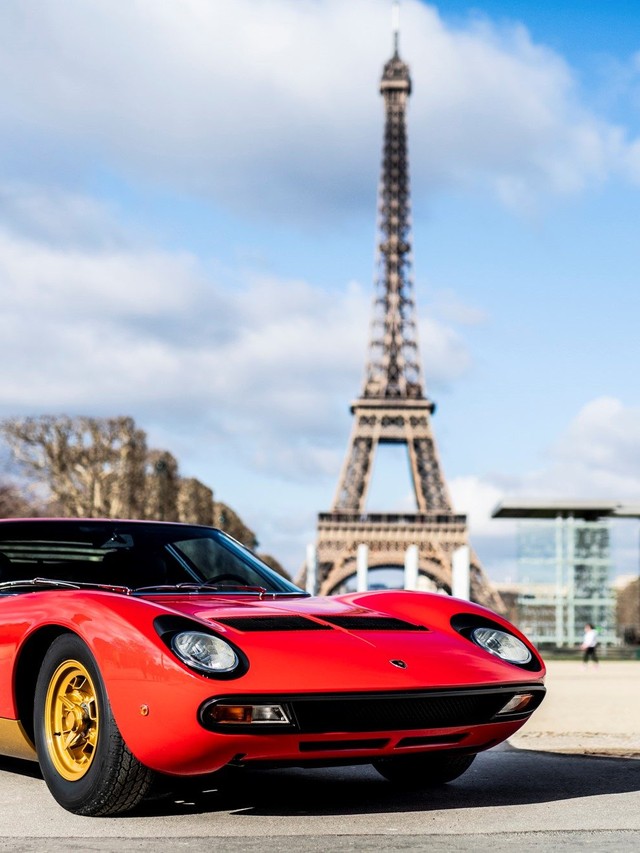
The Miura’s 50th anniversary provided the other anchor. Designed by Marcello Gandini at Bertone and engineered by Gian Paolo Dallara, the Miura established the mid-engine layout that every modern supercar, including the Centenario itself, follows. Placing restored Miuras alongside the Centenario at the concours created a visual argument for design continuity that no press statement could replicate. Here was the car that started the lineage, and here was the car that carried it forward, separated by half a century yet sharing the same fundamental architecture.
The concours format itself reinforced the thesis. Lamborghini structured it with class awards for Miura, Countach, and Diablo, plus a best-of-show for the Miura anniversary year and an authenticity award. This is the kind of event that rewards owners who maintain their cars properly, and it sends a clear signal to the collector market: Lamborghini cares about its back catalog. That message matters commercially, because owners who feel their classics are valued by the factory are more likely to buy the next new model. Lamborghini’s Polo Storico division, which handles heritage certification and restoration, feeds directly into this dynamic, turning preservation into a pipeline for future sales.
Tokyo’s Roaring Streets: Community Engagement and Market Presence
The owner parade through Omotesando and Shibuya was, in marketing terms, the most efficient element of the entire weekend. More than 65 Lamborghinis rolling through one of the world’s most photographed intersections generated organic social media exposure that no billboard campaign could match. Every smartphone photo taken by a pedestrian became unpaid advertising, and every owner behind the wheel became a brand ambassador with a personal stake in the spectacle.
Closing streets in central Tokyo for a private automotive procession requires significant political and logistical capital. Owners who participated walked away feeling that their brand relationship offered access to something genuinely exclusive. That emotional return on investment is what keeps buyers loyal across multiple purchase cycles, and it is the connective tissue between the heritage concours, the hypercar debut, and the parade itself. Each element fed the same message: this brand rewards commitment.
Japan’s supercar culture values discretion, condition, and community belonging. A brand that stages a concours honoring restoration quality and awards the most authentic classic speaks directly to those values. Lamborghini’s position as a top-three market in Japan during this period was not accidental; it was cultivated through exactly this kind of strategic engagement. Ferrari has long understood a similar principle through its Cavalcade events and track days reserved for top clients. Porsche runs its own heritage programs and experience centers. What distinguished Lamborghini’s Tokyo approach was the compression: heritage concours, hypercar debut, and owner parade folded into a single weekend, in a single city, with the CEO present. The format treated collector engagement, product showcase, and community building not as separate initiatives but as facets of one argument about what the brand stands for.
Centenario Technology: Previewing Lamborghini’s Future Engineering Direction
The Centenario’s rear-wheel steering system and its carbon fiber construction philosophy both reappeared in subsequent Lamborghini models. The Aventador S, which arrived in 2017, adopted rear-wheel steering as a standard feature, validating the Centenario’s role as a technology incubator. The infotainment architecture evolved further through the Huracán Evo and eventually into the Revuelto’s more sophisticated digital cockpit. In each case, the limited-edition car served as a proving ground whose lessons reached a far wider audience.
This pattern of using halo cars to debut technologies that later reach series production is a strategy Lamborghini shares with Ferrari (the LaFerrari’s hybrid system previewing the SF90) and Porsche (the 918 Spyder’s hybrid architecture informing the Taycan). Where Lamborghini differs is in the emotional register. Ferrari frames its limited cars around racing heritage; Porsche frames them around engineering efficiency. Lamborghini frames them around spectacle and founder mythology. The Centenario’s name literally translates to “centennial,” and every design decision, from the exposed carbon weave to the aggressive aero surfaces, was calibrated to look like nothing else on the road.
For collectors weighing the Centenario against other limited Lamborghinis, the car occupies a specific niche. It sits between the more extreme Veneno (only nine total, including the prototype) and the later Sián, which introduced supercapacitor hybrid technology. The Centenario’s naturally aspirated V12 and its role as the first rear-steer Lamborghini give it a distinct place in the lineage. One report valued a specific Centenario Roadster, #001 of 20, at $3.75 million, though actual transaction prices for these cars remain closely guarded by their owners.
LamboCars Analysis: The Enduring Power of Heritage and Exclusivity in a Competitive Market
Viewed from a distance of several years, Lamborghini Day Tokyo reads as a template the company has continued to refine. The formula combines a limited-edition debut generating press coverage and collector excitement, a heritage exhibition validating the brand’s history and rewarding long-term owners, and a community activation creating shared experiences that build loyalty. Each element reinforces the others, and together they articulate a single proposition: that Lamborghini’s past and its future are not separate stories but chapters in the same one.
The event also underscored something about Lamborghini’s market position in Asia that remains relevant today. Japan’s supercar buyers tend to be deeply knowledgeable, condition-obsessive, and loyal to brands that respect their commitment. Lamborghini’s willingness to bring a one-off Centenario to Tokyo, rather than reserving it for European or American audiences, signaled that the company viewed its Japanese clientele as peers, not as a secondary market.
Lamborghini has not publicly detailed the direct sales impact of Lamborghini Day Tokyo. What the event confirms is a brand philosophy: exclusivity works best when it is performed, not just promised. Showing 36 classics alongside a carbon fiber hypercar, then sending 65 owner cars through Shibuya, made that exclusivity tangible in a way that a factory press conference never could. For a company now navigating the transition to hybrid powertrains with the Revuelto and Temerario, that ability to stage compelling real-world experiences around its products remains one of its most valuable competitive assets.


