Back-to-Back Wins and a First Pole: The Temerario GT3’s Rapid Ascent
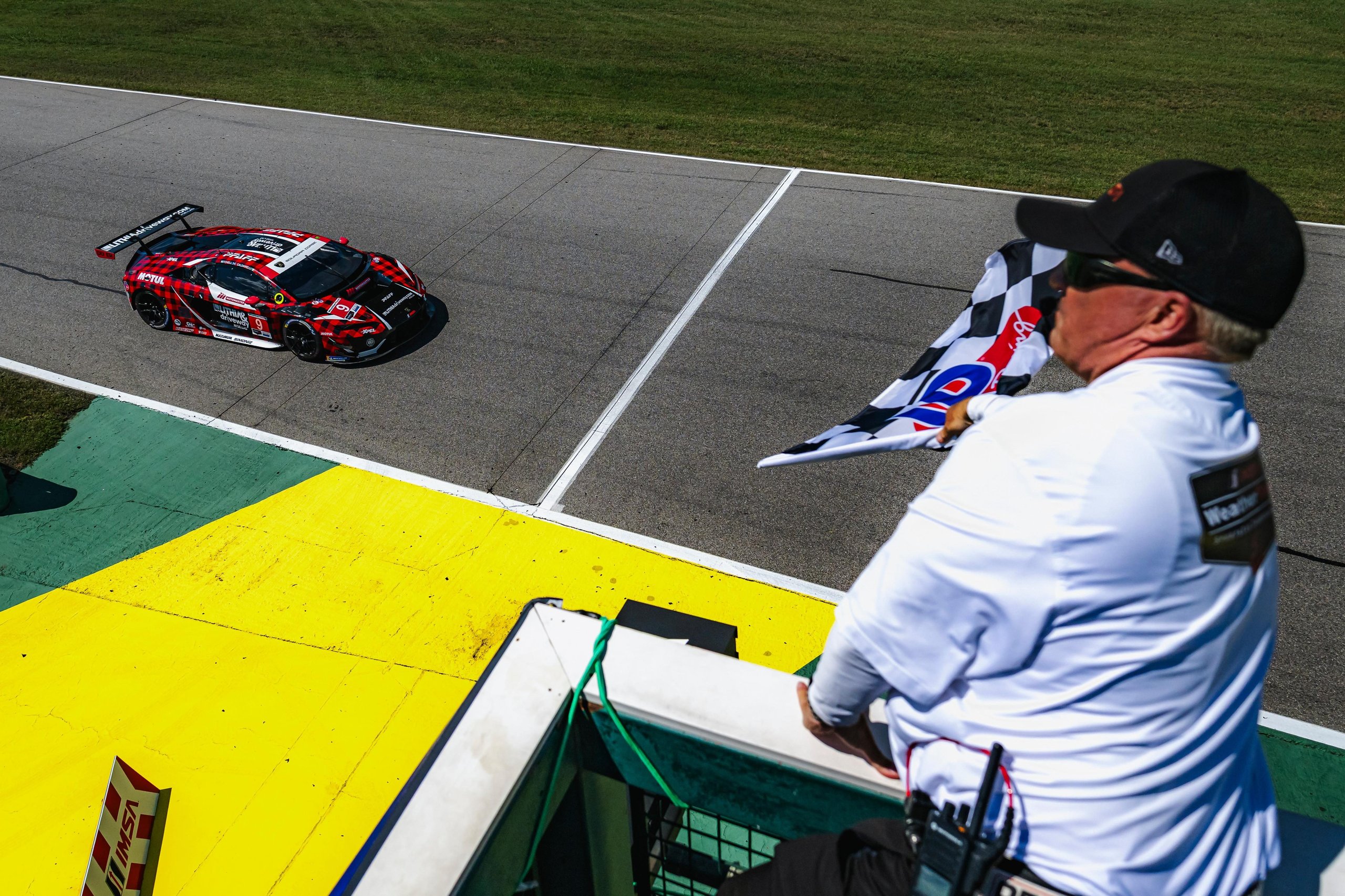
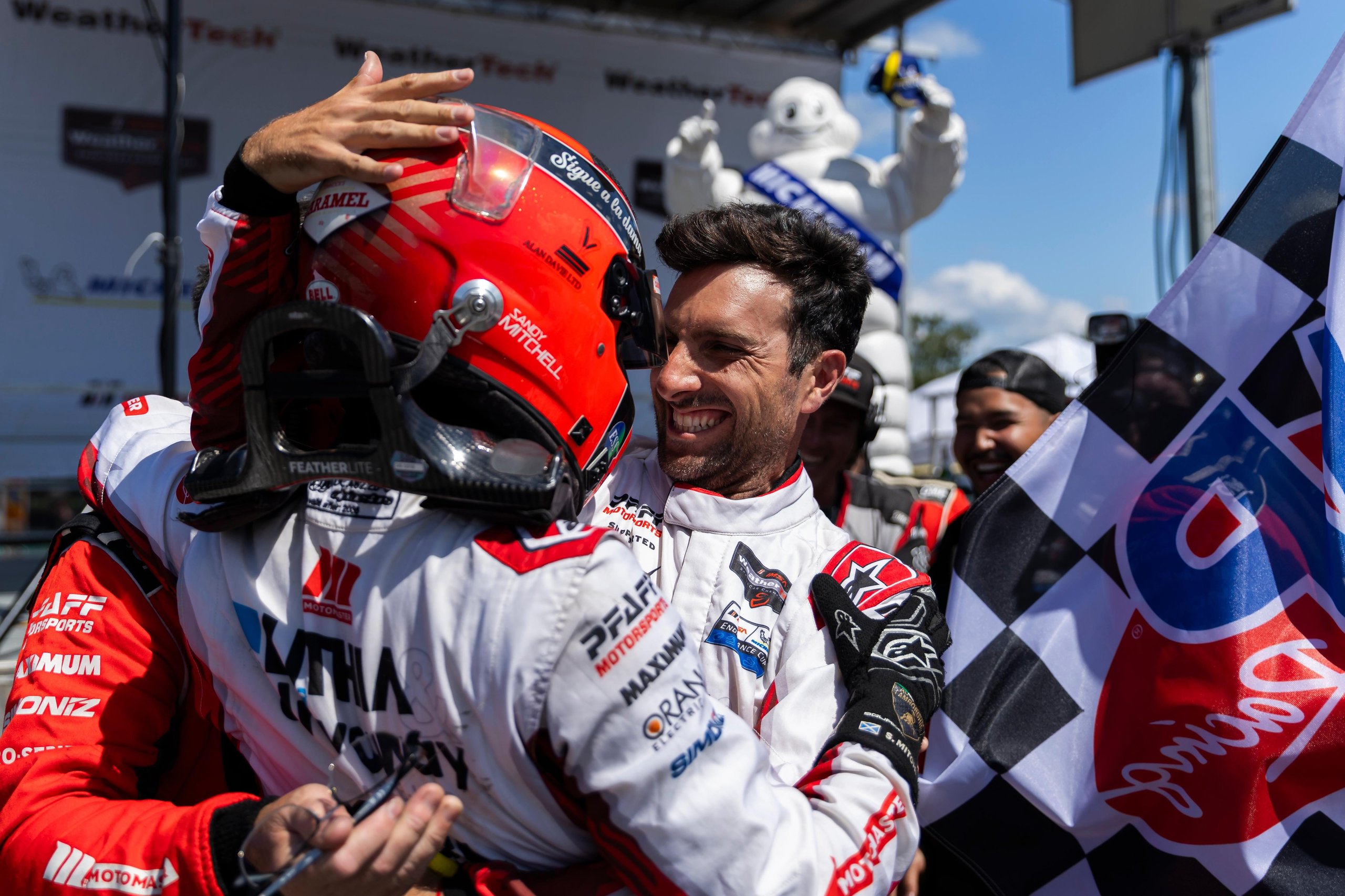
Pfaff Motorsports’ factory drivers Andrea Caldarelli and Sandy Mitchell led every meaningful lap at Virginia International Raceway to deliver the Lamborghini Temerario GT3 its second consecutive IMSA WeatherTech SportsCar Championship victory in the GTD Pro class. Caldarelli qualified the car on pole with a lap of 1 minute, 44.773 seconds, the first pole position the Temerario GT3 has ever recorded. The #9 car then led 69 of 84 laps on its way to a winning margin of 1.517 seconds over the second-placed Ford Mustang.
Context turns a strong result into a remarkable one. The Temerario GT3 made its global racing debut only months ago at the Twelve Hours of Sebring. It collected a podium at the Detroit Sports Car Classic, broke through with a maiden win at Road America, and now owns the pole-to-flag sweep at VIR. That trajectory, from first start to dominant form in a handful of rounds, is unusually steep for any new GT3 platform, and it speaks directly to the maturity of Lamborghini’s first fully in-house race car.
This is also the brand’s third IMSA victory of the 2026 season. The earlier win came courtesy of Wayne Taylor Racing’s Trent Hindman and Danny Formal aboard the outgoing Huracán GT3 Evo2 at Laguna Seca. Both old and new platforms winning simultaneously says something about the depth of Lamborghini’s current IMSA program, but the momentum clearly belongs to the Temerario.

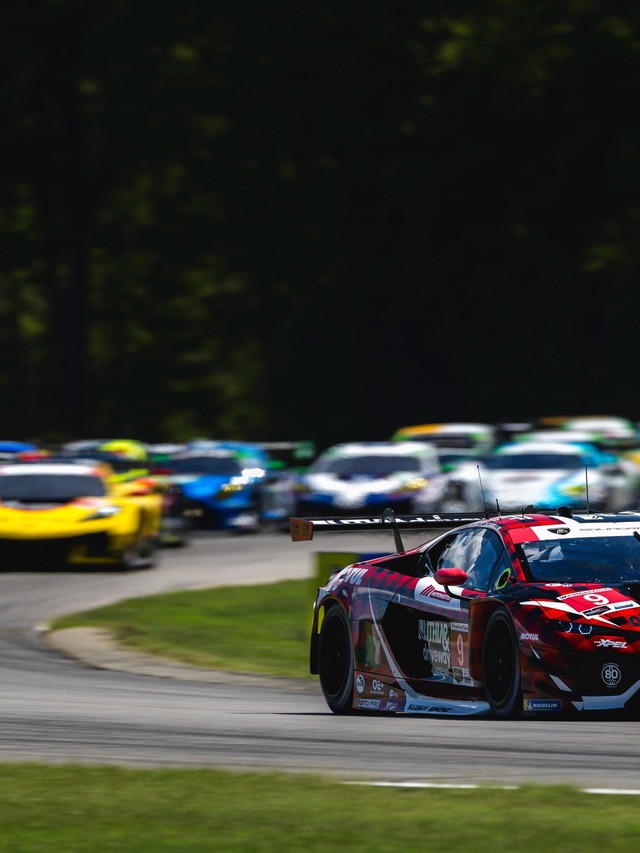
A red and black Lamborghini race car leads a pack of competitors around a turn on a sunny racetrack. Image: Automobili Lamborghini.
Why ‘In-House’ Development Changes the Equation
The Temerario GT3 holds a distinction no previous Lamborghini race car can claim: it is the first GT3 platform entirely designed and developed at Sant’Agata Bolognese. Previous Huracán-based racers relied more heavily on external partners for their competition engineering. It by contrast, came out of Squadra Corse working alongside Centro Stile under one roof.
That structural change matters for reasons beyond corporate pride. When a manufacturer controls the full development loop, from road car architecture through race car homologation, the feedback cycle tightens. Lessons learned at VIR or Sebring feed directly back into the people who designed the base platform. Ferrari and Porsche have operated this way for decades. Lamborghini doing it with a clean-sheet GT3 car represents a genuine escalation of the brand’s motorsport commitment, and the speed of the results suggests the investment is paying off faster than anticipated.
As Road & Track noted when the car was revealed, the Huracán GT3 soldiered on for a full decade while competitors like Porsche cycled through three entirely new GT3 platforms in the same period. The Temerario GT3 closes that structural gap in one move.
From V10 to Twin-Turbo V8: Engineering the Successor
The generational shift from Huracán GT3 Evo2 to Temerario GT3 involves more than a badge swap. The powertrain architecture changes fundamentally: the naturally aspirated 5.2-liter V10 gives way to a 4.0-liter twin-turbocharged V8 derived from the road car’s engine. For GT3 racing, Lamborghini strips the road car’s hybrid system entirely to comply with FIA regulations, leaving a pure internal-combustion race car underneath.
The engine is not the only departure. According to one report, the Temerario GT3 introduces a six-speed sequential transverse gearbox, a layout designed to improve airflow to the rear of the car and alter weight distribution compared to the Huracán’s longitudinal arrangement. Six-way adjustable dampers replace the previous car’s suspension package, giving teams more tuning latitude.
| Feature | Huracán GT3 Evo2 | Temerario GT3 |
|---|---|---|
| Engine | Naturally aspirated V10 | Twin-turbo V8 |
| Hybrid system | None | Removed from road car |
| Gearbox | Longitudinal | Transverse sequential |
| Development | External partner-assisted | Fully in-house (Squadra Corse) |
For customer racing teams, the transition means adapting to an entirely different powerband. Turbo lag management, boost mapping, and heat rejection all become new variables in a category where the Huracán’s linear V10 delivery was a known quantity. The speed of Pfaff Motorsports’ adaptation suggests the car’s baseline setup arrived in a remarkably mature state, another dividend of that tighter in-house development loop.

A red and black Lamborghini race car with a plaid livery speeds away on a racetrack. Image: Automobili Lamborghini.
Championship Stakes and the GTD Pro Landscape
Caldarelli and Mitchell now sit unofficially third in the GTD Pro championship standings with two rounds remaining: Indianapolis and Petit Le Mans. Lamborghini has not published exact points gaps, but the trajectory is unmistakable. A car that did not exist in competition six months ago is now a legitimate title contender.
The competitive context sharpens the achievement. GTD Pro fields factory-backed entries from Porsche, Ferrari, Corvette Racing, BMW, Mercedes-AMG, and others. Balance of Performance regulations are designed to equalize the field, which means raw pace advantages tend to be small and execution becomes everything. Winning from pole and leading 82 percent of the laps, as the Temerario GT3 did at VIR, suggests the car is not merely competitive on pace but also kind to its tires over long stints. Sandy Mitchell’s own post-race comments reinforce this: the car rewarded aggressive driving without punishing tire life beyond recovery.
One report indicates that Pfaff Motorsports is in its final IMSA campaign, which adds a bittersweet layer. If true, the team’s farewell season is coinciding with the most competitive Lamborghini GT3 platform the sport has seen. For Lamborghini’s broader customer racing ecosystem, the question becomes which teams pick up the Temerario GT3 allocation next and whether the car’s debut-season credibility accelerates that process.
The VIR victory also carries a small historical footnote: Lamborghini had not won at Virginia International Raceway since 2017. Nine years between victories at the same circuit, then a pole-to-flag demolition. The gap underscores just how much the competitive picture changed with the arrival of the new car.

Two victorious race car drivers proudly display their golden trophies and checkered flags on the podium. Image: Automobili Lamborghini.
What the Temerario GT3’s Success Signals for Lamborghini’s Future
Lamborghini’s motorsport and road car programs have never been entirely separate, but the Temerario GT3 tightens that relationship in a way the Huracán never quite managed. Because the GT3 car shares its chassis and base engine architecture with the road-going Temerario, competition data flows back into a platform that is actively being sold and developed. The road car’s 4.0-liter twin-turbo V8, tuned to rev to 10,000 rpm with its hybrid system intact, already drew praise from Car and Driver for its visceral character and agility. Racing validation of the same core architecture adds engineering credibility that marketing alone cannot manufacture.
For buyers watching from the sidelines, the practical takeaway is straightforward. The Temerario platform is proving itself under the most demanding conditions GT racing can offer, and it is doing so in its first season. That kind of durability and performance maturity, demonstrated publicly, tends to age well when it comes time to evaluate a road car’s long-term engineering integrity. Lamborghini has also been running its SC63 LMDh prototype in parallel, meaning the company is now fielding competitive programs across two major racing categories simultaneously. That level of motorsport investment from Sant’Agata Bolognese would have been difficult to imagine a decade ago.
The Temerario GT3’s debut season is not finished. Indianapolis and Petit Le Mans remain, and the championship is still mathematically open. But the story has already shifted from whether Lamborghini’s first fully in-house GT3 car could compete to how far it can go. Two wins, a pole, and a podium in a handful of starts answered the first question faster than anyone, including Caldarelli himself, expected.

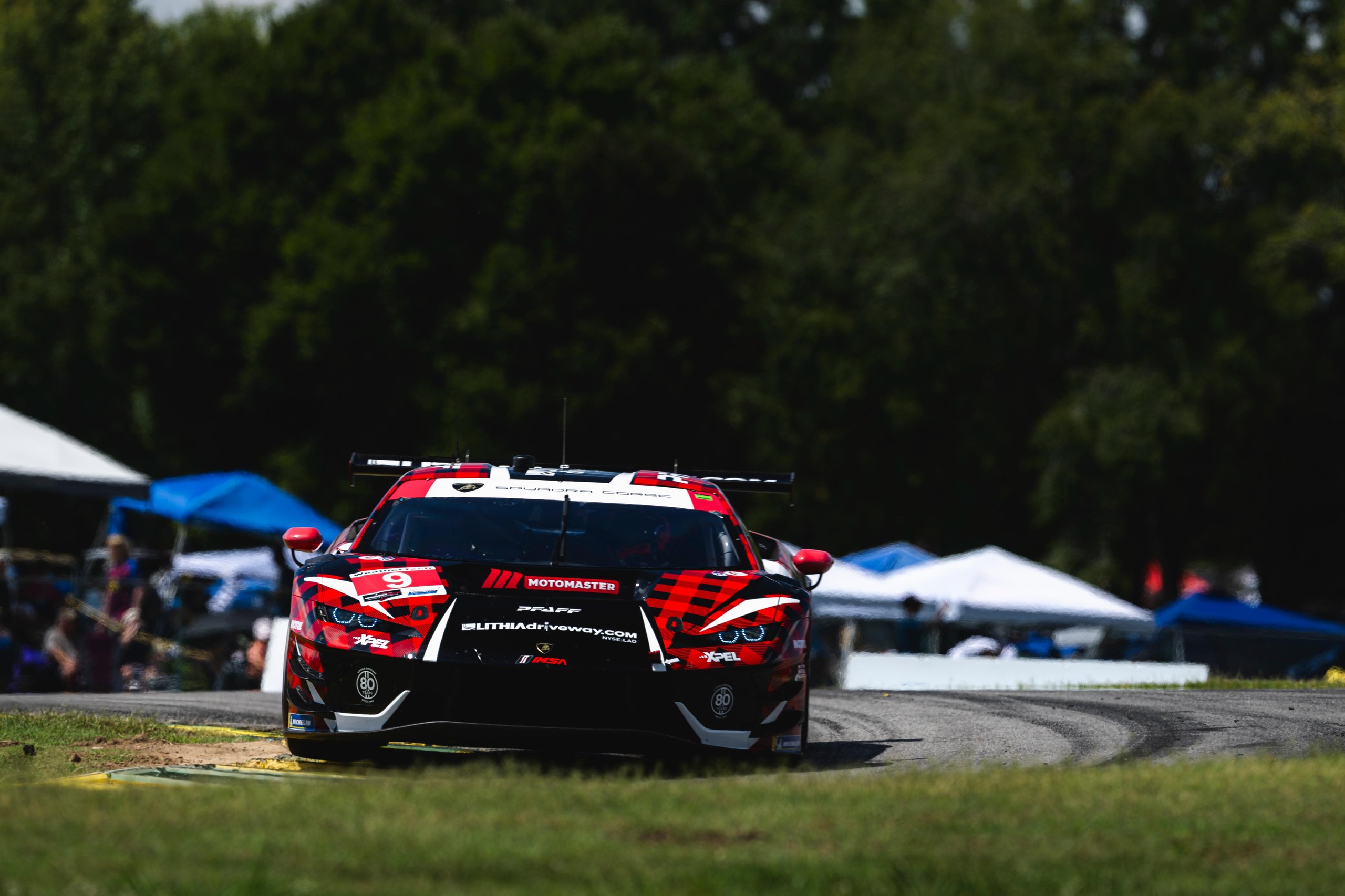
A red and black Lamborghini race car with a distinctive plaid livery speeds along a racetrack. Image: Automobili Lamborghini.
Gallery