The Car That Made Lamborghini a Global Brand
Lamborghini is marking 35 years of the Diablo, the V12 supercar that debuted in Monaco in January 1990 and immediately rewrote the rules for what a road car could do. The company frames the milestone through Polo Storico, its heritage division, which reports that certification and restoration requests for the Diablo are climbing fast, driven by a new generation of collectors who view the car as a cultural artifact rather than just a used exotic.
With 2,903 units built between 1990 and 2001, the Diablo set a production record for the brand that stood well into the Murciélago era. For a company that nearly collapsed more than once during the 1980s, those numbers represented genuine commercial validation.
Alessandro Farmeschi, Lamborghini’s After Sales Director, put it plainly in the company’s official anniversary material:
“The Diablo isn’t just a symbol of Lamborghini’s history; it’s also a model of growing strategic importance to Polo Storico. In recent years, we’ve seen a significant increase in requests for certifications and restoration services for the Diablo, in the most part due to a new generation of collectors and enthusiasts who see this car as a cultural and design icon.”
The Miura and Countach already command seven-figure prices at the top of the market. The Diablo, produced in far greater numbers and still relatively accessible, occupies a sweet spot where rising collector interest meets genuine parts and restoration support from the factory.

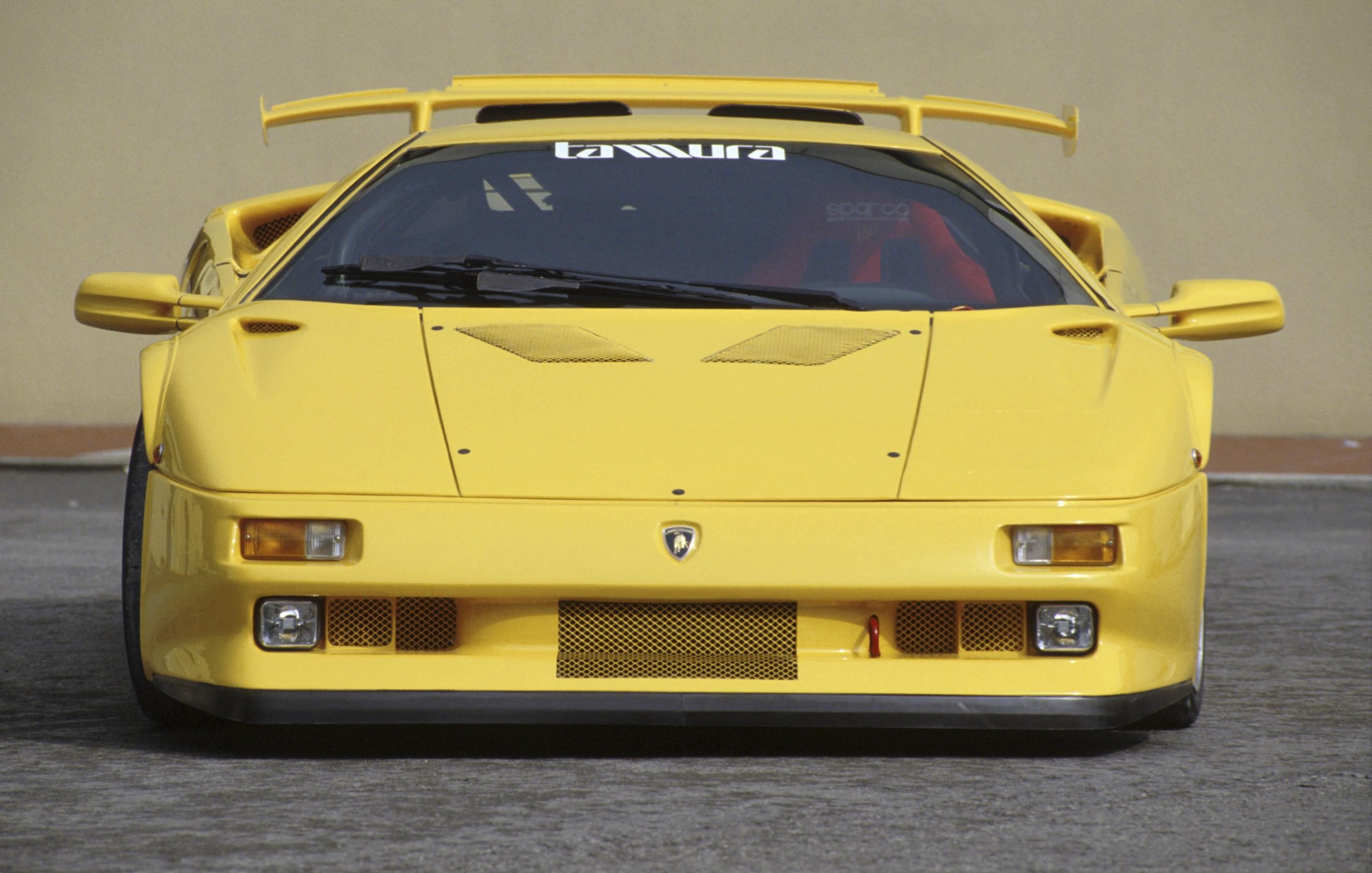
The iconic scissor doors of a yellow Lamborghini Diablo are open, revealing its inviting interior in a charming European plaza.
Project 132: From Gandini’s Sketch to Chrysler’s Refinement
Lamborghini began Project 132 in 1985 with a clear objective: build the fastest production car in the world, a successor to the Countach that could break the 200 mph barrier. Marcello Gandini, the designer responsible for both the Miura and the Countach, drew the initial lines. His concept was sharp, angular, and aggressive.
Then Chrysler arrived. The American automaker acquired Lamborghini in 1987, and its management found Gandini’s design too extreme. A design team in Detroit, led by Tom Gale, softened some of the harder edges, giving the Diablo more visual harmony and a silhouette that would age better than anyone expected. The scissor doors stayed. The muscular proportions stayed. The car gained a passenger compartment that was, by Lamborghini standards of the era, genuinely comfortable.
Gandini channeled his uncompromised original vision into the Cizeta-Moroder V16T. The Diablo, meanwhile, became one of the most recognizable automobiles of the 1990s. The name itself, honoring a legendary fighting bull that battled matador José de Lara for hours in 1869, set the tone for everything that followed.

This front three-quarter view captures the unpainted Lamborghini P132 prototype during its early development stages.
The V12 That Broke 325 km/h
At the heart of every Diablo sat a 5.7-liter naturally aspirated V12, a 60-degree aluminum block producing 492 CV and 580 Nm of torque in its original form. Paired with a five-speed manual gearbox and a dry single-plate clutch, the base car accelerated from 0 to 100 km/h in 4.09 seconds and reached 325 km/h, verified at the Nardò test circuit, where it hit 337 km/h to set a new speed record for road cars of that period.
A tubular steel frame carried aluminum and steel body panels with carbon fiber inserts, a material Lamborghini says was used for the first time on a production car. Dual-wishbone suspension at all four corners, ventilated disc brakes (330 x 32 mm front, 284 x 22 mm rear), and Pirelli P Zero tires completed the mechanical package. Curb weight came in at 1,620 kg.
What separated the Diablo from the Countach was a deliberate push toward livability. Adjustable seats, electric windows, and an Alpine stereo sound unremarkable today, but in the context of replacing a car whose interior ergonomics were famously hostile, these features represented a genuine philosophical shift. The clutch is heavy, the visibility is limited, and the car vibrates with a mechanical intensity that modern supercars have engineered away. But the throttle response is immediate, and at wide-open throttle the V12 delivers a sensory experience owners consistently describe as unlike anything else.

The powerful V12 engine of the Lamborghini Diablo, a masterpiece of automotive engineering, is revealed.
Eleven Years, Twelve Variants, Three Owners
The Diablo’s production run spanned one of the most turbulent decades in Lamborghini’s corporate history, passing from Chrysler to an Indonesian investment group to Audi. Each ownership change left its mark on the car.
The 1993 VT introduced all-wheel drive to a Lamborghini V12 for the first time, using a central viscous coupling. That system became a defining feature of every subsequent V12 flagship. The same year brought the SE30, a 30th anniversary special with output bumped to 525 CV and weight stripped to 1,449 kg; a Jota version pushed the engine to 596 CV. The 1995 VT Roadster opened the door to open-top V12 Lamborghinis, a lineage that continues through the Aventador Roadster and into the Revuelto.
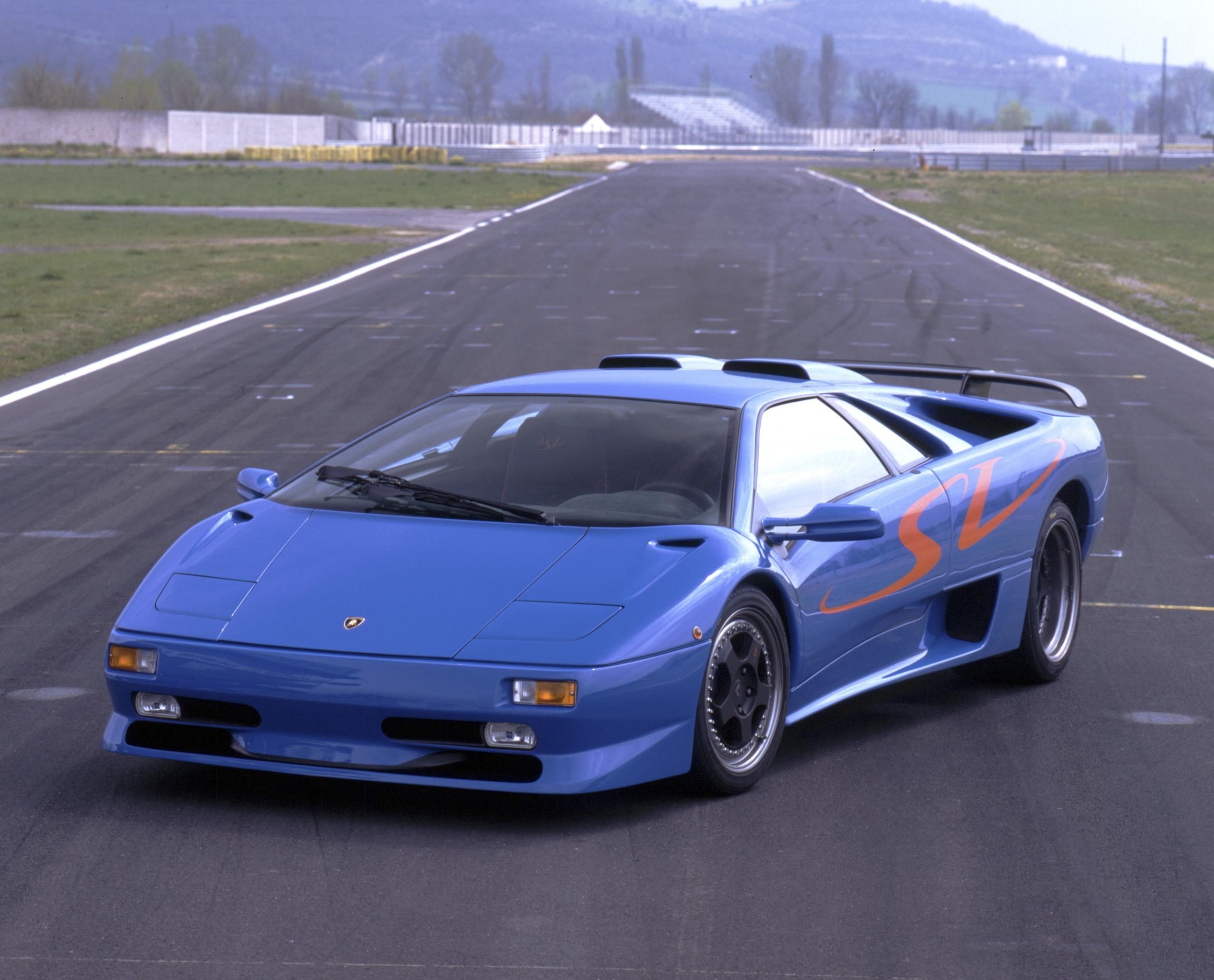
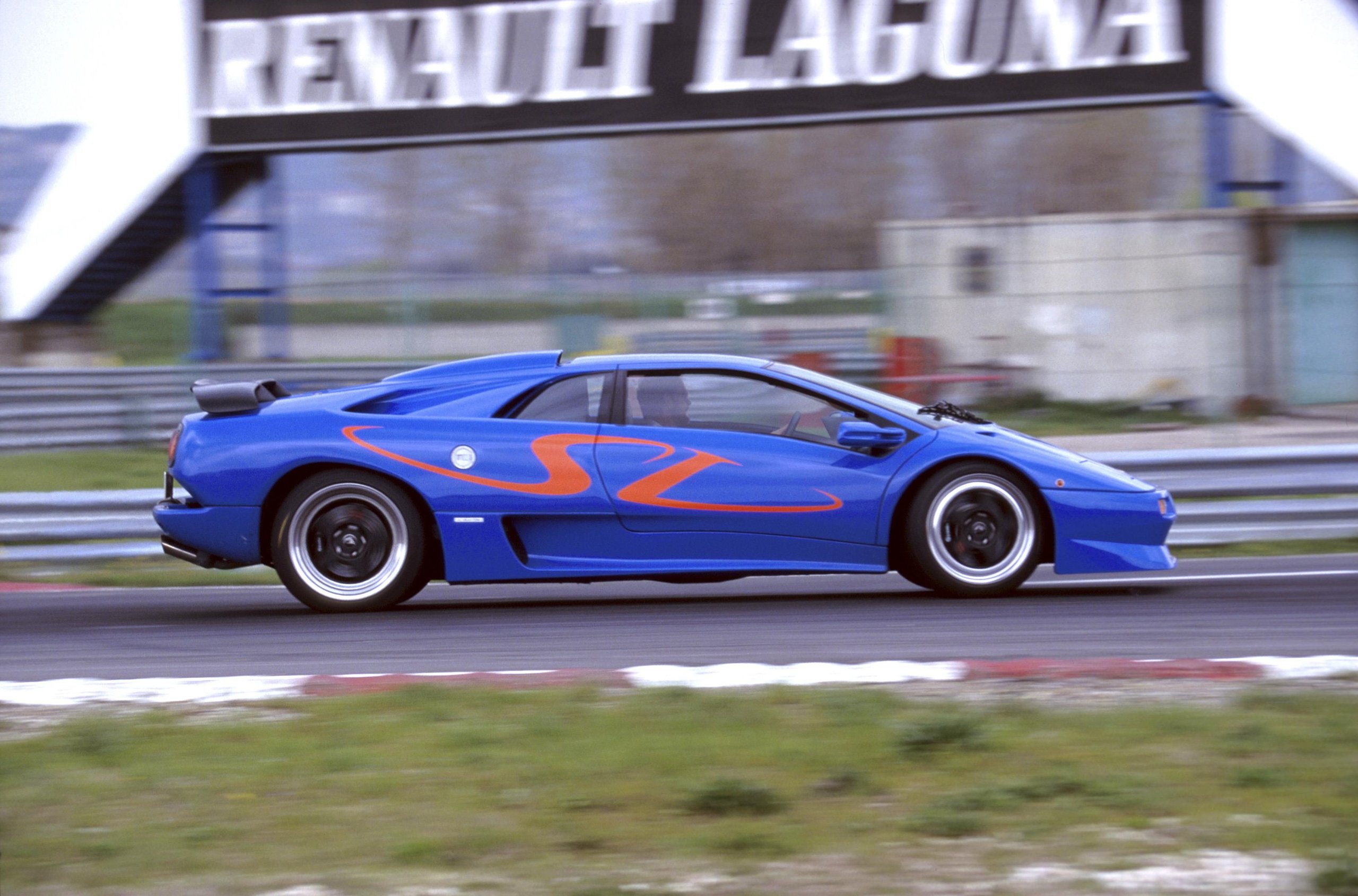
The SV (Sport Veloce) arrived in 1995 with 530 CV and rear-wheel drive. Only 346 were built. The 1999 GT enlarged the V12 to 6.0 liters and 575 CV, reaching 338 km/h, with Audi’s engineering influence beginning to reshape the car from within.
The final evolution came with the VT 6.0 and 6.0 SE, penned by Luc Donckerwolke, Lamborghini’s first chief designer under Audi ownership. These cars replaced the pop-up headlights with fixed units, added ABS, and introduced a visual language that flowed directly into the Murciélago. Enthusiast opinion on the fixed-headlight cars remains split: some prize the cleaner look; others insist the pop-ups are inseparable from the Diablo’s identity.
A base 1990 car with pop-up headlights and rear-wheel drive is a fundamentally different proposition from a 1999 GT with the 6.0-liter engine and ABS. Both carry the Diablo name, but they represent opposite ends of a decade-long evolution.

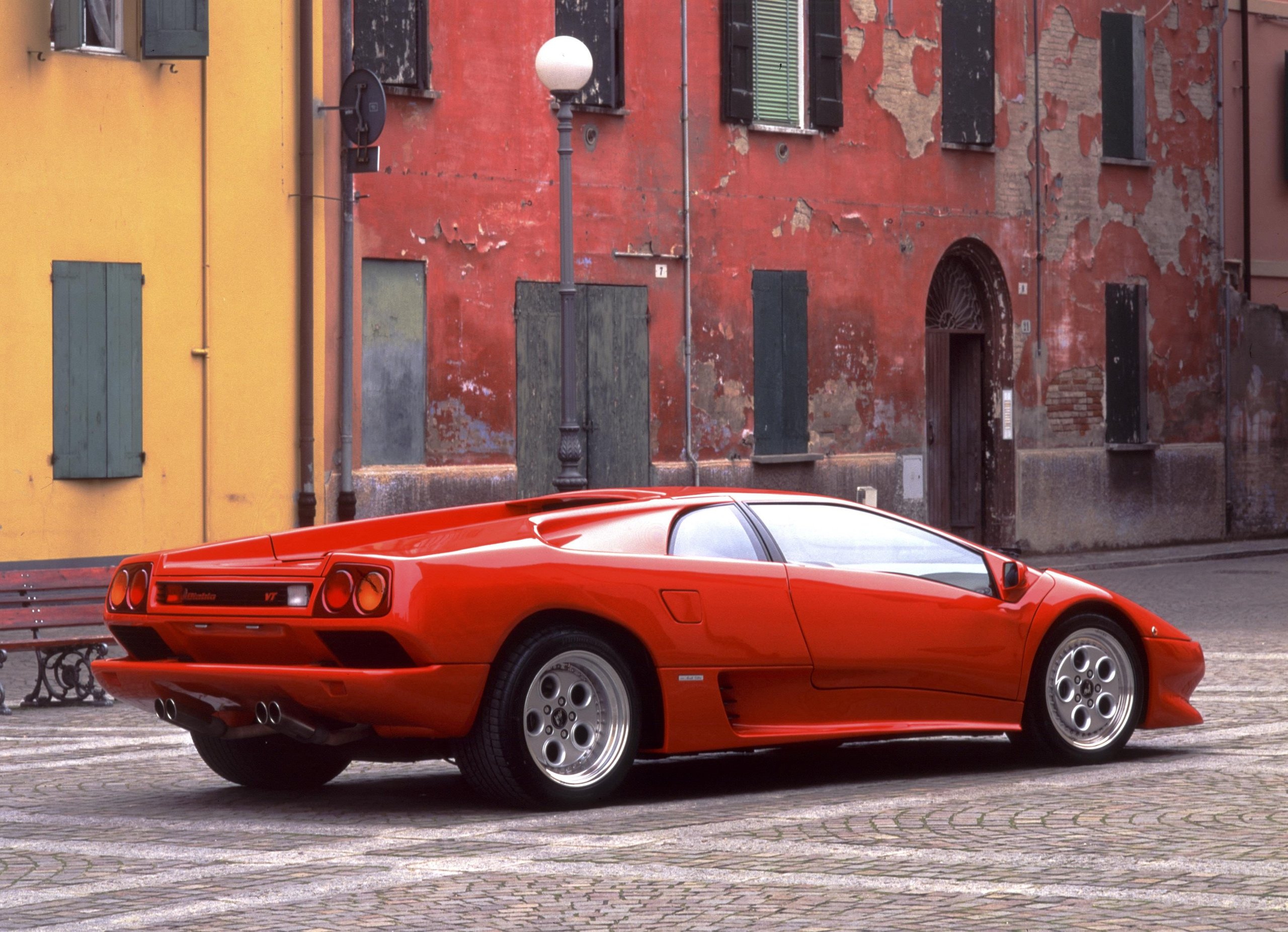
The vibrant red Lamborghini Diablo Roadster speeds along a scenic road, embodying pure driving exhilaration.
Racing DNA: From the Super Sport Trophy to the GT-R
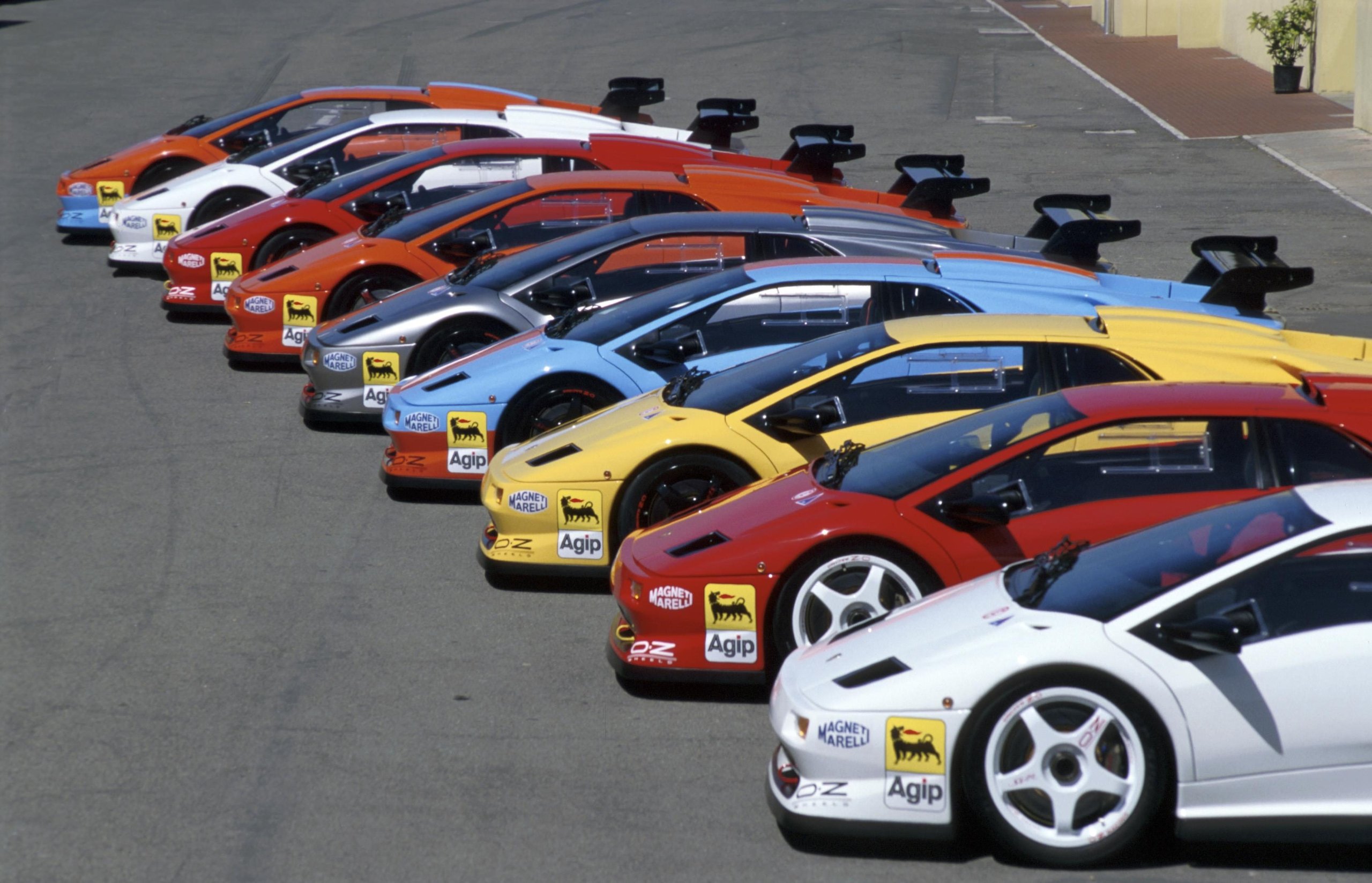
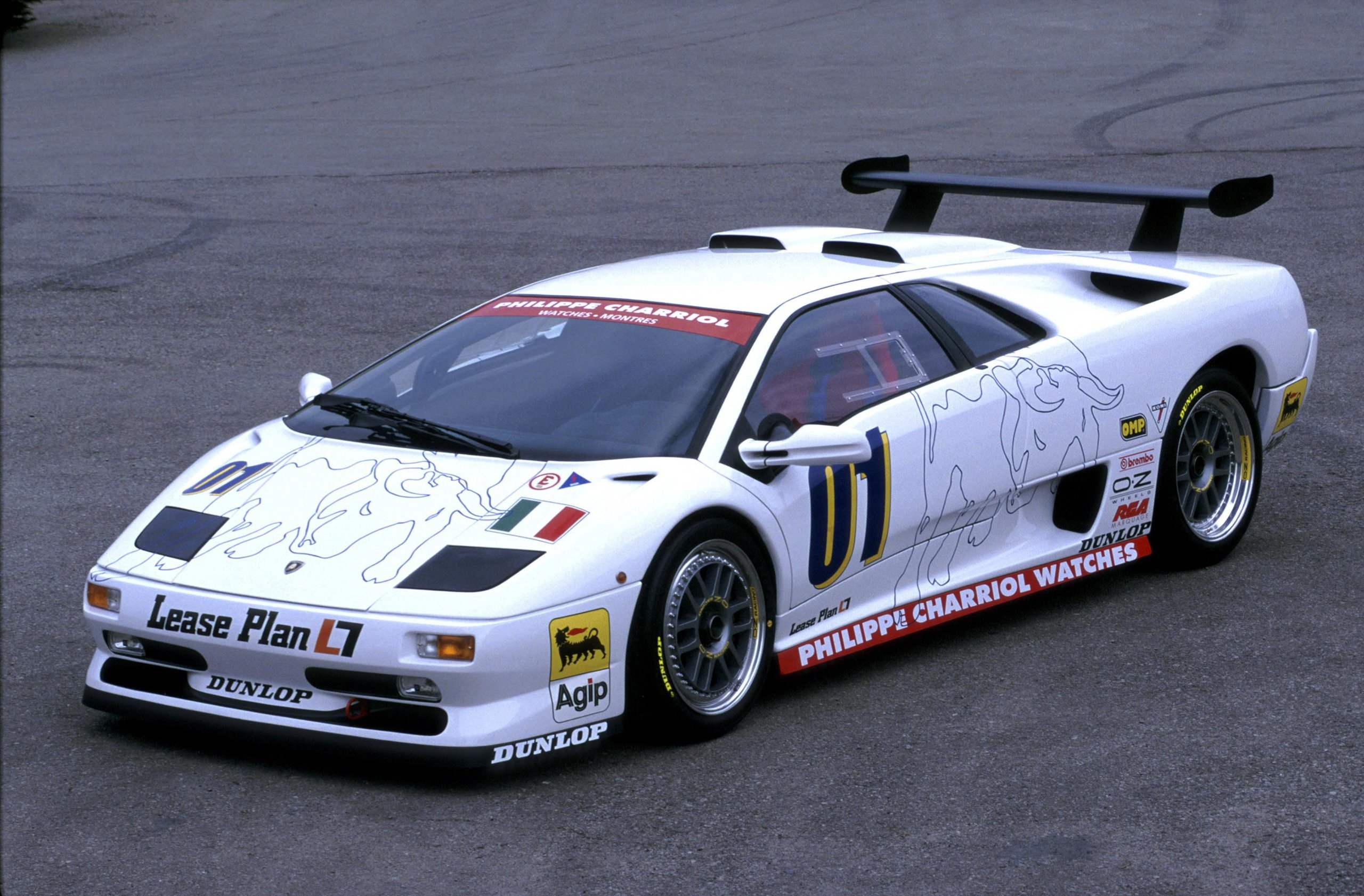
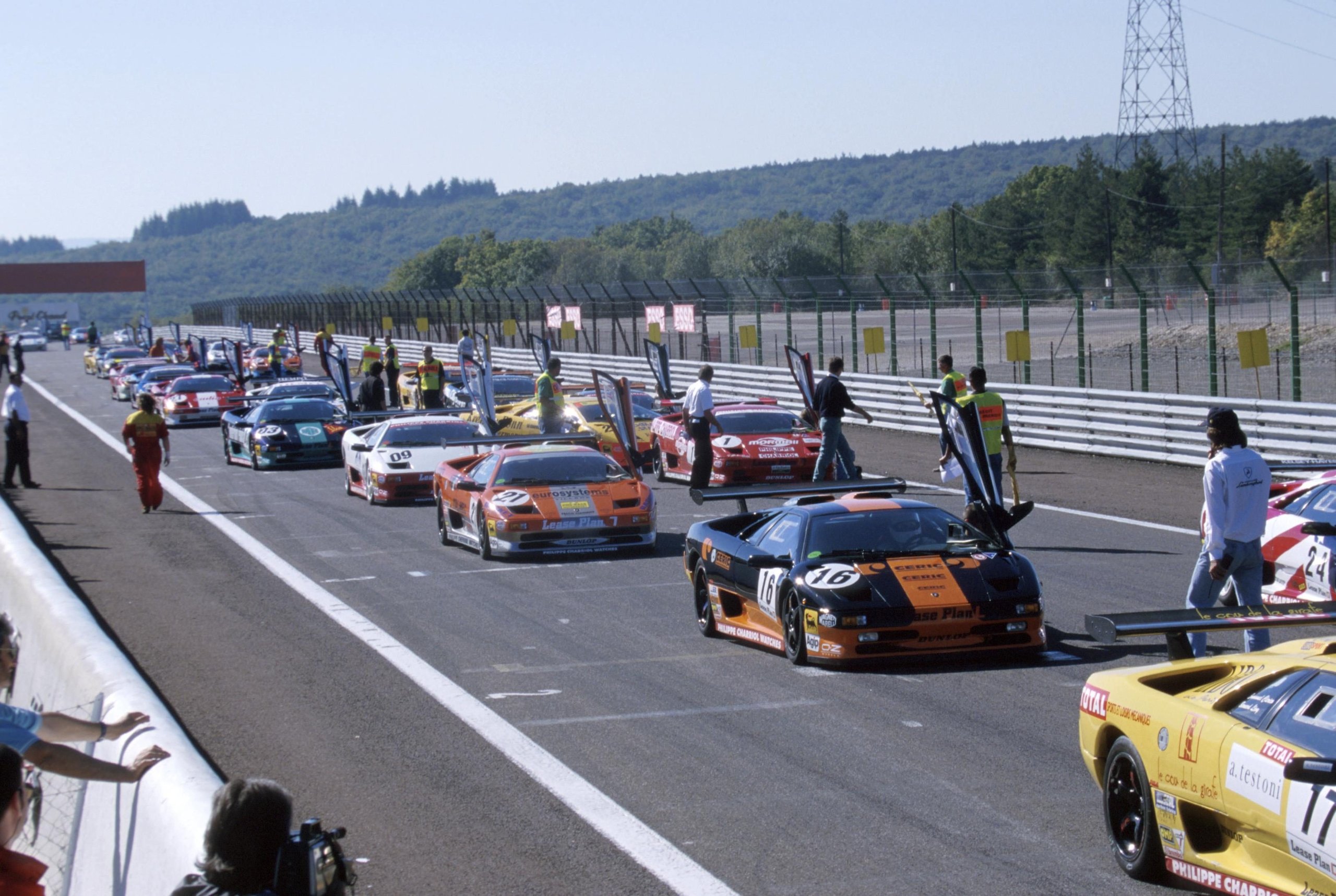
In 1996, Lamborghini launched the Super Sport Trophy, a one-make championship built around the Diablo SV-R. Only 32 SV-R units were produced, each packing 540 CV from the 5.7-liter V12 and stripped to 1,385 kg. That program was the first official racing series directly linked to the Lamborghini name, and its DNA runs straight through to the Huracán Super Trofeo.
The racing effort also produced two ultra-rare Diablo GT1 Stradale prototypes making 655 CV, and the Diablo GT-R, the track-only version of the GT built in a run of 40+1 units. The GT-R competed in the Japanese JGTC championship and various European GT series, giving Lamborghini genuine international racing credibility at a time when the brand needed it most.

A thrilling pack of Lamborghini Diablo GTRs speeds around the track during an intense race event.
The Poster Car That Became a Cultural Force
The official anniversary material catalogs the Diablo’s pop culture resume: Jim Carrey drove a red one in Dumb and Dumber (1994), it appeared in Die Another Day (2002), and it anchored Jamiroquai’s Cosmic Girl music video. The Need for Speed franchise featured it from the 1990s onward. Celebrity owners included Jay Leno, Nicolas Cage, Mario Andretti, and Dennis Rodman.
With over 60 available colors, 40 of which could be customized, the Diablo anticipated what Lamborghini now calls its Ad Personam program. Red proved the most popular choice, accounting for over 550 units.
A 1994 Diablo SE30 earned a podium finish at the 2023 Pebble Beach Concours d’Elegance, confirming the car’s acceptance into the upper tier of collector recognition.

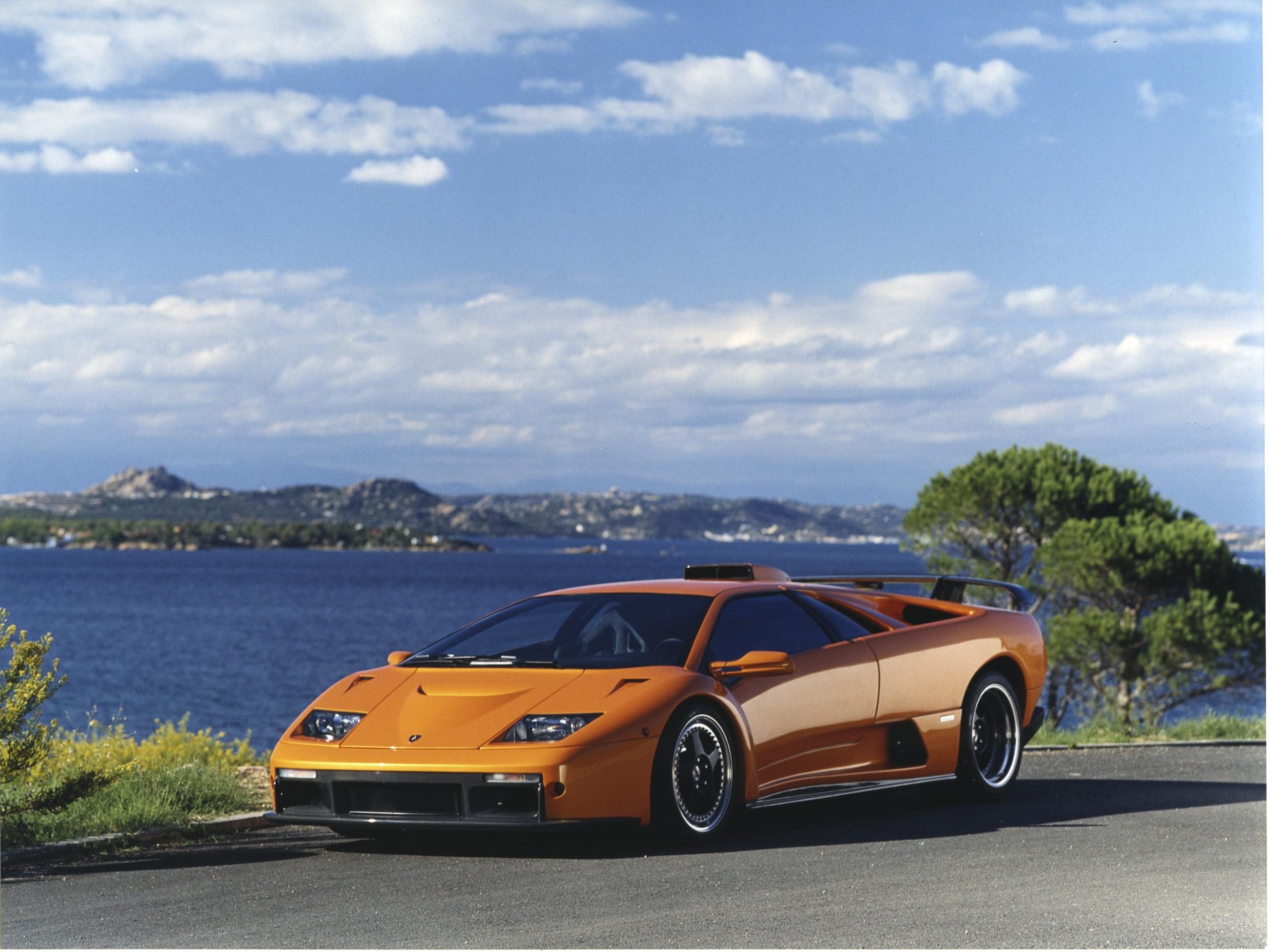
A striking orange Lamborghini Diablo stands proudly in a historic European piazza under a bright blue sky.
Polo Storico and the Collector Market
Lamborghini’s Polo Storico division operates on four pillars: Archive, Certification, Restoration, and Original Spare Parts. The division maintains access to over 30,000 original technical documents, design sketches, and production records, allowing verification of chassis numbers, original paint codes, and interior configurations. Original spare parts coverage extends across more than 65% of Lamborghini’s historic fleet, from the 350 GT through the Diablo, available through authorized dealerships worldwide.
The Certification of Authenticity process, supervised by the Lamborghini Experts Committee (Comitato dei Saggi), scrutinizes every component against factory specifications. Farmeschi’s comments suggest this certification activity is growing rapidly for the Diablo specifically.
Lamborghini says the Diablo’s value is “constantly rising, particularly the special editions and more customized versions.” Low-production variants like the SE30, GT, and GT-R command premiums that continue to widen against standard models. A Polo Storico certification is increasingly the document that separates a well-maintained car from a genuinely investment-grade one.

A craftsman meticulously sands the body of a Lamborghini Diablo on the assembly line.
What the Diablo Means for Lamborghini’s Future
When production ended in 2001, the Diablo handed its V12 crown to the Murciélago, which handed it to the Aventador, which handed it to the Revuelto. Every one of those cars carries forward something the Diablo established: all-wheel drive on V12 models, a commitment to open-top variants, a factory-backed racing program, and a customization philosophy that treats each car as a canvas.
The 35th anniversary celebration is, at its core, a Polo Storico business story. Given the Diablo’s production volume of 2,903 units, far more than the Miura’s 764 or the Countach’s roughly 2,000, the addressable market for Polo Storico services is substantial. Values are climbing, factory support is expanding, and concours recognition is growing. The window where a Diablo represents both an attainable dream car and a sound collector purchase may not stay open indefinitely.

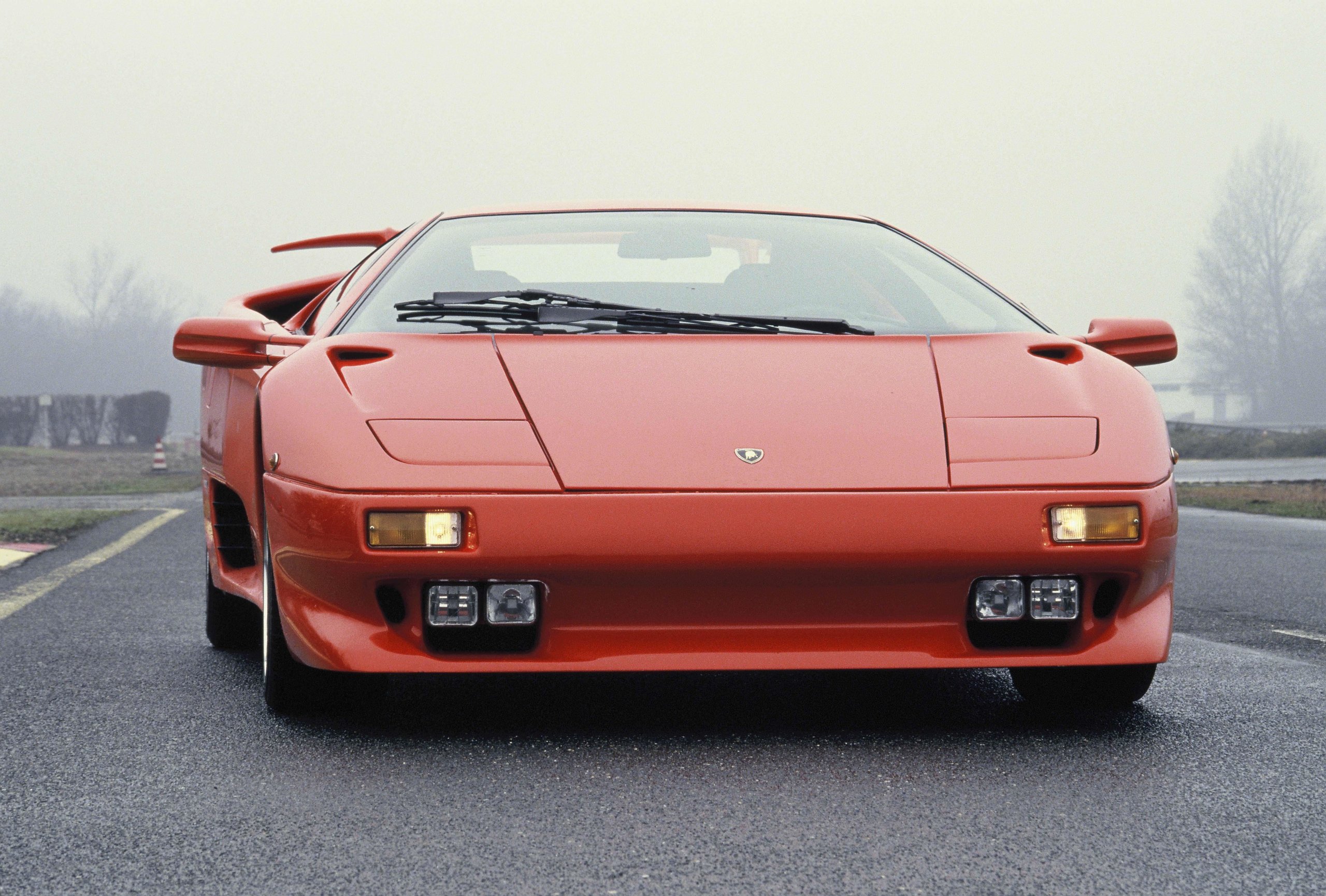
The striking purple Lamborghini Diablo showcases its signature scissor doors in an urban setting.
Diablo Variant Guide: Key Specs at a Glance
Lamborghini produced the Diablo across more than a dozen variants over eleven years. The table below covers the major road and racing models, using specifications confirmed in Lamborghini’s official material.
| Variant | Years | Engine | Power | 0-100 km/h | Top Speed | Units Built |
|---|---|---|---|---|---|---|
| Diablo | 1990-1998 | 5.7L V12 | 492 CV | 4.09 s | 325 km/h | 873 |
| Diablo VT | 1993-1998 | 5.7L V12 (AWD) | 492 CV | 4.09 s | 325 km/h | 529 |
| Diablo VT Roadster | 1995-1998 | 5.7L V12 (AWD) | 492 CV | 3.95 s | 323 km/h | 468 |
| Diablo SE30 | 1993-1994 | 5.7L V12 | 525 CV | 3.9 s | 333 km/h | 157 |
| Diablo SV | 1995-1999 | 5.7L V12 (RWD) | 530 CV | 3.85 s | 320 km/h | 346 |
| Diablo SV-R | 1996 | 5.7L V12 (Race) | 540 CV | 3.9 s | 306 km/h | 34 |
| Diablo GT | 1999-2000 | 6.0L V12 (RWD) | 575 CV | 3.5 s | 338 km/h | 83 |
| Diablo GT-R | 1999-2000 | 6.0L V12 (Race) | 590 CV | N/A | N/A | 40+1 |
The spread tells the story of the Diablo’s evolution: from a 492 CV grand tourer to a 590 CV race car, all built on the same fundamental architecture. The SV-R (34 units) and GT-R (41 units) represent the rarest and most competition-focused examples, while the VT Roadster (468 units) offers the most accessible entry into the open-top V12 Lamborghini lineage.
Gallery