Lamborghini Expands Direzione Cor Tauri to the Entire Value Chain
Every Lamborghini strategy announcement since the company’s founding has ultimately been judged by a single question: does the car still make the hair on your arms stand up? The expanded Direzione Cor Tauri plan, unveiled by CEO Stephan Winkelmann and the full Board of Management at Sant’Agata Bolognese, is the most expensive attempt in the company’s six-decade history to answer yes while rewriting the engineering underneath.
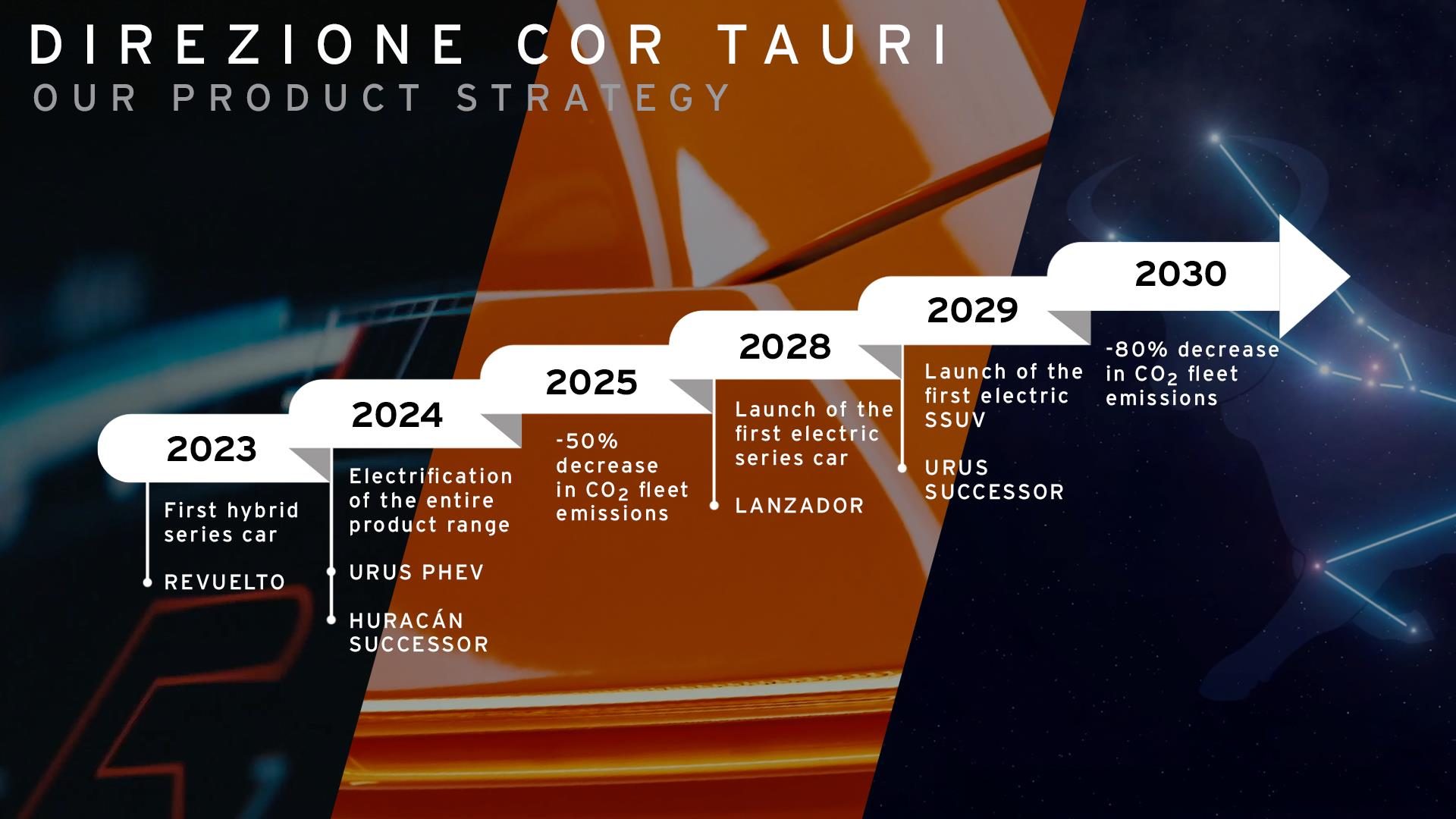
First introduced in 2021 as a product electrification roadmap, Direzione Cor Tauri now reaches well beyond the cars themselves. It covers production, the supply chain, logistics, and the product use phase, all bound to a single headline target: a 40% reduction in CO2 emissions per car across the whole value chain by 2030, benchmarked against 2021 levels. Backing that target is an investment of $1.8 billion, which Lamborghini says represents the largest capital commitment the company has ever made. Further milestones include a 50% fleet CO2 reduction by 2025, an 80% cut by 2030, and total carbon neutrality by 2050.
Those numbers matter less as abstract percentages and more as evidence that Sant’Agata is restructuring how it builds, ships, and powers every car it sells. The real test is whether that restructuring sharpens the product or merely greens the balance sheet.

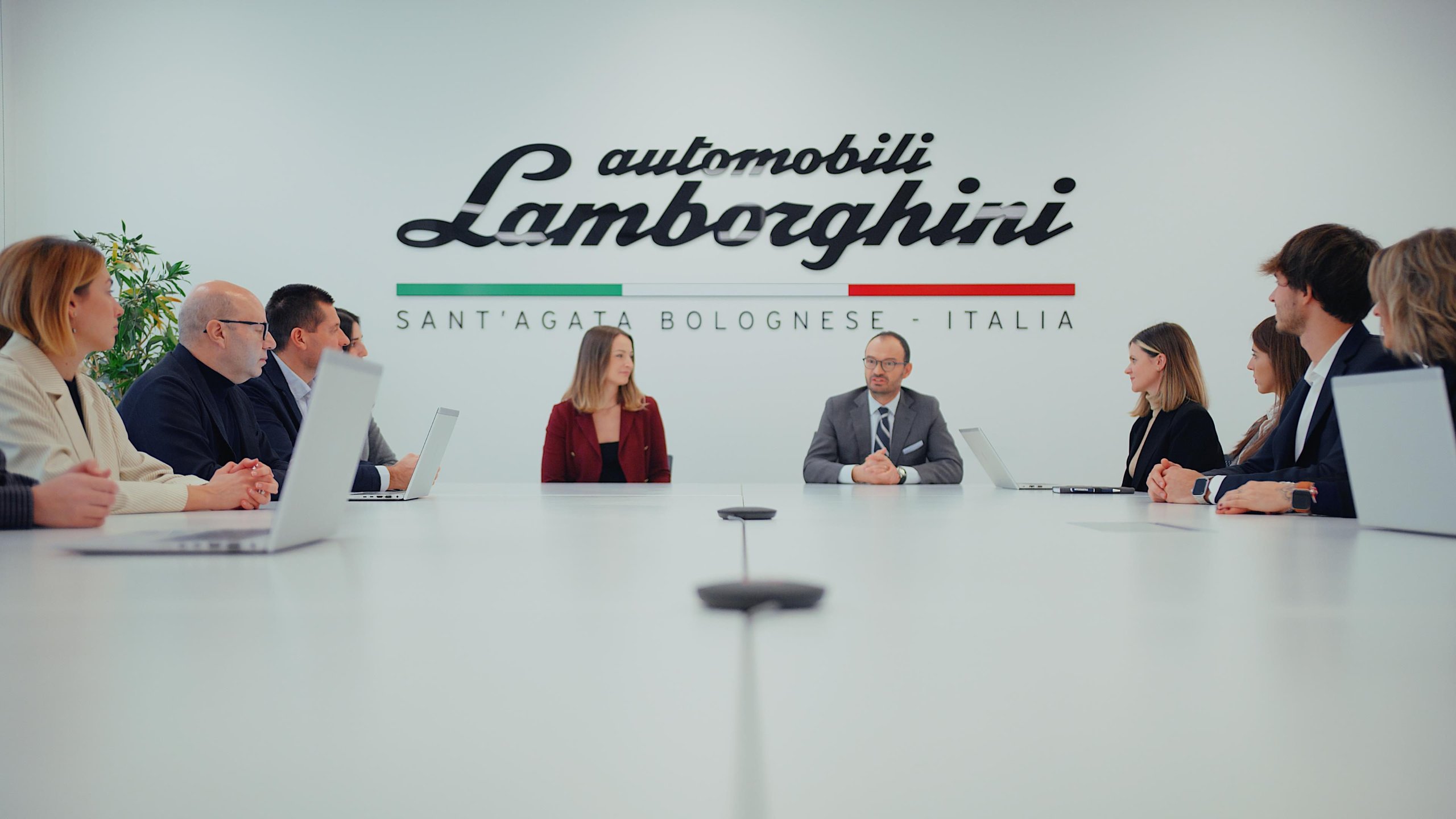
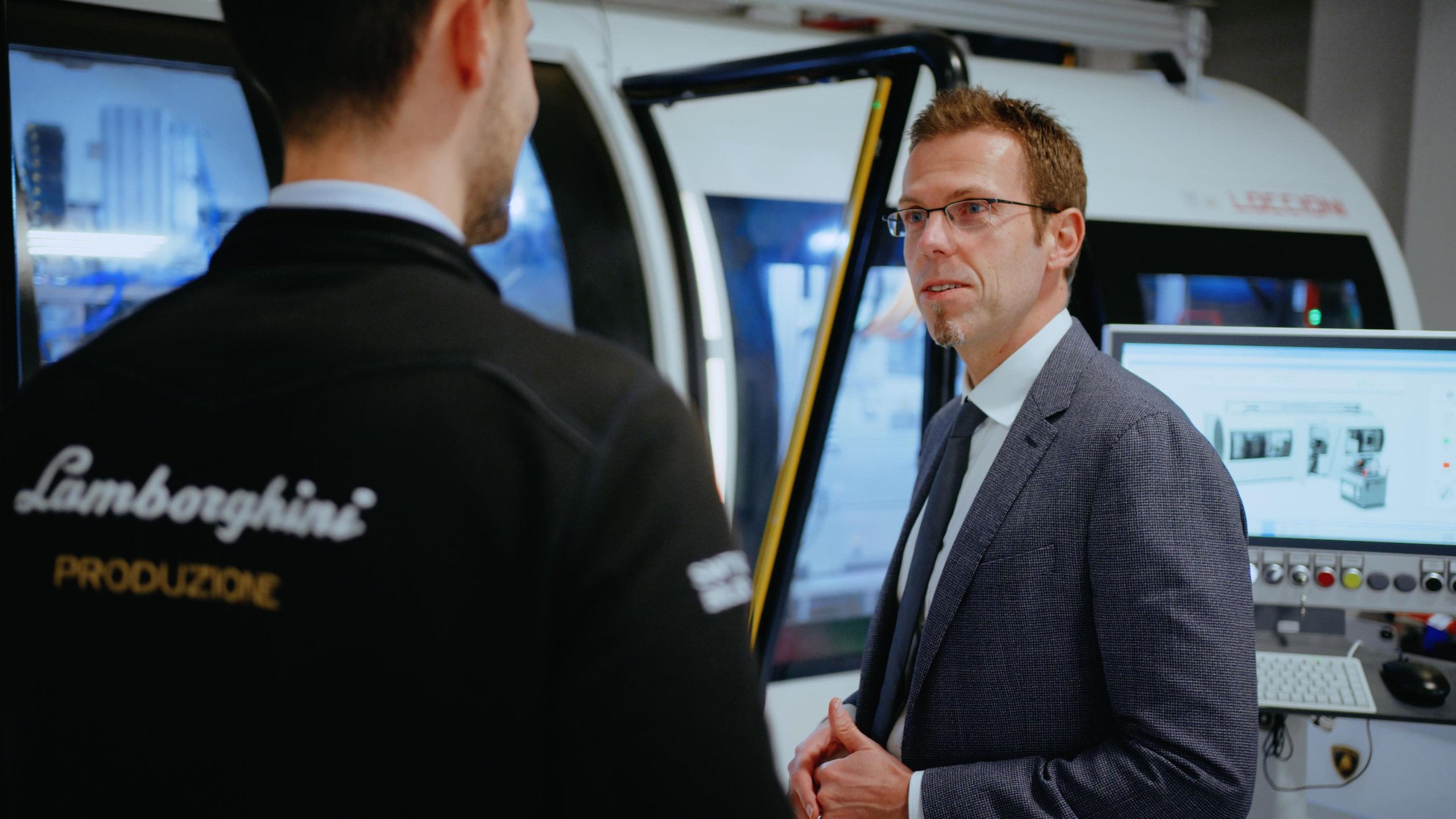
Stephan Winkelmann, CEO of Automobili Lamborghini, smiles during a discussion in a bright, contemporary setting.
Preserving the Pilot Experience in an Electric Era
Strip away the corporate sustainability language and the core anxiety for Lamborghini’s audience comes into focus: can a hybrid or electric supercar still make the driver feel like a pilot? Chief Technical Officer Rouven Mohr frames the electric motor not as a concession but as a new tool for redefining driving dynamics. That framing is deliberate, and it is the philosophical hinge of the entire strategy.
Lamborghini says its R&D department is concentrating on six pillars for its future electric vehicles: Human-Machine Interface, carbon fiber for weight reduction, electric powertrain architecture, advanced frame design, smart aerodynamics, and integrated control systems. The last pillar is the most intriguing for anyone who cares about seat-of-the-pants feel. Integrated control, as Lamborghini describes it, aims to synthesize torque vectoring, active aero, and chassis management into a unified system that gives the driver a sensation comparable to piloting an aircraft.
Whether that ambition translates into a visceral, goosebump-inducing experience remains unproven. The Revuelto, Lamborghini’s first High Performance Electrified Vehicle, offers an early data point, and forum discussion among owners and enthusiasts is genuinely mixed on the hybrid transition. Some embrace the added performance; others mourn the purity of naturally aspirated power. The company clearly knows this tension exists, and the six-pillar framework reads as a direct response to it. If Direzione Cor Tauri is going to sharpen the bull rather than tame it, the proof will live in these engineering details, not in the emissions spreadsheet.
The Roadmap: Hybrids First, Full Electric by Decade’s End
The hybridization phase began in 2023 with the Revuelto, Lamborghini’s V12 hybrid flagship that replaced the Aventador. For 2024, the plan calls for two more electrified models: a hybrid Urus Super SUV and a second HPEV that will succeed the Huracan. By the end of that year, every car in Lamborghini’s showroom will carry some form of electric assistance.
Lamborghini’s first full-electric production model, previewed by the Lanzador concept at Monterey Car Week, was originally slated for a 2028 debut. A full-electric Super SUV was announced for 2029. It is worth noting, however, that Road & Track reported in early 2026 that Lamborghini scrapped production plans for the Lanzador EV, with Winkelmann confirming the shift away from a pure-electric model. That reversal underscores how rapidly the strategic landscape can change, even for a brand with a multi-billion-euro plan on paper.
The practical takeaway for prospective buyers is clear: the hybrid lineup is real and arriving on schedule, while the fully electric chapter remains fluid. Anyone placing a deposit on a current Lamborghini is buying into a hybrid future with confidence. Anyone waiting for a battery-electric Raging Bull should expect the timeline and format to keep evolving. Direzione Cor Tauri, in other words, is a living document, and the willingness to revise it may ultimately say more about Lamborghini’s seriousness than the original targets did.

Lamborghini commits to a 40% reduction in CO2 emissions per car by 2030, focusing on the entire value chain. Image: Automobili Lamborghini.
Beyond the Powertrain: Factory, Suppliers, and Logistics
Most competitor coverage stops at the model timeline. The more revealing story is what Lamborghini is doing behind the factory gates, because a supercar maker can hybridize its engine and still run a carbon-intensive supply chain. Direzione Cor Tauri attempts to close that gap.
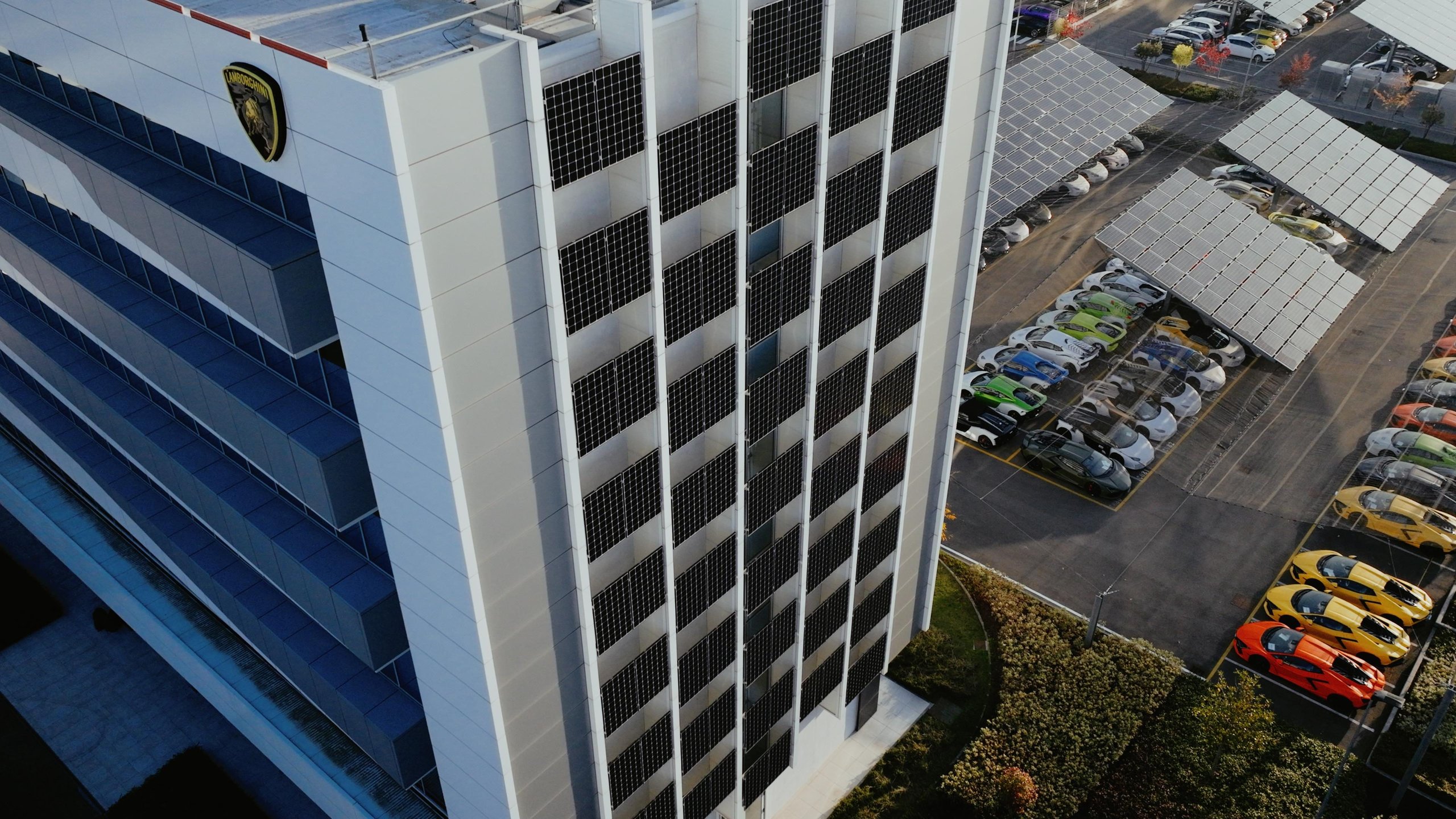
The Sant’Agata Bolognese production facility achieved carbon-neutral certification in 2015 and maintained it even after doubling in size. Lamborghini reports a 36% reduction in energy consumption per vehicle in 2022 compared to 2010, alongside a 34% drop in specific water consumption over the same period. Since 2019, an S-Rating system has assessed suppliers’ compliance with environmental, social, and governance standards; a positive rating is now a prerequisite for doing business with Sant’Agata. On the logistics side, the company significantly shifted its transport mix over the past five years, increasing rail transport for finished vehicles from 4% to 35% and reducing air transport from 18% to 1%. Those are not glamorous numbers, but they represent the kind of operational discipline that actually moves the emissions needle for a low-volume manufacturer.
Lamborghini also plans to create at least 500 new jobs by 2026, a hiring wave aimed squarely at the engineering and manufacturing talent needed to execute the electrification roadmap. Taken together, these operational changes reveal the depth of the $1.8 billion commitment. The investment is not simply buying batteries and motors; it is rebuilding the entire industrial ecosystem around a new definition of what a Lamborghini should be.

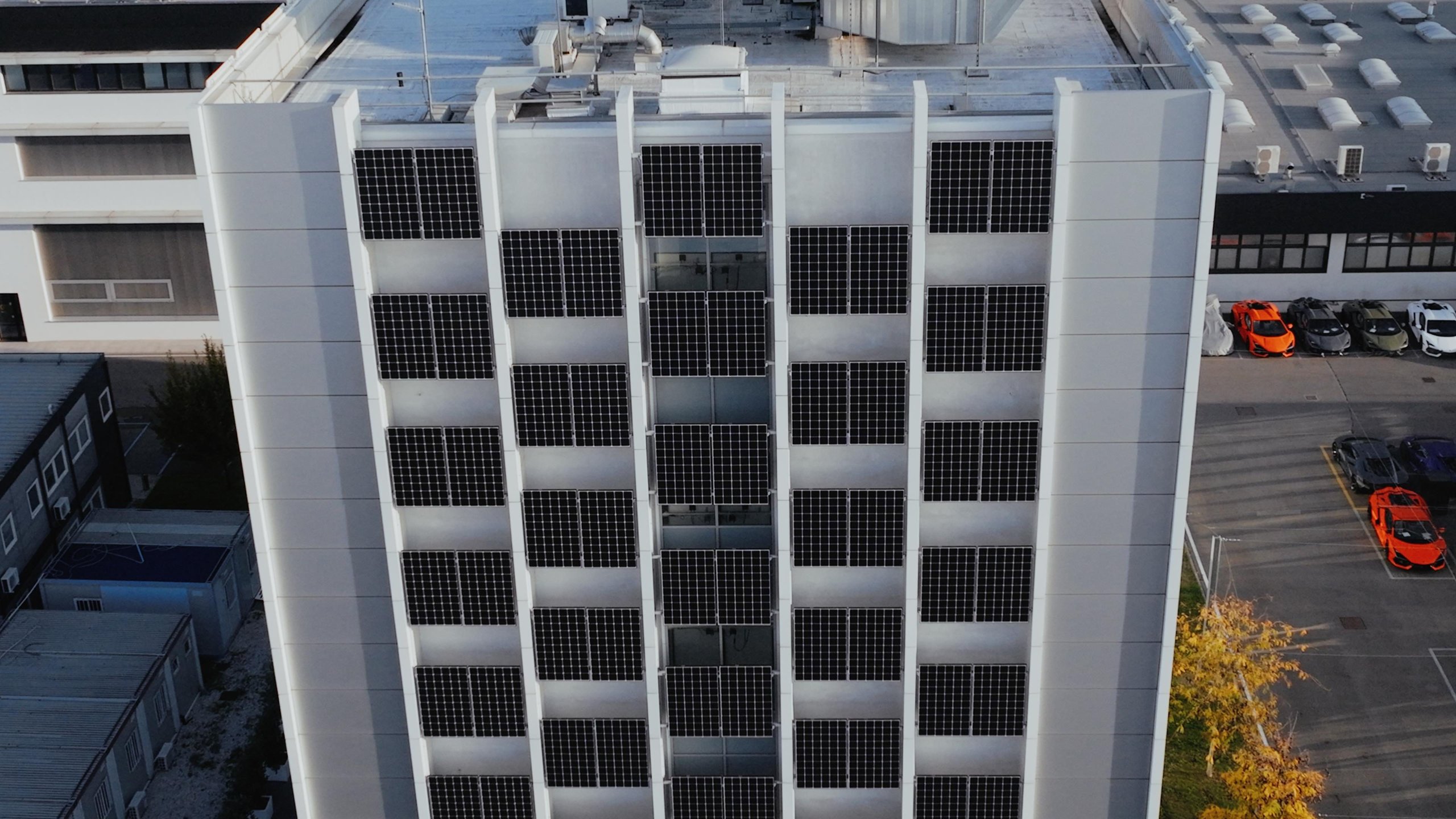
An aerial view reveals the extensive Automobili Lamborghini factory complex, featuring numerous solar panel installations.
How Lamborghini’s Strategy Compares to the Competition
Ferrari and McLaren face the same fundamental tension: electrify without erasing the character that justifies a seven-figure price tag. Ferrari launched the SF90 Stradale as its hybrid flagship and confirmed a fully electric model in development, while McLaren introduced the Artura as its first series-production hybrid. Both brands talk about preserving driving purity. Neither, however, has published a value-chain decarbonization target as specific as Lamborghini’s 40% per-car figure across the entire enterprise.
That distinction shifts the conversation from tailpipe numbers to corporate accountability. Whether it translates into a competitive advantage at the dealership is debatable; supercar buyers do not typically cross-shop on emissions credentials. Where it could matter is in regulatory markets like the EU, where fleet-average rules tighten every cycle, and in long-term brand positioning.
Lamborghini is building a narrative that performance and responsibility are not opposing forces, and the $1.8 billion investment gives that narrative real financial weight. The Lanzador reversal shows the narrative can bend under market pressure. Ultimately, the cars themselves will determine whether Direzione Cor Tauri is remembered as the moment the Raging Bull found a new kind of ferocity or the moment it began pulling its punches.
Gallery