The Opera Unica: A One-Off Sterrato Born from Sardinian Blue
Most automakers celebrate anniversaries with special editions. Lamborghini, marking its 60th year, chose to stage a philosophical argument about paint.
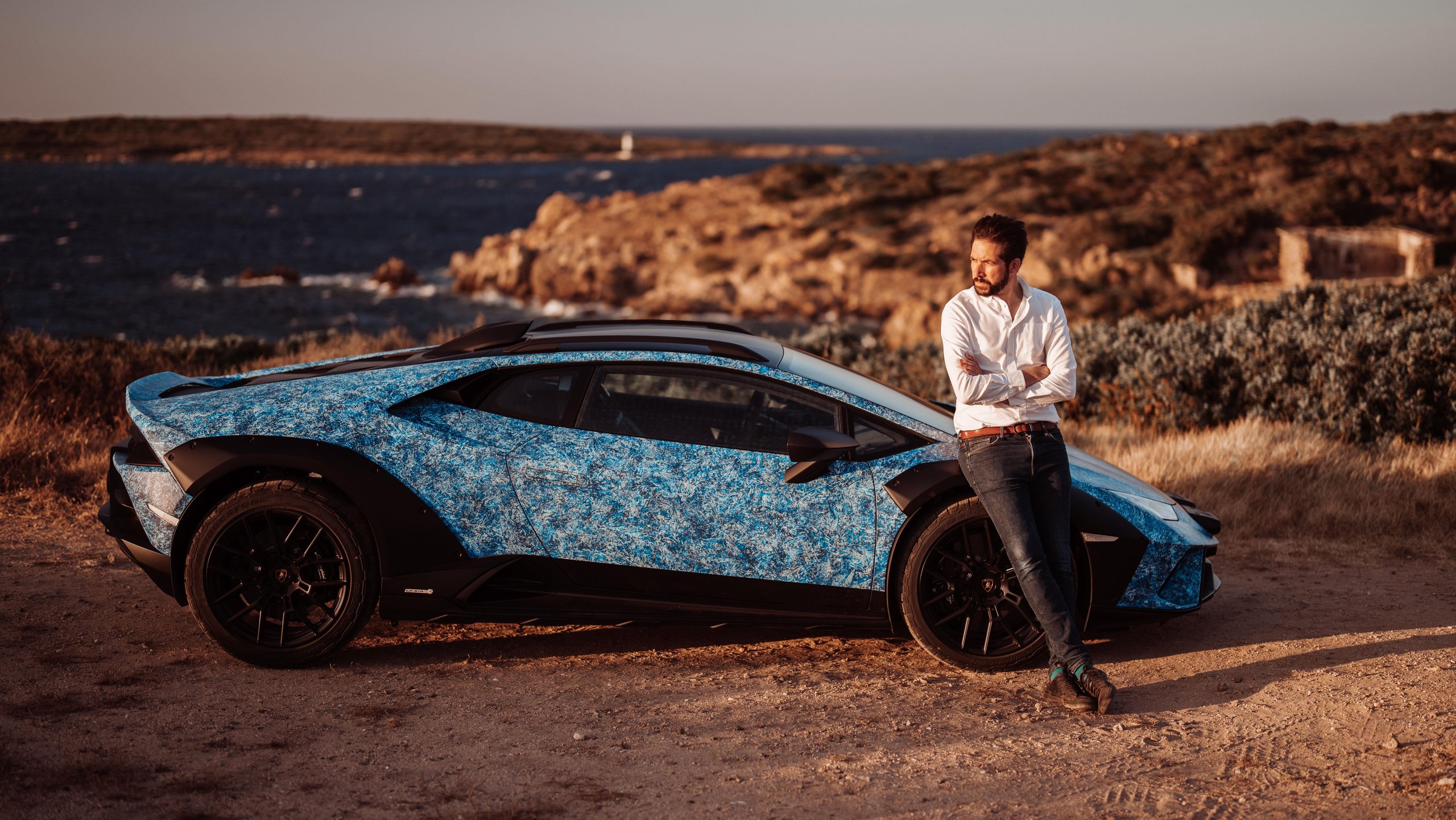
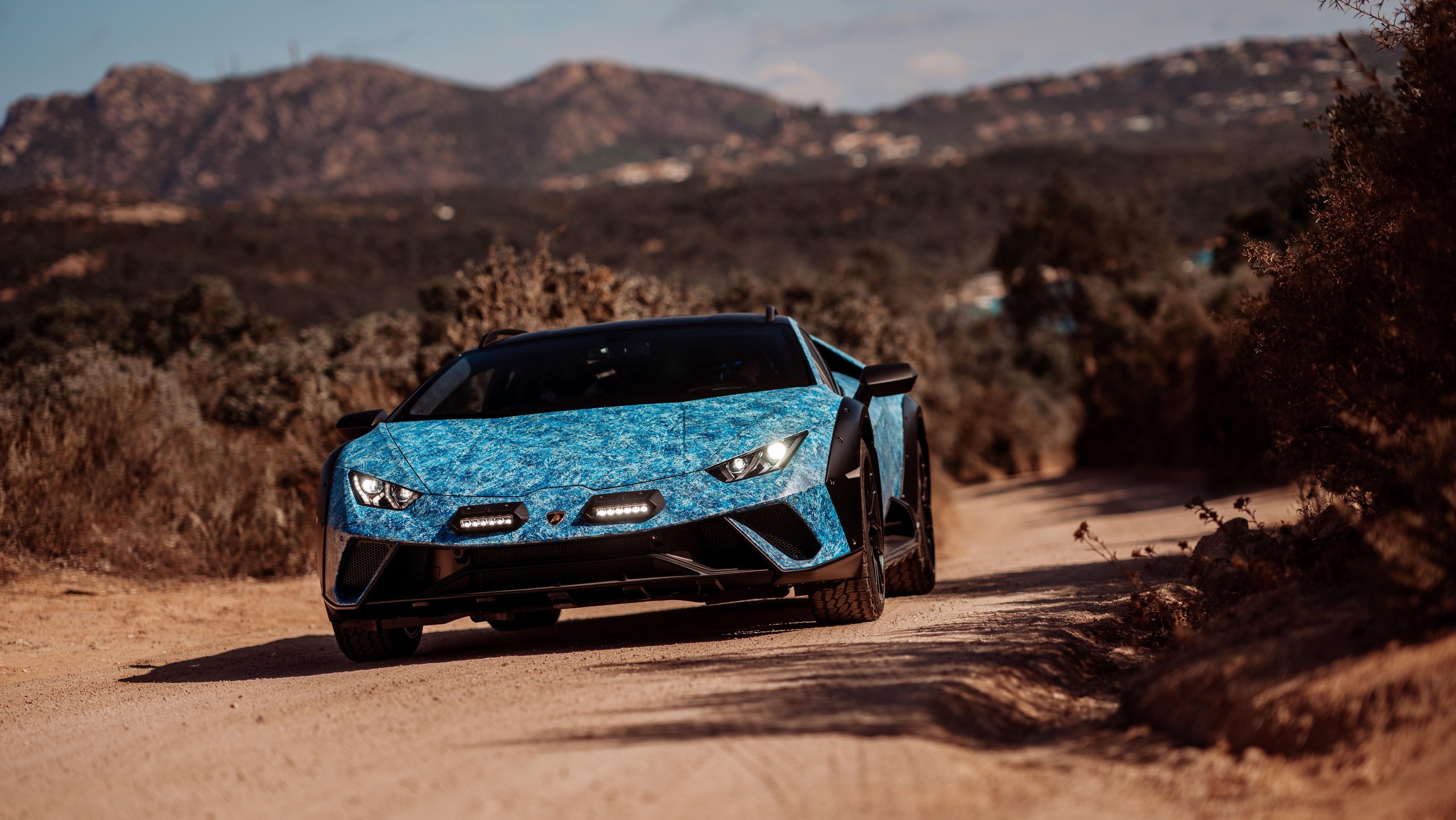
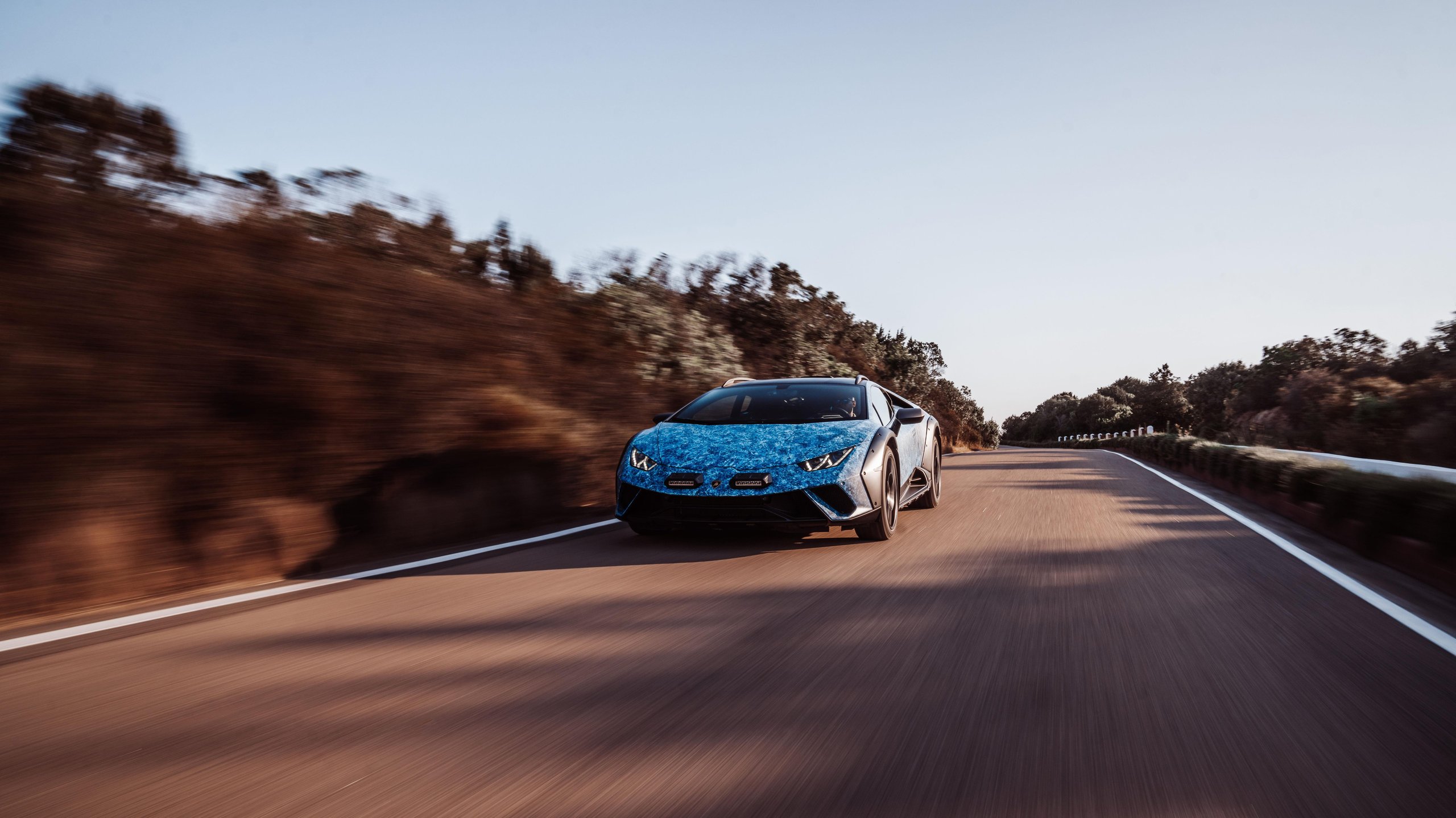
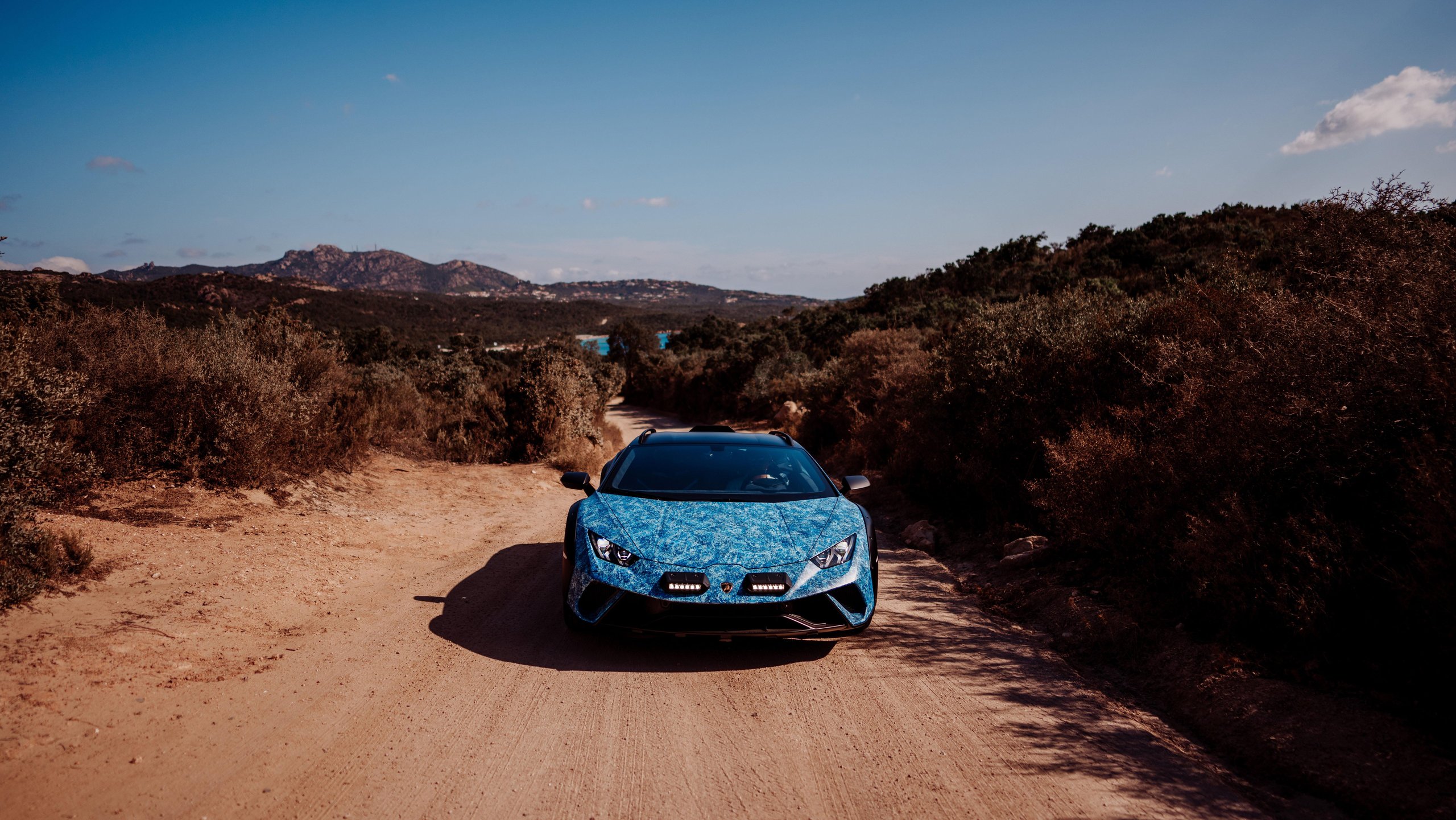
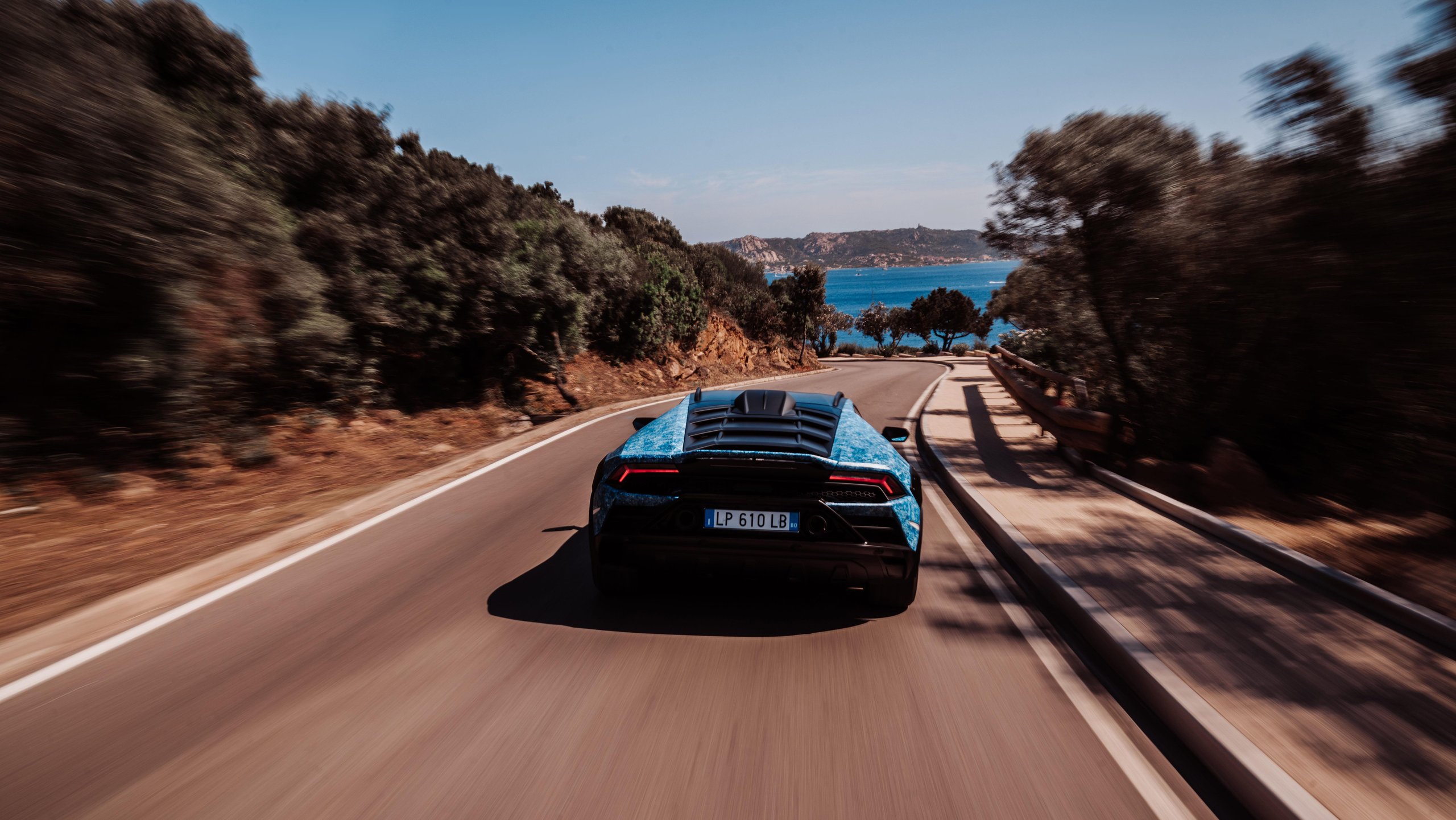
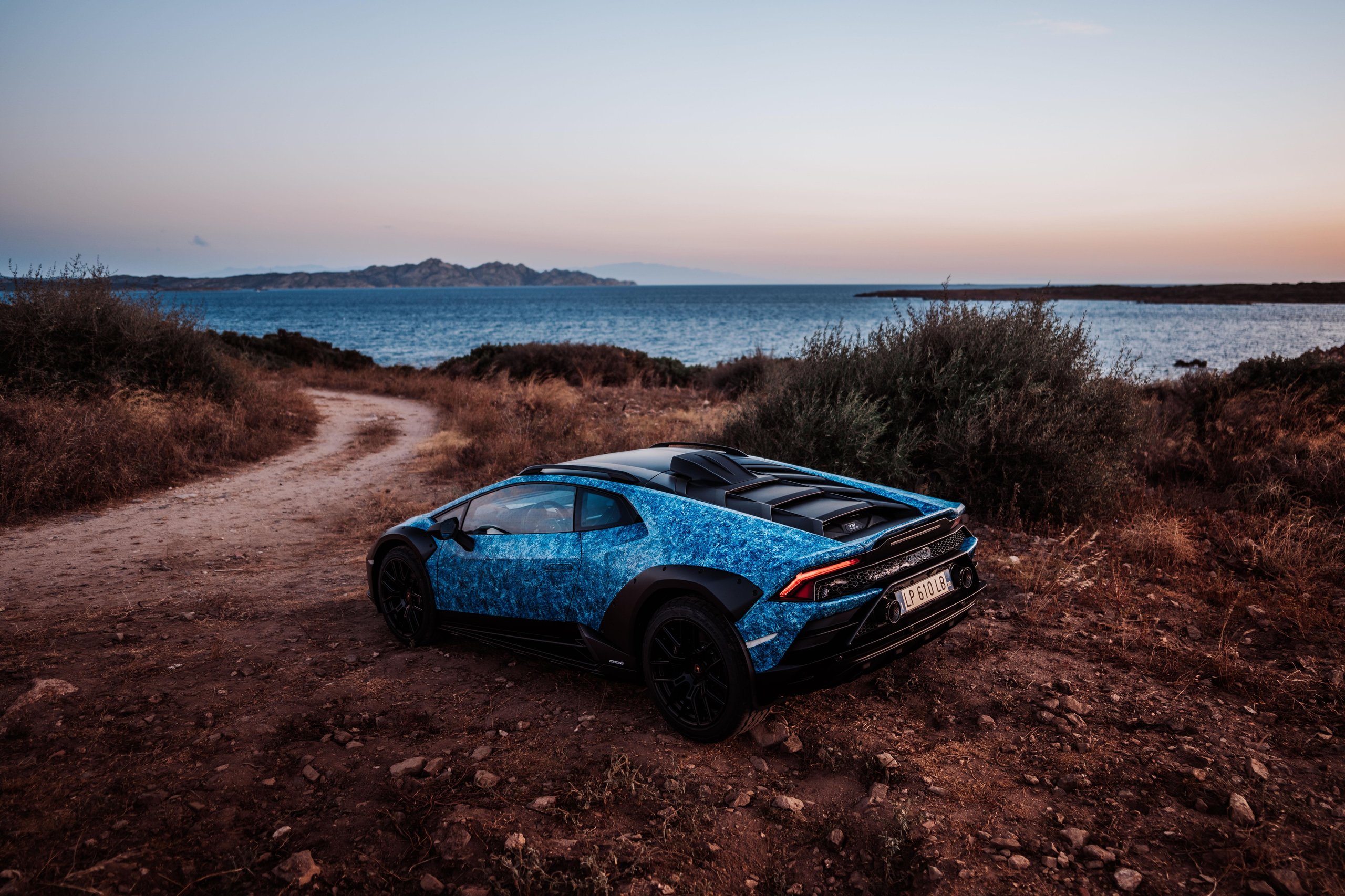
The company shipped Cambridge art historian James Fox to Sardinia, handed him the keys to a one-of-one Huracán Sterrato finished in a bespoke triple-layer crystal-effect blue, and filmed the encounter as a short documentary called Beyond Colour: No Colour Is More Mysterious than Blue. The car, designated the “Opera Unica,” layers three distinct blues onto its body: Blu Amnis, Blue Grifo, and Blu Fedra, each applied by hand over a process that consumed 370 hours in the Ad Personam department. For context, that is roughly nine standard working weeks devoted entirely to surface color on a single car.
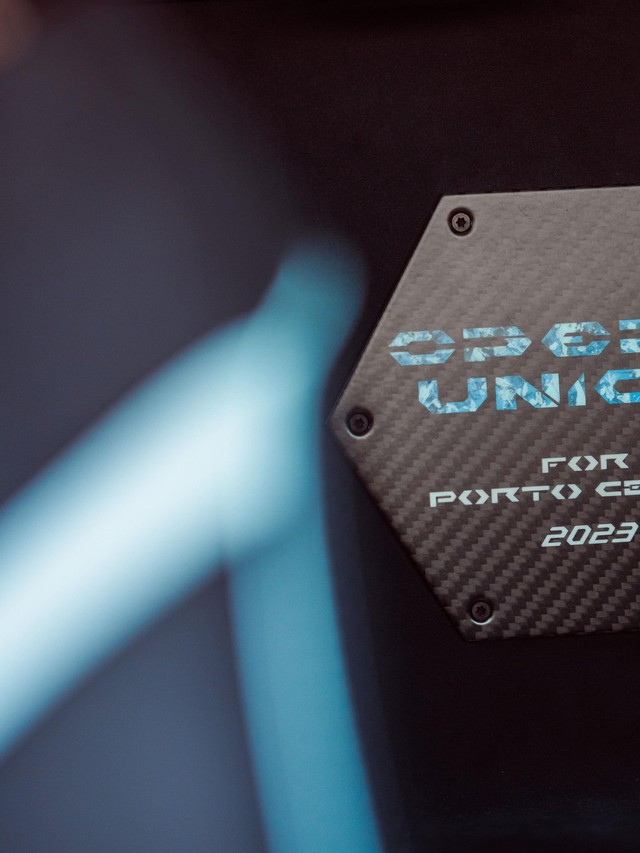
Lamborghini says the treatment drew inspiration from Sardinia’s skies and coastal waters, and the company chose the island’s Costa Smeralda as the backdrop for both the film and the car’s debut at the Lamborghini Lounge in Porto Cervo. An interior plaque confirms the car’s identity: “OPERA UNICA FOR PORTO CERVO 2023.” Mechanically, the car remains identical to the standard Huracán Sterrato, the high-riding, V10-powered all-wheel-drive supercar with flared arches and off-road rubber. The story here lives entirely on the surface, and that is the point.

A detailed view reveals the intricate and unique blue camouflage livery of the Lamborghini Huracan Sterrato.
Why an Art Historian, and Why Blue?
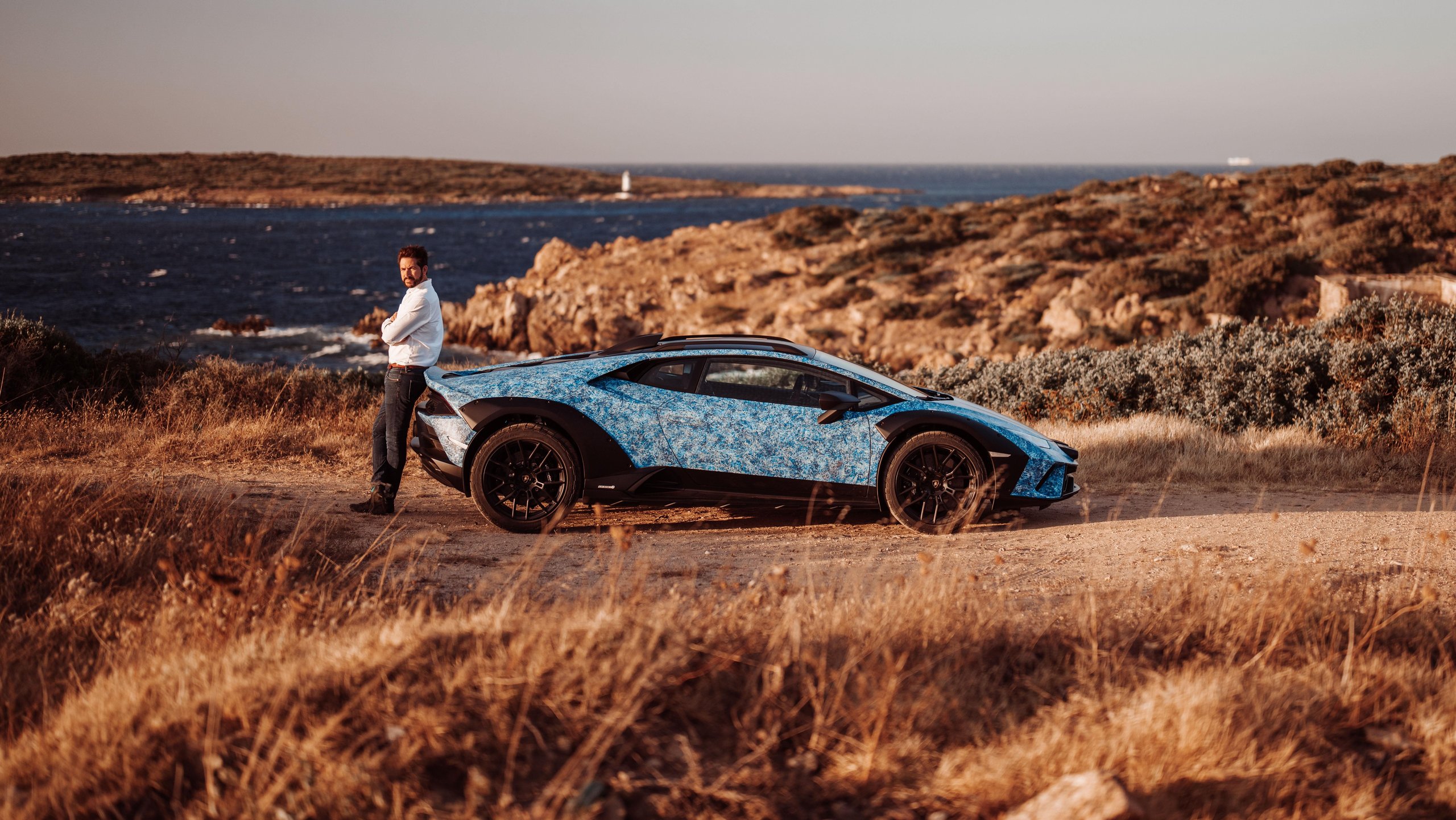
James Fox, Director of Studies in History of Art at Emmanuel College, Cambridge, is the kind of collaborator you pick when you want to elevate a paint job into cultural commentary. His 2021 book, The World According to Colour: A Cultural History, explored humankind’s relationship with color across art, science, and philosophy. Lamborghini says it invited Fox to Sardinia specifically to unpack why blue, of all hues, carries such weight.
His central observation in the film is that blue is paradoxically omnipresent and unreachable. The sky appears blue because atmospheric molecules scatter short wavelengths of sunlight. The sea reflects that illusion. Neither surface actually possesses the color. Fox draws a line from this optical phenomenon to the deeper idea that color itself is constructed inside the brain, making every individual’s experience of it unique.
“When I saw the Huracán Sterrato for the first time, I was really astonished, because it isn’t just a car, it’s a painting, it’s an artwork.”
Fox also connects blue to Italy specifically, noting the country’s historical association with ultramarine pigment and the blue-saturated paintings of Giotto and Titian. He cites research suggesting that while blue generally calms people worldwide, it excites Italians, raising heart rates and brain activity. Whether or not you buy the neuroscience, the cultural framing is clever: Lamborghini positions its color work as distinctly Italian, not merely decorative. The Opera Unica is not just a car in a pretty shade. It is an attempt to make the buyer’s chosen color feel intellectually earned.

A man with a beard smiles in a studio setting, surrounded by a vibrant display of automotive paint samples.
The Sterrato as Canvas: Ad Personam’s Quiet Power Play
That philosophy extends past the bodywork. Inside, the Opera Unica wears Blu Delphinus leather across the seats, door panels, and center console, accented with Celeste Phoebe details. Even the starter button cover carries the same hand-painted tri-layer treatment as the exterior body, a detail visible in official imagery where the textured blue cap sits above the red ignition switch. The dashboard receives specially dyed Alcantara in the same blue family. Every surface reinforces the idea that color is not applied to this car but woven through it.
All of this originates from Ad Personam, Lamborghini’s bespoke personalization division. The department functions as a quiet revenue engine for Sant’Agata, offering clients the ability to commission colors, materials, and trim combinations that never appear in a standard configurator. For the type of buyer who already owns multiple supercars, Ad Personam becomes the differentiator. You can spec a Revuelto in any of a hundred factory shades, or you can commission something that exists once.
The Opera Unica represents the extreme end of that spectrum. Lamborghini did not disclose the price of this one-off, nor the identity of its eventual owner. What the company confirmed is the sheer labor investment: 370 hours of hand-applied paint on a car whose production run is exactly one. That ratio of craft hours to unit volume tells you everything about the margin profile Ad Personam commands, and about the kind of client who finds meaning in a color no one else will ever replicate.

The iconic start/stop button, protected by a unique blue cover, highlights the bespoke interior details.
Color as Competitive Advantage
Every major supercar manufacturer now operates a bespoke division. Ferrari’s Tailor Made program and Porsche’s Exclusive Manufaktur both offer one-off paint treatments and interior commissions. The mechanical playbook is similar across all three: take a production car, apply extraordinary surface craft, and charge accordingly.
What separates the Opera Unica project is the framing. Ferrari tends to lean on racing heritage and coachbuilding lineage when presenting its bespoke work. Porsche emphasizes engineering precision and historical paint-to-sample accuracy. Lamborghini chose to stage an intellectual argument about color as identity, hiring an academic to articulate why a blue paint finish constitutes a philosophical statement. You can dismiss that as marketing theater, but it accomplishes something the competitors’ programs rarely attempt: it gives the buyer a narrative that extends beyond the car itself. It transforms the spec sheet conversation from “which blue did you pick?” to “why does blue matter?” Whether that distinction justifies the cost of a one-off commission depends entirely on the buyer, but it explains why Lamborghini invested in a documentary rather than a simple photoshoot.

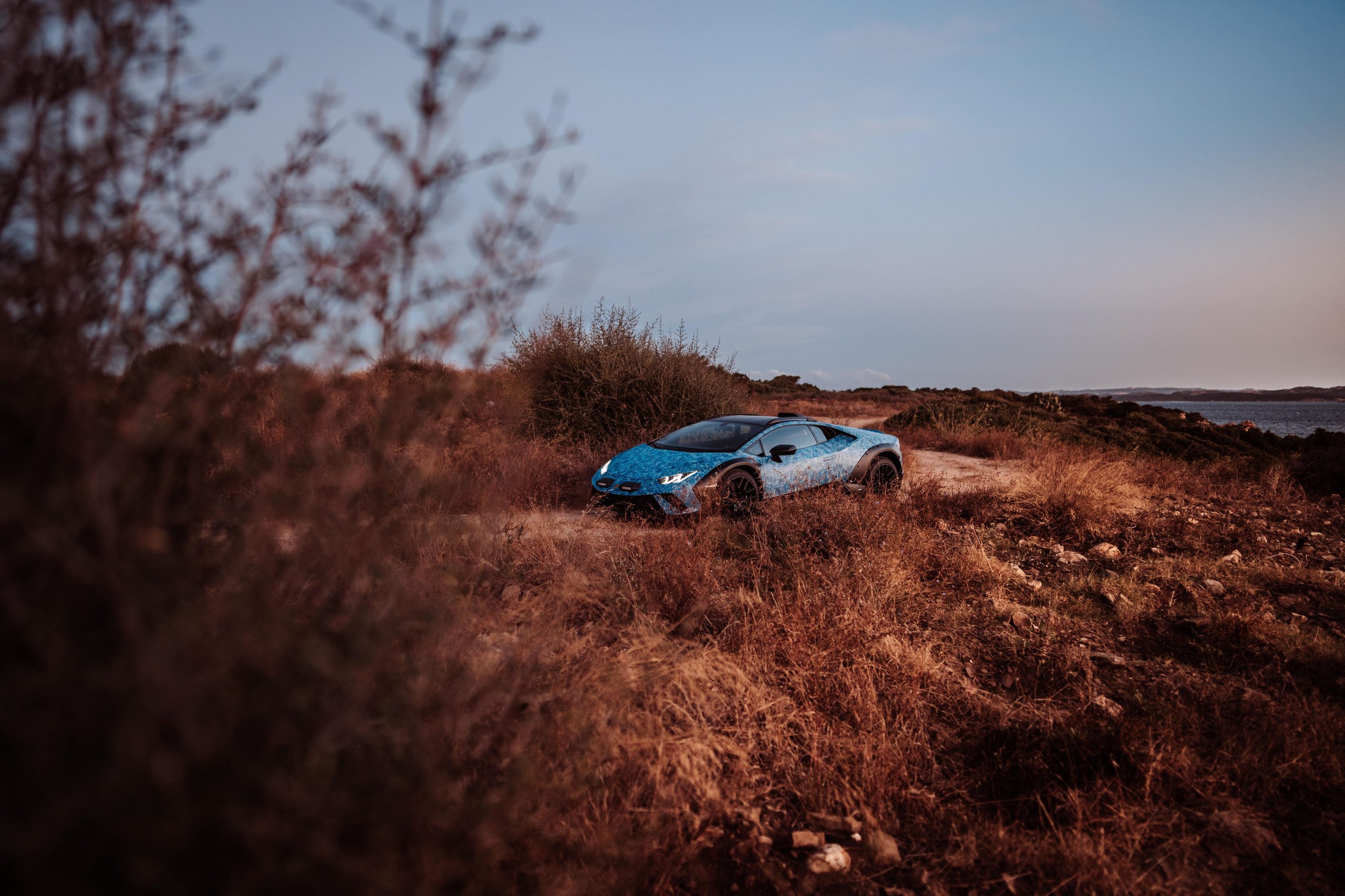
The Lamborghini Huracan Sterrato, in its striking blue camouflage, rests peacefully by the serene coastline.
A Farewell Worth Watching
The Huracán model line is concluding its production run, with the Temerario set to succeed it. That context makes the Opera Unica something more than a bespoke exercise: it is one of the final creative statements built on a platform that defined Lamborghini’s V10 era for over a decade.
According to Road & Track, Lamborghini sales and marketing chief Federico Foschini indicated the Sterrato concept opened the door for “crazier” future models. Car and Driver reported that off-road variants of the Revuelto and Temerario could follow. If those projects materialize, the Opera Unica will look like a proof of concept for how far Ad Personam can push a single car’s identity before the next generation of canvases arrives.
The Huracán may be bowing out, but the philosophy of treating each car as a singular work of applied art appears to be accelerating into the hybrid era. What Lamborghini spent 370 hours painting onto one Sterrato, it now wants to embed into the brand’s entire future vocabulary. That is the real argument the Opera Unica makes: color is not decoration. It is the thing that turns a supercar into something only one person in the world can own.

This exclusive carbon fiber plaque signifies the 'Opera Unica' edition for Porto Cervo 2023.
Gallery