Polo Storico: A Decade of Heritage, Celebrated on Ice
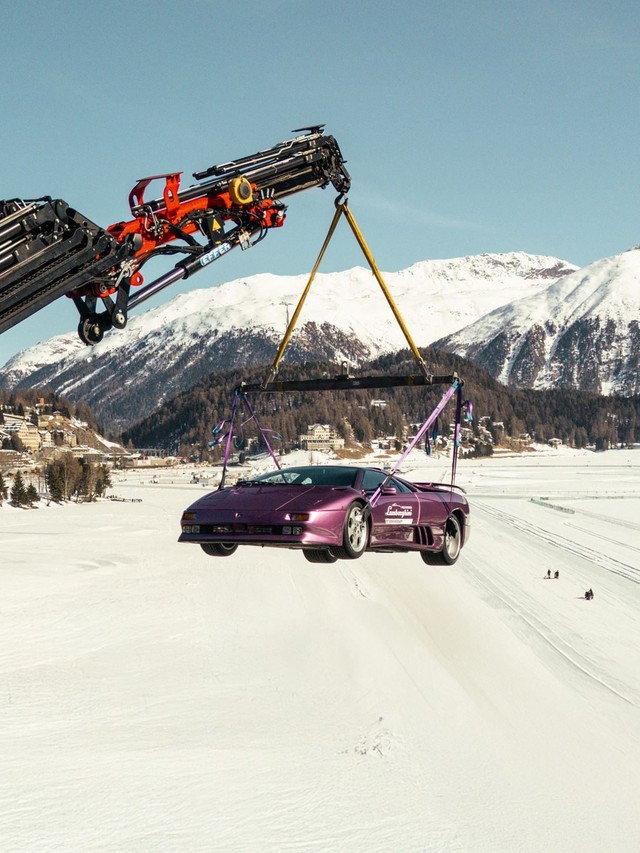
Most heritage departments mark anniversaries with a nice dinner and a press kit. Lamborghini Polo Storico did both, then hoisted a purple Diablo SE30 into the alpine sky above a frozen Swiss lake.
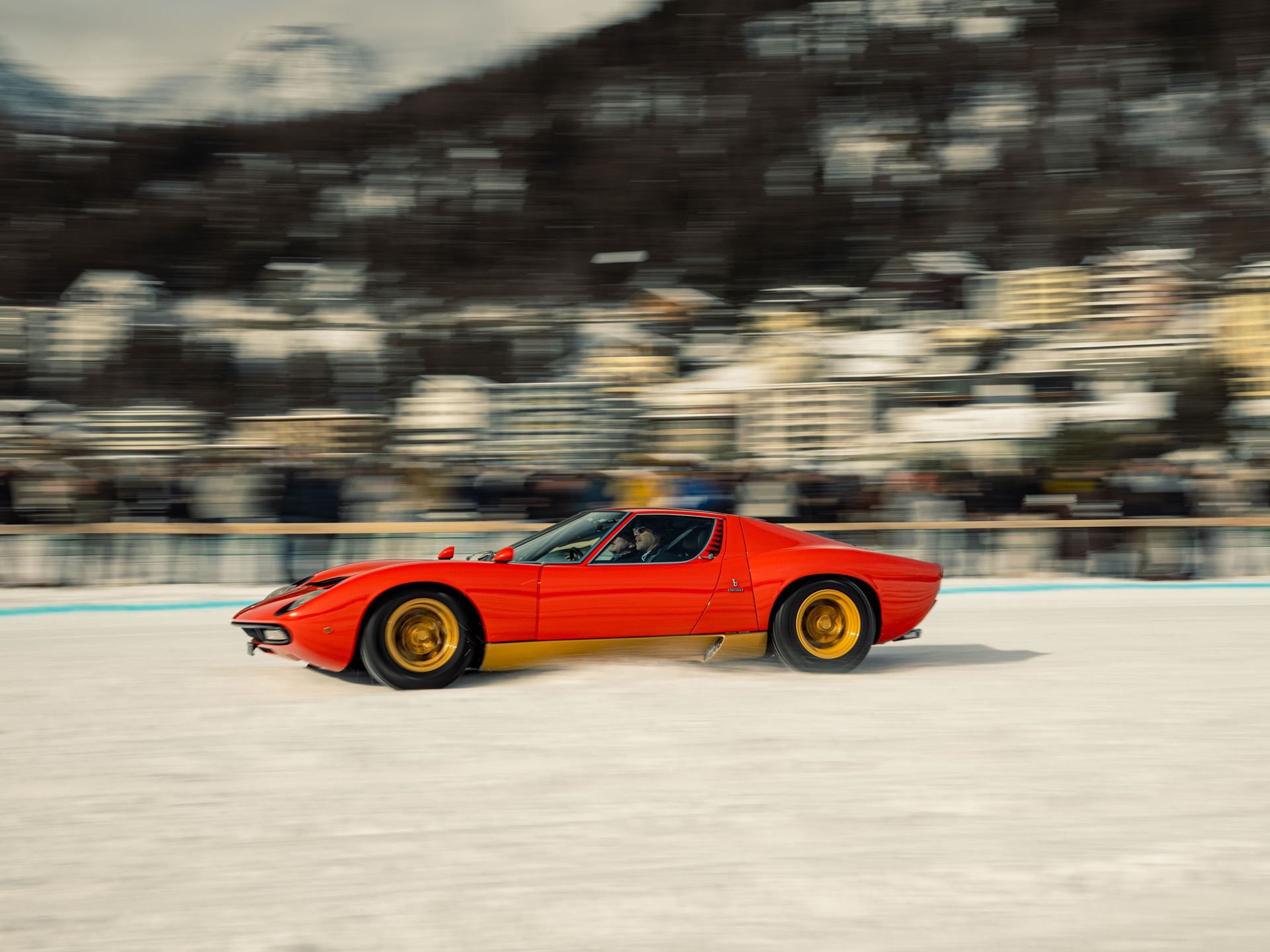
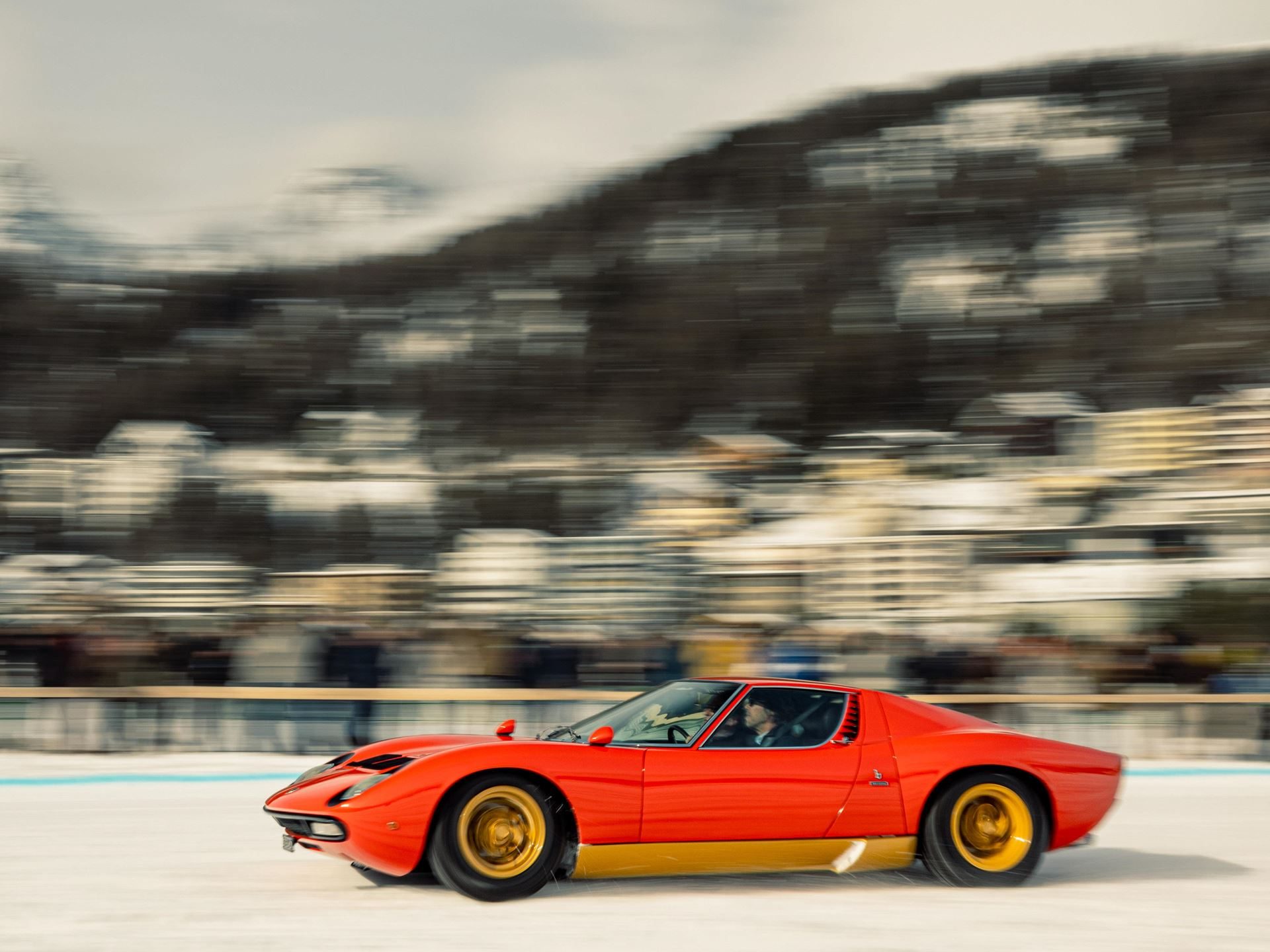
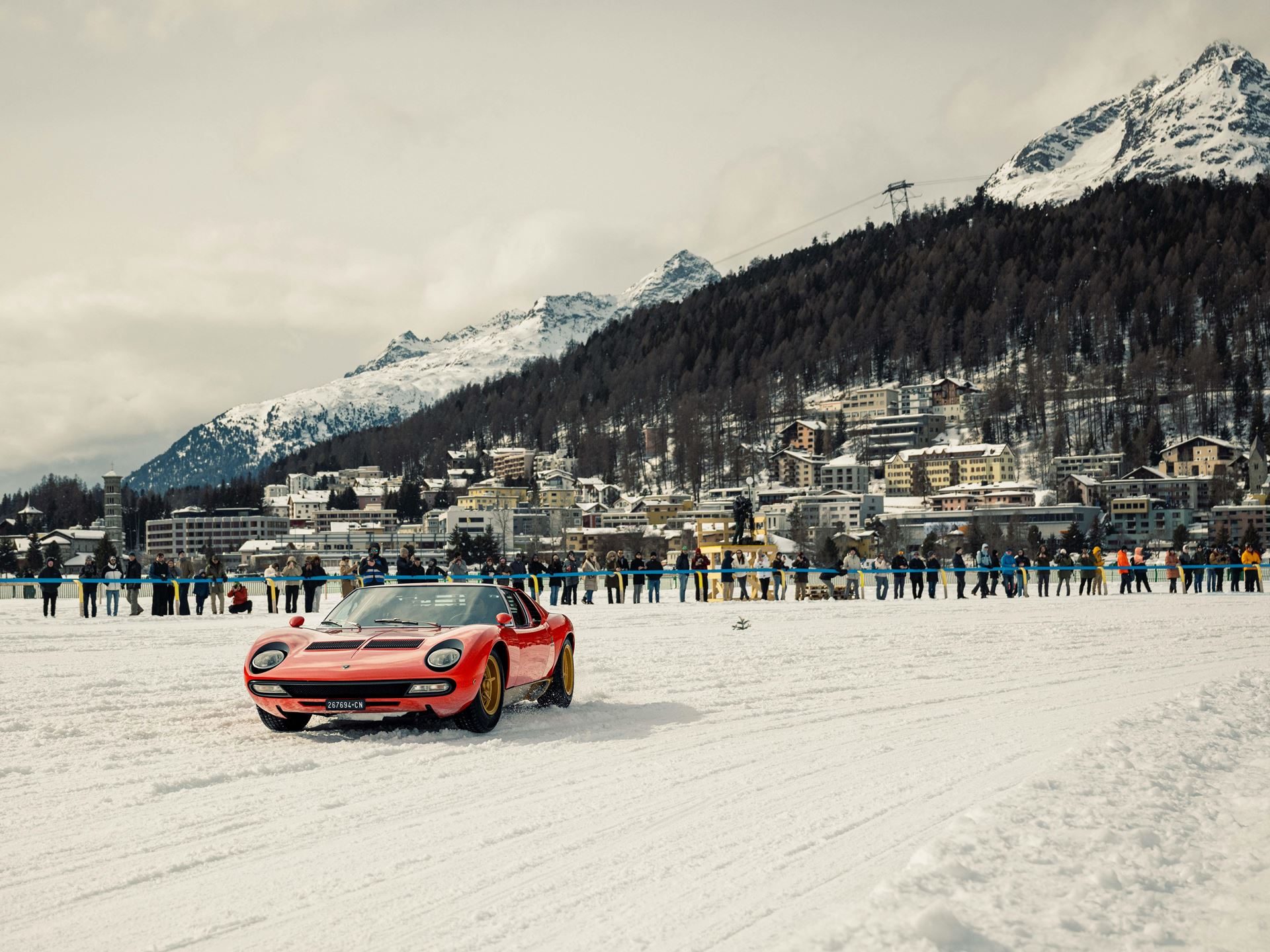
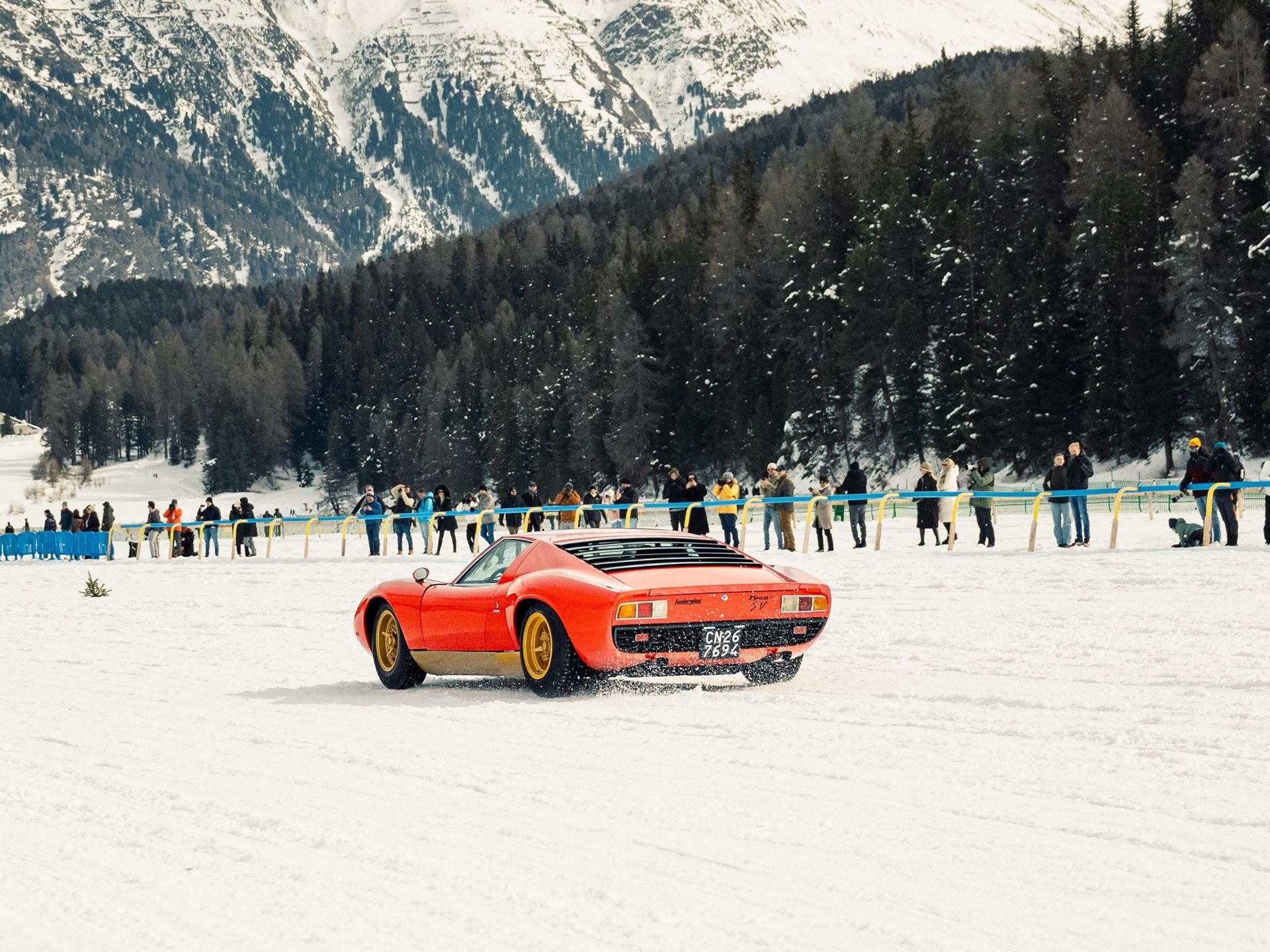
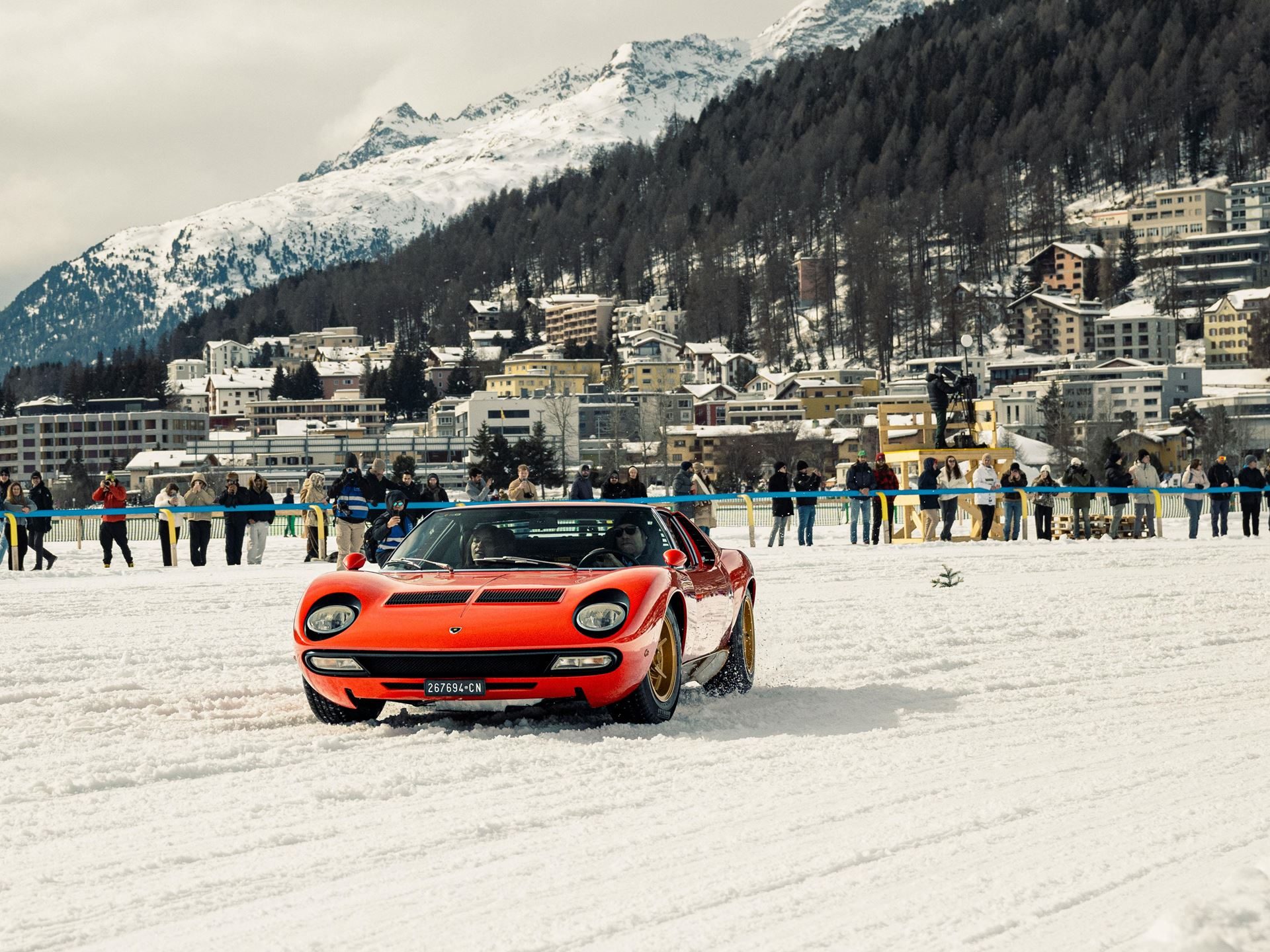
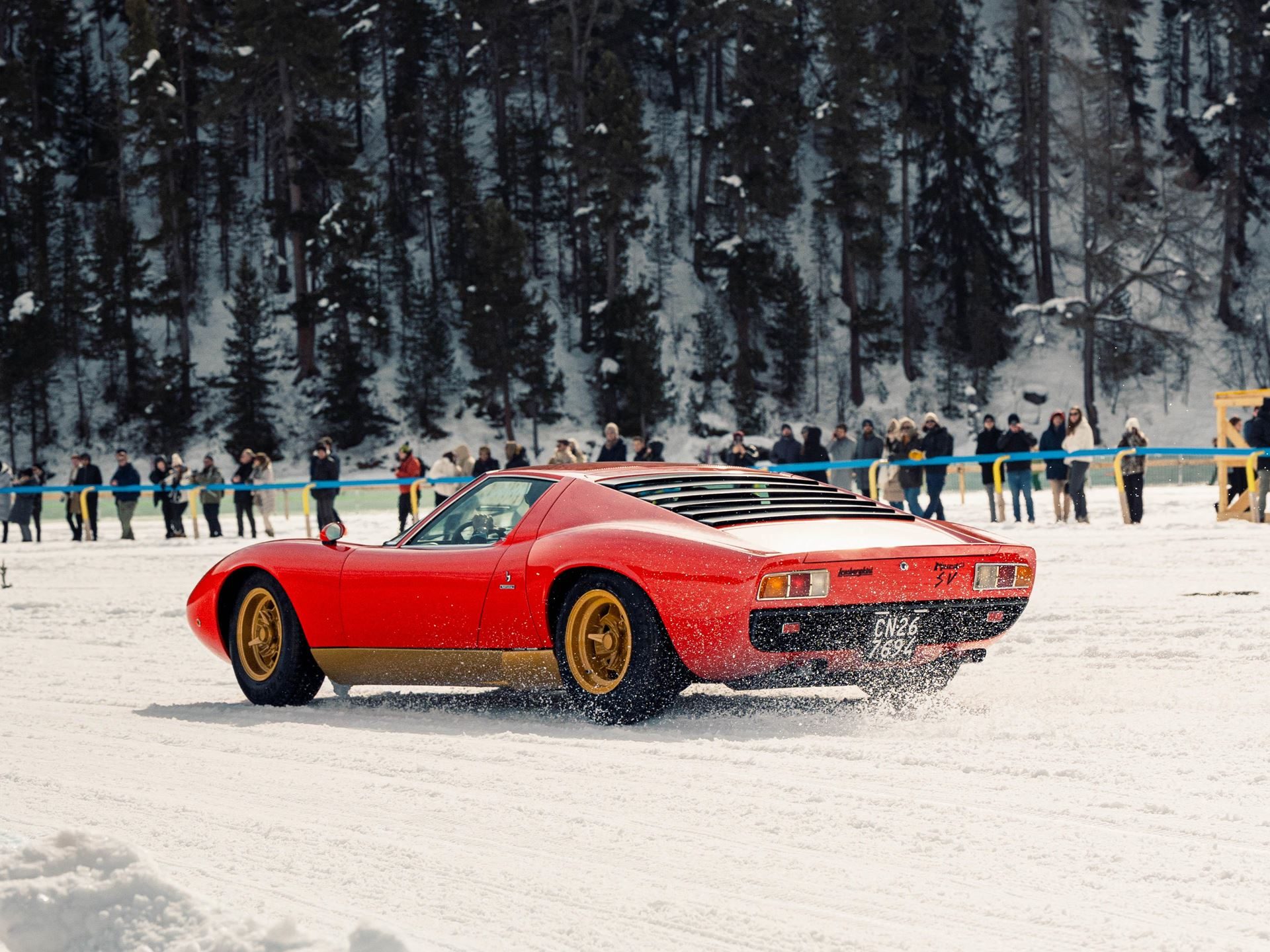
The tenth anniversary celebrations took place in St. Moritz on February 21 and 22, 2025, combining an exclusive dinner for selected customers and collectors at Balthazar Downtown with a lounge event for international journalists the following day. The centerpiece was the Diablo SE30, finished in its signature “Lambo Thirty” purple and positioned in a dramatic “flying” display on the restaurant’s panoramic terrace, overlooking the frozen surface of Lake St. Moritz. Down on the ice itself, two more cars commanded attention: a Countach LP 400S “pace car” and a red Miura SV, both brought by their owners to participate in The I.C.E. St. Moritz concours d’elegance.
The choice of venue tells you something about the kind of owners Polo Storico serves. These are not garage queens. The department operates as Lamborghini’s dedicated heritage center, focused on four core activities: maintaining the company’s historical archive, issuing authenticity certifications, performing restorations, and supplying original spare parts for models ranging from the 350 GT through the Diablo. Owners can order parts through authorized Lamborghini dealers. That Polo Storico chose to celebrate its birthday not in Sant’Agata Bolognese but on a frozen lake, with multi-million-dollar classics on studded tires, speaks to a philosophy that treats these cars as machines meant to be driven, not merely preserved.
The Diablo SE30: 150 Cars Built to Subtract, Not Add
The specific car suspended above the terrace was number 022 of 150 produced, as confirmed by the “VETTURA N° 022/150” plaque visible on its window. Independent sources report that the SE30 was unveiled in September 1993 to mark Lamborghini’s 30th anniversary, and only 150 specially numbered examples were built.
What makes the SE30 compelling from an engineering standpoint is how aggressively it pursued lightness over luxury. One source reports that comfort features like the ashtray, cigar lighter, hi-fi system, and air conditioning were deliberately stripped from the cabin, while the doors were fabricated from lightweight plastic with small wind-up windows reminiscent of closed competition cars. A built-in fire-suppression system and four-point racing harnesses came standard. Peak output reportedly climbed from the standard Diablo’s 492 bhp to 525 bhp at 7,000 rpm, aided by re-programmed fuel injection and a free-flow sports exhaust, with cylinder heads and intake manifolds cast in magnesium to reduce engine mass. An optional Jota kit was reportedly offered to SE30 customers, intended as the foundation for a proposed GT1 racing variant.
The interior of this particular car features blue Alcantara racing seats with embroidered “30 SE” logos and matching blue racing harnesses, a detail visible in event imagery and one that no competitor coverage of the St. Moritz weekend appears to mention. That combination of stripped-out cabin and race-grade hardware captures the philosophy Polo Storico exists to safeguard: the conviction that a Lamborghini’s identity lives in its engineering choices, not its creature comforts.

Icons on Ice: The Countach Pace Car and Miura SV
The Countach LP 400S at St. Moritz carries a specific pedigree. Lamborghini says this car served as the support vehicle at the Monaco Formula 1 Grand Prix in 1981 and as the Race Director’s official car the following year. Event images show the white wedge wearing its “40° GRAND PRIX MONACO 82” livery, a roof-mounted light bar, and, most notably, studded winter tires on its classic five-hole wheels. A Countach that once paced Formula 1 cars at Monaco now picking its way across a frozen Swiss lake on metal studs is the kind of cognitive dissonance that only Lamborghini heritage events seem to produce.
This particular car is currently undergoing the Polo Storico certification process, a detail that underscores the department’s ongoing relevance. Certification involves Polo Storico experts cross-referencing every element, from chassis numbers to bodywork and interior finishes, against the historical archive in Sant’Agata Bolognese. For a car with documented motorsport provenance like the Monaco pace car, that factory stamp of authenticity carries real weight for any future owner. The Countach’s interior, visible through its windows at the event, shows blue leather seats, a gated manual shifter, and the classic three-spoke steering wheel that defined the cockpit experience of the era.
The red Miura SV, certified by Polo Storico in 2018, joined the Countach on parade around the frozen lake. Lamborghini describes the SV as the final and most powerful version of the Miura, a model the company traces to 1966 and positions as the world’s first supercar. The Miura SV took home the “Hero Below Zero” award at the concours d’elegance, determined by public vote, confirming that the audience in St. Moritz knew exactly what they were looking at.

Polo Storico Certification: What It Actually Means for Owners
The certification process deserves closer attention, because it sits at the intersection of authenticity, value, and practical ownership. When Polo Storico certifies a car, its experts collect and verify the vehicle’s data against the factory’s own historical archive, checking chassis numbers, bodywork, and interior finishes for consistency with original specifications. The goal is to confirm that a given car is what it claims to be.
For collectors and prospective buyers of classic Lamborghinis, a Polo Storico certificate functions as the closest thing to a factory guarantee of provenance. Lamborghini does not publish the cost or typical timeline for certification, and the company’s official materials do not break down how many cars carry the designation. Forum discussion around the broader restoration side of Polo Storico’s work suggests costs can be substantial, though specific figures vary widely depending on the model and scope of work.
The St. Moritz weekend itself illustrates that this is a living program, not a plaque-on-the-wall exercise. The Countach pace car’s ongoing certification and the Miura SV’s 2018 certificate both demonstrate active engagement with owners who use their cars. In a market where provenance documentation can make or break a deal, factory verification from the original manufacturer carries a credibility that no independent appraiser can replicate.

Next Stop: Rome in April
Alessandro Farmeschi, After Sales Director at Automobili Lamborghini, confirmed that St. Moritz was the opening act in a year of global celebrations for Polo Storico’s tenth anniversary. The next confirmed stop is Rome, where the department will appear with its own stand at the Anantara Concours d’Elegance from April 24 to 27, 2025. Lamborghini describes the Rome event as an international concours exclusively for Italian classic cars.
Beyond Rome, Lamborghini’s materials reference “some of the world’s most exclusive locations” without naming them. The broader tenth-anniversary program also includes a series of short films dedicated to Polo Storico’s heritage pillars, though Lamborghini has not yet detailed a release schedule.
The St. Moritz weekend, with its suspended Diablo, its studded-tire Countach, and its public-vote-winning Miura SV, set a high bar for theatrical staging. Whether Rome can match the spectacle of a purple supercar hovering above a frozen Alpine lake is another question entirely. What St. Moritz made clear is that Polo Storico, at ten years old, has evolved from a factory archive into something closer to a curatorial force, one that keeps Lamborghini’s most significant cars visible, verified, and very much in motion.

Gallery