A 10,000-RPM Twin-Turbo V8 Built Like a Racing Engine
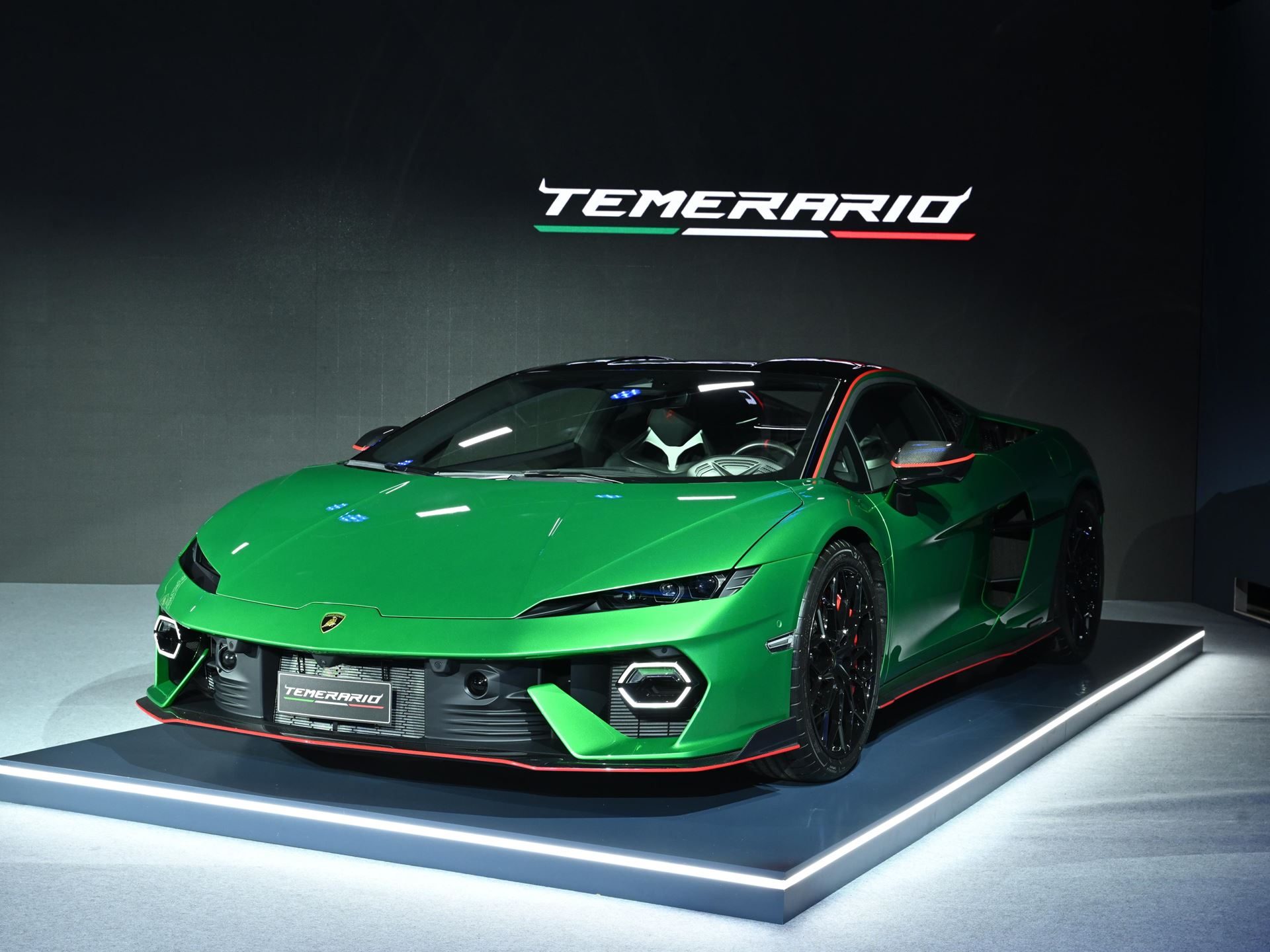
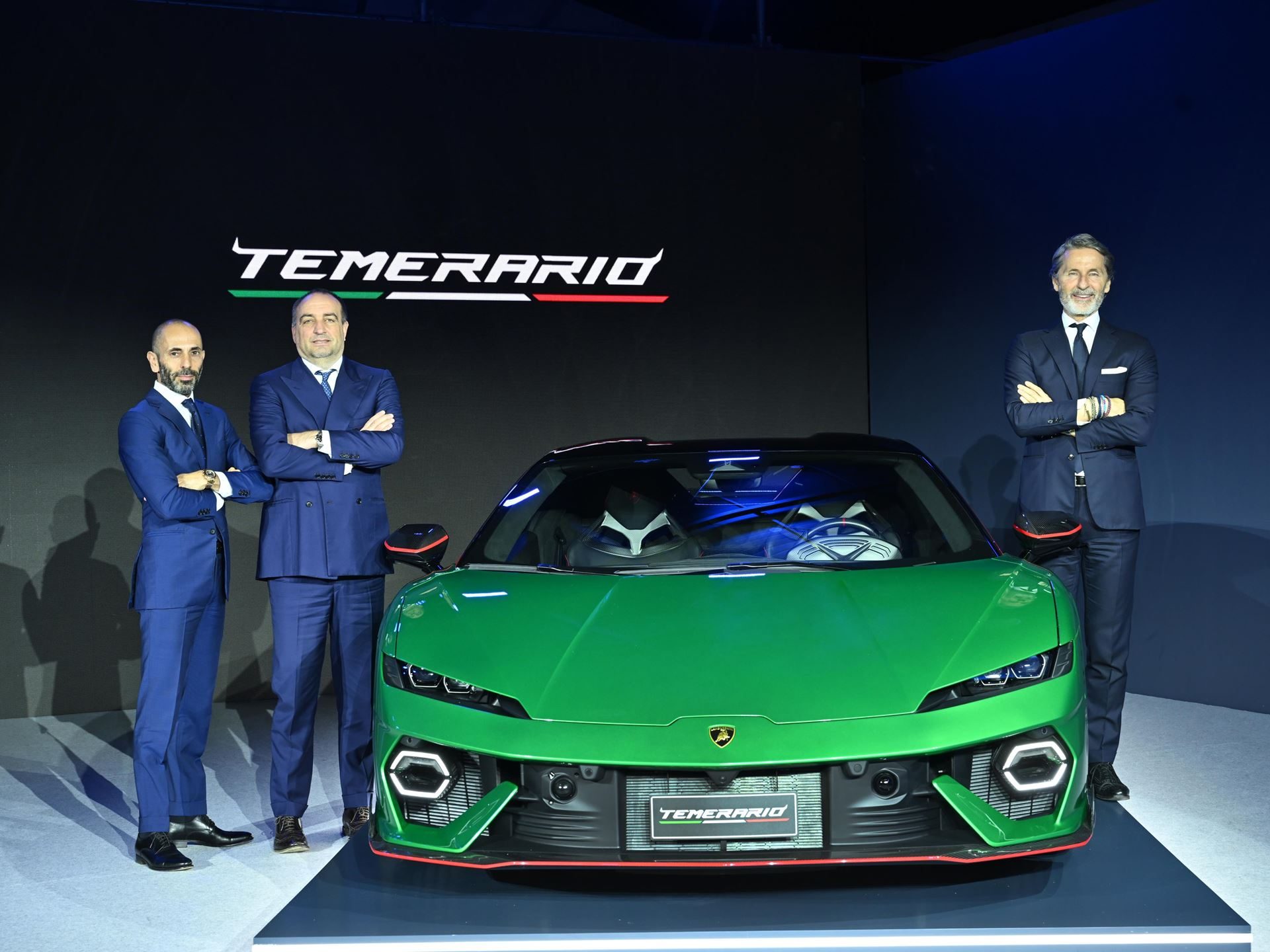
- The Lamborghini Temerario premiered in Seoul on March 7, 2025, marking the Huracán successor’s Korean market debut as Lamborghini’s second High Performance Electrified Vehicle.
- Its all-new 4.0-liter twin-turbo V8 produces 920 CV (907 hp) with three electric motors and revs to 10,000 rpm, a first for a production super sports car engine.
- Lamborghini says the powertrain was designed and developed entirely in-house at Sant’Agata Bolognese.
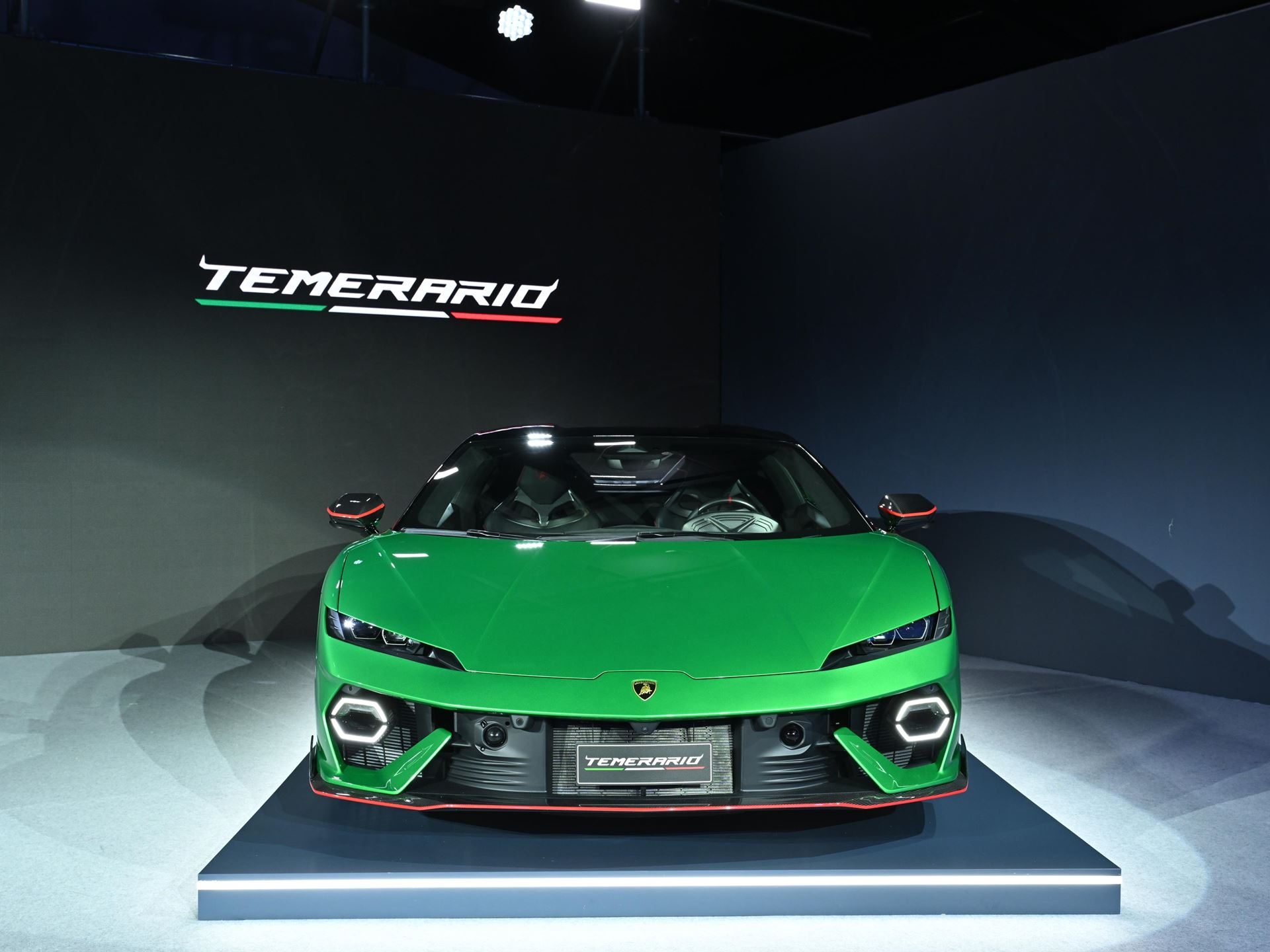
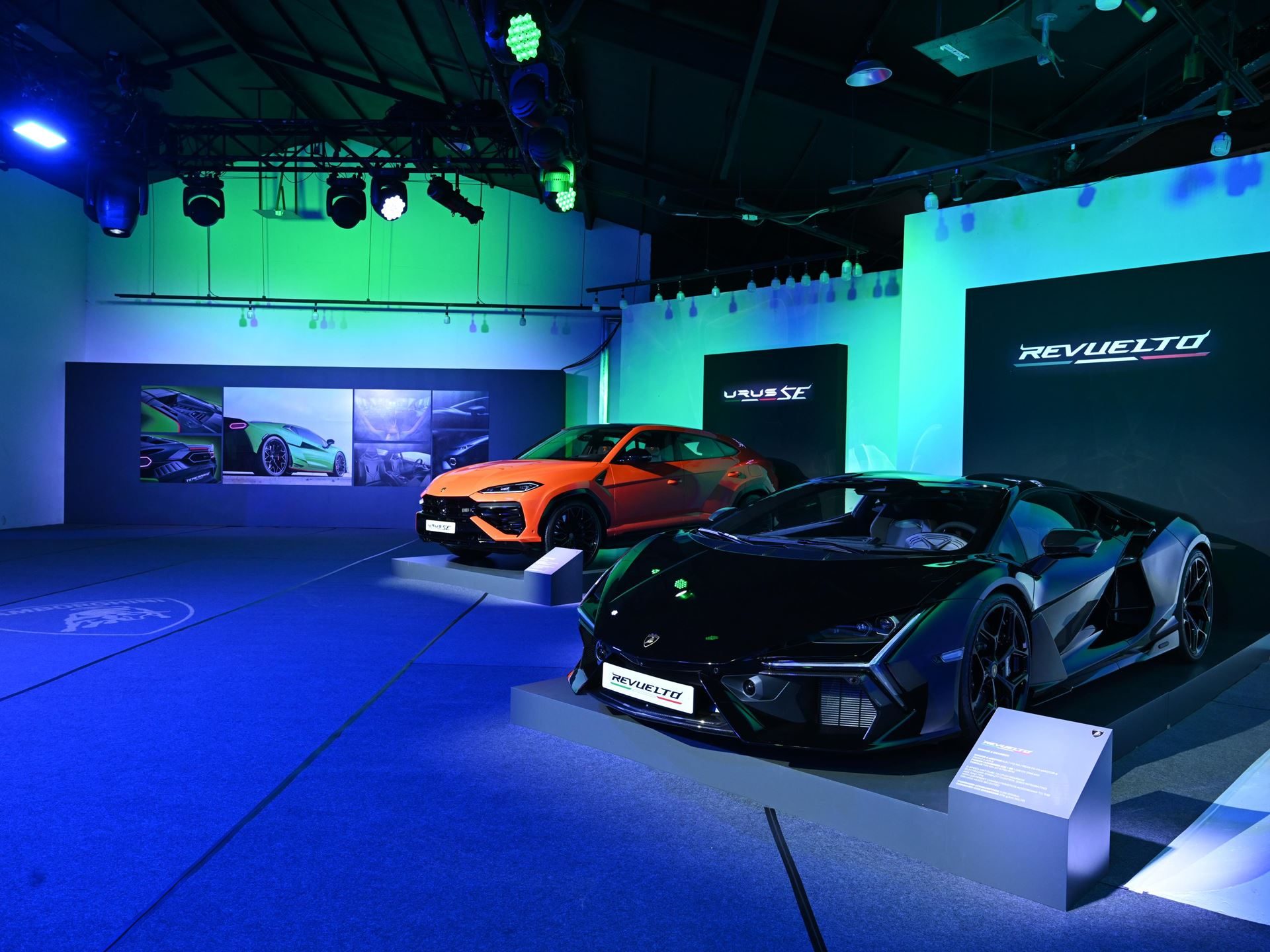
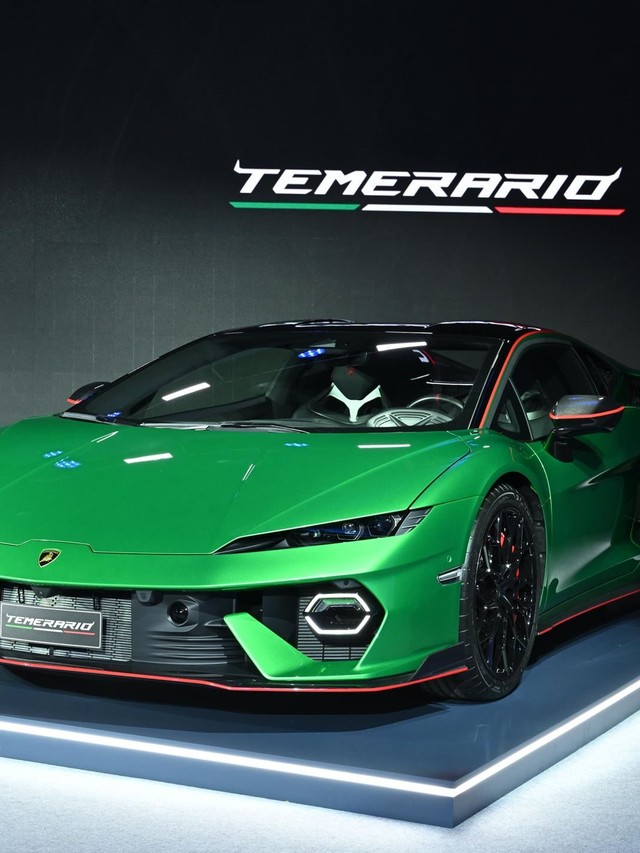
Finished in Verde Mercurius and wearing the optional Alleggerita lightweight specification, the Temerario stood on the Seoul stage flanked by the Revuelto V12 HPEV and the Urus SE plug-in hybrid. Chairman and CEO Stephan Winkelmann, Chief Marketing & Sales Officer Federico Foschini, and Asia Pacific Region Director Francesco Scardaoni all attended. Lamborghini identifies Korea as one of its top ten global markets and top three in Asia Pacific, context that explains why the brand chose Seoul for an early regional launch.
Yet the real purpose of the evening was to put the Temerario’s mechanical story in front of a market that already buys Lamborghinis in volume. That story begins with an engine designated L411, a unit built around principles typically reserved for motorsport hardware, and it threads through every layer of the car’s hybrid architecture.
Inside the L411: Flat-Plane Crank, Titanium Conrods, and 200 CV Per Liter
The 4.0-liter V8 biturbo at the core of the Temerario achieves a specific output of 200 CV per liter. Lamborghini says the combustion engine alone delivers 800 CV between 9,000 and 9,750 rpm, with 730 Nm (538 lb-ft) of torque available from 4,000 to 7,000 rpm. Those numbers come from a parts list that reads more like a prototype race engine than a road car.
A 180-degree flat-plane crankshaft sits at the center of the design. Flat-plane cranks are common in racing because they produce even firing orders and better exhaust scavenging, but they also generate more vibration than the cross-plane cranks typical in road-going V8s. Lamborghini paired it with titanium connecting rods to reduce rotating mass and used A357+Cu for the engine casting, a material composition drawn from motorsport applications.
The valvetrain is equally aggressive. DLC-coated (Diamond Like Carbon) finger followers can withstand rotational speeds up to 11,000 rpm, well beyond the engine’s 10,000-rpm production limit. That margin suggests the L411 was engineered with headroom for sustained high-rpm operation, not just a momentary peak.
Turbochargers sit inside the V of the engine in a “hot V” configuration, keeping intake and exhaust paths compact while optimizing thermal management. Lamborghini quotes maximum boost at 2.5 bar absolute. Cylinder heads were refined using 3D-printed casting cores for internal cooling channels, a technique that allows more precise coolant routing around the combustion chambers for uniform temperature control and improved knock resistance. Direct injection atomizes fuel at up to 350 bars.
Every one of these choices serves the same goal: extracting naturally aspirated character from a forced-induction engine that can spin to five figures on the tachometer.

Three Electric Motors and the Torque-Gap Strategy
If the L411 provides the top-end fireworks, the three electric motors handle the low-end response that turbocharging alone cannot guarantee. One oil-cooled axial-flow motor from YASA sits integrated into the V8 housing in what Lamborghini calls the P1 position, between the engine and the gearbox. Two additional YASA motors drive the front axle.
Lamborghini says each YASA unit produces 300 Nm of peak torque and 110 kW of peak power while weighing just 17.3 kg, with a thickness of only 70 mm and a diameter of 295 mm. The axial-flux design is notable for its power density compared to conventional radial-flux motors.
The P1 motor’s role is particularly revealing. Lamborghini describes it as a “torque gap filler” that delivers immediate response from low engine speeds and maintains consistent thrust through gear changes, smoothing the transient hesitation that turbocharging can introduce. CTO Rouven Mohr framed the objective as combining “an emotional combustion engine based on a twin-turbocharged V8 and a performance-oriented electrification.” In practice, the electric motors mask turbo lag while the V8 builds boost, then the combustion engine takes over as the dominant force through the upper rev range. Combined system output reaches 920 CV.
This layered approach is the engineering thread that ties the entire car together: electrification exists not as a concession to regulation but as the mechanism that lets a 10,000-rpm turbo V8 feel as immediate as the naturally aspirated V10 it replaces.
Packaging Borrowed from the Pit Lane
Lamborghini’s engineers extended the racing philosophy beyond the combustion chamber and into the way the powertrain occupies the chassis. Most auxiliary units, including two water pumps (one for the intercooler, one for engine cooling) and an electronically controlled barrel valve for fine temperature management, are consolidated on one side of the engine. The oil system uses a dry-sump design with five-stage gear scavenge pumps, with the oil tank integrated into the engine block itself.
The practical benefit of all this consolidation is a drive unit that sits flat and low. Lamborghini says this lowers the center of gravity and improves handling characteristics. For anyone who followed the Huracán through its decade-long lifecycle, the emphasis on packaging density and low mass placement signals that Lamborghini is trying to offset the inherent weight penalty of hybridization through smarter architecture rather than brute structural reinforcement.
Lamborghini confirmed the Temerario accelerates from 0 to 100 km/h in 2.7 seconds and reaches a top speed of 343 km/h (over 210 mph). Those figures matter, but they are almost secondary to the deeper point: the Temerario’s performance claims rest on how the powertrain is packaged, not merely on how much power it produces.

Replacing the Huracán: Configuration, Market, and the Open Question
As the Huracán’s successor and Lamborghini’s entry-level supercar, the Temerario arrives with customization options that reflect a car the brand expects to sell in serious volume. The Ad Personam program offers more than 400 exterior colors, and the Seoul event included a physical display of material and color samples for prospective buyers. The Alleggerita lightweight package, visible on the show car, adds further personalization for owners who want to prioritize weight savings.
Lamborghini did not announce official pricing at the Seoul event, and figures circulating from various publications vary widely enough that treating any single number as confirmed would be premature. What the premiere did confirm is that Lamborghini considers Korea a priority market for the Temerario, and the car’s argument is being made on the depth of its powertrain technology rather than on headline figures alone.
For enthusiasts who spent the last decade with the Huracán’s naturally aspirated V10, the Temerario represents a fundamentally different philosophy. The V10’s appeal was always its linear, screaming simplicity. The L411 is a more complex machine, layering turbocharging and electric torque fill to deliver a power curve that Lamborghini says mimics the linearity of a naturally aspirated engine while producing substantially more power. Whether that engineering promise translates into the same visceral connection remains the question only seat time will answer. What Seoul made clear is that Lamborghini has staked the Temerario’s identity not on electrification as a marketing label, but on the racing-derived engine at its heart.

Gallery