Lamborghini Puts Collectors to Work for Polo Storico’s Tenth Birthday
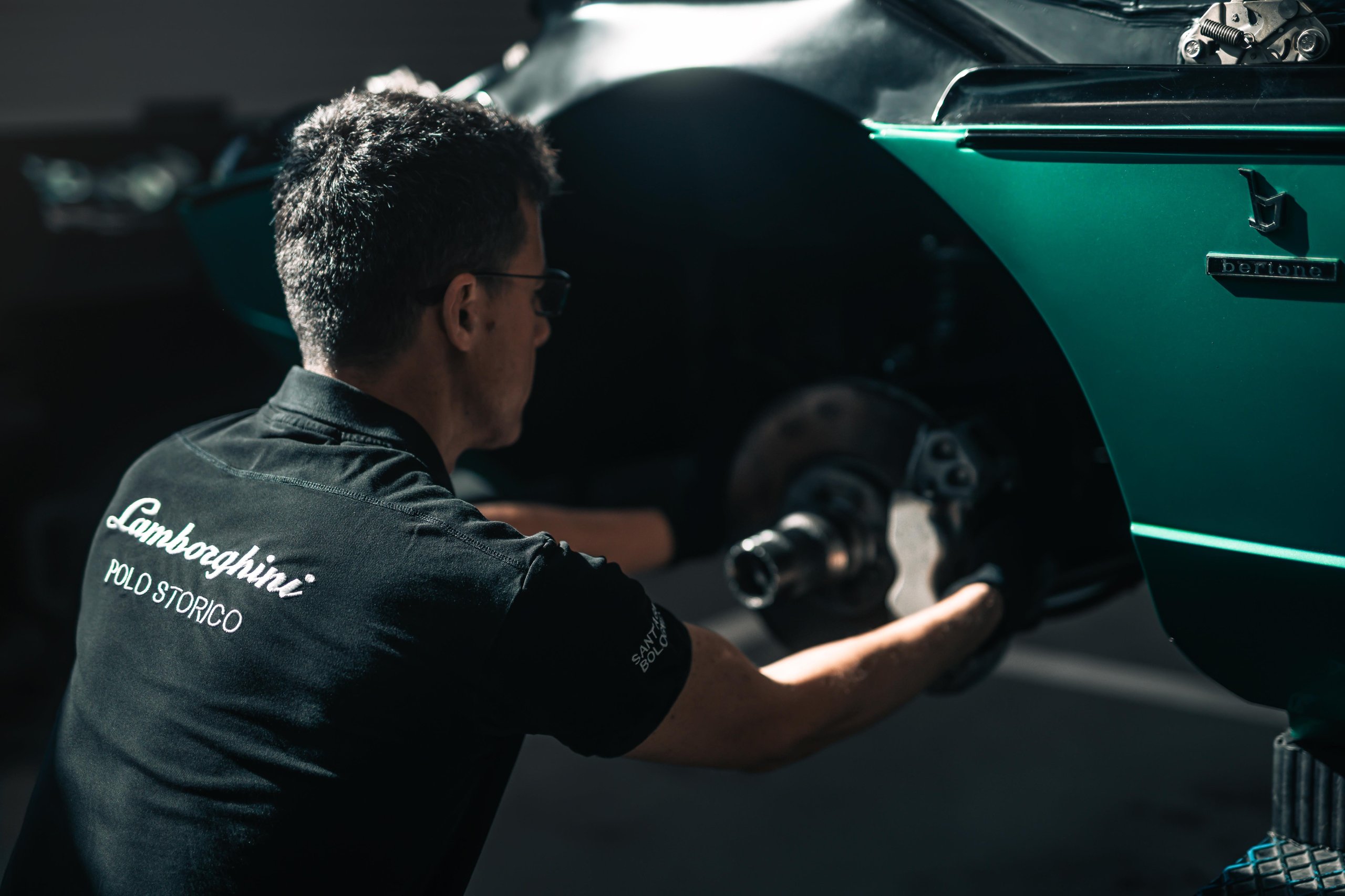
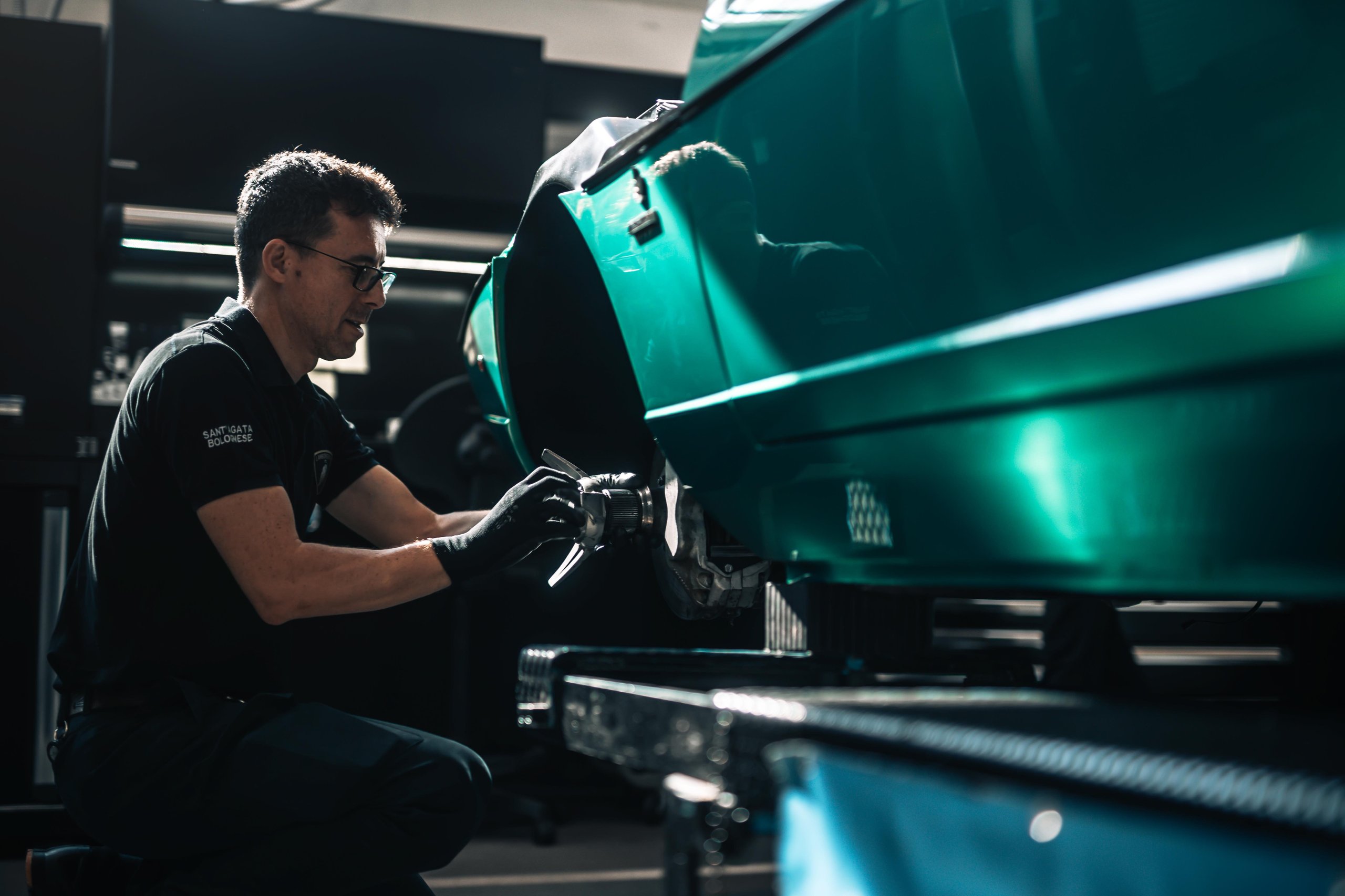
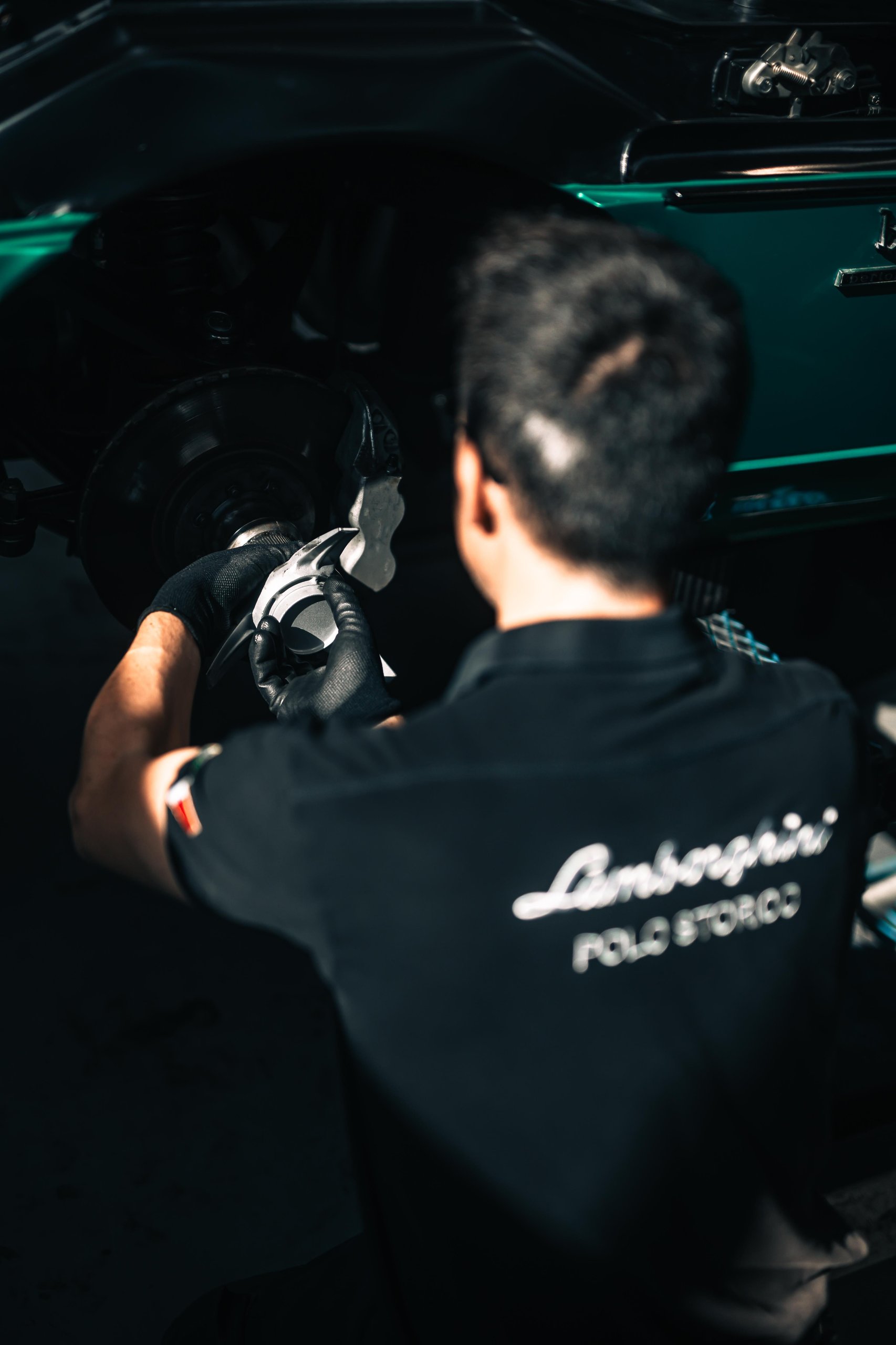
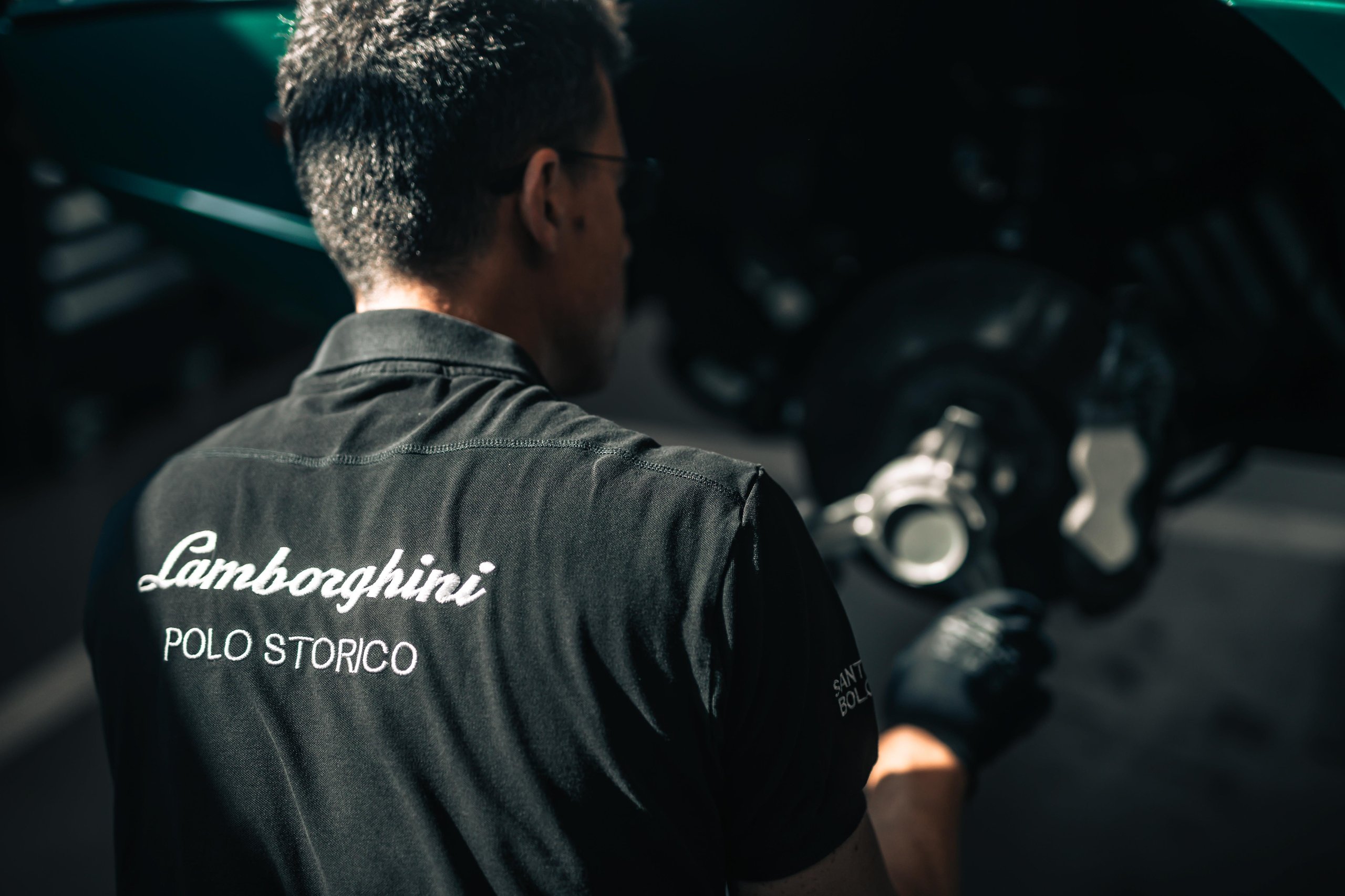
Most heritage programs let collectors admire the silverware. For its tenth anniversary, Lamborghini Polo Storico handed them the polishing cloth. The company’s dedicated heritage division in Sant’Agata Bolognese invited a group of international collectors to step into the roles of its own technicians: performing road tests, consulting the historical archive, verifying authenticity, and getting their gloved hands into actual workshop tasks alongside the department’s resident experts.
The cars on hand were not museum pieces chosen for their docility. A 1967 400GT 2+2, a 1990 Countach 25th Anniversary, a 2001 Diablo SE 6.0, and an LM002 each represented a different chapter of Lamborghini’s first four decades. Pirelli, a long-standing partner, contributed its own expertise in recreating original tires for classic Lamborghinis, adding another layer of technical immersion.
Alongside the hands-on program, Lamborghini released a series of four short films spotlighting the pillars of its heritage department: the Historical Archive, the Committee of Experts (known internally as the Comitato dei Saggi), Restoration, and the Certification of Authenticity. Alessandro Farmeschi, After Sales Director of Automobili Lamborghini, narrates the series and characterized the immersive experience as both challenging and authentic. Together, the films and the event form the centerpiece of a year-long celebration that Lamborghini says will continue through Pebble Beach, Lamborghini Day events in the United Kingdom and Japan, and Auto e Moto d’Epoca in Bologna from October 23 to 26.
The Real Strategy Behind Letting Clients Touch the Cars
Opening the workshop doors is not a hospitality exercise. It is a loyalty play, and a commercially shrewd one. Classic Lamborghini values depend on provenance, and provenance depends on the factory’s willingness to verify, document, and restore. By letting owners experience the rigor of that process firsthand, Lamborghini converts an abstract service into a personal memory. A collector who has personally consulted the archive and watched a technician match paint codes to original build records is far more likely to route future restoration work, and future purchases, through Sant’Agata than through an independent shop, however skilled.
The economics reinforce the logic. Unlike the classic Porsche market, where tens of thousands of 911s created a deep parts ecosystem and a wide base of independent specialists, Lamborghini built far fewer cars between 1963 and 2001. Factory knowledge and factory-sourced components are disproportionately valuable. When Polo Storico manufactures an original spare part for a 350 GT or reproduces a component that went out of production decades ago, it fills a gap that the aftermarket often cannot.
There is an emotional dimension, too. Multiple enthusiast forum discussions reflect a broader anxiety about the aging-out of independent specialists who understand vintage Lamborghini mechanicals. Polo Storico’s existence, and its willingness to open its doors this visibly, reassures owners that institutional knowledge will survive the retirement of the last generation of independent experts who grew up with these cars.

A technician meticulously attends to the classic wooden steering wheel and dashboard of a vintage Lamborghini.
Four Pillars, One Standard: How Polo Storico Actually Works
The four pillars celebrated in the anniversary film series are not independent departments so much as interlocking stages of a single forensic process. Understanding how they connect explains why the division commands the authority it does.
The Historical Archive, established alongside Polo Storico in 2015, houses over 30,000 documents and artifacts: design sketches, production records, technical drawings, and comprehensive build records detailing chassis numbers, engine codes, gearbox codes, axle codes, body codes, and original specifications down to paint color, trim, and optional equipment. When a classic Lamborghini arrives for assessment, the archive provides the forensic baseline. Every restoration and every certification begins here.
The Committee of Experts, the Comitato dei Saggi, functions as a living archive. Composed of former Lamborghini employees who now collaborate as consultants, these are people who assembled, tested, or engineered the cars in question. Their institutional memory fills gaps that paper records cannot. They know, for instance, how a particular batch of Miura body panels was finished, or what a factory-correct wiring loom looked like before it was tidied up by a well-meaning previous owner.
Restoration combines traditional craftsmanship with modern technologies. Lamborghini says master artisans, supported by archival resources and digital tools, can recreate components no longer in production to original specifications. The philosophy is strict fidelity to the car’s factory-delivered state, preserving period-correct characteristics rather than imposing modern standards of perfection.
The Certification of Authenticity, overseen by the Experts Committee, begins with an originality assessment. Cars that pass receive a certificate documenting their verified condition. The process is transparent about deviations: if a classic Lamborghini carries a replacement gearbox, that detail is recorded. Certification by Polo Storico is reported to significantly enhance a vehicle’s historical and market value, making the document both a scholarly record and a financial instrument.

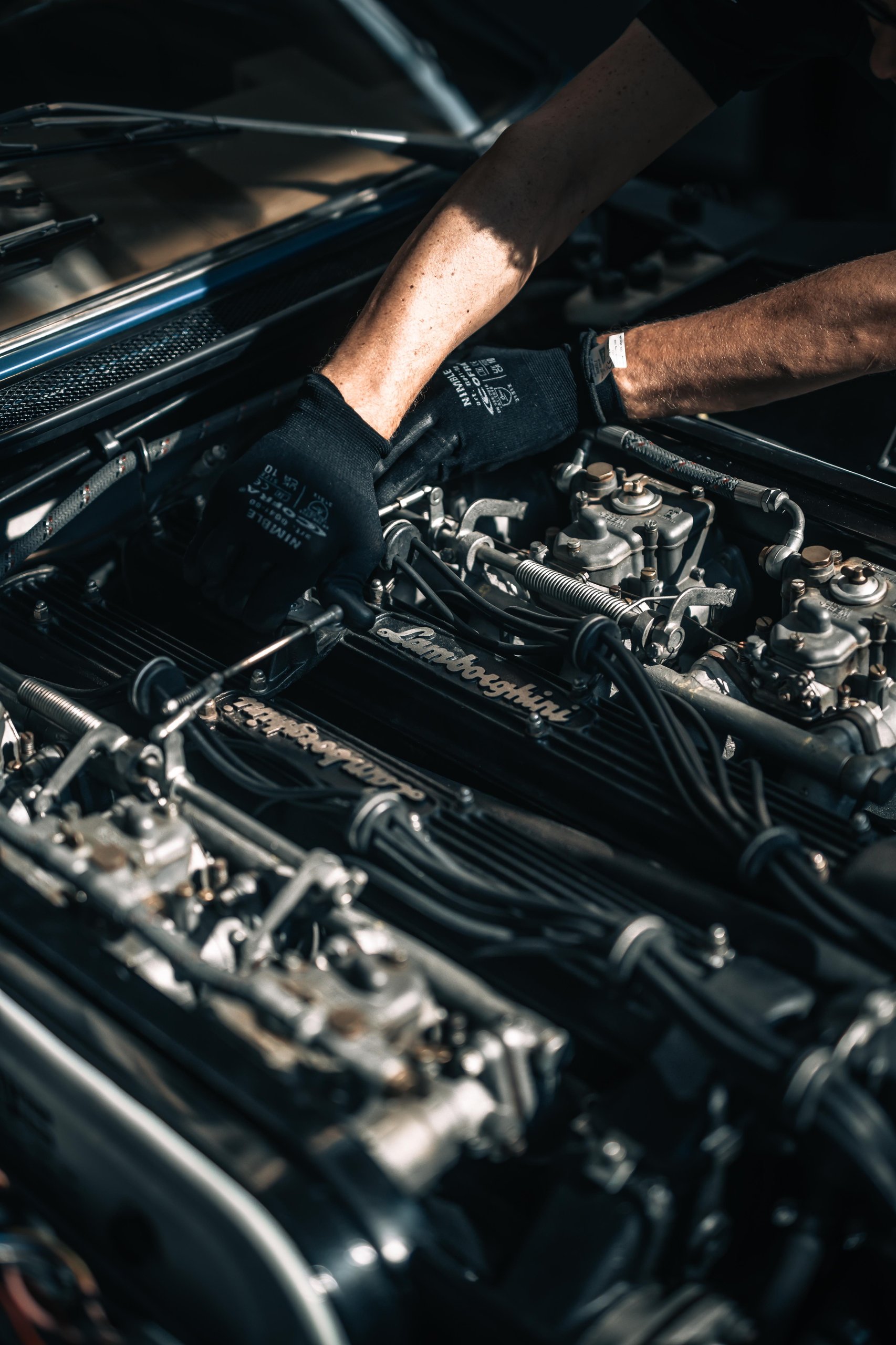
The heart of a classic Lamborghini, showcasing the intricate details of its powerful engine.
Recreating What No Longer Exists: The Technical Reality
The most underappreciated aspect of Polo Storico’s work is the manufacturing challenge. Lamborghini produced many of its classic models in tiny numbers. Some components were hand-formed by artisans who left no formal tooling behind. Reproducing those parts requires reverse-engineering from surviving examples, cross-referencing archival drawings, and then fabricating with a combination of hand skills and modern measurement tools.
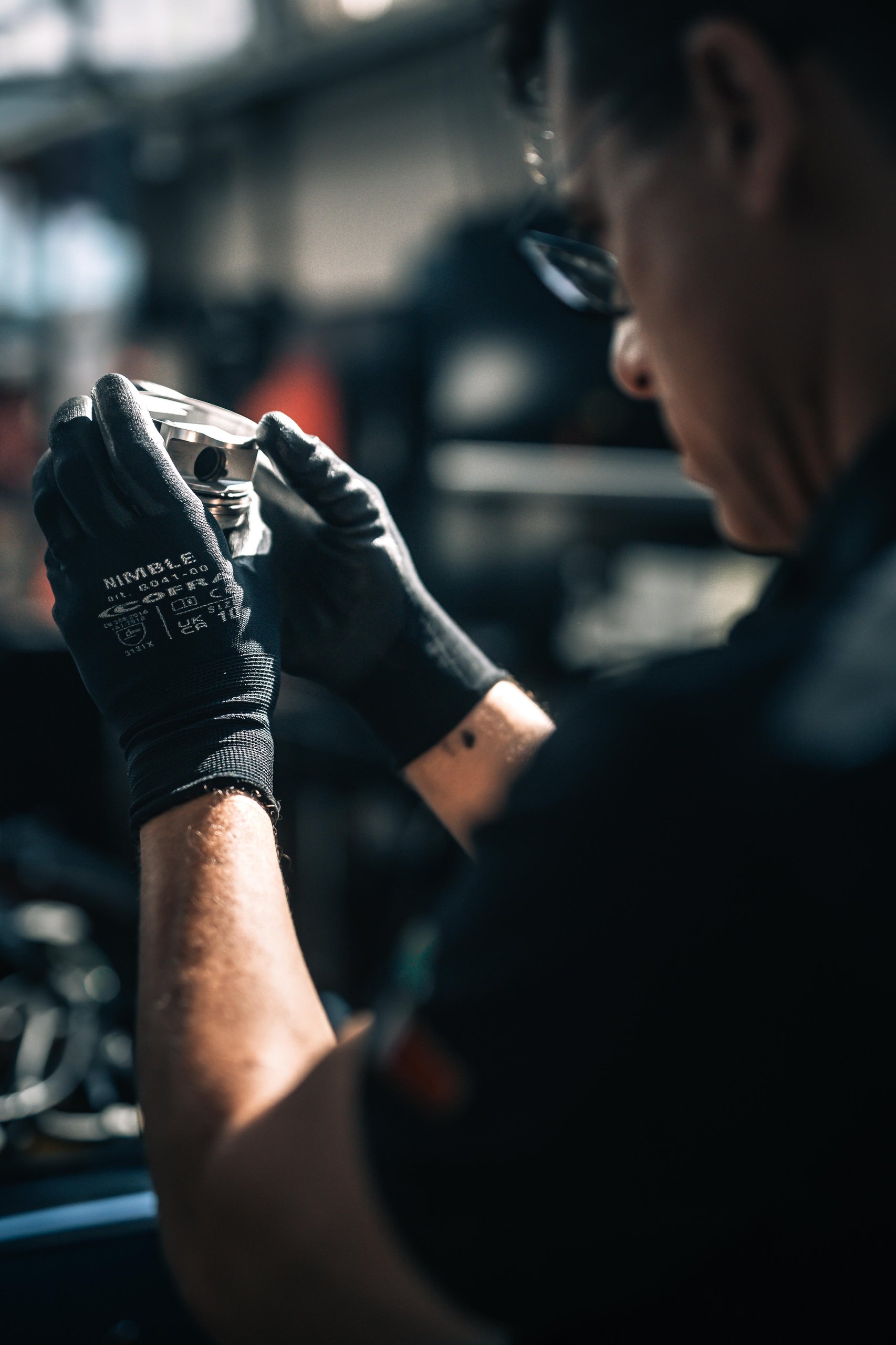
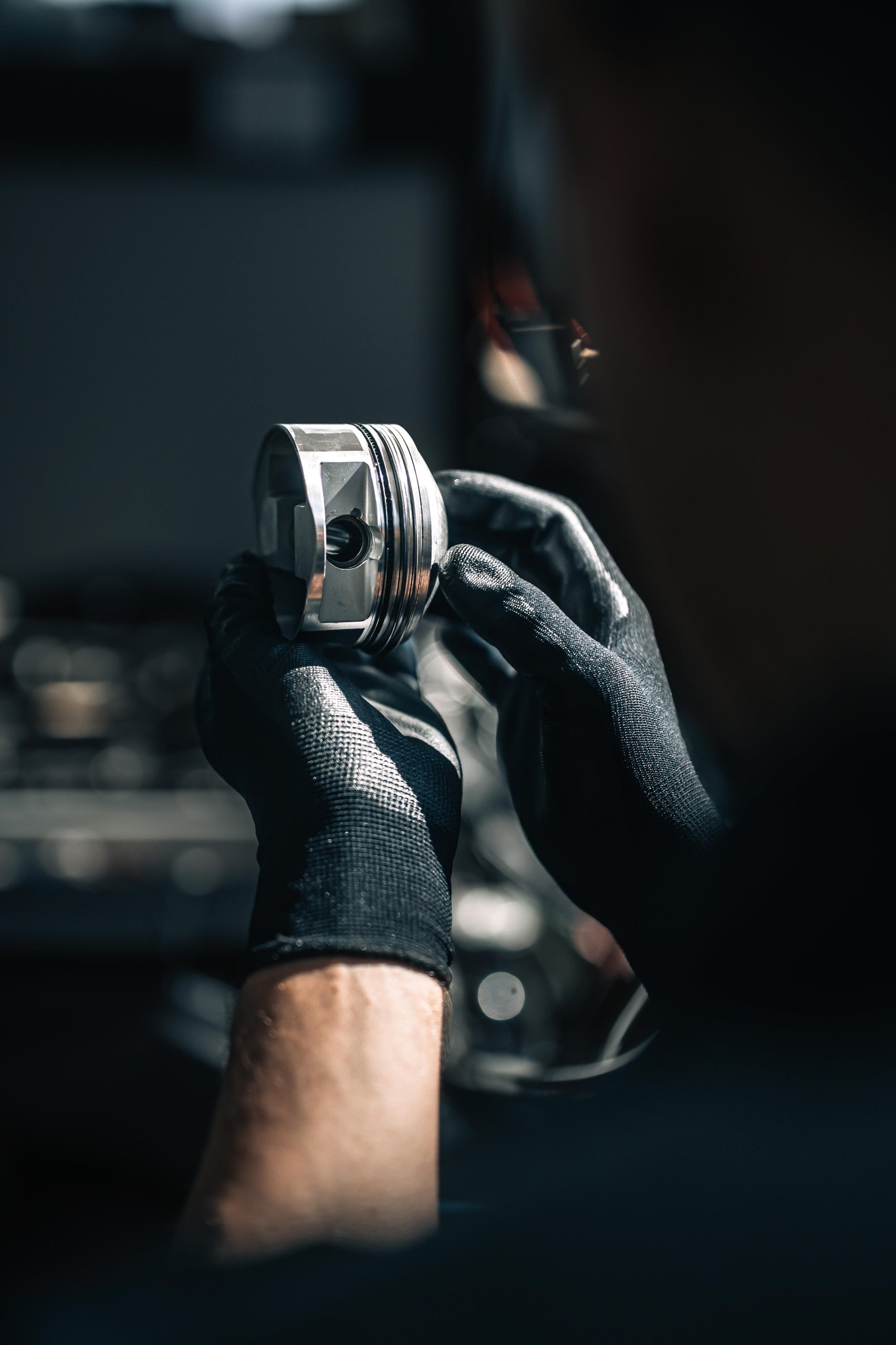
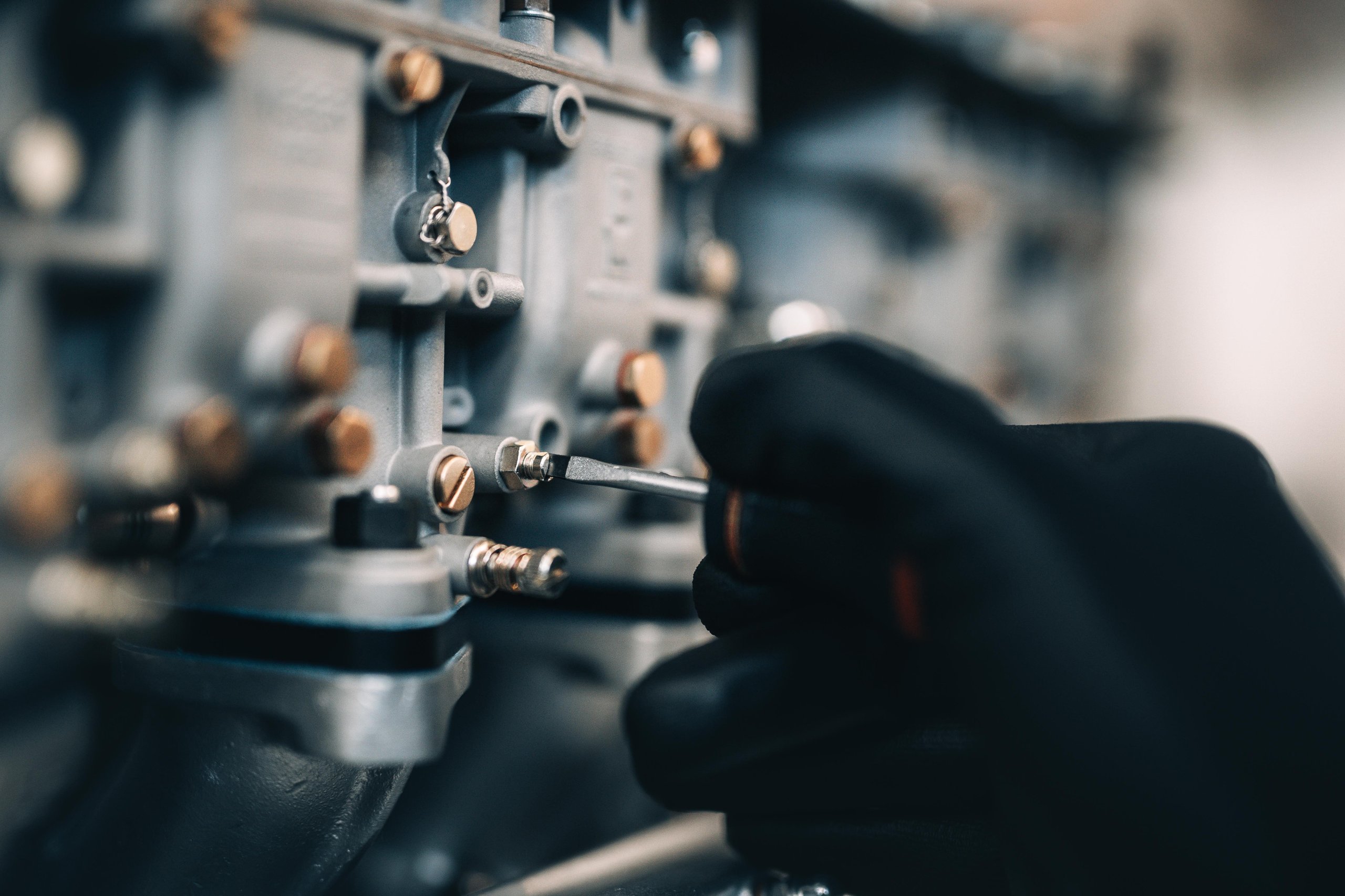
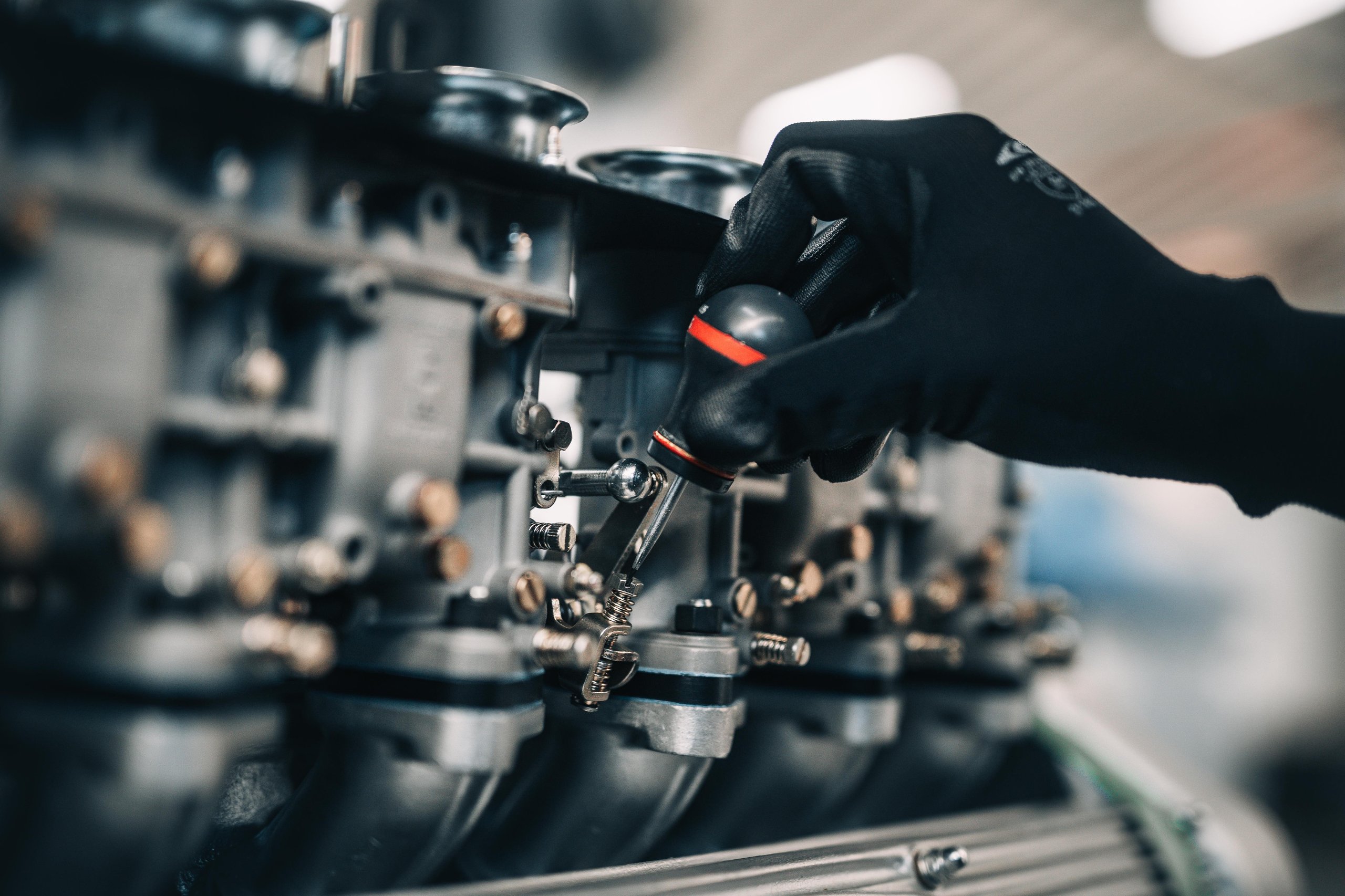
Imagery from the anniversary event illustrates this vividly. Technicians inspect individual pistons by hand. Body panels on a Miura in white primer are sanded and shaped with traditional hammers and dollies, the same metalworking techniques that Bertone’s craftsmen used in the 1960s. A gloved hand adjusts a vintage carburetor with a screwdriver, working on tolerances that predate electronic fuel injection by decades. Polo Storico continues to produce original spare parts for classic models spanning from the 350 GT to the Diablo, which means maintaining supply chains and fabrication capabilities for cars that went out of production a quarter-century ago.
For prospective buyers or current owners considering a factory restoration, the practical question is cost and timeline. One report indicates a full restoration typically runs around €300,000 and takes approximately 18 months to complete. Lamborghini itself does not publicly list pricing for these services, so those figures should be treated as indicative rather than definitive. The relevant comparison is not to a local body shop but to the value uplift that a factory-certified, factory-restored example commands at auction or in a private sale.

A craftsman meticulously shapes a metal component with a hammer, a vital step in classic car restoration.
Heritage as Brand Anchor in the Hybrid Era
Polo Storico’s tenth anniversary arrives at a moment when Lamborghini’s entire current lineup, the Revuelto, the Temerario, the Urus SE, runs on hybrid power. The naturally aspirated era that defined the brand’s identity for six decades is now, officially, history. That shift makes the heritage division’s role more important, not less.
A brand transitioning its engineering identity needs an anchor. Polo Storico provides one by keeping the V12 Miuras, the carbureted 350 GTs, and the screaming Diablos alive and verified. Owners of new hybrids can look at the heritage program and see continuity rather than rupture. Collectors of classic models can see their cars gaining institutional protection, not losing relevance. The anniversary celebrations, stretching from St. Moritz in February through Pebble Beach in August and Bologna in October, reinforce that message at every major collector gathering on the calendar.
The broader collector-car world already rewards factory engagement. Ferrari Classiche’s certification program demonstrably affects auction results for Prancing Horse models, and Porsche Classic’s parts reproduction operation supports a vast global ownership base. Lamborghini’s approach differs in scale (far fewer cars, far more bespoke fabrication per unit) and in intimacy (the immersive experience model, the direct access to retired factory personnel). Whether that approach scales as classic Lamborghini values continue to climb is an open question, but the tenth anniversary suggests Sant’Agata intends to invest further rather than coast.

The elegant rear design of a classic Lamborghini Islero, featuring its iconic badging and distinctive taillights.
What Classic Lamborghini Owners Should Know Now
If you own a classic Lamborghini produced between 1963 and 2001, from the 350 GT to the final Diablo, Polo Storico’s services apply to your car. The first step is an originality assessment, which cross-references your vehicle against the archive’s build records. Cars that pass receive a Certificate of Authenticity. Those that do not pass cleanly, perhaps because a previous owner swapped the gearbox, receive a certificate documenting what changed and what remains original. Both outcomes are useful: the first confirms provenance for sale or insurance purposes, and the second provides a transparent restoration roadmap.
Lamborghini has not published a formal price list for certification or restoration, and the company has not announced plans to expand Polo Storico’s coverage to models newer than the Diablo. Those are reasonable questions for any owner to ask the division directly. What the anniversary program does confirm is that Sant’Agata views this work as central to its identity, not as a side business. The short film series, the global event calendar, and the unprecedented decision to let clients work alongside technicians all point in the same direction: Lamborghini wants classic owners to feel that the factory stands behind their cars with the same conviction it brings to building new ones.
For anyone watching the classic Lamborghini market from the sidelines, the practical takeaway is straightforward. Factory certification and factory restoration add documented, verifiable provenance. In a market where the difference between a well-restored Miura and a factory-certified Miura can be measured in six figures, Polo Storico’s tenth anniversary is a reminder that the most valuable stamp on a classic Lamborghini still comes from the building where it was born.

A Lamborghini Miura chassis in white primer sits ready for restoration in a specialized workshop.
Gallery