Melbourne Gets the Full Lamborghini Treatment
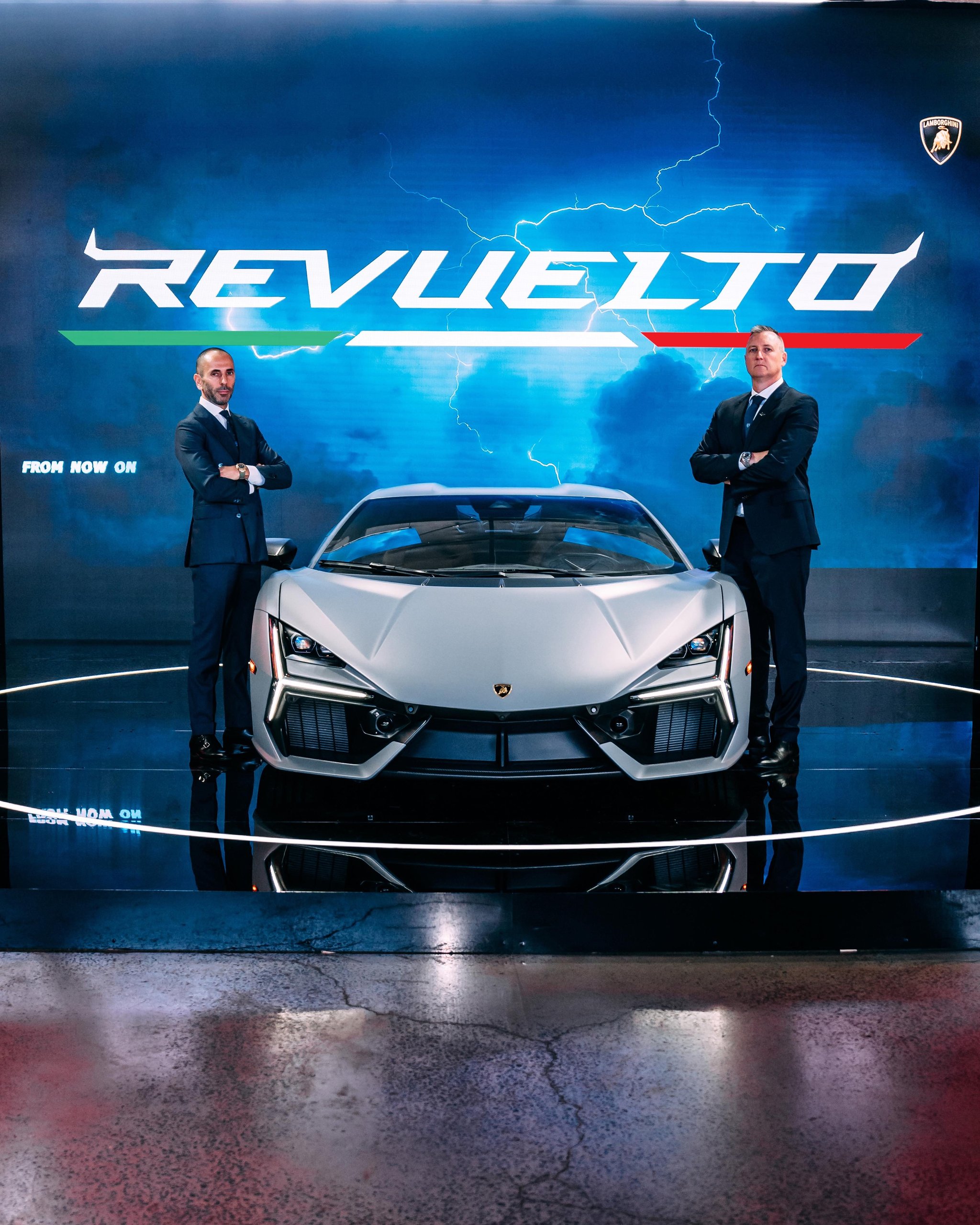
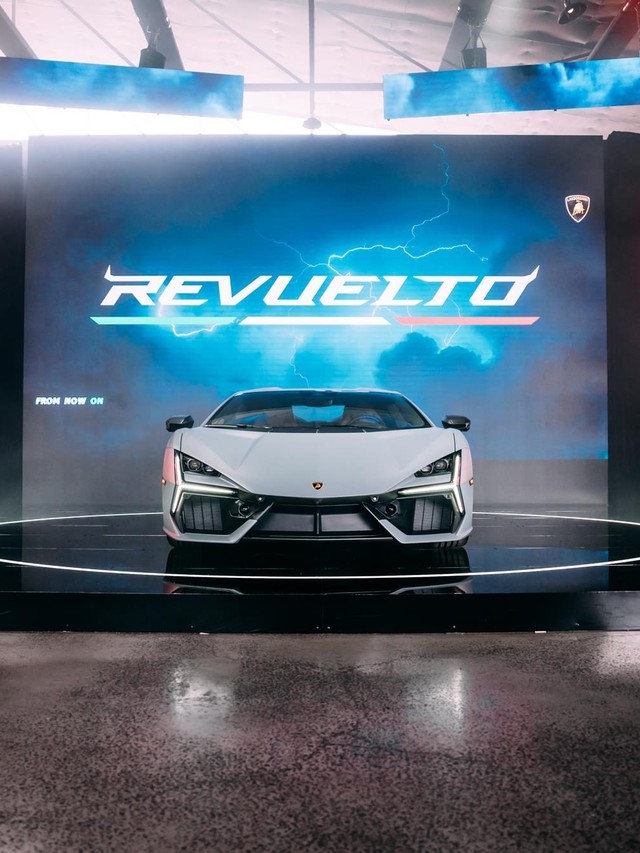
Lamborghini chose Melbourne to stage the Revuelto‘s first Oceania appearance, and a simple unveiling was never on the agenda for a 60th-anniversary year. What landed in late November 2023 was a three-part production: the Revuelto debut before over 350 guests and media, a four-day owner driving tour called the Esperienza Giro Oceania through Victoria’s High Country, and a curated exhibition of commissioned artworks by six local artists representing every Lamborghini dealership city across Australia and New Zealand.
The layering was deliberate. Instead of parking a white Revuelto under a spotlight, the brand built an event architecture designed to connect its newest car to six decades of V12 history, embed it in local culture, and give existing owners four days of windshield time before the public reveal. That combination of heritage showcase, owner engagement, and regional art commissioning tells you more about where Lamborghini thinks its competitive advantage lies than any spec sheet. The thesis running through every element of the Melbourne weekend: the Revuelto is not merely a new flagship but the opening argument for how Lamborghini intends to carry its V12 identity into an electrified era, made through experience rather than press conference.

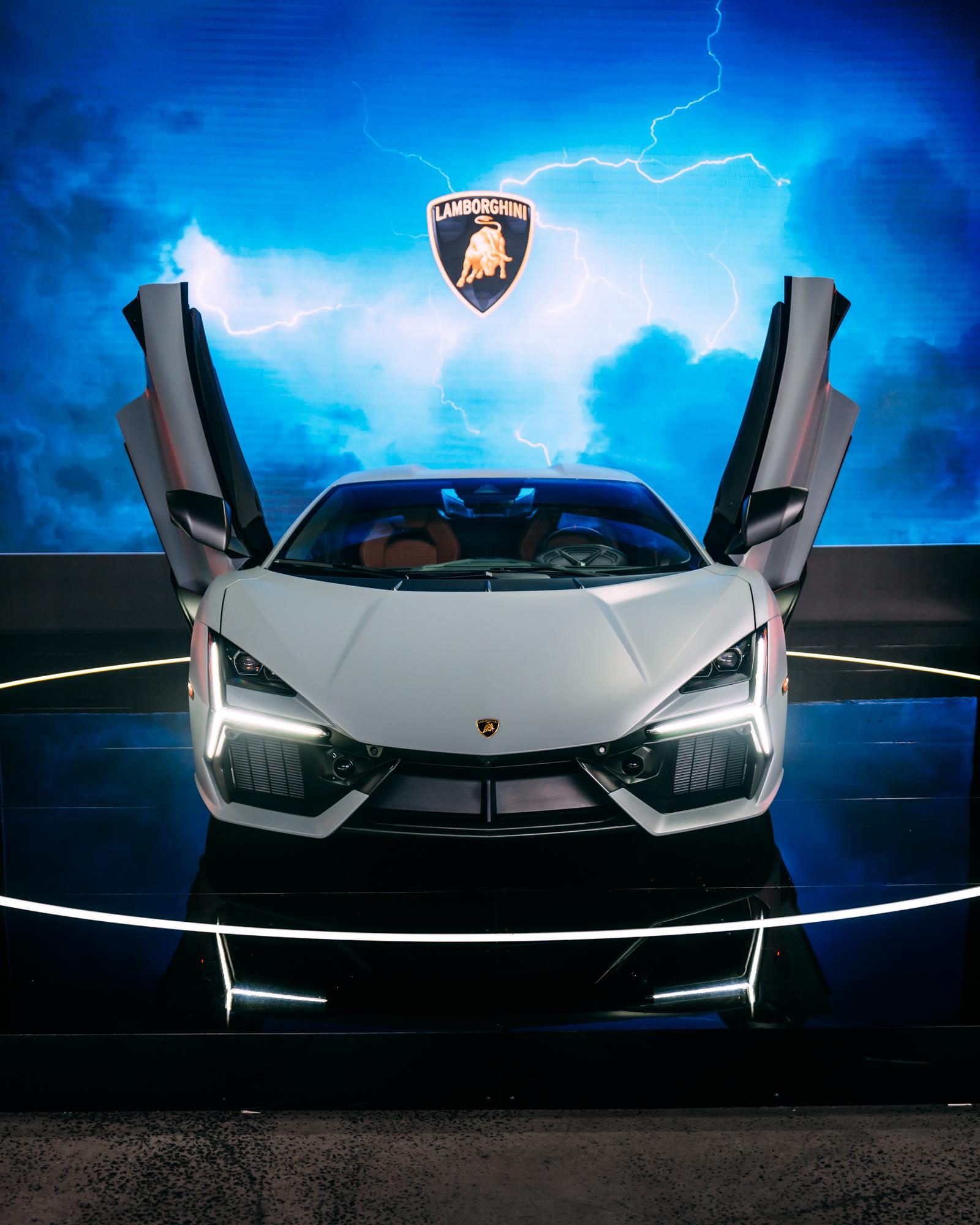
The new Lamborghini Revuelto makes its grand debut on a stage with dynamic lighting and a striking digital backdrop.
Four Days Through Victoria: The Esperienza Giro as a Loyalty Engine
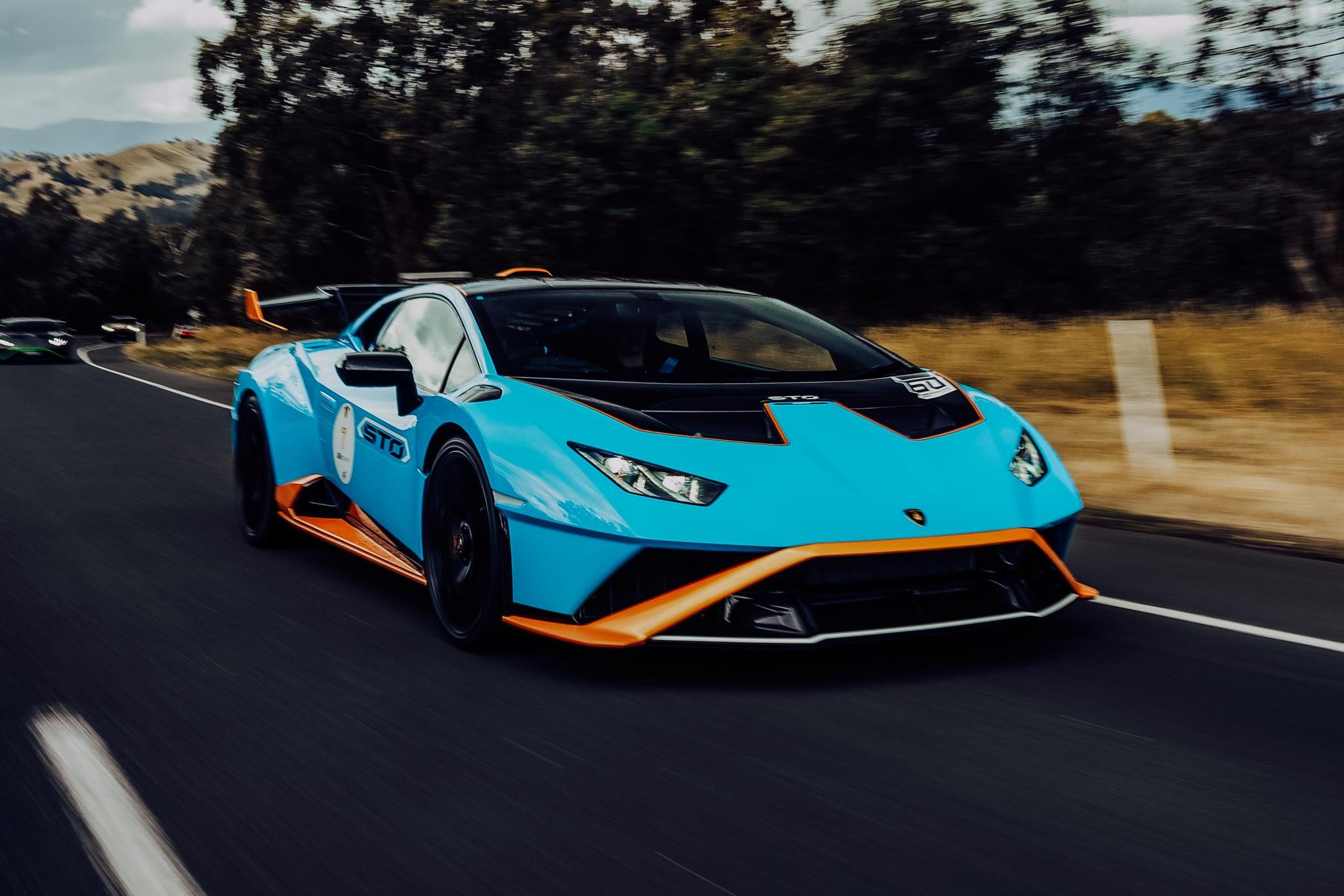
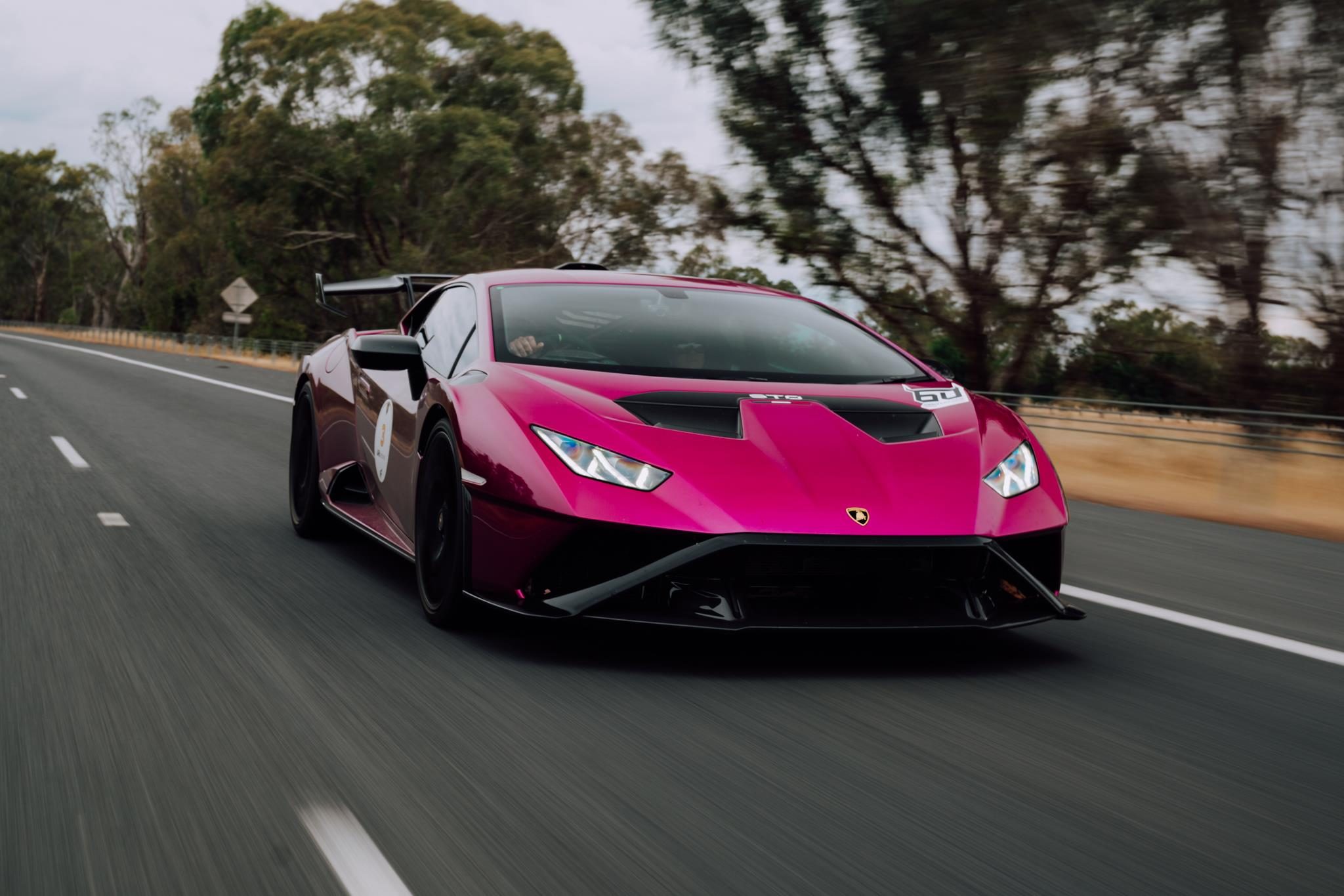
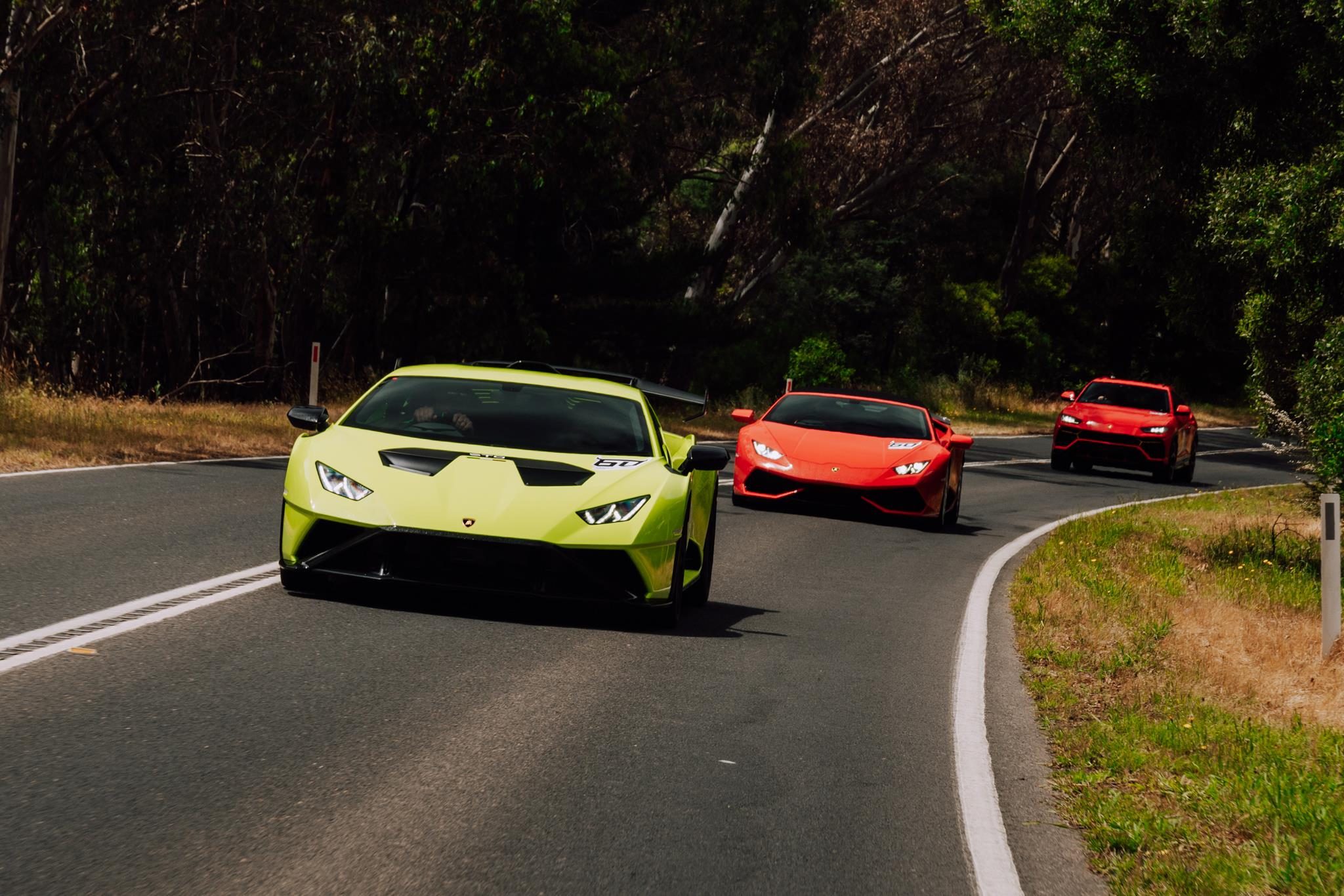
Before the Revuelto took the stage, over 40 owners from across the region gathered for the Esperienza Giro Oceania, a four-day driving tour through northeastern Victoria. A convoy of 20 super sports cars and super SUVs wound through the Yarra Ranges, climbed toward Falls Creek, and stopped in Milawa before the entire group converged on Melbourne for the launch.
The Giro format reveals how Lamborghini thinks about retention during its electrified transition. At this price point, every manufacturer competes for the same pool of ultra-high-net-worth buyers. The differentiator is rarely the roads or the catering; it is whether the experience makes owners feel like members of something exclusive enough to keep them loyal when the next competitor release appears. Lamborghini’s version leans into heritage continuity: mixing a classic Diablo with modern Huracán STOs and Urus models in the same convoy creates a visual timeline of the brand, reinforcing the idea that the Revuelto waiting at the finish line belongs in that lineage. Owners who drive together tend to buy together, and every Giro participant became an ambassador for the new car before it was publicly shown.

A classic blue Lamborghini Diablo leads a dynamic convoy of modern Lamborghinis down a tree-lined highway.
Commissioned Art and a Painted Urus: Lamborghini’s Cultural Bet
The art component functions as more than window dressing. Lamborghini commissioned individual artists from each of its six Oceania dealership cities (Adelaide, Auckland, Brisbane, Melbourne, Perth, and Sydney) to create works tied to both brand heritage and local culture. The results ranged from James Cochran’s aerosol pointillist “Desert Bull” depicting the Huracán Sterrato in the South Australian outback, to a custom-painted surfboard by Brisbane’s Chris Riley, to a racing helmet by New Zealand’s Tyler Richardson that merged the Italian tricolour with Lamborghini design cues.
The centrepiece was the Urus Performante painted by Sydney artist Steen Jones, titled “Toro Australiano,” covered in bold designs including a UV-reactive layer visible only in darkness. Vincent Fantauzzo contributed a photorealistic canvas of the Countach LPI-800-4, bridging past and present in a single image.
What makes this more than gallery filler is the dealer-level commissioning structure. Each dealership sponsored its own city’s artist, creating a direct link between the local market and the brand’s global identity. For a company asking buyers to accept a fundamentally new powertrain philosophy from a factory in Sant’Agata Bolognese, that localized cultural investment carries weight and turns each artwork into a conversation piece at the dealership long after the launch ends.

The exhibition showcases a vibrant array of Lamborghini art, from classic Miura murals to modern Revuelto paintings.
V12 Heritage on Display: From the 400 GT to the Aventador SVJ 63
Alongside the Revuelto, Lamborghini assembled a timeline of V12 models: the 400 GT 2+2, Miura SV, Countach, Diablo SV, Murciélago SV, and Aventador SVJ 63. Each car represents a generation of the twelve-cylinder lineage, and placing the Revuelto at the end of that sequence frames it as the next chapter rather than a departure.
The staging was calculated. The transition from a pure naturally aspirated V12 to a V12 hybrid plug-in inevitably raises questions among purists. By physically surrounding the Revuelto with its ancestors, Lamborghini answered those questions before they were asked. Whether that argument holds up depends on the driving experience, and early independent assessments suggest it does. Car and Driver described the V12’s sound as “glorious” without turbochargers, calling the car “revolutionary” compared to the Aventador it replaces. Road & Track named the Revuelto its 2025 Performance Car of the Year.

The iconic blue Lamborghini Diablo leads the way on a scenic road, followed by a modern white Lamborghini.
The Revuelto’s Engineering Case: Why the Hybrid V12 Matters
Classified by Lamborghini as a High-Performance Electrified Vehicle (HPEV), the Revuelto is the company’s first V12 hybrid plug-in. Combined output of 1,015 CV comes from a new 6.5-litre naturally aspirated V12 working with three electric motors: two axial flux units on the front axle and one radial flux motor integrated with an eight-speed double-clutch gearbox, another first for a twelve-cylinder Lamborghini.
That gearbox swap alone represents a philosophical shift. Every previous V12 Lamborghini from the Murciélago through the Aventador used a single-clutch automated manual. The move to a double-clutch unit eliminates the Aventador’s characteristically abrupt shifts. The lithium-ion battery pack delivers 4,500 W/kg specific power and supports a fully electric drive mode, while the front electric motors enable torque vectoring and all-wheel drive on electricity alone.
The carbon fiber monofuselage extends beyond the tub into most bodywork panels. Lamborghini claims a weight-to-power ratio of 1.75 kg/CV, the best in the company’s history. Acceleration to 100 km/h takes 2.5 seconds, with a top speed exceeding 350 km/h. Production slots are reportedly sold through 2026.

The new Lamborghini Revuelto showcases its striking design and vibrant red brake calipers in a dynamic, neon-lit setting.
Space Race Design: Aerospace Ambition Meets V12 DNA
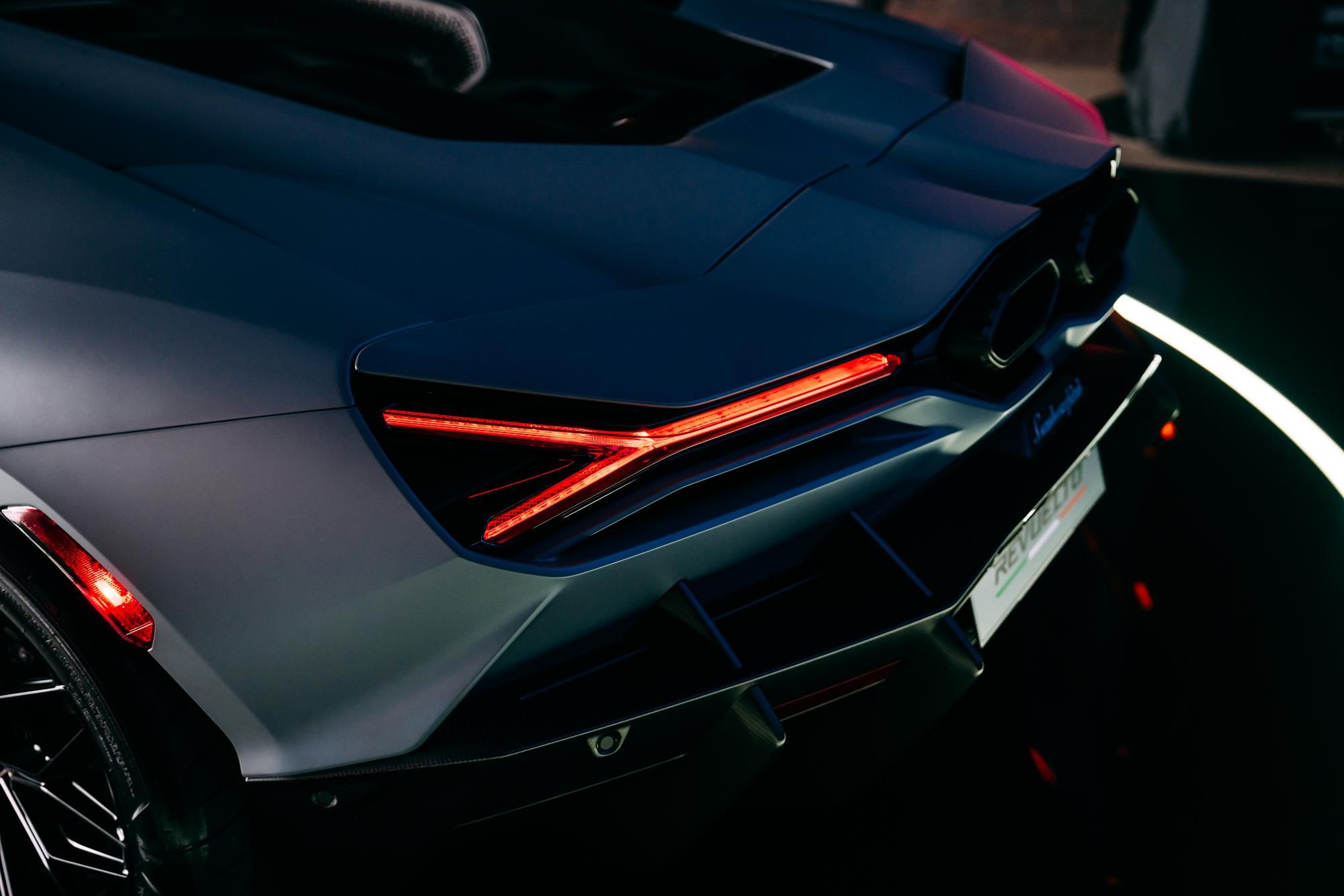
Lamborghini calls the Revuelto’s design language “Space Race,” positioning it as the aesthetic framework for the brand’s electrified future. Aerospace references appear in the sculpted surfaces, hexagonal exhaust outlets, and Y-shaped daytime running lights that now serve as the brand’s contemporary signature. Two prominent body lines originate at the front and wrap around the cabin and engine bay before tapering toward the rear.
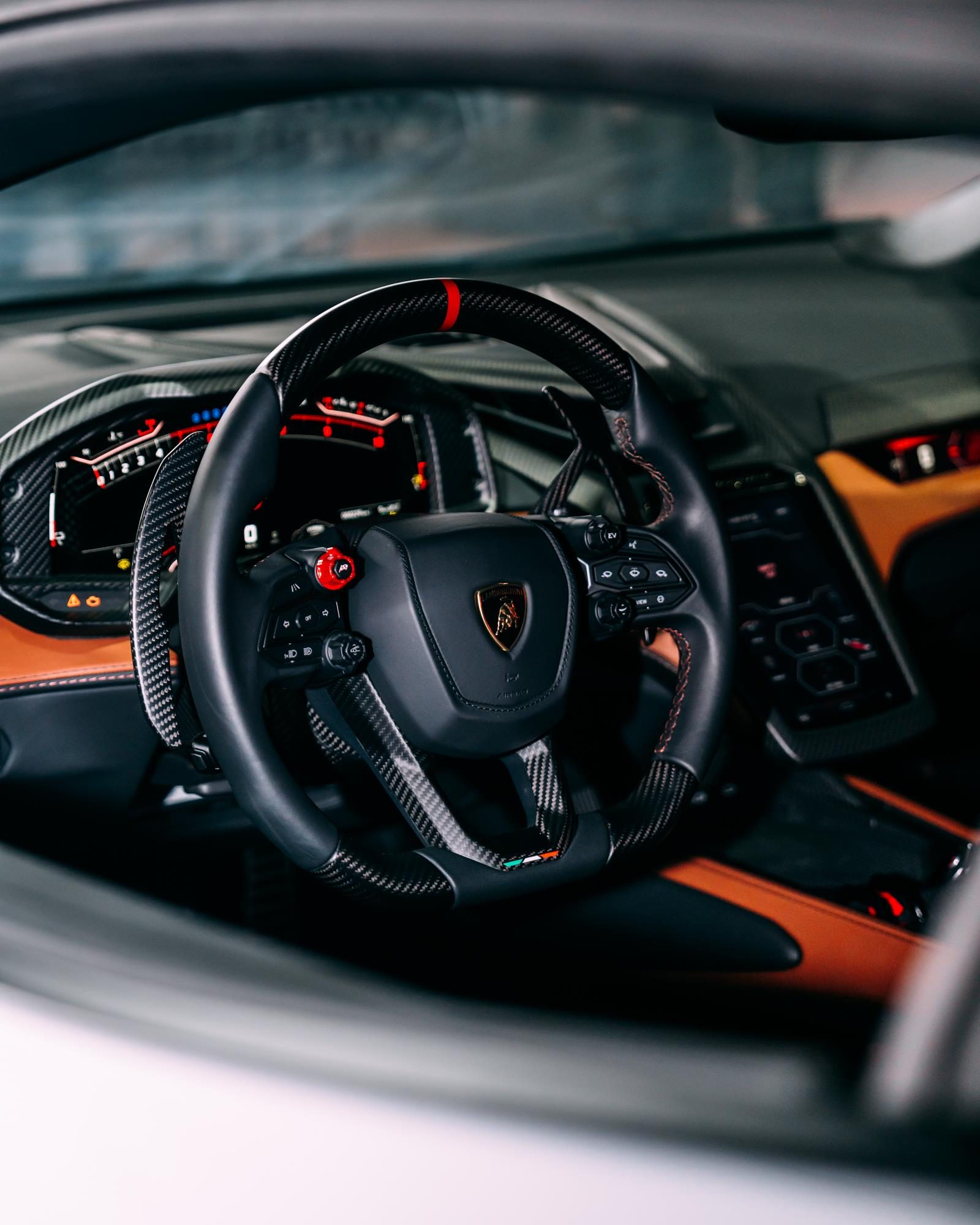
The design team drew explicit connections to previous V12 cars: the 1971 Countach prototype’s single longitudinal proportion line, the Diablo’s floating rear fender blade, and the Murciélago’s muscular, forward-leaning stance all appear in the Revuelto’s visual vocabulary. Scissor doors return. Lamborghini says the roof profile channels air to the rear wing while providing 26 mm more headroom and 84 mm more legroom than the Aventador Ultimae, a genuine packaging achievement given the car also accommodates a battery pack and three electric motors. The interior features a 12.3-inch digital cockpit, an 8.4-inch central touchscreen, and a 9.1-inch passenger display with a swipe function that moves information between screens.

The intricate Y-shaped daytime running lights of the Lamborghini Revuelto showcase its distinctive and aggressive front design.
The Ferrari Question: Two Philosophies for the Hybrid Supercar Era
Any discussion of the Revuelto’s significance eventually arrives at Maranello. Ferrari’s SF90 Stradale and 296 GTB represent the other dominant philosophy: a twin-turbo V8 in the SF90 and a twin-turbo V6 in the 296 GTB, each paired with electric assistance. Lamborghini kept its V12 naturally aspirated, using electric motors to supplement torque rather than compensate for downsized displacement.
Ferrari’s hybrids prioritize thermodynamic efficiency and packaging density. Lamborghini’s approach preserves the high-revving, atmospheric V12 experience that defines the brand’s emotional identity, then layers electric torque on top for low-end response and all-wheel-drive capability. For Lamborghini buyers, the Revuelto’s answer is reassuring: the V12 remains the star, and the electric motors fill in the gaps rather than replace the combustion engine’s personality. The market responded accordingly, with production reportedly sold through 2026.
What Oceania Buyers Should Know
Lamborghini did not announce specific Oceania pricing at the Melbourne event. One report places the Australian starting price at AUD $987,000 plus on-road costs, with New Zealand base pricing at NZD $975,000, though optioned examples typically cross NZD $1 million. With 400 bodywork colours available through the Ad Personam program, final transaction prices will vary considerably.
For prospective Oceania owners, availability rather than price is the primary constraint. With global production reportedly sold through 2026, securing an allocation requires an existing dealer relationship. The Melbourne event, with its blend of owner engagement, heritage display, and cultural programming, functioned partly as a reminder of what that relationship delivers beyond the car itself.
For existing owners, the Esperienza Giro format signals that Lamborghini intends to invest in Oceania as more than a delivery destination. Curated driving tours, locally commissioned art, and dealer-level cultural partnerships suggest the brand sees this market as worth cultivating with the same intensity it brings to Europe and North America. That commitment, more than any single spec figure, is what the Melbourne weekend was really about: proving that the transition to an electrified V12 flagship does not mean abandoning the rituals, the community, or the theatre that have always surrounded a Lamborghini launch.

An impressive aerial view captures a vibrant array of Lamborghini models parked in a mountain lot.
Gallery