Lamborghini Plants Its Flag in Cape Town
When Lamborghini officially opened a new showroom in Cape Town in July 2018, the company did more than cut a ribbon in South Africa. It chose this facility as the first of twelve across the entire Middle East and Africa region to carry the brand’s updated corporate identity, turning a single dealership inauguration into a statement about where Lamborghini sees its next wave of growth.
Chairman and CEO Stefano Domenicali flew in from Sant’Agata Bolognese with other board members for the occasion, and the brand used the evening to give the Urus Super SUV its South African debut. That combination of executive presence, a flagship product reveal, and a pilot rollout of the new retail identity tells a clear story: Cape Town is not a peripheral outpost but a proving ground for how Lamborghini intends to present itself across an entire macro-region.
A New Corporate Identity, Tested Here First
For a brand that sells cars costing several hundred thousand dollars, the showroom environment is part of the product. Lamborghini’s updated corporate identity, as it appeared in Cape Town, represents a shift in how the company wants clients to experience the brand from the moment they walk through the door. Dealers in Dubai, Riyadh, and other Gulf markets will eventually adopt the same template, but Cape Town got it first. For a city that sometimes gets overlooked in favor of Middle Eastern luxury hubs, the distinction is a quiet compliment from Sant’Agata Bolognese.
Lamborghini positioned the Cape Town space as a long-term hub, describing it as a twenty-year reference point for clients and enthusiasts rather than a temporary retail presence. That framing is deliberate. A two-decade commitment to a single facility suggests the company views South Africa not as a speculative market worth testing with a pop-up, but as a region deserving permanent infrastructure. For prospective buyers in the area, the practical takeaway is straightforward: local service, local relationships, and a showroom environment designed to match the global Lamborghini standard rather than lag behind it.
One detail Lamborghini left unaddressed is the specific design vocabulary of the new identity: the materials, lighting concepts, and spatial layout that distinguish it from the previous showroom template. The company confirmed the adoption but did not elaborate on what clients will notice compared to an older Lamborghini dealership. For enthusiasts tracking the brand’s evolution, that visual comparison remains a gap worth watching as additional MEA locations convert.
Why the Urus Led the Way
Choosing to debut the Urus at this event rather than the Huracán or Aventador reveals Lamborghini’s expansion calculus. The Super SUV is the model that opens doors to buyers who might never consider a low-slung mid-engined supercar for daily use but respond immediately to the idea of Lamborghini performance in a more versatile package.
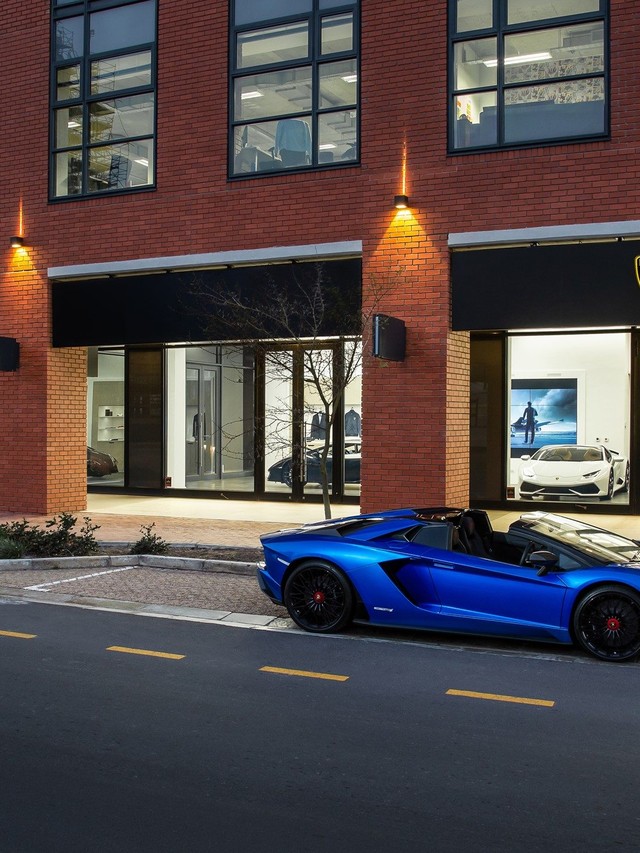
Images from the opening night show a striking blue Aventador S Roadster parked outside the showroom, with additional Lamborghini models visible through the windows. The Aventador’s presence alongside the Urus reinforces the point: the SUV gets people through the door, but the V12 flagship reminds them what the bull on the badge actually represents. By pairing the Urus debut with a flagship-standard retail environment, Lamborghini made a play for buyers who might otherwise default to more established luxury presences in the South African market.
What Cape Town Signals for Lamborghini’s Next Chapter
Showroom openings rarely generate the same excitement as a new model reveal, but this one deserves attention for what it communicates about Lamborghini’s confidence in its own growth trajectory. Sending the CEO and board members to inaugurate a facility in a market that most supercar brands treat as secondary is a statement of intent. The Urus gives Lamborghini a product that justifies the investment; the refreshed corporate identity gives every future visitor a reason to believe the brand takes the region seriously.
For prospective South African buyers, the practical reality is simple: a factory-backed showroom with the latest brand standards means access to factory-trained service and a direct relationship with Sant’Agata Bolognese that independent importers cannot replicate. Whether the Urus or a future supercar is the goal, the infrastructure now exists to support the full ownership experience. Cape Town is not just another pin on the map. It is the template.
Gallery


