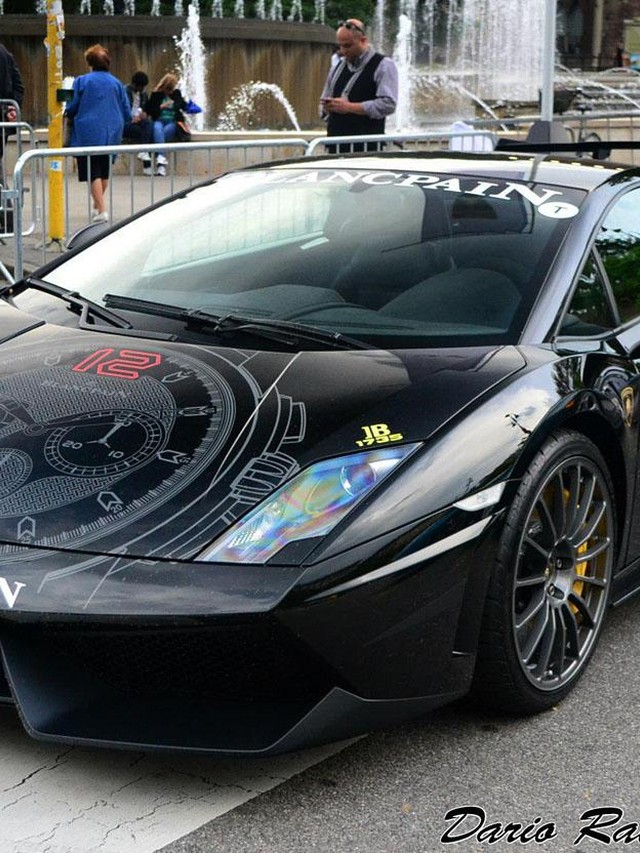
Seventeen Huracáns, One Pit Stop Penalty, and a Podium Rewritten
Round 5 of the 2018 Lamborghini Super Trofeo North America series, held August 5 at Road America’s 14-turn, 4.048-mile circuit in Elkhart Lake, Wisconsin, delivered the kind of result that makes customer racing so unpredictable: the car that crossed the line third never made the podium, and the car that did never passed it on track.
Seventeen Huracán Super Trofeo Evo machines took the green flag behind polesitter Shinya Michimi in the No. 46 PPM entry, representing Lamborghini Palm Beach. The opening 20 minutes produced tight, clean racing, with four Pro class cars separated by fewer than two seconds. Trent Hindman in the No. 1 Wayne Taylor Racing car and Edoardo Piscopo in the No. 50 US RaceTronics entry filled out the top three before the mandatory pit window opened with 30 minutes remaining.
The pit cycle is where the race pivoted. Michimi handed off to co-driver Brandon Gdovic, and the PPM crew executed a stop that preserved their lead. Gdovic brought it home 1.3 seconds ahead of the No. 1 Wayne Taylor Racing, Lamborghini Paramus car, now driven by Jonathan Ceccotto alongside Hindman. The No. 50 US RaceTronics entry crossed the line third overall, but race officials assessed a 0.6-second penalty for a pit stop that fell below the minimum time. That fraction of a second bumped Corey Lewis and Madison Snow in the No. 29 Change Racing, Lamborghini Charlotte car onto the podium instead. In customer racing, the garage decides outcomes as often as the track does.
Pro-Am Collision and an AM Class Battle Decided in the Pits
The same theme of razor-thin margins played out across every class. In Pro-Am, Loris Spinelli and JC Perez in the No. 71 P1 Motorsports, Lamborghini Broward entry held a commanding position until contact with Brian Thienes in the No. 17 US RaceTronics car eliminated both from the race in the closing laps. That collision handed the Pro-Am victory to Stevan McAleer and Randy Sellari in the No. 10 Wayne Taylor Racing, Lamborghini Paramus car, a result that underscored how thin the margins are when gentlemen drivers and professionals share the grid.
The AM class told its story in the pit lane rather than on circuit. Patrick Liddy led the opening stint from the No. 5 P1 Motorsports entry, but Damon Ockey in the No. 09 US RaceTronics, Lamborghini Calgary car emerged ahead after the pit cycle and held on for a victory of just over one second. Ockey was straightforward about it afterward, crediting an excellent pit stop for the position change rather than any dramatic on-track pass.
LB Cup produced its own subplot. Steve Dunn spun his No. 47 PPM car around the 20-minute mark, handing the lead to Brett Meredith in the No. 66 GMG Racing, Lamborghini Newport Beach entry. Meredith held off Sheena Monk in the No. 7 Wayne Taylor Racing car for the win. Lamborghini says it was his second consecutive victory and third consecutive podium since joining the series, the kind of rapid progression the Super Trofeo ladder is designed to encourage.
What the Drivers Actually Said
Michimi’s post-race comments captured the intensity of those opening laps better than any timing sheet could. He described checking his mirrors every lap and seeing Hindman glued to his bumper, with two more Pro cars stacked behind. Practice times had been separated by tenths, and race mode compressed those gaps even further.
Gdovic, who only needed four or five laps after the driver swap thanks to two caution periods, was candid about his contribution: the car came to him with the lead, and he simply kept it there. More revealing was the mention of a new track record, suggesting the PPM team had found genuine pace rather than inheriting a result.
Meredith’s quote offered a window into the LB Cup experience. He described a car that was “so easy to drive” once he took the lead, crediting his GMG Racing crew for a setup that inspired confidence. For amateur and semi-professional drivers, that kind of mechanical trust is what separates a customer racing series from an expensive track day. Across every class at Road America, the pattern held: outcomes turned on pit strategy, crew execution, and split-second penalties as much as on raw driving talent.
The Super Trofeo as Lamborghini’s Motorsport Foundation
Races like this 2018 Road America round illustrate what the Super Trofeo series accomplishes beyond trophies and champagne. Launched in 2009, the single-make championship gives Lamborghini a controlled environment to develop driver talent, stress-test components under racing loads, and build dealership loyalty through team affiliations. Every car on the 2018 grid carried a dealership name: Lamborghini Palm Beach, Lamborghini Paramus, Lamborghini Charlotte, Lamborghini Beverly Hills. The series functions as both a competition platform and a retail engagement tool, binding customers to their local dealer through shared racing campaigns.
The Huracán Super Trofeo Evo that competed in 2018 was a purpose-built, non-street-legal machine derived from the V10 Huracán platform. It ran Öhlins dampers, X-Trac sequential gearboxes, and full carbon bodywork, stripped to the essentials of single-make competition. Autoblog recently reported on a Michigan dealer selling a road-titled Super Trofeo, highlighting just how rare and desirable these track-only cars remain years after their competitive careers.
Ferrari and Porsche both operate their own customer racing ladders in broadly similar formats: identical cars, tiered classes, a pathway toward GT3 and beyond. Where Lamborghini’s program stands apart is the directness of the connection between its one-make series and its GT3 efforts. The Huracán GT3 Evo dominated customer GT racing for years, and the engineering lessons fed directly back into the Super Trofeo platform.
From the Huracán Grid to the Temerario GT3 Era
Viewing this 2018 race through a 2025 lens reveals the arc of Lamborghini’s motorsport strategy. The Huracán Super Trofeo Evo served as the backbone of Squadra Corse’s customer programs for nearly a decade. According to Autoblog, the Temerario GT3, unveiled at the 2025 Goodwood Festival of Speed, represents Lamborghini’s first competition car fully designed, developed, and built in-house. That is a significant structural shift: previous GT3 programs relied on external partners for chassis development.
For teams and drivers who built their programs around the Huracán’s naturally aspirated V10 characteristics, the transition to the twin-turbo V8 Temerario platform will demand adaptation to a different powerband, altered weight distribution, and the complexities of turbo management in wheel-to-wheel racing. Lamborghini has not disclosed whether a Temerario-based Super Trofeo car will replace the Huracán in the one-make series, but the logic of the platform progression makes it a reasonable expectation.
The 2018 Road America grid, with its penalties, collisions, and one-second victories, captured the Super Trofeo at its most compelling. Whatever hardware Squadra Corse fields next, the format itself remains Lamborghini’s most effective argument that its cars perform under pressure, not just on specification sheets.
Gallery


