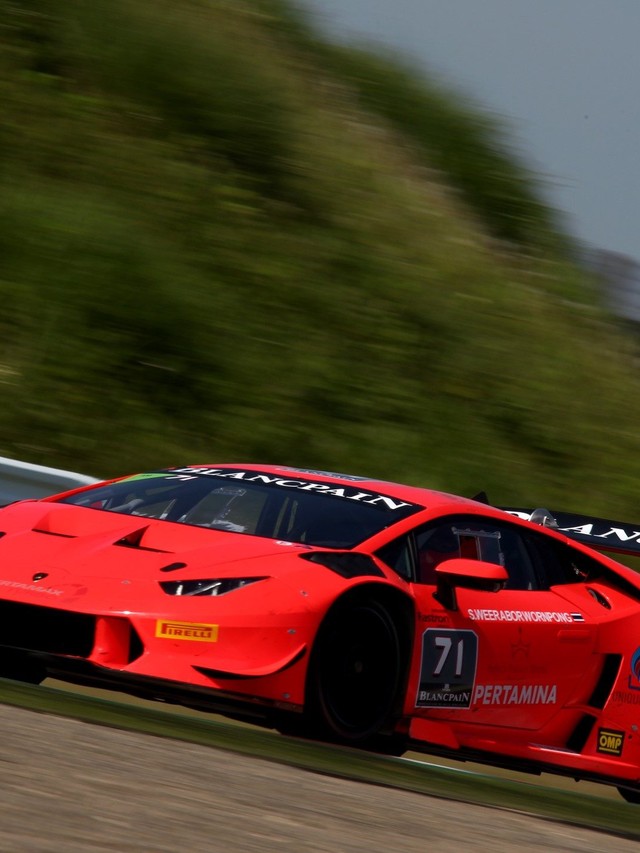
Thailand Takes the Stage: A First for the Super Trofeo Asia Series
When Lamborghini’s Blancpain Super Trofeo Asia series rolls into the Buriram United International Circuit later this month for the third leg of the 2016 championship, it will mark the first time the one-make Huracán LP 620-2 grid has raced on Thai soil. For a brand that treats its customer racing program as a rolling showroom and client cultivation tool, the choice of venue says as much about commercial ambition as it does about motorsport.
Buriram itself is hard to fault. Designed by Hermann Tilke and opened in 2014, the 4.55-kilometer circuit holds FIA Grade 1 and FIM Grade A certifications, a first for any track in Thailand. The Japanese Super GT, World Touring Car Championship, World Superbike Championship, and Asian Le Mans Series have all raced on its tarmac, giving it international credibility that few newer Asian venues can match. Lamborghini says local support for the brand is growing rapidly in Thailand, and Thai racing driver Supachai Weeraborwornpong captured the mood at the series’ opening round in Shanghai:
“I am very excited; it’s a new track for Super Trofeo, it’s very exciting track and we would love to make Thailand a favorite spot for racing!”
Buriram is not the only new addition. Suzuka in Japan hosted Round 2 last month, meaning two fresh venues joined the Asia series roster in a single season. That kind of aggressive calendar expansion tells you something about the commercial appetite Lamborghini Squadra Corse sees across the region, and about the role the Super Trofeo plays in cultivating it.
The Rolling Showroom: Racing as a Luxury Brand Experience
Strip away the lap times and championship points and the Super Trofeo series operates, at its core, as one of the most expensive brand activations in the automotive world. At every stop on the Asia calendar, Lamborghini and its dealer network host VIP guests with premier hospitality and fine Italian dining. The paddock becomes a curated environment where prospective buyers, existing owners, and regional media experience the brand at full volume, literally and figuratively.
Ferrari runs its Challenge series with a similar blend of competition and client cultivation, and Porsche’s Carrera Cup functions as a feeder for GT racing while keeping wealthy amateurs engaged. What distinguishes the Super Trofeo approach in Asia is the deliberate pairing of new market entry with the hospitality apparatus. Lamborghini is not just adding a race to the calendar in Thailand; it is staging a weekend-long brand immersion in a country where its dealer footprint is still maturing.
The logic is straightforward: the person standing in the VIP lounge watching a Huracán brake from 250 km/h into Turn 1 is far more likely to sign a purchase order than someone who reads a spec sheet at home. Thailand represents a luxury automotive market with significant growth potential, and planting the Super Trofeo flag at Buriram turns a race weekend into an experiential showroom aimed squarely at the buyers Lamborghini wants most.
The Huracán LP 620-2: Built to Race, Bred from the Road Car
The 2016 season marks the first year the Huracán LP 620-2 Super Trofeo stands alone on the grid, without any legacy Gallardo-based machinery sharing the field. That transition matters because it sharpens the connection between the car on track and the one in the showroom, reinforcing the series’ role as a brand experience rather than a pure motorsport exercise.
Under the bodywork, the Super Trofeo uses the same 5.2-liter naturally aspirated V10 found in the road car, managed by a Motec control unit and producing 620 horsepower. Its hybrid carbon/aluminum frame borrows the road car’s fundamental architecture but features modified geometries to accommodate an improved front radiator and a racing gearbox at the rear, changes that also yield aerodynamic benefits. At 1,270 kg dry, the car delivers a weight-to-power ratio of 2.05 kg/CV. The rear-wheel-drive configuration is a deliberate choice, mirroring the layout common in GT racing classes and giving drivers a more demanding, skill-dependent platform than the all-wheel-drive road car. Independent reports indicate the car is equipped with 12-position racing ABS and 9-position traction control, giving competitors meaningful latitude to tune behavior to their driving style and track conditions.
Buriram’s mix of long straights and technical corners, combined with Thailand’s characteristic heat and humidity, should provide a revealing test of both driver and machine. Two 50-minute sprint races are scheduled: Round 1 at 14:50 on Saturday, July 23, and Round 2 at 12:20 on Sunday, July 24, with qualifying beginning at 10:25 Saturday morning.
Asia’s Expanding Grid: New Drivers, New Nations, New Ambitions
The commercial logic of the Thailand debut becomes clearer when you look at who is actually on the grid. Lamborghini says the 2016 field includes competitors from eight Asian nations, with a notable influx of new entries from China. The championship structure accommodates this breadth of experience with four distinct classes: Overall, Pro-Am, Am, and the Lamborghini Cup, which is reserved for rookies and new drivers. The car is identical across every class, so the playing field stays level. Only the driver’s classification changes.
That tiered approach is critical to the series’ function as a client pipeline. A wealthy enthusiast who has never raced competitively can enter the Lamborghini Cup, receive factory-level support, and progress through the ranks over multiple seasons. The pathway from enthusiastic owner to international competitor is engineered to be as smooth as the brand can make it, and it leads somewhere tangible: the Super Trofeo World Final. For 2016, the Asia, Europe, and North America series converge at Circuit Ricardo Tormo in Valencia, Spain, where continental champions race for a global title. A driver who starts in the Lamborghini Cup in Buriram could, in theory, work toward that Valencia grid within a few seasons.
The practical question most prospective entrants ask is cost. Lamborghini does not publicly disclose a comprehensive season price, and the total outlay (car purchase, transport, team fees, tires, consumables, hospitality) varies significantly by region and team arrangement. The Super Trofeo sits below GT3-level racing in both cost and regulatory complexity, making it a more accessible entry point for client racers who want genuine competition without the full infrastructure demands of an FIA-sanctioned GT program. That accessibility is precisely what makes the series such an effective gateway to the broader Lamborghini ecosystem.
Strategic Context: What Thailand Tells Us About Lamborghini’s Priorities
Zoom out from the Buriram paddock and the Thailand debut fits into a pattern that has been building since the Super Trofeo series launched in 2009. The 2016 Asia calendar spans 12 rounds across six race weekends, with the first five events staged at prominent Asian circuits before the World Final in Spain. Adding both Suzuka and Buriram in a single season suggests Lamborghini Squadra Corse is accelerating its investment in the region rather than testing the waters cautiously.
Southeast Asia, and Thailand in particular, represents a market where luxury car sales are climbing but where brand loyalty is still being formed. A manufacturer that can offer track time, hospitality, and a championship pathway alongside its road cars builds a relationship that a brochure simply cannot replicate. The Super Trofeo now functions as a three-continent operation with a unified World Final, and each new venue on the calendar represents a bet on where future buyers will come from. The cars on the Buriram grid are purpose-built racing machines, but the real product being sold is membership in the Lamborghini ecosystem, and that ecosystem, in 2016, is expanding faster in Asia than anywhere else.
Whether Buriram becomes a permanent fixture on the calendar or rotates with other emerging circuits remains to be seen. Lamborghini has already accomplished something concrete, though: planting its flag at a world-class facility in a market that competitors are also eyeing. In customer racing, the first mover advantage in hospitality and brand presence can be surprisingly durable.
Gallery


