Day One Drama: North American Teams Set the Pace at the Lamborghini World Final
The Circuito de Jerez served up near-90-degree heat for the opening day of the Lamborghini Super Trofeo World Final, and when the first pair of 50-minute races concluded on Saturday, the North American contingent had seized control of the championship narrative. In three of the four classes, drivers from the North American series finished first or second, a statement of regional depth that would have seemed unlikely when the series launched on the continent only six years earlier.
Steve Aghakhani, a 16-year-old racing under the US RaceTronics banner and representing Lamborghini Beverly Hills, took the overall and AM class victory in the opening race, his third consecutive win of the weekend. McKay Snow of Change Racing (Lamborghini Charlotte) secured second overall and in the AM class, while Cameron Cassels, running with Prestige Performance and Wayne Taylor Racing out of Lamborghini Paramus, finished fourth in class. In the LB Cup category, Supercross champion Chad Reed, competing for Dream Racing and Lamborghini Atlanta, collected his sixth win of the season.
The second race brought the Pro and Pro AM fields together, and once again North American entries were central to the story. Sandy Mitchell and Andrea Amici, also from the Prestige Performance / Wayne Taylor Racing stable, crossed the line just 0.137 seconds behind Europe’s Jonathan Cecotto for second in the Pro class. Conor Daly and Brandon Gdovic, driving the Precision Performance entry from Lamborghini Palm Beach, completed the podium in third.
The Super Trofeo World Final brings together the top finishers from all three continental championships (Europe, Asia, and North America) for a winner-take-all weekend. Lamborghini’s one-make series, organized by Squadra Corse, was established in Europe in 2009 and expanded to North America in 2013. Every driver competes in an identical Huracán Super Trofeo EVO, a rear-wheel-drive, race-spec machine built around aggressive aerodynamics and lightweight construction. The format eliminates equipment advantages and puts the spotlight squarely on driver skill and team strategy.
A Prodigy’s Pursuit: Steve Aghakhani’s Bid for History
Lamborghini says Aghakhani is positioned to become the youngest world champion in the series’ history, and his Day One performance made that ambition look credible rather than aspirational. Driving the No. 106 car, he managed tire degradation in extreme heat while holding off experienced competitors from the European and Asian series. His post-race comments were measured for someone his age: he acknowledged the quality of the field and described the challenge of preserving tire life in conditions that punished aggression.
Aghakhani and Jacob Eidson previously won together at Watkins Glen during the 2021 Lamborghini Super Trofeo North America season, a result that signaled early that Aghakhani belonged at this level. His trajectory illustrates how Squadra Corse uses the Super Trofeo as a development ladder. The series sits below GT3 competition, and strong performers can progress into factory-supported GT programs. It functions as Lamborghini’s equivalent of a junior academy: identify talent in the one-make series, then graduate the best into higher categories where the brand competes against Ferrari, Porsche, and McLaren.
A young driver enters through a regional championship, dominates, and arrives at the World Final with real momentum. Whether that translates to a GT3 seat in subsequent seasons depends on results and sponsorship, but the structure exists, and Lamborghini clearly wants to publicize it. Aghakhani’s weekend was the system working as designed.
From Supercross to Super Trofeo: Chad Reed’s Crossover Season
Chad Reed’s presence on the grid tells a different kind of story about the series’ reach. The Australian Supercross champion was in his first season of Lamborghini racing, and his LB Cup win at Jerez was his sixth of the year. Reed drove solo in the World Final after sharing a car with Justin Price during the North American rounds at Jerez on Friday. His own assessment was characteristically honest: he admitted struggling to find rhythm in the heat but noted every competitor faced the same conditions.
The LB Cup class exists partly for drivers like Reed. It accommodates competitors who bring serious athletic backgrounds and competitive instincts but lack years of circuit-racing experience. Lamborghini benefits from these crossover stories because they expand the brand’s audience beyond traditional motorsport circles. A Supercross champion racing a Huracán generates attention in communities that might never follow GT racing otherwise, and that kind of reach matters when you are selling a lifestyle as much as a car.
Six wins across the season suggest genuine pace, not a celebrity cameo. The North American LB Cup champion, Mel Johnson, finished second in the class race alongside teammate Thomas Lovelady, confirming that the North American LB Cup field arrived at Jerez with real depth. For prospective buyers curious about the Super Trofeo as a racing platform, Reed’s season is a useful data point: the series accommodates a wide range of experience levels while still producing competitive, meaningful racing.
Close Battles and Strategic Plays: The Pro and Pro AM Picture
The Pro class race delivered the tightest finish of the day. Sandy Mitchell made a late charge on Europe’s Jonathan Cecotto and crossed the line just 0.137 seconds behind, a gap that amounts to roughly two car lengths at racing speed. Mitchell’s post-race assessment was confident without being reckless: he noted the car showed strong pace and that starting second for the final race put his team in a favorable position.
Mitchell and co-driver Andrea Amici, representing Prestige Performance / Wayne Taylor Racing, entered the World Final as genuine contenders for the Pro title. Conor Daly, the IndyCar driver competing alongside Brandon Gdovic in the Precision Performance entry, added another layer of crossover credibility to the North American Pro field. Two of the top three Pro finishers on Day One carried North American entries, a result that would carry real weight heading into Sunday’s decisive race.
The Pro AM class told a similar story of North American competitiveness. Champions Damon Ockey and Jacob Eidson (US RaceTronics, Lamborghini Vancouver) finished second. Eidson drove the closing stint and cut a gap of more than ten seconds down to less than four on the eventual class winners, the No. 6 Imperiale Racing entry from Europe. That kind of closing pace, maintained over the final laps in brutal heat, indicated the North American Pro AM champions were far from outclassed by their European counterparts.
The pattern across all four classes reinforced a single point: the North American series, launched only in 2013, had matured rapidly. The competitiveness at the global event reflected both the growth of the customer racing market in the United States and Canada and the quality of teams like US RaceTronics and Wayne Taylor Racing that support these programs.

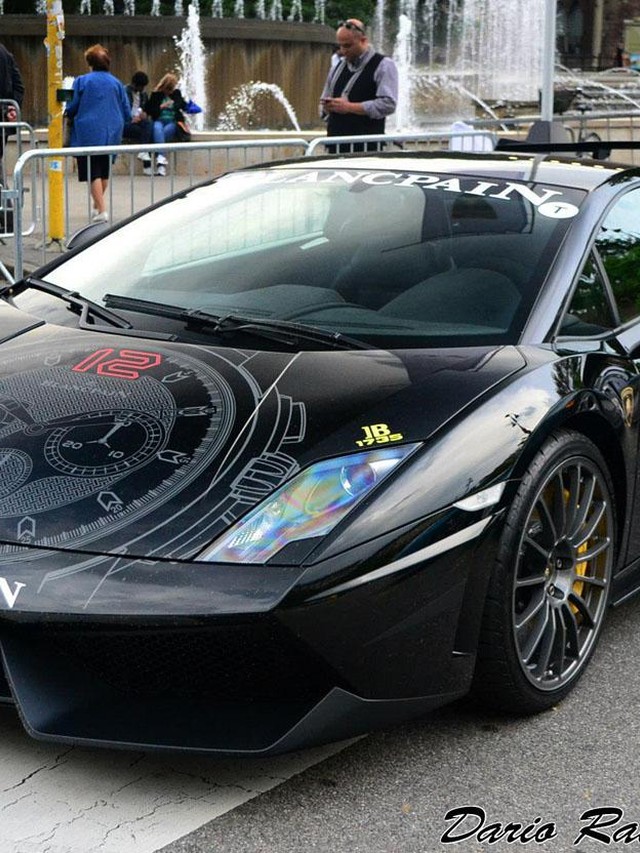
A Lamborghini Huracan Super Trofeo EVO race car speeds around a track, showcasing its distinctive black and teal livery.
The Global Stage: What a World Title Means for Lamborghini Racing
The Super Trofeo World Final functions as more than a trophy ceremony. It is Lamborghini’s most visible customer-racing showcase, a place where the brand demonstrates that its motorsport ecosystem can attract, develop, and celebrate drivers from three continents. Ferrari runs a similar structure with the Ferrari Challenge, and Porsche fields the Carrera Cup as its one-make platform. Each series serves a dual purpose: it gives wealthy enthusiasts a structured, professionally managed racing environment, and it feeds the manufacturer’s broader GT competition pipeline.
Lamborghini’s version distinguishes itself through the Huracán Super Trofeo EVO‘s character. The car retains a naturally aspirated 5.2-liter V10 in rear-wheel-drive configuration, a combination that rewards precision and punishes mistakes. That engineering philosophy, choosing driver engagement over electronic safety nets, aligns with how Lamborghini positions its road cars. The Super Trofeo is, in effect, the brand’s most direct expression of what it thinks racing should feel like for its customers.
For anyone considering entry into customer racing at this level, the World Final also serves as a practical showcase. Prospective entrants can observe the quality of team support, the professionalism of Squadra Corse’s organization, and the caliber of competition. Lamborghini does not publicly disclose the full cost of a Super Trofeo season, but the commitment involves purchasing or leasing the race car, funding a professional team, and covering travel to six double-race weekends plus the World Final. The investment is substantial, but the structure means competitors race on major international circuits with factory-level logistics.
Looking Ahead: The Decisive Final Day
Sunday’s concluding races were set to determine world champions in all four classes. Aghakhani entered the AM finale with maximum momentum, needing a strong result to clinch what Lamborghini says would be a record as the youngest champion in series history. Mitchell and Amici sat within striking distance of the Pro title, their 0.137-second deficit to Cecotto suggesting the final race could come down to a similar margin. Reed, six wins into his rookie season, was positioned to claim the LB Cup world championship.
The broader significance of these results extends beyond individual trophies. Lamborghini’s customer racing program feeds directly into its brand identity, and the World Final is where that identity gets tested against international competition. Strong North American performances reinforce the commercial argument for expanding the series in the region, attracting new teams and sponsors, and building the audience for Lamborghini motorsport content. Both races were available for streaming on the Lamborghini Squadra Corse YouTube page, a distribution choice that reflects the brand’s interest in reaching enthusiasts who follow racing digitally rather than trackside.
With the Temerario GT3 program now in development as Lamborghini’s first fully in-house competition car, according to Autoblog, the Super Trofeo’s role in the Squadra Corse ecosystem will eventually evolve. The Huracán platform that defined this era of customer racing is approaching the end of its competitive life, and the 2019 World Final at Jerez represented one of its peak moments: a global field, close racing in extreme conditions, and a cast of drivers ranging from a teenage prodigy to a Supercross legend. Whatever replaces it will inherit high expectations.


