The Same Twelve Cylinders, Two Completely Different Arguments
Lamborghini built the Countach to terrify the future and the LM 002 to conquer the desert. Both ran the same basic 60-degree V12. Deploying one naturally aspirated twelve-cylinder architecture in a razor-thin mid-engine supercar and a two-and-a-half-ton off-road bruiser remains one of the most audacious powertrain gambits in automotive history, and it tells you more about what makes Lamborghini tick than any spec sheet ever could.
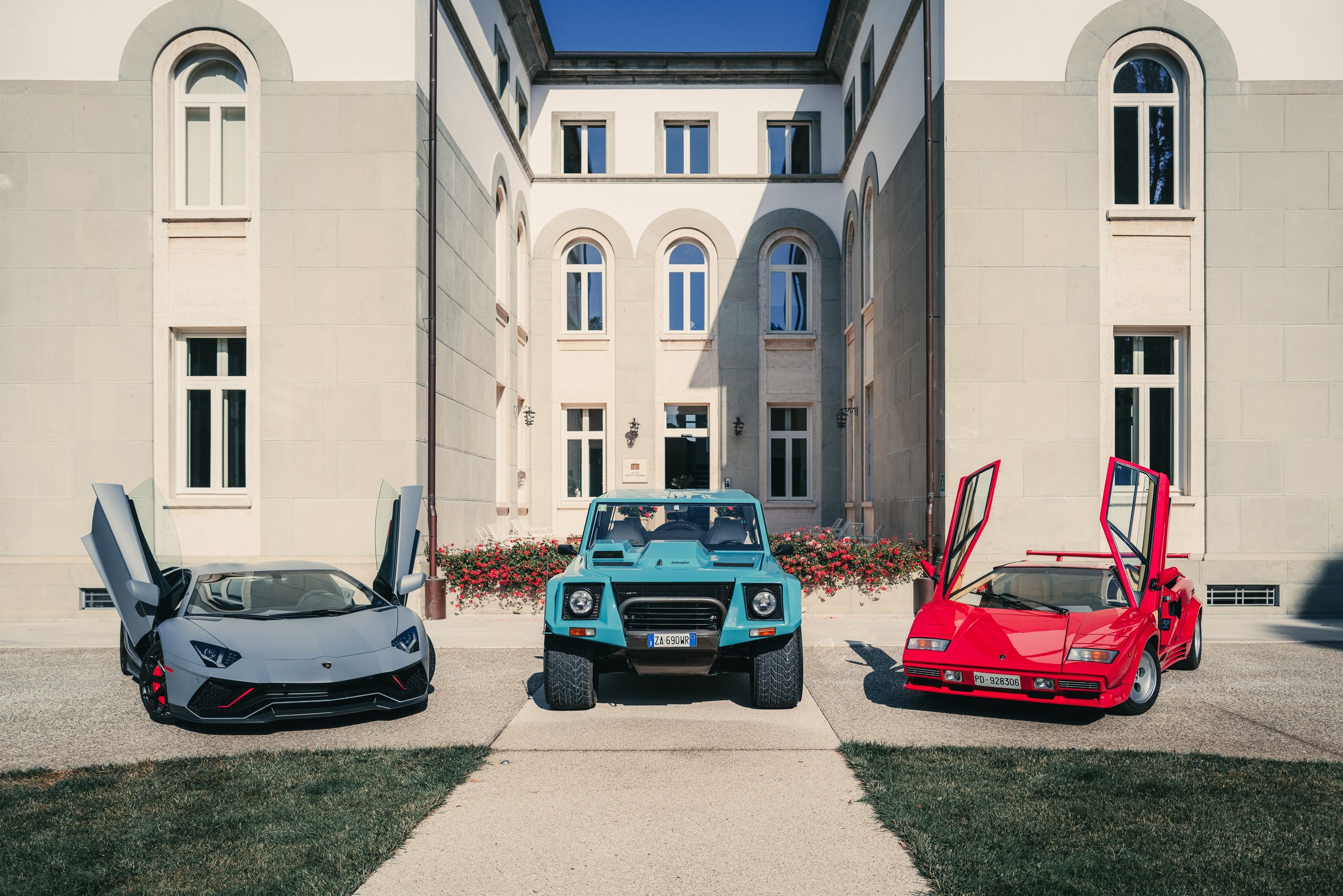
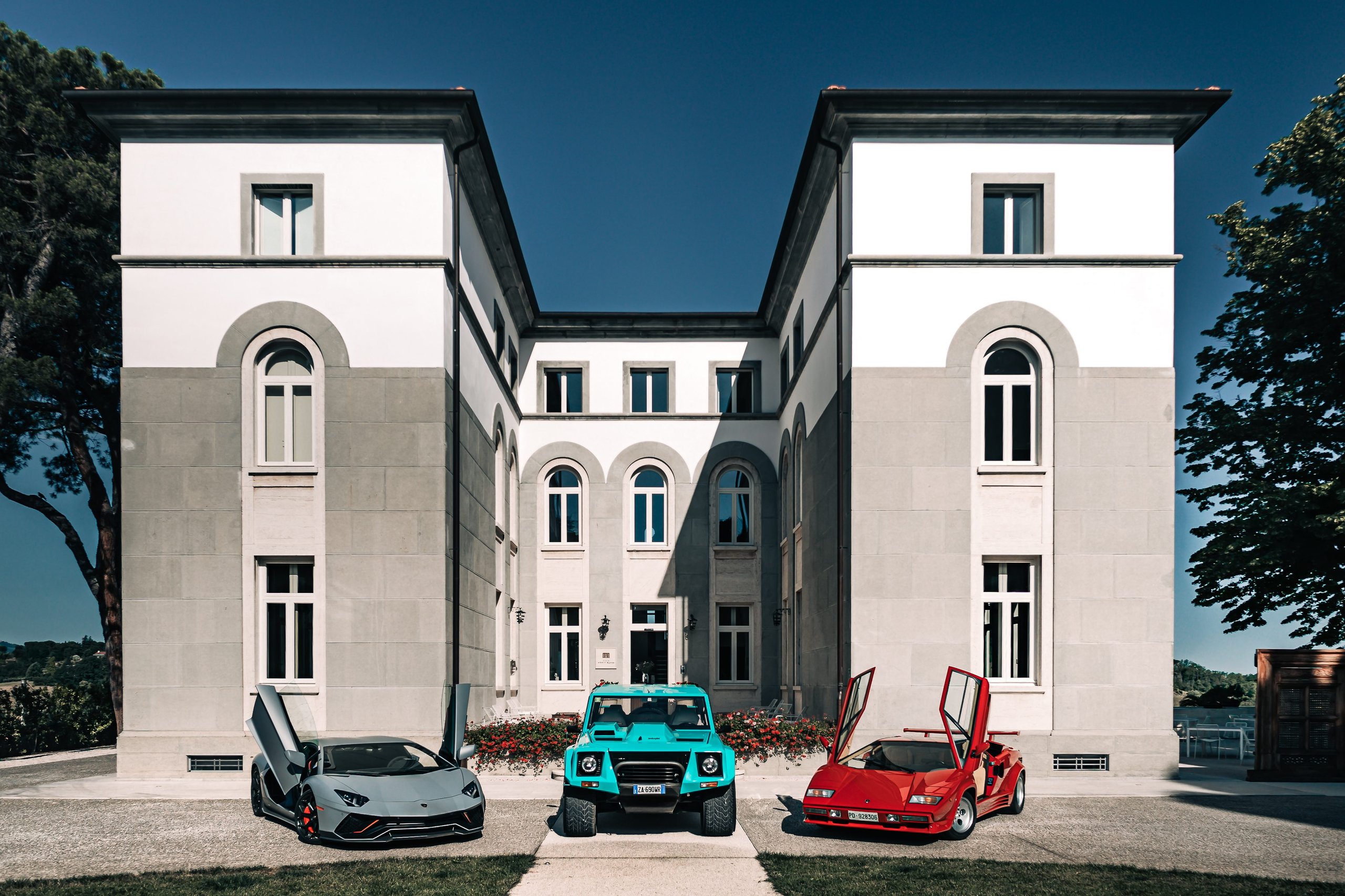
As part of its 2022 celebration of the V12, timed to the final production run of the Aventador Ultimae, Lamborghini revisited these two models together. The company describes them as “diametrically opposed but share the same extraordinary 12-cylinder mechanics.” The pairing is deliberate: it illustrates how a single engine family defined an entire brand philosophy, one that competitors rarely attempted and never replicated at this scale. From Giotto Bizzarrini’s original 3.5-liter unit in the 350 GT through the Aventador’s 6.5-liter successor, no other manufacturer maintained a single engine format as a brand signature for this long across this many vehicle types. The Countach and LM 002 are the clearest proof that the commitment paid off.

The iconic Lamborghini Countach with its scissor doors open stands beside the rugged LM002, showcasing diverse V12 power.
The Countach: From a Piedmontese Expletive to 1,999 Plus One
The Countach origin story is well known to enthusiasts, but Lamborghini’s official account adds a detail worth savoring. The name came from a Carrozzeria Bertone technician who saw the LP 500 prototype under construction and blurted out “Countach!” in Piedmontese dialect, an exclamation roughly equivalent to an astonished profanity. The word stuck just days before the car’s 1971 Geneva debut.
What made the LP 500 radical was not only its Marcello Gandini wedge shape but a fundamental engineering pivot that placed the V12 at the center of the car’s identity. Previous Lamborghini V12 models, the Miura included, mounted the engine transversely. The LP 500 rotated it to a rear-longitudinal position, a layout that would define every Lamborghini flagship for the next five decades. That prototype also stretched the V12’s displacement to nearly five liters (4,971 cc) for 440 hp, a significant jump from the traditional four-liter configuration. Feruccio Lamborghini greenlit production before the Geneva show ended. The prototype itself never survived: after years of punishing road testing by Bob Wallace, it was destroyed in mandatory crash tests on March 21, 1974.
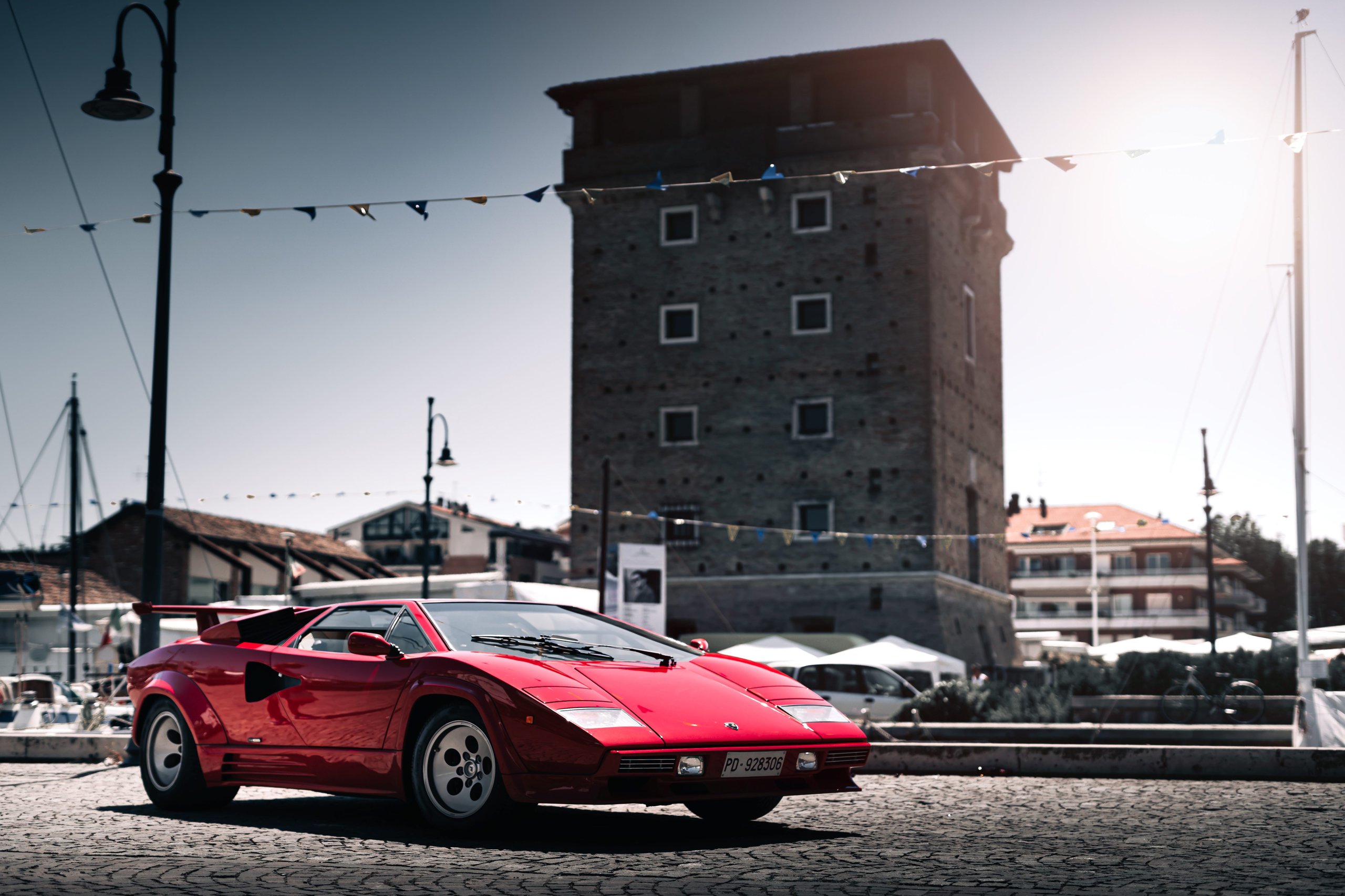
Production Countaches used the proven 4-liter V12, starting with the LP 400 “Periscopio” (152 units), named for the periscope-style roof notch that improved rearview mirror visibility. The LP 400 S followed in 1978 with wider Pirelli P7 tires and the flared wheel arches that became the car’s signature look. Then came the LP 5000 S with its 4.8-liter V12 (323 units), the Quattrovalvole with a 5.1-liter, four-valve-per-cylinder engine producing 455 hp (631 units), and finally the 25th Anniversario (658 units). That last variant, built to celebrate a quarter-century of Automobili Lamborghini, outsold every previous Countach series, proving the design still commanded attention after 17 years.
Total production reached 1,999 cars, plus one. The “plus one” is the LP 500 prototype, which carried a Bertone chassis number rather than a Lamborghini one. The first official Countach, chassis 1120001, rolled out in 1973 painted red, later repainted green. The very last, a Grigio Metallizzato example, left the line on July 4, 1990, and went directly into Lamborghini’s museum.

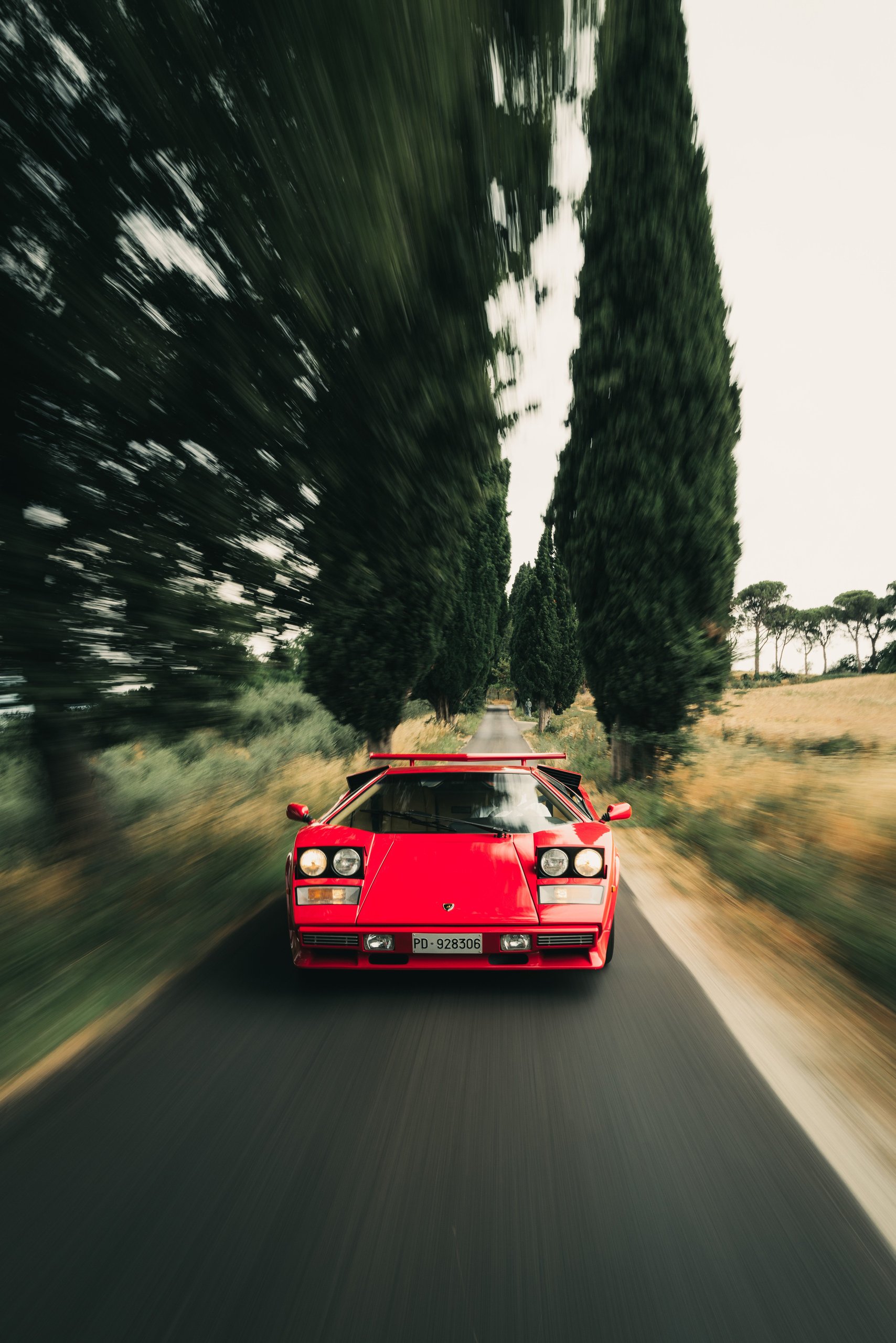
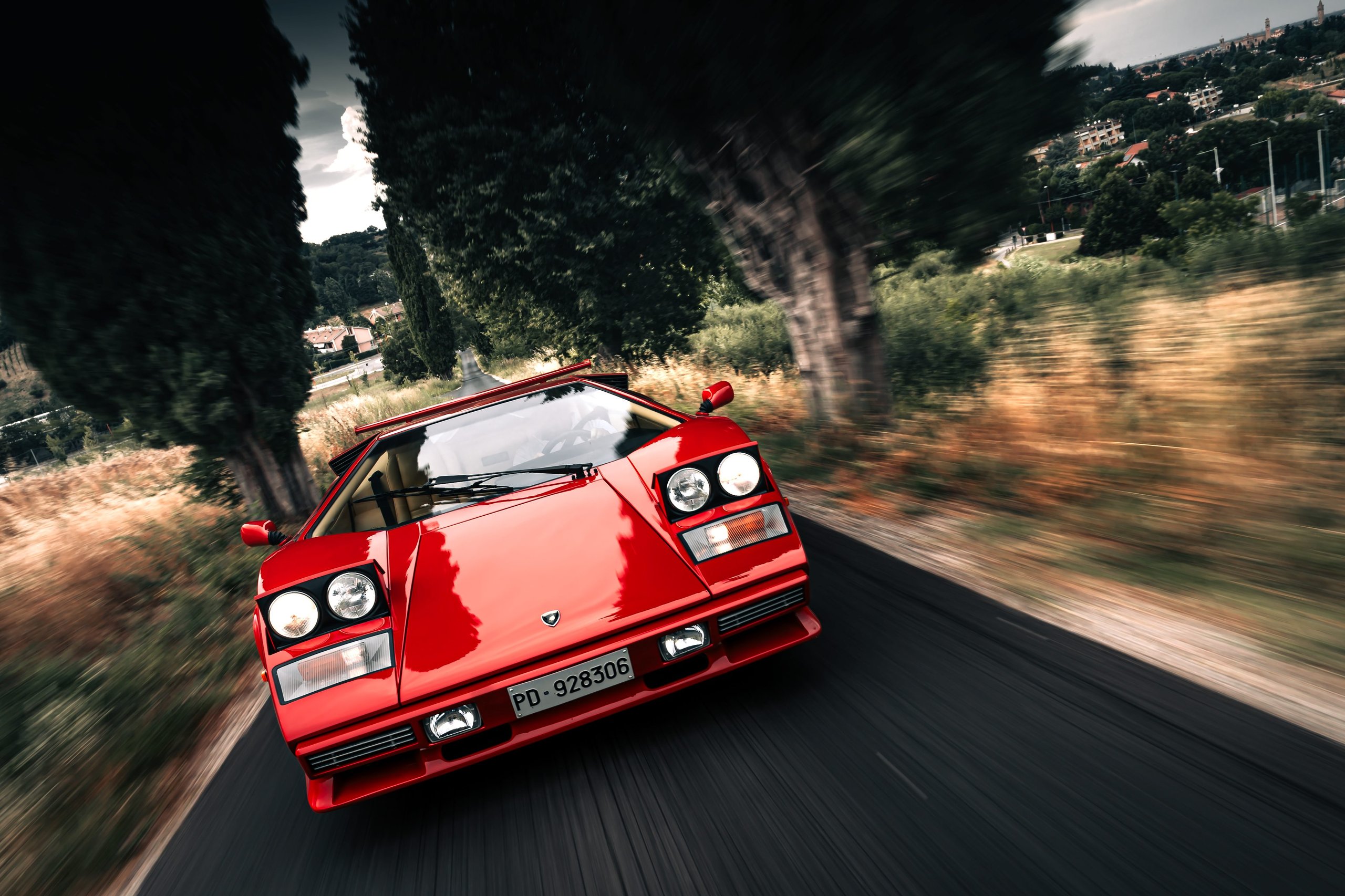
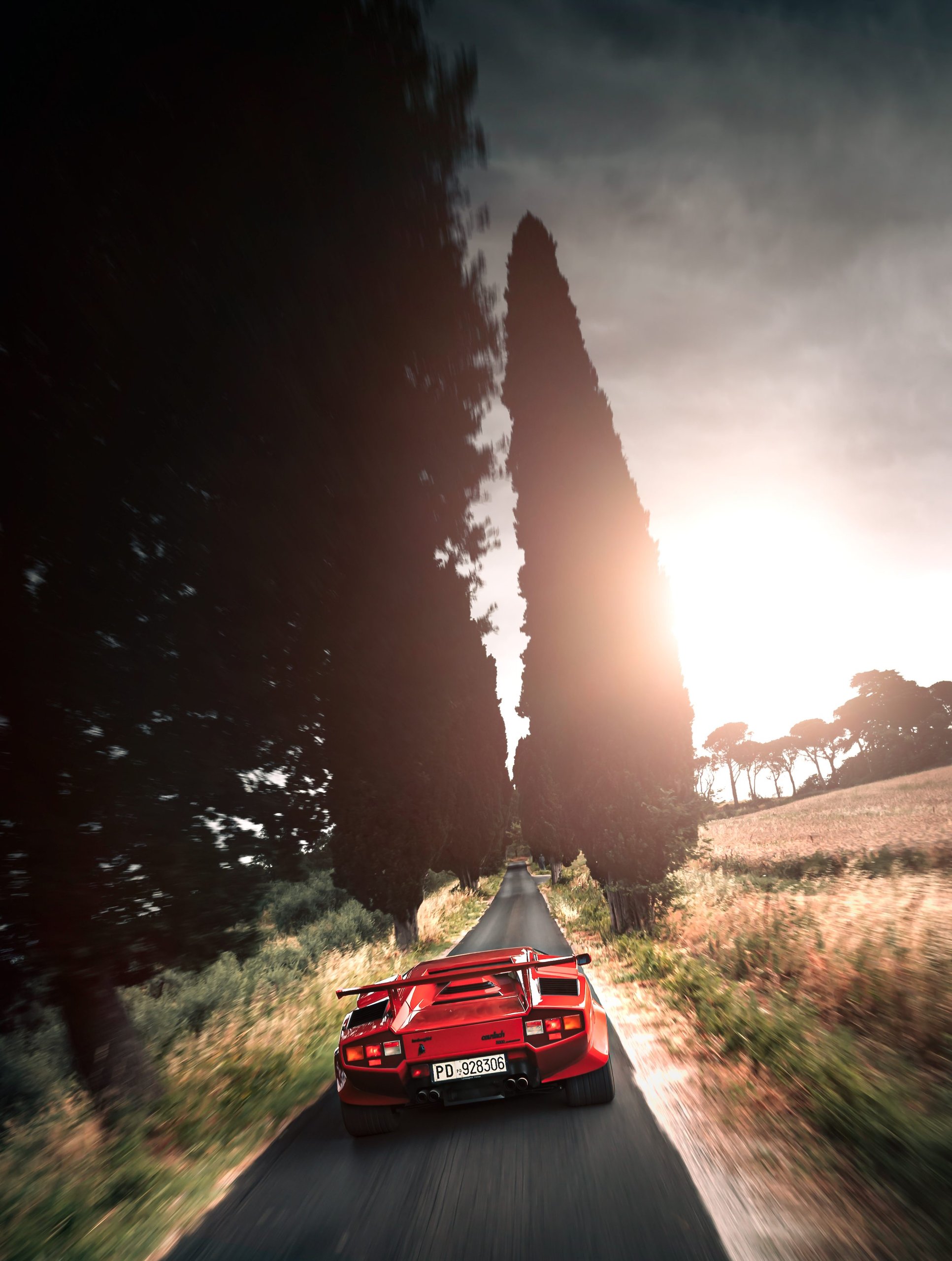
The iconic red Lamborghini Countach LP5000 QV speeds along a winding road, a blur of classic power.
The LM 002: Supercar Engine, Desert Credentials
While the Countach was cementing its place on bedroom walls, thanks in no small part to its starring role in 1981’s The Cannonball Run, Lamborghini’s management was exploring a market nobody else saw clearly: a luxury, high-performance off-road vehicle. The engineering approach was characteristically blunt. Take the Countach’s 5.2-liter V12, detune it by 20 hp so it could tolerate lower-grade fuel, rotate it 180 degrees, and install it in the front of a tubular-chassis truck with four-wheel drive, a central differential, and low-range gearing.
A tubular space frame on an off-road vehicle was essentially unheard of. That construction method belonged to racing cars and the most exotic sports cars, not something designed to cross the Sahara. Yet the V12’s character did not merely survive the transplant; it gave the LM 002 a personality that no conventional truck engine could replicate. According to Lamborghini, the result could cruise highways at sports-sedan speeds and then tackle extreme terrain without missing a beat. Roughly 300 units were built between 1986 and 1993, split roughly evenly between carbureted and fuel-injected versions. Spotting the difference is simple: carbureted LM 002s wear a much more pronounced hood scoop.
The anecdotes surrounding the LM 002 are almost too good. One example received the 7.2-liter, 700 hp V12 engine normally reserved for offshore powerboats. Another was prepped under the guidance of Sandro Munari, the former World Rally champion, for desert endurance racing. Sylvester Stallone owned one, cementing the “Rambo Lambo” nickname. And the best line ever written about the car, from an Italian journalist after a test drive, deserves to be quoted directly:
“At 200 km/h, the LM 002 doesn’t slice through the air. It smacks it with pride.”

The robust Lamborghini LM002 stands ready for adventure against a dramatic backdrop of white desert mounds.
Why This Pairing Still Matters for Lamborghini Buyers
Lamborghini positioned this retrospective in 2022 for a reason. The Aventador Ultimae was wrapping up production, marking the end of the “pure” naturally aspirated V12 unassisted by electrification. The Revuelto, which followed, pairs the V12 with three electric motors. For longtime enthusiasts who view the naturally aspirated V12 as the soul of the brand, the Countach and LM 002 story serves as a reminder that the engine’s identity was never about a single application. It was about character transplanted into radically different vehicles.
Collectors already understand this. Among Lamborghini V12 owners, discussion tends to center on the visceral, unfiltered nature of the experience. Multiple owners on enthusiast forums describe the V12’s exhaust note and physical sensation as the primary reason they chose a Lamborghini over competitors with smoother, more refined powertrains. The LM 002 amplifies that argument: if the V12 could define a luxury off-roader in the 1980s, its character is clearly robust enough to survive hybridization in the 2020s.
For anyone considering a classic Countach or LM 002 purchase, the practical takeaway is straightforward. Both cars share fundamental V12 architecture with decades of parts knowledge behind them, but the LM 002’s limited 300-unit production run and its status as the spiritual ancestor of the Urus give it a collector narrative that keeps strengthening. Countach values, meanwhile, vary enormously by series. The early LP 400 “Periscopio” cars and the Quattrovalvole tend to command the strongest interest among serious collectors, while the 25th Anniversario, despite being the most produced, offers arguably the best balance of usability and presence for someone who actually wants to drive the car.

Generations of Lamborghini SUVs, the LM 002 and Urus, stand together in a field of sunflowers.
The V12’s Through Line, From Bizzarrini to the Revuelto
Bizzarrini designed Lamborghini’s original 60-degree V12 in the early 1960s as a 3.5-liter unit producing 280 hp for the 350 GT. Over the following decades, that architecture grew to 3.9 liters in the Miura, 4.8 liters in the Countach LP 5000 S, and 5.2 liters in the LM 002 and Countach Quattrovalvole, eventually reaching 5.7 liters in the Diablo and 6.2 liters in the Murciélago. The Aventador introduced an entirely new V12 architecture in 2011 at 6.5 liters, but the philosophy remained unchanged: naturally aspirated, high-revving, unmistakable.
Ferrari used V12s extensively, but also built its identity around V8s and turbocharged engines. Lamborghini’s V12 commitment was singular, almost stubborn. The Countach-to-LM 002 pairing is the starkest illustration of that stubbornness, because the engine did not merely survive being dropped into a military-grade off-roader. It thrived there.
The Revuelto now carries that legacy forward with electric assistance. Whether hybrid integration changes the fundamental character of the V12 remains a live debate among enthusiasts. But the precedent set by the LM 002 suggests Lamborghini’s twelve-cylinder engine can absorb dramatic contextual changes and still sound, feel, and perform like nothing else on the road.

The iconic Countach and rugged LM002 stand side-by-side against a stark, mountainous desert backdrop.
Gallery