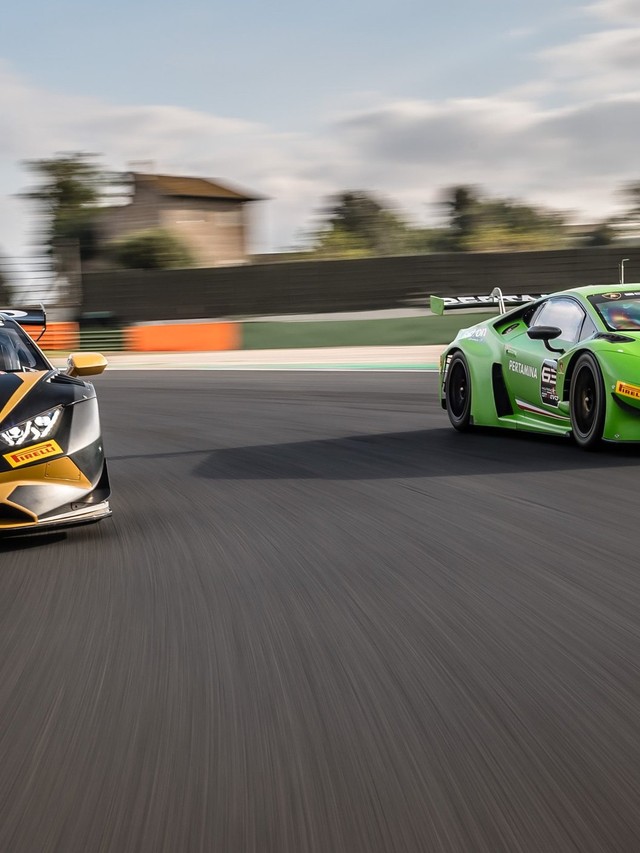
Squadra Corse Names Its 2021 Class of 34
Lamborghini Squadra Corse has confirmed 34 drivers for its 2021 development intake: 19 in the Young Driver Programme and 15 in the GT3 Junior Programme. The roster pulls from Super Trofeo competitors in Europe and North America alongside GT3 racers competing in series ranging from International GT Open to the ADAC GT Masters, making this one of the broadest talent sweeps Squadra Corse has conducted since the programs launched in 2014.
The headcount alone is not the story. What Lamborghini is building is a structured, multi-year ladder designed to convert promising amateurs into factory-backed professionals. In a GT racing landscape where seat time and sponsorship money often matter more than raw talent, a manufacturer-run system that evaluates drivers on skill, attitude, and physical conditioning carries real weight. Lamborghini calls this the most comprehensive development program in GT racing. Every manufacturer makes similar claims, but the structure behind this one, and the factory drivers it has already produced, give the boast some substance.
The Ladder: Super Trofeo to Factory Driver
The pathway works in defined steps. Young Driver Programme candidates must be under 26 and competing in one of the continental Lamborghini Super Trofeo championships. Squadra Corse coaches monitor them throughout the season, evaluating not just lap times but racecraft, consistency, and how they interact with engineering staff. The strongest performers earn an invitation to a year-end shootout in Italy.
Drivers who graduate from that stage move into the GT3 Junior Programme, where they race the Huracán GT3 Evo in international championships under continuous assessment. The ultimate prize is promotion to the Lamborghini Factory Driver Programme. Raffaele Giammaria leads the entire operation, and the evaluation criteria extend well beyond on-track speed. Lamborghini says the programs cover media training, physical preparation, technical knowledge development, and what the company describes as professional and personal growth.
The proof that this ladder delivers sits in the careers of Giacomo Altoè and Sandy Mitchell. Both entered as Young Drivers, climbed through the GT3 Junior tier, and earned full factory status. Altoè won the International GT Open; Mitchell took the British GT title. For any aspiring racer weighing which manufacturer program to pursue, those two names represent concrete evidence that the Lamborghini pathway can produce a professional career, not just a season of coaching.

A racing helmet, emblazoned with the iconic Lamborghini emblem, awaits the start of another thrilling race day.
What the Shootout Actually Involves
The year-end evaluation is not a simple track test. Lamborghini describes it as a two-day session that includes physical training assessments, attitude evaluations, driving skills analysis, and kart sessions run in partnership with DR Racing Kart. The kart element is a deliberate choice: stripping away the electronic aids and aerodynamic grip of a GT3 car forces raw car control and racecraft to the surface.
For the 2021 intake, Super Trofeo Europe contributes 13 of the 19 Young Drivers, with six coming from North America. The Asian Super Trofeo championship was temporarily folded into the China GT Championship this season, narrowing the geographic pipeline slightly. Raúl Guzman, winner of the 2020 Young Drivers Assessment, returns to the program targeting the Super Trofeo Europe title with Target Racing.
The GT3 Junior roster reads like a scouting report across global GT racing. Yuki Nemoto, Michele Beretta, and Baptiste Moulin arrive from International GT Open. Super Trofeo graduates Kikko Galbiati and Andrea Amici step up. Luca Ghiotto, known primarily for single-seater racing, joins as a notable crossover talent. Tim Zimmermann and Steijn Schothorst return from the ADAC GT Masters for another year of evaluation. Each of these drivers faces the same question the ladder is designed to answer: can they earn a factory seat on merit?

An athlete trains with specialized equipment, focusing on neck and core strength, as part of a rigorous fitness regimen.
Why Lamborghini’s GT-Only Focus Changes the Equation
Ferrari operates its Driver Academy primarily as a single-seater feeder system aimed at Formula 1, with GT racing serving as a secondary development track. Porsche runs its own Junior Programme through the Supercup and GT categories, offering factory contracts to standout performers. Lamborghini’s approach differs in a meaningful way: because the brand does not compete in F1, its entire development pyramid is oriented toward GT racing. Every rung of the ladder, from Super Trofeo to GT3 to factory status, points in the same direction.
That singular focus creates a tangible advantage for drivers who know their career lies in sportscar and GT competition rather than open-wheel racing. A young driver entering the Lamborghini system is not competing for attention against a parallel F1 junior program. The factory seat is the top of the pyramid, and the path to it runs exclusively through GT machinery. For a talented 22-year-old weighing options, that clarity of purpose matters as much as any coaching curriculum.
Lamborghini does not publicly disclose a statistical success rate for promotions from junior to factory status, and the financial commitments required of drivers entering the Super Trofeo feeder series remain undisclosed in official materials. Those are fair questions for any aspiring participant to ask before committing. What the program does confirm is a documented lineage of graduates who reached the top, and a structured evaluation process that at least attempts to separate talent from budget.
Lamborghini’s Long Game in Global GT Racing
Building a driver development pipeline is a slow, unglamorous investment compared to unveiling a new road car or announcing a race win. The payoff arrives years later, when a factory roster is filled with drivers who understand Lamborghini’s engineering philosophy, know the team’s working culture, and can extract performance from the Huracán without a lengthy adaptation period.
The 2021 class of 34 will be filtered down over the coming months. Most will not reach factory status. But the system itself, running continuously since 2014 and evolving its selection criteria along the way, represents Lamborghini’s clearest signal that Squadra Corse views GT racing as a permanent commitment rather than a marketing exercise. For enthusiasts who follow the brand’s competition efforts, these are the names worth tracking before they appear on factory entry lists at the Spa 24 Hours or the Daytona endurance races. The ladder exists. The question, as always, is which of these 34 will climb it.

A young athlete engages with an interactive training system, enhancing reaction time and agility in a modern gym setting.
Gallery


