A Handover Ceremony at 306 km/h (On Paper, at Least)
At the Dubai Airshow 2023, Lamborghini’s regional head for the Middle East and Africa, Paolo Sartori, handed the keys to a specially modified Urus Performante to Major General Ahmed Mohammed bin Thani, acting commander-in-chief of the Dubai Police. The ceremony formalized what Lamborghini describes as a continuation of the dealership’s collaboration with the force, which already inducted a standard Urus in 2022.
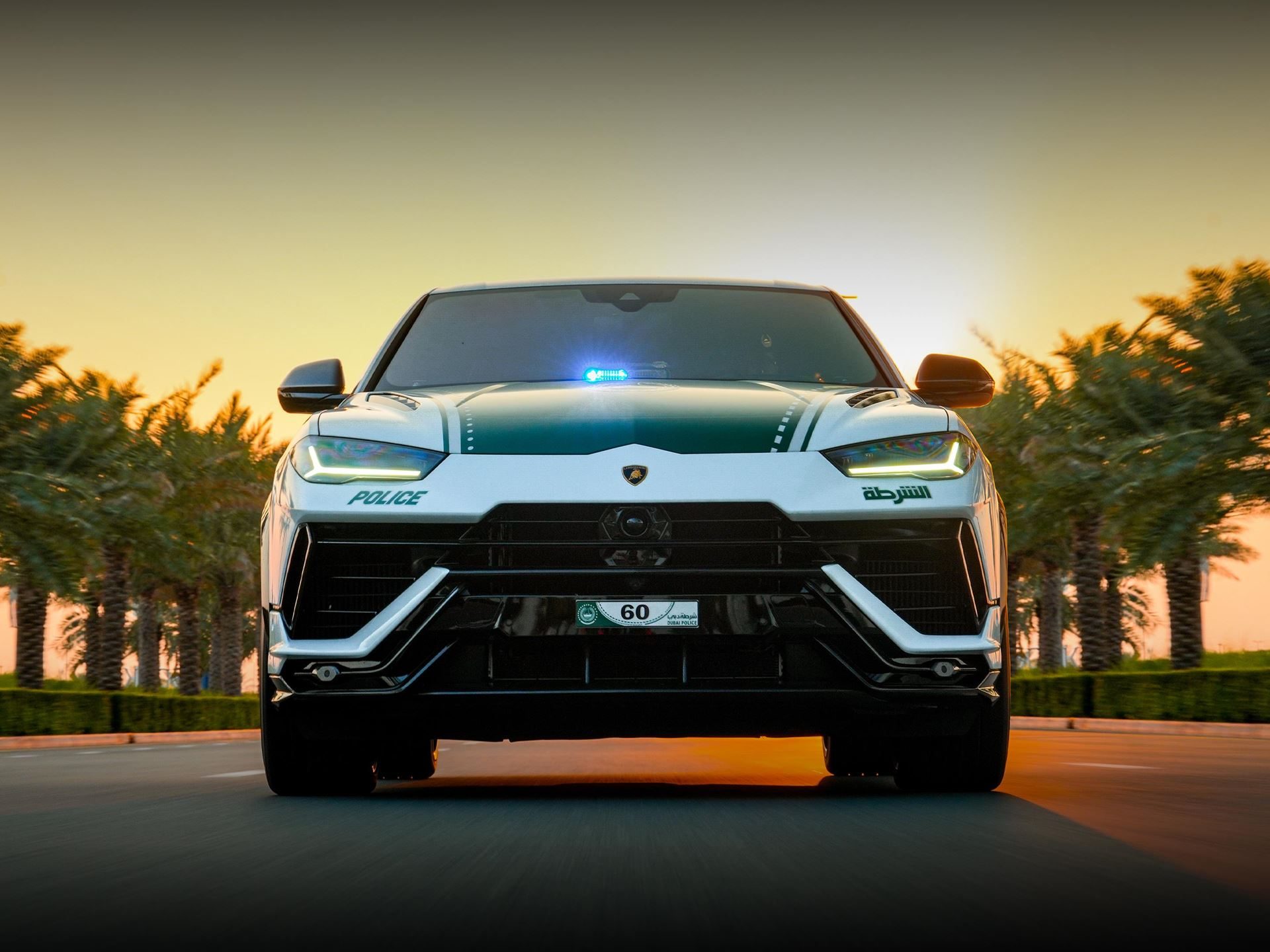
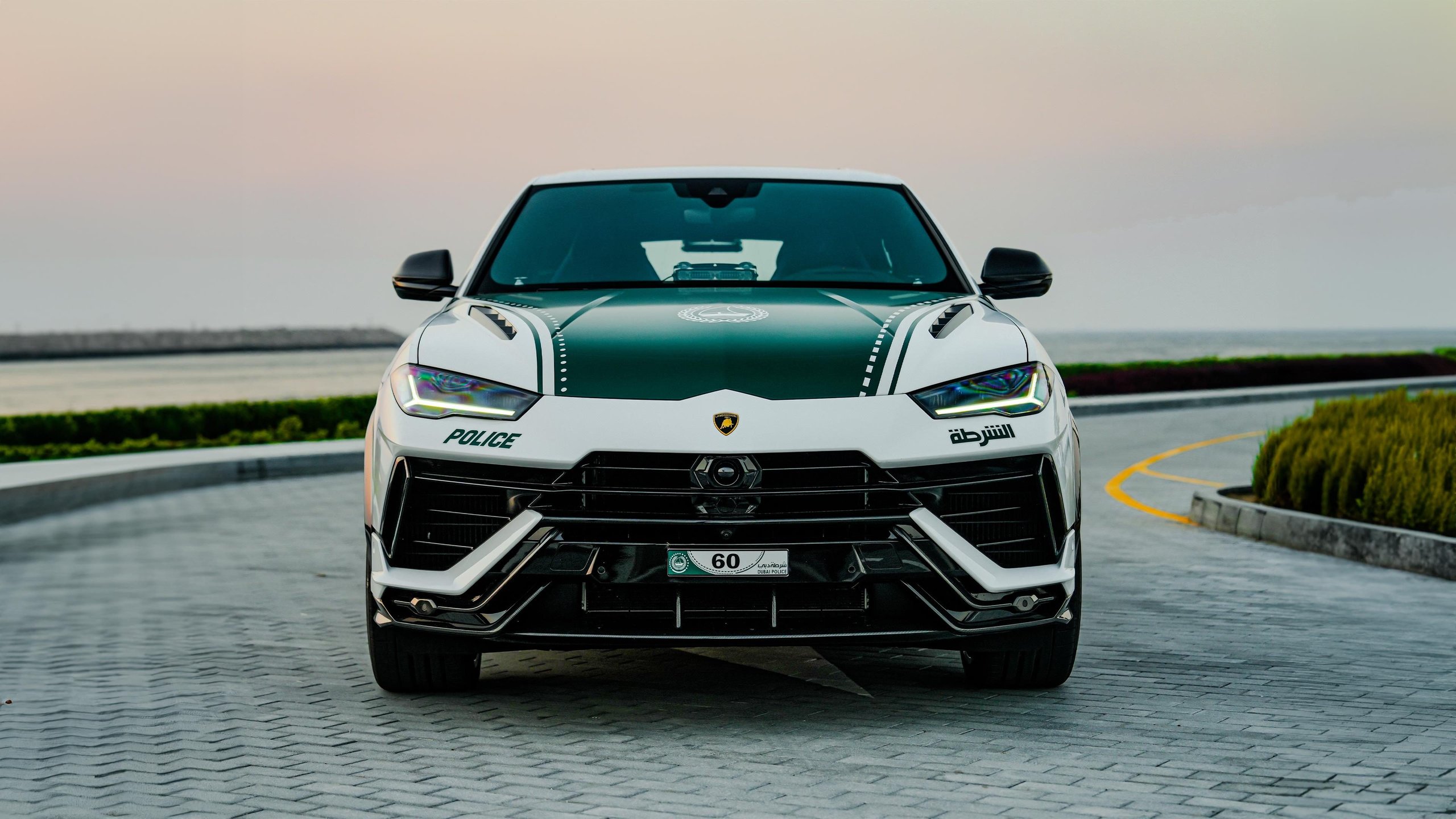
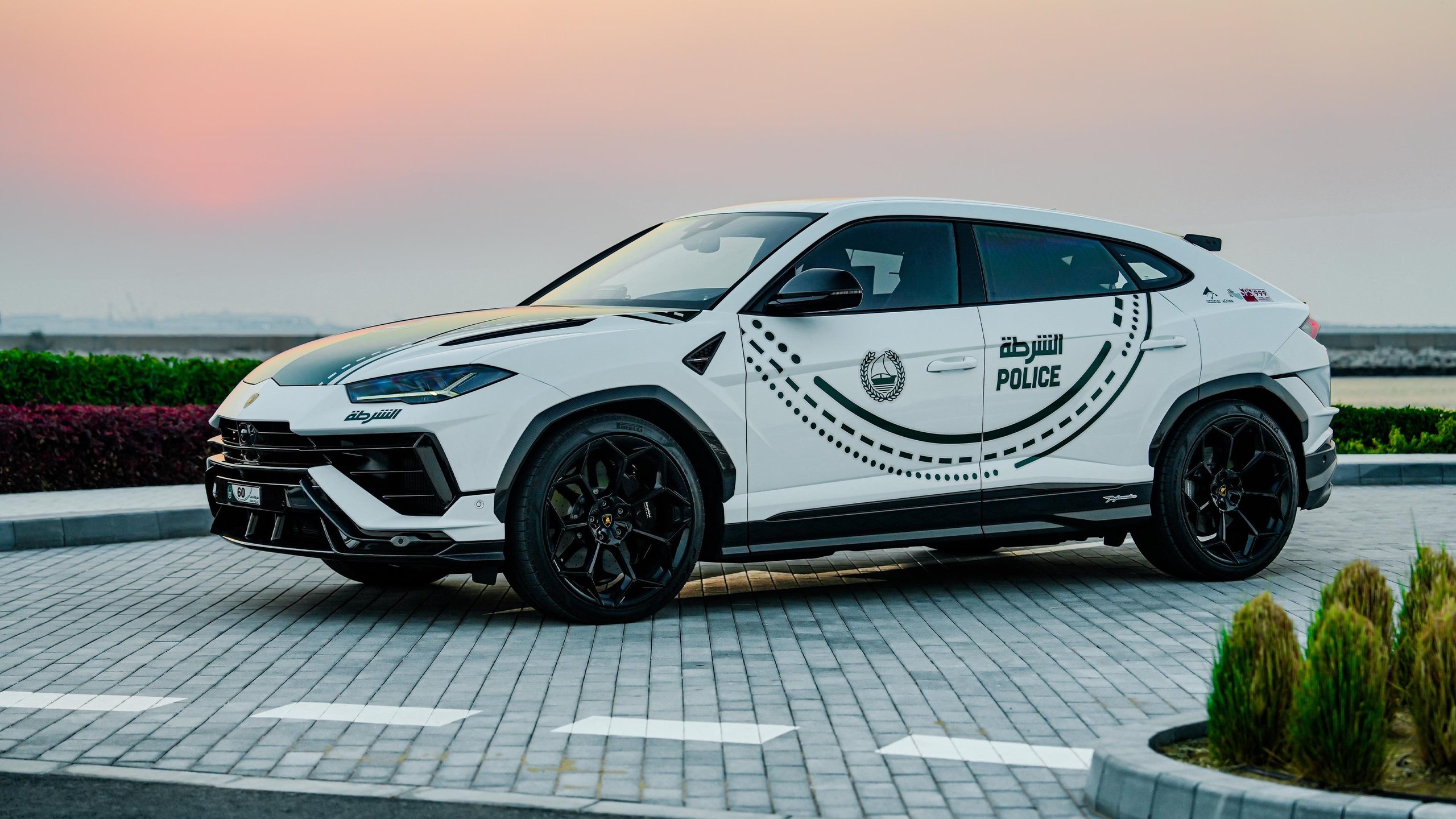
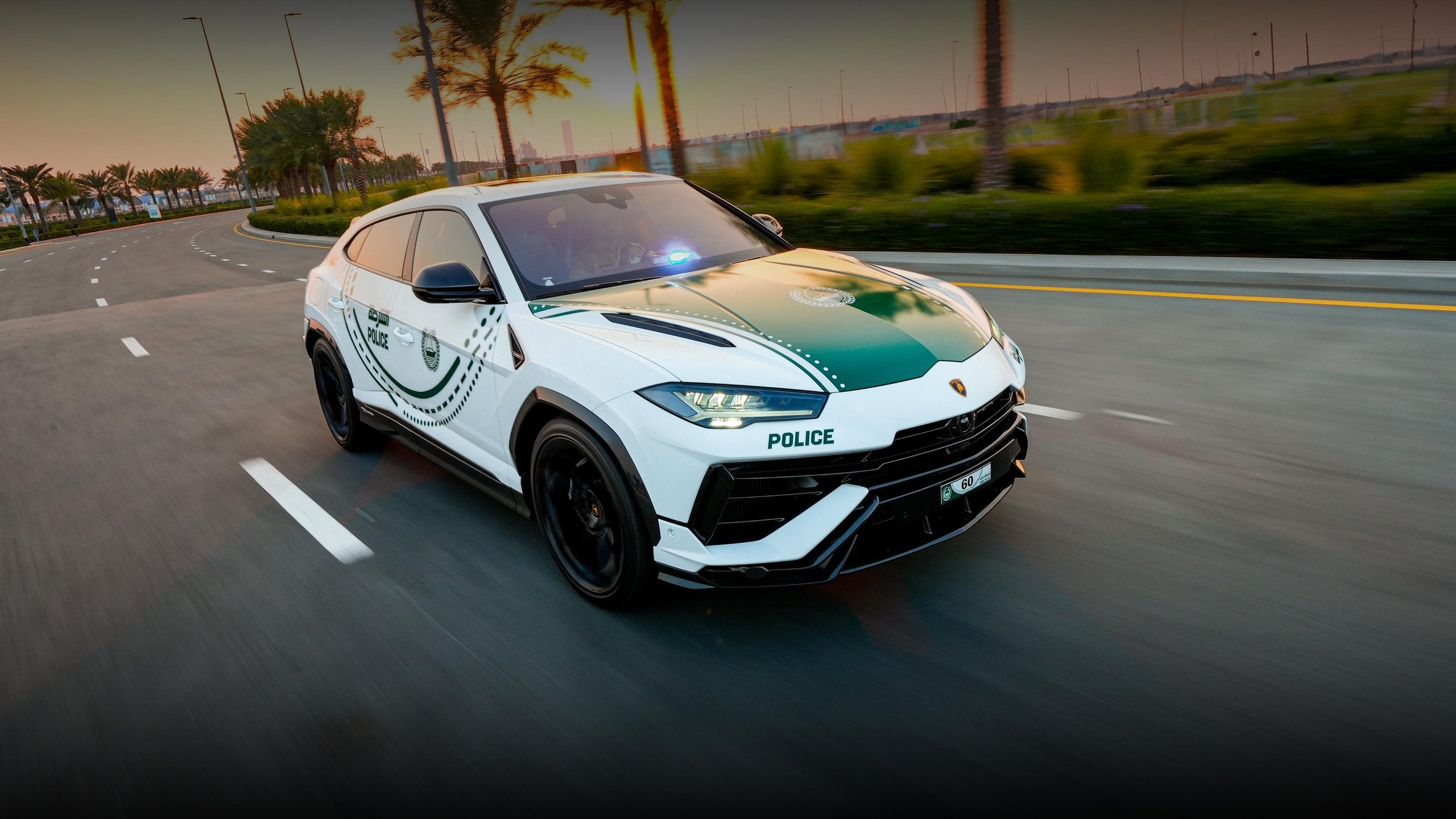
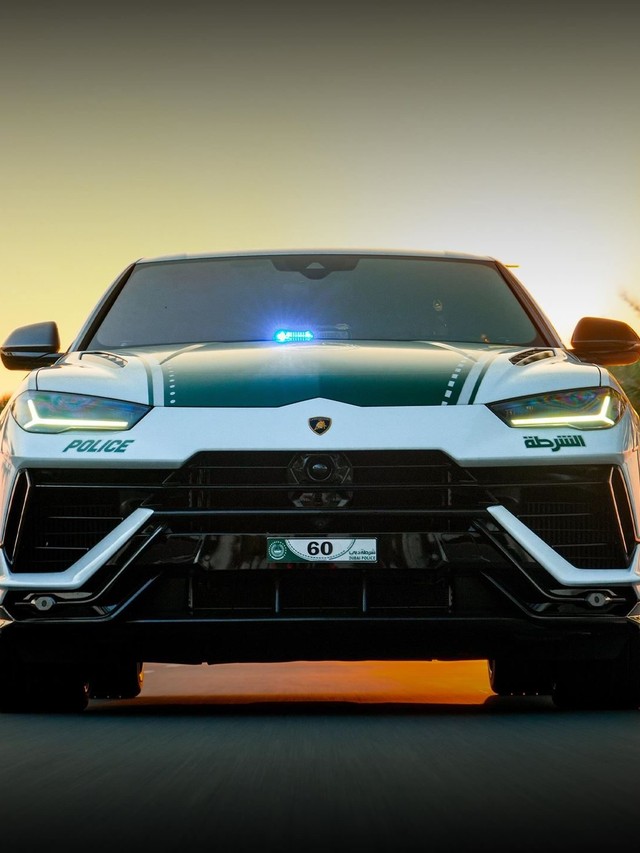
The vehicle wears the familiar green-and-white Dubai Police livery, complete with department logos on the bonnet and side doors, and carries a “60” anniversary plate visible in official imagery, marking Lamborghini’s sixtieth year. According to Lamborghini, the Urus Performante underwent a dedicated period of preparation and modification before entering service, adapting it from a performance SUV into something that can, at least nominally, respond to emergencies. The stated mission: public duties, urban security, and a visible presence in tourist-heavy areas of the city.
The more revealing question is not what the car looks like in police green, but what Lamborghini gains from putting it there.
Brand Theater, Not Traffic Enforcement
The strategic logic deserves a direct reading. Dubai Police do not need a 306 km/h SUV to write parking tickets. The force’s exotic fleet, which reportedly includes an Aston Martin One-77, a Bugatti Veyron, a Ferrari FF, and a Lamborghini Aventador among others, exists primarily as a projection of the city’s identity. Many of these vehicles reportedly serve promotional purposes at expos and generate tourist engagement on social media rather than logging high-speed pursuits.
For Lamborghini, that arrangement is close to ideal. The company gets a rolling billboard in one of the world’s most photographed cities, operated by an institution that conveys authority and prestige. Every tourist snapshot of the Urus Performante parked on the Jumeirah strip is unpaid advertising in a market where Lamborghini already competes fiercely with Ferrari, Porsche, and Bentley for the attention of ultra-high-net-worth buyers.
The Middle East remains a pivotal region for the brand. Year-round driving conditions, a deep appetite for personalization through the Ad Personam program, and a clientele that gravitates toward the most extreme variants in any lineup make it a natural fit for the Urus Performante specifically. Placing the top-tier model with Dubai Police, not the standard Urus, not the Urus S, sends a calibrated signal: this is the version that matters, and the force chose it.

The Dubai Police Urus Performante showcases its dynamic design and official livery in a static front three-quarter view.
What the Police Spec Actually Includes
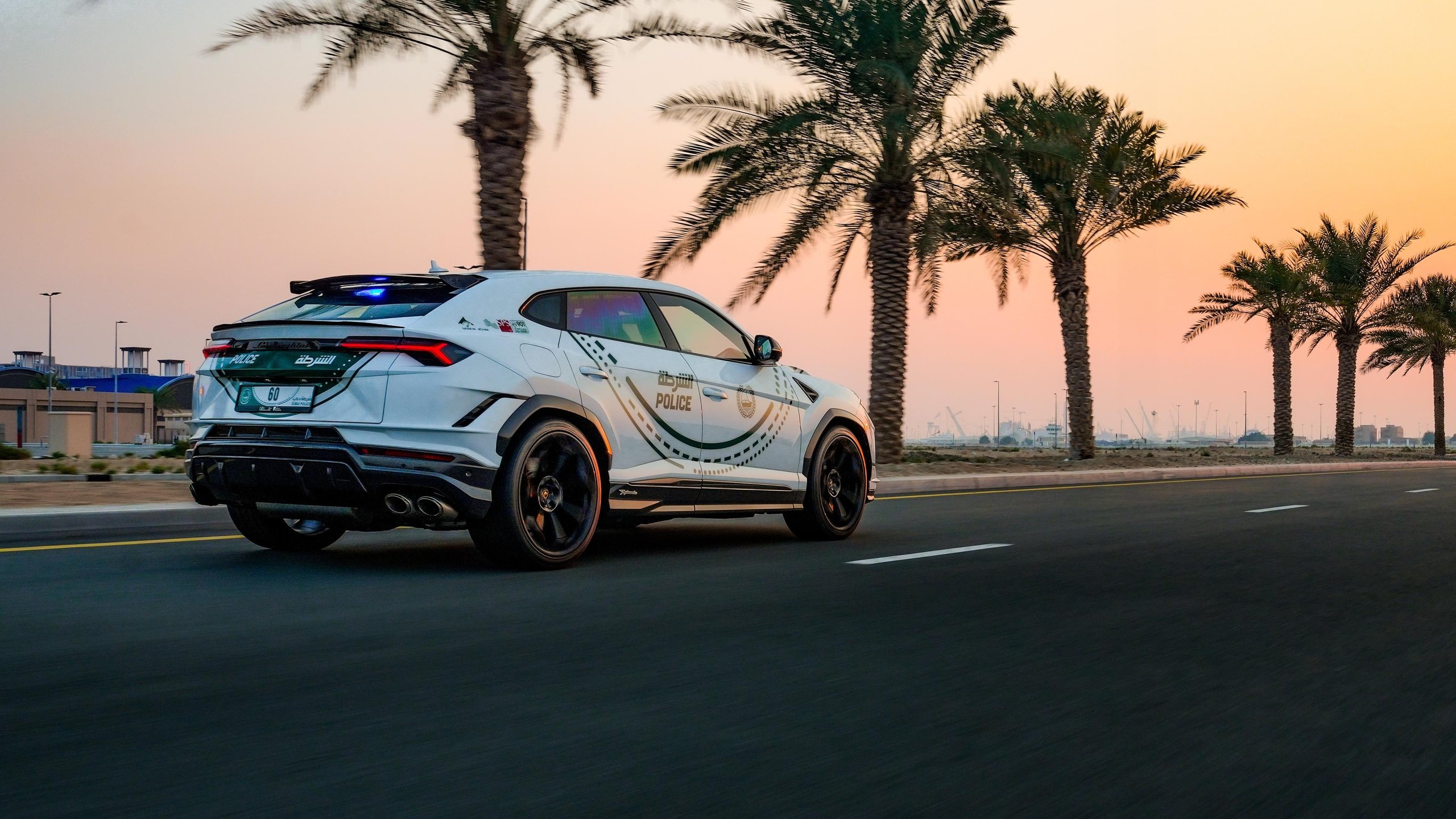
The modifications go well beyond a paint job. Integrated into the rear spoiler is a blue 360-degree LED light bar paired with an electric siren. Inside the cabin, the Urus Performante carries an armored gun box, a fold-down message display, a dedicated boot compartment for service equipment, and an on-board defibrillator for first-aid response.
That equipment list is more interesting than it first appears. The armored gun box and defibrillator suggest Lamborghini, or more precisely the outfitter working with the Dubai dealership, treated this as a genuine operational vehicle rather than purely a showpiece. The fold-down message display implies the car may function in a command or communication role during public events. Lamborghini’s official account does not detail who performed the conversion or how deeply it integrates with the car’s existing electronics, leaving some questions about the bespoke engineering process unanswered.
Underneath, the mechanical package remains the production Urus Performante: the 4.0-liter twin-turbo V8 producing 666 CV and 850 Nm of torque, with a 0-to-100 km/h time of 3.3 seconds. The Performante’s real advantage over the standard Urus was never raw horsepower (the bump was modest) but rather its driving dynamics, lighter weight, and revised chassis tuning. For a police application, that translates to a vehicle that handles with more precision than any patrol SUV reasonably should. Yet the deeper purpose of these specifications is not operational. They exist to reinforce the narrative that Dubai Police chose the sharpest tool in Lamborghini’s SUV arsenal, a distinction that reverberates through showrooms across the Gulf.

The Dubai Police Urus Performante stands proudly, its rear design and official livery visible against the urban backdrop.
Dubai’s Fleet in Context: How Lamborghini’s Police Partnerships Differ
Lamborghini’s relationship with law enforcement is not unique to Dubai, but the rationale shifts dramatically depending on the country. The Italian State Police operate Huracans as genuine rapid-response vehicles, famously using them for organ transport and highway patrol in situations where speed and visibility serve a direct tactical purpose. Italy’s program is rooted in operational need and, admittedly, national pride in a homegrown manufacturer.
Dubai’s program operates on entirely different logic. The exotic fleet functions as a soft-power instrument for the city itself, reinforcing Dubai’s brand as a destination where excess is the baseline. Lamborghini benefits from the association, but so does every other manufacturer whose car sits in that fleet. The competitive dynamic is less about performance superiority and more about which brand secures the most visible position. By delivering the Performante, the most extreme Urus variant available at the time of handover, Lamborghini ensured it occupied the top shelf.
Neither Ferrari nor Porsche appear to have matched this specific move with their SUV offerings. Ferrari’s Purosangue arrived later and occupies a different market position, while Porsche’s Cayenne, despite its Turbo GT variant, lacks the visual drama that makes a police livery go viral. Lamborghini’s advantage here is partly timing and partly the Urus Performante’s inherent theatricality, a combination that turns a single vehicle delivery into a global media moment.

The Dubai Police Urus Performante cruises along a scenic road, its police lights flashing under the golden sunset.
What This Signals for Lamborghini Buyers
For prospective Urus Performante owners, the Dubai Police deployment reinforces something the market already understands: the Performante sits at the top of the Urus hierarchy for a reason, and Lamborghini intends to keep it visible in the most prominent possible contexts. The delivery also coincided with Lamborghini’s 60th anniversary year, a detail the company clearly wanted to underscore.
The practical buyer takeaway is about residual value and desirability. Every high-profile deployment, every tourist photo, every social media clip of the green-and-white Urus cornering past the Burj Khalifa feeds the aspirational engine that keeps demand for the Performante strong. With the Urus SE now representing the hybrid future of the lineup, the purely combustion-powered Performante occupies a narrowing window. Forum discussion among owners already reflects an awareness that the Performante’s production run and its status as the last non-electrified performance Urus could make it increasingly collectible.
Lamborghini’s Dubai play is calculated, visible, and effective. The company did not hand over a base model. It placed its best SUV where it would generate the most impressions per kilometer, in a city built to amplify exactly that kind of spectacle. Whether the Urus Performante ever exceeds the speed limit in police service is almost beside the point.

The Lamborghini Urus Performante, in its distinctive Dubai Police livery, patrols the streets with unparalleled style and performance.
Gallery