A Ceremony at the Ministry: The Urus Performante Enters Police Service
On December 12, 2023, Lamborghini Chairman and CEO Stephan Winkelmann stood in Rome’s Piazza del Viminale, directly outside the Ministry of the Interior, and handed the keys of a specially equipped Urus Performante to Minister of the Interior Matteo Piantedosi. Head of Police Vittorio Pisani was present for the ceremony, and Prime Minister Giorgia Meloni was also reported to be in attendance. The setting was deliberately symbolic: not a product launch or a dealer event, but an act of national service.
The vehicle will enter active duty in 2024 as the sixth Lamborghini model to join the Italian Highway Police fleet, operating alongside the existing Huracán LP610-4. Its primary mission is urgent medical transport of organs and plasma, a role where speed, stability, and reliability are not marketing talking points but literal matters of life and death. Lamborghini says the Urus Performante will also be deployed for broader special services within the Polizia di Stato.
For enthusiasts, the spectacle of a 306 km/h Super SUV in police blue is easy to enjoy on a surface level. The deeper story is about what this partnership reveals: Lamborghini positioning itself not merely as a manufacturer of desirable objects, but as an institution woven into the fabric of Italian public life. That thread, running unbroken since 2004, is what makes the Urus Performante handover more than a photo opportunity.

Italian Prime Minister Giorgia Meloni and officials gather around the new Lamborghini Urus Performante police vehicle.
Twenty Years and Six Models: Lamborghini’s Police Fleet Legacy
The collaboration between Automobili Lamborghini and the Italian State Police began in 2004, and the Urus Performante represents the sixth distinct model to wear the Polizia livery. That timeline encompasses the Gallardo, the Huracán in multiple iterations, and now the company’s Super SUV. Each generation reflected the state of Lamborghini’s lineup at the time, and each served a genuine operational purpose rather than functioning as a static publicity prop.
The Gallardo and Huracán police cars became some of the most photographed law enforcement vehicles on the planet, generating enormous organic media attention. Yet the Italian Highway Police actually used them, logging thousands of kilometers on the Autostrada and, crucially, transporting organs across the country at speeds no conventional ambulance could match. The Huracán LP610-4 remains in active service, and the Urus Performante will operate alongside it, expanding the fleet’s capability with a vehicle better suited to carrying bulkier medical equipment and navigating a wider range of road conditions.
No other supercar manufacturer maintains a comparable, continuous relationship with a national police force. Ferrari does not supply cars to the Polizia di Stato for active duty. Porsche does not either. Lamborghini’s two-decade commitment to this program is genuinely unique in the industry, reinforcing a brand narrative that competitors cannot replicate: the idea that these cars are Italian national assets, not just export commodities for wealthy collectors.

Italian officials pose with a Lamborghini Huracán police car and a covered vehicle at an official event.
Organ Fridge and Armored Weapon Box: Inside the Police Conversion
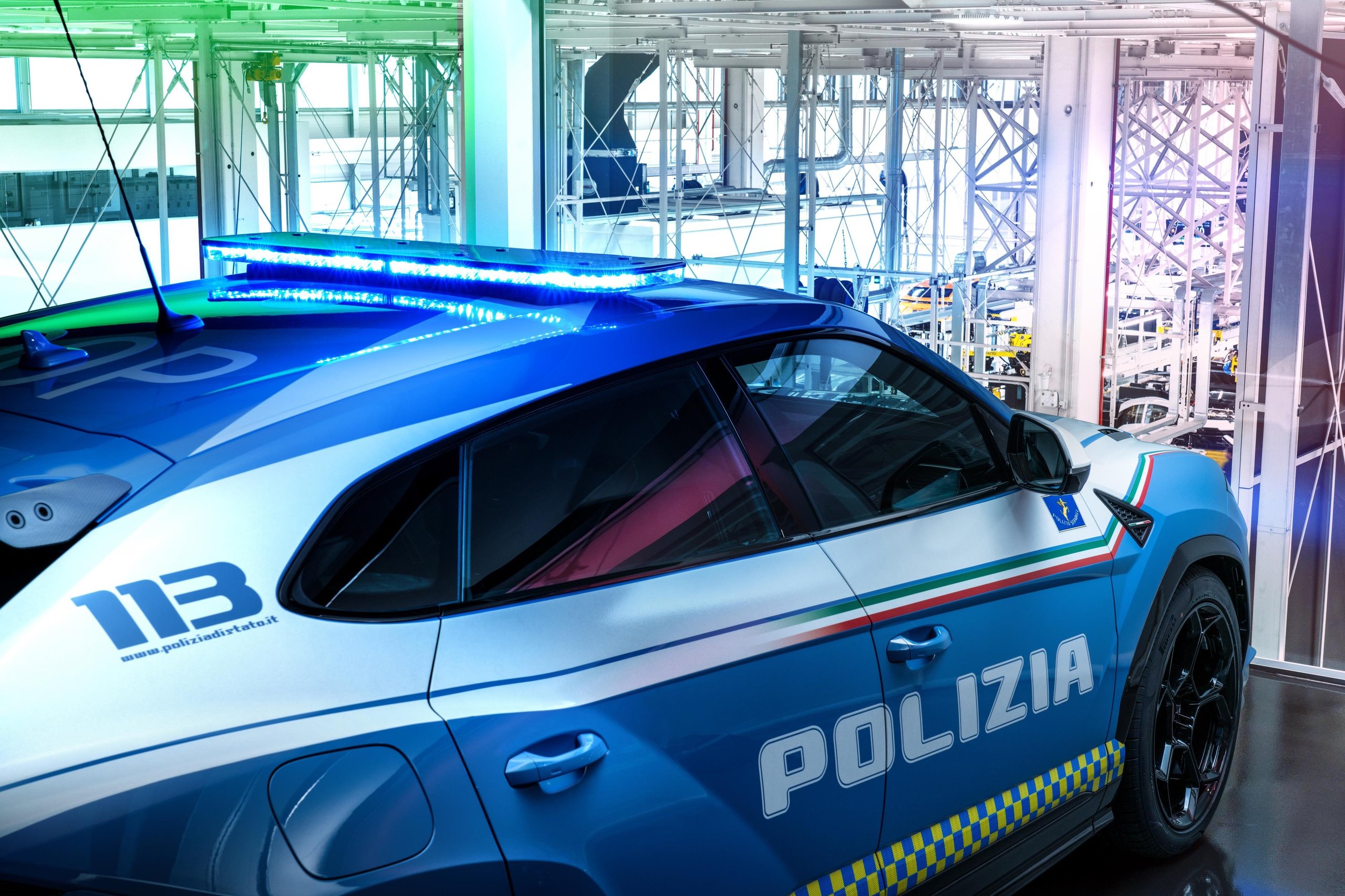
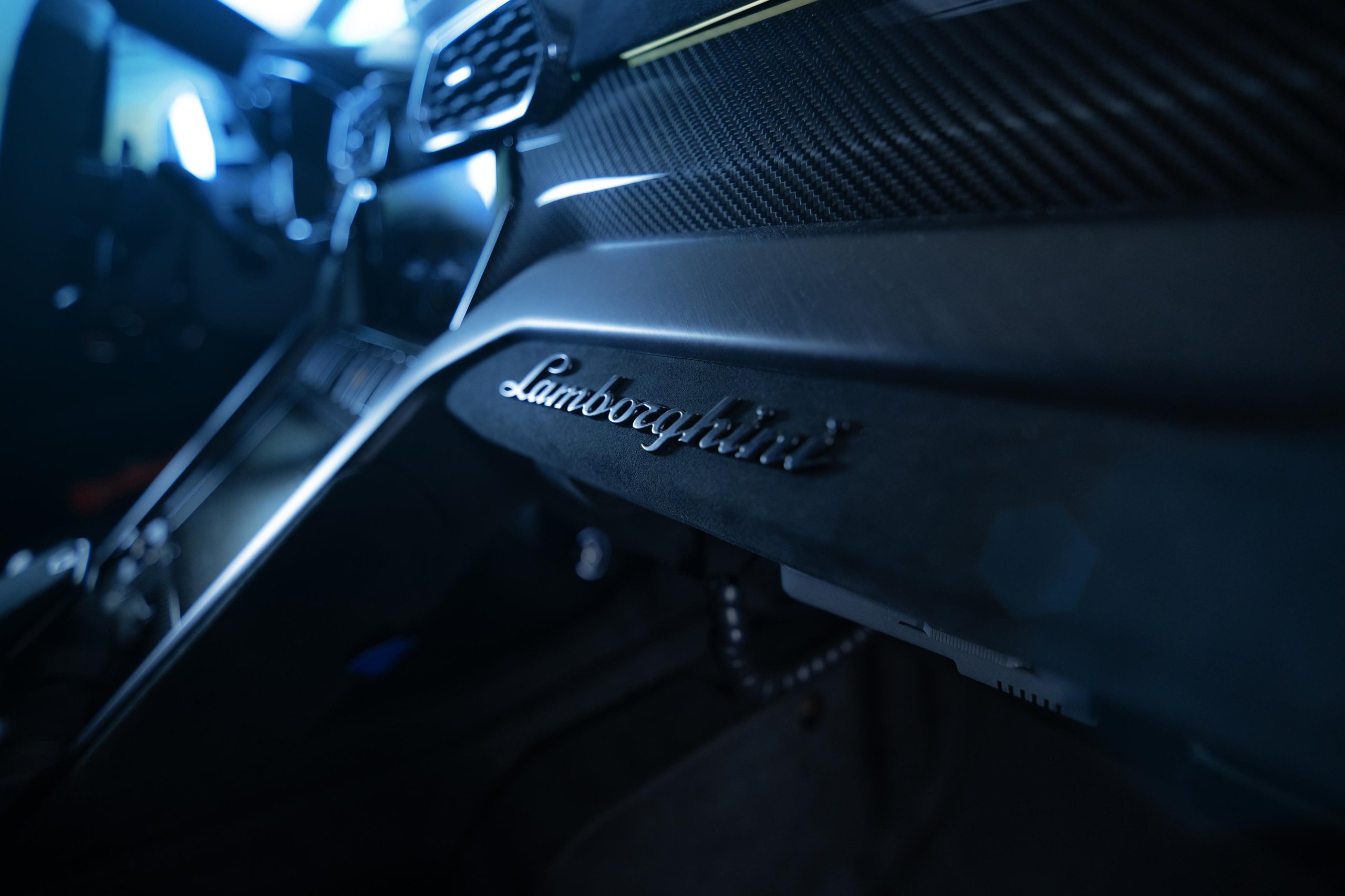
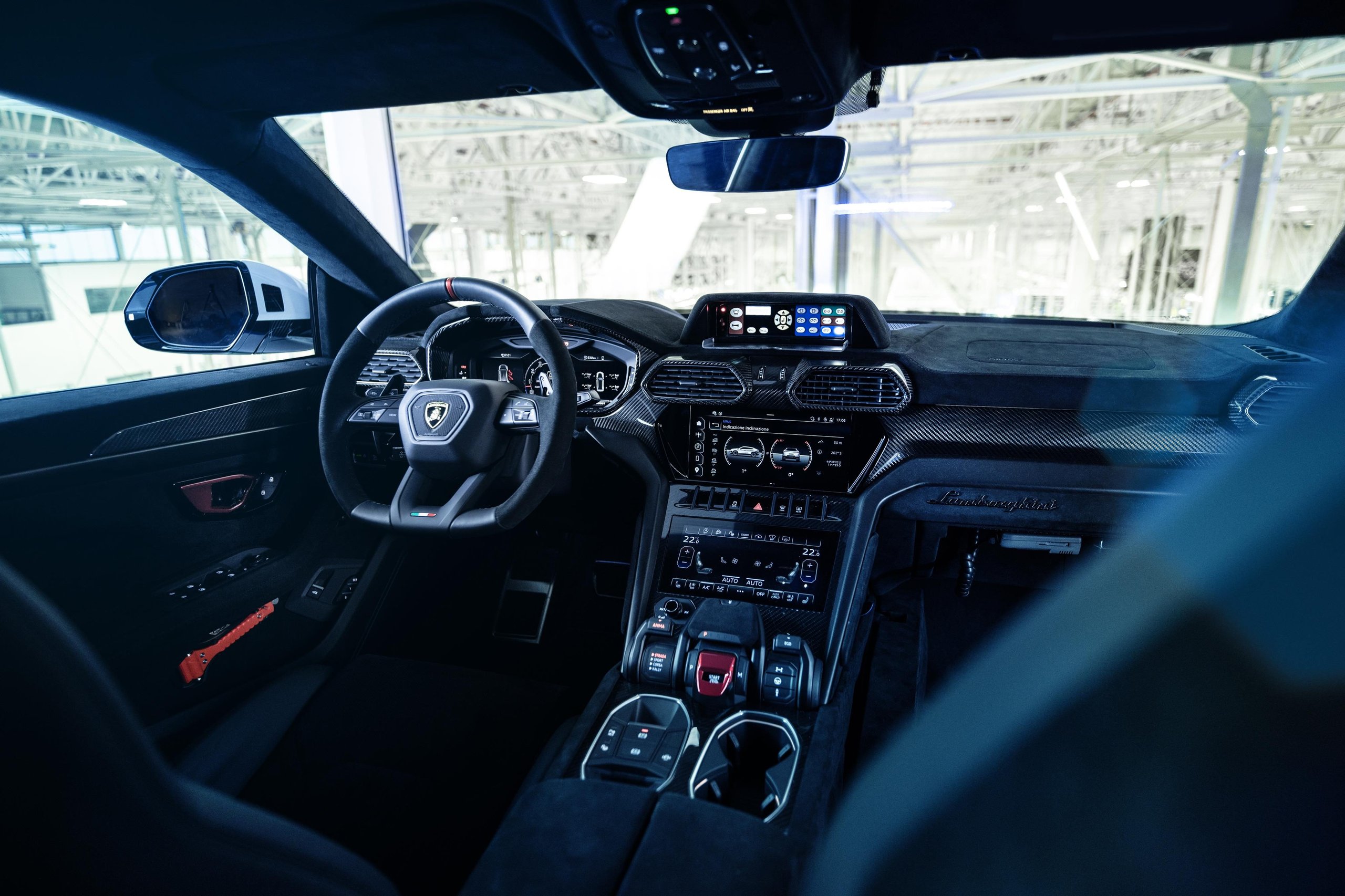
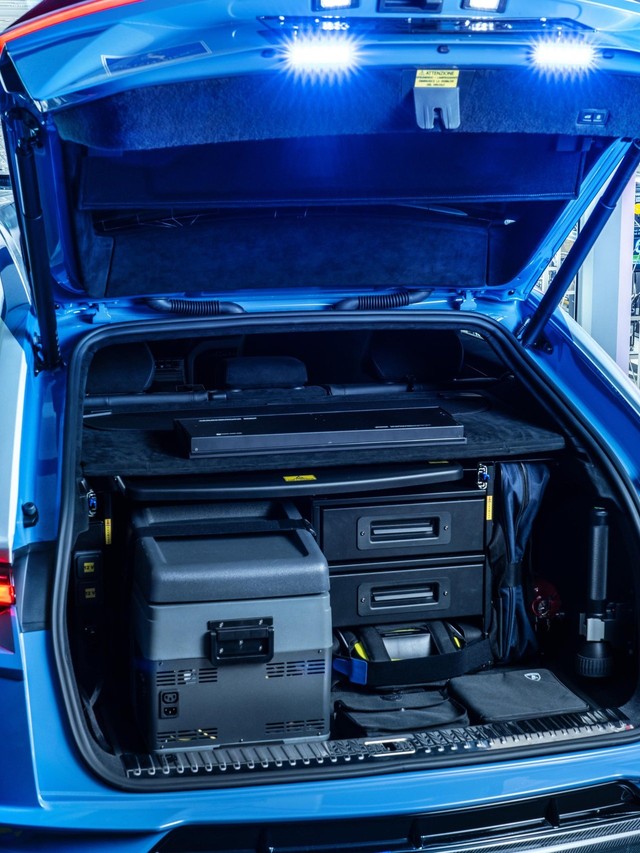
Lamborghini technicians at Sant’Agata Bolognese carried out the conversion to police specifications, and the modifications go well beyond a paint job and a light bar. The cockpit includes an armored weapon box, a flip-down message display for communicating with other motorists, and a dedicated trunk compartment for service equipment and a defibrillator. A 360-degree blue LED light bar and two-tone electric siren sit on the roof.
The most consequential piece of equipment is the portable fridge designed specifically for organ transport. It includes a display and data logger for continuous temperature monitoring, a detail that matters enormously in context. Transplant organs are viable for limited windows, often measured in single-digit hours depending on the organ, and any temperature deviation during transit can render them unusable. The data logger provides a verifiable chain of custody for temperature, ensuring the organ arrives at the receiving hospital with documented proof that cold-chain integrity was maintained throughout the journey.
This system sounds clinical rather than glamorous, but it represents the engineering problem that makes this vehicle genuinely different from a standard Urus Performante. Integrating a temperature-controlled medical device into a car that also needs to sustain high-speed autostrada runs, while keeping the cabin functional for armed officers carrying service equipment, is a packaging challenge that required real work at Sant’Agata. It is also the clearest illustration of why this program transcends marketing: the car is built to keep people alive.

The Lamborghini Urus Performante police vehicle's trunk reveals specialized equipment for law enforcement duties.
Why a 666 CV Super SUV Makes Sense for This Mission
The Urus Performante is powered by a twin-turbo V8 producing 850 Nm of torque between 2,300 and 4,500 rpm. Lamborghini says the vehicle accelerates from 0 to 100 km/h in 3.3 seconds and reaches a top speed of approximately 190 mph (306 km/h). Those figures sound like marketing material until you consider the operational context: an organ transport mission on the Italian motorway network, where the vehicle may need to cover hundreds of kilometers in the shortest possible time, in variable weather, on surfaces ranging from dry asphalt to rain-soaked mountain passes.
The Huracán, for all its brilliance, is a low-slung two-seater with minimal cargo space. It can carry a small cooler and little else. The Urus Performante, with seating for up to five and a boot capacity that one report pegs at 616 liters minimum, offers the practical volume to carry both the organ transport fridge and the full complement of police service equipment. All-wheel drive and a raised ride height give it capability in conditions where the Huracán would be compromised. It also holds the 2022 Pikes Peak Hillclimb record for a production SUV, with a time of 10:32.064, which speaks to its stability and composure at the kind of sustained high speeds that define these missions.
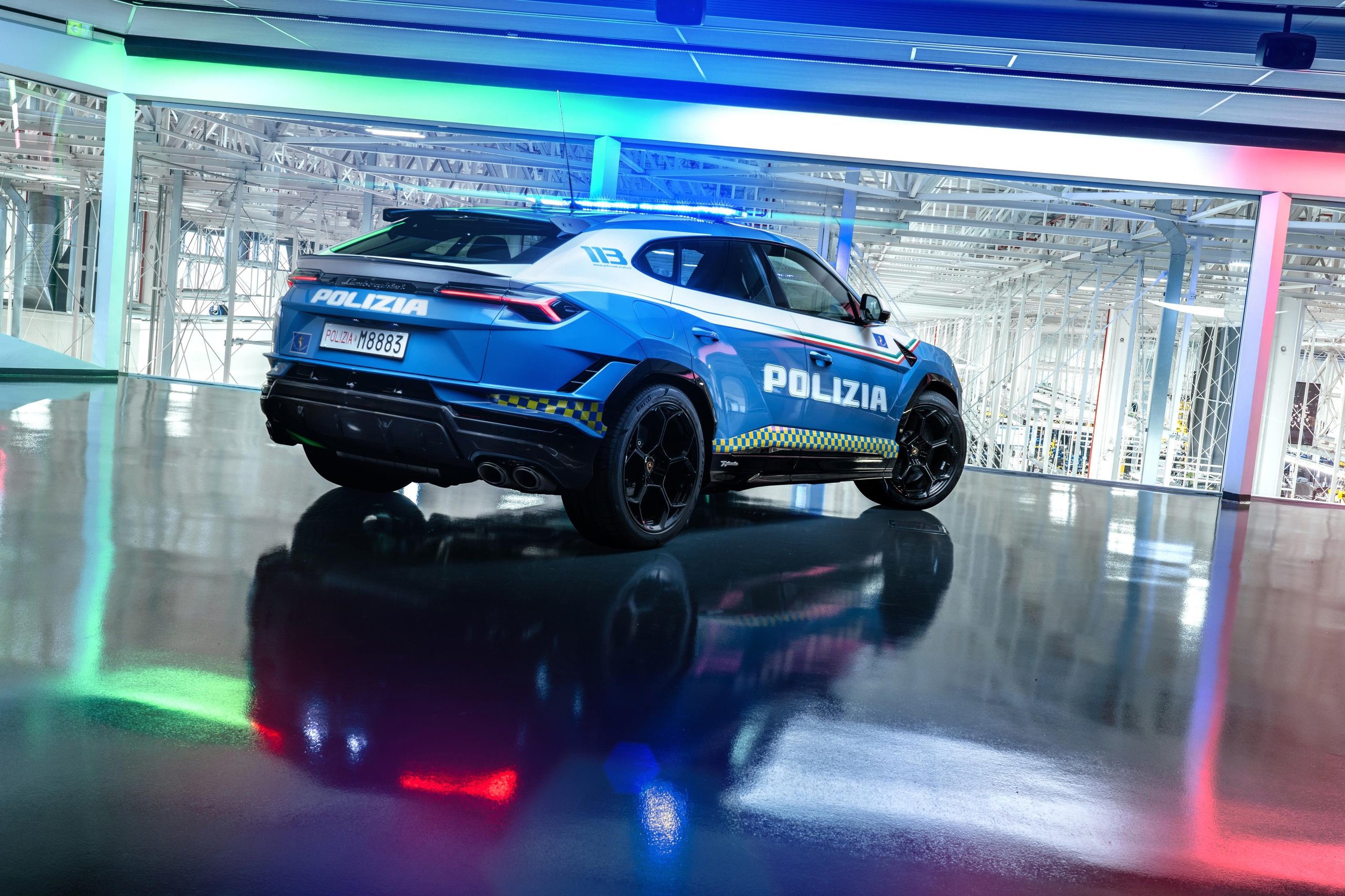
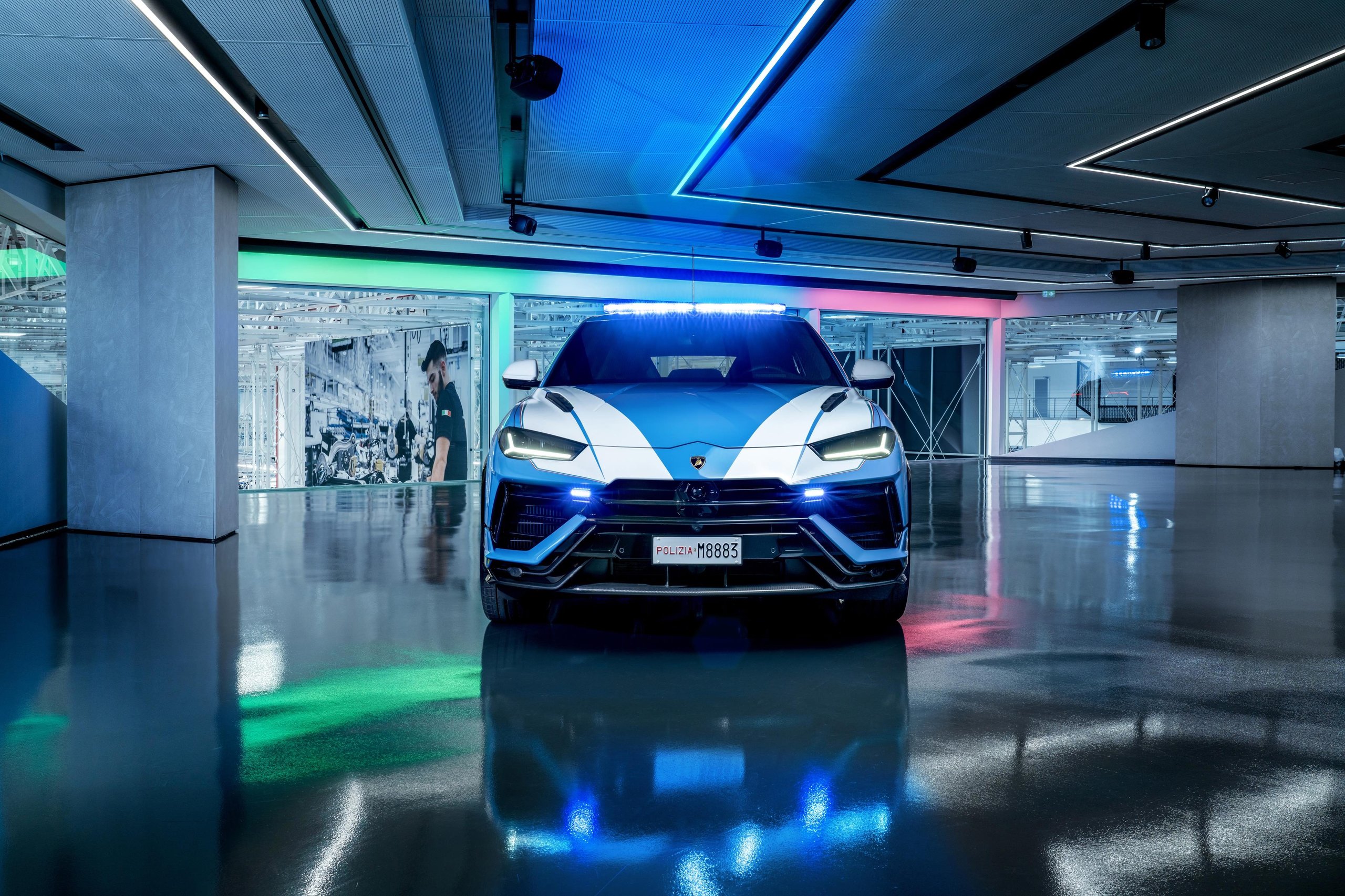
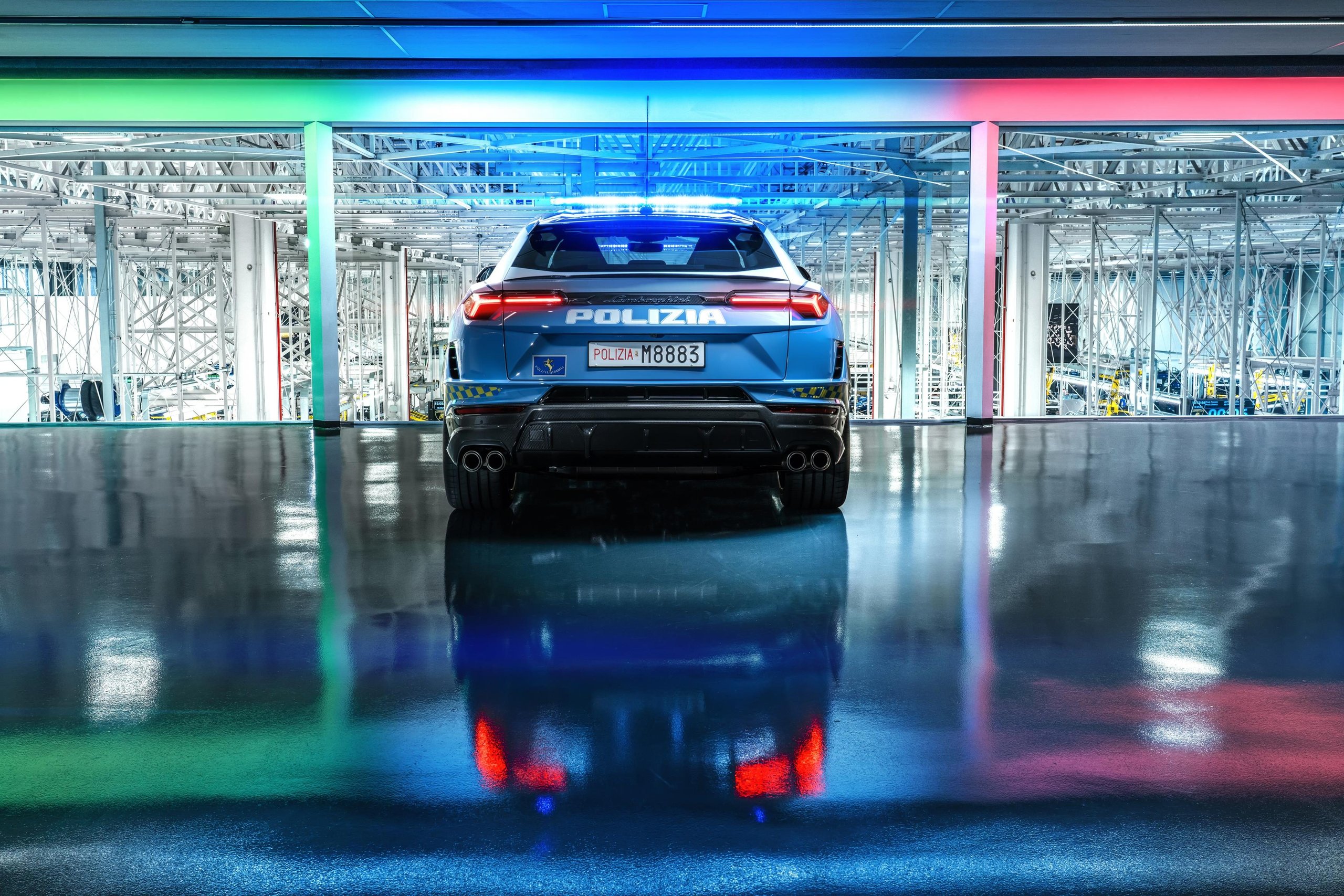
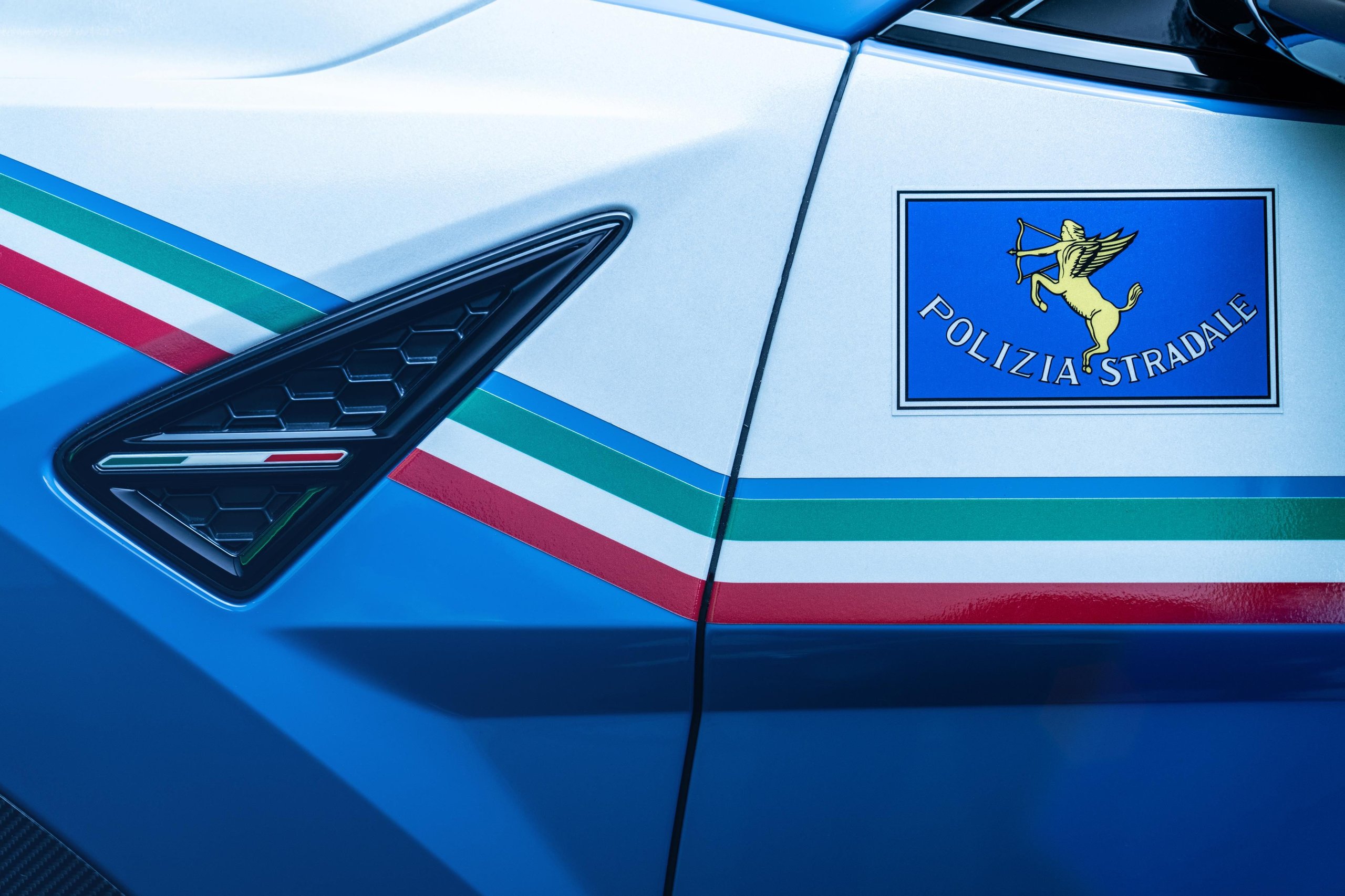
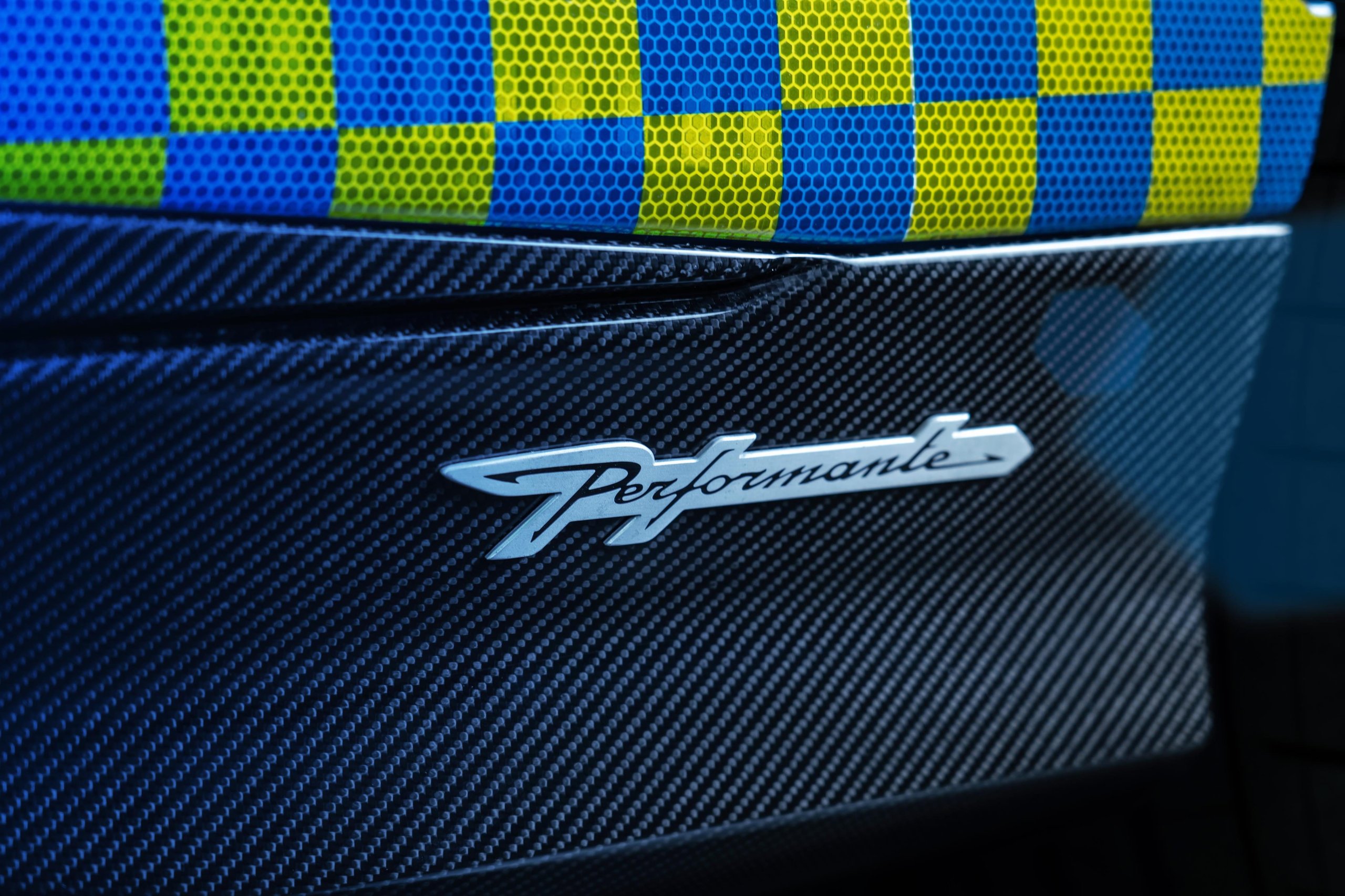
Lamborghini Centro Stile designed the livery, combining the classic blue and white of the Italian State Police with tricolor bands on the sills and seat belts. Reflective film police logos adorn the doors. The aggressive Performante bodywork, with its carbon-fiber accents and widened arches, looks remarkably natural in police dress. Among enthusiast communities, discussion of the Urus Performante often centers on how its driving dynamics distinguish it from the standard Urus and the newer SE. Owners on forums like Lamborghini-Talk frequently describe the Performante as the sharper, more focused choice, and it is easy to see why Lamborghini selected this variant rather than the comfort-oriented S or the hybrid SE for a role that demands maximum mechanical responsiveness.

The Lamborghini Urus Performante police vehicle showcases its dynamic side profile and official livery.
Brand Identity You Cannot Buy: What the Police Fleet Means for Lamborghini
Every supercar manufacturer invests heavily in brand image, most of it flowing into motorsport programs, celebrity partnerships, and lifestyle marketing. Lamborghini does all of those things. The police fleet program, though, operates on a different register entirely. When an Italian Highway Police officer drives a Urus Performante at speed across the Apennines to deliver a transplant organ, the brand association is not aspirational luxury. It is national duty.
That distinction matters more than it might appear. Lamborghini competes against Ferrari, Porsche, McLaren, and Aston Martin for attention and desirability. None of those brands maintain an equivalent, ongoing, operational partnership with a national police force. Ferrari’s Prancing Horse is a symbol of Italian excellence, certainly, but it does not appear on active-duty emergency vehicles saving lives on the A1. For Lamborghini, the Polizia fleet is a piece of brand equity that money alone cannot construct. It required twenty years of consistent commitment, six models, and a willingness to engineer bespoke conversions at the factory.
Lamborghini has not disclosed any financial details of the arrangement, and the question of whether these vehicles are donated, sold at cost, or provided under some other structure remains unanswered. What the company’s official account does confirm is that the vehicles are built to police specifications at Sant’Agata Bolognese and formally delivered to the state. For buyers and collectors who care about the cultural weight behind the badge on their own car, this program adds a layer of meaning that no competitor currently matches. The Urus Performante in Polizia livery is, in the end, the most compelling argument Lamborghini can make for what the brand actually stands for: performance inseparable from purpose.

A group of officials and police personnel pose with the Lamborghini Urus Performante and Huracán police vehicles.
Gallery