The 2017 Super Trofeo Asia: A Stage for Performance and Prestige
When Lamborghini brought its single-make Super Trofeo Asia series to Thailand’s FIA-accredited Chang International Circuit in Buriram for the second round of a six-weekend 2017 season, the weekend told a story that went well beyond lap times. Two 50-minute sprint races shared the schedule with a curated VIP hospitality program, and the combination revealed the real purpose of the exercise: Lamborghini was using competitive motorsport to cultivate brand loyalty across Southeast Asia, one trackside dinner and one podium finish at a time.
The series returned to Thailand for the second time in as many years, following the inaugural Super Trofeo race at the track in 2016, and growing interest from local Thai drivers shaped the 2017 grid. Returning competitor Supachai Weeraborwornpong arrived carrying two Lamborghini Cup class wins from the opening round in Sepang. PSC Motorsport’s Thai brothers Sarun and Saravut Sereethoranakul entered in the AM Class, while Bobby Suttiluch of True Visions made his Super Trofeo Asia debut. This local engagement mattered strategically. Lamborghini was actively seeding competitive participation in markets where it wanted to sell road cars, and the Super Trofeo provided the ideal vehicle for that effort.
Running alongside the second round of the Blancpain GT Series Asia, where Lamborghini also fielded Huracán GT3 entries, the Buriram weekend gave the brand a disproportionate share of trackside visibility and hospitality real estate. Two separate racing programs at the same venue, on the same weekend, amplified the message: Lamborghini was not merely present in Asia’s motorsport calendar. It was investing in it.
The Huracán Super Trofeo: Engineering for the Gentleman Racer
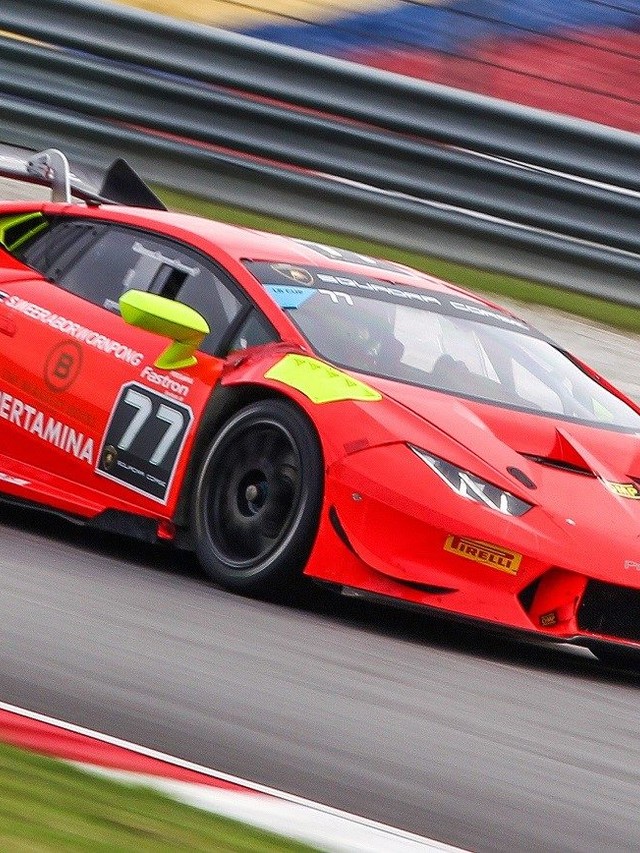
The car that made this brand-building strategy tangible was the Huracán LP 620-2 Super Trofeo, a race-ready version of the Huracán road car first unveiled at the 2014 Monterey Car Week. Lamborghini says the 2017 specification carried over unchanged from the previous year: a 5.2-liter naturally aspirated V10 managed by a Motec control unit, producing 620 horsepower and sitting in a chassis that weighed just 1,270 kg dry. The resulting weight-to-power ratio of 2.05 kg/hp placed serious performance in the hands of drivers who, in many cases, raced as a weekend pursuit rather than a profession.
The car reportedly shed roughly 550 lbs compared to the production model through extensive use of carbon fiber and aluminum, according to Lamborghini-Talk forum coverage from the original reveal. Rear-wheel drive replaced the road car’s all-wheel-drive system, and an X-Trac six-speed sequential gearbox handled shifts. Developed by Squadra Corse in collaboration with Dallara Racing, the Huracán Super Trofeo delivered genuine race-car dynamics without requiring the budget or infrastructure of a full GT3 program.
That accessibility was central to the loyalty-building thesis. The class structure reinforced it: separate podiums for Overall, Pro-AM, AM, and Lamborghini Cup categories ensured newer drivers competed against peers of similar experience rather than seasoned professionals. A gentleman racer could arrive at Buriram, race a naturally aspirated V10 Lamborghini in anger, stand on a class podium, and return to the hospitality suite feeling like part of the family. No amount of showroom polish could replicate that emotional conversion.

A red Lamborghini Huracan GT3 race car with yellow accents speeds around a racetrack, showcasing its dynamic performance.
Beyond the Racetrack: Lamborghini’s Exclusive Hospitality and Brand Building
Lamborghini and its regional dealers hosted VIP guests at every stop of the Super Trofeo Asia series, offering premium hospitality and fine Italian dining alongside the racing action. The specifics of guest counts and catering budgets remain undisclosed, but the intent was transparent: convert trackside spectators into future showroom visitors, and reinforce existing owners’ emotional connection to the brand.
This approach distinguished Lamborghini’s customer racing philosophy from a pure competition framework. Ferrari’s Challenge series and Porsche’s various Cup programs serve broadly similar functions, but Lamborghini leaned heavily on the experiential wrapper around its races. For the Asian market in particular, where the company was still expanding its dealer network and owner community in 2017, the ability to invite prospective clients to a race weekend, feed them well, and let them feel the V10 reverberating through the grandstands carried real commercial weight. The Super Trofeo was as much a hospitality platform as a championship.
The 2017 season also marked the debut of the Lamborghini Super Trofeo Middle East series, alongside the ninth year of the European championship and the fifth year in North America. Squadra Corse was scaling a global hospitality and racing infrastructure simultaneously, and the Asian series functioned as the growth engine for that expansion. Every new regional series meant more weekends to host prospective buyers, more podiums to celebrate gentleman racers, and more touchpoints to deepen the relationship between the brand and its most passionate customers.
Chang International Circuit: Asia’s ‘Destination of Speed’
The venue itself reinforced the hospitality-first logic. The Chang International Circuit, known locally as the “Destination of Speed,” was designed by Hermann Tilke with a 4.55-kilometer layout featuring 12 corners, all visible from the spectator stands. That last detail matters enormously for a brand-experience event: VIP guests could watch the entire race unfold without leaving their seats, something not possible at longer, more sprawling circuits.
By 2017, the track had already hosted Japanese Super GT, World Touring Car Championship, World Superbike Championship, and Asian Le Mans Series events. Lamborghini positioned the venue as a credible, FIA-accredited stage rather than a secondary circuit, and the concurrent Blancpain GT Series Asia round reinforced that perception. Sharing a bill with Blancpain meant access to a larger audience and a more professional event atmosphere without bearing the full cost of a standalone race weekend. For guests sipping Italian wine in the Lamborghini hospitality suite, the distinction between a regional support race and a prestige international event dissolved entirely.
The Global Vision: Super Trofeo’s Role in Lamborghini’s Motorsport Strategy
The 2017 Asia series comprised 12 races across six weekends, opening in Sepang and visiting Suzuka, Fuji, and Shanghai before the season’s final two rounds converged with the European and North American series at the Enzo & Dino Ferrari Circuit in Imola for the World Final. That convergence point, held on Lamborghini’s home turf in the Bologna region, was the emotional capstone of the entire program: regional champions from three continents racing against each other for a global title. For a gentleman racer who started the year at Buriram, the prospect of finishing it at Imola was a powerful incentive to stay inside the Lamborghini ecosystem.
Cross-pollination between the regional series added competitive depth and kept the loyalty loop turning. Gabriele Murroni, the Middle East series’ Lamborghini Cup class winner, entered the Buriram round. Rik Breukers, a Young Drivers Program graduate and Middle East Pro/Am class winner, raced for GDL Racing alongside teammate Nigel Farmer. Lamborghini says the pair took an overall race win and two class wins at Sepang, putting pressure on Pro Class leaders Afiq Yazid and Cozzolino Kei of Clazzio Racing. Front-running European teams like Leipert Motorsport, FFF Racing Team, and Team Lazarus also competed, giving the Asian series a genuinely international character.
One detail worth noting for anyone who follows Lamborghini’s current GT3 trajectory: the Super Trofeo served as the developmental pipeline for Squadra Corse’s driver talent and team relationships. The Young Drivers Program, which graduated Breukers, was a formal mechanism for identifying future factory-supported competitors. When Lamborghini unveiled the Temerario GT3 at Goodwood in 2025, as Autoblog reported, the company described it as its first competition car fully designed, developed, and built in-house. The infrastructure that made that possible did not appear overnight. Programs like the 2017 Super Trofeo Asia built the organizational muscle, the team partnerships, and the driver networks that Squadra Corse now draws on.
From 2017 to Today: The Enduring Legacy of Lamborghini’s Customer Racing
Viewed from a current vantage point, the strategic logic of the 2017 Buriram weekend reads clearly. Lamborghini used the Super Trofeo to validate the Huracán as a competitive platform, build dealer relationships in growth markets, create aspirational experiences for prospective buyers, and develop the human infrastructure of drivers, teams, and engineers needed for its broader motorsport ambitions. Each of those objectives served the same central purpose: turning customers into loyalists and loyalists into evangelists.
The Huracán Super Trofeo itself evolved after 2017. The EVO variant arrived later that year with significant aerodynamic revisions, and the subsequent EVO2 continued the platform’s development. The naturally aspirated V10 remained the constant through every iteration, giving the Super Trofeo a sonic identity that no turbocharged competitor series could replicate. As Autoblog noted in covering a low-mileage EVO Collector edition that surfaced on the secondary market, these cars now represent what the publication called Lamborghini’s “golden era of pure, naturally aspirated racing.”
For anyone considering entry into Lamborghini’s customer racing ecosystem today, the practical takeaway from the 2017 story is that Squadra Corse builds long-term relationships, not one-off race entries. The class structure, the hospitality program, the Young Drivers pipeline, and the World Final convergence at Imola all remain active elements of the current program. Lamborghini confirmed the 2026 Super Trofeo Asia calendar includes stops in Sepang, Ningbo, Fuji, Inje, Shanghai, and Monza. The circuits rotate, the cars evolve, and the V10 will eventually give way to the Temerario’s twin-turbo V8. The model for cultivating owners through motorsport, though, traces directly back to weekends like Buriram 2017.


