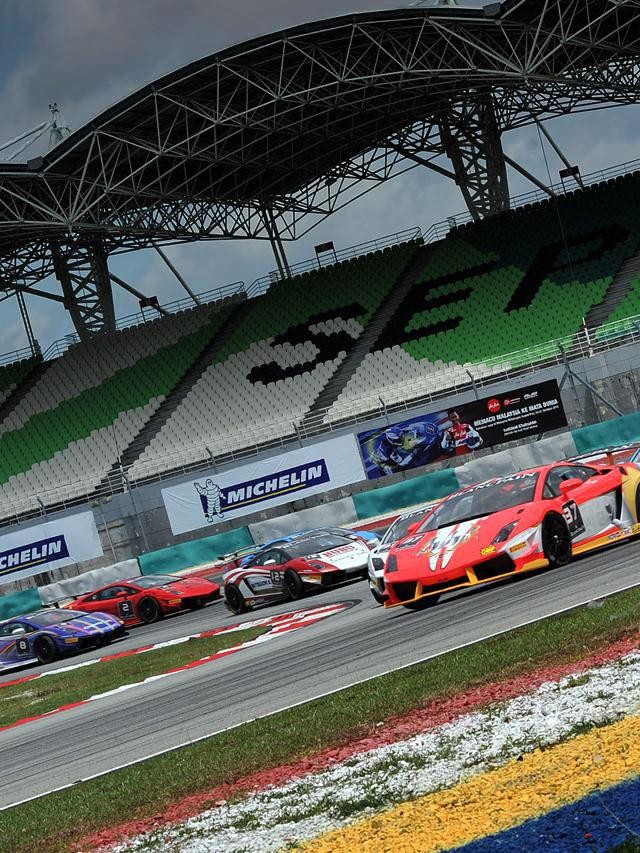
Lamborghini’s Global Racing Spectacle Returns to Italian Soil
Vallelunga, Sepang, Sebring, Valencia. For four consecutive years the Lamborghini Super Trofeo World Final traveled the globe. In November 2017, the fifth edition came home to the Autodromo Internazionale Enzo e Dino Ferrari at Imola, a 4.9-kilometer ribbon of tarmac steeped in Formula One history, for a four-day program running November 16 through 19. What unfolded there was more than a season finale. It was the clearest evidence yet that Squadra Corse’s customer racing operation had grown into something capable of supporting far larger factory ambitions.
Lamborghini says more than 60 Huracán Super Trofeo cars and nearly a hundred drivers converged on the Emilia-Romagna circuit for a week that combined the final rounds of the European, Asian, and North American continental championships with the standalone World Final races. That concentration of identical machinery on a single grid made Imola, for one weekend, the densest collection of competitive Lamborghini hardware on the planet.
The format itself reveals how Squadra Corse structures its calendar. Thursday and Friday absorbed the remaining double-header rounds of each continental series, eight races in total, before Saturday and Sunday staged the World Final proper. Splitting the AM and Lamborghini Cup races from the PRO and PRO-AM events across separate sessions kept grid sizes manageable while ensuring every class received its own spotlight. For teams that had been chasing points from Austin to Shanghai to the Nürburgring, this compressed schedule meant no room for conservative strategy. Every session counted.
Championship Drama Across Three Continents
The beauty of a World Final is that it forces unresolved championship battles into a single, high-pressure venue. By the time the paddock opened at Imola, the three continental series arrived in wildly different states of tension, and that variety only sharpened the weekend’s stakes.
The European series brought the tightest fight. Only the AM title, claimed by the Polish VS Racing pairing of Andrej Lewandowski and Teodor Myszkowski at the Nürburgring, was settled before the cars reached Italy. In the PRO class, Lamborghini confirmed that just 12 points separated the top four crews heading into the final 32 available. Loris Spinelli and Mikaël Grenier led for Antonelli Motorsport with five victories from ten races, but Jonathan Cecotto and Vito Postiglione of Imperiale Racing trailed by only three points. Behind them, Rik Breukers and Axcil Jefferies of GDL Racing, already 2017 Middle East series champions, sat seven points off the lead with two European wins of their own. The PRO-AM and Lamborghini Cup categories were similarly unresolved, with Liang Jiatong and Christopher Dreyspring holding a single-point advantage in PRO-AM and Gerard Van Der Horst defending a 16-point cushion in the Cup.
Asia, by contrast, arrived largely decided. Kei Cozzolino and Afiq Yazid of Clazzio Racing sealed the PRO championship at Shanghai with eight victories, a dominant run that left talented newcomers Artur Janosz and Toby Sowery of Lazarus chasing experience rather than points. Andrew Haryanto wrapped up the AM title with three races to spare. Only the PRO-AM, where Nigel Farmer and Breukers (pulling double duty with GDL Racing) held a 29-point buffer, and the Lamborghini Cup, led by Supachai Weeraborwornpong, offered remaining suspense.
North America split the difference. Riccardo Agostini and Trent Hindman of Prestige Performance/Lamborghini Paramus led the PRO standings by 28 points over Richard Antinucci of Change Racing, a comfortable margin earned through five victories. The PRO-AM gap was razor-thin: Edoardo Piscopo and Taylor Proto of US RaceTronics/Lamborghini Beverly Hills held a single point over eighteen-year-old Austin Versteeg, whose seven wins in his debut season made him one of the weekend’s most compelling storylines. The AM class featured a three-way scrap between Yuki Harata, Emmanuel Anassis, and Brian Thienes, separated by just 15 points at the top.
When the Checkered Flag Fell
One source covering the event’s results indicates that the North American PRO championship went to Agostini and Hindman, who secured two more victories in the final continental rounds at Imola to confirm their season-long consistency. Piscopo and Proto claimed the PRO-AM title after their close battle with Versteeg, while Harata reportedly swept the AM class to close out the season.
The World Final races themselves, staged on Saturday and Sunday with separate grids for AM/Lamborghini Cup and PRO/PRO-AM, produced different winners. Based on available reporting, Race 1 on Saturday saw Agostini and Hindman take the PRO class, Piscopo and Proto the PRO-AM, Philipp Wlazik and Florian Scholze the AM, and Gerard Van Der Horst the Lamborghini Cup. Sunday’s Race 2 reshuffled the order: Raphael Abbate and Yuki Nemoto, racing under Vincenzo Sospiri Racing, won the PRO class, Nicolas Gomas and Lucas Mauron took PRO-AM honors, and Massimo Mantovani claimed the AM victory.
Those split results across two World Final races underline a characteristic of the Super Trofeo format that makes it so compelling as customer racing. Because every car runs essentially identical hardware, the margins come down to driver skill, team preparation, and race-weekend adaptation. A crew that dominates a continental season can still be beaten over a single weekend by a rival who reads Imola’s conditions better. That parity is not accidental; it is the entire point of the series, and it is what made the operational complexity of converging three championships onto one circuit worth the effort.
A Purpose-Built Machine and Its Role in Lamborghini’s Ecosystem
Understanding the Huracán Super Trofeo itself clarifies why the World Final matters beyond trophy presentations. Stripped of road-car compromises, fitted with a full roll cage, competition suspension, racing slicks, and locked into an aggressive drivetrain calibration, the Super Trofeo occupies a specific rung on Lamborghini’s motorsport ladder. It sits below the GT3-spec Huracán that competes in open championships worldwide, but above any track-day experience a road-legal Performante or STO can offer.
That positioning is deliberate. The one-make format means driver talent, not budget-driven aero development, determines outcomes. For gentleman drivers in the AM and Lamborghini Cup classes, the series provides genuine wheel-to-wheel racing in a controlled environment. For young professionals like Versteeg, Janosz, or Sowery, it functions as a proving ground. The career pipeline from Super Trofeo to GT3 competition is well established within Squadra Corse’s structure, and a strong World Final performance puts a driver’s name on the radar of teams running Lamborghini machinery in IMSA, the World Endurance Championship, and other international GT series.
Forum discussion among Lamborghini enthusiasts reflects a consistent appreciation for the Super Trofeo’s rawness compared to road-going variants. The car’s naturally aspirated V10 in competition trim, the stripped interior, the aggressive aero package visible in race photos, large rear wings, carbon bodywork, racing liveries, all contribute to a machine that looks and sounds like what many enthusiasts wish they could drive but few ever will. The occasional appearance of road-titled Super Trofeo cars on the secondary market, as Autoblog documented with a Michigan-titled example, only reinforces how unusual and desirable these purpose-built racers remain outside their intended habitat.
From Customer Racing to the Temerario GT3: Super Trofeo’s Strategic Legacy
Viewed in isolation, the 2017 World Final was a successful season-ender for a well-run customer racing program. Viewed in the context of what Lamborghini built afterward, it looks more like a foundation.
Squadra Corse, Lamborghini’s motorsport division founded in 2013, built its early identity around the Super Trofeo series and the customer-facing GT3 program. Both relied on external engineering partnerships for the race cars themselves. The Huracán GT3, campaigned globally by privateer teams, earned victories and championships but was developed with significant outside collaboration. That model worked, but it also meant Lamborghini’s competition DNA was partially outsourced.
The Temerario GT3, which Lamborghini debuted at the 2025 Goodwood Festival of Speed, changed that equation. As Autoblog reported, it marks Lamborghini’s first competition car to be fully designed, developed, and built in-house. That milestone did not emerge from nowhere. Years of running the Super Trofeo series, managing global logistics for three continental championships, supporting dozens of privateer teams, and learning what drivers and customers needed from a racing Lamborghini created the institutional knowledge that made an in-house GT3 program possible.
The comparison to rival one-make series is instructive. Ferrari’s Challenge series and Porsche’s various Cup programs serve similar functions: they sell cars to wealthy amateur racers, develop young talent, and keep the brand visible in paddocks worldwide. What distinguishes Lamborghini’s approach is the trajectory. The Super Trofeo was never conceived as an endpoint. It was a stepping stone toward deeper factory involvement in top-tier GT racing, a strategy that the Temerario GT3 now makes explicit. For anyone who watched 60 Huracáns circulate Imola in November 2017, the through-line to Lamborghini’s current factory GT ambitions is direct.
For prospective buyers considering entry into Lamborghini’s customer racing ecosystem today, the practical takeaway from this history is encouraging. Squadra Corse’s infrastructure, from technical support at race weekends to the driver development pathway, was stress-tested across years of global Super Trofeo competition before the brand committed to building its own GT3 car. That operational maturity matters more than any single spec-sheet number when you are writing checks for race entries, spare parts, and engineering support throughout a season.
Why Imola Keeps Drawing Lamborghini Back
The choice of Imola for the 2017 World Final was not purely logistical, though the circuit’s proximity to Sant’Agata Bolognese, roughly 60 kilometers, certainly simplified the operation. Imola carries weight in Italian motorsport culture that few circuits can match. Its Tamburello and Villeneuve chicanes carry the ghosts of a different era of racing, and its technical layout, mixing high-speed compressions with tight, low-grip corners, rewards car control over raw straight-line speed. For a one-make series where every car produces identical power, that kind of circuit separates drivers rather than machinery.
Lamborghini’s decision to bring the World Final back to Italy after four years abroad also carried a symbolic dimension. Hosting the event at Vallelunga in 2013 established the Italian precedent, but the subsequent rotation through Malaysia, Florida, and Spain demonstrated global ambition. Returning to Imola in 2017 signaled that the series had matured enough to come home without appearing provincial. The grid was genuinely international, the championship battles spanned continents, and the event’s structure, eight continental races plus the World Final, justified a venue that could handle the density.
Imola continues to feature in Lamborghini’s motorsport calendar years later, reinforcing how well the 2017 template worked. A circuit that rewards bravery and precision over aerodynamic advantage suits a one-make series perfectly, and it gives Squadra Corse a home venue that resonates with the brand’s Italian identity while welcoming teams from Hong Kong to Palm Beach.
What the 2017 World Final demonstrated, above all, was that Lamborghini’s investment in customer racing could produce a genuinely compelling sporting event, not just a marketing exercise with helmets. The championship battles were real. The talent pipeline was functioning. And the operational scale, 60 cars, nearly 100 drivers, three continental series converging on a single weekend, proved that Squadra Corse could manage complexity at a level that justified the ambitions that followed.
Gallery


