The Unlikely Pairing Heading to Jerez
Lamborghini could have slotted two seasoned GT drivers into car number 222 at the Super Trofeo World Final and nobody would have noticed. Instead, Squadra Corse assembled a crew designed to generate conversation, and in doing so revealed how seriously the brand treats its customer racing platform as a marketing weapon.
Nine-time FIM World Motocross champion Tony Cairoli and five-time 24 Hours of Le Mans winner Emanuele Pirro will share a Huracán Super Trofeo Evo at the Lamborghini World Final in Jerez de la Frontera, scheduled for October 24 through 27. For Cairoli, this marks his first competitive outing in a GT car. For Pirro, it doubles as a racing weekend and a working assignment: he now serves as a motorsport consultant for Lamborghini, and the event gives him a seat from which to evaluate the Super Trofeo series from the inside. The car’s number, 222, was chosen as a tribute to Cairoli’s personal racing number.
The crossover narrative is deliberate. A motocross legend learning to trust aerodynamic downforce for the first time, guided by an endurance racing veteran whose résumé spans Formula 1, the American Le Mans Series, and five overall victories at La Sarthe. Lamborghini wrote this pairing because it pulls two entirely separate audiences toward a championship that deserves wider recognition, and that calculation tells you everything about where Squadra Corse sees the Super Trofeo heading.
From Dirt Berms to Apex Curbing: Cairoli’s GT Baptism
Cairoli’s motorsport credentials are staggering on their own terms. He secured five consecutive championships for KTM between 2010 and 2014, and his total of nine world titles places him among the most decorated riders in motocross history. He also won the Monza Rally Show in 2018, and Lamborghini says he tested a Formula 1 single-seater with Red Bull. The man knows speed. What he does not know, at least not yet, is how a 1,200-plus-kilogram GT car behaves when you trail-brake into a high-speed corner with significant aerodynamic load pressing the tires into the asphalt.
Motocross and circuit racing in a closed-cockpit GT car occupy opposite ends of the vehicle-dynamics spectrum. On a dirt bike, the rider is the active suspension: body weight shifts constantly, the rear end slides by design, and commitment is measured in physical aggression. In a Huracán Super Trofeo Evo, the driver sits low in a carbon tub, strapped tight, relying on precise pedal inputs and a feel for grip that builds progressively with speed. The faster you go, the more downforce the car generates, and the more grip becomes available. That relationship is counterintuitive for someone whose instincts were forged on loose surfaces where speed and grip are often inversely related.
Both Cairoli and Pirro completed initial test runs in a Huracán Super Trofeo Evo at Vallelunga ahead of the World Final. Cairoli described the car as enjoyable to drive, though weather disrupted the second day of testing. The limited preparation time makes the Jerez weekend a genuine learning exercise rather than a calculated podium run, and that honesty is part of what makes the entry compelling. Cairoli is not pretending to be a GT driver. He is trying to become one, in public, at the highest-profile event on Lamborghini’s single-make calendar.

A smiling race car driver gives a thumbs-up while holding his helmet on the track, ready for the challenge.
Pirro’s Dual Role: Mentor and Evaluator
Emanuele Pirro brings a career that would fill a small museum. Beyond his five Le Mans victories, his Formula 1 career included stints at Benetton and Scuderia Italia. His endurance résumé extends to three victories at Petit Le Mans, two American Le Mans Series championships, and two wins at the Sebring 12 Hours. He also spent years as an FIA steward, which means he understands racing regulations from the enforcement side as well as the cockpit.
His consultant role with Lamborghini adds a layer of purpose to what might otherwise be a fun exhibition outing. Pirro acknowledged that the weekend would give him a firsthand look at how the Super Trofeo series operates, information he can feed back into Lamborghini’s motorsport strategy. Sharing a car with a raw talent like Cairoli intensifies the exercise. He will experience the series not just as a competitor but as a coach, translating decades of racecraft into real-time advice for a driver whose reflexes are world-class but whose reference points are entirely different.
For Lamborghini, installing a figure of Pirro’s stature in a consulting capacity signals ambition. Customer racing programs thrive on credibility, and few names carry more weight in endurance racing circles. If his evaluation leads to refinements in driver coaching, series structure, or car development, the Jerez weekend becomes more than a spectacle. It becomes a data-collection exercise wrapped in a compelling story, and that combination is precisely the kind of return on investment Squadra Corse is chasing across its entire program.
The Huracán Super Trofeo Evo as a Proving Ground
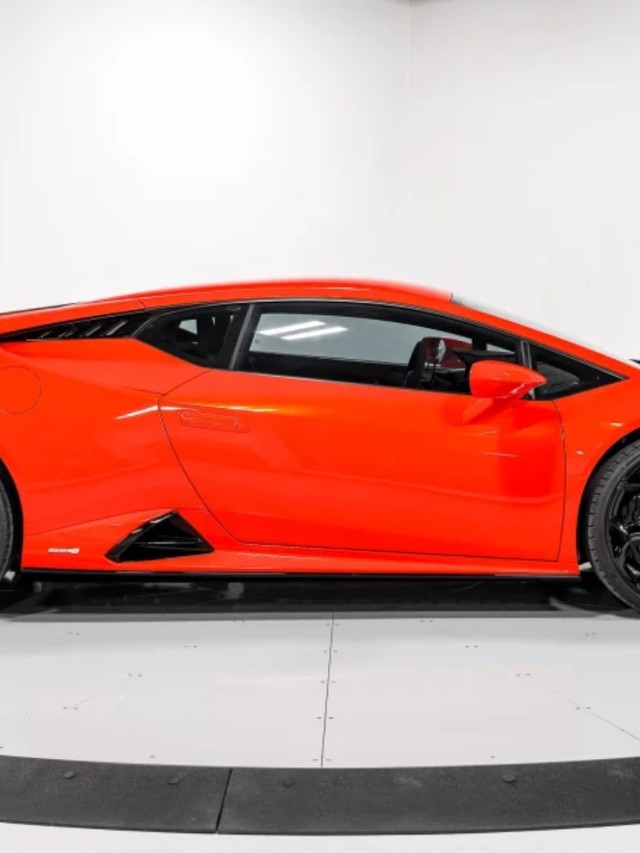
The car at the center of this story is a purpose-built race machine, not a road car with a roll cage bolted in. The Huracán Super Trofeo Evo runs a naturally aspirated 5.2-liter V10, the same engine family that powers the road-going Huracán but tuned and managed for competition through a Motec control unit and mated to a sequential six-speed X-Trac gearbox. The chassis combines carbon fiber and aluminum, and the aerodynamic package produces substantial downforce, enough to fundamentally change how the car behaves at speed compared to anything Cairoli would have driven on four wheels before.
The Super Trofeo series itself functions as a structured competitive ladder. Divided into three continental championships covering Europe, North America, and Asia, each series runs double-race weekends on prominent circuits before the season converges at the World Final. Driver categories span Pro, Pro-Am, Am, and LB Cup, which means the grid at Jerez will include experienced semi-professional racers alongside gentleman drivers. Cairoli and Pirro will enter the Pro-Am category for the 6th round of the Super Trofeo Asia on Friday, then participate as wild cards in the two final races on Saturday at 5:00 pm and Sunday at 4:00 pm.
Ferrari runs its Challenge series on a similar one-make model, and Porsche operates the Carrera Cup. All three programs serve overlapping purposes: they give wealthy enthusiasts a structured competitive outlet, they develop future talent for GT3 and endurance programs, and they function as rolling brand showcases at circuits worldwide. Lamborghini’s version leans heavily on the V10’s naturally aspirated character as a differentiator, a quality that makes the car viscerally rewarding to drive at the limit. Placing a crossover star like Cairoli in that cockpit, with a consultant like Pirro coaching from the adjacent seat, turns the car itself into a storytelling device for the brand.
What Lamborghini Gains from the Spectacle
Cairoli’s participation generates media coverage that a standard Super Trofeo weekend, however competitive, simply cannot match. Motocross fans who might never visit a Lamborghini dealership will follow his progress. Pirro’s involvement lends institutional credibility and connects the series to the broader world of professional endurance racing. The combination attracts eyeballs from two distinct audiences, neither of which overlaps significantly with the existing Super Trofeo fanbase.
Lamborghini says all races will be livestreamed on the Squadra Corse website, Facebook page, and YouTube channel, which means the brand is investing in distribution, not just the on-track event. The full weekend schedule is available on squadracorse.lamborghini.com.
This kind of guest-entry program signals that Lamborghini views its customer racing platform as a marketing asset, not just a motorsport operation. If the Cairoli experiment generates the attention Squadra Corse is clearly hoping for, similar crossover entries in future seasons would be a logical next step. The series already serves as a proving ground for drivers who graduate to GT3 competition, and high-profile wildcards only increase its visibility. Every element of the Jerez weekend, from the car number to the driver pairing to the streaming infrastructure, points toward a brand that has learned to treat its single-make series as a stage, not merely a race.
The Real Test Starts at Jerez
What makes this entry genuinely interesting, rather than merely promotional, is the uncertainty. Cairoli is fast. That much is beyond dispute. But fast on a motocross track and fast in a Huracán Super Trofeo Evo require fundamentally different skill sets, and the gap between testing at Vallelunga and racing wheel-to-wheel against experienced competitors at Jerez is enormous. Pirro’s presence in the other seat provides a safety net of experience, but the car does not care about résumés once the lights go out.
The number 222 Huracán will line up against drivers who know these cars intimately, who understand tire degradation across a race stint, who can extract the last tenth from a sequential gearbox under braking. Cairoli will be learning all of that in real time. Whether he finishes mid-pack or collects a trophy matters less than whether the weekend demonstrates that the Super Trofeo series can absorb and showcase talent from outside the traditional GT pipeline.
Pirro evaluates the series he now consults for. Cairoli brings a global fanbase to a championship that could use the exposure. And the Huracán Super Trofeo Evo, a car built around one of the last great naturally aspirated racing V10s, gets another weekend in the spotlight. The World Final at Jerez is a race weekend, yes. But it is also a carefully staged piece of brand theater, and Lamborghini cast it well.


