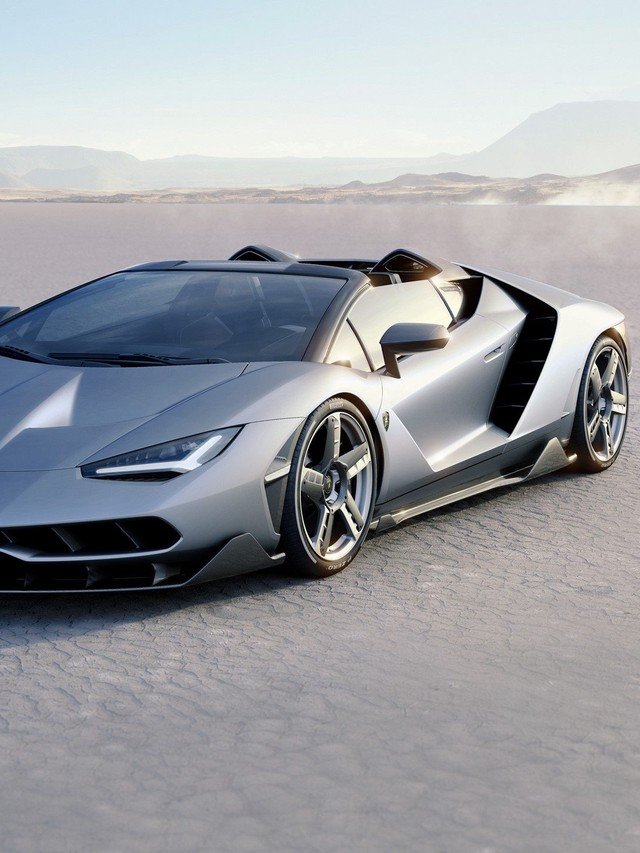
Twenty Units, Zero Availability: The Centenario Roadster Lands at Monterey
Every unit was spoken for before the car appeared in public. That was the commercial reality when Lamborghini pulled the covers off the Centenario Roadster at The Quail, A Motorsports Gathering during Monterey Car Week in August 2016. Limited to exactly 20 examples worldwide, priced from 2 million euros plus tax, the open-top Centenario arrived as the companion piece to the coupe that preceded it, completing a 40-car commemorative series honoring what would have been Ferruccio Lamborghini‘s 100th birthday.
Selling out a hypercar before its debut is familiar enough, but the Centenario Roadster carried an unusual burden. Lamborghini positioned it not merely as a centenary keepsake but as a deliberate signal of where the brand’s design language was heading. That dual purpose, part retrospective tribute, part forward-looking manifesto, made it more consequential than the typical limited-run exercise in scarcity pricing. RobbReport indicated an approximate price of $2.2 million for the Roadster, placing it firmly in the rarefied territory where cars function as both driving machines and cultural artifacts.
Ferruccio’s Century: Why the Name Carries Weight
Ferruccio Lamborghini, born in 1916, built tractors before he built supercars, and the company he founded in 1963 reflected his particular brand of stubbornness: build something better than what existed, or don’t bother. The Centenario name, Italian for “centenary,” tied the car directly to that origin story. Lamborghini designed the commemorative series to embody what it called the progressive qualities of its founder, a man who famously started making sports cars because he felt existing Italian exotics were not engineered well enough.
The tribute was not purely sentimental. By invoking Ferruccio’s legacy, Lamborghini gave its design team license to push beyond the Aventador‘s established visual vocabulary. The coupe debuted at the 2016 Geneva Motor Show; the roadster followed six months later in California. Both were conceived as a matched pair from the outset, each exploring a different expression of the same philosophy. Where the coupe delivered a sealed, aerodynamically optimized silhouette, the roadster confronted a harder question: how do you maintain that visual and structural aggression without a roof?
Design as Prophecy: Reading the Centenario’s Lines
Lamborghini described the Centenario Roadster as embodying a new design direction, one defined by cleaner surfaces and sharper reflections where form follows function. The car’s body language tells a clear story without the marketing vocabulary. Low overhangs, a mono-body silhouette, and deeply sculpted air channels through the front headlight casings and side skirts pointed toward a visual grammar that would eventually surface in production Lamborghinis.
Study the Centenario’s face and then look at a Revuelto. The family resemblance is unmistakable. Y-shaped lighting signatures, aggressive splitter geometry, and the emphasis on functional aerodynamic surfaces over decorative scoops all trace a line from this 2016 exercise to the hybrid V12 flagship that followed years later. The Sian, which arrived in 2019 as Lamborghini’s first electrified production car, borrowed even more directly from the Centenario’s design vocabulary. In retrospect, the Centenario was less a standalone celebration and more a public sketch of the next decade’s design DNA.
Few observers covered this connective thread when the car debuted. Most focused on the spec sheet and the price tag. The more revealing observation is that Lamborghini used a birthday tribute as a proving ground for aesthetic risks it was not yet ready to commit to across its entire lineup. That strategy, testing bold design moves on ultra-limited cars before migrating them to volume models, mirrors what Ferrari does with its Icona series and what McLaren attempted with the Elva. Lamborghini simply did it earlier and more quietly.

The silver Lamborghini Centenario Roadster stands majestically on a dry lakebed, showcasing its sleek design against a desert backdrop.
Open-Air Engineering: What Losing the Roof Actually Costs
Removing a roof from a mid-engine supercar producing 770 horsepower from a naturally aspirated V12 is not a cosmetic exercise. The carbon fiber monocoque and full carbon body that Lamborghini says underpins the Centenario had to compensate for the structural rigidity lost when the fixed roof disappeared. The Roadster carries a weight-to-power ratio of 2.04 kg/hp, a figure that sounds abstract until you consider the engineering discipline required to keep an open-top car that light while maintaining chassis stiffness at speeds Lamborghini claims exceed 217 mph.
The aerodynamic package demanded its own rethinking. An electrically deployed rear wing actuates automatically based on speed and driving conditions, but the real complexity sits around the cockpit. Channels behind the headrests, the specific curvature of the windscreen, and an integrated diffuser all work to manage airflow into the cabin at high speed. Twin cowls behind the occupants’ heads double as engine air intakes, feeding the V12 while shielding passengers from turbulence. Rear-wheel steering, a system Lamborghini would continue refining through subsequent models, sharpened the Roadster’s agility and stability in a package that weighed more than the coupe but aimed to feel no less precise.
The naturally aspirated 6.5-liter V12, producing what Lamborghini claimed was the most powerful engine it had built at the time, delivered its power through the same ISR automated manual gearbox found in the Aventador SV. Acceleration from 0 to 60 mph arrived in a claimed 2.8 seconds. For an open-top car built on a 2016 platform with no hybrid assistance, those numbers still command respect. The sound was the real dividend of the roofless format. A naturally aspirated V12 at 8,500 rpm with nothing between you and the intake trumpets is an experience that hybrid successors, however technically superior, will struggle to replicate. Touchscreen access to connected infotainment, including internet, web radio, telemetry, and Apple CarPlay, rounded out a cockpit that balanced raw mechanical drama with contemporary connectivity.
Collector Reality: What a Sold-Out Hypercar Signals
With all 20 units allocated before the public unveiling, the Centenario Roadster immediately entered a secondary market where scarcity dictates pricing. According to LuxuryPulse, a used 2017 model was listed for $2,649,996, suggesting meaningful appreciation from the original asking price. That trajectory aligns with what enthusiast forums and collector communities observed with the Veneno Roadster and the Reventon before it: Lamborghini’s most limited V12 specials tend to hold or increase in value, particularly when they mark a genuine inflection point in the brand’s design history rather than a simple livery exercise.
The buyer profile for a car like this is worth understanding. These are not weekend canyon runners. Centenario owners typically belong to Lamborghini’s inner circle of collectors, the same clients invited to preview future models, attend private events, and receive first allocation on the next limited car. Acquiring a Centenario was as much about maintaining that relationship as it was about owning the car itself. For Lamborghini, the commercial value of the Centenario program extended well beyond 40 invoices. It cemented loyalty among the clients who matter most to the brand’s long-term financial health.
One report noted the Centenario Coupe was seen being filmed for an upcoming Transformers movie, underscoring the car’s cultural reach beyond the collector garage.
From Centenario to Revuelto: Tracing the Design Lineage
The question that matters most for LamboCars readers is whether the Centenario actually delivered on its promise as a preview of Lamborghini’s future. The evidence says yes, with caveats. The sharp, function-driven surfacing and Y-motif lighting that debuted on the Centenario clearly informed the Sian and, through it, the Revuelto. The emphasis on visible aerodynamic elements as design features rather than afterthoughts became a defining characteristic of every Lamborghini that followed.
What the Centenario could not preview was the powertrain revolution. The Revuelto pairs its V12 with three electric motors and a double-clutch gearbox, a fundamentally different engineering philosophy from the Centenario’s pure naturally aspirated approach. The Temerario, Lamborghini’s forthcoming V8 hybrid, pushes even further from the Centenario’s mechanical template. The design language survived the transition to electrification. The mechanical purity did not.
For those watching the secondary market, the practical takeaway is straightforward: the Centenario Roadster represents the last generation of Lamborghini’s design experimentation conducted entirely within a naturally aspirated, non-hybrid framework. Every limited-edition Lamborghini that follows will carry some form of electrification. That distinction, combined with the 20-unit production cap, positions the Centenario Roadster as a bookend to an era rather than simply a birthday card. Ferruccio, the tractor builder who demanded better engineering from everyone around him, would probably appreciate the irony. His centenary tribute now marks the closing chapter of the very engine philosophy his company perfected.


