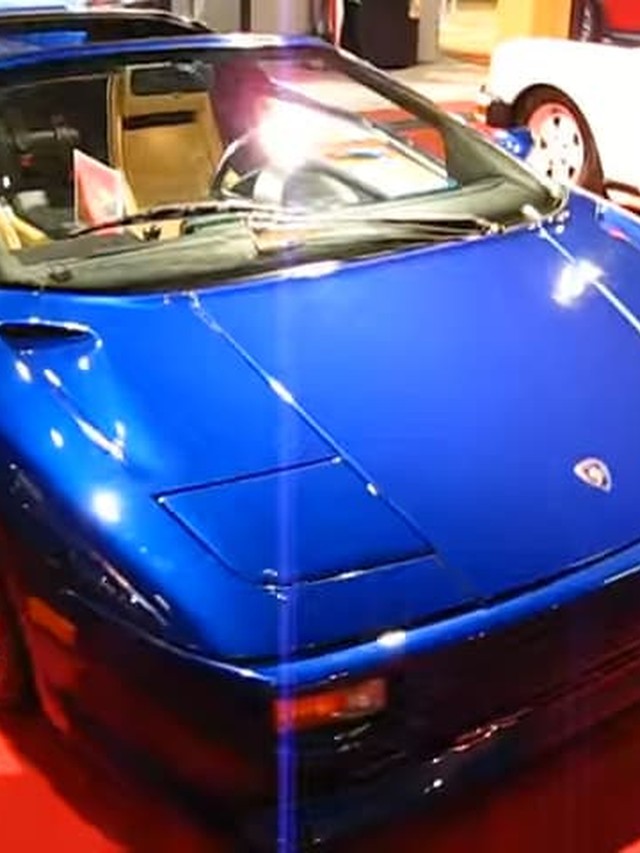
The 30-Year Legacy: Why the Diablo Still Matters to Lamborghini Enthusiasts
No car in Lamborghini’s history absorbed as much corporate upheaval, engineering reinvention, and philosophical change as the Diablo. Across an 11-year production run, three different owners, and nine distinct variants, the model transformed from a rear-wheel-drive, power-steering-free V12 brute into a refined all-wheel-drive grand tourer equipped with variable valve lift and ABS. That trajectory tells us something important not just about the Diablo itself, but about the DNA of every V12 Lamborghini that followed, right through to the Revuelto’s hybrid architecture.
Lamborghini marked the Diablo’s 30th anniversary in 2020, and the occasion invites more than nostalgia. With 2,903 units produced, according to Lamborghini, the Diablo was the brand’s most-produced model at the time. The Countach it replaced was a poster-car legend, but the Diablo proved Sant’Agata could build its V12 flagship in genuine volume without diluting its character. More critically, it served as the proving ground where Lamborghini learned to reconcile raw performance with the engineering sophistication that modern buyers expect. Every all-wheel-drive system, every electronic aid, every variable valve timing strategy in a contemporary Lamborghini V12 traces at least part of its philosophical lineage back to decisions made during the Diablo’s production run.
From Countach to Murciélago: The Diablo’s Pivotal Place in Lamborghini History
Development began in 1985 under the codename Project 132, with a clear mandate: replace the Countach at the top of Lamborghini’s range. The original Diablo went on the market in January 1990 and stayed in production until 2001, when the Murciélago took over. That timeline places the Diablo squarely between two of Lamborghini’s most celebrated eras: the analog wildness of the Countach and the more technologically ambitious approach that defined the Murciélago and, later, the Aventador.
What makes this position so revealing is the sheer breadth of change the car absorbed. The Diablo that launched in 1990 and the one that left the factory in 2001 shared a basic silhouette and a V12 engine, but almost everything else told a different story. Rally champion Sandro Munari contributed to the original car’s dynamic development, according to Lamborghini. By the time the final 6.0-liter models rolled out under Audi’s stewardship, the Diablo carried technology that would have been unrecognizable to Munari’s test program. That gap between the first car and the last is the clearest illustration of how corporate ownership reshaped Lamborghini’s engineering ambitions in real time.
Engineering Evolution: RWD Purity, AWD Revolution, and the Introduction of Driver Aids
The original Diablo’s specification reads like a deliberate provocation. Lamborghini says early models, those built before 1993, came without electronic driving aids or power steering. Rear-wheel drive only. A 5.7-liter V12 with four overhead camshafts, four valves per cylinder, and multi-point electronic injection, rated at 485 HP and 580 Nm of torque, mounted longitudinally behind the cabin. At launch, Lamborghini described it as the fastest production car in the world, quoting a top speed of 325 km/h (203.1 mph).
Despite that raw mechanical character, the Diablo was no stripped-out racer. Lamborghini fitted leather trim, air conditioning, electric windows, and electrically adjustable seats. A car with no power steering that nonetheless offered electric seat adjustment: that duality of brutal performance wrapped in genuine comfort defined the Diablo’s personality and set a template the company would refine for decades.
The pivotal engineering moment came in 1993 with the Diablo VT. Lamborghini says it was the first Lamborghini Granturismo to feature four-wheel drive, and the VT brought mechanical and styling improvements that eventually filtered down to the two-wheel-drive models as well. For buyers at the time, the VT represented a fundamentally different ownership proposition, a car that could deploy its considerable power with more confidence in mixed conditions. Multiple owners on enthusiast forums describe the RWD-to-AWD split as the single biggest dividing line in the Diablo experience, with the earlier cars demanding more respect and the VT offering a broader usability window.
Then Audi Group acquired Automobili Lamborghini in 1999, and the engineering evolution accelerated sharply. The restyled models received an engine updated to 529 HP and 605 Nm, along with a variable valve lift system and, for the first time on any Lamborghini, ABS brakes. In less than a decade, the Diablo went from a car with no electronic safety nets to one carrying the building blocks of a modern supercar’s dynamic toolkit. That compression of progress under successive owners is the Diablo’s most consequential legacy for the V12 cars that followed.
Design Influences: Gandini’s Vision and the Impact of Chrysler and Audi Ownership
Marcello Gandini penned the Diablo’s initial design, continuing a creative lineage that stretched back through the Countach and the Miura. But the car that reached production was not purely Gandini’s vision. Chrysler’s design center, which became the majority shareholder of Automobili Lamborghini during the development period, partially revised his work. The result retained Gandini’s aggressive wedge proportions and dramatic presence while incorporating changes that, depending on whom you ask, either softened or refined the original concept.
This corporate design tension runs through the entire Diablo story and mirrors the engineering tension between analog purity and technological progress. The gold VT 6.0 shown in Lamborghini’s anniversary imagery displays the model’s classic wedge profile and prominent side air intakes, visual signatures that survived every revision. But the details around those signatures shifted meaningfully as ownership changed hands.
After Audi’s acquisition, Lamborghini hired Luc Donckerwolke as its first in-house designer. His 1999 restyling of the Diablo SV, followed by updated VT and VT Roadster models, brought modernized exterior lines and interior appointments. Donckerwolke’s work on the late Diablo essentially previewed the design language that would define the Murciélago, making these final-year cars a fascinating transitional moment. Collectors and enthusiasts tend to split sharply on whether the pre-facelift or post-facelift Diablo represents the car’s purest expression, a debate that speaks to the depth of feeling this model inspires and to the real consequences of corporate ownership on a car’s identity.
Diablo Variants: A Look at the Most Notable Models
The sheer variety of variants Lamborghini produced across the Diablo’s 11-year run reflects a company constantly iterating on a successful platform, each version responding to a different owner’s priorities and a shifting market:
| Variant | Years | Units Produced |
|---|---|---|
| Diablo (base) | 1990-1998 | 873 |
| Diablo VT | 1993-1998 | 529 |
Lamborghini published production figures for additional variants, though the two above represent the highest-volume models. Beyond them, the family expanded in several directions.
The SE30, unveiled in 1993 to commemorate 30 years since the company’s founding, lifted output to 523 HP. The SV debuted at the Geneva Motor Show in 1995 as a rear-wheel-drive purist’s choice, rated at 510 HP and fitted with an adjustable rear wing. In December 1995, Lamborghini introduced the VT Roadster, which the company described as its first mass-produced 12-cylinder open-roof model, offered exclusively with four-wheel drive and slightly revised styling.
The family eventually grew to include special-series and competition versions, some equipped with 6.0-liter engines. The VT 6.0 paired that larger engine with all-wheel drive, representing the most evolved road-going expression of the Diablo platform. For anyone considering a Diablo today, the variant choice matters enormously: the gap between a 1991 base model with no power steering and a 2001 VT 6.0 with ABS and variable valve lift is not merely a spec-sheet difference. It represents two fundamentally different driving philosophies packaged in the same silhouette, a direct consequence of the corporate transformations the car lived through.
The Diablo Today: Enduring Appeal and What It Tells Us About Lamborghini’s Future
The Diablo occupies an unusual position in Lamborghini’s back catalog. It lacks the mythical poster-car status of the Countach and the sheer production volume of the Gallardo, yet it bridged the two most transformative decades in the company’s history. The 1990s saw Lamborghini pass through Chrysler’s hands and into Audi’s, and the Diablo absorbed the engineering consequences of both relationships while maintaining a coherent identity.
Lamborghini’s anniversary materials focus on the model’s technical evolution and production milestones, but several questions that matter to enthusiasts remain unanswered. Current market values for different Diablo variants, real-world ownership costs, and the practical realities of maintaining a car from this era are not addressed in any official capacity. What the available evidence does confirm is that the Diablo’s 2,903-unit production total, spread across numerous variants with distinct specifications, creates a collector landscape where condition, variant, and provenance matter far more than the model name alone.
The Diablo’s 30th anniversary is worth marking not because the car needs rediscovery, but because its story illuminates how Lamborghini learned to evolve under pressure. The company that built a 485 HP rear-drive car with no power steering in 1990 was, by 2001, building a 529 HP all-wheel-drive car with ABS and variable valve lift. That trajectory, from analog defiance to measured technological adoption, is the same arc the brand continues to navigate with the Revuelto’s hybrid V12 architecture. The Diablo was where that journey started in earnest, and understanding it sharpens our reading of every V12 Lamborghini that has come since.
Gallery


