The Giro Polo Storico: Lamborghini’s 60th Anniversary Celebration on Italy’s Roads
From September 14 to 17, 2023, Automobili Lamborghini staged the Giro Polo Storico, a four-day driving tour that brought international customers and their classic Lamborghinis through some of northern Italy’s most scenic regions. The route began in Franciacorta’s vineyard country, wound along the panoramic roads above Lake Idro, descended to the shores of Lake Garda, crossed through Valpolicella and Verona, paused for a gala dinner in Modena, and concluded at the factory in Sant’Agata Bolognese. As a centerpiece of the brand’s 60th-anniversary celebrations, the event gathered models from every generation up to the early third millennium, the full scope of cars covered by Lamborghini’s Polo Storico heritage department.
The cargo alone justified the effort. Among the participants: the 350 GT bearing chassis number 0102, recognized as the oldest existing production Lamborghini and still in perfect running condition. A Countach LP 400 S that paced the 1981 Monaco Formula 1 Grand Prix, flown in directly from its appearance at Pebble Beach. A black Diablo VT that served as a demonstration pace car during the 1996 PPG CART Indy Car World Series. And the most faithful replica of Bob Wallace’s legendary Jota, rebuilt over thirteen years by an English enthusiast using mechanical components assembled to original specification by Wallace himself. These are not cars you see at a local concours. They are rolling artifacts, and Lamborghini put them on public roads for four days.
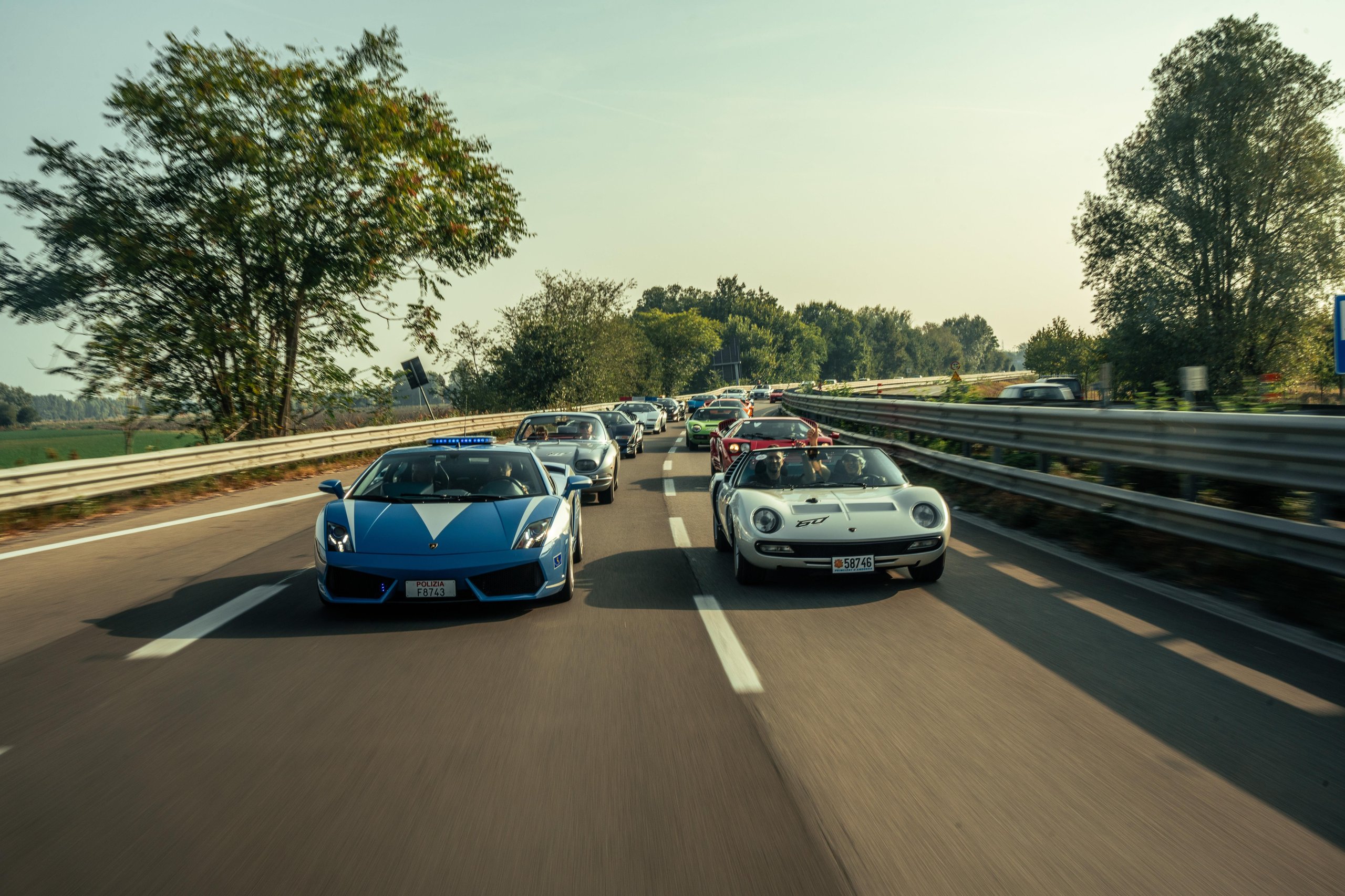
Images from the event reveal a blue and white Gallardo police car leading the convoy, an appropriately Italian touch. The juxtaposition of a modern Gallardo in Polizia livery escorting a sixty-year-old 350 GT captures something about the brand’s relationship with Italian civic life that no marketing brief could manufacture.

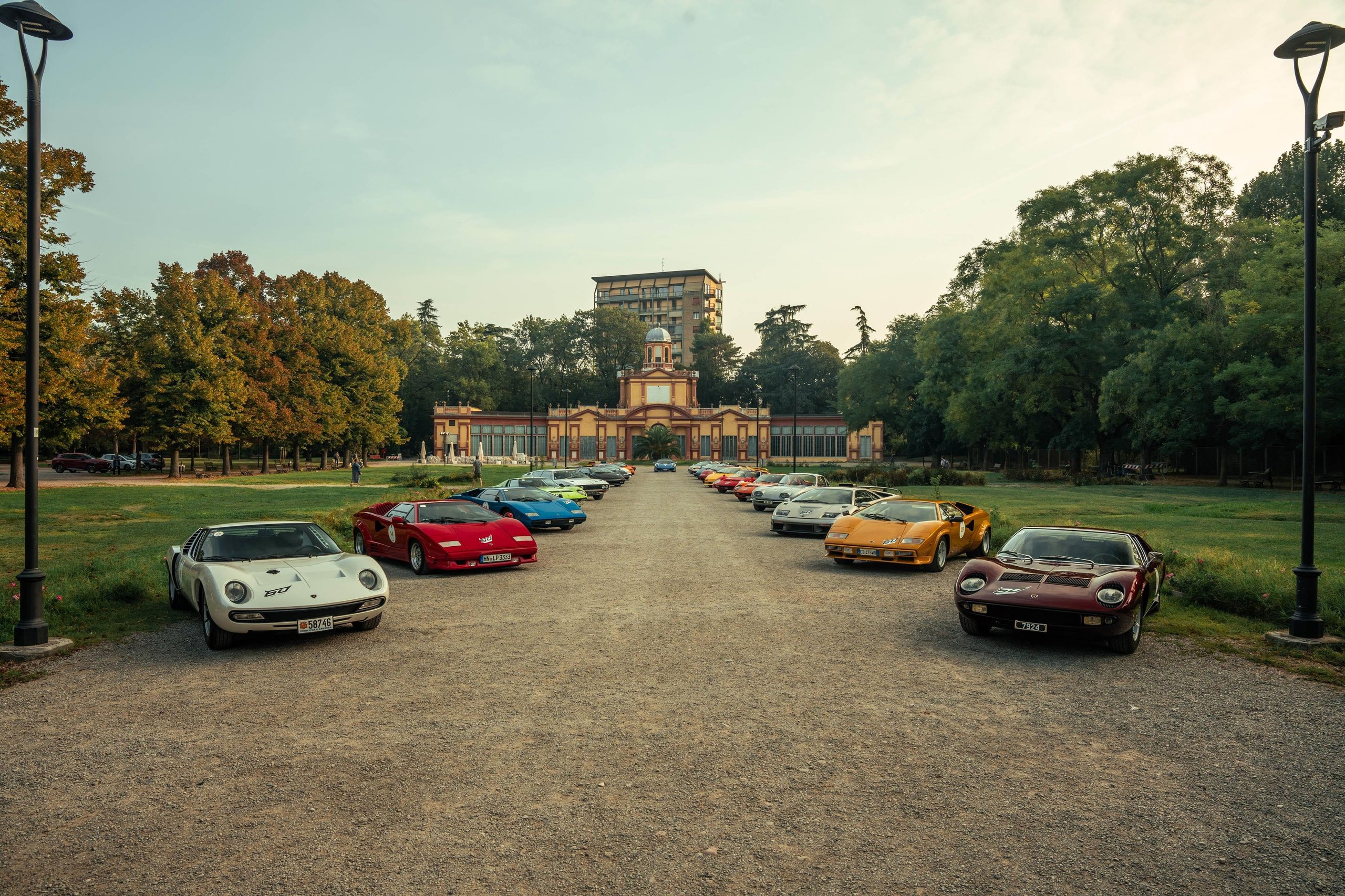
A stunning green Lamborghini Miura leads a procession of classic cars down a picturesque tree-lined road.
More Than a Tour: How Lamborghini Builds Loyalty Through Heritage Experiences
Lamborghini already operates Esperienza driving programs and Accademia track events for current model owners. The Giro Polo Storico serves a different purpose: it tells classic Lamborghini owners that the factory still cares about them, that their cars remain part of the family, and that the company invests real resources in keeping those machines alive and relevant.
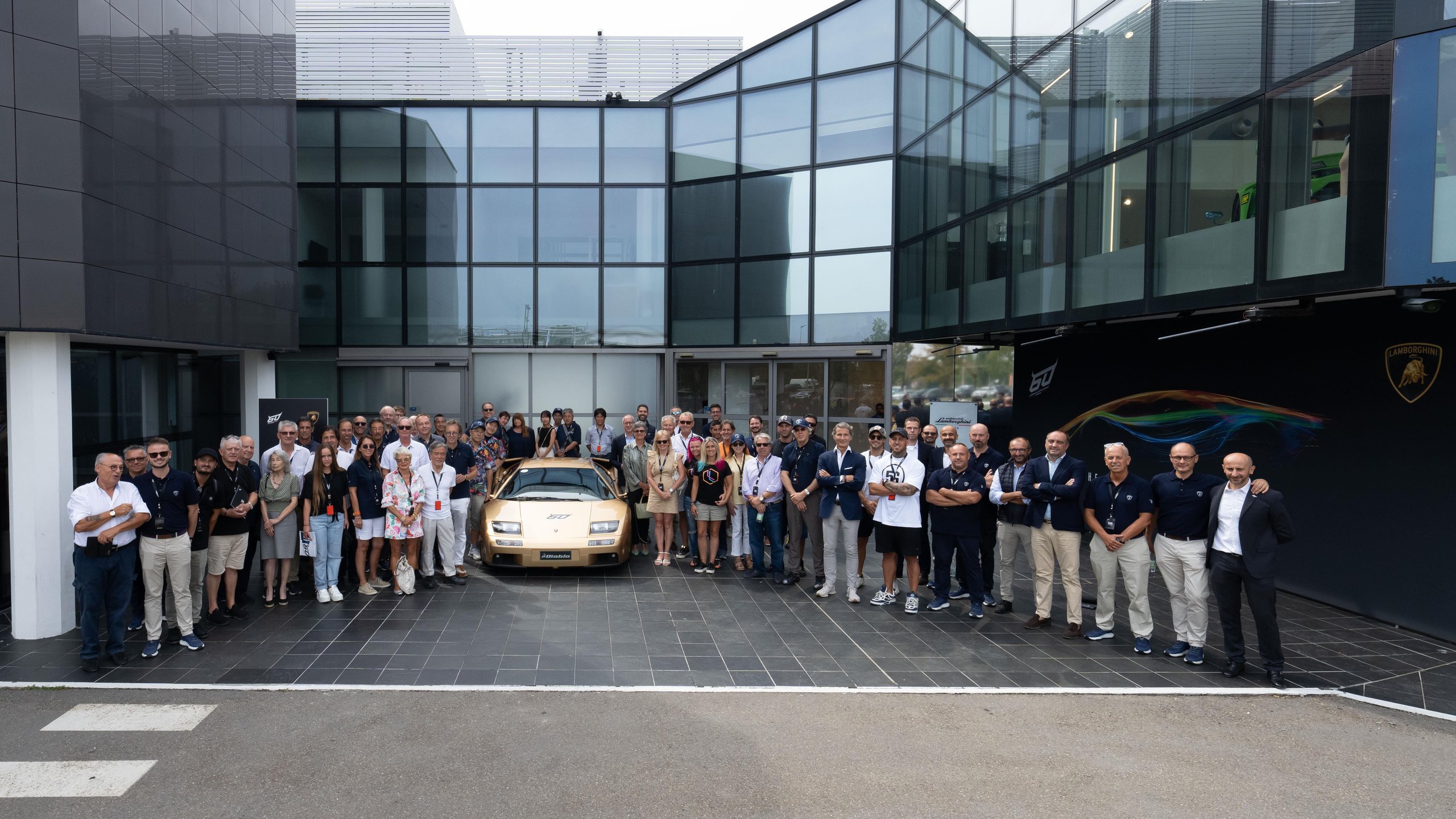
Federico Foschini, Lamborghini’s Chief Marketing and Sales Officer, framed the event as an effort to connect the brand’s past to its future. The commercial logic beneath the sentiment is not hard to read. Classic Lamborghini values continue to climb, and owners who feel emotionally bonded to the factory are more likely to invest in proper restorations, buy certified parts, and remain in the Lamborghini ecosystem when the time comes to add a Revuelto or Temerario to the garage. The final lunch of the Giro took place inside the Finishing building where Huracán, Urus, and Revuelto production concludes. That staging was deliberate: classic owners sat among the cars that represent Lamborghini’s present and immediate future, a visual argument that the company’s DNA runs unbroken from the 350 GT to the hybrid V12.
The tour also reunited participants with former factory employees from the eras when these classic models were built. Those conversations, full of production-floor anecdotes and firsthand memories, are the kind of provenance detail that no certificate can replicate. For collectors who measure value partly in documented history, hearing a retired craftsman describe the specific quirks of assembling a Countach or Miura adds a layer of authenticity that strengthens their connection to the car and, by extension, to the brand.

Guests gather among a stunning display of Lamborghini vehicles and elegant dining setups within a modern industrial space.
Polo Storico: The Guardians of Lamborghini’s Legacy and Owner Value
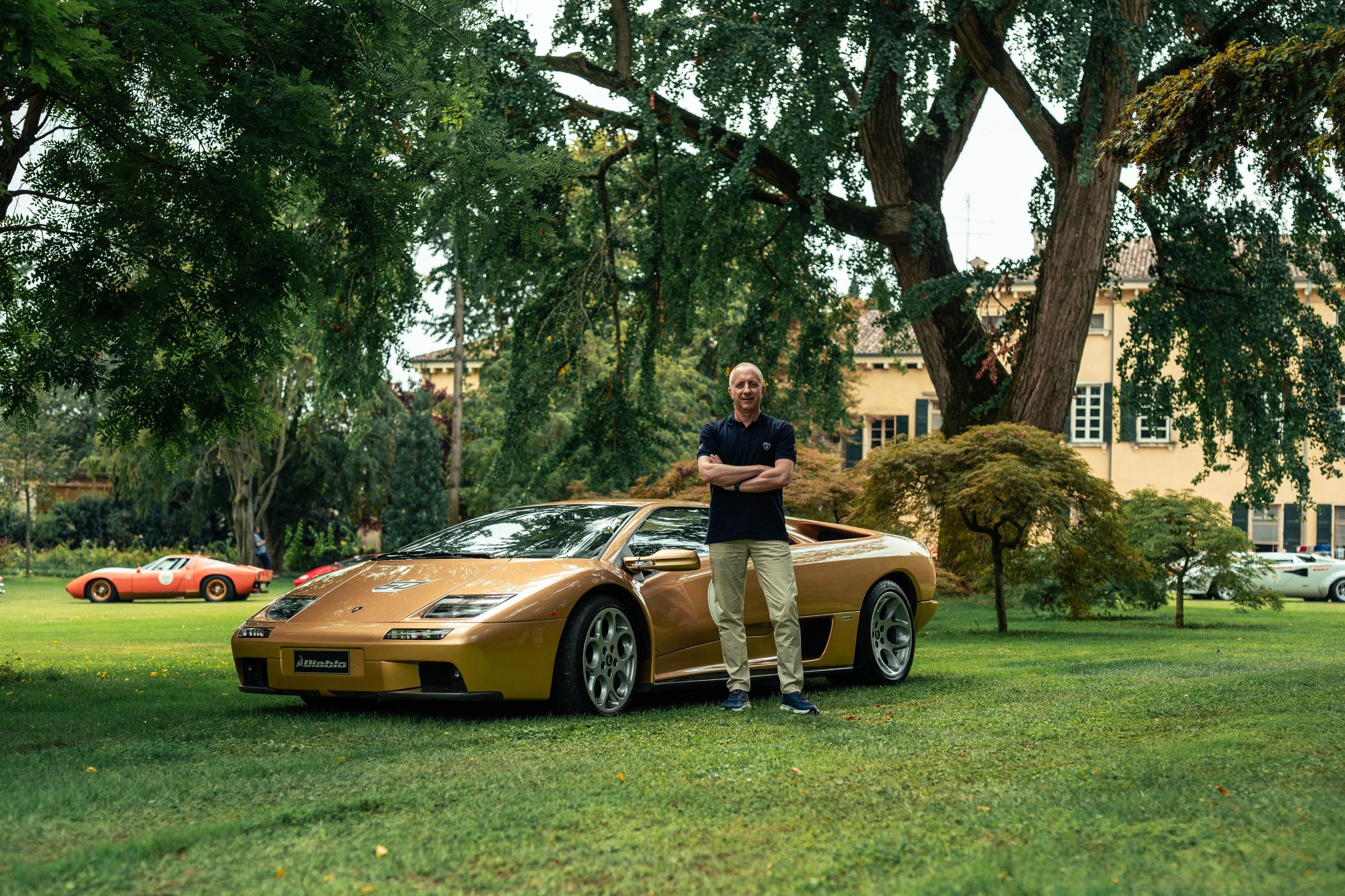
Polo Storico maintains Lamborghini’s historical archive, including original production documents, configuration records, and technical data for every model up to the Diablo 6.0 SE series. The department also produces certified original spare parts and performs full restorations. Alessandro Farmeschi, Lamborghini’s After Sales Director, described the Giro as a central event in the 60th-anniversary celebrations, calling Polo Storico the “custodian of the brand’s history, technical and material heritage.” Farmeschi himself drove the last Diablo ever produced, one of the gems of the factory’s own collection, throughout the tour.
The restoration philosophy, according to one report, prioritizes returning each car to the exact condition in which it left the factory, including minor imperfections that were present at the time. That same source indicates a full Polo Storico restoration can cost around €300,000 and typically takes approximately 18 months to complete. Smaller jobs vary: an engine rebuild for a Jalpa, for instance, was noted at roughly €22,600 by an Italian specialist. These are significant sums, but for owners of cars whose market values can reach seven figures, factory-certified restoration work with documented provenance represents a sound investment.
A Polo Storico certification meaningfully enhances both a car’s historical standing and its market value. The department uses only certified original parts, and every step of the process is discussed with the customer. For prospective classic Lamborghini buyers, this matters: a Polo Storico certificate functions as a kind of factory guarantee that the car is what it claims to be, mechanically and cosmetically.

The elegant wooden steering wheel and classic dashboard of a Lamborghini 350 GT, a testament to timeless automotive design.
Spotlight on the Stars: Iconic Cars and Their Unique Histories
The 350 GT with chassis number 0102 occupies a singular position in the Lamborghini story. It is the oldest existing production Lamborghini, the second car off the line, and it remains in perfect running condition. Watching it thread through traffic alongside Miuras and Countachs on modern Italian roads is a reminder that Ferruccio Lamborghini’s original ambition was to build grand tourers refined enough to be driven daily, not garage queens preserved under covers.
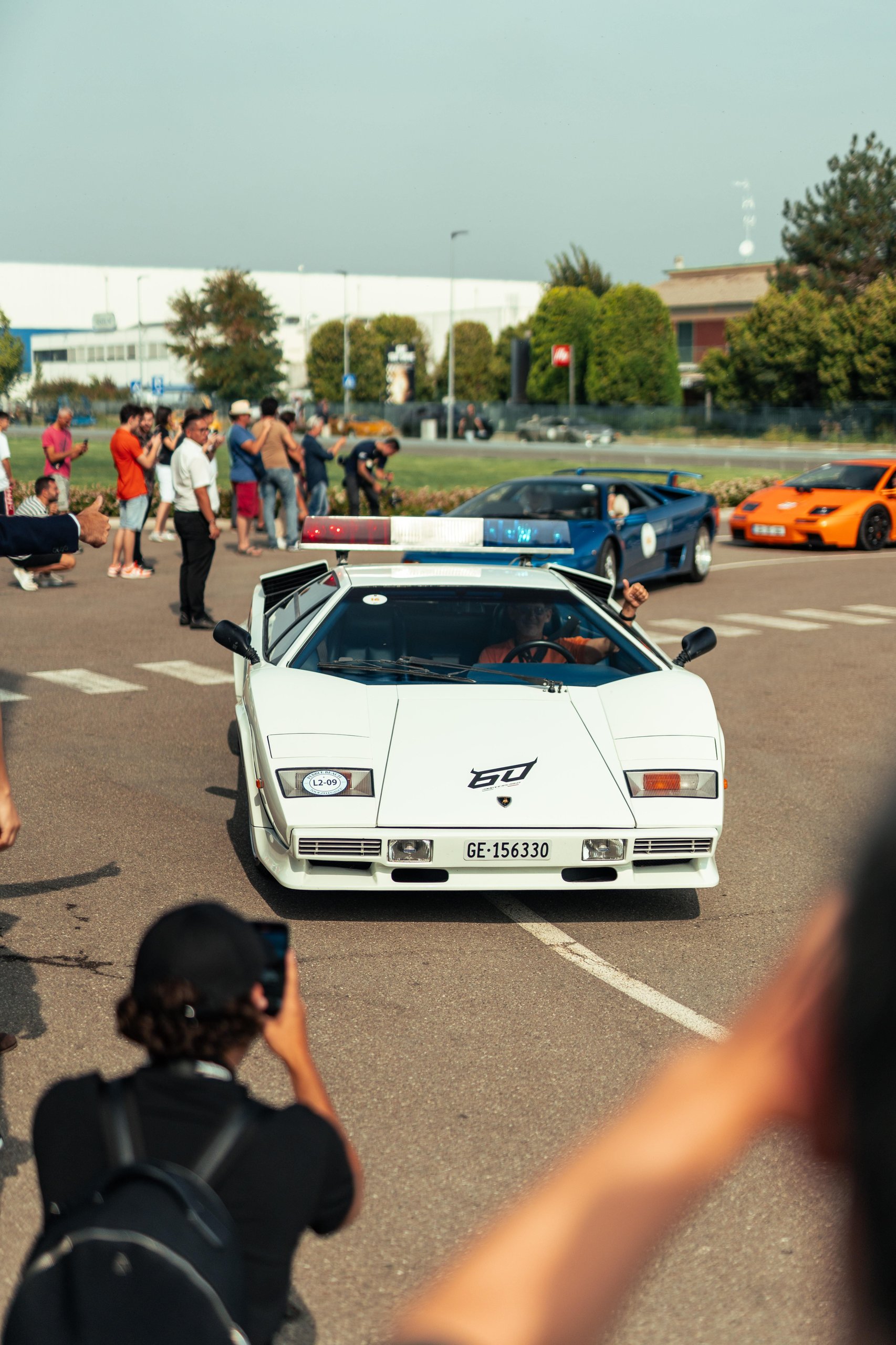
The Countach LP 400 S that paced the 39th Formula 1 Grand Prix of Monte Carlo on May 31, 1981, arrived at the Giro directly from the United States after appearing at that year’s Pebble Beach Concours d’Elegance. Owned at the time by the Mimran family, who headed Lamborghini during that period, the car ran the Monaco circuit with a large flashing light on its roof and the inscription “intervention.” According to the brand, Ferruccio Lamborghini himself established a tradition of presenting new creations at the Monaco GP, using the setting to debut the Miura, Countach, and the unrepeatable Marzal. The pace car is a physical link to that tradition.
The black Diablo VT pace car from the 1996 PPG CART Indy Car World Series is one of only two such cars ever built, the other finished in gold. Both were equipped with roll-bars and the Jota kit, which increased maximum power to 600 hp, complemented by a dedicated bonnet air intake and a front bumper with two tow hooks. The “PPG Pace Car Indy Car World Series” decal and number 18 roundel remain clearly visible on the car’s flanks.
The Miura Jota replica deserves special attention. Bob Wallace’s original Jota no longer exists, destroyed in an accident after leaving the factory. The replica present at the Giro was built from a crashed Miura over thirteen years of painstaking work by an English enthusiast, with the mechanical components rebuilt to the same specification as the original by Wallace himself. That combination of obsessive private dedication and factory test-driver involvement makes this car arguably the closest thing to the lost original that will ever exist.

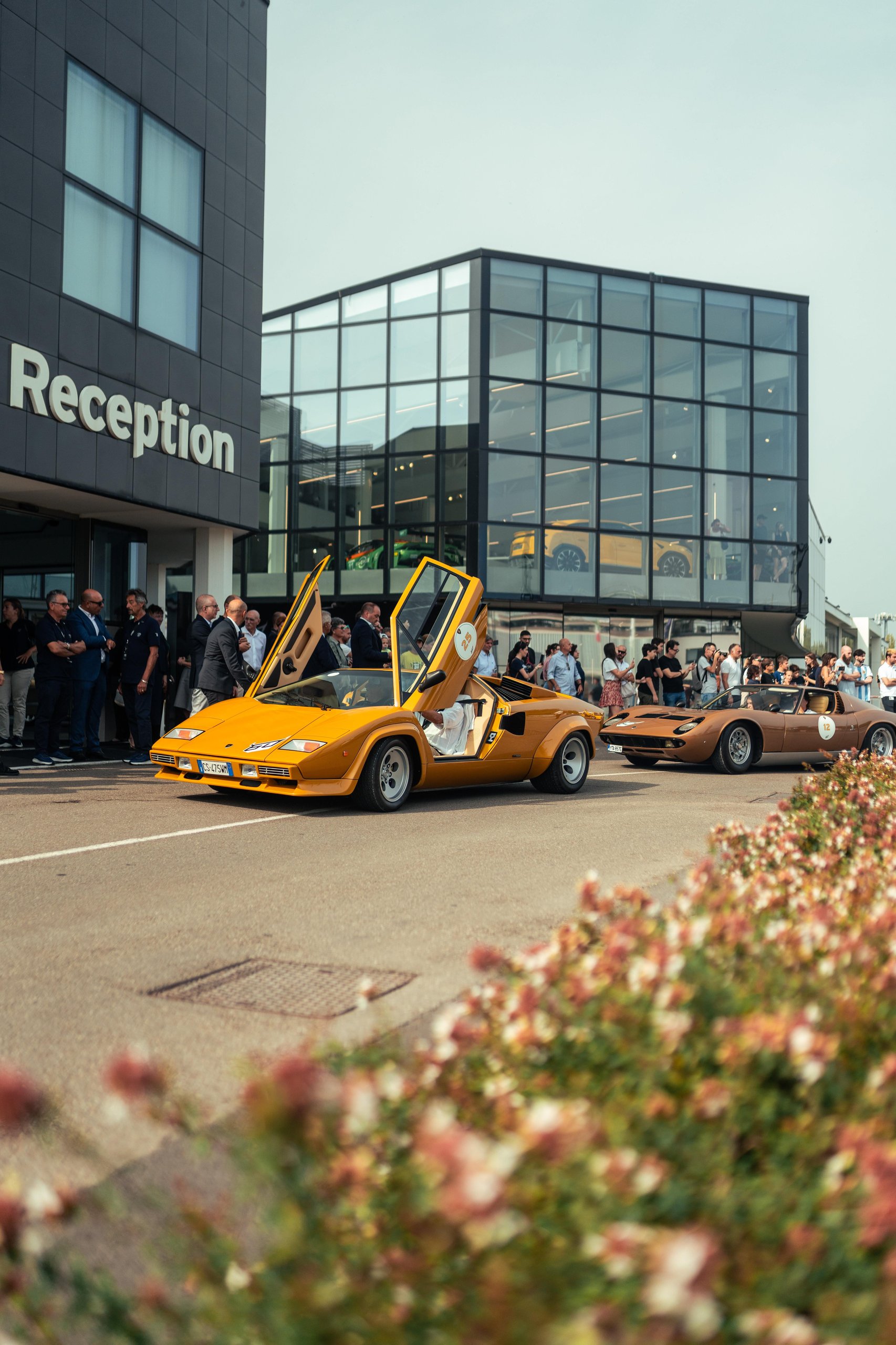
This classic Lamborghini Countach LP400S, equipped with a police light bar, stands proudly before a contemporary building.
Connecting Past to Future: How Heritage Events Shape Lamborghini’s Competitive Edge
Ferrari operates Ferrari Classiche, its own heritage certification and restoration program, and Porsche runs Porsche Classic with a dedicated factory restoration facility. Both brands stage their own heritage driving events and concours appearances. Lamborghini’s Polo Storico competes directly with these programs for the loyalty and restoration budgets of collectors who often own cars from multiple marques. The Giro Polo Storico is Lamborghini’s answer to the question of whether a smaller, younger brand can match the heritage infrastructure of rivals with longer histories and larger back catalogs.
The honest assessment: Lamborghini’s classic production numbers are tiny compared to Ferrari or Porsche, which means fewer cars exist, fewer need restoration, and the potential customer base is smaller. But scarcity works in Lamborghini’s favor. Every 350 GT, Miura, or Countach carries outsized cultural weight precisely because so few were made. A Polo Storico certification on a Miura carries a different kind of gravity than a Classiche red book on a 308, simply because the population of surviving Miuras is so small that each one matters.
Pirelli’s participation in the Giro reinforced another practical advantage: the tire maker’s partnership with Lamborghini stretches back to the company’s founding in 1963, and Pirelli continues to develop period-correct tires for classic models. That kind of supplier continuity is rare and genuinely useful for owners who want to drive their cars rather than trailer them.
For current or prospective classic Lamborghini owners, the practical takeaway from the Giro Polo Storico is straightforward. The factory actively supports these cars with parts, documentation, restoration services, and community events. That support structure protects long-term value and makes ownership more rewarding. If you own a classic Lamborghini and you are not already in contact with Polo Storico, the department exists specifically for you. And if you are considering entering the classic Lamborghini market, the factory’s commitment to its heritage cars, demonstrated publicly through events like this one, should factor into your buying decision as seriously as any mechanical inspection report.

The side of a black Lamborghini Diablo showcases its 'PPG PACE CAR INDY CAR WORLD SERIES' livery and a prominent number 18.
Gallery