Monterey Car Week, August 2023: Lamborghini Bets on an Electric Fourth Model
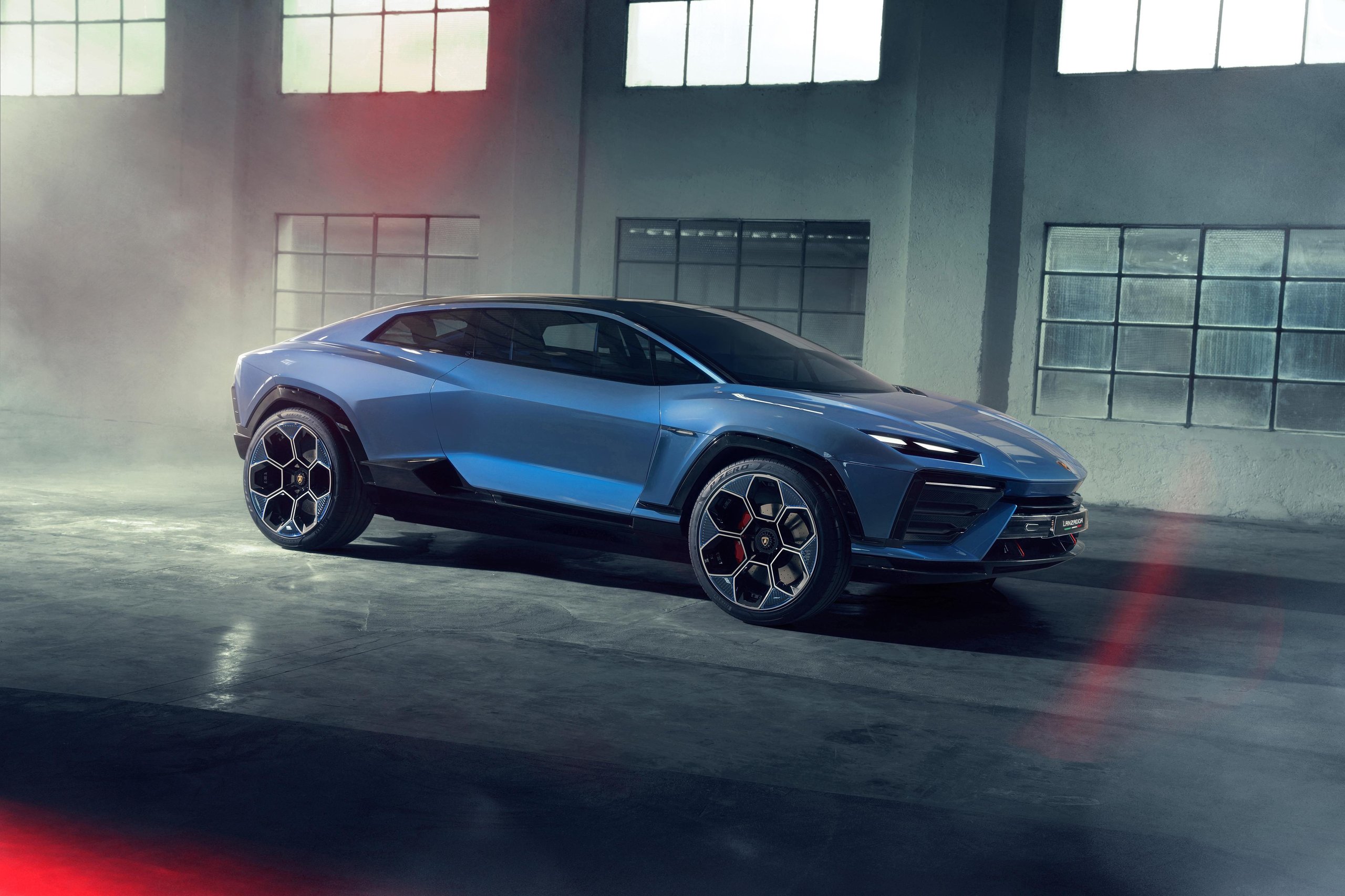
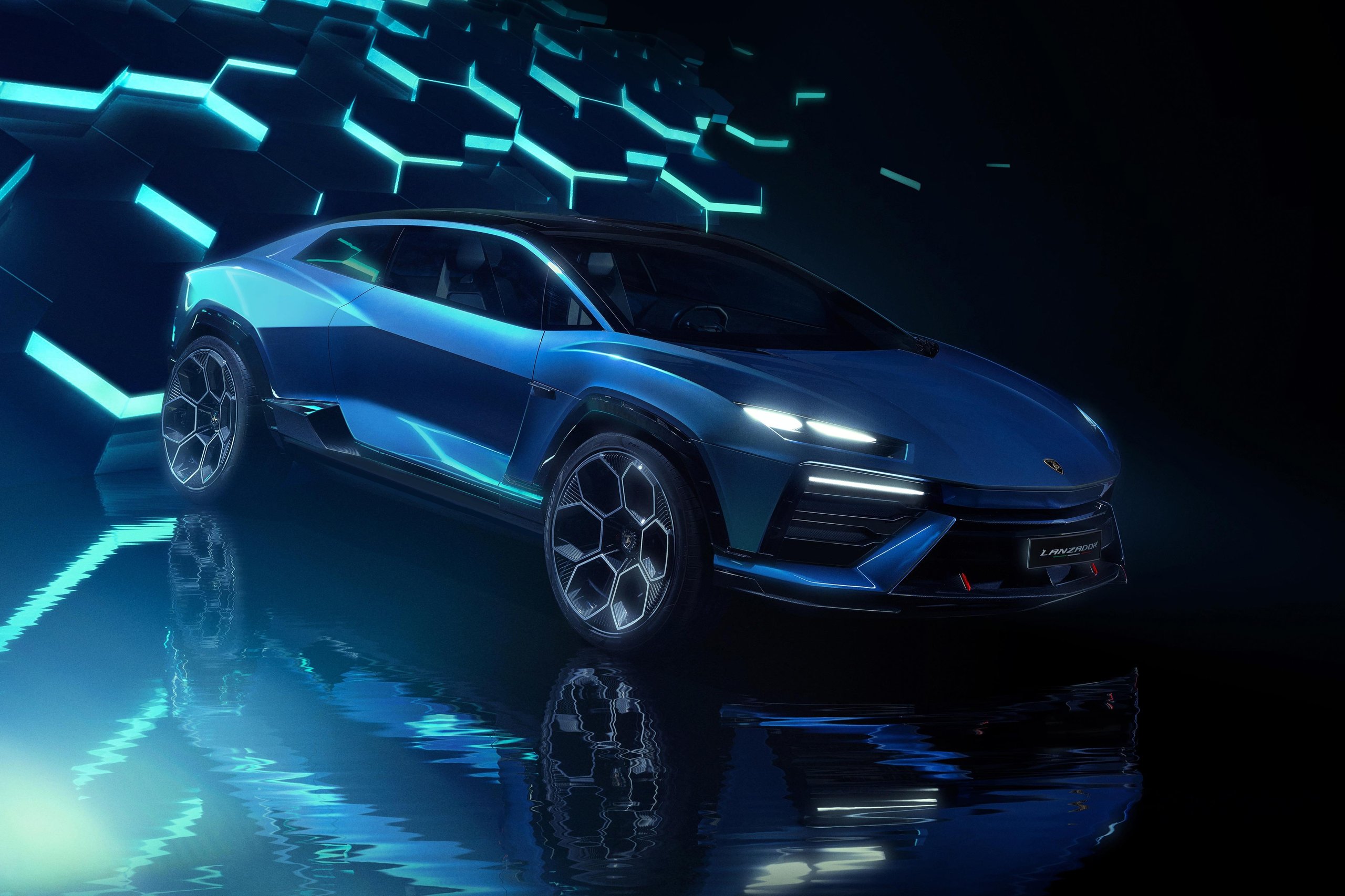
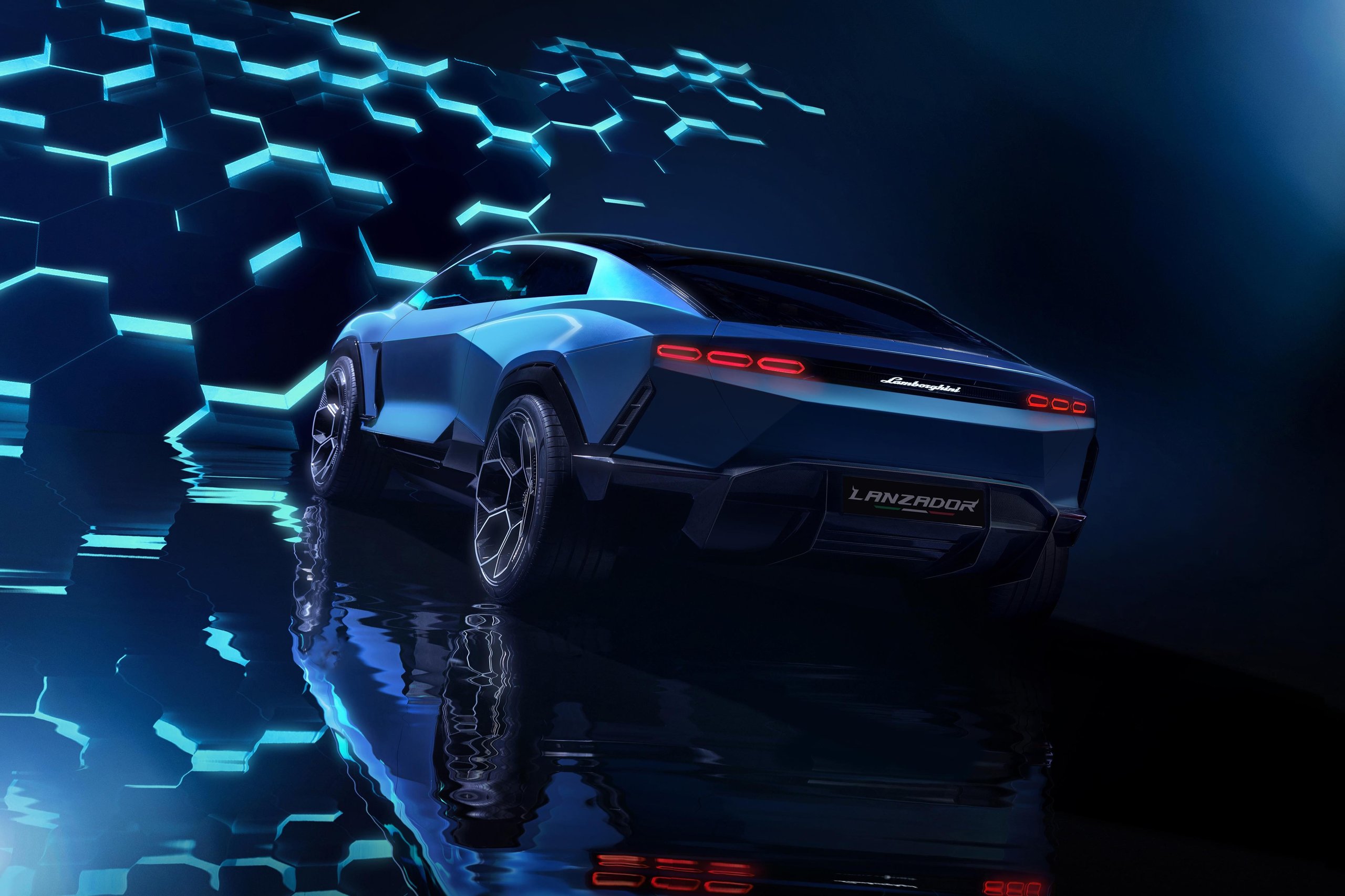
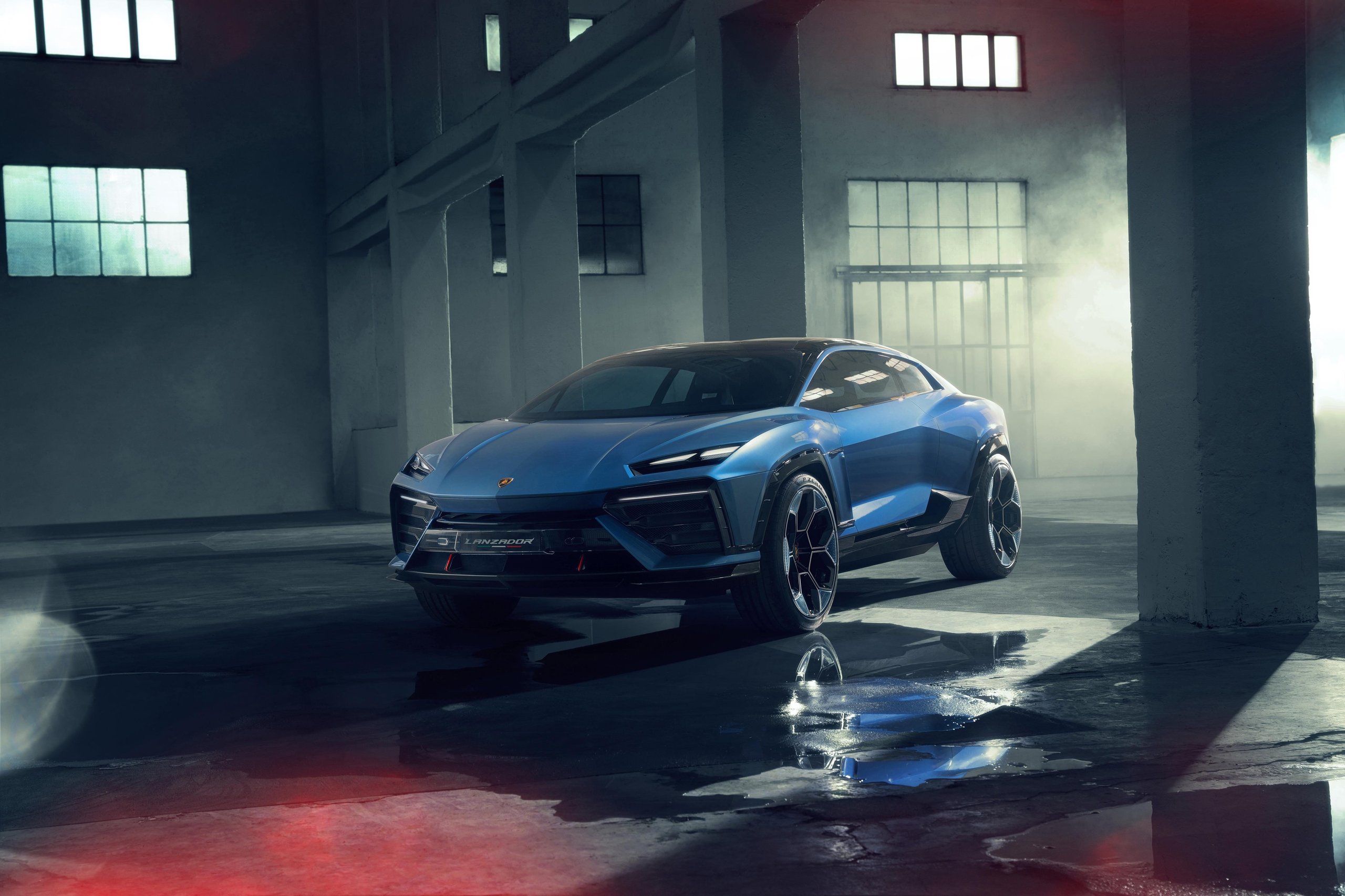
At Monterey Car Week in August 2023, Lamborghini rolled out a concept car that looked like nothing else in its lineup. The Lanzador was a high ground-clearance 2+2 GT painted in a bespoke color called Azzurro Abissale, sitting on 23-inch wheels, with a roof height of roughly 1.5 meters. Low, wide, and unmistakably aggressive, it was also something Lamborghini had never attempted in production form: a purely electric vehicle.
The concept was intended to preview a fourth series production model slated for 2028, one that would create an entirely new segment the company dubbed the “Ultra GT.” CEO Stephan Winkelmann positioned it as the next chapter of the Direzione Cor Tauri electrification strategy announced in 2021, the same roadmap that produced the V12 hybrid Revuelto. The Lanzador was supposed to be the destination that roadmap pointed toward: full battery-electric power, over one megawatt of output (translating to more than 1,341 horsepower), and a dual-motor all-wheel-drive layout with active e-torque vectoring on the rear axle.
The ambition was enormous. And then, as the industry learned over the next two years, so were the complications.

The Lamborghini Lanzador Concept shines in a dynamic studio environment, reflecting its innovative spirit.
Why the Electric Dream Collapsed
By late 2024, reports indicated the Lanzador’s production target had slipped from 2028 to 2029. That delay turned out to be a prelude to something more fundamental: Lamborghini officially canceled the Lanzador as an all-electric model and began planning to launch the vehicle as a plug-in hybrid instead.
Winkelmann’s reasoning, as reported, was blunt. Lamborghini’s target market showed “close to zero” interest in electric vehicles. One report indicates the CEO went further, describing EVs as an “expensive hobby” requiring significant financial outlay with little return. According to one account, the decision to halt the pure EV program was finalized at the end of 2025 after extensive internal debates and consultations with customers and dealers. An electric Urus is also reportedly being ruled out.
For a brand that built its electrification narrative around the Lanzador as a capstone, this reversal carries real weight. Lamborghini remains technically capable of producing a battery-electric vehicle, but the company is adapting its plans based on what its buyers actually want. The entire range is now expected to be plug-in hybrid by 2030, not battery-electric. That distinction matters enormously in terms of engineering investment, sound character, and the emotional profile of the cars.
Road & Track reported as early as mid-2025 that Winkelmann was suggesting the Lanzador might end up as a plug-in hybrid, well before the formal cancellation of the EV program. The trajectory, in hindsight, was visible for months.
What ‘Ultra GT’ Actually Means for Lamborghini’s Lineup
Strip away the powertrain debate, and the Lanzador still represents something genuinely new for Lamborghini: a car that combines supercar aggression with the daily usability of a grand tourer, in a body style that sits between the Urus SUV and the mid-engine sports cars. Lamborghini describes it as a 2+2 lifestyle concept with adjustable rear seats, a variable luggage compartment, a front trunk concealed under the bonnet, and a large glass tailgate at the rear. Concept images confirm this: custom-fitted luggage in the frunk, a spacious rear cargo area visible through the open hatch, and four bucket seats under a panoramic glass roof.
The question is whether the “Ultra GT” label survives the powertrain change intact. The original pitch leaned heavily on the idea that electric motors would deliver a new kind of Lamborghini performance, with software and active controls replacing displacement as the primary differentiator. With a combustion engine returning to the equation, the segment positioning shifts. A PHEV Lanzador becomes less of a technology statement and more of a practical expansion of the lineup, closer in philosophy to the Urus SE (which already pairs a twin-turbo V8 with a plug-in hybrid system) than to the radical clean-sheet EV originally promised.
The practical implication for buyers is this: if the Lanzador arrives as a plug-in hybrid, it will likely share architectural DNA with existing Lamborghini PHEV platforms rather than requiring the entirely bespoke electric skateboard the concept implied. That could mean a faster path to production, but it also means the car will need to justify its existence against the Urus SE on one side and the Revuelto on the other. One source estimates a potential MSRP around $300,000, though Lamborghini itself has confirmed no pricing.

Lamborghini Design DNA sketch by Mitja Borkert, featuring the Urus Performante, Huracan Sterrato, Revuelto, and Lanzador.
Active Dynamics and Aerodynamics: The Technology That Transcends Powertrain
The most forward-looking elements of the Lanzador concept were never about the battery. They were about the control systems layered on top of whatever propulsion source powers the car, and this is precisely why the pivot from electric to hybrid does not gut the concept of its substance.
Lamborghini says the concept featured a newly developed version of its LDVI (Lamborghini Dinamica Veicolo Integrata) driving dynamics control system, integrating significantly more sensors and actuators than current production vehicles. The active chassis included a steerable rear axle and air suspension, with torque distribution calculating the necessary power for each axle individually within milliseconds, differentiating between left and right sides on the rear axle. A separate Wheelspeed Control system regulated power at individual wheels for sharper turn-in on winding roads.
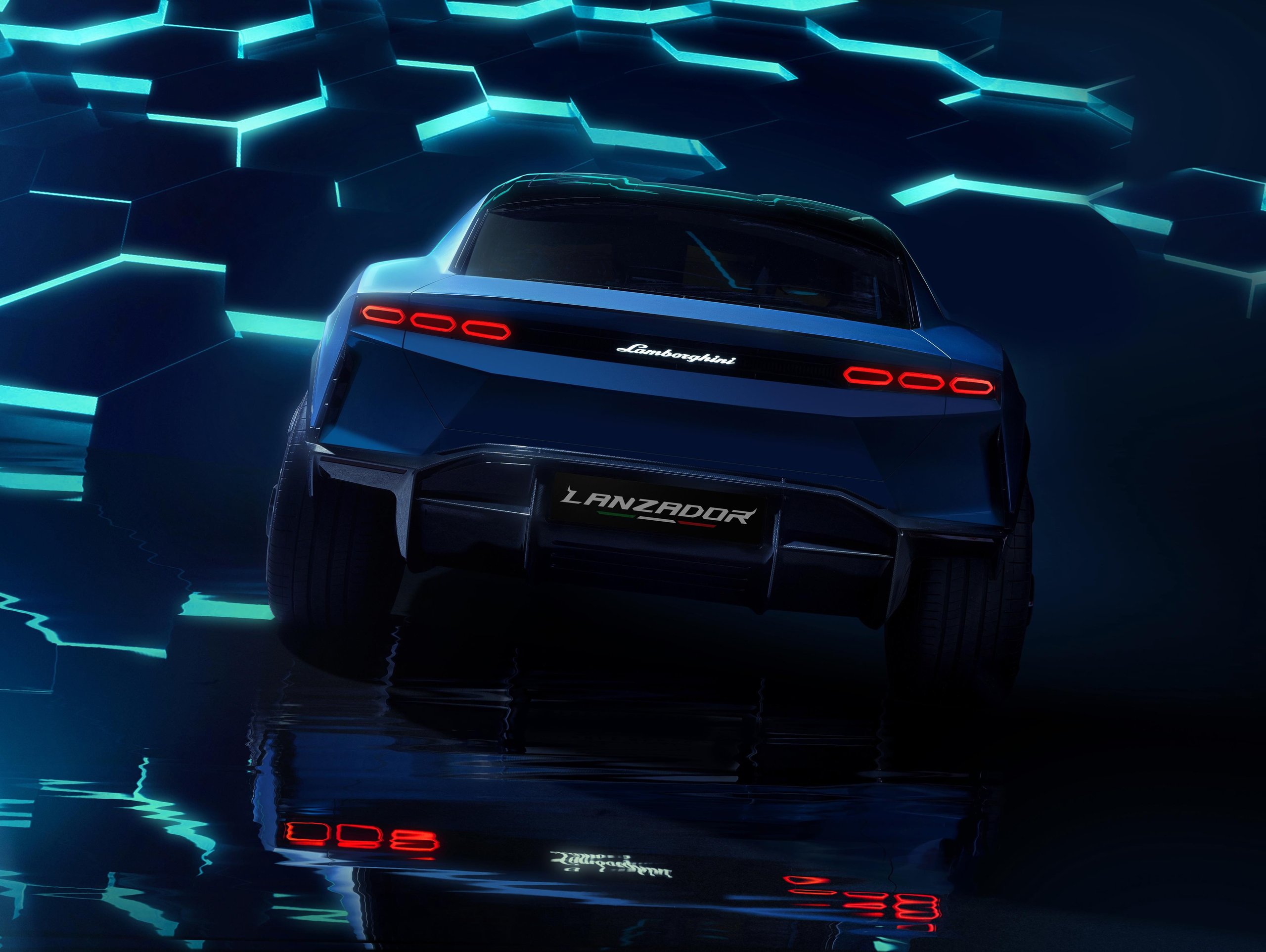
The active aerodynamics package, branded as Lamborghini’s “Vision of Smart Aerodynamics,” drew directly from the ALA (Aerodinamica Lamborghini Attiva) system proven on the Huracan Performante and Aventador SVJ. The Lanzador added a front air shutter, movable splitter, S-Duct, concealed louvers for wheelhouse ventilation, an air curtain, and rear airblades extending from the sides and diffuser. In Efficient mode, laminar flow runs the full length of the body before breaking off at the rear, with the ALA system increasing pressure recuperation to reduce drag.
All of this transfers to a hybrid powertrain without losing its purpose. Active aero still extends range, whether that range comes from a battery alone or a battery-plus-combustion combination. Torque vectoring still sharpens handling. LDVI still refines the driving character. CTO Rouven Mohr described the combination of these systems as raising “the driving behavior of the concept car to a new level compared to a super sports car with a combustion engine.” That claim remains testable regardless of whether the final production car plugs into a charger or also fills up at a pump.

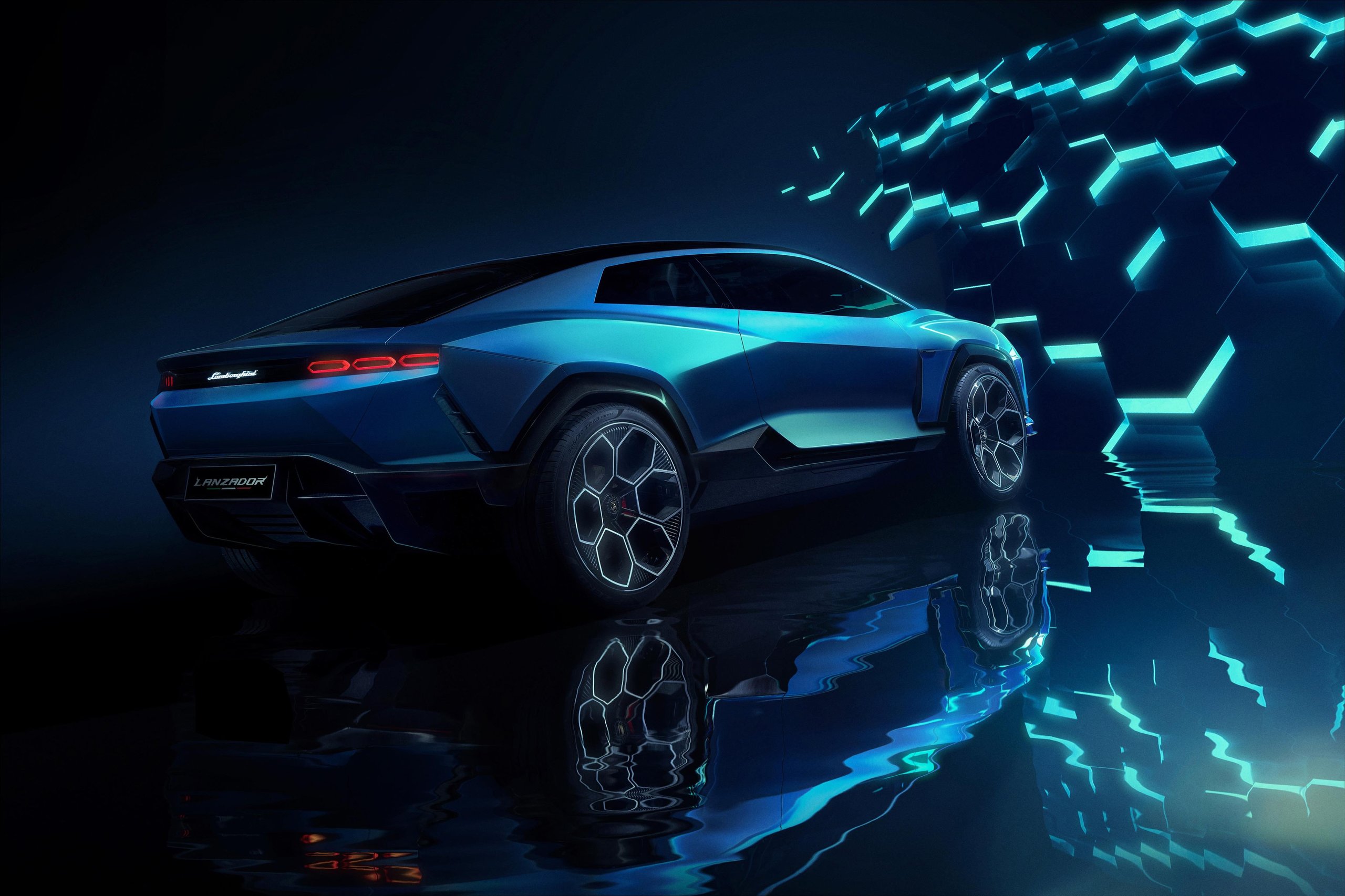
The Lamborghini Lanzador Concept features intricate hexagonal wheels, carbon fiber accents, and powerful red brake calipers.
Design Language: Supercar Aggression Meets GT Versatility
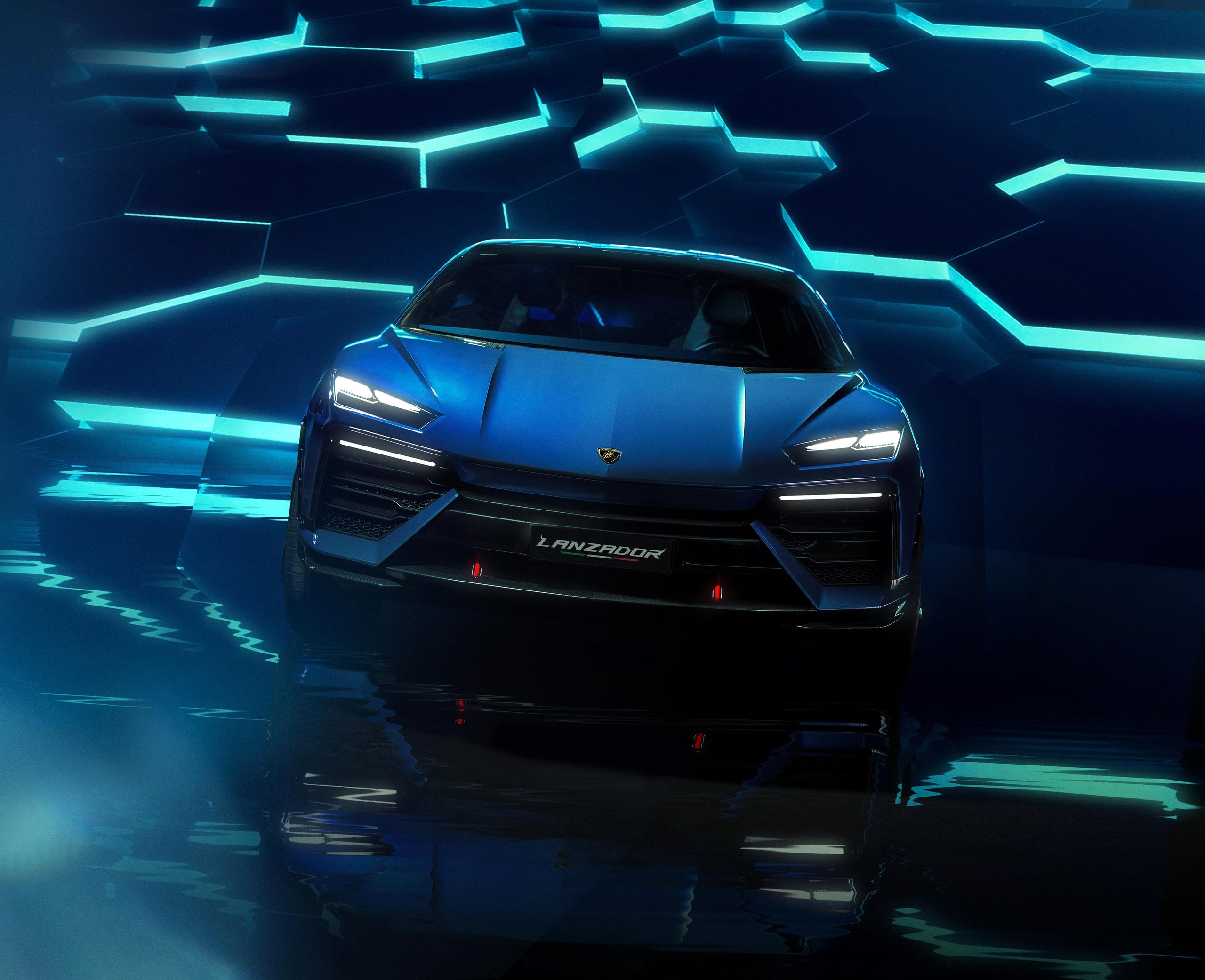
Head of Design Mitja Borkert described the Lanzador as Lamborghini’s “most visionary and futuristic concept car,” and the design draws from a deep well of brand heritage. The exterior takes inspiration from the Sesto Elemento, Murcielago, and Countach LPI 800-4, while the elevated driving position and overall body concept echo the Huracan Sterrato. Slim headlights reference the Countach LPI 800-4 specifically, and hexagonal taillights carry three LED elements on each side.
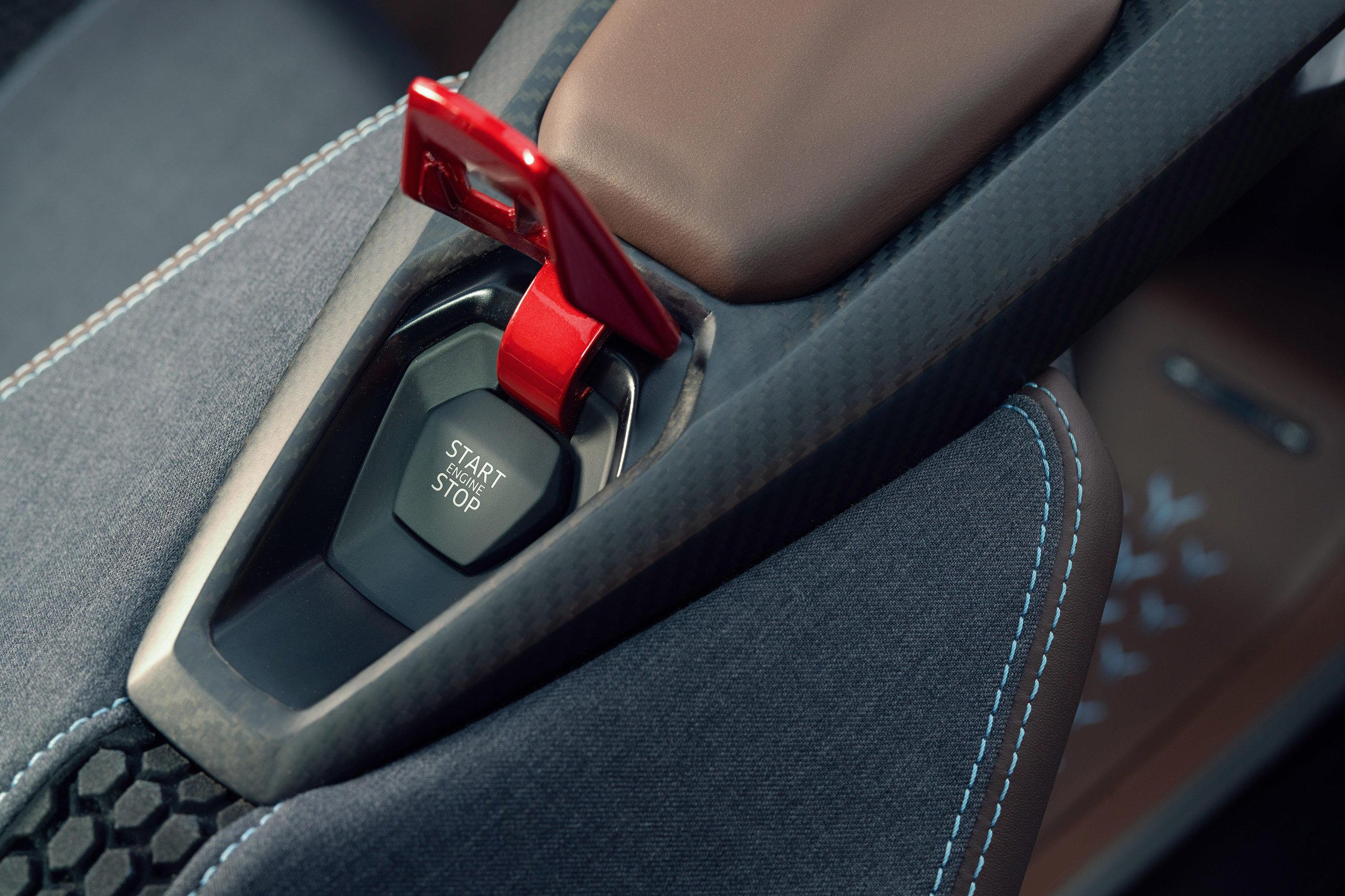
Inside, Lamborghini followed what it calls a pilot’s cockpit philosophy. The driver and co-pilot sit low in the cabin, separated by a Y-shaped center console bridge that flows into the dashboard. Controls for entertainment, climate, and driving modes sit within arm’s reach on the console, and passengers receive information via automatically retractable displays. The concept’s interior is built almost entirely from sustainable materials sourced in Italy: Merino wool from a B Certified Italian company dresses the dashboard, seats, and door panels, while colored thread is made from regenerated nylon and recycled plastic. Even the sports seat foam uses 3D-printed recycled fibers.
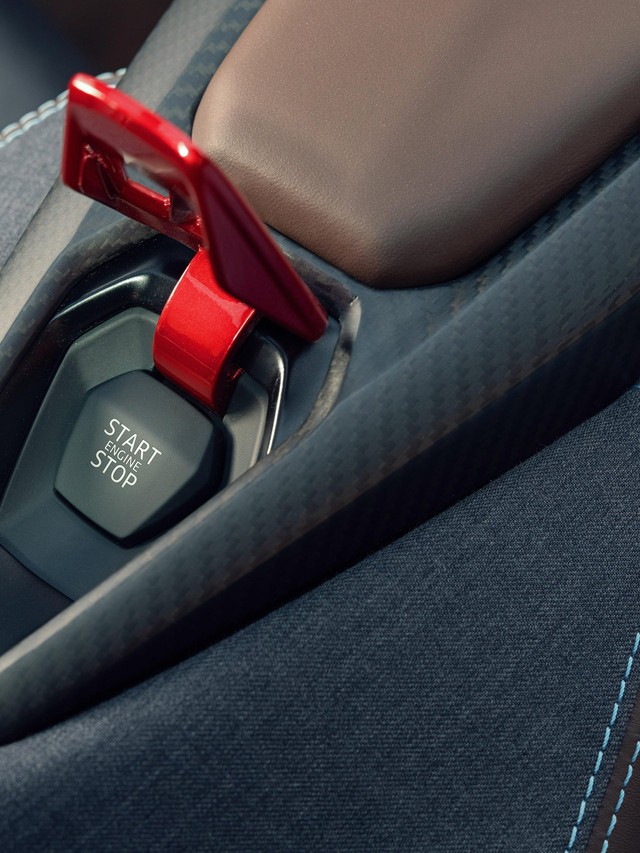
What stands out in the concept images is how the fighter-jet start button, with its red flip-up cover, survived the transition to an electric concept. That detail tells you everything about how Lamborghini approaches electrification: the ceremony of driving one of these cars matters as much as the engineering underneath. Whether the production version retains that specific touch or not, the intent is unmistakable.

The Lanzador Concept's symmetrical interior design emphasizes driver and passenger engagement with advanced digital interfaces.
Competitive Context: Where the Lanzador Pivot Leaves Lamborghini
Lamborghini is not the only ultra-luxury brand recalibrating its EV timeline. Ferrari’s approach to electrification remains cautious, with its hybrid models (the SF90 Stradale, 296 GTB) using electric motors as performance supplements rather than primary propulsion. Porsche, which committed earlier and more aggressively to battery-electric with the Taycan, occupies a different market position and price tier. The Lanzador’s pivot to PHEV effectively aligns Lamborghini’s strategy with what Ferrari already practices: hybridize everything, commit to full electric only when the customer base demands it.
Online discussion around the cancellation reflects a genuine split in enthusiast opinion. Some owners and fans agree that Lamborghini’s appeal is inseparable from internal combustion, while others argue the Lanzador’s design proved an electric Lamborghini could look and feel authentic. That debate is unlikely to resolve itself until someone actually drives a production version.
For prospective buyers watching the Lanzador saga, the practical takeaway is straightforward: do not plan your garage around a pure-electric Lamborghini arriving this decade. The company’s entire range is converging on plug-in hybrid architecture, and the Lanzador, whenever it reaches production, will follow that template. The concept’s design language and active dynamics technology are real and transferable. The all-electric powertrain is not. What remains genuinely uncertain is whether a PHEV Lanzador can carve out a distinct identity between the Urus SE and the Revuelto, or whether it risks becoming a solution looking for a segment that only existed on a concept-car stage.

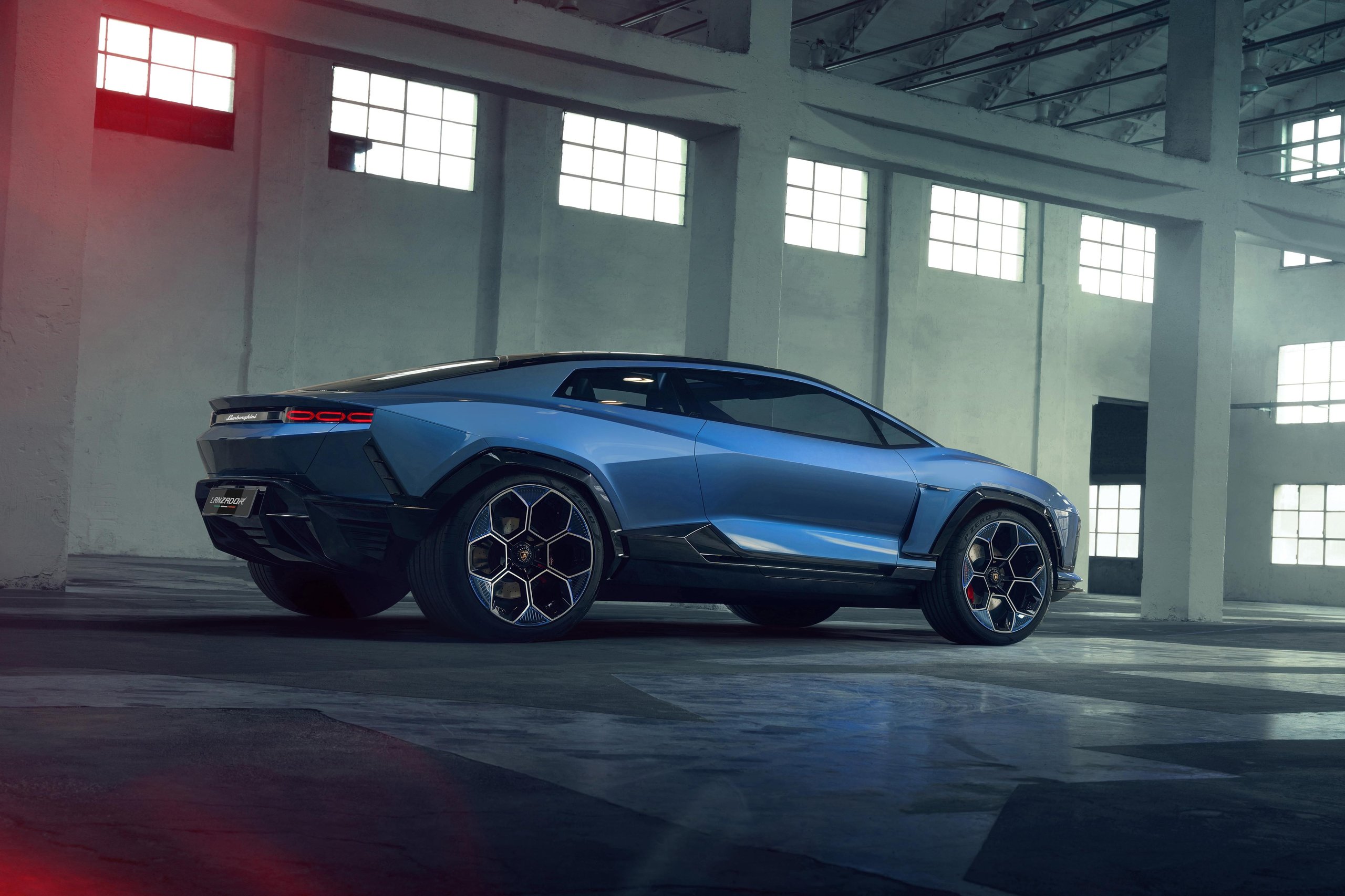
The Lamborghini Lanzador Concept's side profile reveals its unique blend of SUV and coupe aesthetics.
Gallery