A Private Villa, a Public Statement
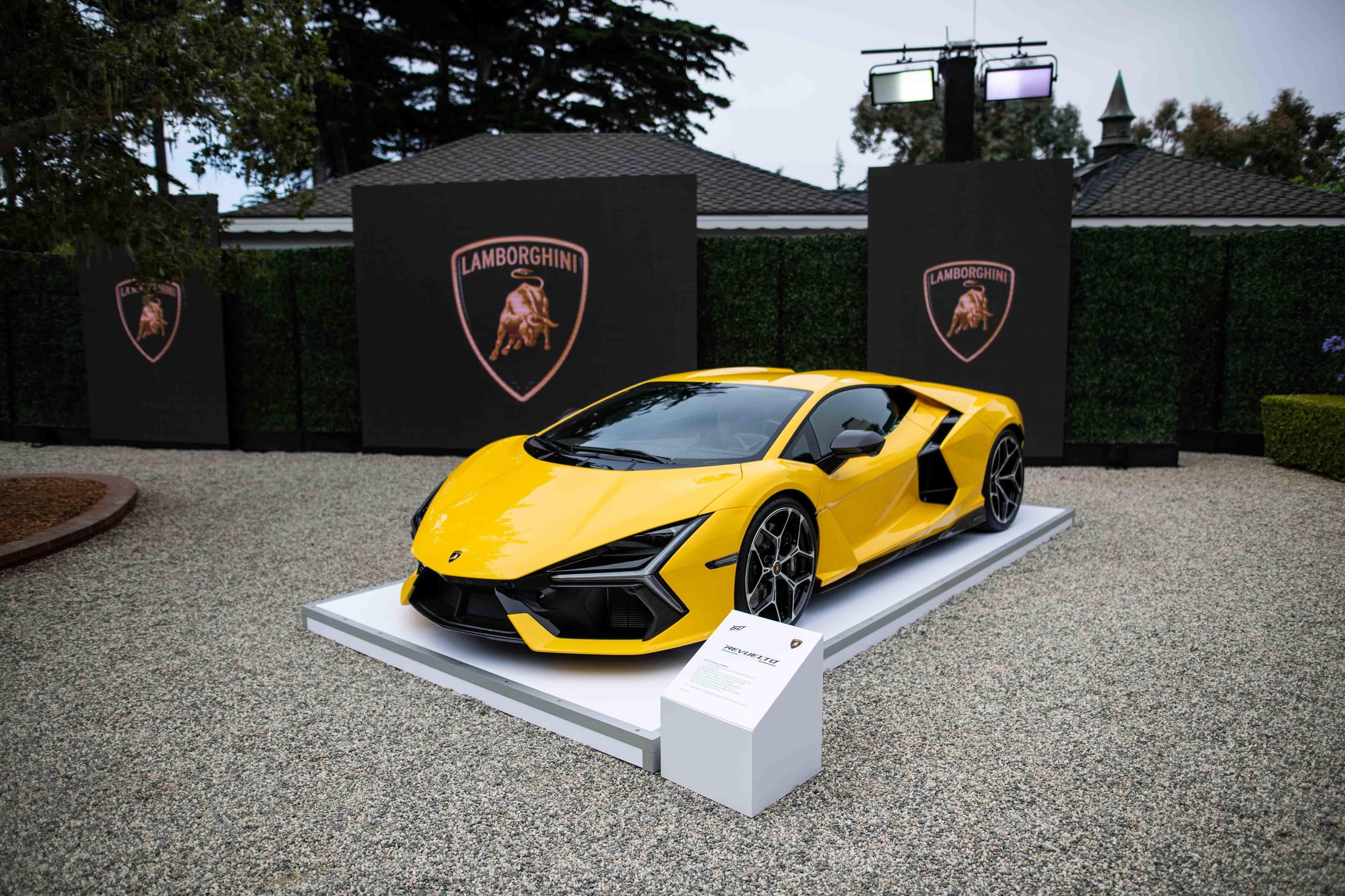
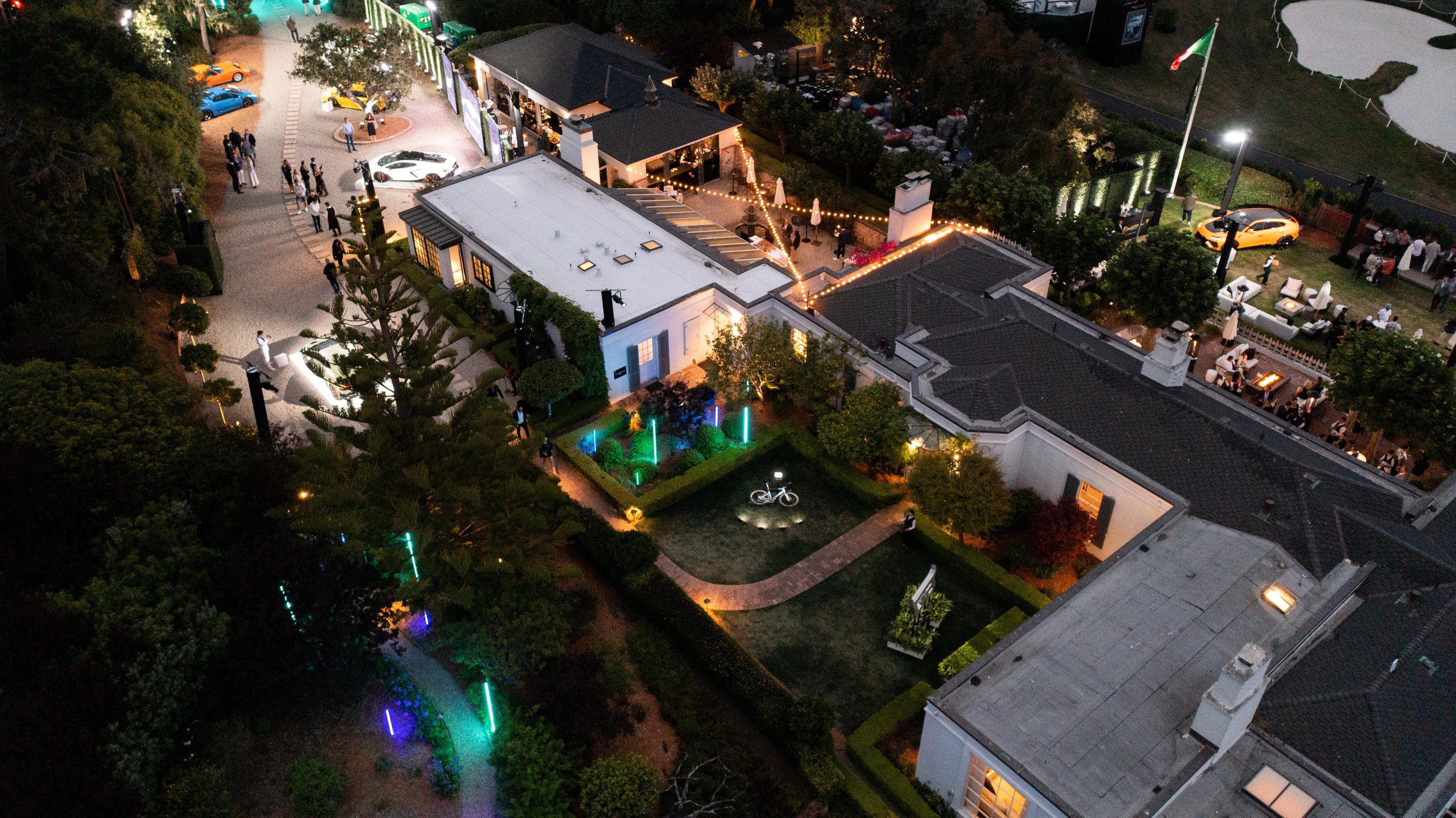
Lamborghini transformed a private villa overlooking the 18th fairway of Pebble Beach Golf Links into something more pointed than a typical Monterey Car Week hospitality suite. The Lounge Monterey placed the all-electric Lanzador concept on a white platform surrounded by manicured hedges and a lineup of historic V12 machinery that read like a curated argument for the company’s relevance across six decades.
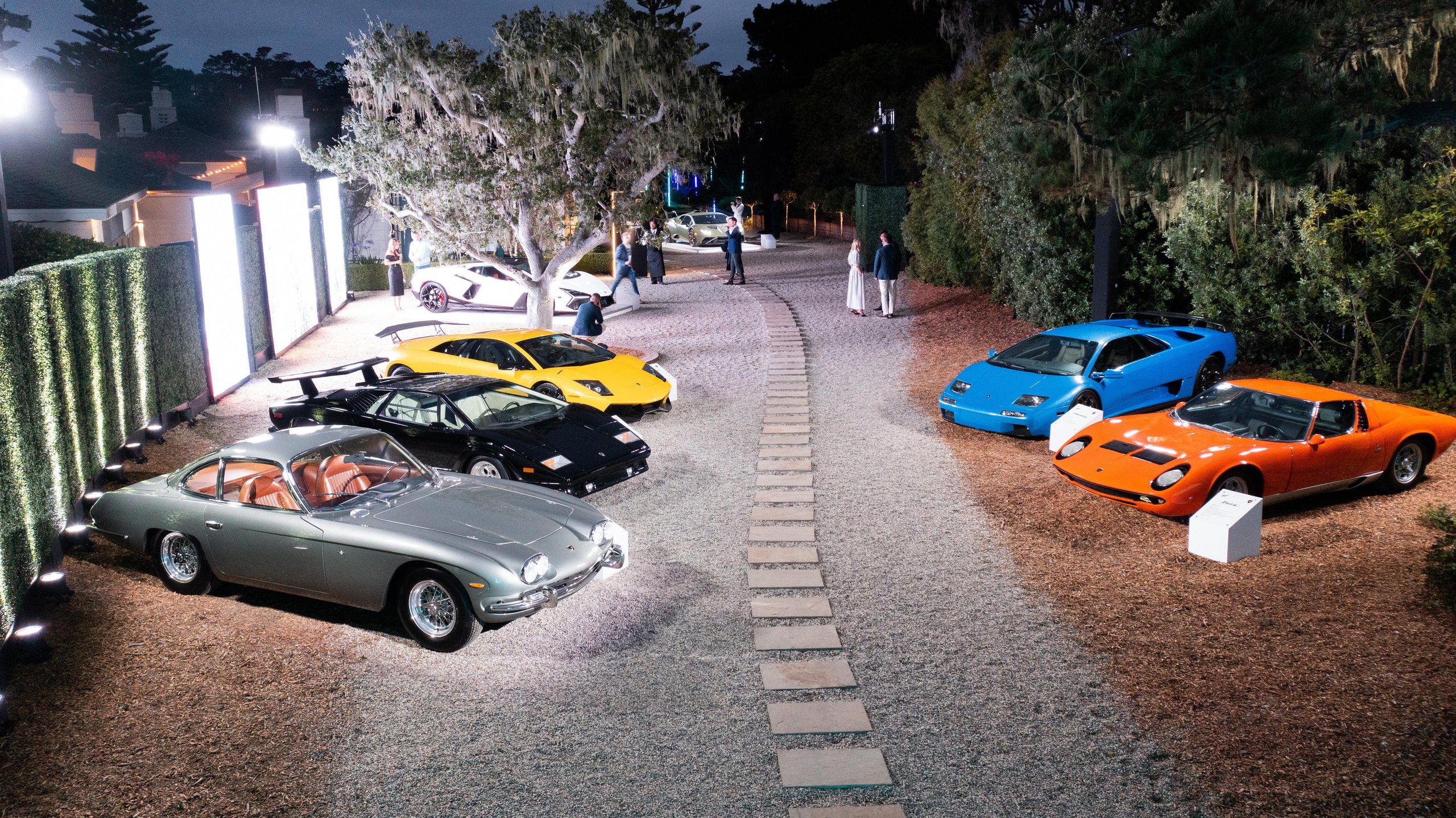
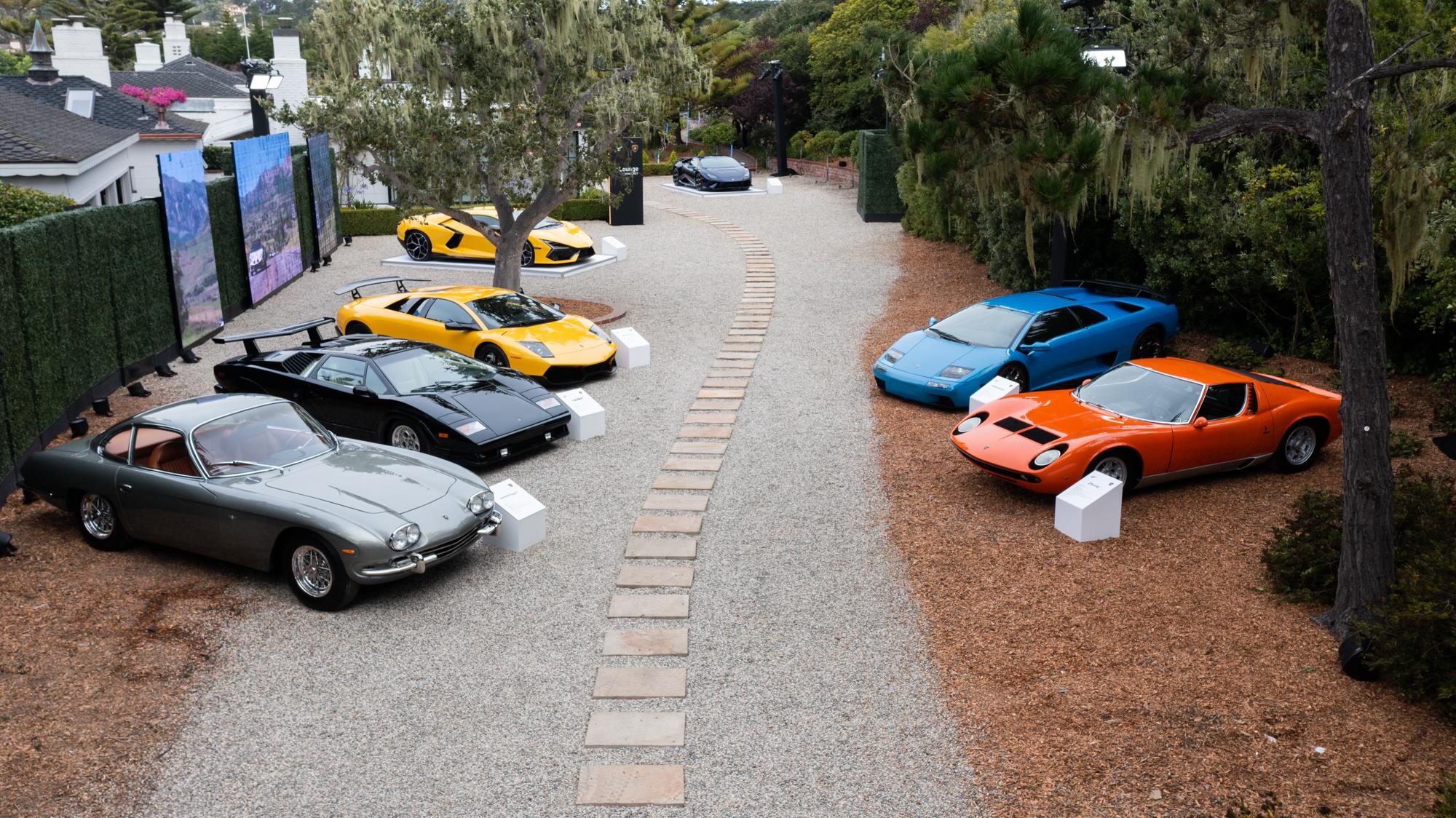
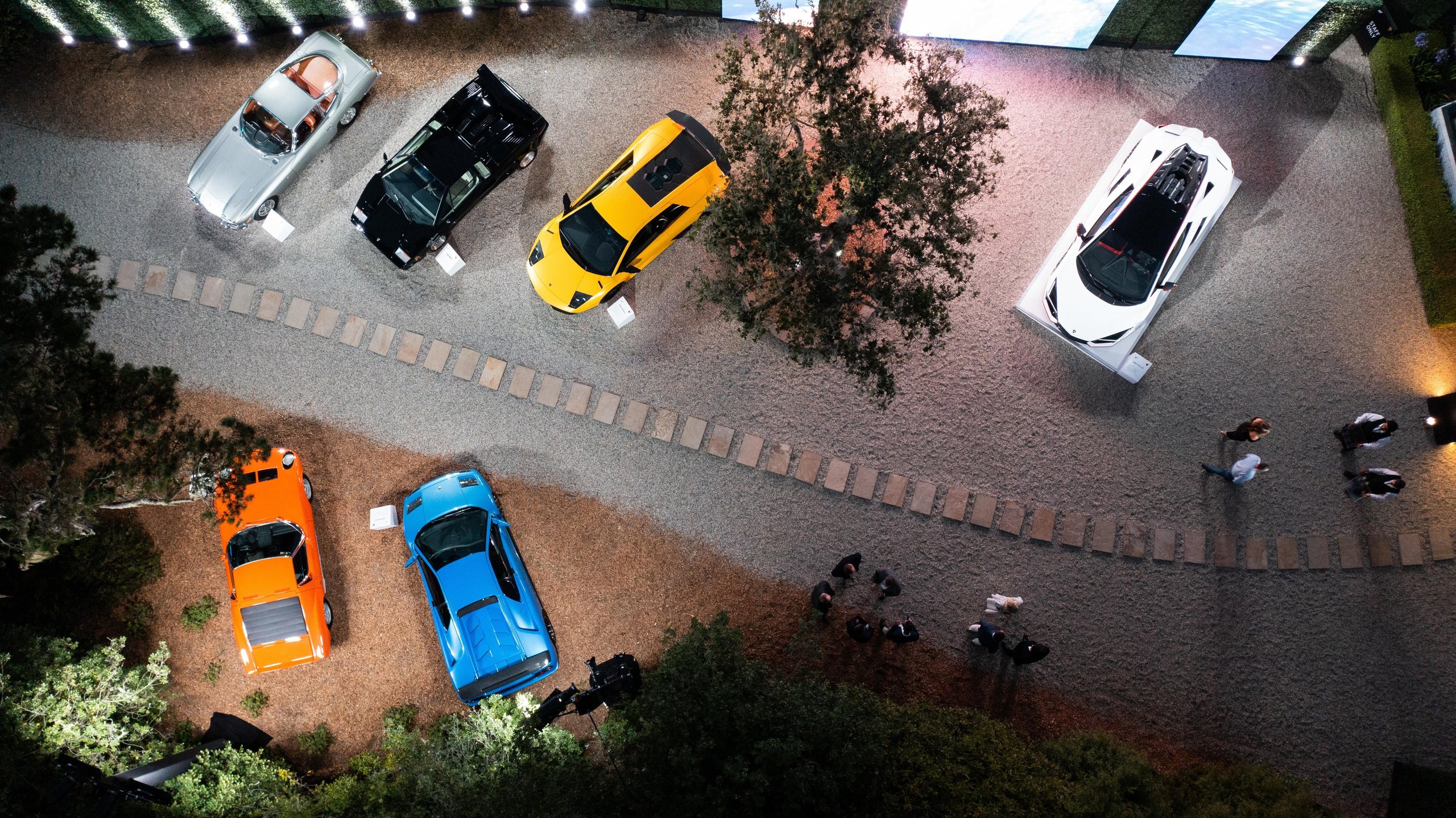
Fresh from its formal debut at The Quail: A Motorsports Gathering on August 18, 2023, the Lanzador sat directly alongside a 400 GT, Miura S, Countach 25th Anniversary, Diablo, and Murciélago LP 670-4 SuperVeloce. Five chapters of V12 history arranged on gravel paths, illuminated at dusk, with the brand’s proposed electric future parked just meters away. The message required no caption.
Two dedicated Ad Personam customization studios occupied the villa. A limited-edition 3T electric bicycle, the RaceMax Boost LTD x Automobili Lamborghini, sat in the foreground of the Lanzador display. Only 30 units exist worldwide. Every element was calibrated to make existing owners feel valued and prospective buyers feel urgency, but the subtext ran deeper: Lamborghini wanted its most loyal customers to see the Lanzador not as a threat to the brand’s identity, but as its continuation. That tension between heritage and reinvention would define the entire weekend.

The elegant outdoor lounge area features a prominent Lamborghini shield logo on a white brick wall, surrounded by lush greenery.
The Lanzador Concept: Bold Pitch, Complicated Aftermath
Lamborghini positioned the Lanzador as a vision for a purely electric fourth production series. The concept introduced a segment the company labeled “Ultra GT,” combining a high ground-clearance body with 2+2 seating, a claimed output exceeding one megawatt (over 1,341 horsepower), and a design language that drew from the angular aggression of the 2011 Sesto Elemento and the modern Countach, according to Road & Track’s reporting on Lamborghini’s stated inspirations.
The Lanzador’s futuristic SUV-coupe silhouette featured sharp integrated lighting elements, large wheel arches, and an aerodynamic profile that split the difference between a lowered Urus and something from a science-fiction production design office. Online reaction was polarized, with enthusiast communities split between praising it as “perfectly Lamborghini” and comparing it to a computer mouse.
What matters more than the design debate is what happened to the powertrain strategy after Monterey. The production timeline, originally targeting 2028, slipped to 2029. Then, in early 2026, Car and Driver and Road & Track reported that Lamborghini canceled the pure electric version entirely, with plans to launch the Lanzador as a plug-in hybrid instead. CEO Stephan Winkelmann was quoted stating that the brand’s target market showed “close to zero” interest in electric vehicles, and that investing heavily in battery EVs would be “financially irresponsible.” Road & Track reported in March 2025 that Volkswagen Group CEO Oliver Blume had suggested the production version could deliver up to 2,000 horsepower.
For anyone who stood in that Pebble Beach villa in 2023 and believed they were seeing Lamborghini’s first EV, the pivot is significant. The Lanzador nameplate will reportedly survive, but the vehicle behind it will be fundamentally different from the concept displayed at Monterey. The heritage cars flanking it that weekend now look less like a bridge to the electric future and more like a foreshadowing of the gravitational pull that combustion still exerts on this brand.

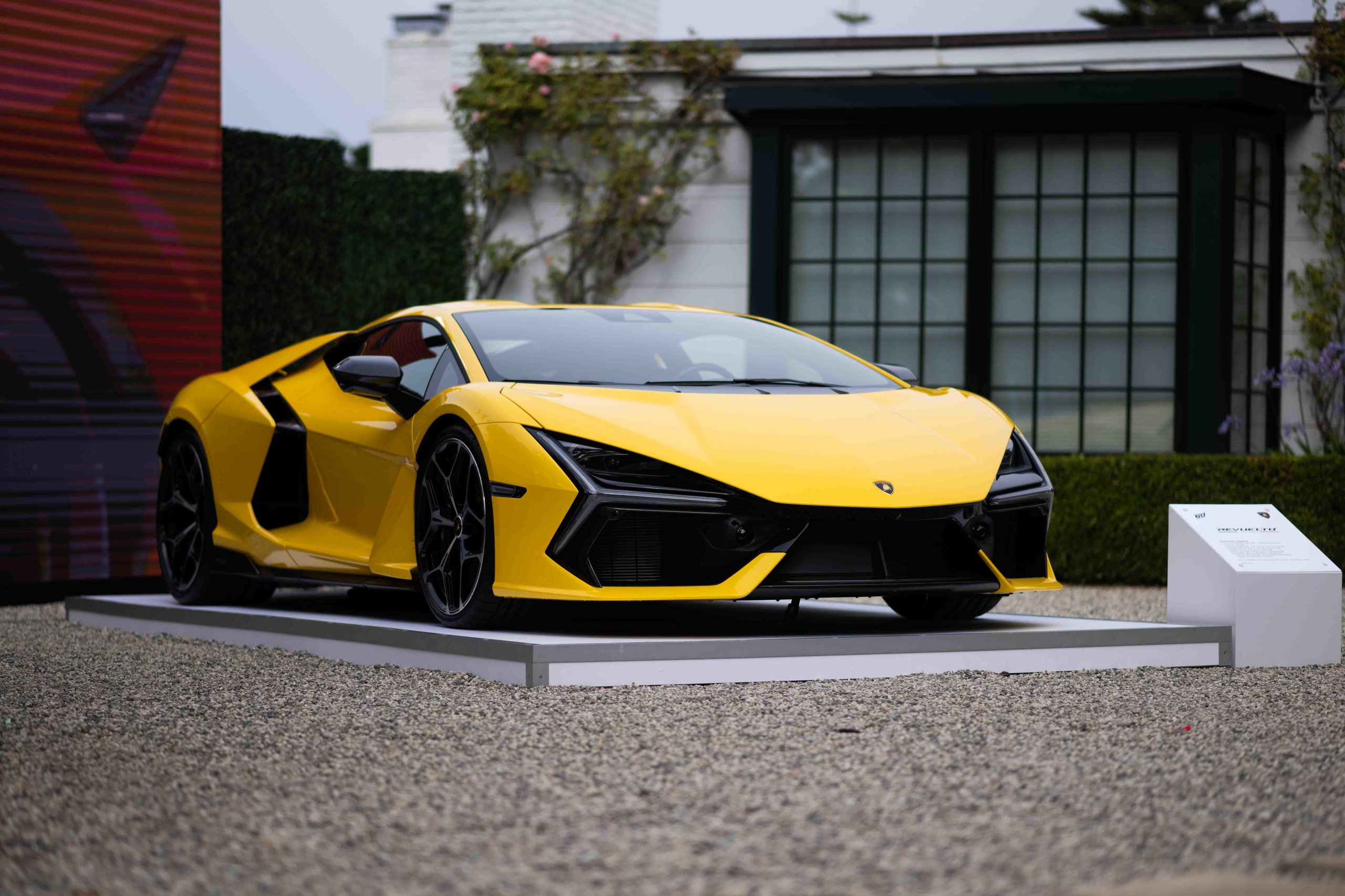
The striking Lamborghini Lanzador Concept car makes a bold statement on display at an outdoor event.
Sixty Years of V12 DNA, Arranged on Gravel
The five historic V12s at the Lounge Monterey were not chosen at random. Lamborghini curated a chronological walk through its flagship lineage, and the sequence told a specific story about how the company’s design language evolved while its mechanical soul remained constant.
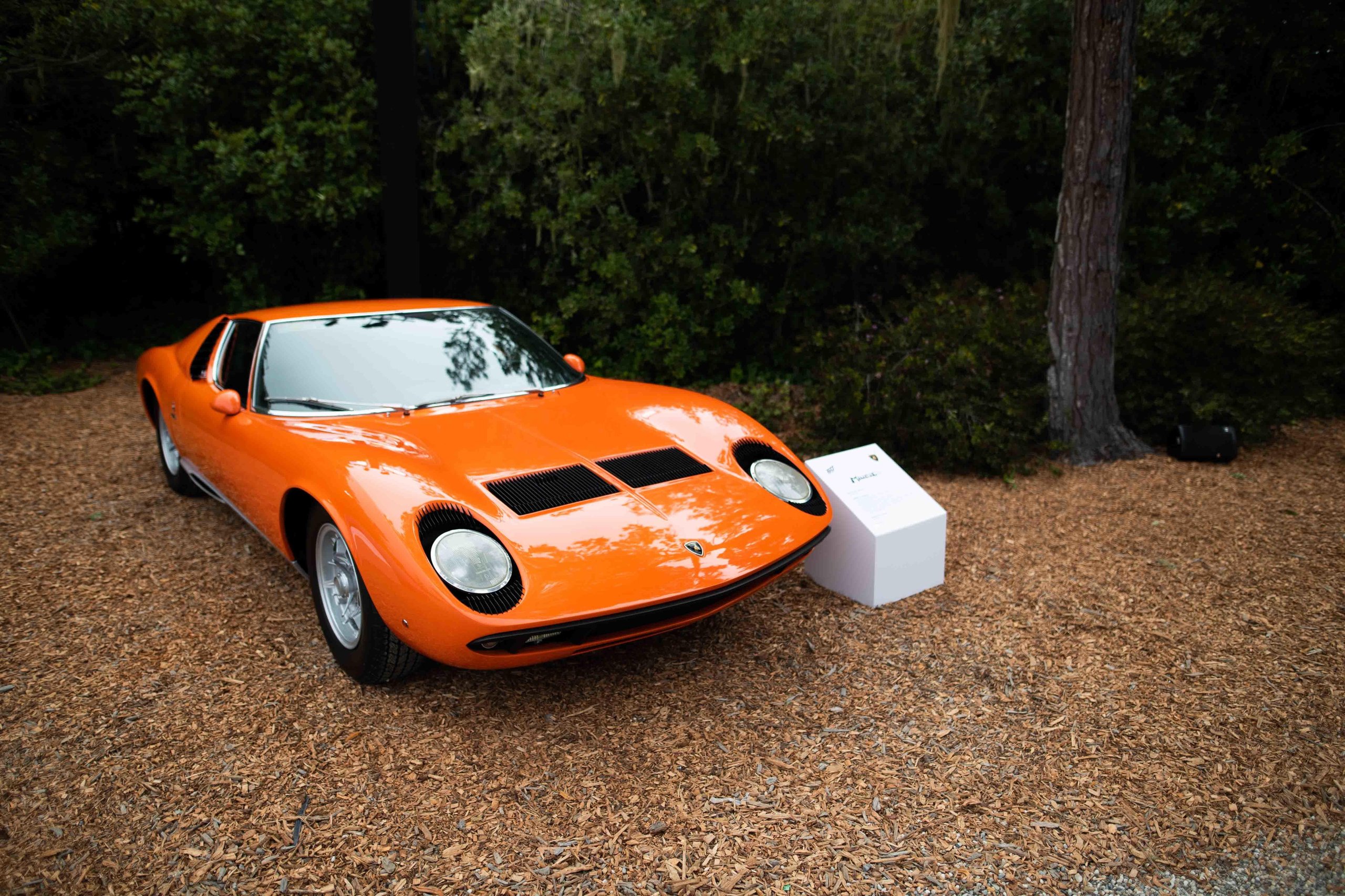
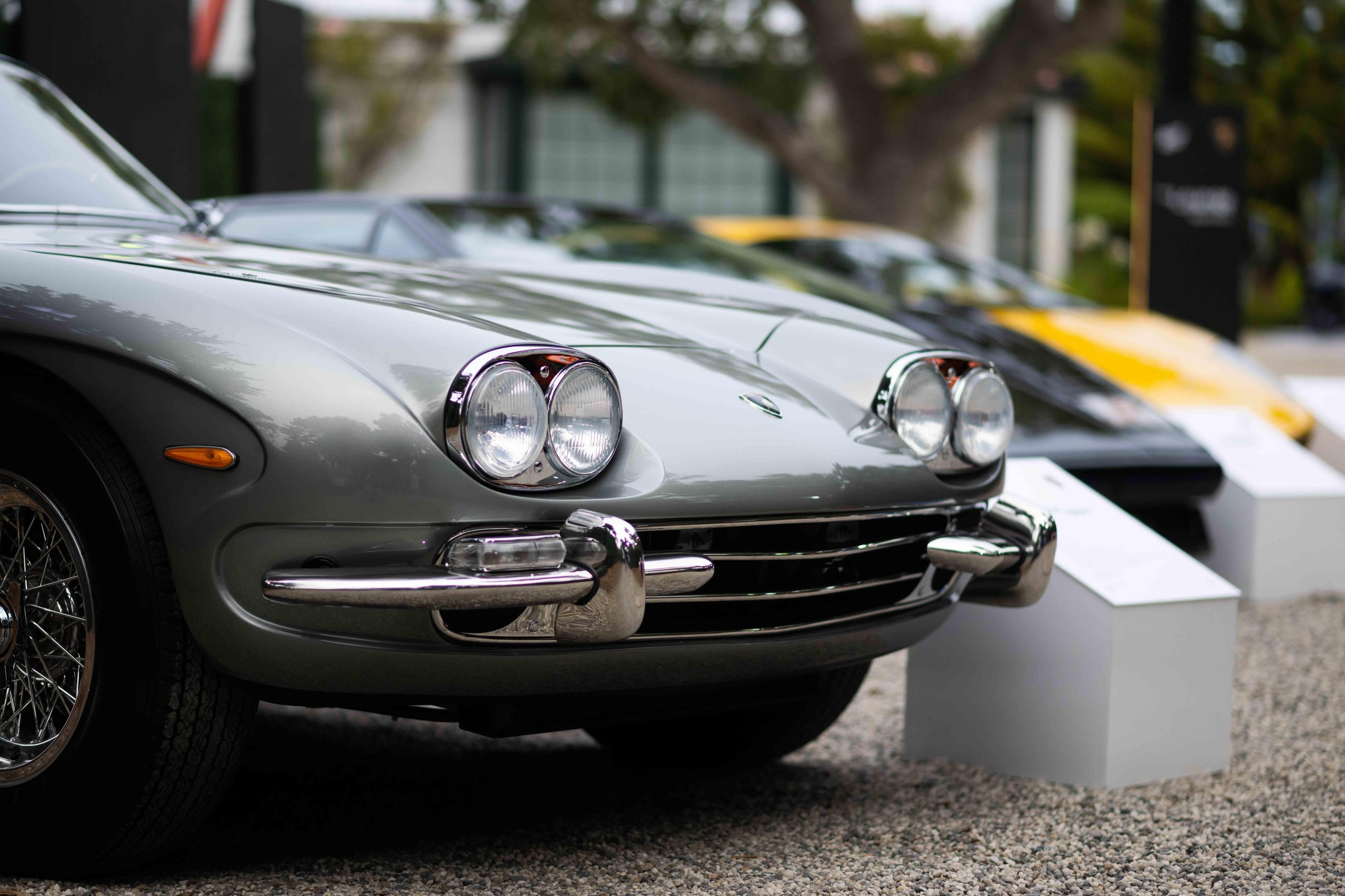
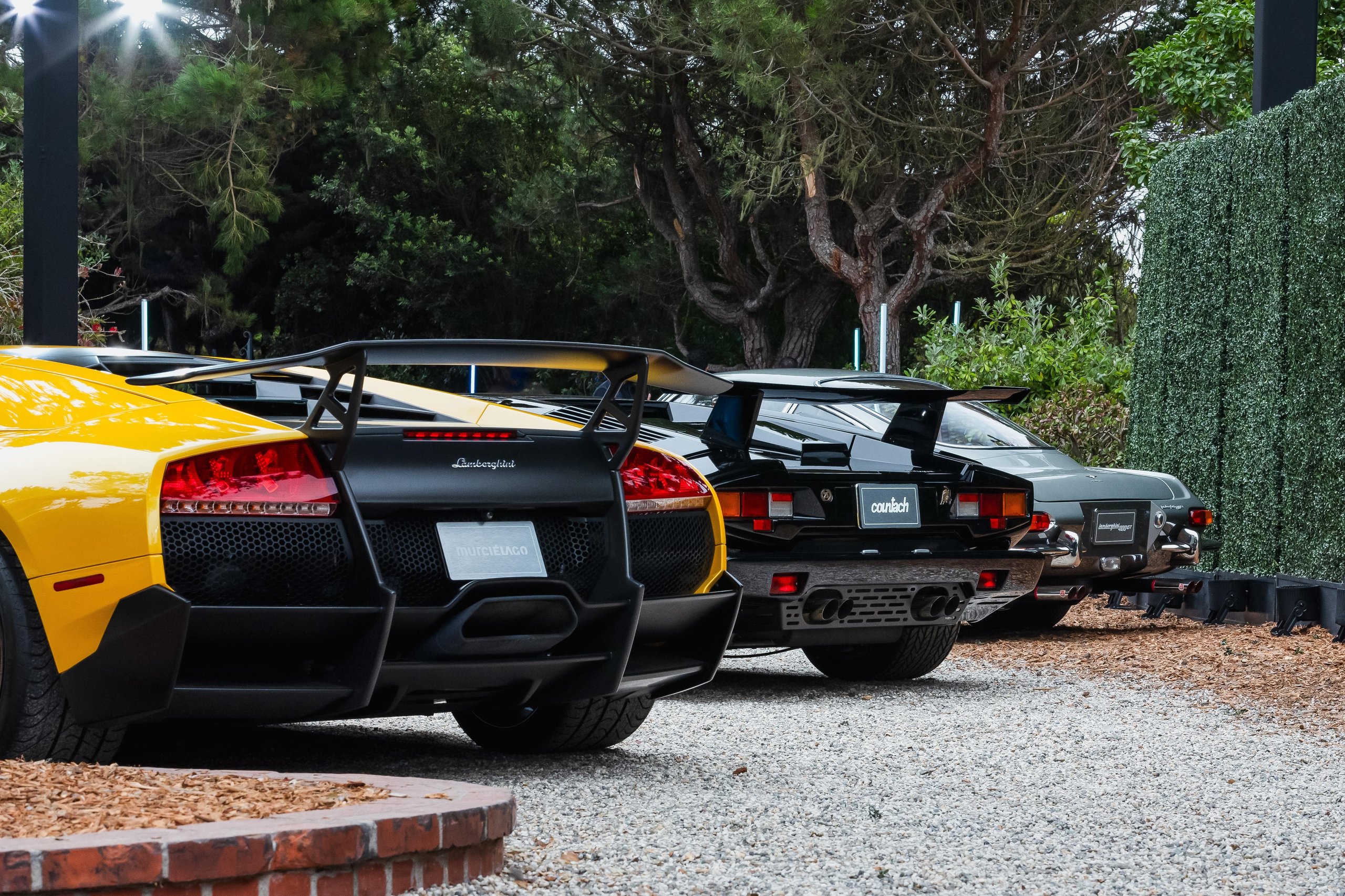
The silver 400 GT represented the company’s earliest grand touring ambitions. The orange Miura S embodied the mid-engine revolution. The black Countach 25th Anniversary brought the angular aggression that cemented Lamborghini’s visual identity for a generation. The Diablo continued that wedge philosophy into the 1990s. And the Murciélago LP 670-4 SuperVeloce, the final naturally aspirated V12 flagship before the Aventador era, closed the historical arc.
The Revuelto, Lamborghini’s first V12 High Performance Electrified Vehicle, served as the quiet bridge between this heritage display and the Lanzador concept. It proves Lamborghini can hybridize its V12 and still produce a car that earns appropriately breathless responses, validating the engineering direction. Whether the same emotional transfer can work for a plug-in hybrid 2+2 GT without a V12 at all remains the open question the Monterey staging so carefully avoided answering.
Lamborghini wanted guests to feel the unbroken thread from the 400 GT to the Revuelto before asking them to imagine what comes next. In hindsight, the arrangement also revealed the difficulty of the ask: every car in that chronological line drew its emotional power from a naturally aspirated twelve-cylinder engine. Placing the Lanzador at the end of that sequence invited a comparison it could not yet win.

A black Countach LP5000 QV leads a lineup of iconic Lamborghinis, showcasing the brand's evolution.
The Ultra GT Segment: Where Does the Lanzador Actually Compete?
Lamborghini’s “Ultra GT” label is marketing shorthand for a vehicle that does not fit neatly into any existing category. A high-riding, 2+2, performance-oriented grand tourer with supercar power is not quite an SUV, not quite a coupe, and not quite a sedan. The closest competitor in spirit is the Ferrari Purosangue, which also bends traditional segment definitions by offering four seats and a V12 in a body that Ferrari insists is not an SUV.
That comparison is instructive because of how the two brands diverged. Ferrari chose to keep a naturally aspirated V12 in the Purosangue, anchoring the car’s emotional appeal in the engine that defines its identity. Lamborghini initially went the opposite direction with the Lanzador, proposing a fully electric architecture. The subsequent retreat to plug-in hybrid suggests Lamborghini’s leadership reached the same conclusion Ferrari’s product planners apparently reached earlier: at this price point and for this customer, the combustion engine is not a compromise. It is the product.
Lamborghini confirmed no pricing or final production specifications for the Lanzador. What the Monterey presentation confirmed is the body style, the 2+2 configuration, and the ambition to create a fourth model line distinct from both the Urus and the mid-engine supercars. Whether that ambition survives the powertrain pivot intact is the question prospective buyers should be tracking.
Ad Personam and the Business of Belonging
The two Ad Personam studios inside the Lounge Monterey were functional sales tools, and their presence at a lifestyle event rather than a dealership says something about how Lamborghini cultivates its highest-value customer relationships.
The Monterey setup included physical material samples, color swatches, and a virtual configuration system. Placing this experience inside an exclusive villa, surrounded by heritage cars and a concept previewing the brand’s future, is a calculated move. A customer who has just walked past a Miura and examined the Lanzador up close is not in a rational, comparison-shopping frame of mind. They are in a brand immersion state, and that is precisely when the Ad Personam conversation becomes most effective.
The 3T electric bike collaboration, limited to 30 units worldwide and designed in partnership with Lamborghini Centro Stile, extends the same logic into a lifestyle product. For a brand navigating the transition toward electrification, putting a Lanzador-inspired electric bicycle next to the Lanzador concept is a subtle way of normalizing electric Lamborghini products in the minds of customers who might otherwise resist it. Viewed through the lens of the subsequent powertrain pivot, that normalization effort takes on a different character: even the soft sell proved insufficient to move the needle with Lamborghini’s core audience.

The 'Ad Personam' customization lounge offers a vibrant array of color and material choices for personalized Lamborghini creations.
What the Lanzador’s Pivot Means for Buyers Watching Lamborghini’s Next Chapter
Viewed from hindsight, the Lounge Monterey looks like a high-water mark for Lamborghini’s all-electric ambitions. The Lanzador concept was presented with genuine conviction in August 2023, wrapped in 60 years of V12 heritage at one of the most exclusive automotive gatherings on the planet. The concept looked credible, the brand narrative felt coherent, and the path from Miura to Lanzador seemed, for one Monterey weekend, like an unbroken line.
The reality proved more complicated. The production timeline slid. The powertrain strategy reversed. And Lamborghini’s CEO publicly acknowledged that the company’s own customers did not want what the Lanzador originally promised. For a brand that built its mythology on giving customers exactly what they did not know they wanted, the Miura, the Countach, the Urus, that admission carries weight.
The practical takeaway: the fourth model line is still coming, likely around 2029 or 2030, but as a plug-in hybrid rather than a pure EV. The 2+2 Ultra GT body style appears to be surviving the transition. Final specifications, pricing, and performance figures remain unconfirmed. Lamborghini’s recent Manifesto concept, reported by Road & Track in late 2025, previews the brand’s evolving design DNA without tying itself to a specific production model, suggesting the visual language is still in motion.
What Monterey demonstrated, and what remains true regardless of the powertrain outcome, is that Lamborghini understands how to manage the emotional transition better than most competitors. Placing the future next to the past, in a setting designed to make both feel inevitable, is a skill no spec sheet can replicate. Whether the production Lanzador earns the same reverence as the V12s it was displayed alongside will depend on engineering decisions still being made in Sant’Agata Bolognese. The gravel paths at Pebble Beach told a beautiful story. The road from there to the showroom floor has turned out to be far less linear.

The Lamborghini Lanzador Concept, a fully electric 2+2 GT, is showcased alongside a matching bicycle at an exclusive outdoor event.
Gallery