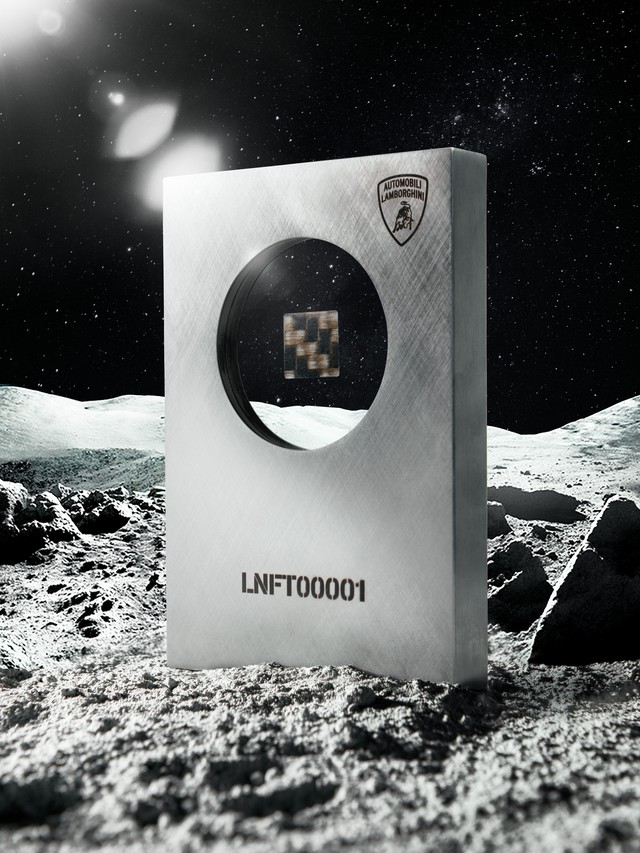
Five Units, One Space Station, and Lamborghini’s First NFT
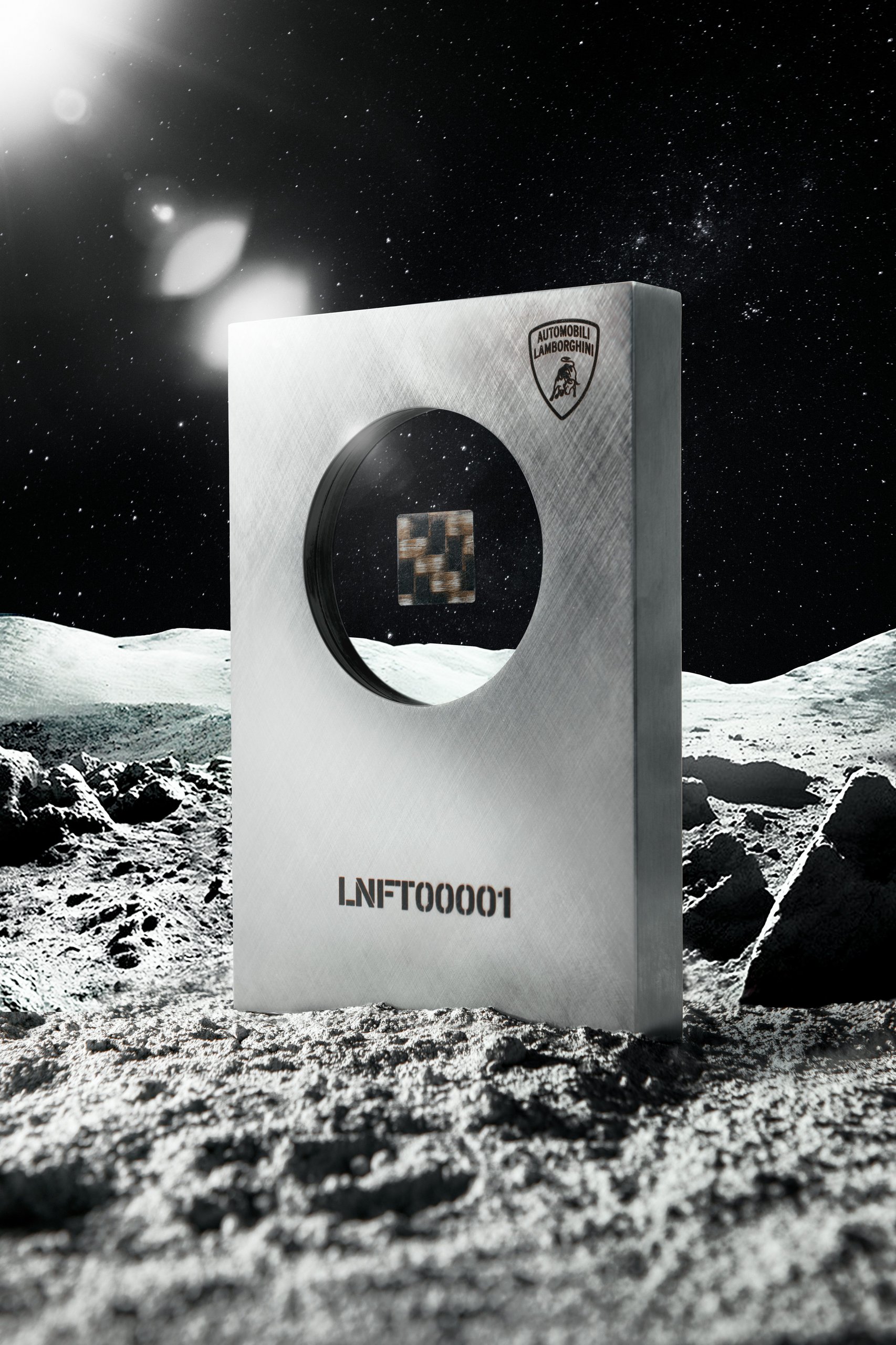
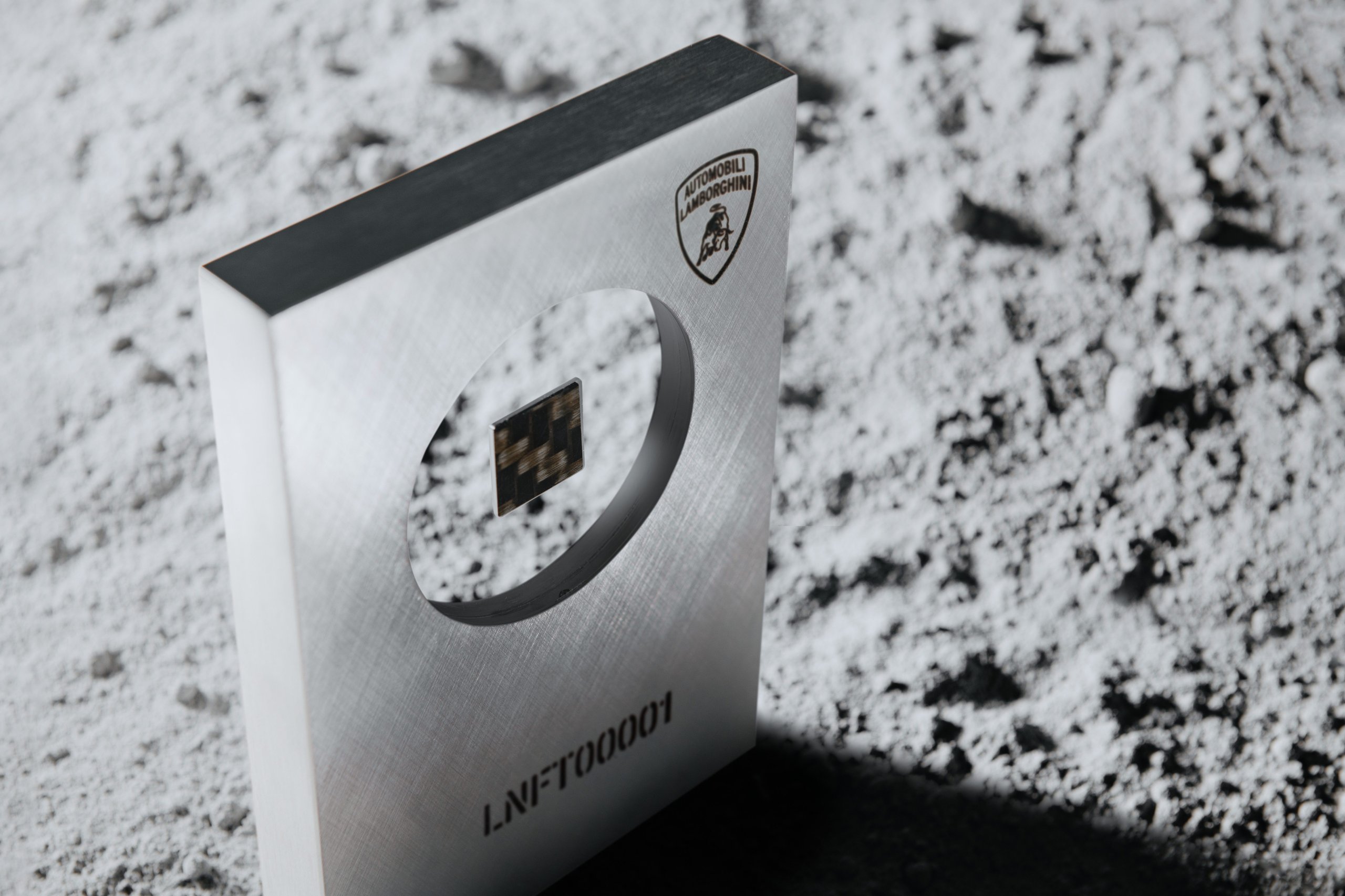
Lamborghini’s first NFT is called the Space Key, and it is stranger and more compelling than the label suggests. Each of the five limited units pairs a physical piece of advanced carbon fiber composite, one that actually traveled to the International Space Station, with an exclusive digital artwork accessible through a QR code engraved on the carbon fiber’s backside. The project was developed in collaboration with NFT PRO™ and a then-undisclosed artist, with an auction to follow.
The “To the Moon” social media teasers that preceded the reveal were not subtle, but the product itself is genuinely unusual. This is not a JPEG of a Lamborghini with a blockchain receipt. The physical anchor is a 3D-printed carbon fiber sample weighing 3.2 grams, tested by the European Space Agency aboard the ISS from February to August 2020. That sample went to orbit as part of a legitimate joint research project Lamborghini initiated in 2019, studying how advanced composites behave in the extreme conditions of outer space. After returning to Earth and completing its scientific purpose, the material found a second life as the core of a collectible. The real question the Space Key poses is whether Lamborghini’s mastery of scarcity, the same instinct that limits a Veneno to a handful of cars, can translate into an entirely new category of artifact.

The Lamborghini Space Key NFT display reveals details about its material, weight, testing, and origin on a moon-like surface.
The Carbon Fiber’s Journey: From Research Lab to Low Earth Orbit
What separates the Space Key from the flood of celebrity-endorsed NFT drops that characterized early 2022 is provenance. Lamborghini’s Advanced Composites Structures Laboratory, based in Sant’Agata Bolognese, sent the carbon fiber to the ISS not as a marketing stunt but as genuine materials research, studying how advanced composites respond to microgravity, radiation, and thermal cycling in orbit.
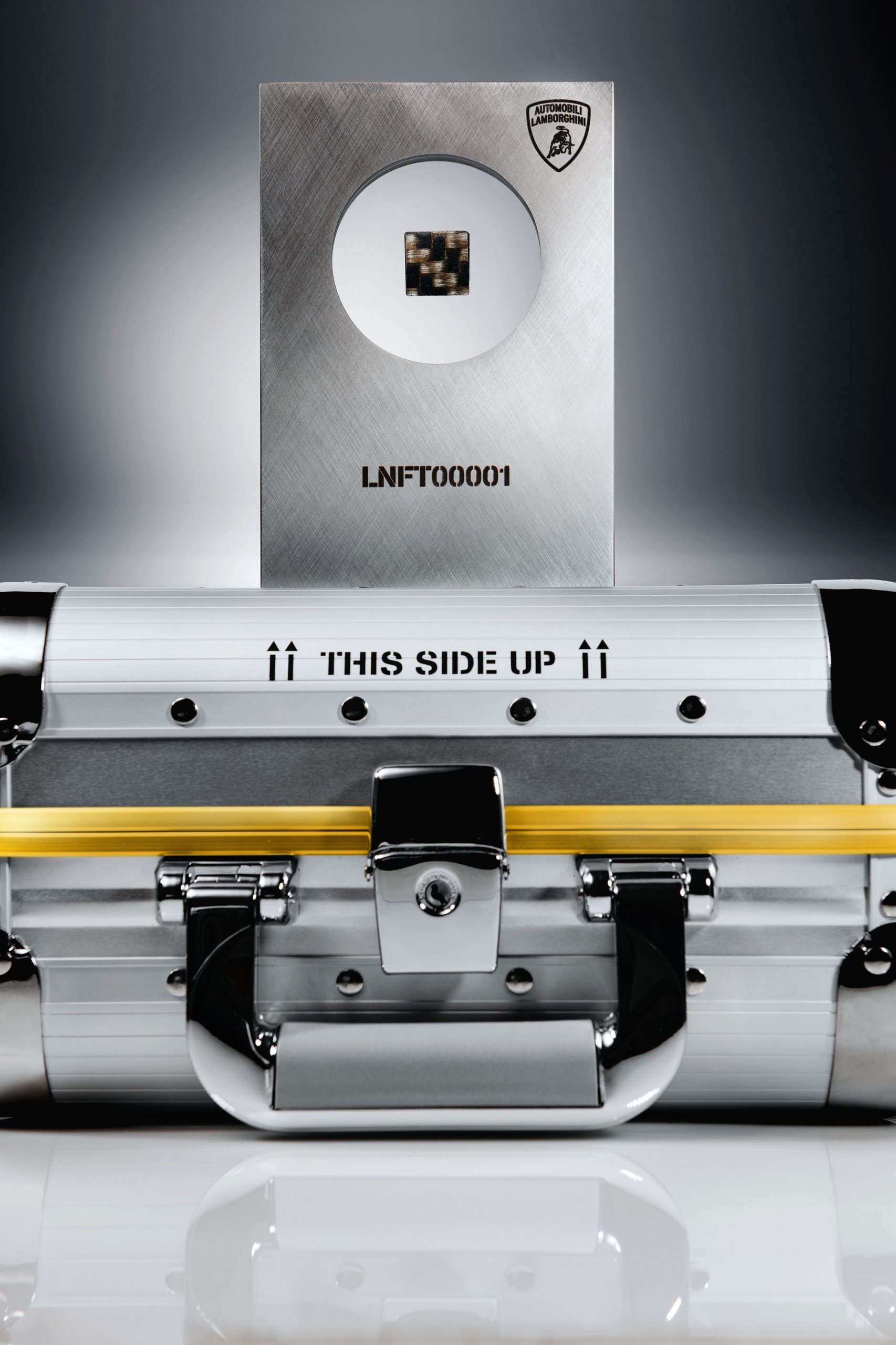
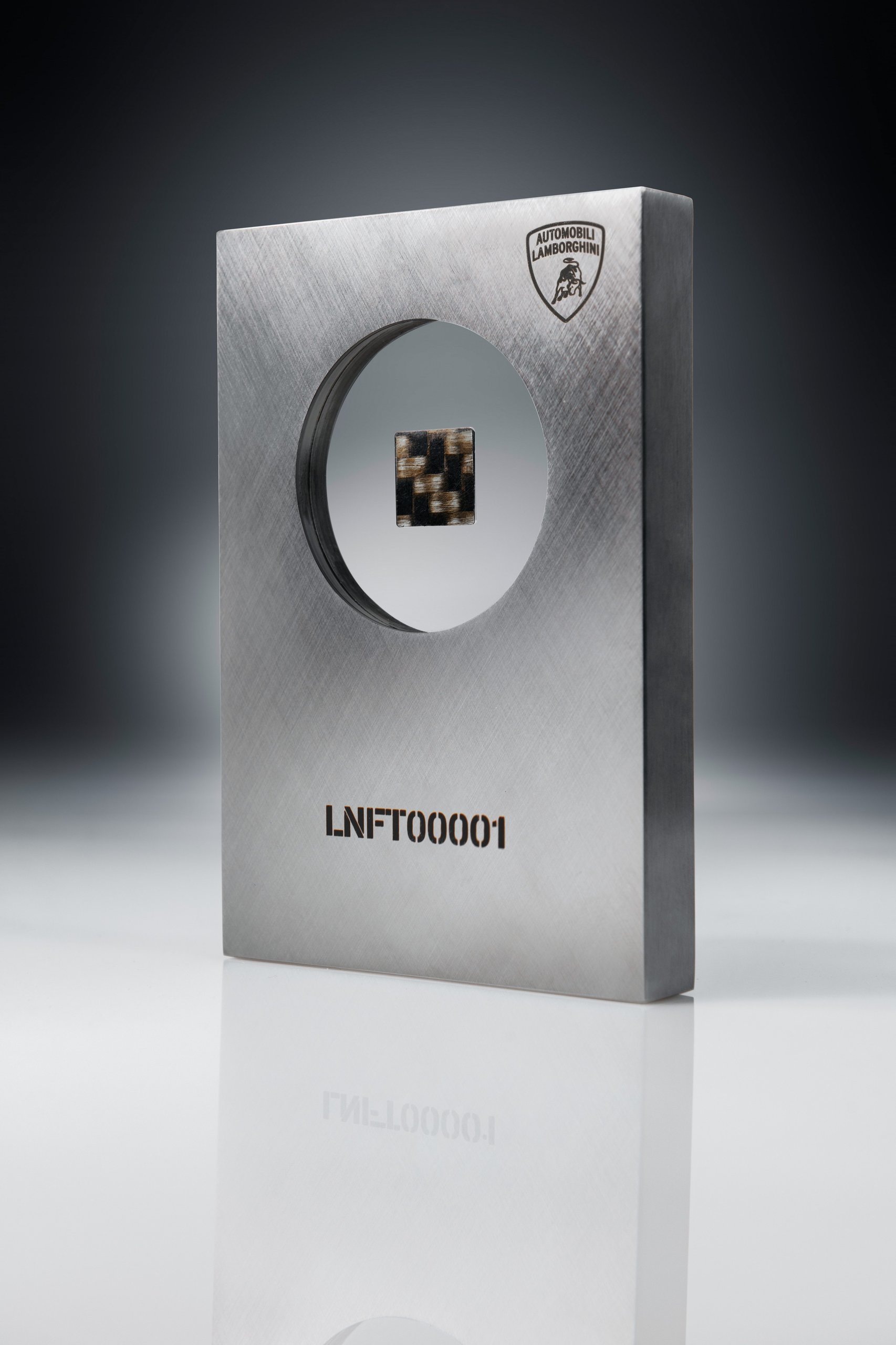
One source identifies the physical presentation as the carbon fiber piece seated within a block of machined aluminum, housed in a protective case stamped “CRITICAL SPACE ITEM.” The packaging is deliberate theater, but the provenance is real: this material spent six months outside Earth’s atmosphere. For a company whose entire identity rests on the mastery of carbon fiber, one that operates one of the most advanced carbon fiber facilities in the automotive world, producing monocoques and structural components for every current model, repurposing a space-tested sample into a collectible is a surprisingly coherent brand extension. The scarcity is not manufactured through an arbitrary edition number. It is baked into the material itself: you cannot send more carbon fiber to the ISS on a whim.

A closed, silver and yellow protective case with a 'CRITICAL SPACE ITEM' label rests on a moon-like surface.
Why Lamborghini Ventured into Digital Collectibles
In early 2022, luxury brands were scrambling to stake claims in the NFT space, many of them producing little more than branded digital trading cards. Lamborghini CEO Stephan Winkelmann framed the move as a natural extension of the company’s appetite for new technology, stating that entering the metaverse was “again proof of Lamborghini always setting sail for new horizons.”
Strip away the corporate optimism, and the real calculation is about exclusivity mechanics. Lamborghini already understands scarcity better than almost any automaker alive. The Sian was limited to 63 units. The Centenario to 40. The Veneno to a handful. Each time, the constraint amplified desirability and resale premiums. The Space Key applies the same principle to a non-automotive product: five units, irreproducible provenance, and a digital component that lives permanently on the blockchain. For collectors who already own the cars, this becomes a different category of Lamborghini artifact entirely.
Whether the NFT component retains value over time is a separate question, and one the broader market answered with some brutality in the months that followed. According to Road & Track, Ferrari’s own much later NFT venture, the F76, was met with skepticism in a market where Bored Ape Yacht Club tokens had already lost over 90 percent of their peak value. Lamborghini, to its credit, moved earlier and tied its project to a tangible physical object with genuine scientific history, giving the Space Key a fundamentally different collectibility argument than a purely digital token.
The Digital Art and Auction: What Collectors Should Know
At the time of Lamborghini’s initial announcement, the artist behind the digital artwork remained undisclosed. One report identifies the collaborator as Swiss artist Fabian Oefner, whose “Space Time Memory” series depicts a Lamborghini Ultimae deconstructing in space, with 1,500 individual car parts appearing to dislodge above Earth’s curvature. Oefner’s process was painstakingly analog: each nut, bolt, and body panel was individually photographed from a real Ultimae, and the Earth’s curvature was captured via a weather balloon launched into the stratosphere. He then spent over two months compositing these elements into hyper-realistic images, each reportedly comprising 600 million pixels.
Lamborghini confirmed the project was executed in cooperation with NFT PRO™, and one competitor report identifies RM Sotheby’s as the auction partner. The five lots were auctioned between February 1 and February 4, 2022, with each auction window lasting 75 hours and 50 minutes, a deliberate nod to the time Apollo 11 took to travel from Earth to lunar orbit. Collectively, the five Space Time Memory lots sold for almost $660,000.
For prospective collectors who missed the auction, the practical takeaway is straightforward: these are gone. With only five in existence, secondary market appearances will be exceptionally rare. The physical carbon fiber component gives each piece a provenance story that purely digital NFTs cannot replicate, which may insulate them from the worst of the broader NFT market correction.

An open, silver and yellow protective case containing the Lamborghini Space Key NFT display rests on a moon-like surface.
Lamborghini’s Position in the Luxury Digital Arms Race
By early 2022, Porsche, Mercedes-AMG, and several other luxury marques were either exploring or actively launching NFT projects. Most of those efforts amounted to digital art collections or virtual car renders with no physical component. Lamborghini’s decision to anchor its NFT to a space-flown research artifact gave it a differentiation that competitors lacked: real provenance, scientific history, and a material connection to the company’s core engineering competence.
Did it transform the NFT landscape? No. The broader market correction that began later in 2022 humbled virtually every brand-affiliated token. But viewed as a brand exercise rather than a revenue play, the Space Key accomplished something useful. It demonstrated that Lamborghini could extend its exclusivity model beyond cars and into objects that carry the same logic of scarcity, craftsmanship, and storytelling. The collector community, which already trades in everything from scale models to Ad Personam spec sheets, gained a genuinely novel category of artifact.
Lamborghini confirmed at the time that further details and future digital initiatives would follow. The company’s subsequent focus on record car deliveries and its electrified lineup suggests that NFTs were a one-chapter experiment rather than a permanent strategic pillar. For the five collectors who own a Space Key, that brevity only reinforces the scarcity. The same instinct that makes a Veneno worth multiples of its original price applies here: when Lamborghini closes a door, the objects on the other side become more desirable, not less.

The Lamborghini Space Key NFT display, featuring a QR code, rests on a textured surface resembling the moon's regolith.
Gallery