Nine Years Running, and Counting
In January 2022, Lamborghini collected its ninth consecutive Top Employer Italia certification, a recognition from the Top Employers Institute that evaluates workplace culture, benefits, training investment, and people strategy. For a company with just over 1,900 employees at the time, that consistency carries a specific message: the people stitching leather, calibrating suspension geometry, and programming hybrid control units in Sant’Agata Bolognese are staying, and new talent keeps arriving.
The streak did not stop at nine. Lamborghini achieved its eleventh consecutive Top Employer Italia certification in 2024, and according to the Randstad employer brand research 2026, the company ranked first overall among Italian employers with a 79.8% preference rating. That trajectory, from niche supercar manufacturer to Italy’s most desirable workplace, coincides precisely with the period in which Lamborghini launched the Urus, hybridized its entire lineup, and committed to the largest research and development investment in its history under the Direzione Cor Tauri plan.
The overlap is not coincidental. Building a Revuelto or a Urus SE requires a workforce that can operate at the intersection of traditional Italian craftsmanship and rapidly evolving electrified powertrain technology. Attracting and keeping those people demands more than competitive salaries. It demands a workplace culture deliberate enough to earn external validation year after year, and substantial enough to retain specialists through the most disruptive technological transition in the company’s six-decade history.

Lamborghini employees discuss operations on the factory floor, with a black Huracan visible in the background. Image: Automobili Lamborghini.
Feelosophy: A Wellness Program Only Lamborghini Would Name This Way
Launched in 2021, the Lamborghini Feelosophy program is structured around three pillars: body, mind, and purpose. The name is exactly as Italian-corporate as it sounds, but the substance runs deeper than the branding. Lamborghini says the program includes guidance on sustainable nutrition and the importance of sleep, alongside longstanding physical and mental health initiatives. By 2024, the company expanded Feelosophy to include on-site psychological support sessions with mental health professionals.
A supercar factory teaching its workers about sleep hygiene sounds like a detail from a parody, but consider the context. Precision assembly of carbon fiber monocoques and hand-stitched leather interiors depends on sustained concentration and fine motor skills. Fatigue and stress are not abstract HR concerns in an environment where a single misaligned stitch or improperly torqued fastener can mean a rejected component on a car that will sell for several hundred thousand dollars. Wellness, in this setting, is quality control by another name.
The parental support programs reflect the same philosophy applied to retention. Lamborghini offers dad and mom coaching courses for employees navigating the arrival of a child. A renewed labor agreement raised the economic supplement for the first six months of optional parental leave to 80% of pay when both parents participate, and to 100% for single parents or those with children with disabilities. Employees also receive eight hours of paid leave for placing each child in daycare or preschool (sixteen hours for single parents or families with children with disabilities), plus ten days of paid leave for adoption or foster care. These are not vague commitments. They are contractual terms negotiated into a supplementary labor agreement, the kind of concrete benefit that keeps a skilled composite technician from accepting an offer elsewhere.

A person engages with the 'DAD COACHING' program on a laptop, surrounded by miniature Lamborghini models. Image: Automobili Lamborghini.
Training a Workforce for Direzione Cor Tauri
The 2022 certification arrived at a pivotal moment. Lamborghini had just announced Direzione Cor Tauri, the electrification and sustainability roadmap that represents the largest R&D investment in the company’s history. Every model in the current lineup is now hybridized: the Revuelto pairs a V12 with three electric motors, the Temerario uses a twin-turbo V8 with hybrid assistance, and the Urus SE runs a plug-in hybrid powertrain. None of that engineering happens without a workforce capable of bridging the gap between combustion-era expertise and high-voltage electrical systems.
To close that gap, Lamborghini committed to substantial investment in training using virtual and digital technologies to accelerate learning for production line workers. The company also announced plans to hire a minimum of 500 new employees by 2026. When the original announcement was made in early 2022, the headcount stood at over 1,900 with a 5.6% increase recorded in 2021, a growth rate that defied broader employment trends during the pandemic.
Cross-mentoring programs pair junior and senior employees to transfer institutional knowledge in both directions. Younger engineers bring fluency in simulation tools and software-defined vehicle architecture; veteran technicians bring decades of understanding about how composite materials behave under stress or how a naturally aspirated engine should sound at 8,500 rpm. That bidirectional exchange matters when the company is simultaneously maintaining the Huracan Super Trofeo racing program and developing entirely new electrified platforms. The Top Employer certification, in this light, is less a trophy and more a diagnostic: external confirmation that the human infrastructure supporting Direzione Cor Tauri is holding together under the strain of transformation.

An employee demonstrates digital manufacturing processes to a colleague beside a vibrant green Lamborghini Urus. Image: Automobili Lamborghini.
From the Factory Floor to the Finished Car
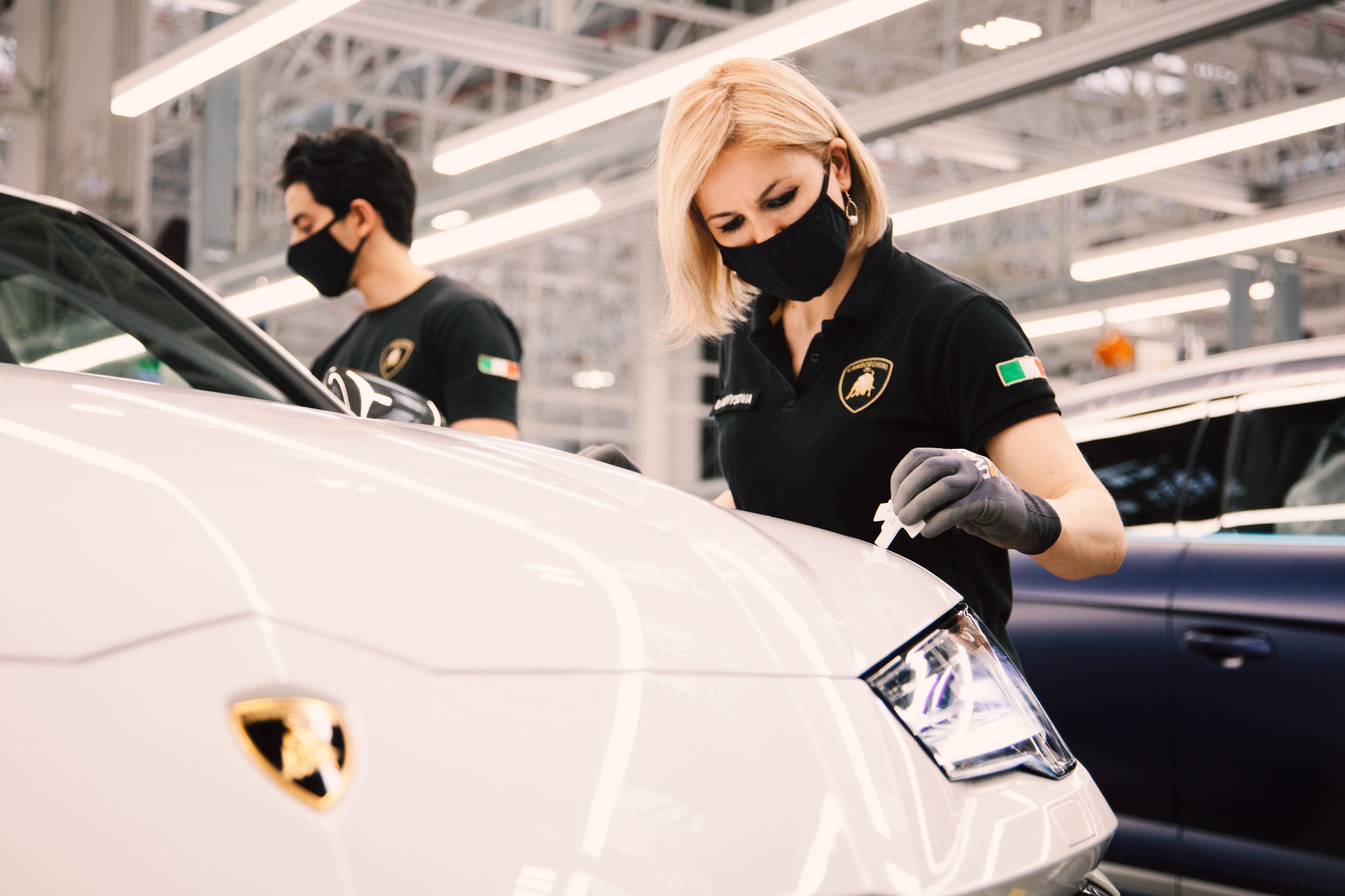
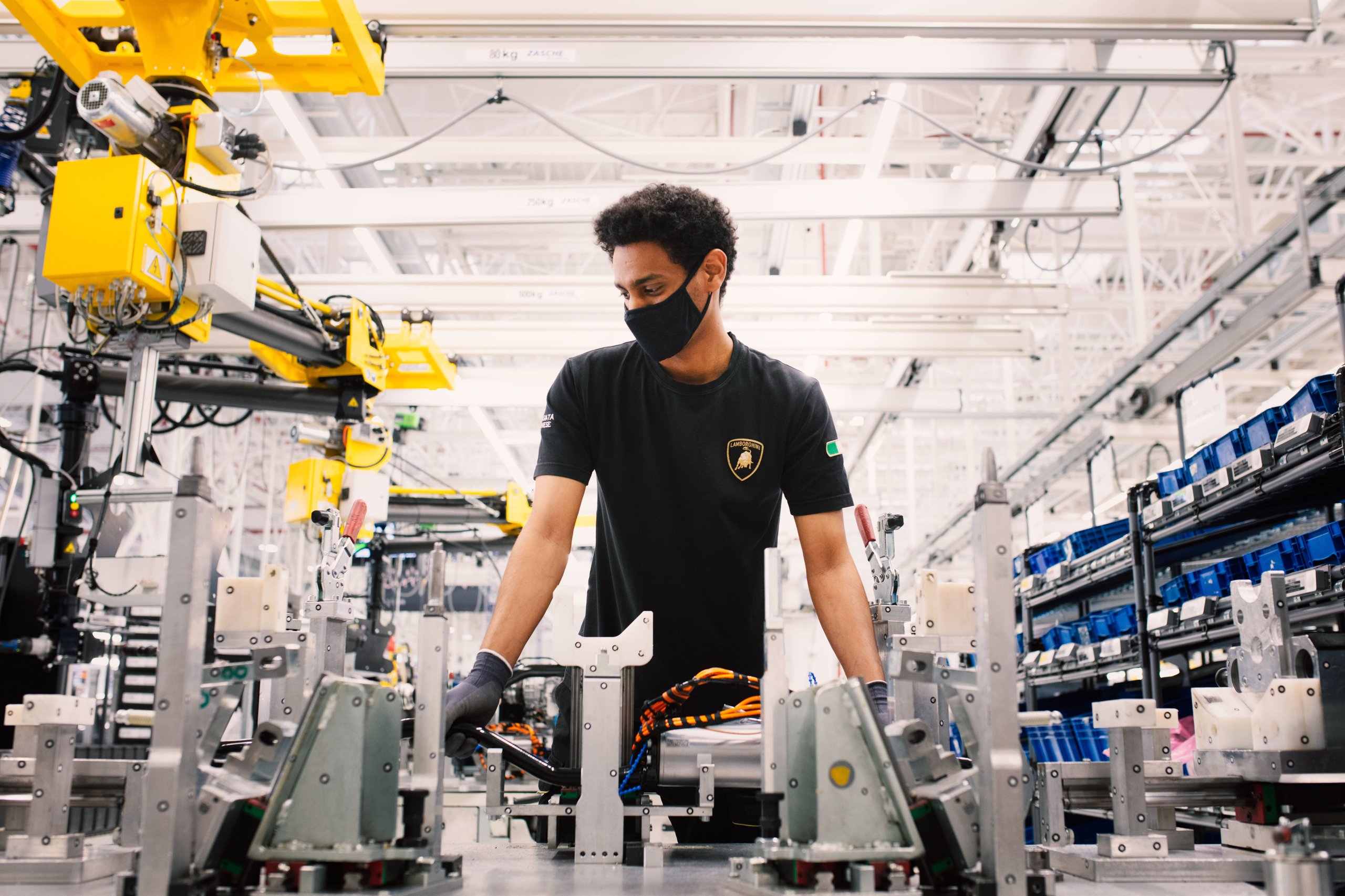
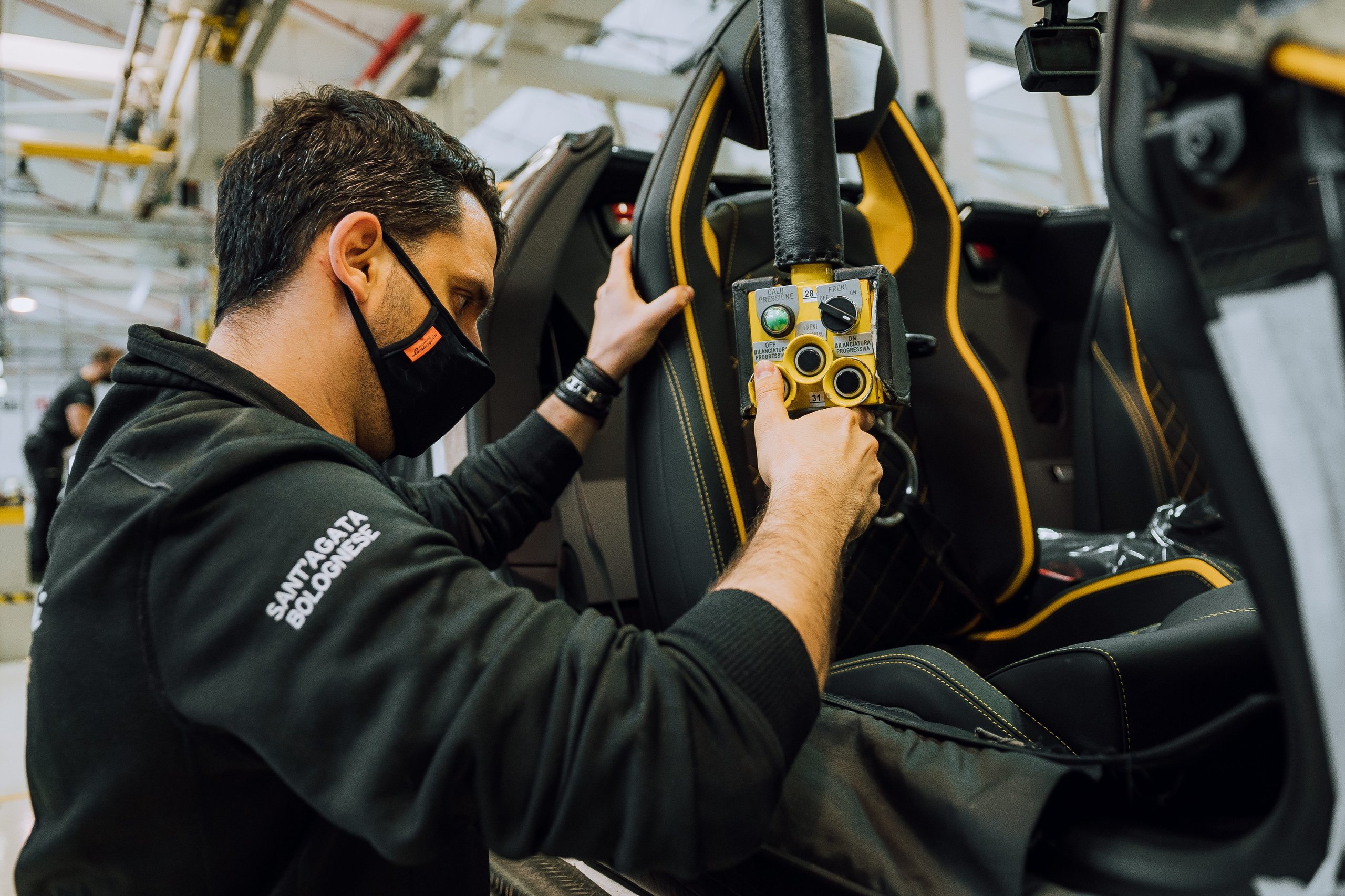
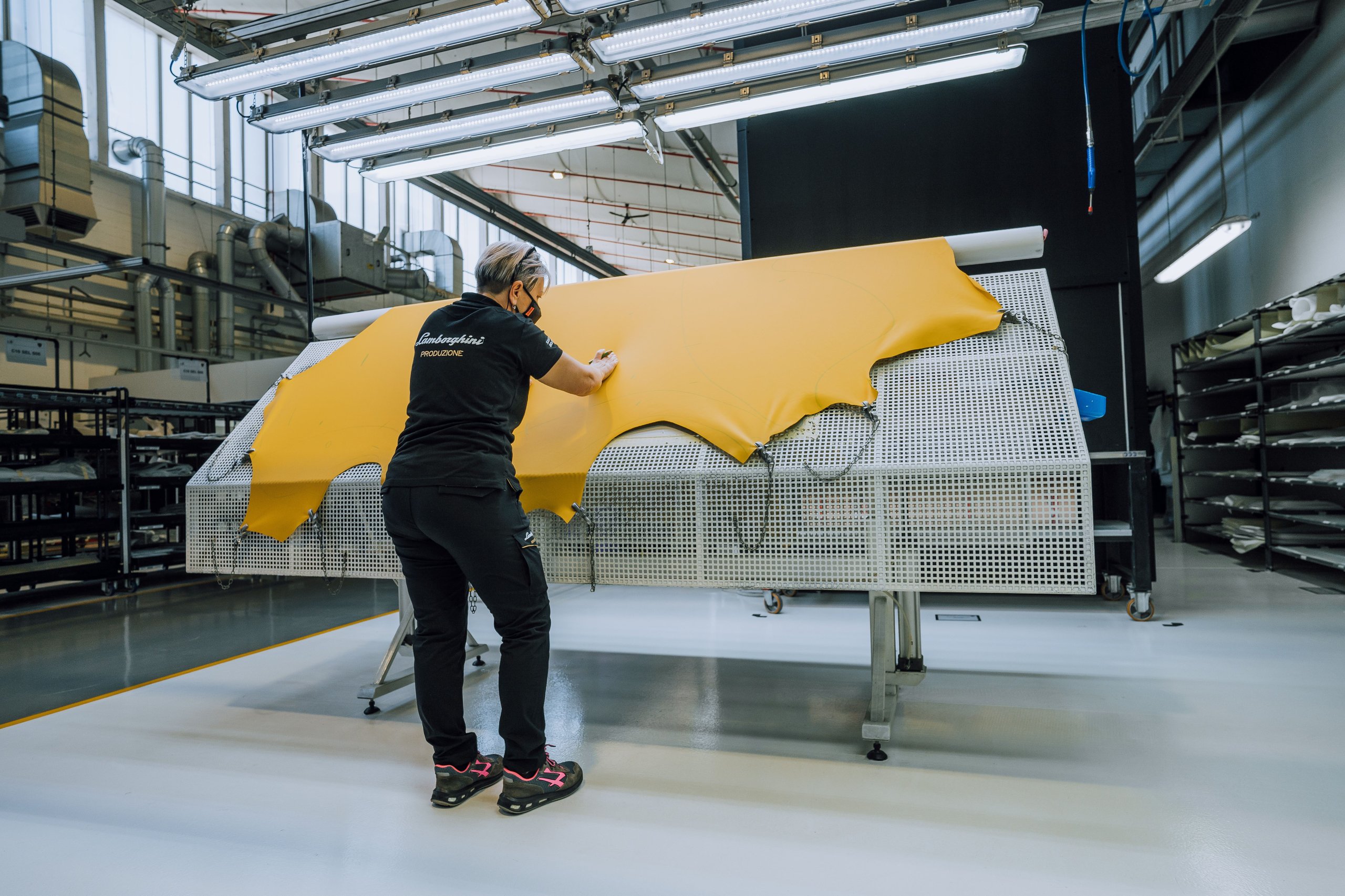
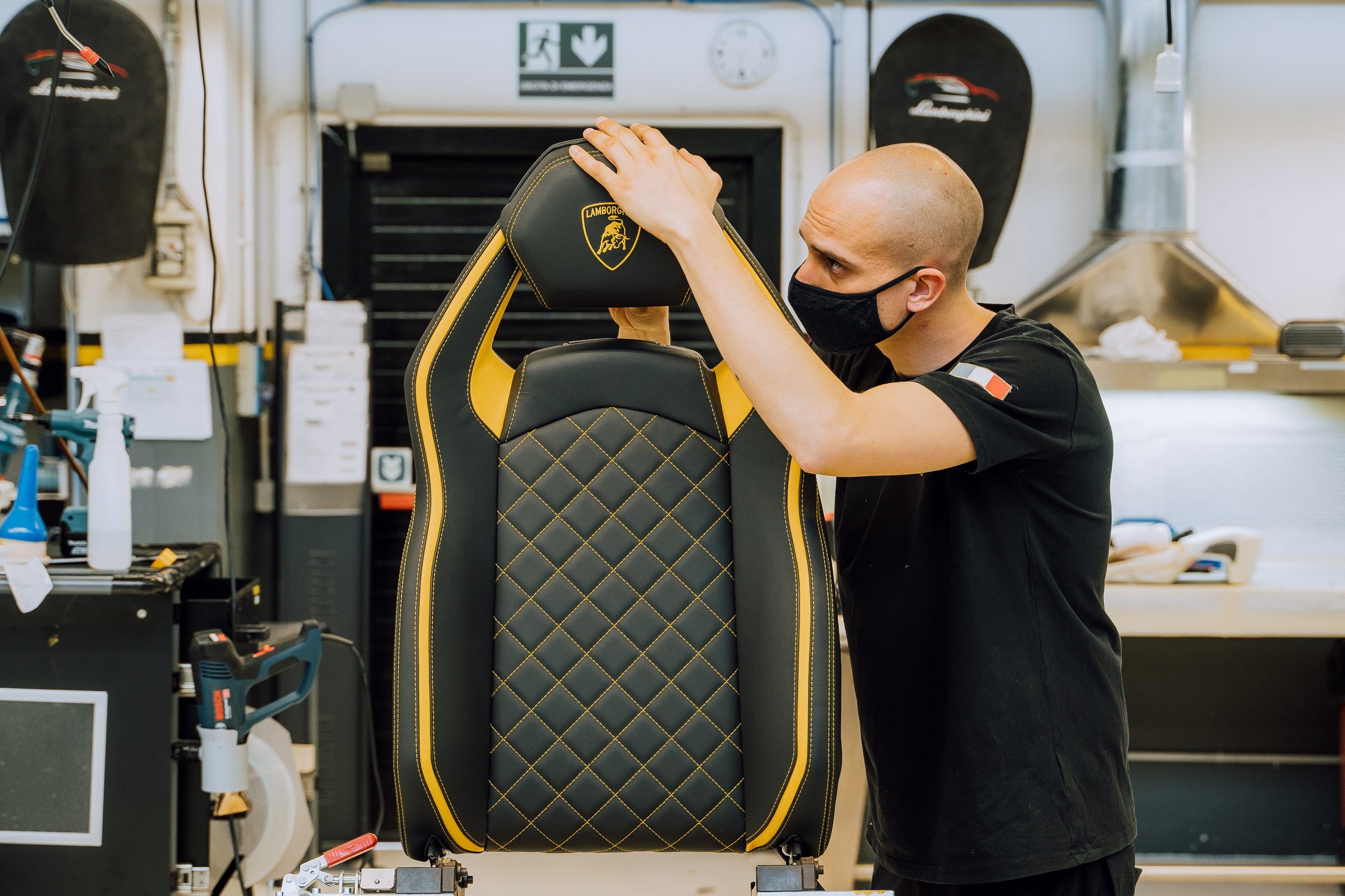
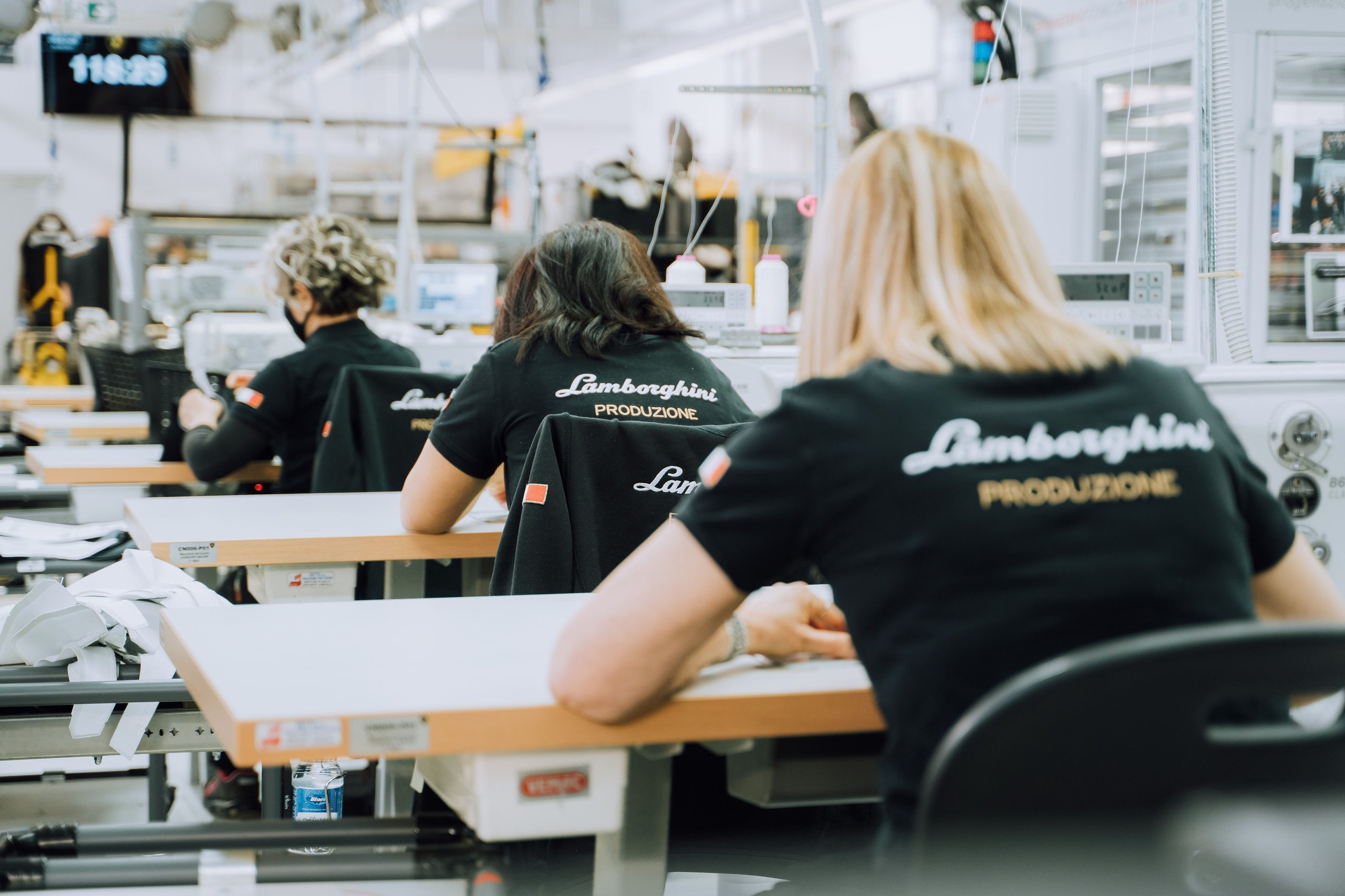
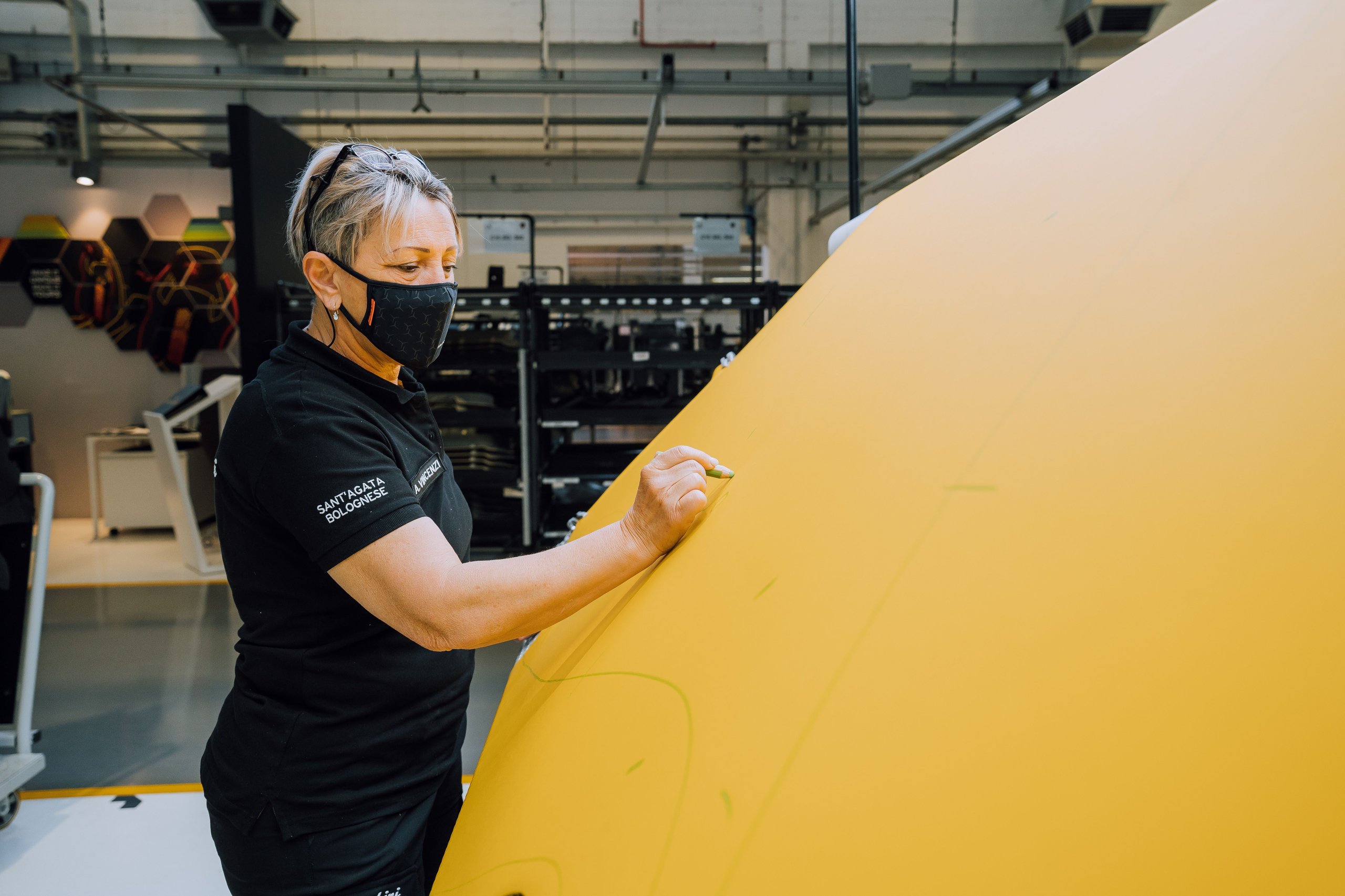
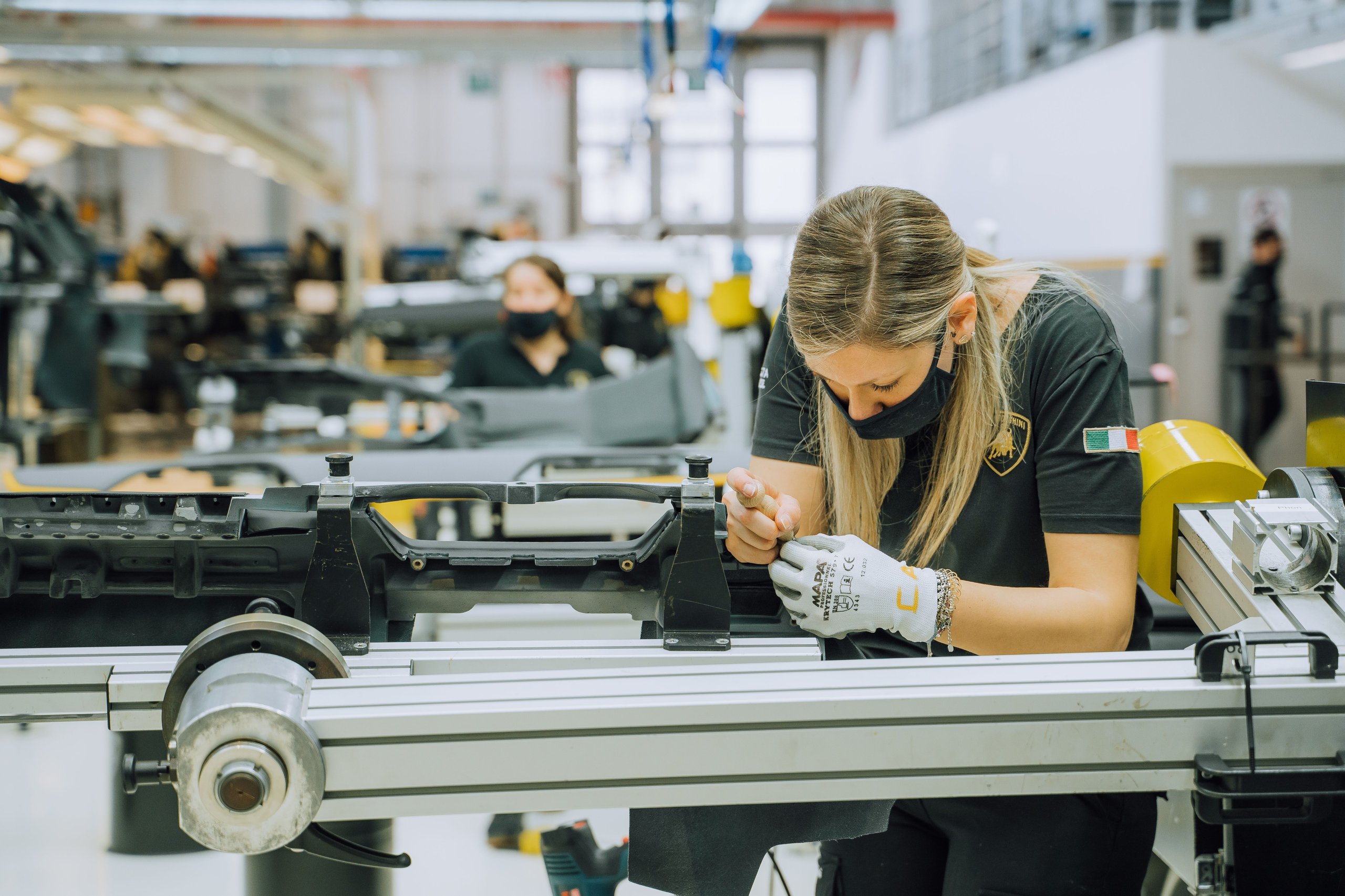
Walk through the images from the Sant’Agata plant and the link between workforce investment and product quality becomes tangible. Workers in branded Lamborghini production shirts operate specialized tooling on engine or chassis components with surgical precision. In the trim shop, an employee carefully inspects a large piece of yellow leather before it becomes part of an interior, while another operates a sewing machine stitching black and yellow material with visible spools of thread arranged behind the workstation. Every Ad Personam interior, every bespoke color-matched leather hide, every hand-finished carbon fiber element passes through the hands of workers whose training, morale, and job satisfaction directly affect the final product.
Lamborghini’s workforce draws from 35 countries, and the company actively pursues generational diversity through its cross-mentoring initiatives. The pandemic period offered a revealing stress test of the culture behind the certification: rather than furloughing staff, Lamborghini repurposed parts of its plant to produce face masks and medical visors, and collaborated with SIARE Engineering International Group to manufacture lung simulators. The company also launched the Lamborghini Learning Place e-learning platform and a Banca Ore Solidale program allowing employees to donate accrued vacation time to colleagues in need.
Those decisions during a crisis tell you more about a company’s relationship with its workforce than any annual award ever could. The certification simply confirms that the relationship is consistent, and consistency is what separates a workplace that retains talent through a generational technology shift from one that hemorrhages it.

A Lamborghini artisan expertly stitches black and yellow material on a sewing machine, creating precise upholstery. Image: Automobili Lamborghini.
How Lamborghini’s People Strategy Compares
No direct, apples-to-apples comparison of employee welfare programs exists across Lamborghini, Ferrari, McLaren, and Porsche. The specific curricula, parental benefits, and wellness initiatives at rival manufacturers are not publicly documented in the same detail. What can be said is that Lamborghini’s thirteen consecutive years of Top Employer certification and its first-place finish in the 2026 Randstad employer brand research represent a sustained, externally validated track record that few competitors in the luxury automotive segment can match with equivalent public evidence.
The practical implication for buyers is indirect but real. A supercar manufacturer competing for the same pool of composite materials engineers, hybrid powertrain specialists, and software developers as the broader Volkswagen Group, Ferrari, and the growing EV startup sector needs a compelling reason for top talent to choose Sant’Agata Bolognese. Lamborghini’s approach combines the emotional draw of building some of the most dramatic cars on the planet with concrete, contractual benefits that address the realities of modern working life. One report indicates the company is also experimenting with a work model incorporating flexibility and a shortened work week, a move that would be notable for any manufacturing operation, let alone one building low-volume supercars.
For prospective Lamborghini owners, the takeaway is straightforward: the company’s investment in its people is a leading indicator of build quality and innovation capacity. A workforce that stays, grows its skills, and feels supported produces better cars. The Revuelto’s three-motor hybrid system, the Temerario’s high-revving V8, and the Urus SE’s plug-in architecture all required Lamborghini to retrain or recruit specialists who did not exist in the company five years ago. The Top Employer streak is evidence that this transition is being managed with the same deliberateness Lamborghini applies to its engineering.

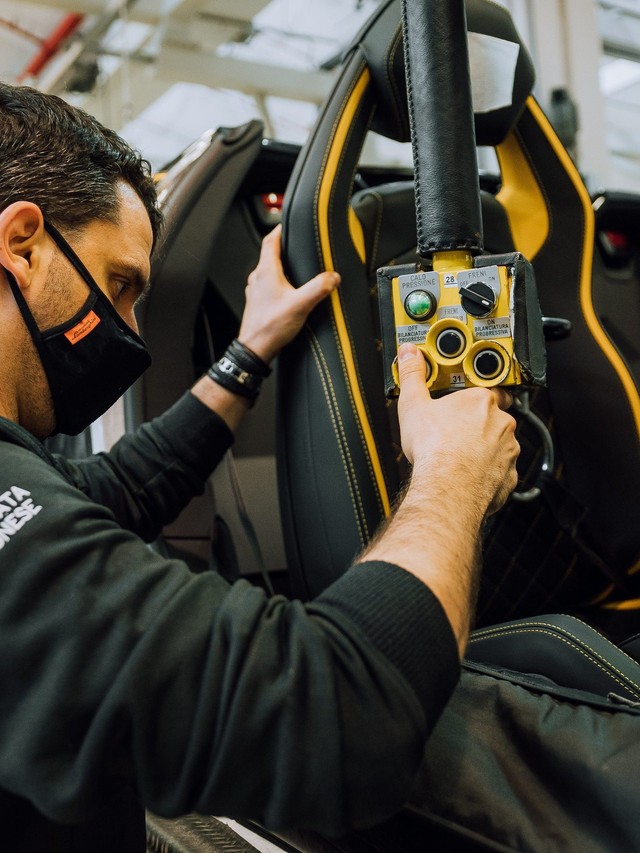
A Lamborghini technician precisely operates a specialized tool on a component during the assembly process. Image: Automobili Lamborghini.
Gallery