The Records That Built a Brand
Lamborghini recently curated a list of five records and firsts drawn from its back catalog, each tied to a model that changed the company’s trajectory. The Marzal, Miura, LM002, and Countach are all familiar to enthusiasts, but the particular achievements Lamborghini chose to spotlight tell a more revealing story than any individual spec sheet could. Together, they map the design gambles, engineering choices, and philosophical commitments that became permanent features of what people mean when they say “Lamborghini DNA.”
What makes the selection worth examining is what it says about priorities. Ferrari’s heritage narrative leans heavily on racing pedigree and lap times. Porsche’s centers on evolutionary refinement. Lamborghini’s chosen firsts are different in character: they involve radical aesthetics, youthful ambition, and a willingness to build things nobody asked for. Every one of these records connects directly to something you can see, feel, or experience in a Revuelto or Urus sitting on a dealer floor today. The thread running through all five is not speed or trophies. It is audacity.
The Marzal’s Glass Revolution and the Courage to Be Transparent
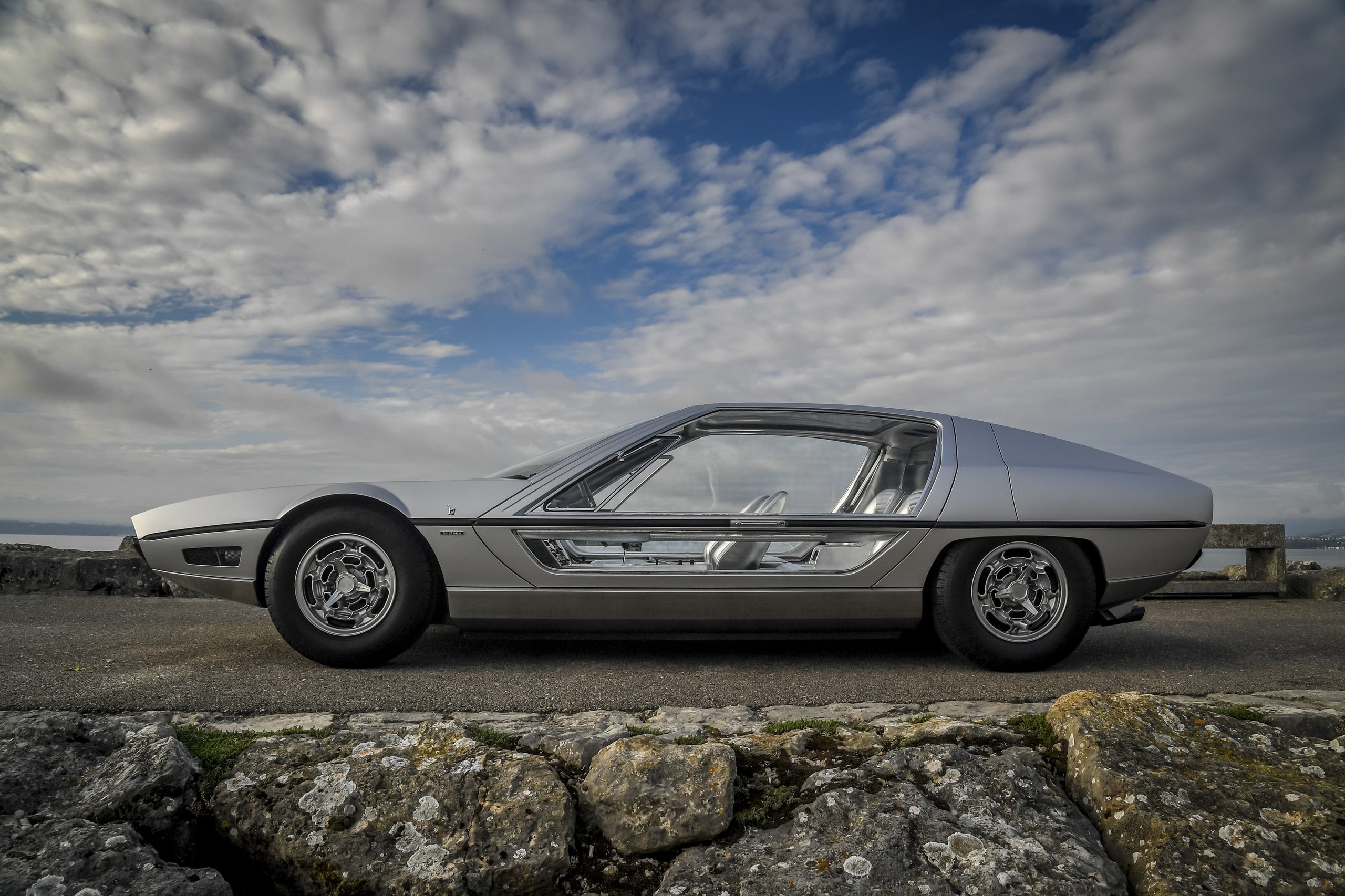
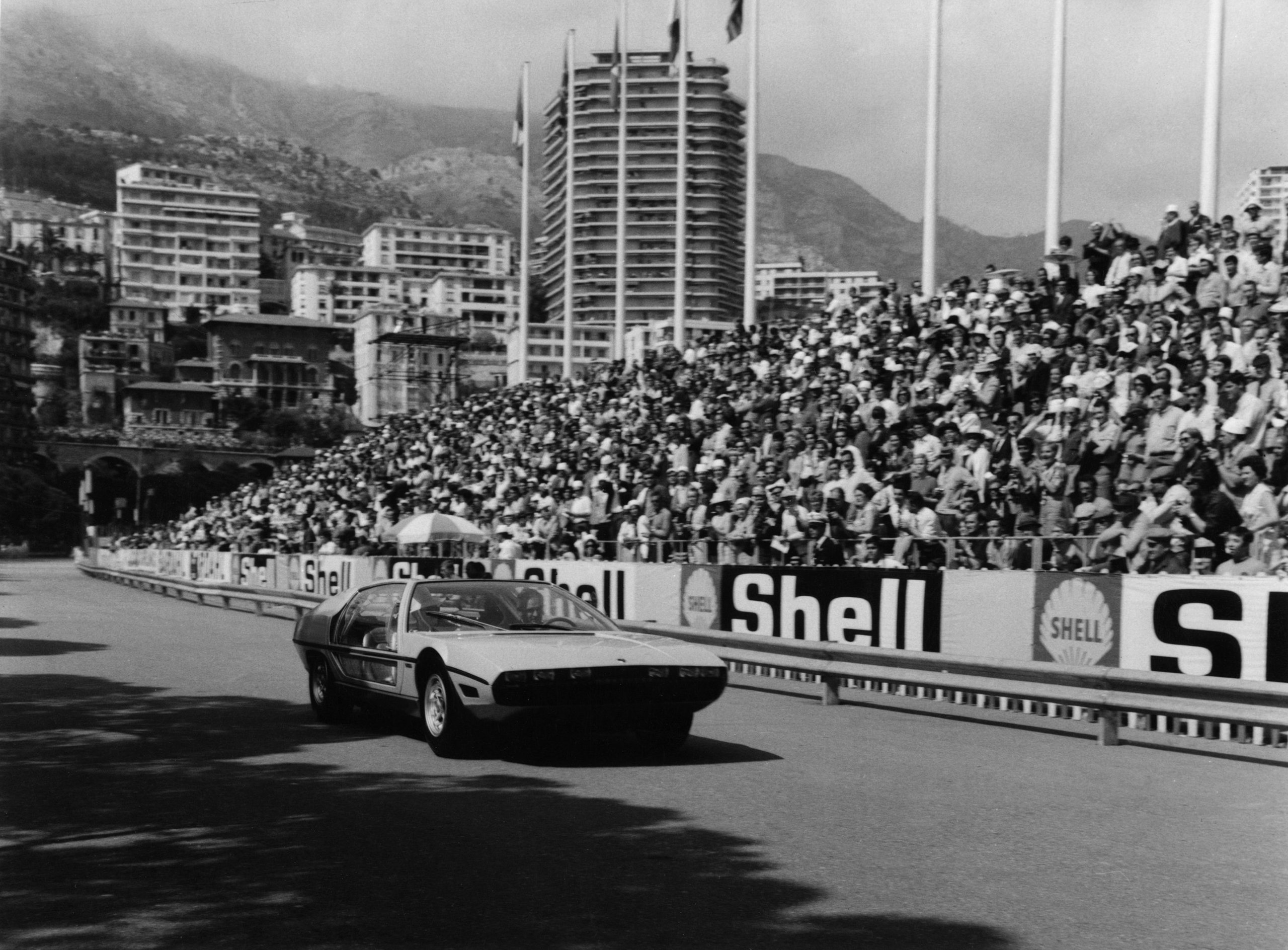
Lamborghini says the Marzal concept featured 4.5 square meters of glass surface area, stretching from its gull-wing doors through the roof, making it the car with the largest glass surface in history. Designed by Marcello Gandini for Carrozzeria Bertone, the Marzal was conceived as a four-seat grand tourer, but its real purpose was provocation.
The interior, entirely upholstered in silver-colored leather, looked like something pulled from a science fiction film set. Gandini treated the hexagon as the car’s organizing principle, repeating it across the dashboard, the rear window, and the console cutouts. That hexagonal motif would become a quiet but persistent signature in Lamborghini’s design vocabulary for decades, surfacing in everything from wheel designs to the instrument clusters of modern production cars.
The glass, though, is the point. In an era when most concept cars were exercises in aerodynamic enclosure, Gandini did the opposite: he opened the car up to the world. The Marzal’s transparent doors and roof made occupants part of the visual spectacle rather than hiding them behind sheet metal. It was impractical, thermally questionable, and absolutely unforgettable. That willingness to sacrifice convention for visual drama became a core Lamborghini trait. When you look at the way the Revuelto’s engine bay is displayed through its rear glass, or the way the Sián’s bodywork channeled light through transparent elements, you can trace the impulse back to this strange, beautiful concept sitting on a Mediterranean coastal road in the late 1960s.

The visionary Lamborghini Marzal concept car reveals its innovative design with all panels open on a dramatic coastal backdrop.
Average Age 29: The Team That Invented the Supercar
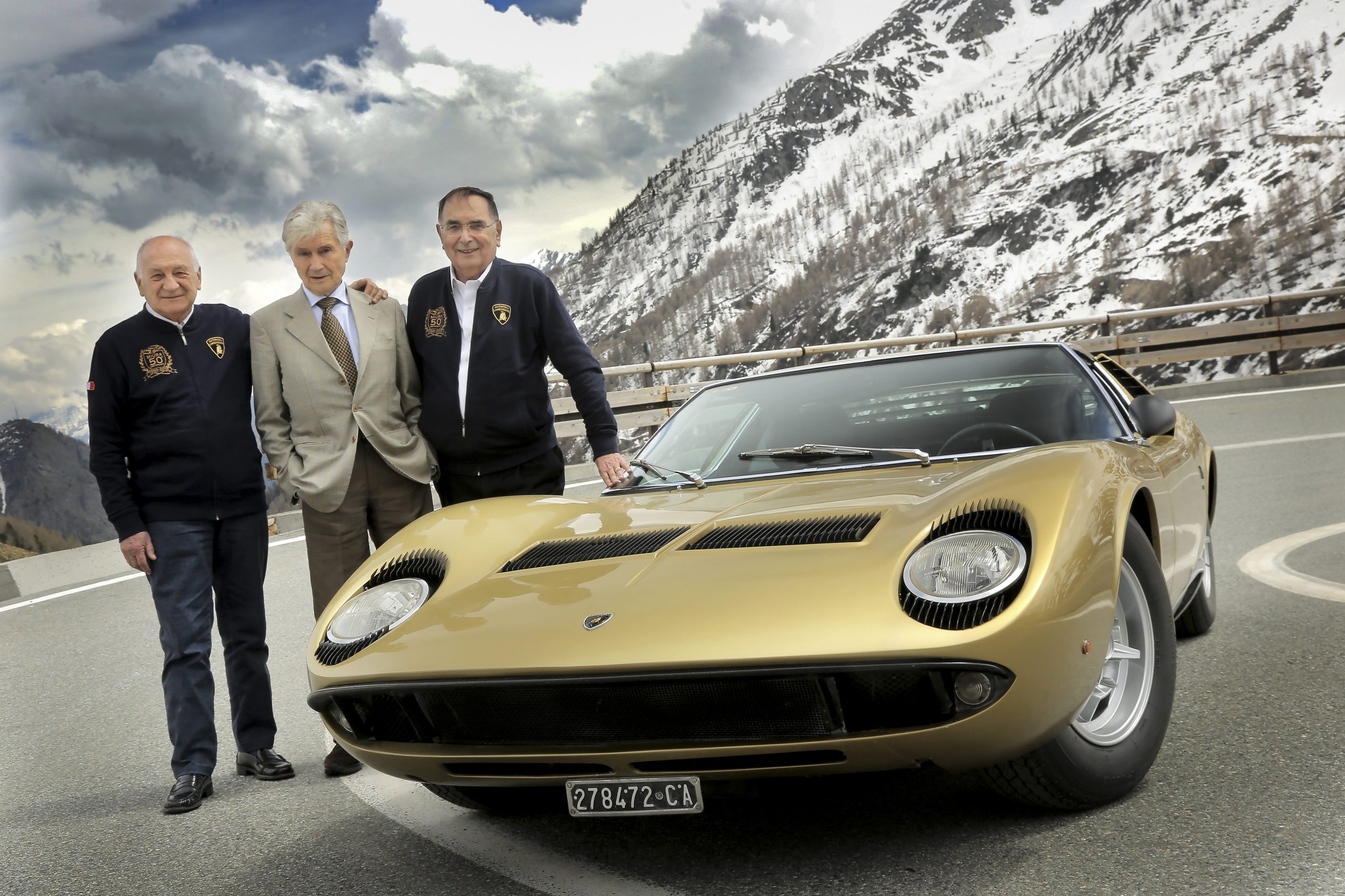
Ferruccio Lamborghini‘s decision to staff the Miura project with a team averaging 29 years old was not a feel-good anecdote. It was a strategic bet that paid off so spectacularly it reshaped the entire supercar category.
Lamborghini says the key figures included designer Marcello Gandini and test driver Bob Wallace, both 28, alongside chief engineer Gian Paolo Dallara and assistant engineer Paolo Stanzani, both 30. Every one of them went on to become a towering figure in automotive engineering and design. Dallara built a chassis empire. Gandini went on to design the Countach and, as widely reported, the Diablo. Bob Wallace became a legendary development driver whose instincts shaped how Lamborghini’s cars actually felt on the road, not just how they looked on paper.
Their youth mattered beyond biography. Young engineers tend to challenge assumptions that older teams accept as fixed constraints. The Miura’s transverse mid-mounted V12 layout was a radical departure from the front-engine GT formula that dominated the mid-1960s. A more experienced, more cautious team might have refined the existing 350 GT platform instead. Ferruccio’s willingness to trust unproven talent produced a car that essentially invented the modern supercar template. Ferrari, by contrast, built its identity around seasoned racing engineers with decades of competition experience. Both approaches produced legendary cars, but Lamborghini’s path was distinctly its own: hire brilliant people who do not yet know what they are supposed to be afraid of.

The bustling Lamborghini factory floor in the past, with Miura chassis and V12 engines ready for assembly.
105.5 Centimeters: The Miura’s Ground-Hugging Obsession
Lamborghini says the Miura stood just 105.5 cm tall, making it the lowest mass-produced car ever built. To put that in perspective, a standard dining table is roughly 75 cm high. The Miura barely clears it.
In the 1960s, low height was the primary visual language of speed. Designers understood that a car pressed close to the ground communicated velocity even standing still. The Miura took this further than anyone else dared in a production vehicle, and that extreme low stance was not purely aesthetic. It contributed to a lower center of gravity and a more aerodynamically efficient profile, both of which mattered on roads where the Miura was expected to perform.
This obsession with visual and mechanical lowness persisted through every subsequent flagship. The Countach, the Diablo, the Murciélago, the Aventador: each one kept the roofline as close to the pavement as engineering constraints would allow. The Revuelto continues the tradition. Lamborghini’s supercars look like they are trying to merge with the road surface, and that visual identity started with the Miura’s 105.5 cm commitment. Porsche’s 911, by contrast, carries a taller, more upright silhouette that communicates a different set of values: everyday usability, rear-engine balance, evolutionary continuity. Lamborghini chose drama over practicality from the beginning, and the Miura’s record-setting height is where that choice became permanent.

Detailed technical blueprint showcasing the iconic design and dimensions of the Lamborghini Miura P400.
The LM002: Building a Category Before Anyone Knew It Existed
Lamborghini says the LM002 was the first Super SUV in history, and the claim is difficult to argue with. Unveiled at the Brussels Motor Show in 1986, the LM002 started life as a military vehicle project before evolving into something the luxury market did not know it wanted: a V12-powered off-road truck with the heart of a Countach.
The numbers tell part of the story. Lamborghini says the LM002 packed a 5167 cc engine delivering 450 HP at 6800 rpm, wrapped in a body of aluminum and fiberglass. All-wheel drive, a two-speed transfer case with central locking differential, and the ability to tackle slopes up to 120 percent made it genuinely capable off-road. A total of 300 units rolled out of Sant’Agata between 1986 and 1992.
More important than the specs, though, is what the LM002 proved about the brand’s identity. Lamborghini demonstrated that its philosophy of excess and performance was not confined to low-slung two-seaters. The same engineering ambition that produced the Miura could be applied to a completely different vehicle category. That insight lay dormant for decades until the Urus arrived and became the company’s best-selling model. Lamborghini describes the Urus as the direct heir of the LM002 and the first super SUV to be mass-produced. Collectors on enthusiast forums often note that clean LM002 examples now command serious money, partly because the Urus success story made buyers appreciate the original’s pioneering role.
No other supercar manufacturer attempted anything comparable in the 1980s. Ferrari stayed in its lane. Porsche’s closest equivalent, the Cayenne, would not arrive until 2002. Lamborghini saw the opportunity first, built the proof of concept, and then waited three decades for the market to catch up.

The legendary LM002 and the modern Urus drive together on a snowy mountain road, bridging generations of Lamborghini SUVs.
Scissor Doors: The Practical Fix That Became a Symbol
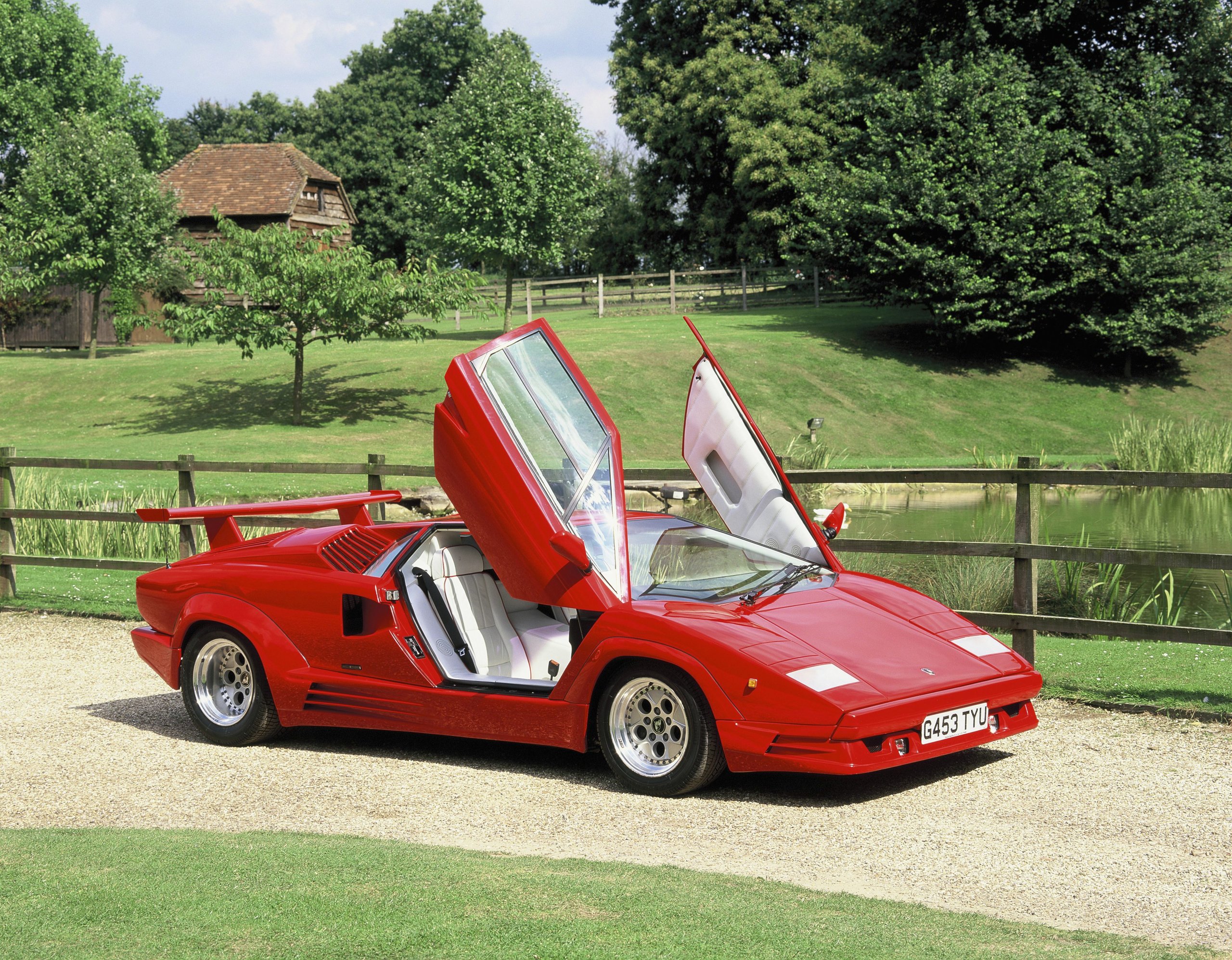
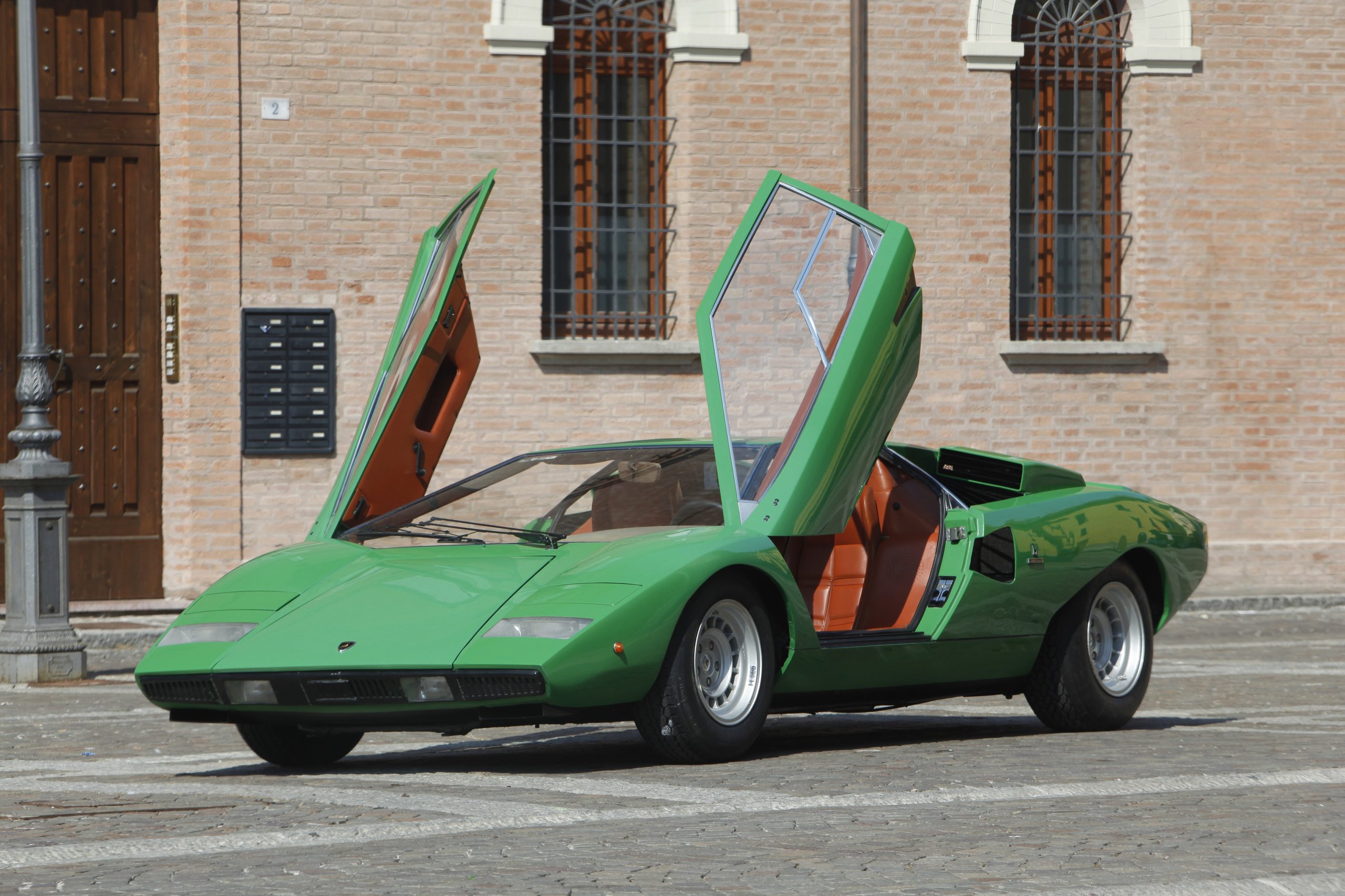
Lamborghini says the Countach was the first production car equipped with vertically opening scissor doors, designed by Marcello Gandini in 1971. The origin story is more interesting than most people realize, because the scissor door was not born from vanity. It was a solution to a real problem.
The Countach’s extreme width and limited rearward visibility made conventional doors impractical. Long, heavy doors could not swing open in tight parking spaces, and the driver could barely see what was behind the car. Lamborghini says the upward-opening mechanism allowed the driver to lean out and look rearward when reversing, solving both the visibility and the clearance problem simultaneously. Function came first. The theatricality was a bonus.
That functional origin is easy to forget because the scissor door became the single most recognizable design element in Lamborghini’s visual identity. Vertically opening doors now define every V12 flagship the company builds. From the Diablo through the Murciélago, Reventón, Veneno, Centenario, and the entire Aventador range, Lamborghini says the feature became an essential characteristic of its DNA on 12-cylinder models. The Revuelto carries the tradition forward.
Other manufacturers have experimented with dramatic door mechanisms. McLaren uses dihedral doors. Koenigsegg developed its own rotating system. None of these became synonymous with the brand the way scissor doors define Lamborghini. When a child draws a supercar with doors that open upward, they are drawing a Lamborghini. That kind of cultural penetration started with Gandini solving a parking problem on a cobblestone street in Turin.

The striking green Lamborghini Countach LP500 prototype showcases its revolutionary design with an open scissor door.
Why These Five Records Still Matter
Lamborghini’s decision to spotlight these particular achievements, rather than lap times or horsepower milestones, reveals something important about how the company understands its own competitive position. Ferrari sells racing heritage. Porsche sells engineering refinement. Lamborghini sells the idea that a car should be an event: visually confrontational, emotionally overwhelming, and unapologetically different from anything else on the road.
All five records reinforce that positioning. The Marzal’s glass excess said transparency could be beautiful. The Miura’s young team proved that ambition could outperform caution. The Miura’s impossible low stance made supercars look like they belonged on the ground, not above it. The LM002 showed that Lamborghini’s philosophy could survive transplantation into an entirely new vehicle category. And the Countach’s scissor doors turned a practical fix into the most iconic entrance in automotive history.
For current and prospective owners, the practical takeaway is straightforward: these are the reasons your car looks, feels, and behaves the way it does. The Urus exists because the LM002 proved the concept. The Revuelto’s doors open upward because Gandini needed to see behind a Countach. The hexagonal design cues scattered across every current Lamborghini interior trace back to the Marzal’s silver-leather cockpit. Understanding these connections makes ownership richer, and it explains why Lamborghini continues to occupy a space in the supercar market that no competitor can replicate simply by matching horsepower figures.
As Lamborghini navigates its transition toward hybridization and, eventually, electrification, these foundational choices become even more relevant. Powertrains will change. The willingness to build something nobody expected, something that looks like nothing else on the road, is the part of the DNA that needs to survive the transition intact.

The powerful orange Lamborghini Aventador LP 700-4 commands attention with its signature scissor doors open.
Gallery