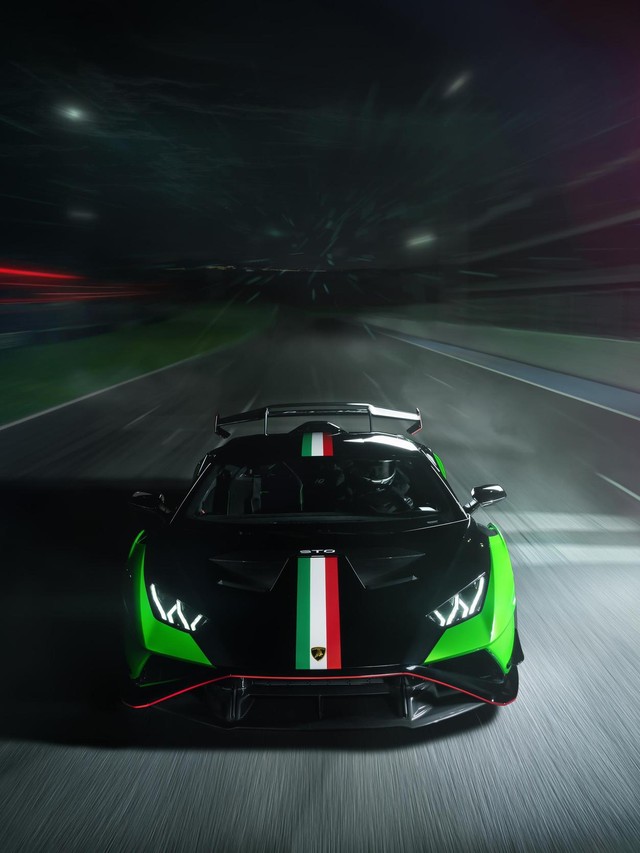
The Green Flag Drops: Super Trofeo Europe 2020 Kicks Off at Misano
After months of silence since the 2019 World Finals at Jerez de la Frontera, the Lamborghini Super Trofeo Europe championship opens its 2020 campaign at Misano World Circuit Marco Simoncelli on August 7 through 9. The weekend features two 50-minute races: the first under lights at 8:45 PM on Saturday, August 8th, the second at 1:20 PM CEST on Sunday. Both include a mandatory pit stop, which means driver pairings and pit strategy will matter from the very first green flag.
Twenty-three driver line-ups are confirmed across the Pro, Pro-Am, Am, and LB Cup classes, a grid that blends returning champions with genuine newcomers. A condensed five-round calendar (Misano, Nürburgring, Barcelona, Spa-Francorchamps, and Paul Ricard) compresses the championship drama into tighter margins. Every weekend counts more than usual, and Misano’s tight, technical layout will reward precision over brute straight-line speed.
But the real story at Misano is not simply that the Super Trofeo is back. It is that this grid of identically prepared Huracán Super Trofeo EVOs, running nose to tail on a compressed schedule, reveals exactly what Lamborghini’s one-make series does for the brand and why Sant’Agata Bolognese keeps investing in it. From talent development to engineering data to customer loyalty, every element of the 2020 season reinforces a single strategic purpose.
More Than a Race: Lamborghini’s Strategic Playbook for Motorsport
One-make racing series strip away the engineering arms race that defines Formula 1 or prototype endurance racing and replace it with something arguably more revealing: pure driver skill and team execution, measured against identical machinery. For Lamborghini, the Super Trofeo fulfills several strategic roles simultaneously, and understanding those roles explains why the program endures.
The series functions first as a talent pipeline. Drivers who prove themselves in Super Trofeo often graduate to GT3 competition, where Lamborghini fields the Huracán GT3 EVO2 in international series like GT World Challenge and IMSA. The progression from one-make racing to multi-manufacturer GT competition mirrors what Ferrari accomplishes with its Ferrari Challenge series and what Porsche does through its Carrera Cup ladder. The difference is in scale and philosophy: Lamborghini’s grid tends to be more intimate, which creates closer racing and arguably more visibility for individual drivers trying to catch the eye of factory-supported GT programs.
Less discussed but equally important, the Super Trofeo serves as a rolling laboratory for Squadra Corse. Running hundreds of identical cars across three continental championships (Europe, Asia, and North America) generates enormous data on component durability, suspension behavior, and aerodynamic performance in race conditions. That data feeds directly into the development of Lamborghini’s GT3 program and, increasingly, into the road car engineering loop.
The strategic significance sharpens when you consider what Lamborghini revealed at the 2025 Goodwood Festival of Speed. Multiple sources report that the Temerario GT3, the brand’s first competition car fully designed, developed, and built in-house, debuted there. Every lesson learned from running the Huracán platform in Super Trofeo competition over the past decade feeds into that in-house capability. The 2020 season, then, represents one of the final chapters of the Huracán’s racing story, even if nobody on the Misano grid knew it at the time.
The Huracán Super Trofeo EVO on Track
The car at the center of all this is a proper race machine. The Huracán Super Trofeo EVO strips away everything that makes a road-going Huracán livable and replaces it with a full roll cage, Öhlins racing dampers, a sequential six-speed X-Trac gearbox, and a MoTeC engine management system. The 5.2-liter naturally aspirated V10 produces 620 horsepower at 8,250 RPM, and the car sits at a dry weight of 1,270 kg. The resulting power-to-weight ratio puts it firmly in serious racing territory.
Because every car on the grid runs identical specifications, the series eliminates the variable that dominates most motorsport categories: engineering advantage. What remains is driver talent, team strategy during mandatory pit stops, and the ability to extract every tenth of a second from setup changes within the allowed regulations. For spectators, this means closer racing. For drivers, it means nowhere to hide.
The V10’s naturally aspirated character deserves a moment of appreciation. At 8,250 RPM, the engine produces a sound that no turbocharged replacement will replicate, and the linear power delivery rewards a driving style built on precision throttle application rather than managing boost thresholds. As Lamborghini transitions its road car lineup toward hybrid and turbocharged architectures, the Super Trofeo EVO represents one of the last competitive platforms where that pure, atmospheric V10 experience remains central to the action. According to Autoblog, a 2020-spec Huracán Super Trofeo EVO with only 84 miles recently appeared on the collector market, underscoring how even unused examples of these race cars now carry collector significance.
That collector interest circles back to the strategic point: the Super Trofeo does not just produce racing results. It produces cars, stories, and driver careers that sustain the Lamborghini brand long after the checkered flag falls.
Veterans and Rookies: The Drivers and Teams to Watch
The 2020 grid reads like a casting call designed to produce maximum on-track drama, and the mix of experience and ambition illustrates how the Super Trofeo pipeline works in practice.
In the Pro class, Imperiale Racing fields Super Trofeo veteran Vito Postiglione alongside his 2019 teammate Kikko Galbiati. The pair claimed four race wins last season but lost the title at the final round, which means they arrive at Misano with unfinished business and zero patience for a slow start. They face competition from Oregon Team, one of two new outfits joining the grid. Former single-seater driver Dorian Boccolacci partners with Kevin Gilardoni in the Pro class entry, a pairing that combines open-wheel racecraft with GT experience. Bonaldi Motorsport’s Dean Stoneman, another series newcomer, brings a pedigree that includes Formula Renault 3.5 and Formula 2 experience. Stoneman’s presence illustrates exactly how the Super Trofeo functions as a crossroads: accomplished single-seater drivers who want to build careers in GT racing find this series a natural entry point.
The Pro-Am class features its own headline act. Former champion Miloš Pavlović, who won the European title in 2014, returns at Target Racing alongside promising young Mexican driver Raul Guzman. VS Racing’s Polish partnership of Karol Basz and Andrzej Lewandowski arrive fresh off a World Finals victory, looking to add the European Pro-Am crown to their collection.
Leipert Motorsport commands the largest operation on the grid with four cars spread across multiple classes, including Finnish duo Mikko Eskelinen and Elias Niskanen in Pro-Am and Luxembourg’s Yury Wagner with Panagiotis Spiliopoulos in Am. Monaco-based GSM Racing, the other new team, brings Venezuelan Jonathan Cecotto alongside Patrick Liddy, who earned his reputation in Super Trofeo North America. Vincenzo Sospiri’s VS Racing and Konrad Motorsport both return after time away, rounding out a grid that spans at least eight nationalities and a wide range of racing backgrounds.
The Am class and LB Cup may attract less headline attention, but they serve a purpose that matters deeply to Lamborghini’s business model. These categories provide a competitive home for gentleman drivers and aspiring racers who want genuine wheel-to-wheel competition in a professionally organized championship. Autovitesse’s Cedric Leimer returns in Am, while Hans Fabri takes another shot at the LB Cup title with Imperiale Racing. Every car on this grid represents a customer who bought into the brand’s motorsport ecosystem, not just a road car. That customer loyalty, renewed season after season, is the commercial engine that keeps the entire Super Trofeo program viable.
The Bigger Picture: V10 Racing Legacy and What Comes Next
Viewed in isolation, the 2020 Super Trofeo Europe season opener is a race weekend. Viewed in context, it crystallizes everything the series has meant to Lamborghini over the past decade.
The Huracán platform, in both road and racing forms, carried Lamborghini’s naturally aspirated V10 tradition through an era of rapid industry change. The Super Trofeo series gave that engine its purest competitive expression, stripped of road-car compromises and judged purely on lap times. With the Temerario now replacing the Huracán in Lamborghini’s road car lineup and the Temerario GT3 marking the brand’s first fully in-house competition car, the Super Trofeo’s future will eventually pivot to a new platform, a new engine architecture, and likely a hybrid powertrain.
For teams and drivers who built their programs around the Huracán’s characteristics, that transition will mean adapting to an entirely new powerband, different weight distribution, and the complexities of turbo management in wheel-to-wheel racing. The skills honed in the current V10 era, precise throttle modulation, exploiting a linear power curve, managing tire degradation without electronic assists common on road cars, will translate, but the character of the racing will change.
Lamborghini has not announced when the Super Trofeo will transition to a new platform or what that car will look like. What the 2020 season confirms is that the Huracán EVO remained a compelling and competitive racing machine through the end of its competitive life, a foundation solid enough to support three continental championships and a World Finals that regularly draws capacity grids. The talent pipeline kept flowing, the engineering data kept accumulating, and the customer base kept growing. That is the real measure of a one-make series, and it is why the green flag at Misano matters well beyond the grid.
How to Follow the Action
Both Misano races will be streamed live on the Lamborghini Squadra Corse YouTube channel and Facebook page, free of charge. For a series that runs on some of Europe’s finest circuits, the accessibility of the broadcast stands in welcome contrast to the increasingly fragmented world of motorsport streaming rights. The full 2020 calendar runs through five rounds:
| Round | Venue | Date |
|---|---|---|
| 1 | Misano Adriatico | August 7-9 |
| 2 | Nürburgring | September 4-5 |
| 3 | Barcelona | October 9-11 |
| 4 | Spa-Francorchamps | October 20-24 |
| 5 | Circuit Paul Ricard | November 13-15 |
Five rounds, ten races, and a compressed timeline that guarantees the championship fight will stay tight from Misano to Paul Ricard. For anyone following Lamborghini’s motorsport story, this season offers one of the last opportunities to watch the naturally aspirated V10 compete in anger across Europe’s best circuits. Bookmark the Squadra Corse channel, set a reminder for Saturday night’s race under lights, and pay attention to the Pro class battle between Postiglione, Stoneman, and Boccolacci. That rivalry alone will be worth the stream.
Gallery


