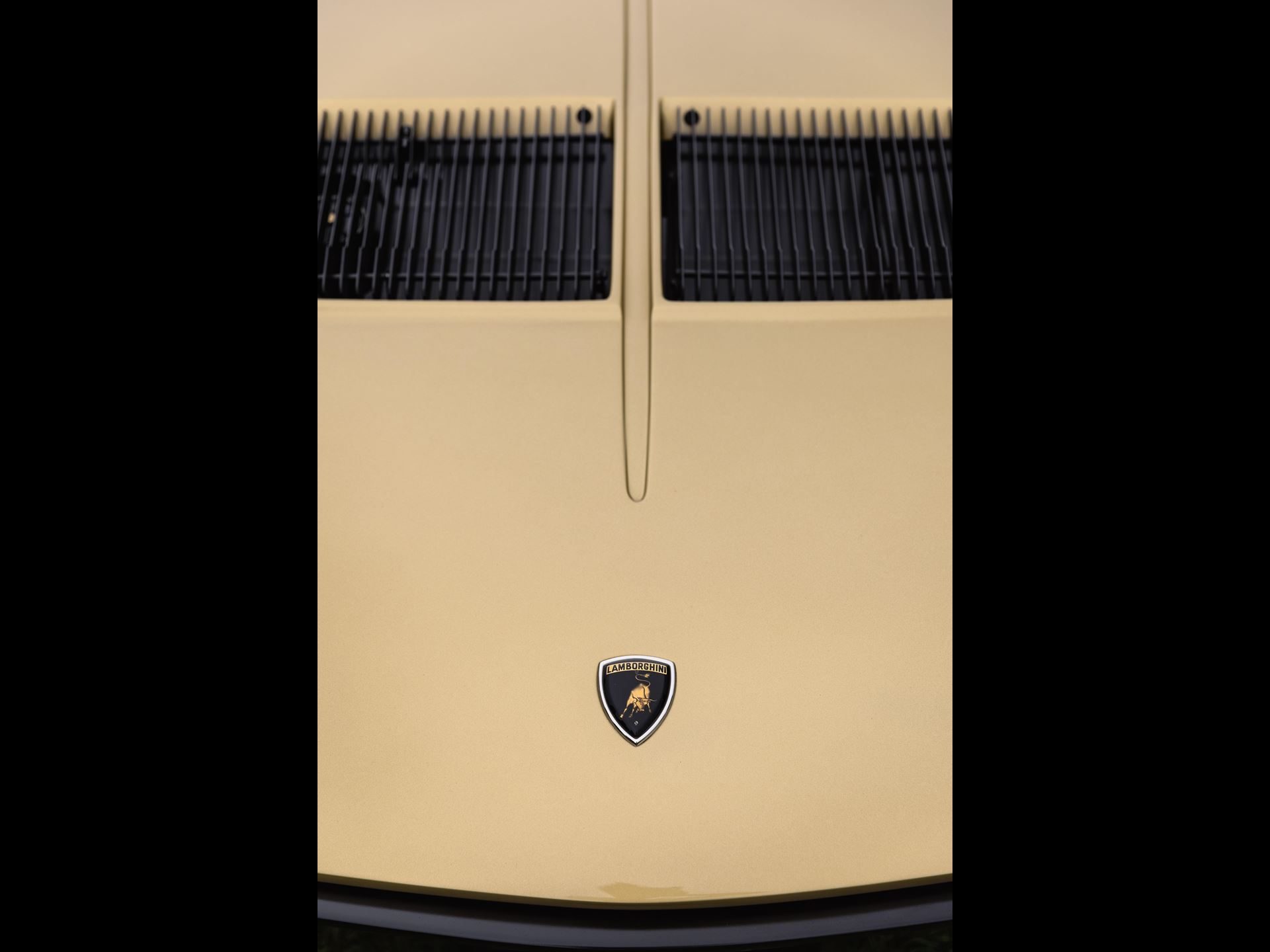
The Lamborghini Lounge Monterey: A Private Stage for the Temerario
- Lamborghini turned a private Monterey villa into a VIP brand experience centered on the all-new Temerario.
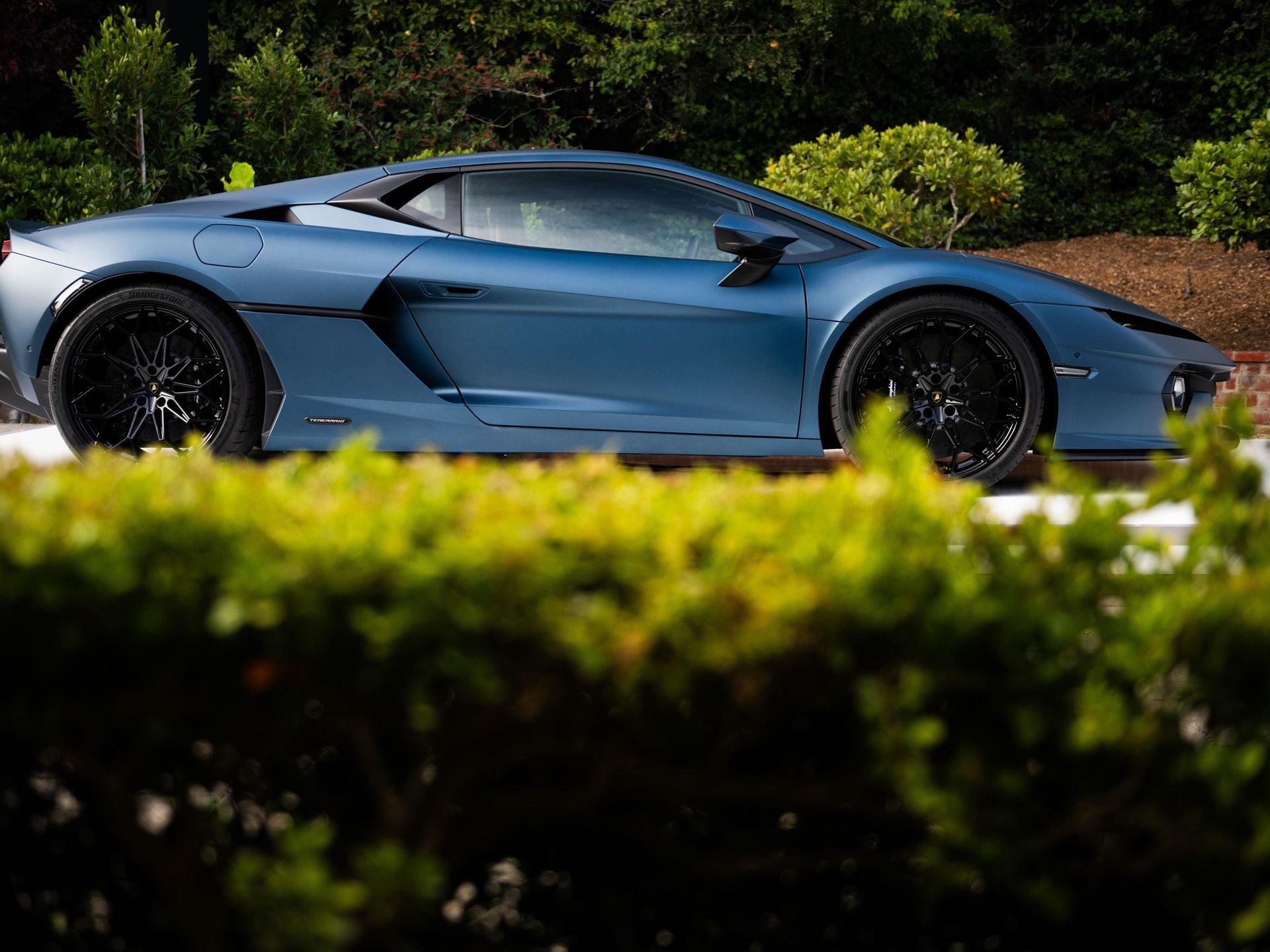
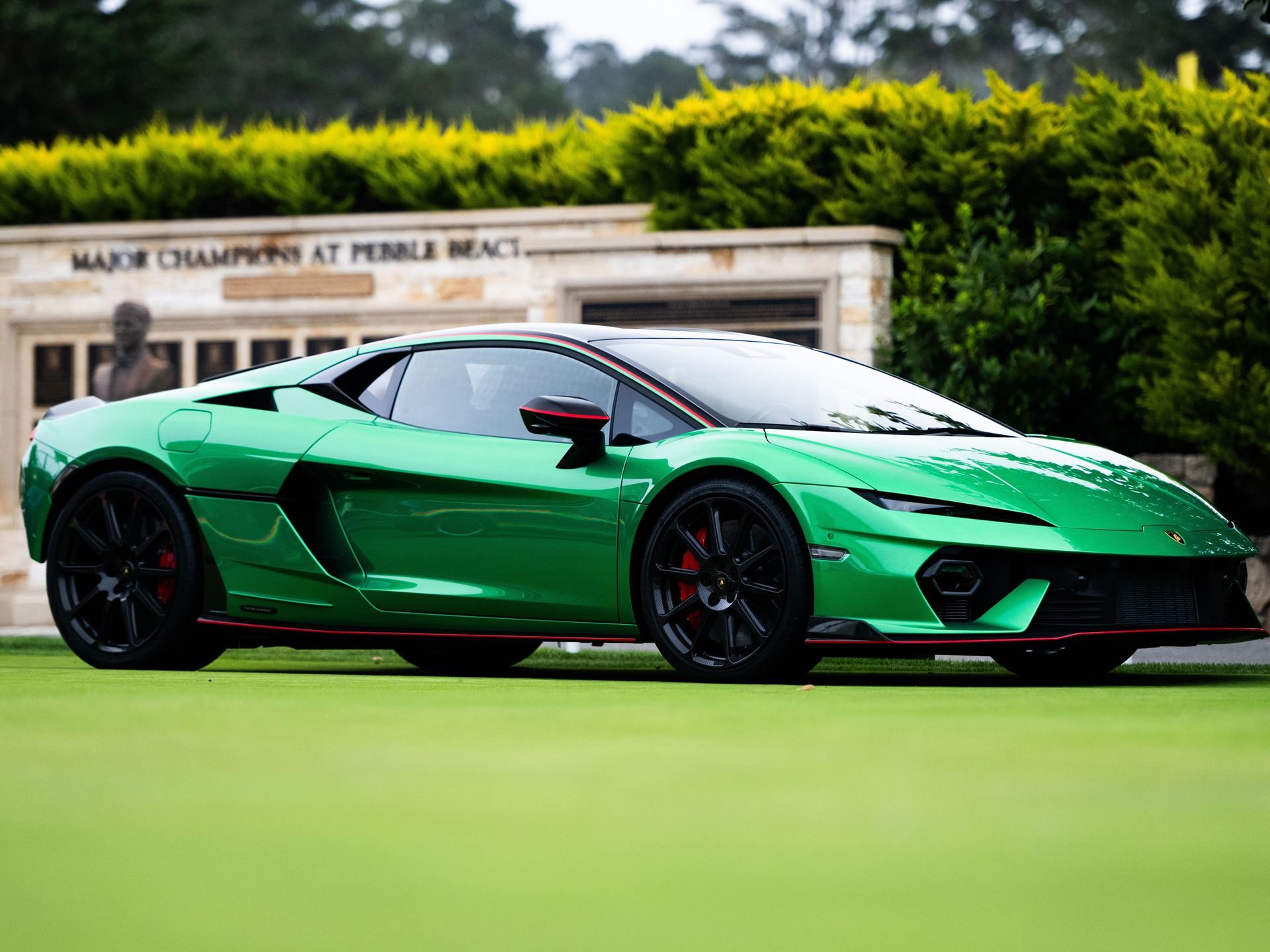
- The Huracán successor appeared in two new launch colors, Blu Marinus and Verde Mercurius, alongside a track-focused Alleggerita package.
- Every current hybrid Lamborghini was on display, making the Lounge a comprehensive statement about the brand’s electrified direction.
Lamborghini did not simply park the Temerario on a turntable and call it a day. For Monterey Car Week 2024, the company converted a private villa into what it called the Lamborghini Lounge Monterey, a controlled environment where VIP guests could spend time with the new car, explore a mixed-reality display of its aerodynamics and engine architecture, and absorb the broader message that its entire lineup now runs on some form of hybrid power.
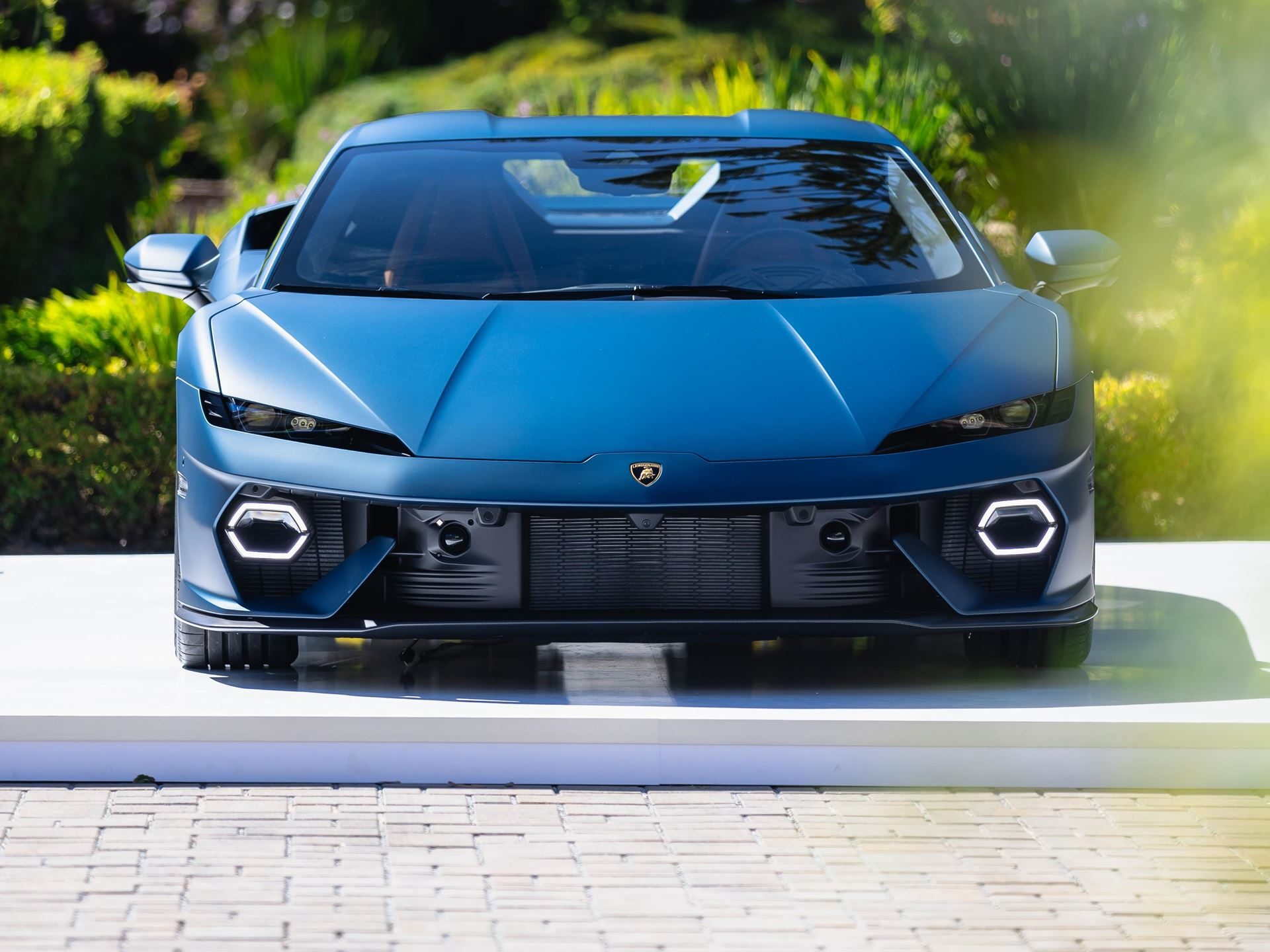
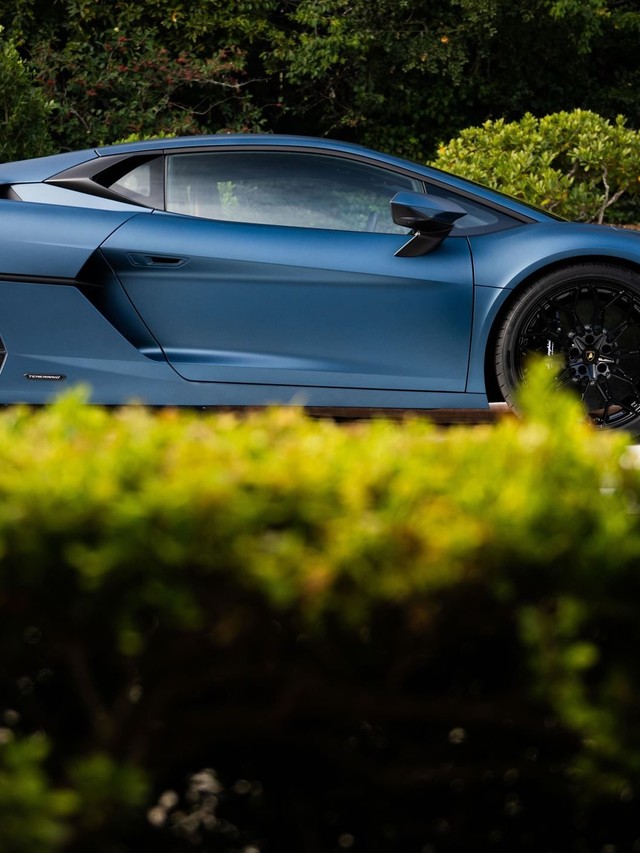
The Temerario occupied the center of that message. Shown in two dedicated launch colors, Blu Marinus (a deep matte blue visible in event imagery) and Verde Mercurius (green), the car also appeared with its optional Alleggerita lightweight package, which Lamborghini describes as aimed at customers more inclined to track driving. Pairing new colors with a track-oriented option at a lifestyle event tells you something about how Lamborghini sees the Temerario buyer: someone who wants both the spectacle and the substance.
This kind of staging matters more than it might seem. Monterey Car Week draws the exact clientele Lamborghini needs to convert: collectors and ultra-high-net-worth enthusiasts who already own competing brands and evaluate cars as much by the experience surrounding them as by the spec sheet. Hosting them in a private villa rather than a convention booth is a deliberate choice, one that Ferrari and McLaren also make in various forms at Pebble Beach, but that Lamborghini leaned into heavily by filling the space with its complete hybrid portfolio.

What the Temerario Actually Is: Lamborghini’s Hybrid V8 Successor to the Huracán
Strip away the event staging and the Temerario is a straightforward proposition with enormous implications. It replaces the Huracán, which means it fills the role of Lamborghini’s most accessible mid-engine supercar, the car that accounts for the bulk of the brand’s volume and introduces many owners to Sant’Agata Bolognese for the first time.
The powertrain shift is the headline. The Huracán’s naturally aspirated V10 is gone, replaced by a hybrid V8 system that Lamborghini says produces approximately 907 horsepower. The V8 reportedly revs to 10,000 rpm, a figure clearly chosen to answer the obvious enthusiast concern: will a turbocharged hybrid feel as visceral as the screaming V10 it replaces? A 10,000-rpm redline is an engineering statement as much as a performance one, signaling that Lamborghini engineered this motor to deliver the kind of top-end drama that defined the Huracán, even if the soundtrack and delivery will inevitably differ.
At Monterey, Lamborghini positioned the car as what it called a “new benchmark in the super sports car segment,” language worth attributing directly to the company rather than accepting at face value. Whether the Temerario earns that label will depend on how it drives, how it sounds at full tilt, and how it competes against the Ferrari 296 GTB and McLaren Artura, both of which occupy similar hybrid territory. What the showcase confirmed is the ambition: Lamborghini wants this car to be the definitive answer in its class, not a compromise forced by emissions regulations.
For prospective buyers, several critical details remain unconfirmed. Lamborghini did not announce pricing at Monterey, nor did it specify a delivery timeline for U.S. customers. The Alleggerita package, while clearly positioned as a track-oriented option, lacks published details on exact weight savings, suspension changes, or aerodynamic modifications. These gaps will matter enormously to anyone placing an order, and they remain open questions as of this event.

A Full Hybrid Lineup on One Lawn: Urus SE, Revuelto, and SC63
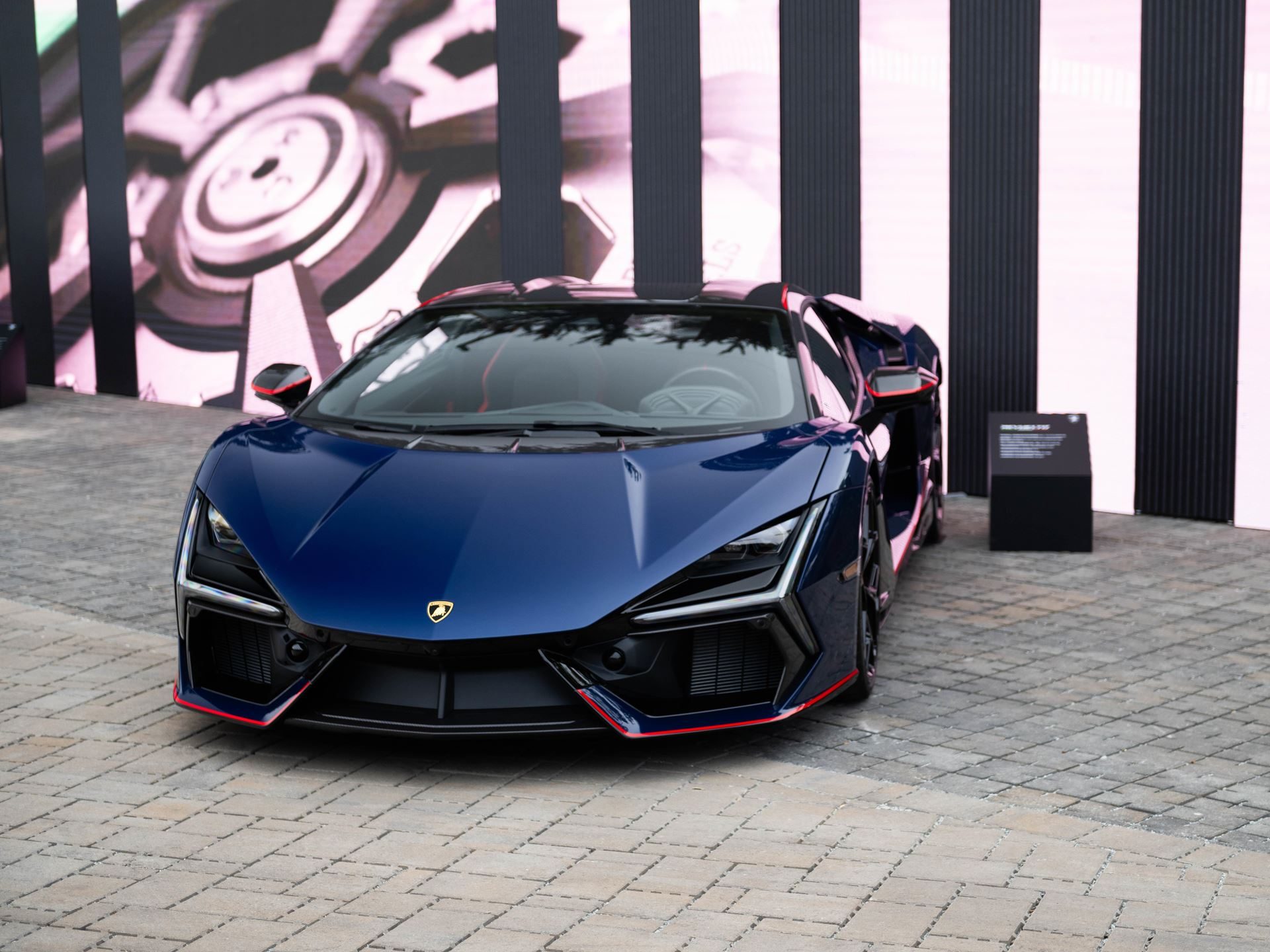
Surrounding the Temerario with the rest of the hybrid range was the Lounge’s most effective piece of theater. Lamborghini also displayed the Urus SE, its plug-in hybrid Super SUV, and the Revuelto, the 1,015 CV V12 hybrid flagship. Placing all three production hybrids together was a visual argument that needed no caption: every Lamborghini you can buy now carries some form of electrification.
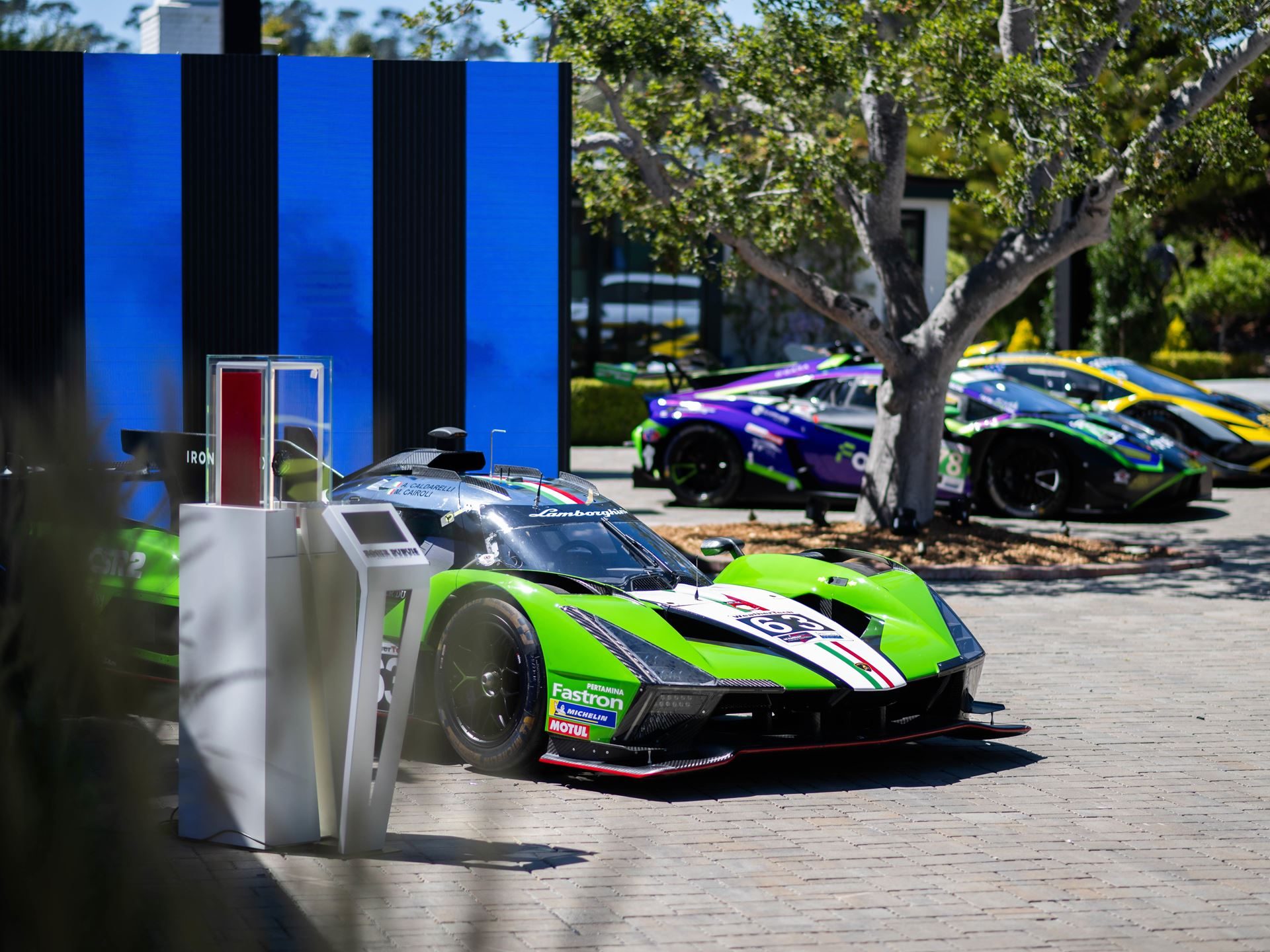
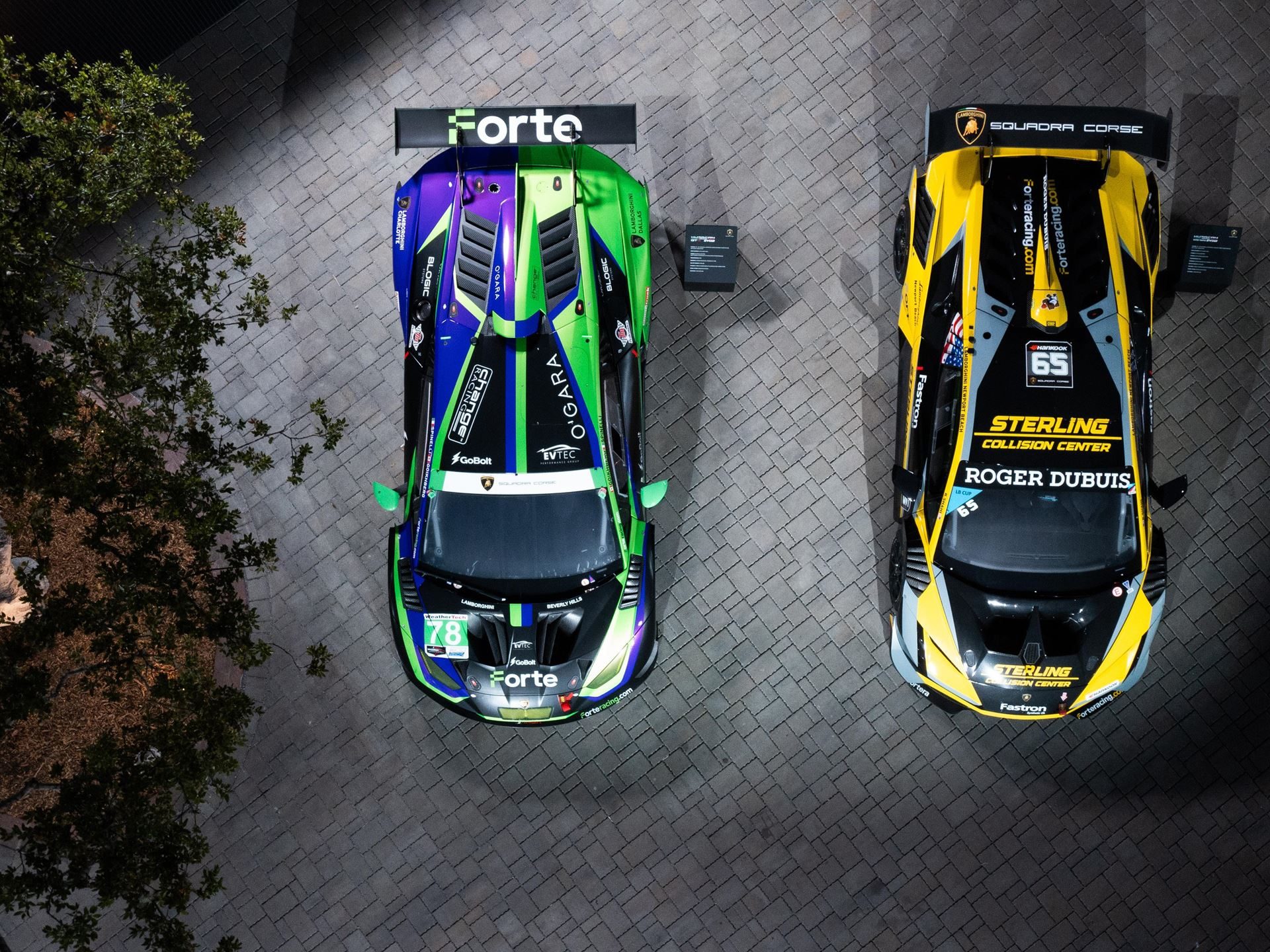
Lamborghini Squadra Corse added a motorsport layer with three race machines: the SC63 hybrid prototype (which competes in both the FIA World Endurance Championship and IMSA WeatherTech SportsCar Championship), the Huracán GT3 EVO2, and the Huracán Super Trofeo EVO2. The SC63 is particularly relevant context for the Temerario because it represents Lamborghini’s first hybrid race car. Showing it alongside the road car reinforced the idea that hybrid technology is not a concession at Sant’Agata but a performance tool being developed simultaneously for the road and the track.
Guests at the Lounge could also experience a new collaboration with Italian audio brand Sonus faber, which demonstrated an exclusive in-car sound system for the Revuelto. The pairing is a small but telling detail. Lamborghini is investing in cabin refinement and sensory experience at a moment when the brand’s powertrain character is changing. If the V8 hybrid sounds different from the V10, the rest of the interior experience needs to compensate, and partnerships like Sonus faber suggest Lamborghini recognizes that.

Lifestyle Collaborations and the Ad Personam Pitch
Lamborghini used the Monterey event to reinforce something that often gets lost in horsepower discussions: for its target buyer, the car is one piece of a broader luxury identity. Roger Dubuis presented its Excalibur Spider Flyback Chronograph at the Lounge, a 45mm timepiece finished in the same Verde Mantis shade worn by the SC63 race car. These collaborations are calibrated to the kind of buyer who considers a watch, a car, and an audio system as parts of a single aesthetic.
The Ad Personam customization program also featured prominently. Lamborghini’s bespoke division offers over 400 exterior colors and extensive interior personalization, and the Monterey setting was designed to let prospective owners start imagining their own specifications. Experienced Lamborghini buyers know that Ad Personam is where the real spending begins; the base car is almost a canvas. Positioning the program so visibly at the Temerario’s debut signals that Lamborghini expects strong personalization revenue from this model, just as it achieved with the Huracán over a decade of production.
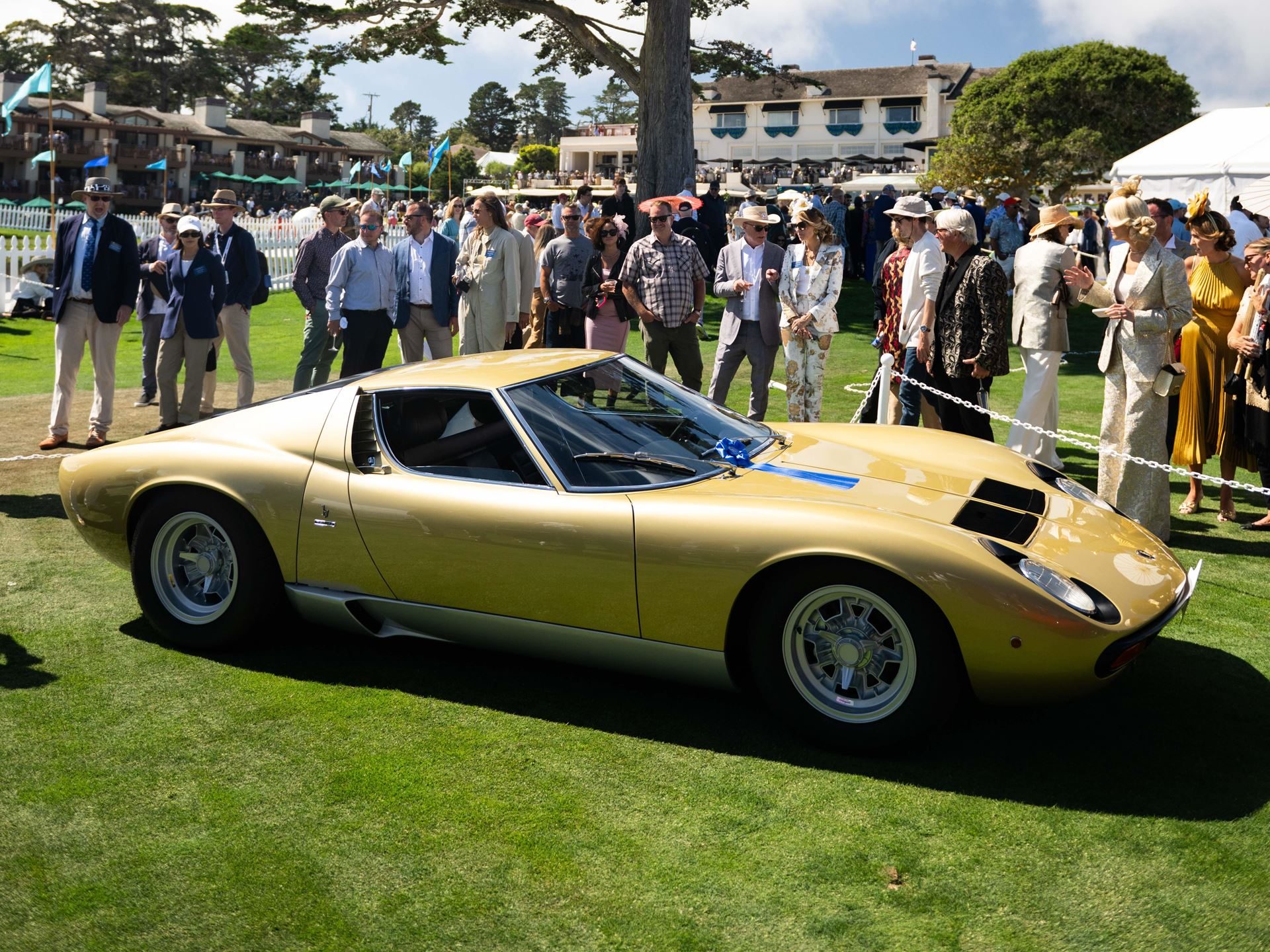
Stephan Winkelmann, Lamborghini’s Chairman and CEO, and Design Director Mitja Borkert also served as Honorary Judges at the Pebble Beach Concours d’Elegance during the same weekend. Their presence at both the Lounge and the Concours underscored how deeply Lamborghini embedded itself across Monterey Car Week, treating the entire event as an opportunity to connect with collectors on multiple levels.

Where the Temerario Sits Against Ferrari and McLaren
The competitive reality facing the Temerario is straightforward. Ferrari’s 296 GTB and McLaren’s Artura both use hybrid architectures to deliver similar performance promises: electrified power, reduced emissions, and the claim that nothing meaningful was lost in the transition from naturally aspirated engines. All three manufacturers are making essentially the same bet, that buyers will accept turbocharged hybrid power if the total output and driving character remain compelling.
Lamborghini’s differentiator, at least on paper, is the 10,000-rpm V8. Neither Ferrari nor McLaren has marketed a comparable redline figure for their hybrid sports cars in this segment. Whether that translates into a genuinely different driving experience, the kind of top-end rush that made the Huracán’s V10 so addictive, remains the single most important unanswered question for enthusiasts. No independent driving impressions existed at the time of the Monterey showcase, so the promise is still theoretical.
The Alleggerita package adds another competitive dimension. Lamborghini explicitly positioned it as a track-driving option available from launch, which suggests the company anticipates buyers who will cross-shop the Temerario against not just road-focused rivals but also track-day specials. Ferrari and McLaren both offer lightweight or track-enhanced variants of their mid-engine cars, typically arriving later in the production cycle. Offering a track package from day one is a notable competitive statement, even if the specific hardware details remain unpublished.
For current Huracán owners considering an upgrade, the practical question is whether the Temerario’s hybrid V8 delivers the same emotional connection as the V10. Forum discussion across enthusiast communities reflects genuine anxiety about this transition, mixed with curiosity about the performance gains. The roughly 907-horsepower output represents a significant jump over the Huracán’s final iterations, but raw numbers alone never settled a Lamborghini debate.
What the Monterey Debut Tells Lamborghini Buyers
Lamborghini chose to reveal the Temerario inside a controlled, immersive environment rather than at a traditional auto show, and that choice carries a message for prospective owners. The company is selling an experience, not just a car. The mixed-reality displays, the Sonus faber audio demonstration, the Ad Personam studio, and the Roger Dubuis collaboration all point toward a brand that understands its buyers evaluate purchases holistically.
The practical takeaway for anyone watching the Temerario is patience. Pricing, delivery windows, and the full Alleggerita specification remain unconfirmed. What Monterey did confirm is the direction: Lamborghini’s entry-level supercar is now a hybrid V8 with a claimed 10,000-rpm redline, available from launch with a track-oriented lightweight option, and surrounded by a brand ecosystem designed to make ownership feel like membership.
Whether the Temerario earns the loyalty that the Huracán built over a decade of production will depend on answers that Monterey could not provide. How does it sound at redline? How does the hybrid system behave on a circuit? Does the Alleggerita package genuinely transform the car’s track manners? Those questions will define the Temerario’s reputation. What the Lamborghini Lounge established is that the company is treating this car as the cornerstone of its next chapter, and staging the introduction accordingly.

Gallery