Two Races, Two Wins, and a Four-Point Deficit Erased
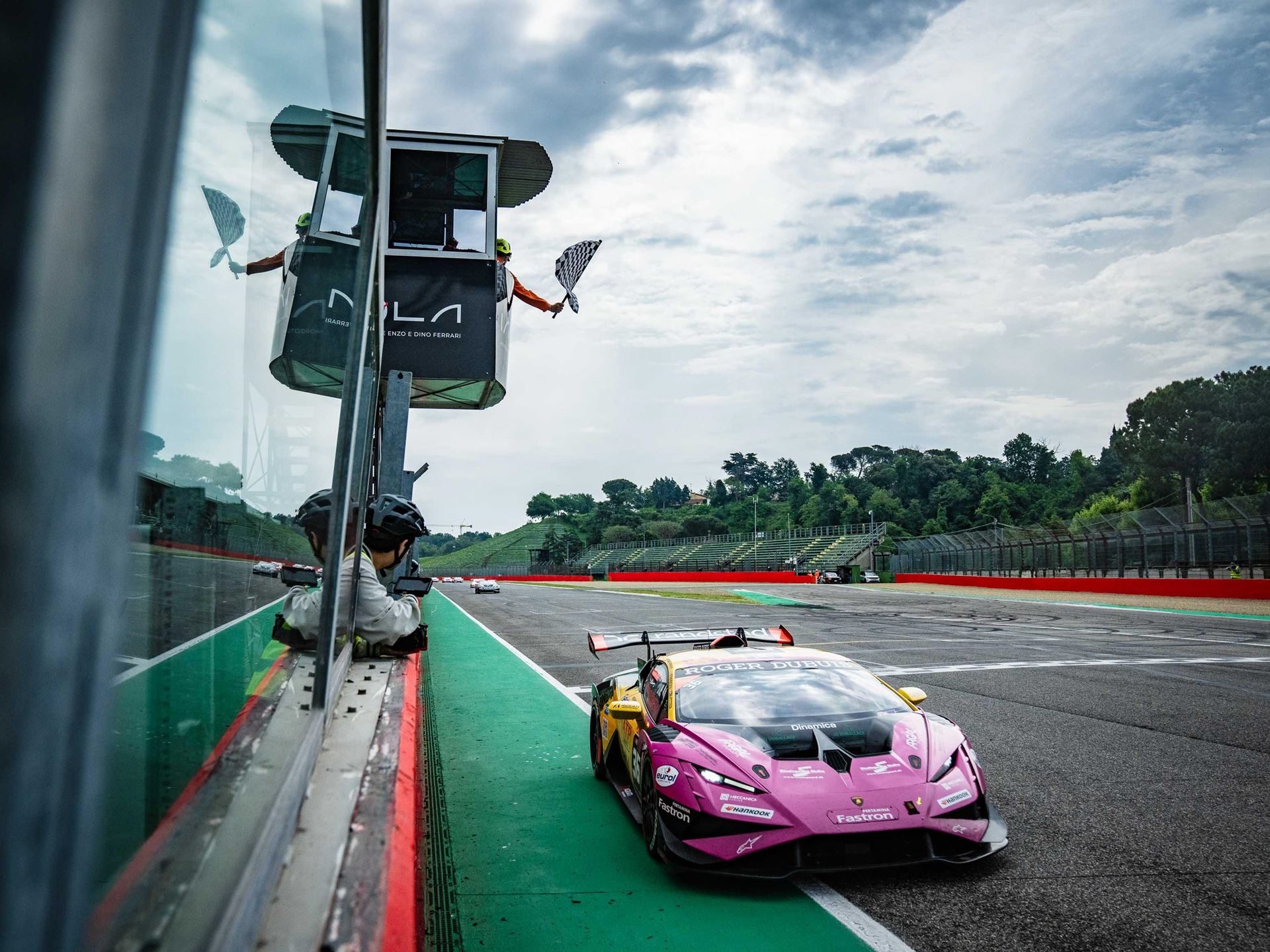
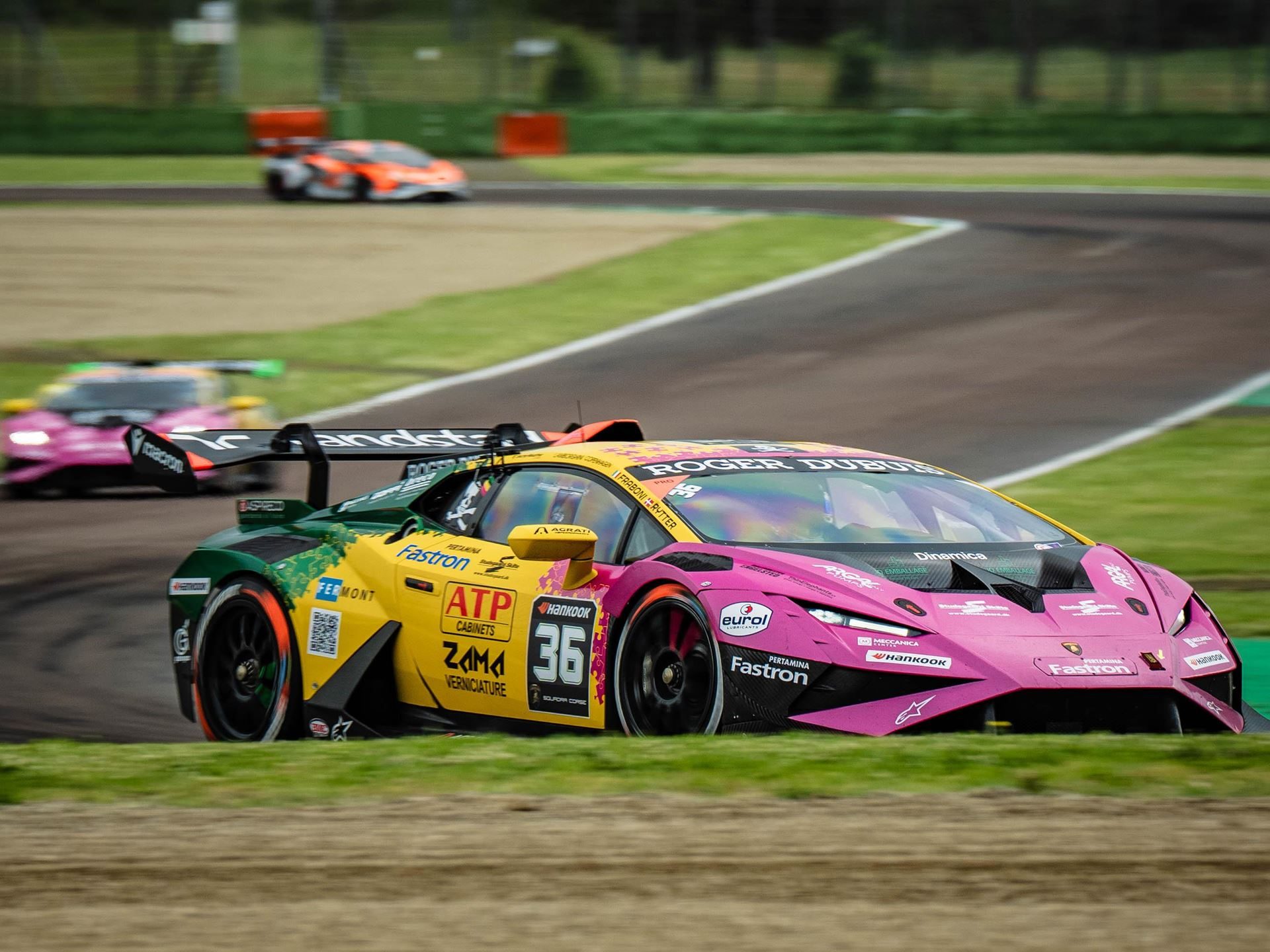
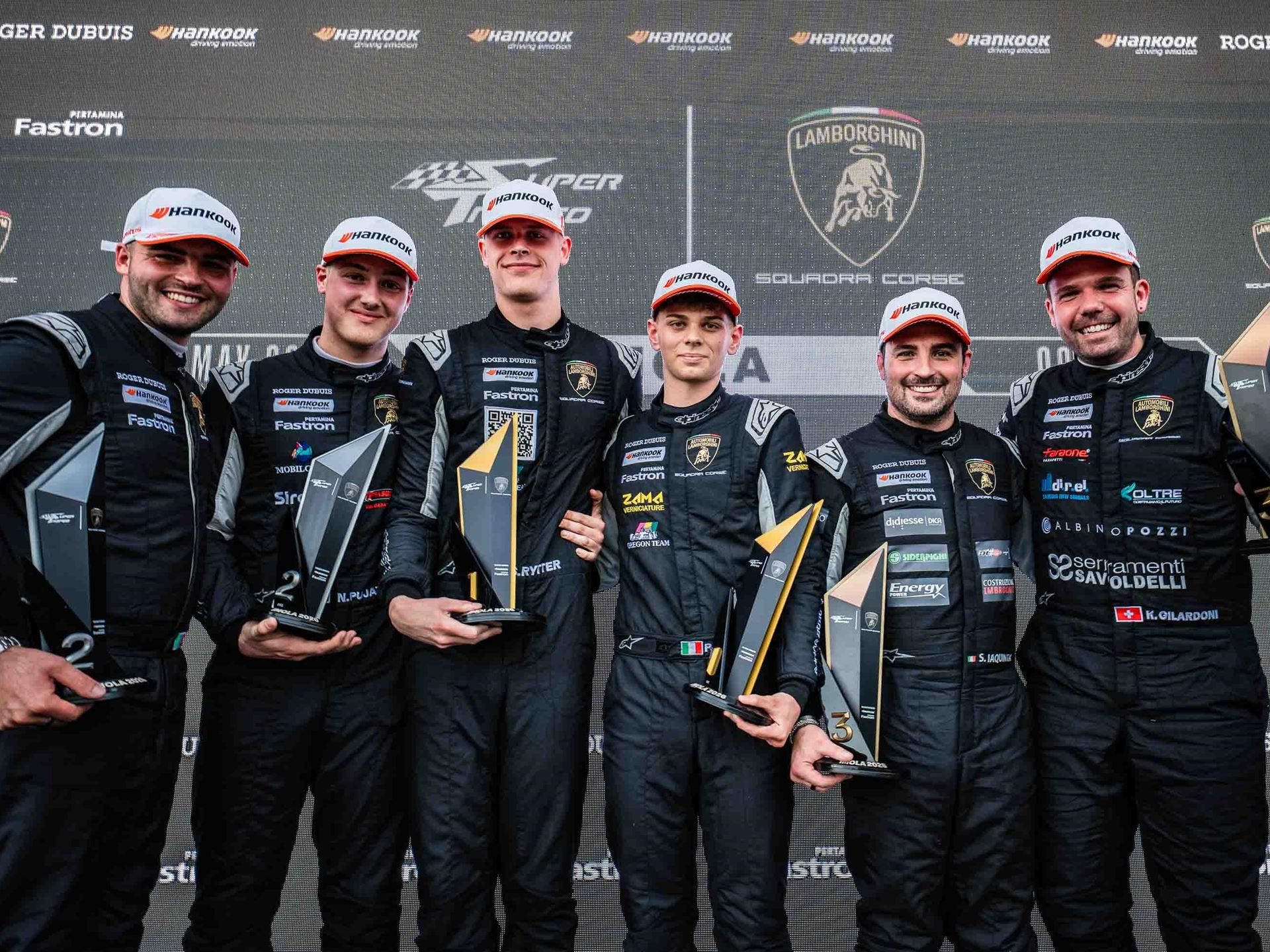
- Oregon Team’s Silas Lovén Rytter and Patrik Fraboni won both races at Imola, vaulting into second place in the 2026 Lamborghini Super Trofeo Europe standings.
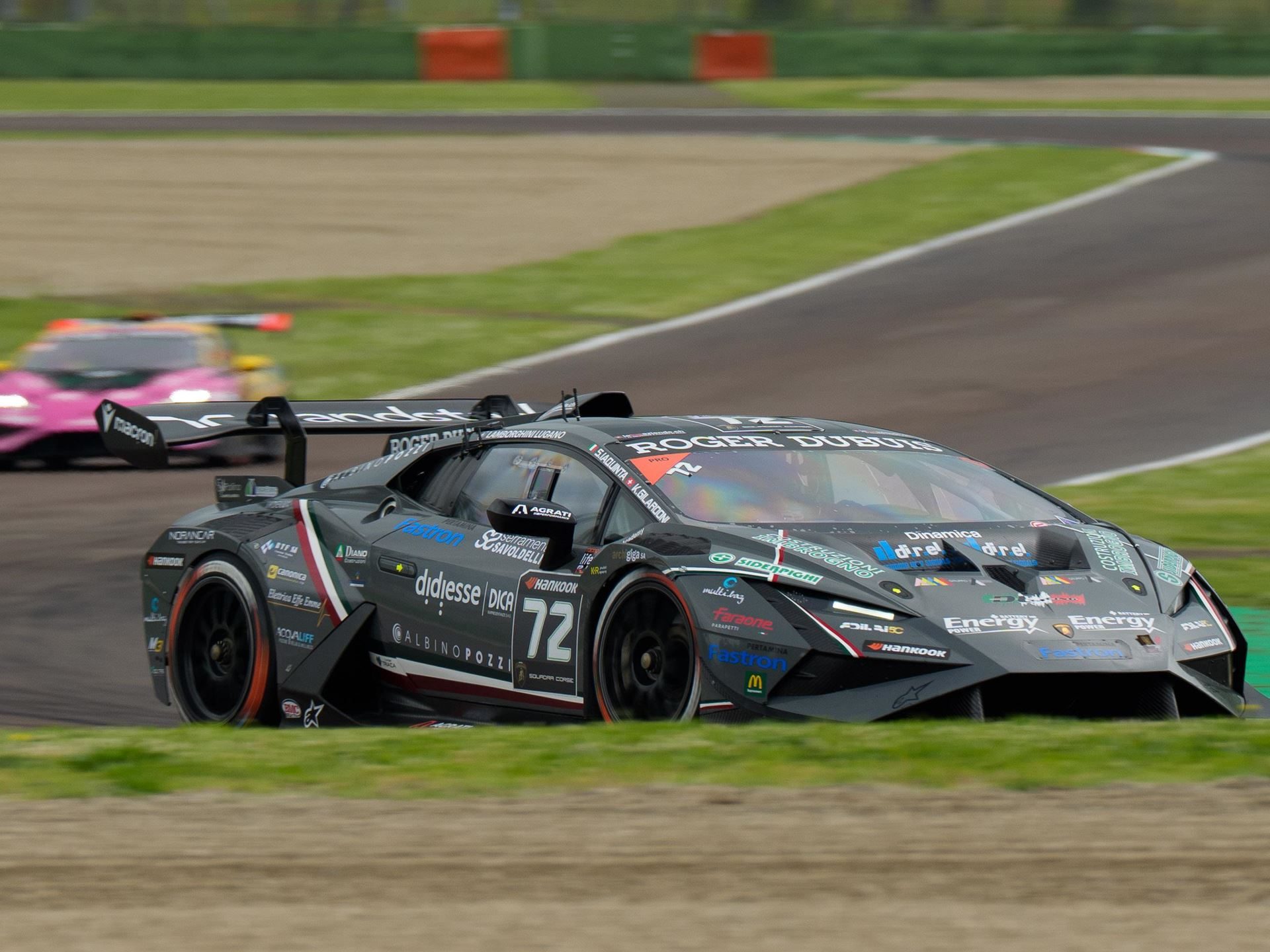
- The gap to championship leaders Simone Iaquinta and Kevin Gilardoni (DL Racing) is now just four points heading into Spa-Francorchamps.
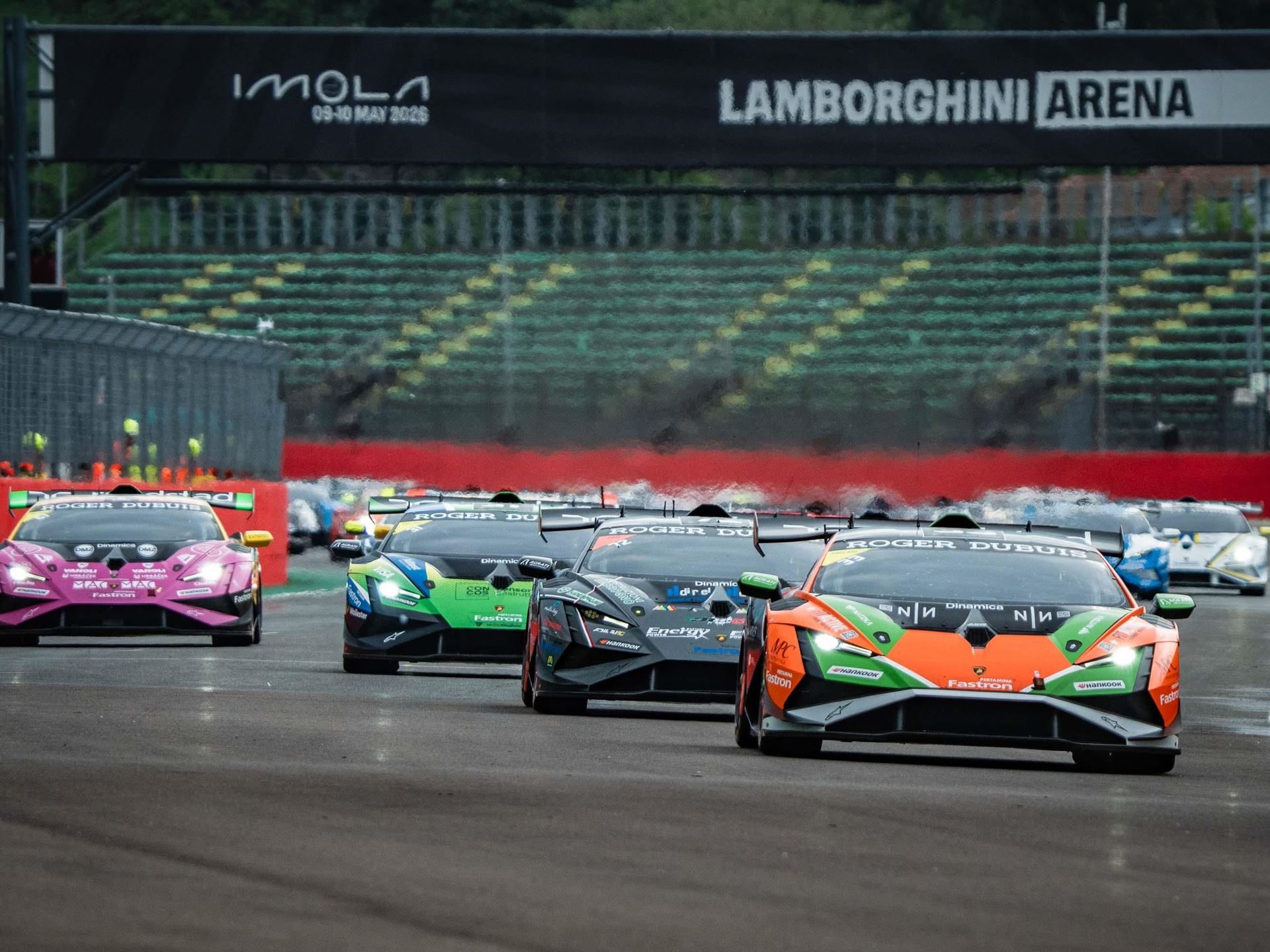
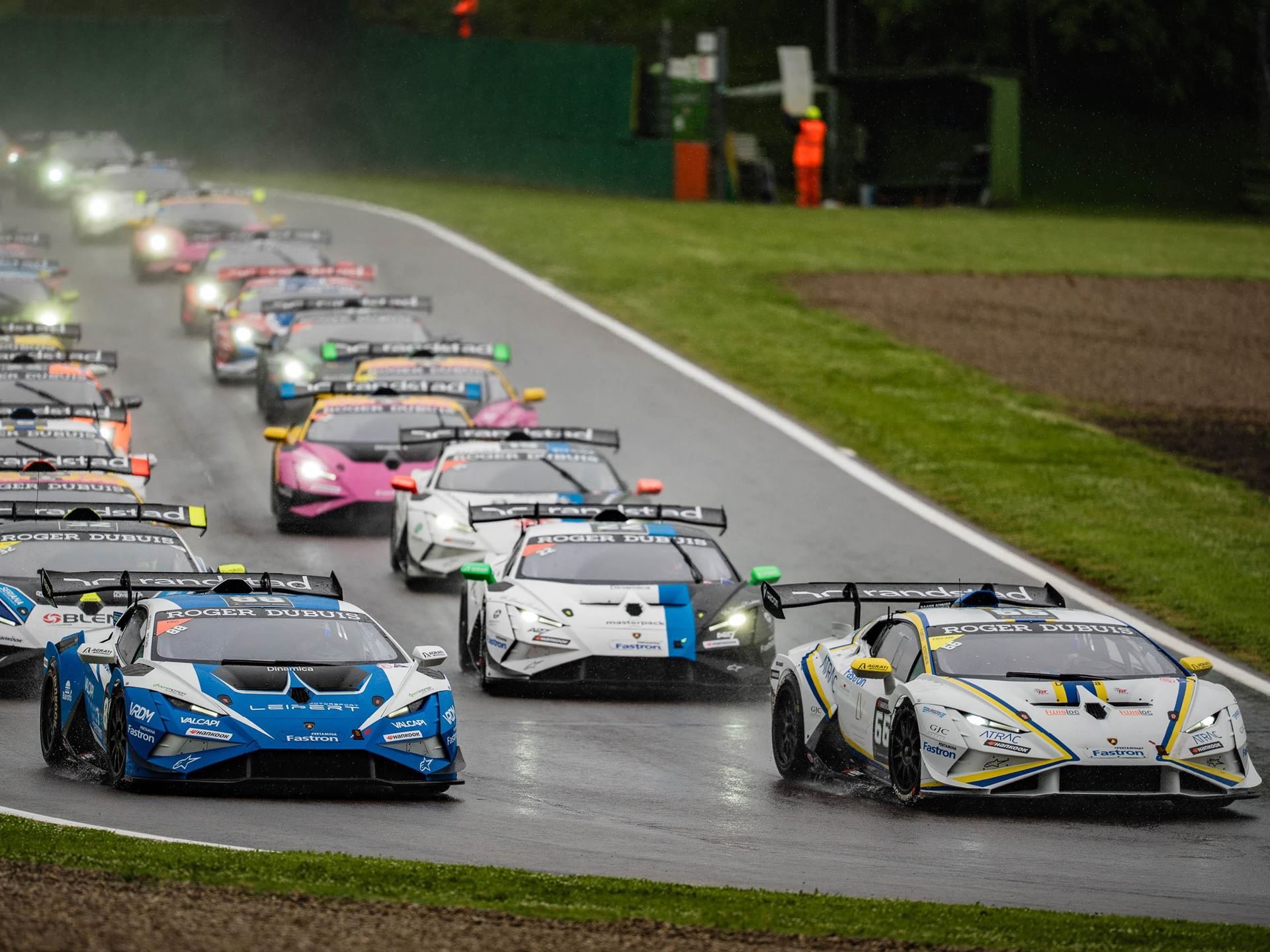
- A 33-car field raced in both dry and soaking wet conditions, producing drama across every class.
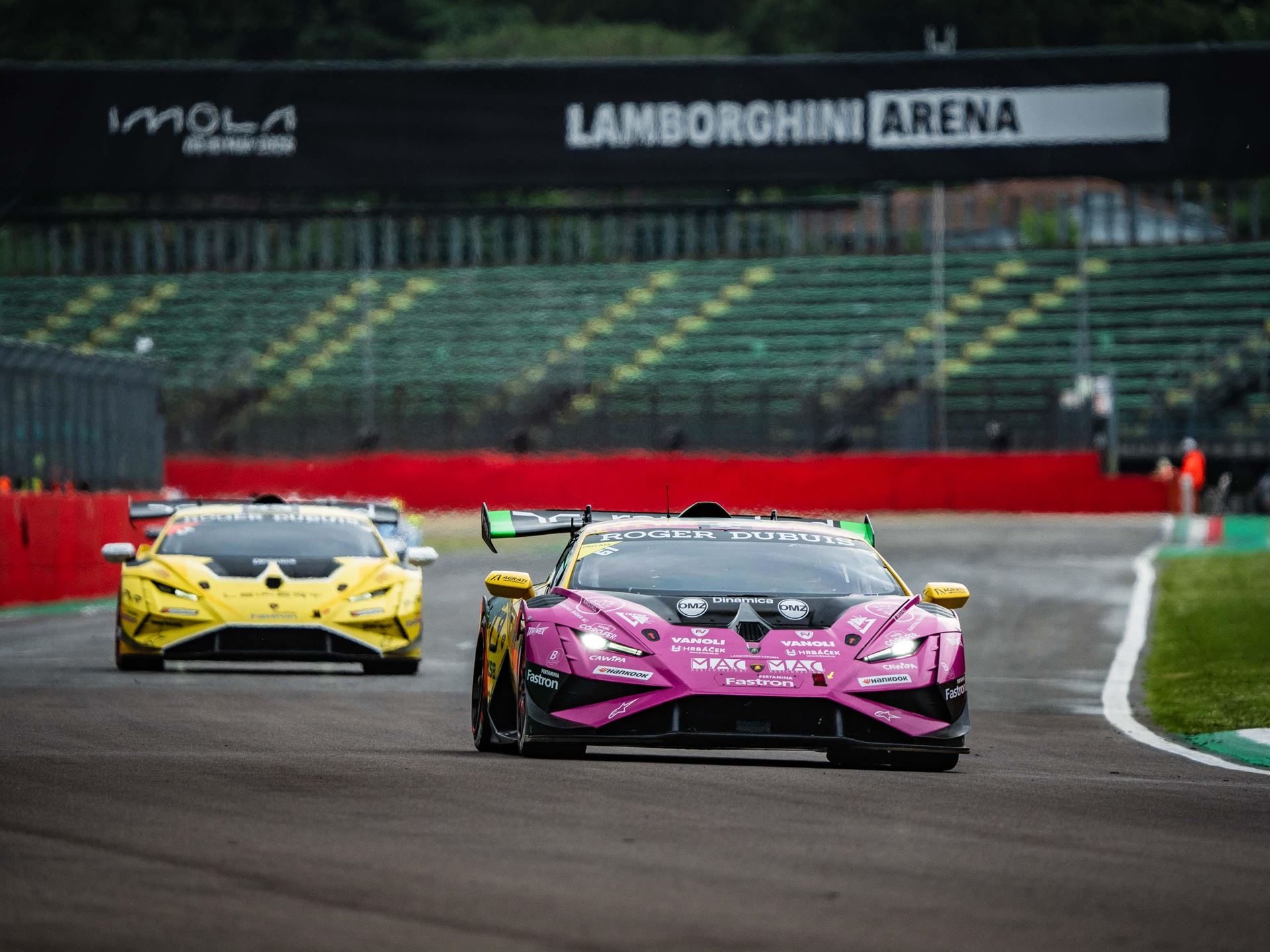
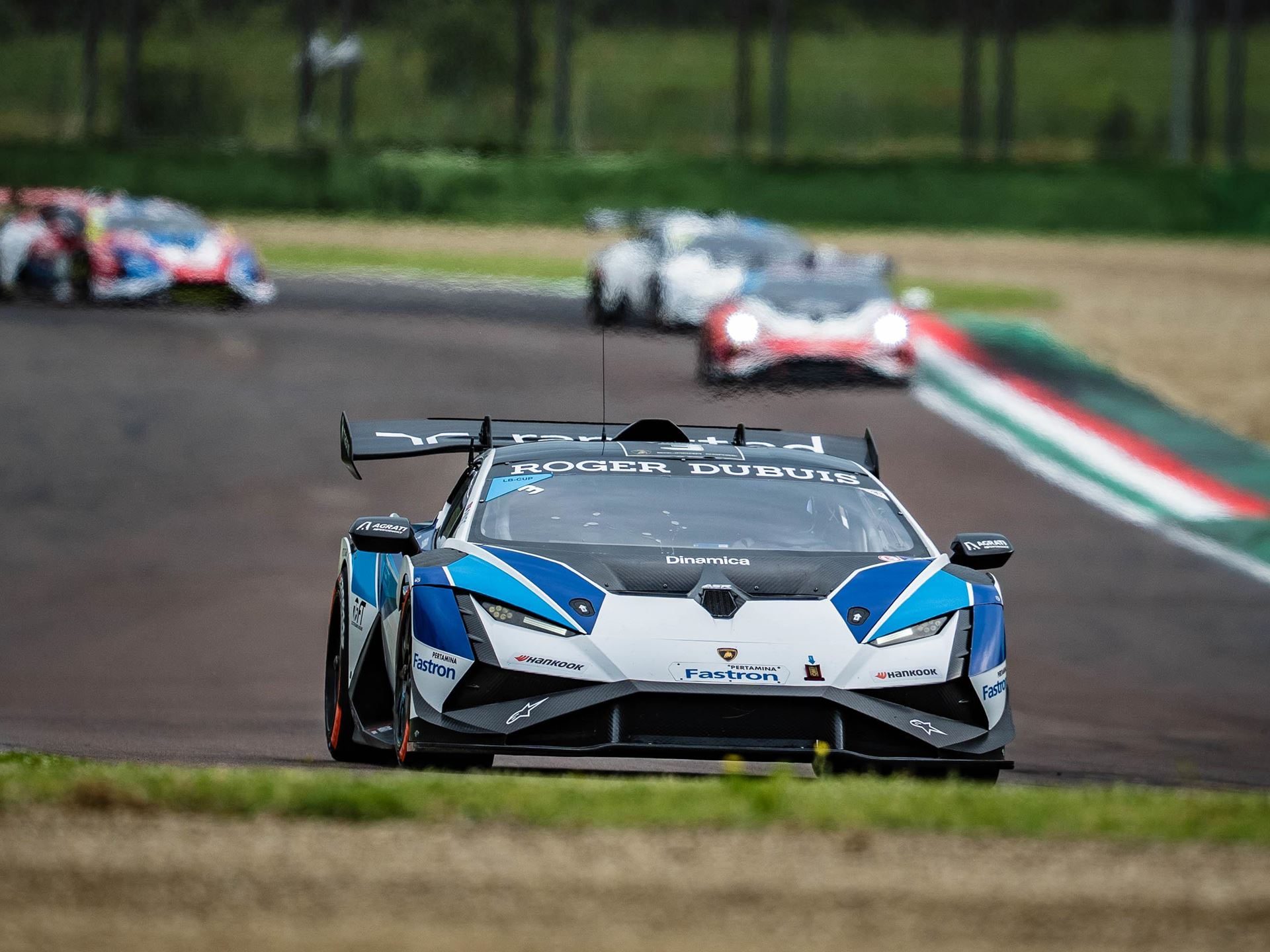
A four-point deficit with four rounds remaining. That is where Oregon Team’s Rytter and Fraboni now sit after taking both wins at Imola’s Autodromo Enzo e Dino Ferrari, the second stop on the 2026 Super Trofeo Europe calendar. The pair drove the #36 Huracán Super Trofeo EVO2 through dry conditions in Race 1 and a rain-drenched Race 2, adapting to each without dropping a beat. Lamborghini says the crew “mastered both dry and wet conditions,” and the results back that up: two starts, two victories, and a championship picture that looks completely different from the one after Paul Ricard.
Oregon Team, for those less familiar with the Super Trofeo paddock, is not some upstart outfit. The Italian squad, led by Jerry Canevisio and Giorgio Testa, traces its motorsport roots to 1987. Since joining the Super Trofeo Europe grid in 2020, the team secured a Pro and Team title in the 2021-2022 cycle and now fields multiple cars across several classes. Kevin Gilardoni, who currently leads the 2026 championship for rival team DL Racing, actually won the 2021 Pro title with Oregon Team. That kind of driver turnover is normal in customer racing, but it adds a layer of familiarity (and perhaps motivation) to the current title battle.

How the Races Unfolded
Race 1 started dry and chaotic. Miloš Pavlović qualified fastest but earned a drive-through penalty for jumping the start, handing the effective lead to Iaquinta. Jonathan Cecotto (Invictus Corse) then produced the move of the race, diving past Anthony Pretorius at Piratella and later passing Iaquinta around the outside at Rivazza to take the outright lead. After the mandatory driver swaps, Gilardoni held the Pro lead for DL Racing, but Rytter capitalized when Gilardoni got held up by Cecotto’s teammate Sergei Astafjev approaching the Villeneuve chicane. Rytter grabbed the inside line and took the lead moments before a safety car bunched the field. Two more safety car periods followed (separate heavy crashes for Christian Bortolato and Luciano Privitelio at Tamburello and Rivazza, both drivers unhurt), and Rytter and Fraboni held on for their first win of the season. Iaquinta and Gilardoni finished second. Jerzy Spinkiewicz recorded UNIQ Racing’s first podium of the year in third.
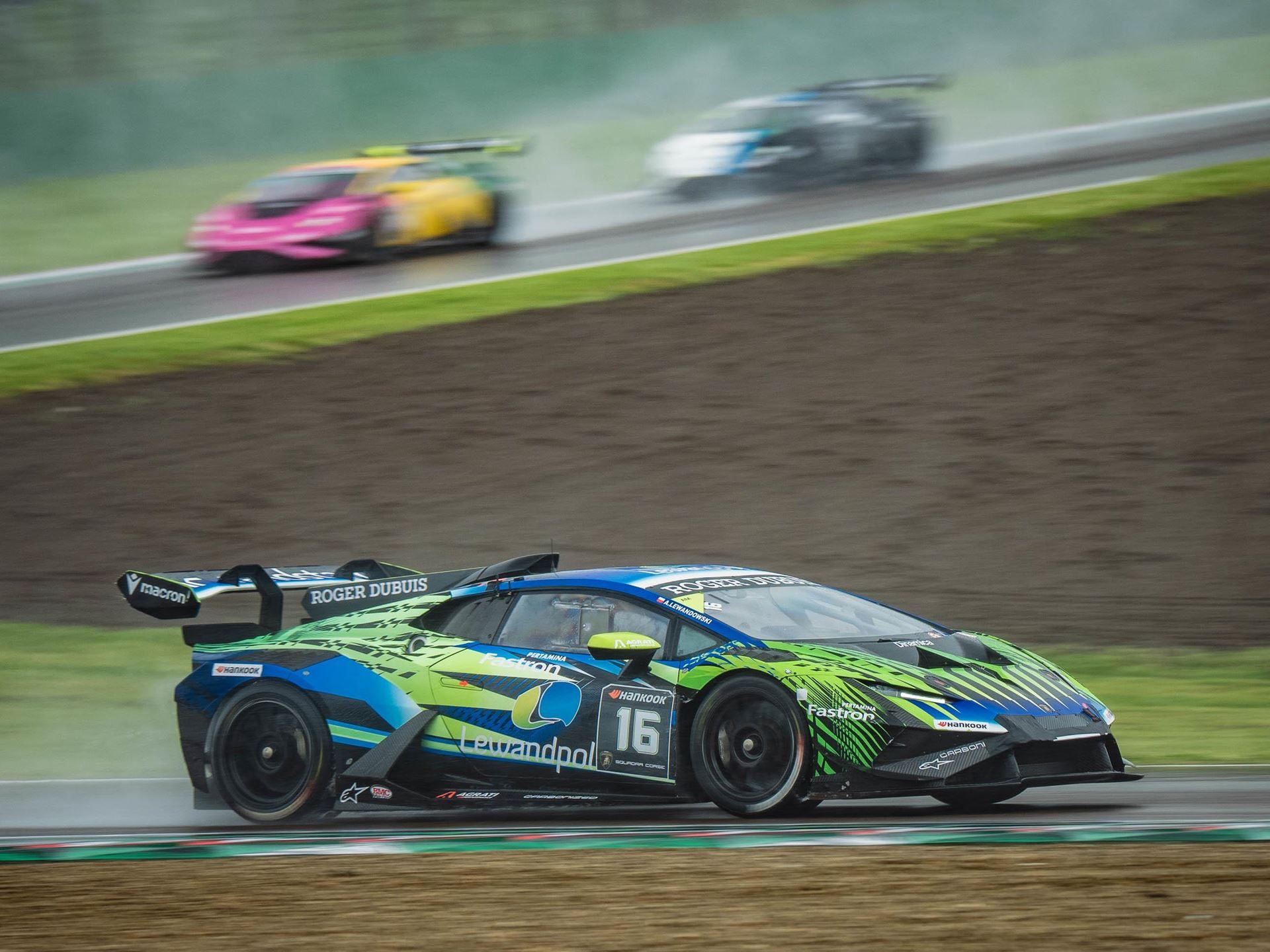
Race 2 arrived under heavy rain. Paul Levet (VSR) converted pole into an early lead, but Rytter, starting sixth, carved through the spray and was into the Pro lead by lap three. He passed Matias Salonen, then Marzio Moretti, then set about closing on Levet. After the pit window, Fraboni emerged at the head of the field and controlled the remaining laps behind a final safety car to complete the double. Benedetto Strignano and Nicholas Pujatti (Rexal Villorba Corse) finished second in Pro after a tight battle that also involved Rogério Grotta (Oregon Team) and Iaquinta, who secured third and with it maintained the overall championship lead for DL Racing.

Championship Standings and Class Winners
Iaquinta and Gilardoni still lead the Pro standings by four points over Rytter and Fraboni, who in turn sit two points ahead of Strignano and Pujatti. With four rounds and the World Finals still to come, the title fight involves at least three serious crews, and the margins are razor-thin.
Across the other classes, the Imola spoils were shared:
| Class | Race 1 Winner | Race 2 Winner |
|---|---|---|
| Pro | Rytter / Fraboni (Oregon Team) | Rytter / Fraboni (Oregon Team) |
| Pro-Am | Knopp / Perolini (Oregon Team) | Pavlović / Ruffini (ASR) |
| Am | Giannoni (Automobile Tricolore) | A. & A. Lewandowski (GT3 Poland) |
| Lamborghini Cup | Matić (ASR) | Baptista (Oregon Team) |
The Am class saw Raffaele Giannoni take Race 1, with the father-and-son pairing of Andrzej and Adrian Lewandowski winning Race 2 after Andrzej overtook Jakub Knoll in the closing stages. In the Lamborghini Cup, Petar Matić controlled Race 1’s opening stint before the pit-stop swap gave Adalberto Baptista the advantage in Race 2. Oregon Team’s dominance extended well beyond the Pro class: the squad took three of the eight available class wins across the weekend.

Inside the Huracán Super Trofeo EVO2
The Lamborghini Super Trofeo is a one-make racing series, meaning every car on the grid is identical in specification. Lamborghini Squadra Corse, the brand’s in-house motorsport division, serves as the sole constructor and provides technical support at each round. SRO Motorsports Group co-organizes the events. The format strips away the engineering arms race that defines prototype or GT3 racing and puts the emphasis squarely on driver skill and team preparation. Hankook supplies the spec tires.
The car itself, the Huracán Super Trofeo EVO2, is a purpose-built race machine that shares its silhouette with the road car but almost nothing else. One source reports a naturally aspirated 5.2-liter V10 producing 620 horsepower at 8,250 rpm and 570 Nm of torque at 6,500 rpm, channeled exclusively to the rear wheels through an X-Trac six-speed sequential gearbox with paddle shift. That rear-drive layout is significant: the road-going Huracán was available in both rear-drive and all-wheel-drive configurations, but the race car uses rear-drive only. Without front driveshafts loading the steering, the front end communicates grip changes more directly, which rewards precise inputs and punishes laziness. In the wet at Imola, where standing water shifts the grip threshold corner by corner, that honest steering feel becomes the driver’s primary survival tool.
The chassis rides on Öhlins TTX 36 two-way adjustable dampers, with a six-position adjustable anti-roll bar at the front and two positions at the rear. Brembo Racing steel brakes (380×35 mm front, 355×32 mm rear) handle stopping duties, paired with a 12-position adjustable racing ABS. The car weighs 1,270 kg, giving it a power-to-weight ratio of around 488 hp per tonne — a figure that places it squarely alongside purpose-built GT3 machines from rival manufacturers rather than road-derived track-day cars. For context, a Ferrari 488 GT3 Evo runs a comparable turbocharged V8 to similar power-to-weight targets; the EVO2 achieves that mark without forced induction, relying instead on the V10’s natural character at the top of its rev range.

From Super Trofeo to GT3: Lamborghini’s Motorsport Ladder
The Super Trofeo series, inaugurated in 2009, functions as the entry point of Lamborghini’s customer racing ladder. The original Huracán LP 620-2 Super Trofeo debuted in 2014, followed by the EVO in 2017, and eventually the current EVO2. Each step refined the platform while keeping costs manageable for privateer teams. The road-going Huracán was replaced by the plug-in hybrid Temerario in 2025, but the EVO2 race car soldiers on as the series workhorse.
The next rung up is GT3 racing, and Lamborghini’s approach to that transition matters. The Temerario GT3 represents Lamborghini’s first competition car fully designed, developed, and built in-house by Squadra Corse. Previous GT3 efforts relied on external partners for significant portions of the development. For drivers like Rytter and Fraboni, the Super Trofeo grid is where they prove they can handle wheel-to-wheel combat, manage tire degradation over a stint, and execute pit-stop strategies under pressure. Those are exactly the skills GT3 demands, just at higher speeds and against mixed-manufacturer fields. Whether any current Super Trofeo drivers will transition into the Temerario GT3 program remains to be seen, but the pipeline exists by design.
Spa-Francorchamps, which hosts the next round from June 25 to 27, also carries particular significance for Lamborghini. It is the circuit where the brand secured its historic first victory in the Spa 24 Hours, one of endurance racing’s crown jewels. For Super Trofeo competitors, racing at Spa means confronting Eau Rouge and Raidillon, corners that compress the car into the pavement at speeds exceeding 250 km/h and demand absolute trust in the chassis. The EVO2’s Öhlins dampers and adjustable anti-roll bars earn their keep in those compressions, where the suspension must absorb massive vertical loads while maintaining tire contact through rapid direction changes.

Why One-Make Racing Matters for the Brand
Lamborghini’s one-make series competes for attention (and customer budgets) against Ferrari’s Challenge series and Porsche’s Carrera Cup, among others. The core proposition is similar across all three: buy the race car, show up, and compete on equal footing. But the details differ. The Super Trofeo’s naturally aspirated V10 is a holdover from an era that the road car lineup already left behind. Every Lamborghini you can buy from a dealer in 2026 runs some form of electrified powertrain. The EVO2’s screaming atmospheric V10, revving to 8,250 rpm with no turbo lag and no hybrid intervention, is now exclusive to the race paddock. For buyers who fell in love with the Huracán’s character, the Super Trofeo grid is the last place to experience it at full intensity.
The practical question enthusiasts ask about these series is always cost. Specific participation figures for the Super Trofeo Europe remain difficult to pin down publicly, and Lamborghini does not publish a price list for a full season’s entry. What is clear: the one-make format controls costs relative to open GT3 competition by eliminating the development spending that can spiral in mixed-manufacturer series. Teams run identical cars, identical tires, and receive factory support from Squadra Corse engineers at each event. For a buyer weighing whether to step into customer racing, the Super Trofeo is designed as the less financially terrifying option compared to a full GT3 campaign.
The 33-car field at Imola suggests the series remains healthy. That grid size, across Pro, Pro-Am, Am, and Lamborghini Cup classes, means the paddock accommodates everyone from semi-professional drivers like Rytter and Fraboni to gentleman racers like the Lewandowski father-and-son duo. The diversity of the grid is part of the product.

2026 Calendar: Where the Title Will Be Decided
Four rounds remain after Imola, plus the season-ending World Finals. Lamborghini says the 2026 Super Trofeo Europe calendar runs through six circuits:
| Round | Circuit | Dates |
|---|---|---|
| 1 | Paul Ricard | April 10-12 |
| 2 | Imola | May 9-10 |
| 3 | Spa-Francorchamps | June 25-27 |
| 4 | Nürburgring | August 28-30 |
| 5 | Barcelona | October 2-4 |
| 6 | Monza | October 21-23 |
| World Finals | Monza | October 24-25 |
The calendar covers a range of circuit characters that will test the EVO2 in very different ways. Paul Ricard’s long straights and abrasive run-off areas stress power and tire management. The Nürburgring’s elevation changes and blind crests demand chassis confidence. Barcelona’s high-speed final sector punishes aerodynamic compromises. And Monza, which hosts both Round 6 and the World Finals on back-to-back weekends, will likely decide the championship in front of Lamborghini’s home crowd.
For Rytter and Fraboni, the math is straightforward: four points behind with 12 potential race wins still available. Iaquinta and Gilardoni’s consistency (four podiums in four races) gives them a buffer, but Oregon Team proved at Imola that outright pace in changing conditions can erase gaps quickly. The Nürburgring and Barcelona rounds in late summer and early autumn bring their own weather unpredictability, and if Imola demonstrated anything, it is that the #36 crew thrives when the forecast turns ugly.
The deeper play for Lamborghini is what happens after October. When the Temerario GT3 eventually enters full competition, Squadra Corse will need proven drivers and teams to fill its customer programs. Every Super Trofeo season is, in part, an audition. The crews fighting for this year’s title are also building the résumés that will matter when the next generation of Lamborghini customer racing arrives.

Gallery