A Ferrari Veteran Takes Charge at the Most Critical Moment in Lamborghini Racing History
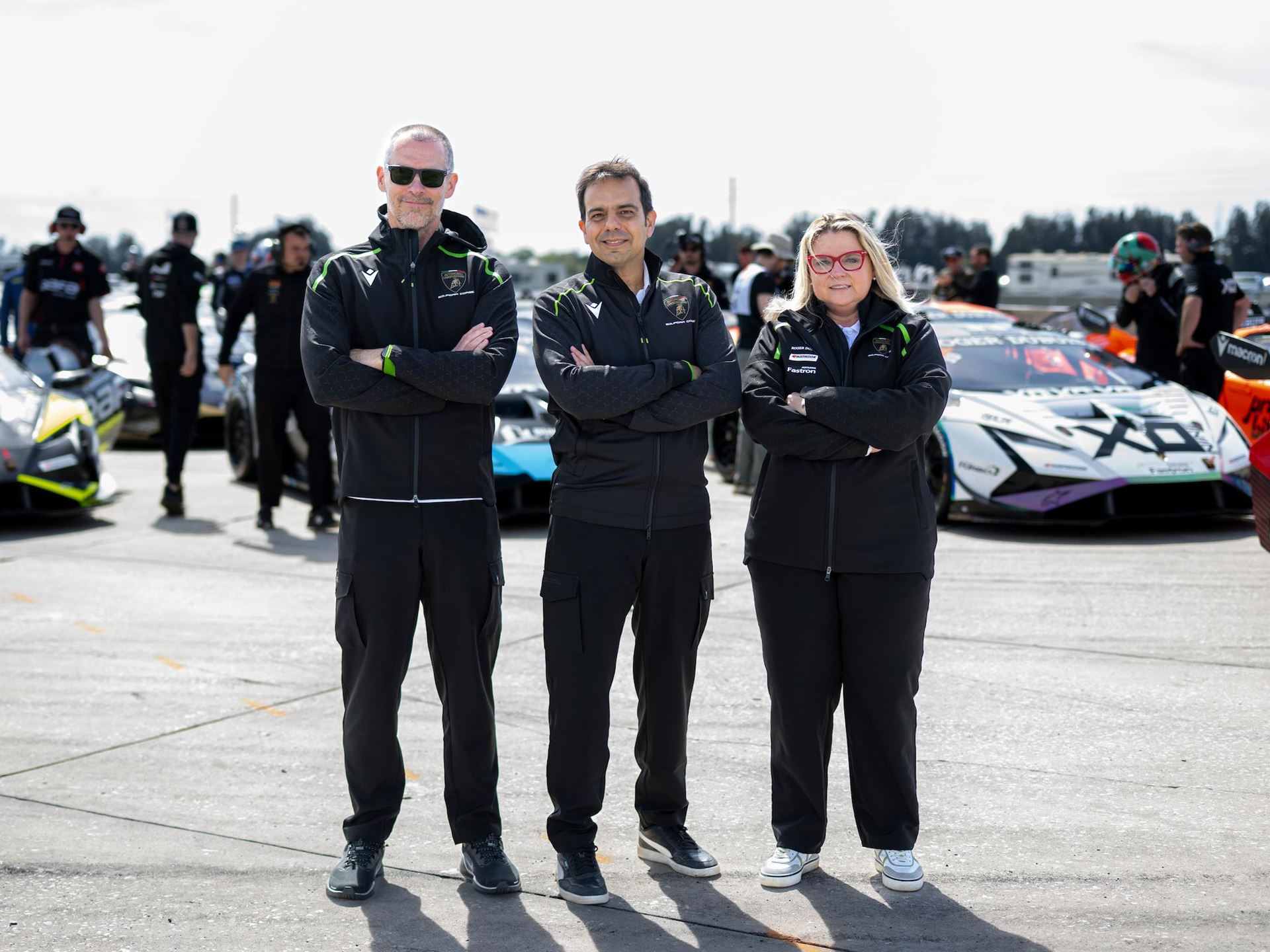
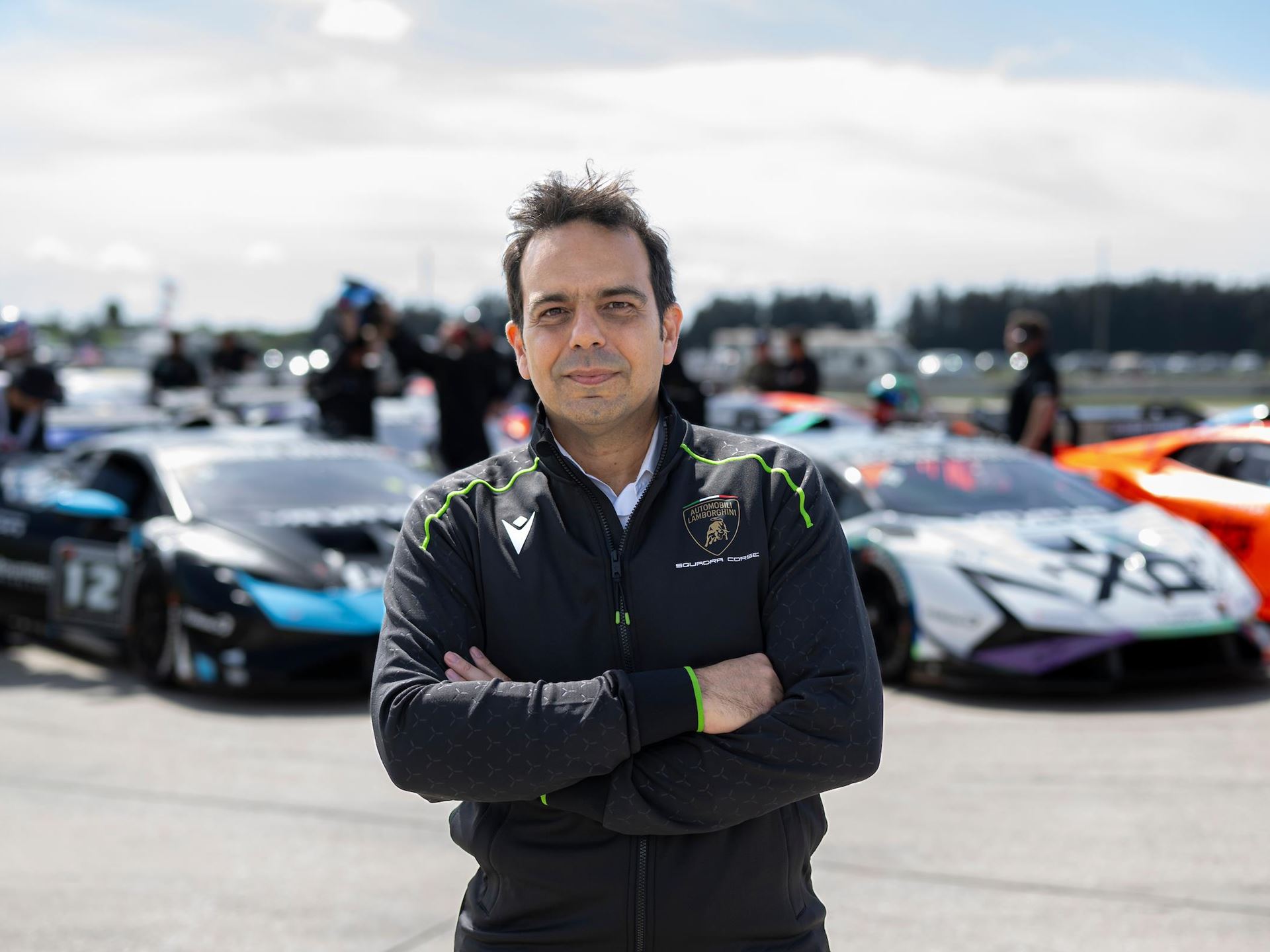
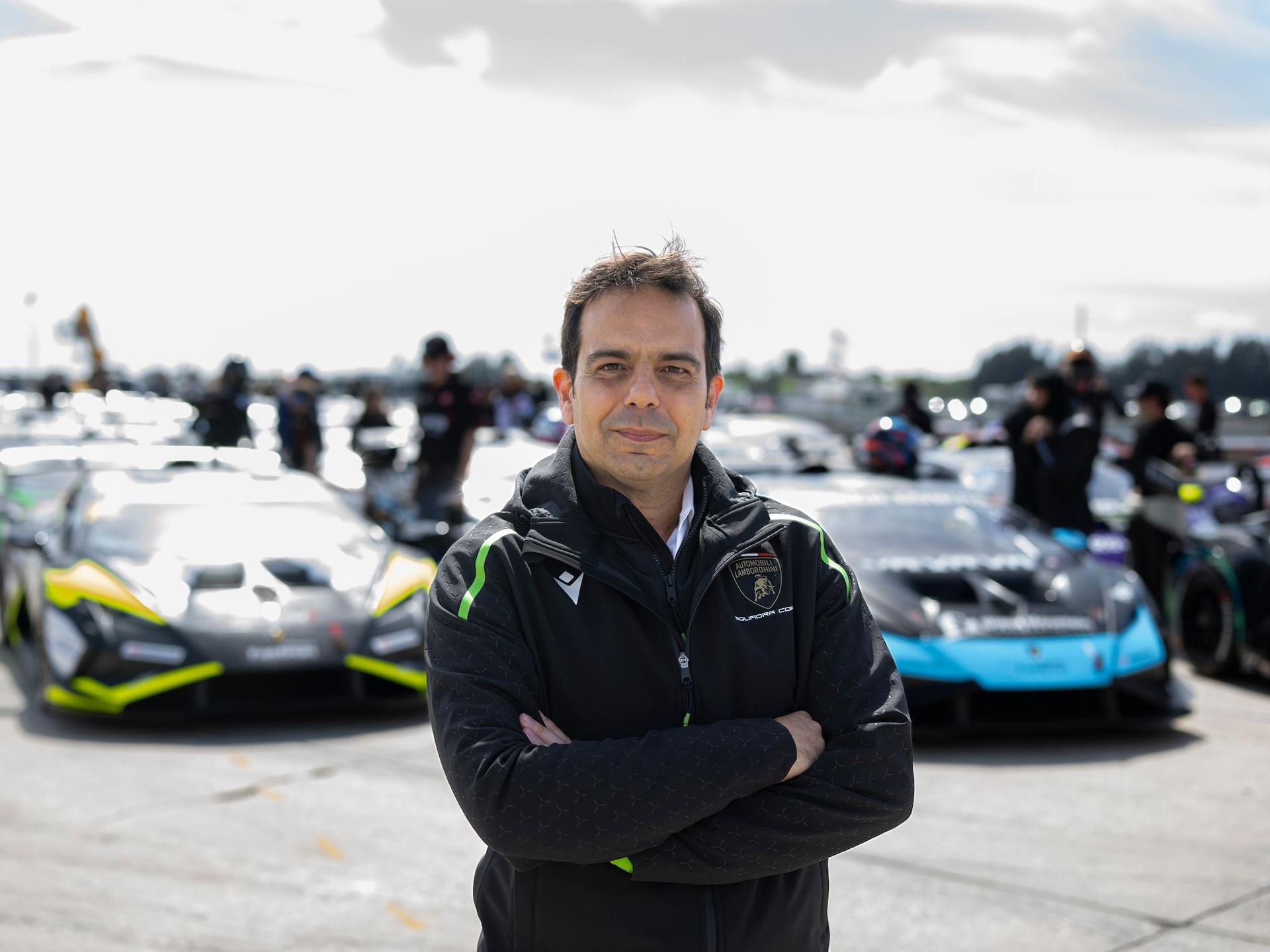
The Temerario GT3 rolls onto the Sebring grid this weekend for its first competitive outing, and the person now responsible for making that car (and everything else Lamborghini races) a success is someone who spent a decade doing essentially the same job for Ferrari. Andrea Reggiani, an Italian-Swiss engineer, has been appointed Lamborghini’s new Head of Motorsport, taking charge of the entire Squadra Corse operation. He reports directly to Lamborghini Chief Technical Officer Rouven Mohr.
The timing here is what matters most. Lamborghini is not simply swapping one executive for another. The company is in the middle of the most significant platform transition in its customer racing history: retiring the Huracán-based racing ecosystem that has served as the backbone of its motorsport identity for a decade and replacing it, simultaneously, with two new Temerario-based machines. The GT3 car debuts now. Lamborghini says the Temerario Super Trofeo is in its initial development phases and will underpin three continental single-make championships starting next year. Reggiani’s job is to architect that entire transition without losing the customer base that made the Huracán programme one of the most popular in GT racing.
Despite sharing a surname, Andrea Reggiani is unrelated to former Lamborghini Chief Technical Officer Maurizio Reggiani, one of the most iconic figures in the brand’s modern history. The coincidence is striking, but the connection that actually matters is a different one: Andrea Reggiani’s career before Sant’Agata.
Who Is Andrea Reggiani: A Career Built on Exactly What Lamborghini Needs
The press release describes Reggiani’s background in characteristically vague corporate language, noting “senior positions with some of the sport’s leading brands.” The actual résumé, pieced together from reporting elsewhere, is considerably more specific and revealing.
According to Motorsport.com, Reggiani joined Ferrari in 2008, initially in a marketing role covering Asia and China. He reportedly rose to become head of Ferrari’s Corse Clienti programme in the Asia-Pacific region. According to one report, he took over overall management of Ferrari’s Corse Clienti programme in 2014, the exclusive operation that lets clients drive actual Formula 1 cars and classic Ferrari racing machinery. He is reported to have later served as head of motorsport for Ferrari North America, overseeing the Ferrari Challenge one-make series.
Pause on that for a moment. Ferrari Challenge is the direct competitor to Lamborghini’s Super Trofeo. Ferrari’s Corse Clienti is the direct analogue to the kind of high-value trackday experience Lamborghini offers through the Essenza SCV12 programme. Lamborghini did not hire a generic motorsport executive. They hired someone who has already run the exact programmes they need him to run, just in red instead of green.
Motoport.com reports that Reggiani moved to Dallara in 2018, serving as chief commercial officer of the Stradale road car project. That seven-year stint at one of the world’s premier racing chassis constructors adds a layer of engineering credibility to what might otherwise look like a purely commercial profile. The Dallara Stradale itself was a fascinating exercise in translating race car philosophy into a road-legal product, precisely the kind of road-to-race (and race-to-road) thinking that defines modern GT3 development.
For buyers and teams invested in Lamborghini’s racing ecosystem, the practical takeaway is straightforward: the new boss has direct, hands-on experience managing customer racing relationships at scale, across multiple continents, for a rival manufacturer. He knows what keeps gentleman drivers happy, what makes team principals renew their commitments, and how one-make series need to be structured to stay commercially healthy. Those are the skills that matter when you are asking hundreds of customers to transition from a proven platform to an unproven one.
The Huracán-to-Temerario Transition: What Reggiani Inherits
The Huracán racing platform has been one of the most commercially successful customer racing cars in GT history. IMSA reports an anticipated field of 39 Huracán Super Trofeo EVO2 cars for the 2026 Sebring opener, a remarkable grid size that speaks to how deeply embedded this car is in the customer racing world. According to IMSA, the Lamborghini Super Trofeo North America is entering its 14th season.
All of that is about to change. The Temerario GT3 makes its competitive debut at the Sebring 12 Hours this weekend, marking the beginning of the end for the Huracán GT3 EVO2 in professional sportscar racing. And Lamborghini says the Temerario Super Trofeo will replace the Huracán in all three continental one-make championships from the 2027 season.
For teams and drivers who have built entire programmes around the Huracán’s naturally aspirated V10 character, this is not a minor update. It is a generational shift. The series has seen incremental evolution before, from the original Super Trofeo car through various EVO specifications, but the underlying platform always remained fundamentally the same. Moving to the Temerario means a new engine architecture, new chassis, new aerodynamic philosophy, and new everything for the mechanics who maintain these cars at the track.
Reggiani’s remit covers the global Super Trofeo platform across Europe, Asia, and North America, the GT3 customer racing programme, and the Essenza SCV12 trackday programme. That is an enormous portfolio during a period of stability. During a simultaneous platform transition across all three pillars, it is a genuinely daunting mandate.

Leadership Turnover at Squadra Corse: The Elephant in the Pit Lane
There is an uncomfortable pattern here that the press release does not address. Multiple reports indicate that Reggiani replaces Maurizio Leschiutta, who departed the company at the end of December after roughly one year in the role. According to Motorsport.com, CTO Rouven Mohr had been overseeing the motorsport division on an interim basis following Leschiutta’s exit.
But Leschiutta himself was not a long-tenured leader either. Deep research indicates that Giorgio Sanna, who served as Head of Lamborghini Motorsport from 2015, departed in March 2024. Mohr stepped in on an interim basis then as well, before Leschiutta was appointed. Now the cycle has repeated.
Three different people (or interim arrangements) leading Squadra Corse in roughly two years is not ideal for any racing programme, let alone one navigating the most complex platform transition in its history. The press release’s pointed emphasis on “stability” among the regional coordinators reads differently in this context. Lamborghini says Erik Skirmants (North America), Federica Teneggi (Europe), and Francesco Scardoni (Asia-Pacific) will continue as regional motorsport activity coordinators. That announcement of continuity at the regional level feels like a deliberate signal to customer teams: the people you actually deal with on race weekends are not going anywhere.
What happened with Leschiutta remains unclear. No public explanation has been offered for his departure after such a brief tenure, and speculating would be unfair. What is fair to observe is that Lamborghini clearly needs this appointment to stick. The Temerario transition cannot afford another leadership reset.

The GT3 Customer Racing Arms Race
Lamborghini does not operate in a vacuum. The GT3 customer racing market has become fiercely competitive, with Ferrari, Porsche, McLaren, BMW, Mercedes-AMG, Aston Martin, and Corvette all fielding current-generation machinery. For wealthy amateur drivers and professional customer teams choosing which manufacturer to align with, the decision involves far more than the car itself. It encompasses the entire ecosystem: factory support quality, parts availability, engineering responsiveness at the track, and the prestige of the one-make series that feeds into the GT3 pipeline.
This is precisely where Reggiani’s background becomes strategically significant. Having run Ferrari’s Corse Clienti operation and overseen Ferrari Challenge in North America, he has seen firsthand how a rival manufacturer structures these relationships. Customer racing is, at its core, a service business wrapped in a racing programme. The teams writing seven-figure cheques for GT3 cars expect white-glove treatment, and the manufacturers who deliver it best tend to retain the largest and most loyal customer bases.
Lamborghini’s Super Trofeo series has been a remarkably effective feeder system, introducing drivers to the brand’s racing ecosystem before they graduate to GT3 competition. A 39-car field at the season opener is a healthy number by any standard. The question Reggiani must answer is whether those customers will follow the brand from the Huracán to the Temerario, or whether the disruption of a platform change creates an opening for competitors to poach dissatisfied teams.
Specific revenue figures for Lamborghini’s customer racing operations are not publicly available, but the commercial importance of this business to the broader brand is difficult to overstate. Every Super Trofeo car sold, every GT3 customer programme funded, and every Essenza SCV12 trackday experience booked represents both direct revenue and a deepening of brand loyalty that eventually feeds back into road car sales.
The Temerario GT3 at Sebring: What to Watch
The competitive debut of the Temerario GT3 at the Sebring 12 Hours this weekend provides an immediate, high-profile test for the new platform. Sebring is famously one of the most punishing circuits on the calendar, with its bumpy concrete surface and relentless heat exposing mechanical weaknesses that smoother European tracks might forgive.
Based on available reporting, the Temerario GT3 features a 4.0-liter twin-turbo V8 derived from the road car’s engine, though notably without the hybrid system (GT3 regulations prohibit hybrid powertrains). One source indicates the power output sits around 550 horsepower, paired with a six-speed transverse gearbox and a 10,000 rpm redline. The chassis is reported to be an adapted aluminum spaceframe from the production car, modified extensively for racing with a fully removable rear subframe and an integrated FIA-spec roll cage.
For anyone who has spent years listening to the Huracán GT3’s screaming naturally aspirated V10 from the grandstands, the switch to a turbocharged V8 will be immediately noticeable. Whether that is a loss or a gain depends on your perspective, but it represents Lamborghini following the same forced-induction path that most of its GT3 competitors have already taken.
Reggiani will be watching this debut closely, though he inherits a car whose development was completed before his arrival. How the Temerario GT3 performs through its first full season will shape everything that follows, from customer team confidence to the development direction of the Super Trofeo variant that arrives in 2027.
What Comes Next for Squadra Corse
Reggiani’s immediate to-do list is clear: support the Temerario GT3’s debut season, finalize development of the Temerario Super Trofeo for its 2027 launch, and maintain the health of the existing Huracán-based Super Trofeo championships during their final year. The Essenza SCV12 programme also falls under his watch, though whether that track-only hypercar experience evolves or eventually transitions to a new platform remains an open question the press release does not address.
Lamborghini CEO Stephan Winkelmann welcomed Reggiani to the company, and CTO Mohr emphasized that Reggiani’s “significant motorsport expertise and know-how” aligned with the brand’s long-term plans. The language is standard corporate welcome, but the subtext is clear: Lamborghini needs someone who can provide stability and commercial acumen during a period of significant change.
The broader context here is worth noting. Customer racing has become one of the most commercially important activities for supercar manufacturers, functioning simultaneously as a revenue stream, a technology development laboratory, and a brand-building exercise. The manufacturer that runs the best customer racing programme does not just win trophies. It builds the kind of loyalty that translates into road car orders, special edition allocations, and long-term relationships with the wealthiest car enthusiasts on the planet. Reggiani has done this before, for a different team. Whether he can do it again, through the most disruptive platform change in Lamborghini’s racing history, is the question that will define his tenure.
Gallery