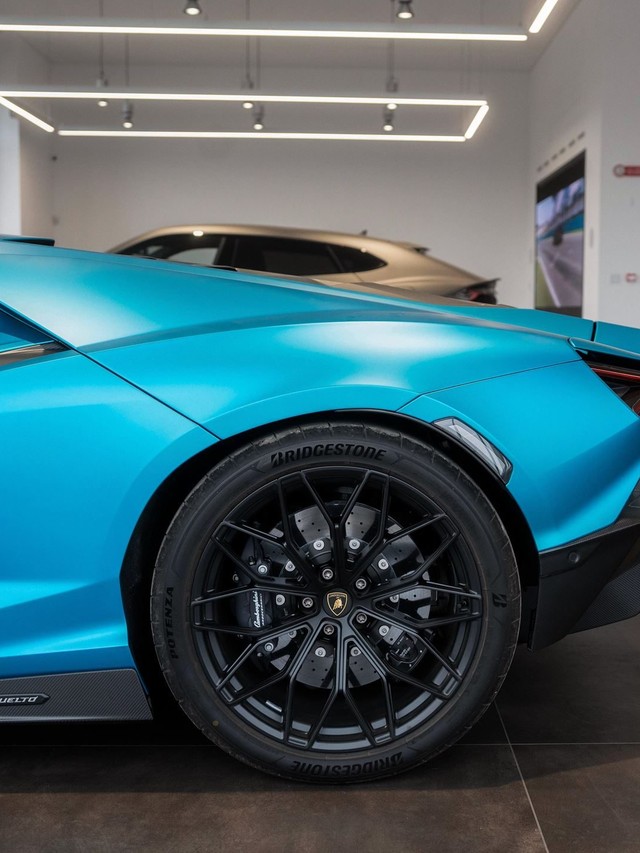
The Temerario’s High-Revving Hybrid Heart
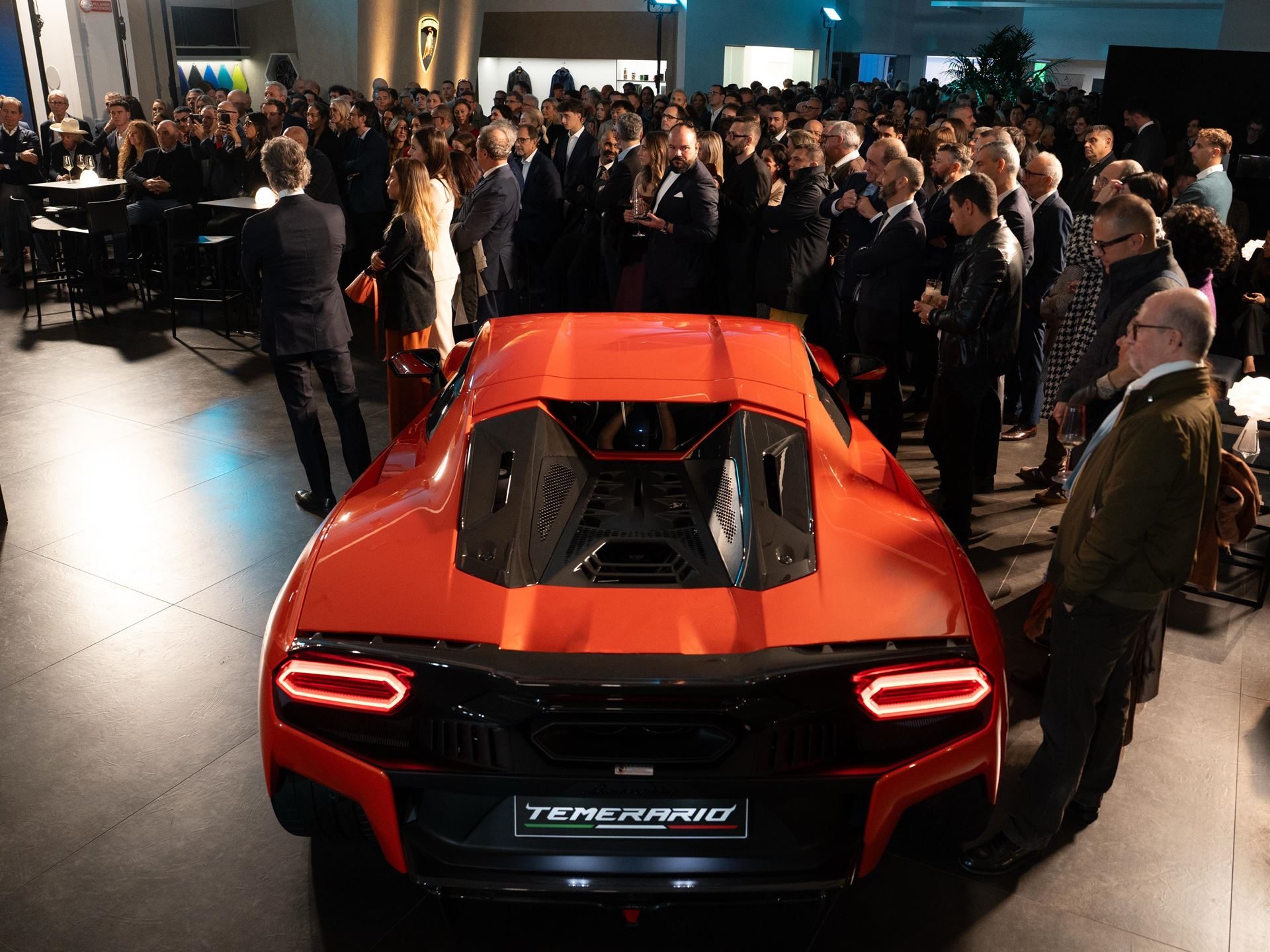
The car drawing the biggest crowd on opening night in Turin was the Temerario, and the reason starts with its engine. According to Lamborghini, the Temerario’s all-new twin-turbo V8 can reach 10,000 rpm, a claim the company uses to position it as the only production super sports car capable of that figure. For a turbocharged engine, that redline is extraordinary. One report from Car and Driver details the engineering choices that make it possible: a flat-plane crankshaft, titanium connecting rods, a short-stroke design, and a “hot vee” turbocharger layout that tucks the turbos between the cylinder banks for tighter packaging and faster spool.
The V8 alone reportedly produces 800 PS between 9,000 and 9,750 rpm, with the hybrid system’s three axial-flux electric motors pushing combined output to 920 CV. One motor sits between the engine and an 8-speed dual-clutch gearbox, filling torque gaps and smoothing turbo lag. The other two drive the front wheels independently, delivering all-wheel drive without a mechanical prop shaft. This is a fundamentally different architecture from the naturally aspirated V10 that defined the Huracán for a decade, and seeing it displayed in a brand-new Italian showroom underscores how completely Lamborghini’s product lineup now revolves around hybridization.
For prospective buyers, the practical takeaway is clear: the Temerario represents Lamborghini’s answer to the question of whether forced induction and electrification can coexist with the kind of mechanical drama the brand built its reputation on. A 10,000-rpm redline on a turbo V8 is the company’s way of saying yes. That this car anchored the Turin opening, rather than the flagship Revuelto, tells you where Lamborghini believes its technological story is most compelling right now.
Lamborghini’s Strategic Italian Expansion
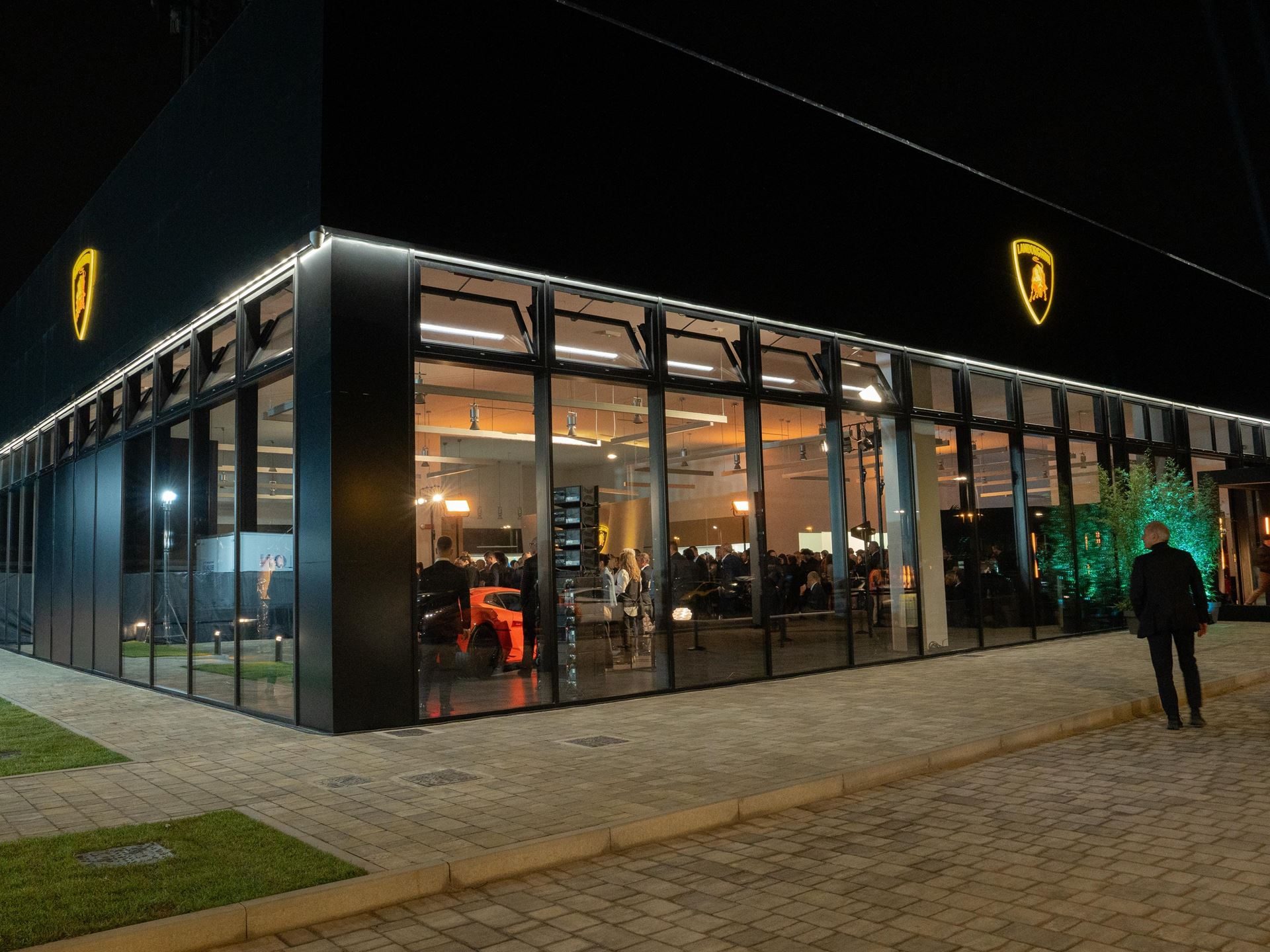
Lamborghini inaugurated the Turin facility on Thursday, October 30, making it the brand’s seventh location in Italy and bringing the global dealer network to 185 locations across 56 countries. The company reported 10,687 cars delivered worldwide in 2024 and employs approximately 3,000 people, so this is a brand operating at meaningful scale rather than boutique volume.
Opening a showroom in Turin carries particular resonance. The Piedmont capital is historically associated with Fiat, Lancia, and the broader Italian automotive establishment. Planting a flag on Corso Allamano signals confidence in the domestic market at a time when many luxury brands focus expansion almost exclusively on the Middle East and Asia. Around 500 guests attended the inauguration, with Chairman and CEO Stephan Winkelmann and Chief Marketing & Sales Officer Federico Foschini both present alongside the showroom’s two local representatives: General Manager Gabriele Vigo and President Rinaldo “Dindo” Capello, the three-time Le Mans winner turned automotive entrepreneur. Capello’s involvement lends the Turin operation a layer of motorsport credibility that most Lamborghini dealership openings simply cannot claim.

The Turin Showroom Experience: Ad Personam and Beyond
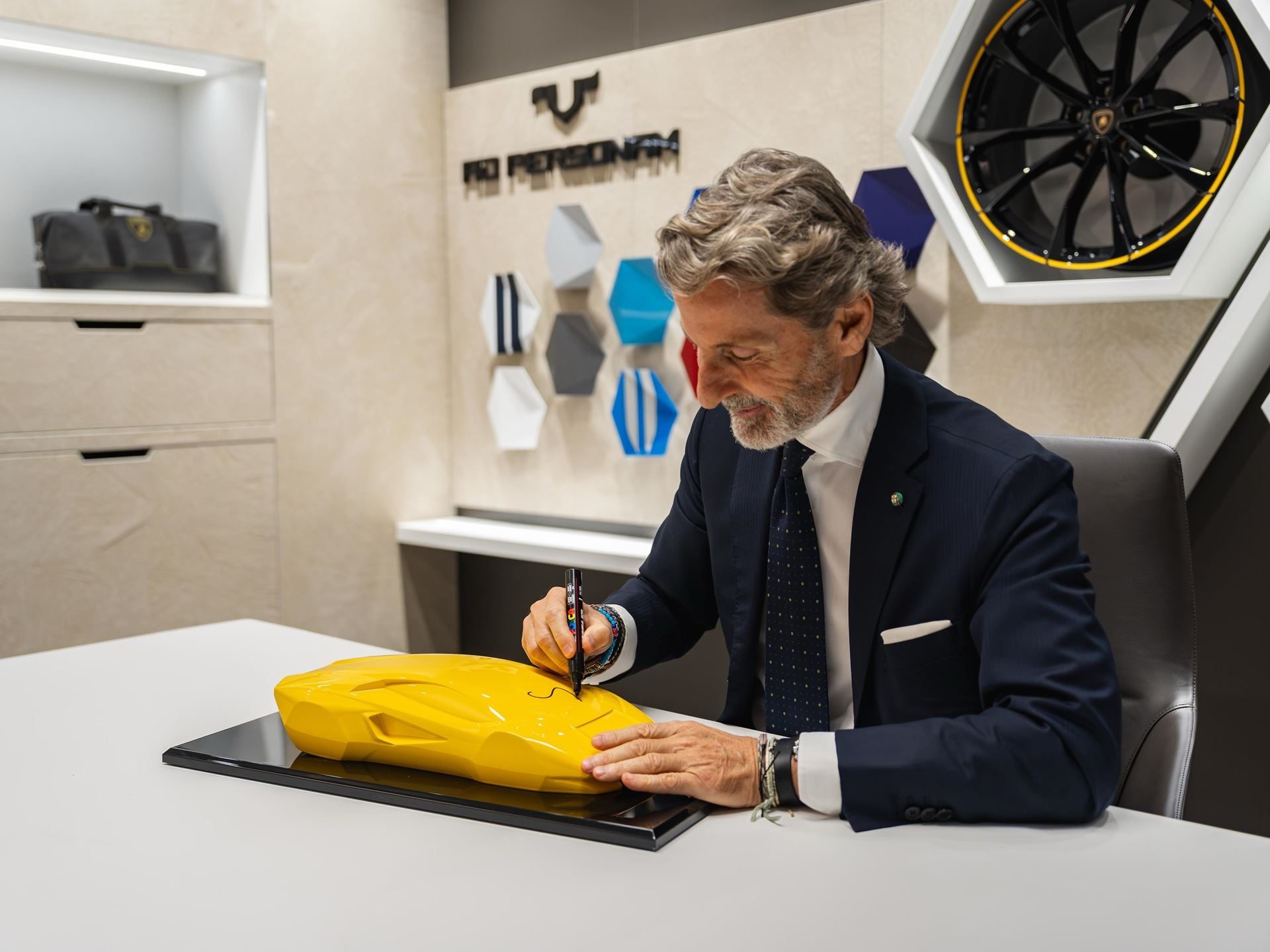
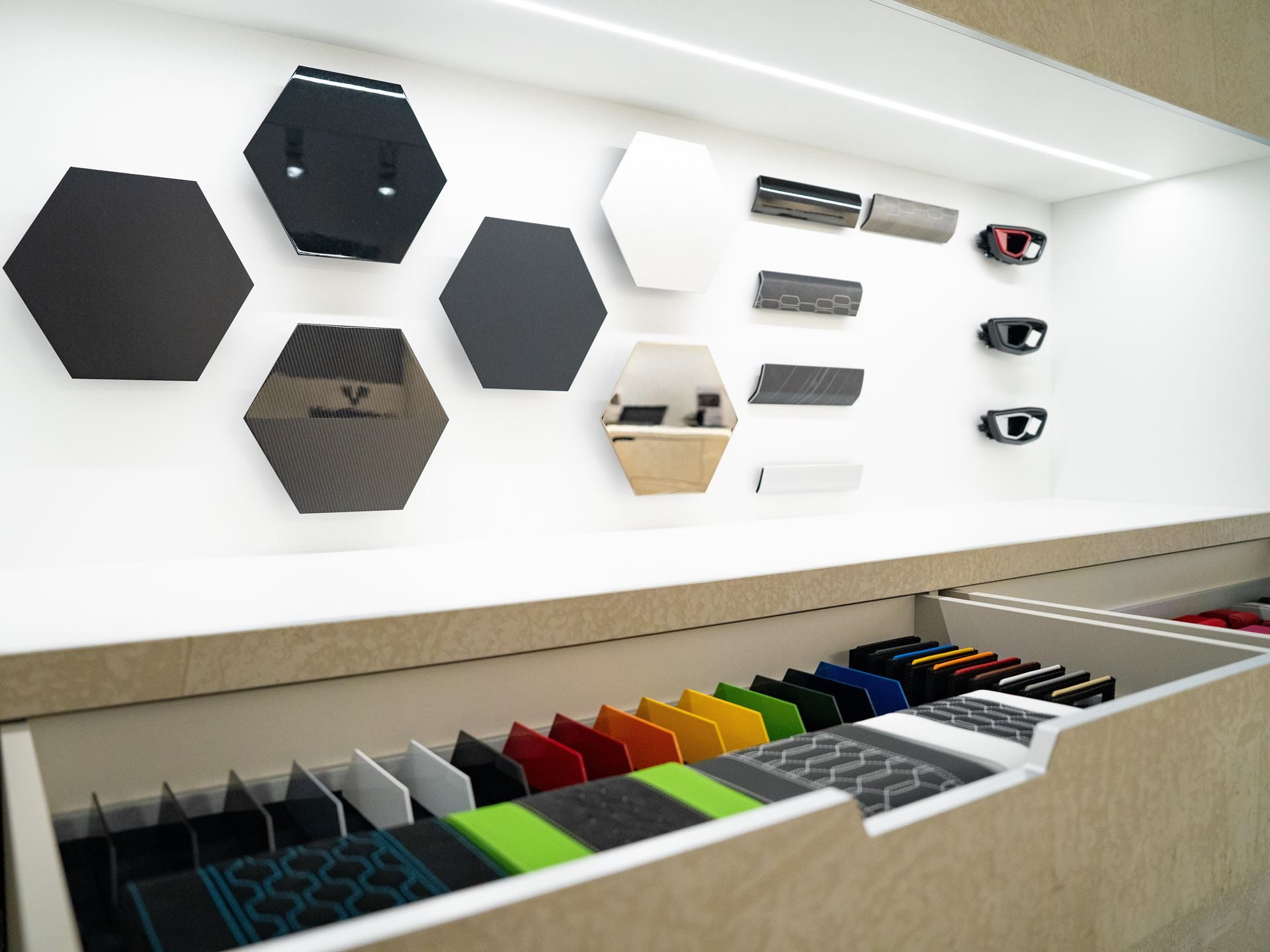
Spanning 1,400 square meters, the Turin showroom comprises three distinct zones: the main display floor, a service workshop, and a dedicated Ad Personam customization space. That last element is increasingly central to how Lamborghini sells cars. Ad Personam allows clients to personalize their vehicles across a wide range of details, and the physical studio in Turin gives buyers in the region a hands-on environment to work through those choices rather than relying on a configurator screen.
Photos from the opening show hexagonal material samples, drawers of color swatches, wheel options, and interior trim pieces arranged for tactile comparison. A separate image reveals paint chips, leather hides, and a digital display rendering a green Lamborghini in real time as options are selected. For anyone who has spec’d a car remotely, the difference between scrolling through a website and physically holding a swatch of Alcantara next to a carbon-fiber weave is substantial. Experienced Lamborghini buyers tend to spend considerable time in these studios, and the fact that the company continues to build them into new showrooms rather than consolidating personalization at Sant’Agata suggests it views the in-person configuration experience as a competitive advantage worth replicating.
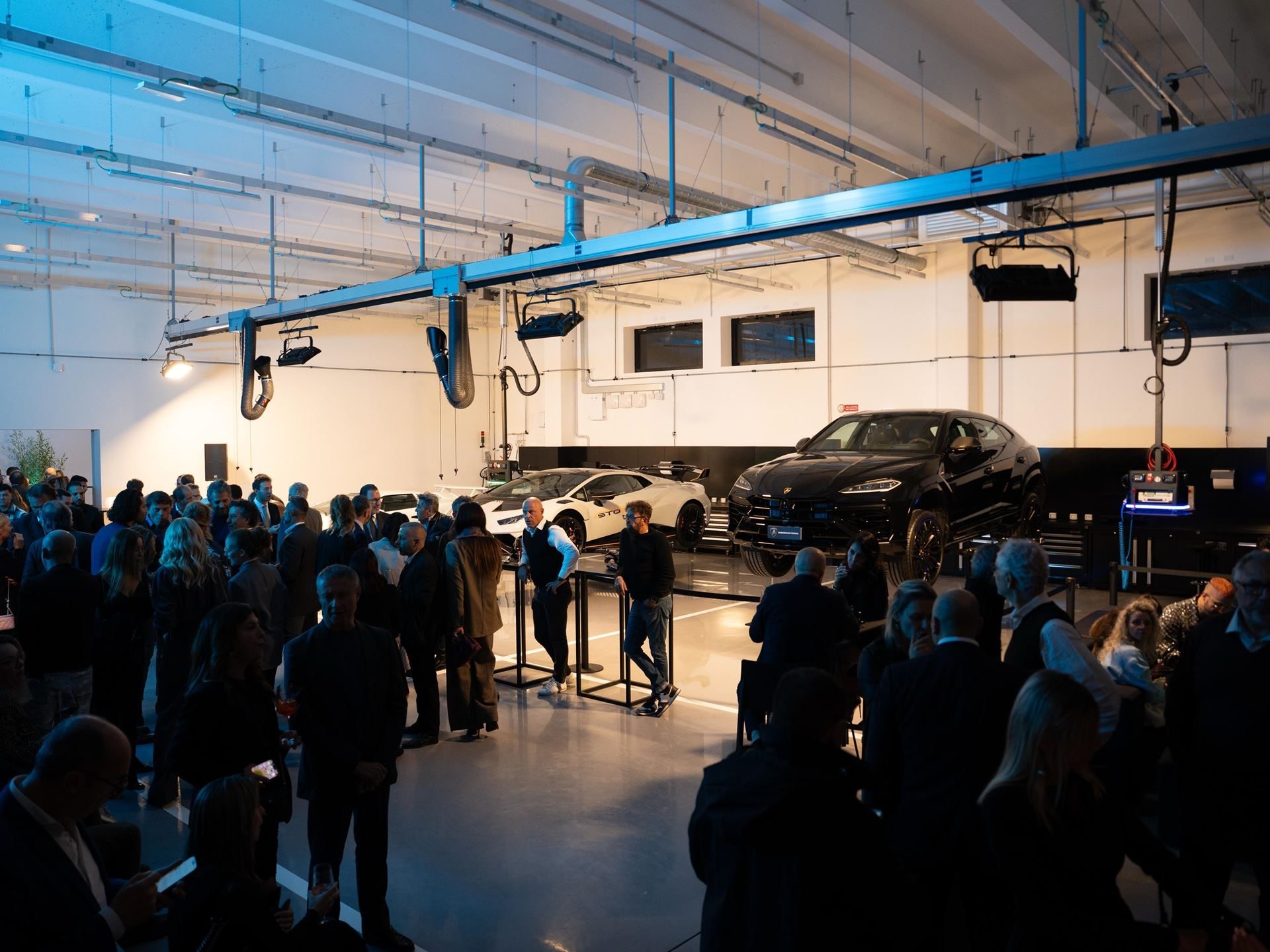
The workshop, visible in event photography with a blue Revuelto and a grey Urus elevated on lifts, rounds out the facility. Owners in the Turin area now have a local service point rather than traveling to one of the other six Italian locations.

The Broader Hybrid Lineup and Future Vision
All three models from what Lamborghini describes as the first fully hybridized lineup in the super sports car segment were present at the inauguration: the Revuelto, the Urus SE, and the Temerario. Lamborghini calls the Revuelto a V12 HPEV (High Performance Electrified Vehicle), while the Urus SE carries the company’s claim of being the first plug-in hybrid Super SUV. Together with the Temerario, these three models represent a complete generational shift from the naturally aspirated engines that defined the brand for decades.
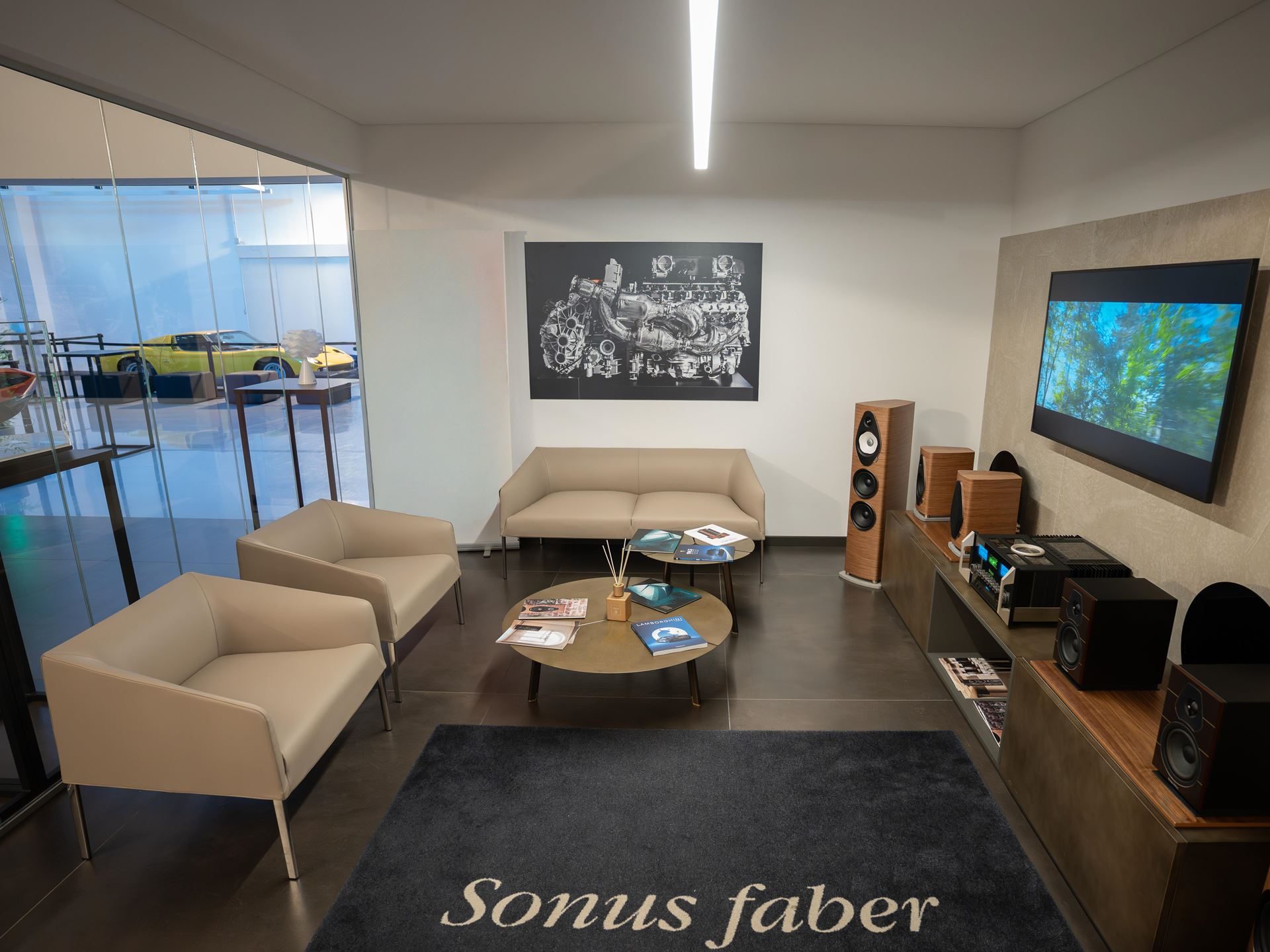
Heritage models also lined the showroom floor, including the Miura and Countach, alongside more recent cars like the Urus Performante and Huracán Sterrato. Placing the old guard next to the new hybrid lineup is a deliberate curatorial choice, one that lets visitors trace the arc from Bizzarrini’s original V12 architecture through to the electrified powertrains of today. The Temerario’s 10,000-rpm turbo V8 sits at the sharp end of that arc, proof that Lamborghini’s engineers treated hybridization as a performance opportunity rather than a regulatory concession.
Lamborghini’s decarbonization roadmap, called Direzione Cor Tauri, guides its broader sustainability commitments, and the company says its Sant’Agata Bolognese production site has maintained carbon-neutral status for over a decade. None of this changes what the cars feel like on the road, but it frames the hybrid lineup as part of a longer strategic arc rather than a reaction to regulation.

Competitive Landscape and Market Position
Lamborghini did not disclose the investment behind the Turin facility, how many staff it employs, or whether it will serve a defined regional territory beyond the city itself. Those details matter for prospective owners trying to gauge service capacity and delivery logistics, but they remain unanswered for now.
What the opening does confirm is continued physical retail investment at a moment when some luxury brands are experimenting with pop-up formats and digital-first sales models. A 1,400-square-meter permanent Lamborghini dealership with a full workshop and a dedicated personalization studio is a substantial commitment. For owners and buyers in northwest Italy, the practical benefit is straightforward: closer access to sales, service, and the Ad Personam experience without a trip to Milan or Bologna.
The broader pattern is worth watching. Lamborghini now operates 185 dealer locations globally, and the pace of openings suggests the company sees room to grow its retail footprint even as production volumes remain deliberately constrained. Whether Turin is the last Italian addition for a while or the start of further domestic expansion is something the company has not addressed. But for a brand that delivered just over 10,000 cars last year, seven Italian showrooms represent a density that speaks to the strength of the home market and to the confidence Lamborghini places in a hybrid lineup led by a 10,000-rpm engine that no rival currently matches.

Gallery