A 650 HP Support Car for a 1,238 km Hike-and-Fly Race
On June 20, 2021, Lamborghini sent a Urus into the Alps to do something no other car in its lineup could credibly attempt: shadow a paragliding champion across five countries, over mountain passes and valley roads, for days on end. The athlete was Aaron Durogati, a 36-year-old two-time world paragliding champion from Merano in northern Italy, and the event was the Red Bull X-Alps, widely considered one of the most punishing endurance races on the planet.
Thirty-three athletes set out to cover 1,238 kilometers of Alpine terrain by hiking and paragliding only, racing daily from 5 a.m. to 10 p.m. across twelve mandatory checkpoints spanning Austria, Germany, Switzerland, France, and Italy before looping back to Austria. Durogati brought multidisciplinary pedigree that made the partnership more than a logo exercise. He had opened new lines of steep skiing and speed-riding in the Alps and Georgia, and his combination of aerial precision, extreme skiing ability, and raw endurance mapped neatly onto the Urus brand positioning: a vehicle Lamborghini says can do everything, everywhere.
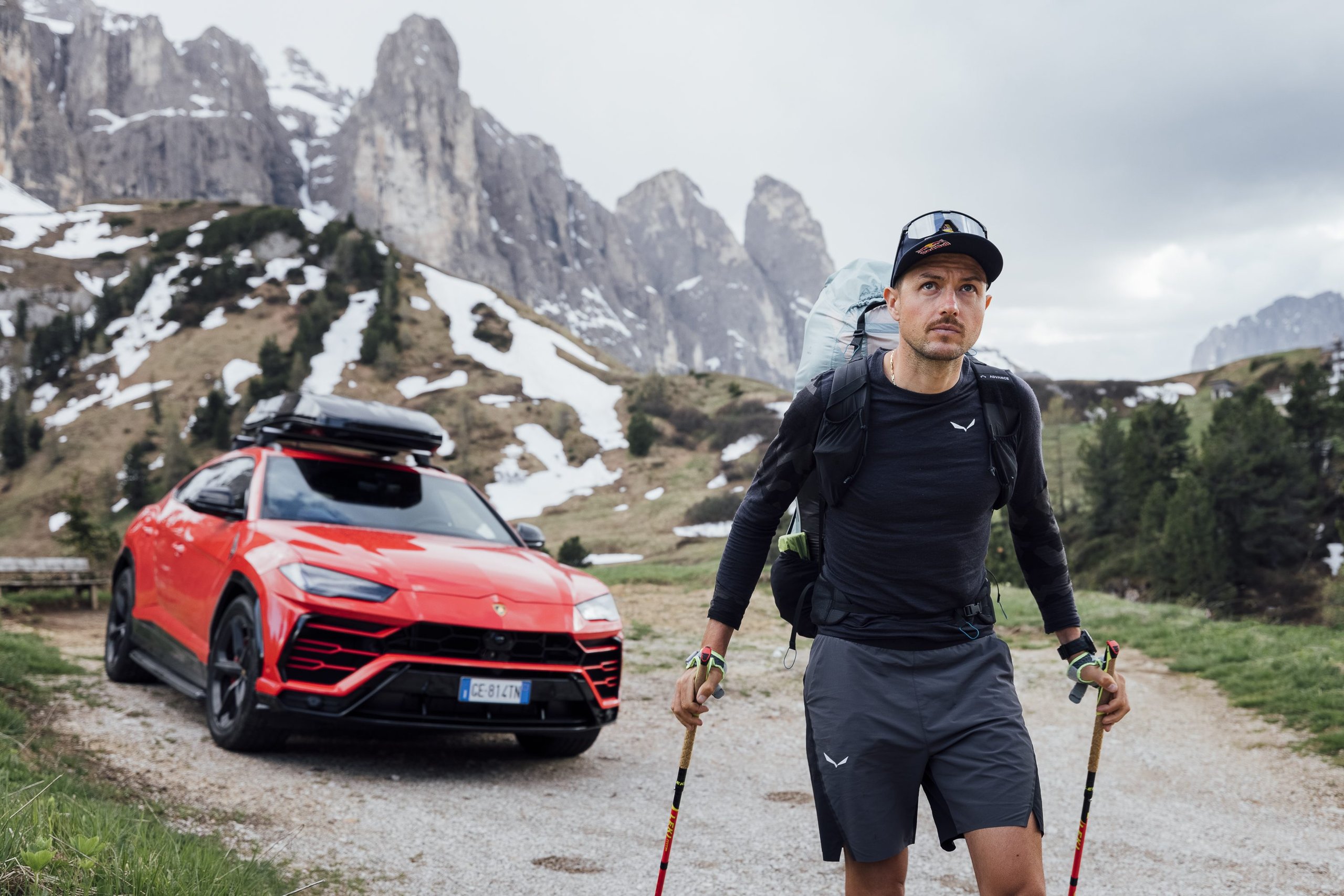
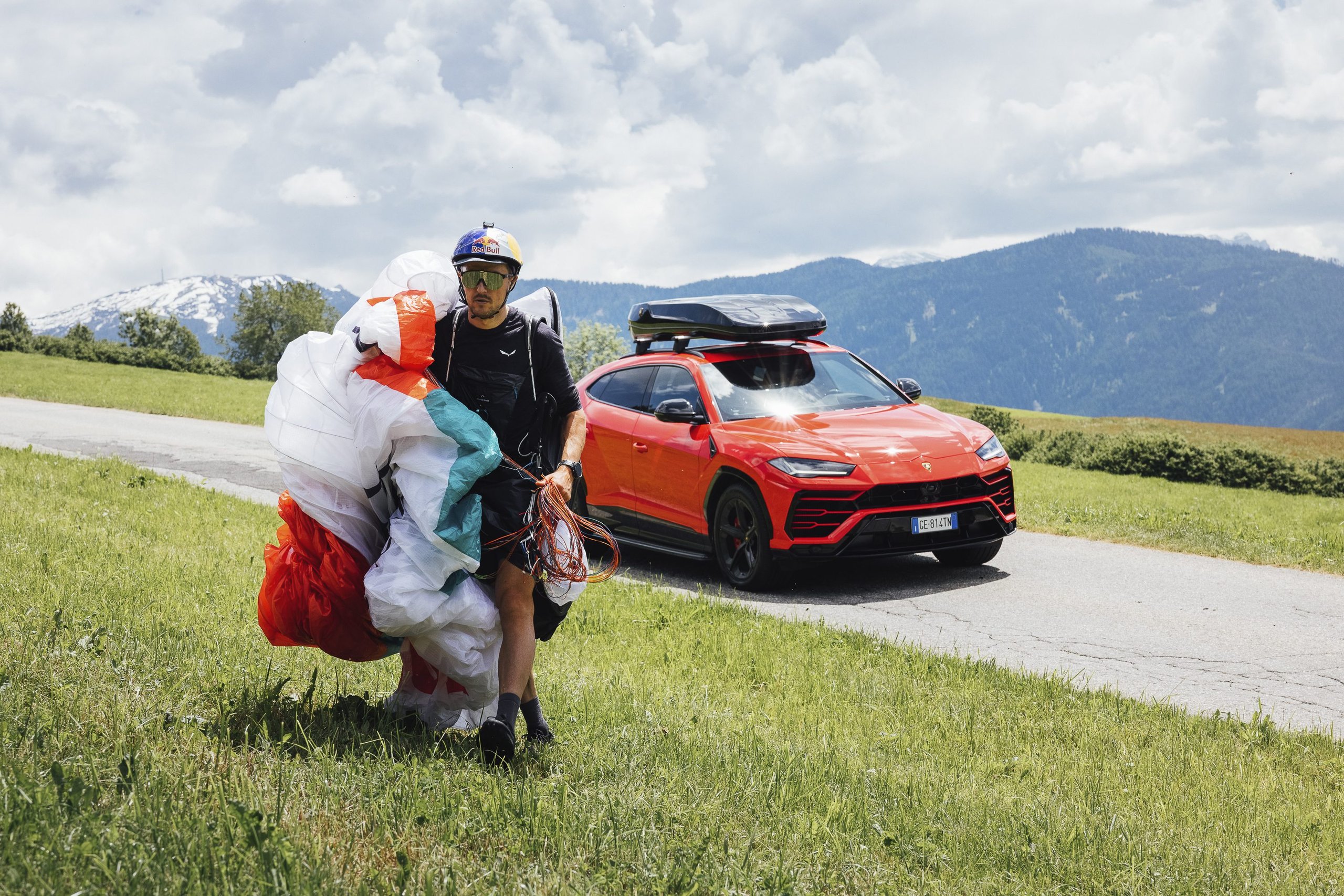
The Urus served as Durogati’s personal ground support vehicle throughout the competition, with his team using it to chase the athlete across a route that demanded constant terrain changes. Lamborghini says the car also supported Durogati during his race preparations in the months leading up to the event.

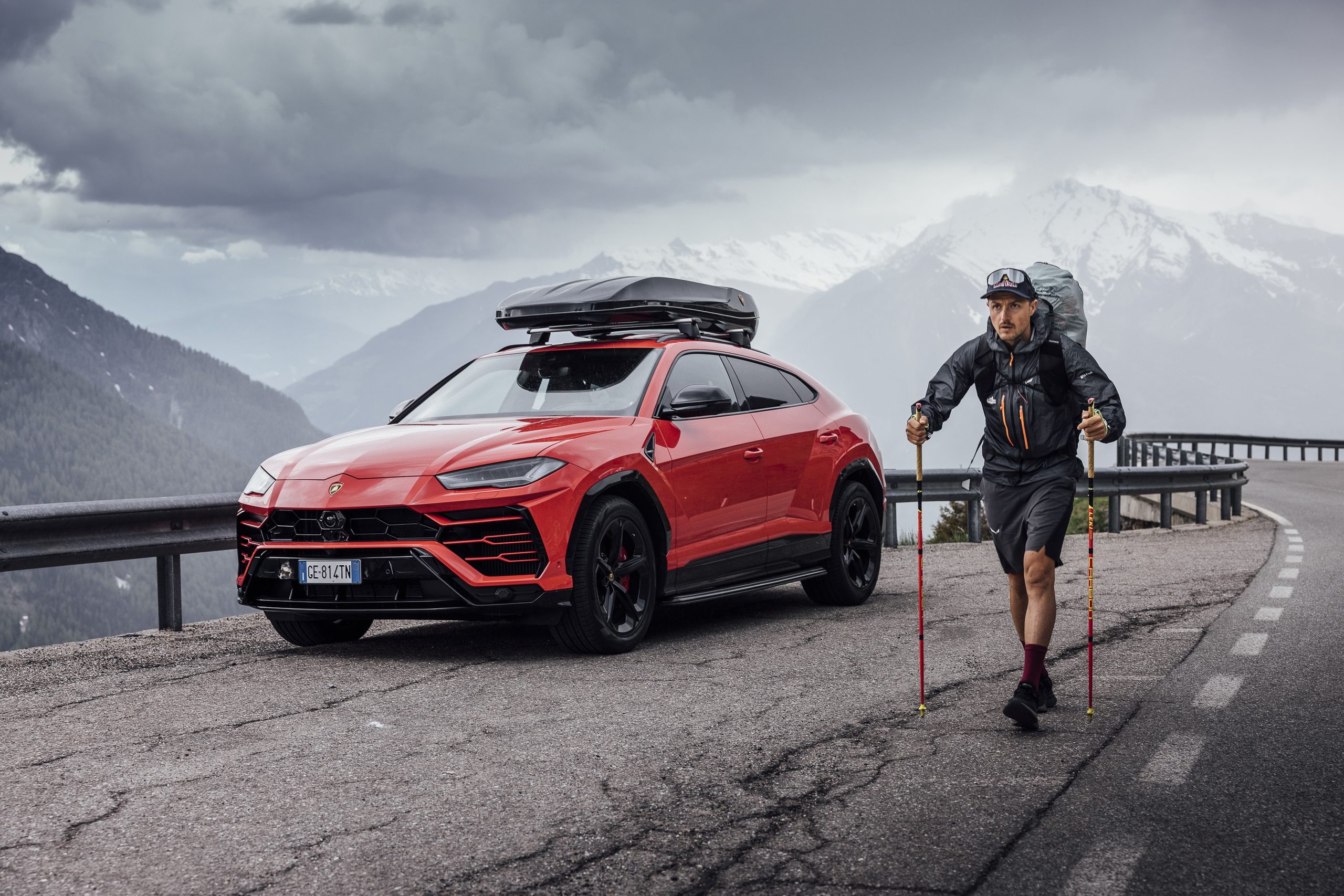
A red Lamborghini Urus supports a paraglider launch on a scenic mountain road under a cloudy sky.
Why Lamborghini Picked a Paraglider, Not a Racing Driver
The pairing was calculated. Lamborghini’s “Unlock Any Road” campaign for the Urus needed to demonstrate something the Huracan and Aventador never could: genuine, sustained off-road utility combined with the kind of long-haul comfort that keeps a support crew functional over days of continuous driving. A circuit racer would reinforce the performance message Lamborghini already owns with its mid-engine cars. A paragliding champion chasing checkpoints through five countries reinforces a completely different argument, one that justifies the Urus’s existence in the lineup: this Lamborghini belongs in places no other Lamborghini could go.
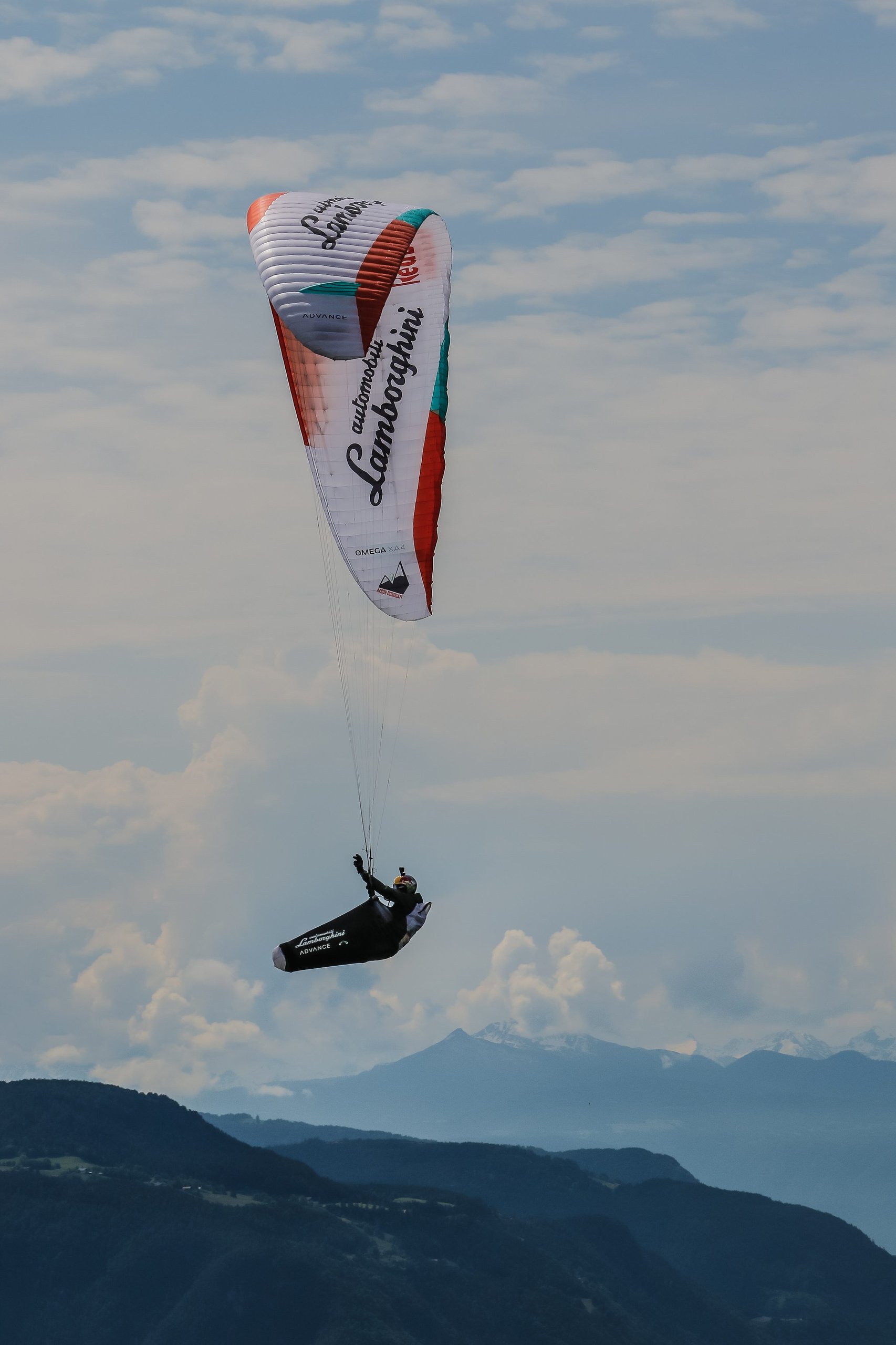
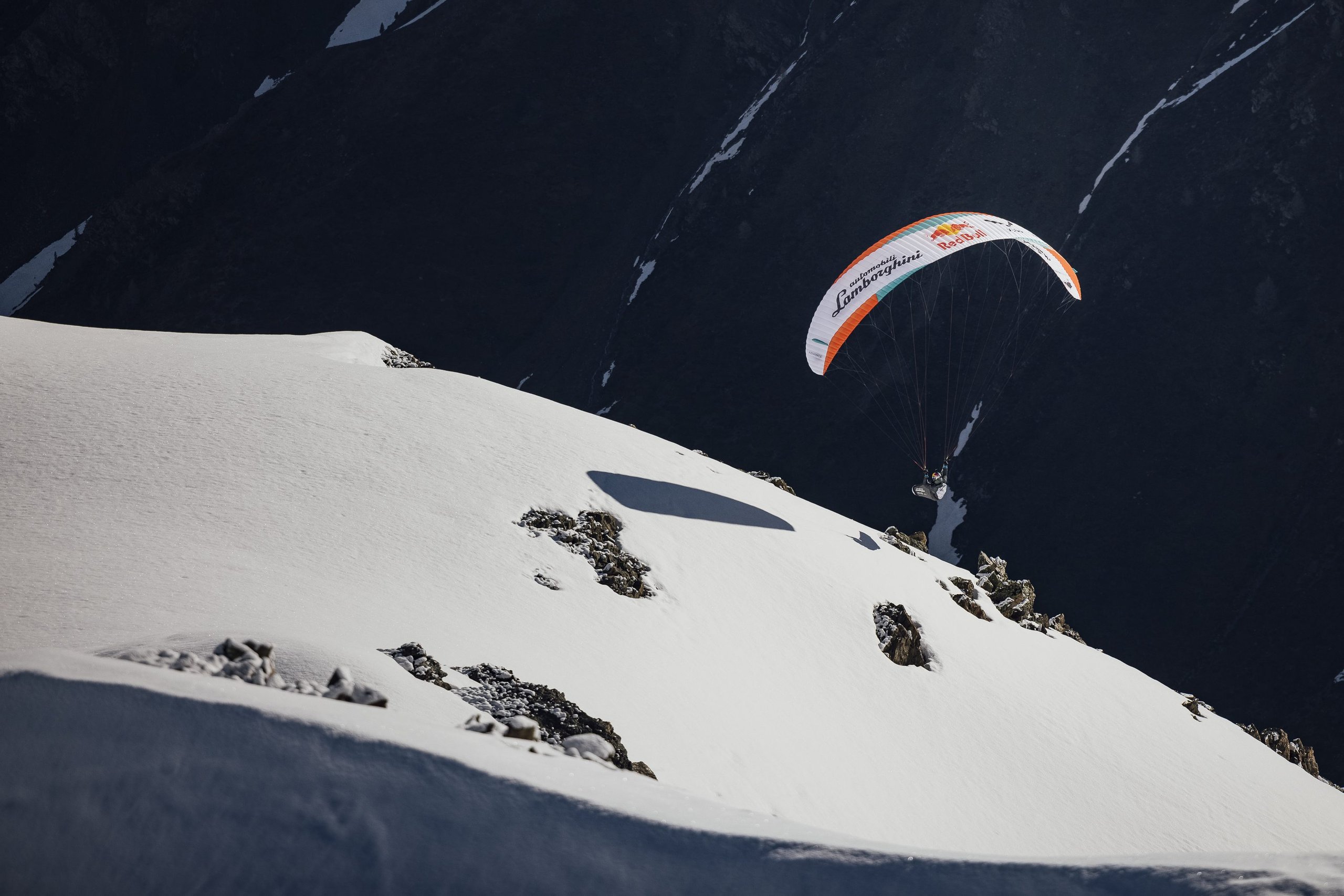
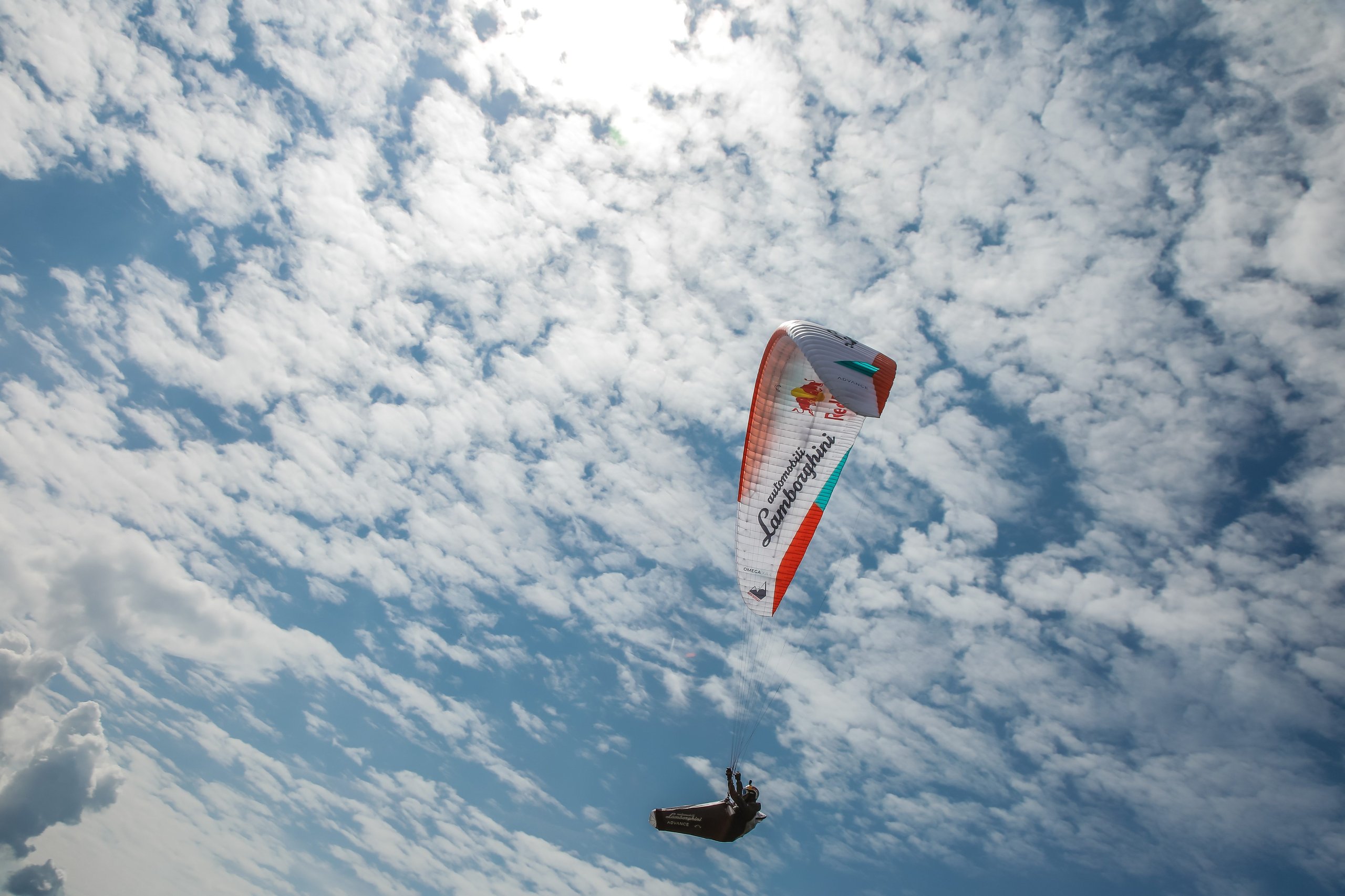
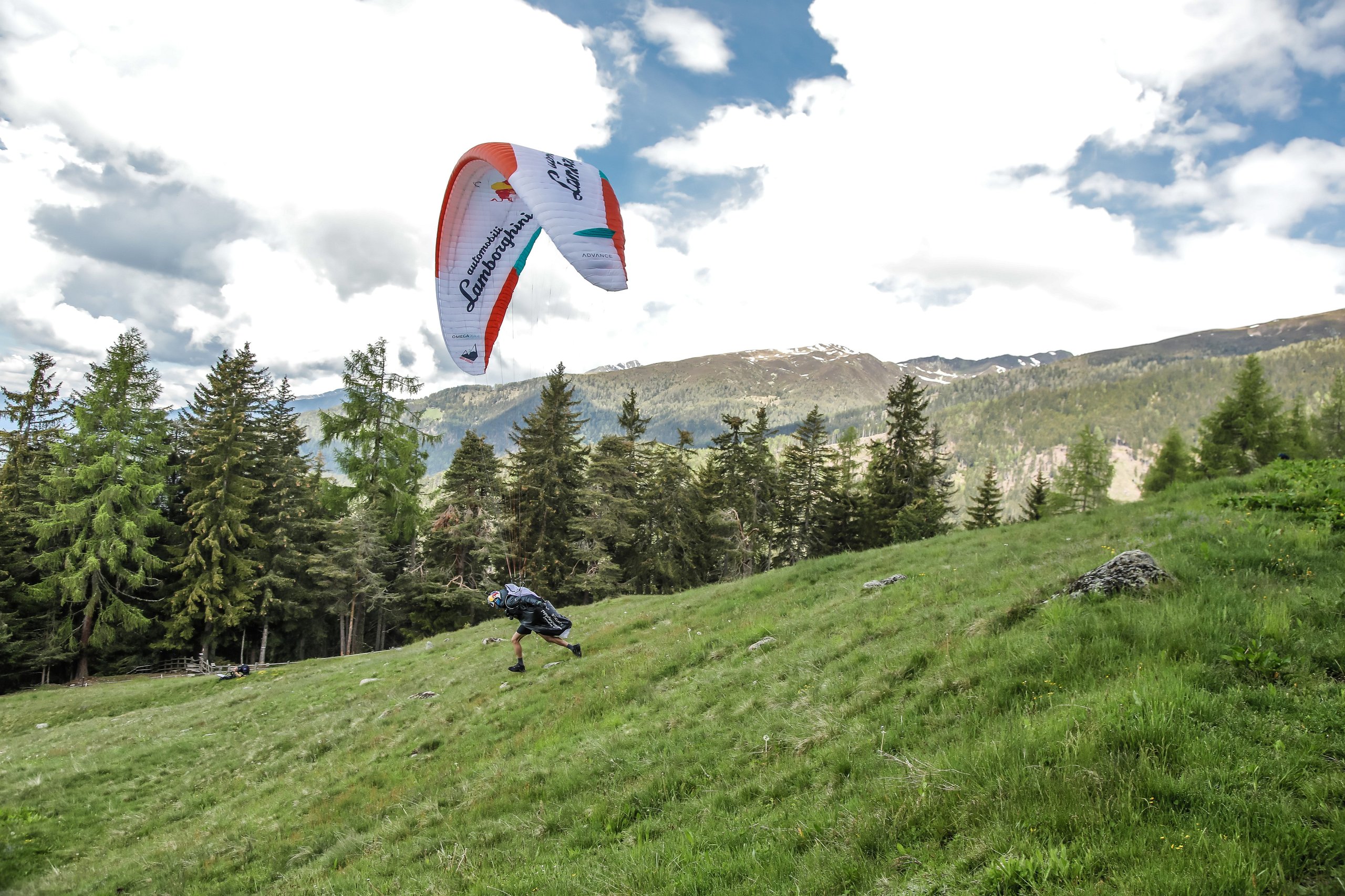
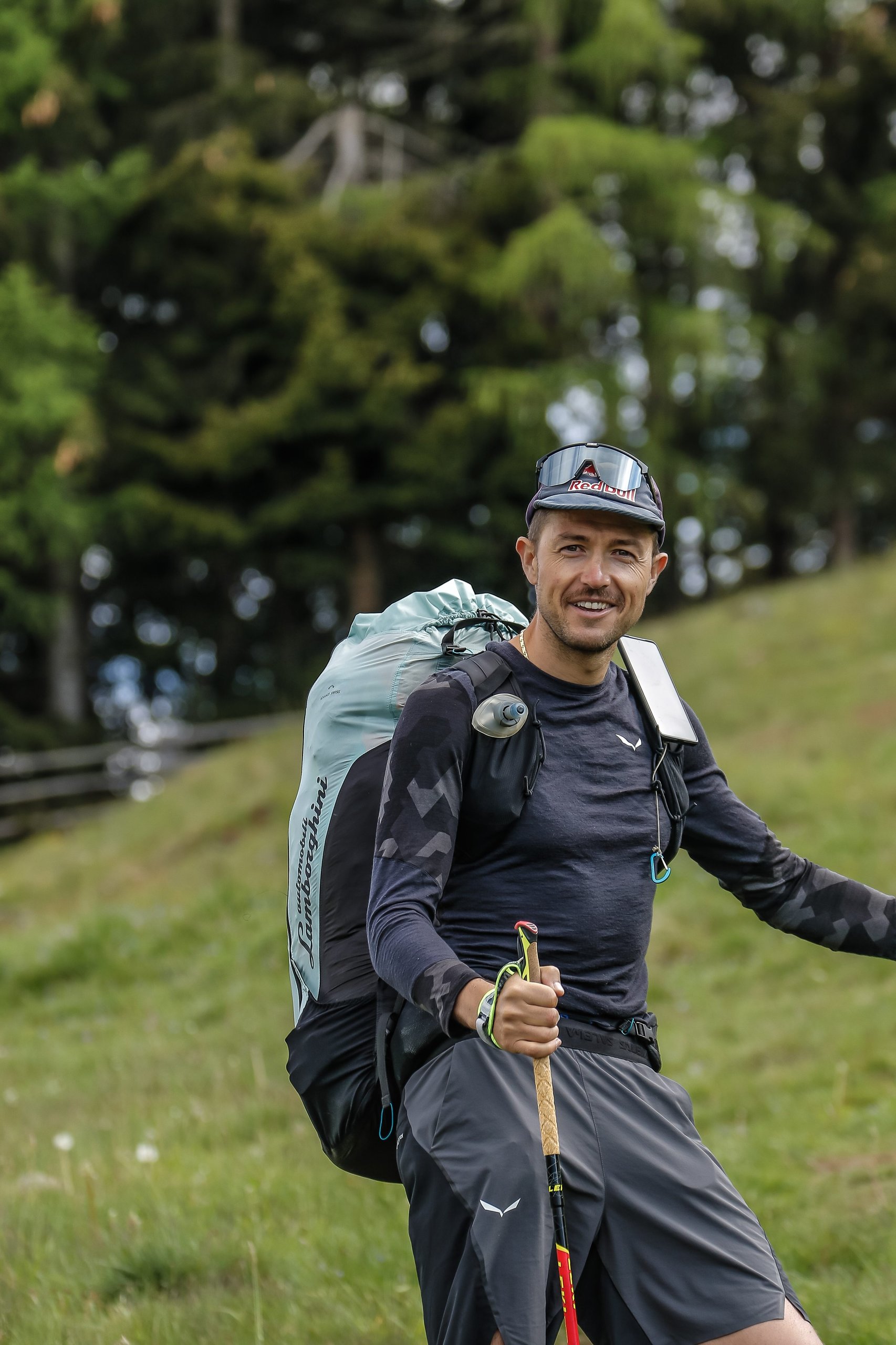
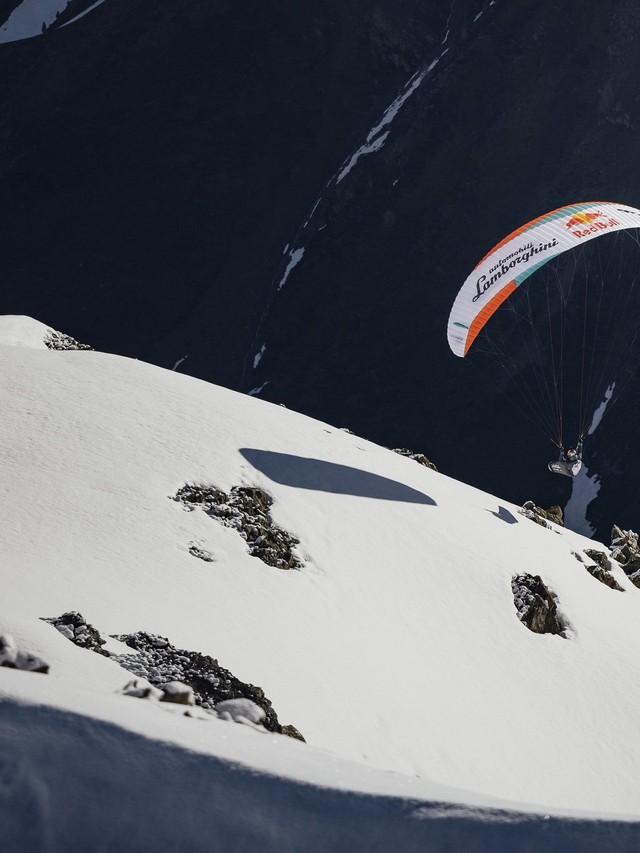
Durogati’s Lamborghini-branded paraglider canopy, visible in the campaign imagery in Italian tricolor green, white, and red, extends the brand above the road surface entirely. The visual message is unmistakable: Lamborghini’s reach now includes the sky, the mountain, and the trail, not just the tarmac.
For enthusiasts who still debate whether the Urus belongs alongside Sant’Agata’s mid-engine icons, campaigns like this one represent the company’s ongoing effort to define the Super SUV on its own terms. The Urus arrived in late 2017 and faced immediate skepticism from purists. By 2021, Lamborghini was confident enough in the model’s commercial success to push it into genuinely demanding real-world scenarios rather than relying solely on lap times or drag strip numbers.

A paraglider with Lamborghini branding is launched from a lush green mountain slope.
The Urus Spec Sheet Behind the Adventure
Strip away the campaign photography and the Urus that supported Durogati ran the standard 4.0-liter twin-turbocharged V8 producing 650 HP at 6,000 rpm and 850 Nm of torque from 2,250 rpm. Lamborghini says the car achieves 0-100 km/h in 3.6 seconds and a top speed of 305 km/h. For a support vehicle tasked with chasing an athlete across Alpine passes, though, the more relevant numbers are the ones Lamborghini rarely headlines: four-wheel drive, four-wheel steering, adaptive air suspension, active anti-roll bars, and the ANIMA system’s six drive modes (STRADA, SPORT, CORSA, TERRA, NEVE, SABBIA).
TERRA and NEVE, designed for loose surfaces and snow respectively, are the modes that matter on unpaved mountain access roads at altitude. The air suspension’s ability to raise ride height gives the Urus genuine ground clearance when the pavement ends. Combined with the roof box visible in the campaign photos, the car functioned as a proper expedition vehicle carrying paragliding gear, trekking equipment, and support supplies.
| Specification | Value |
|---|---|
| Engine | 4.0L Twin-Turbo V8 |
| Power | 650 HP (478 kW) @ 6,000 rpm |
| Torque | 850 Nm @ 2,250 rpm |
| 0-100 km/h | 3.6 seconds |
| Top Speed | 305 km/h |
| Drive Modes | STRADA, SPORT, CORSA, TERRA, NEVE, SABBIA |
Owners who actually use their Urus for road trips and outdoor pursuits already know this capability exists. The Red Bull X-Alps campaign simply puts it on camera in a context more demanding than most will ever encounter.

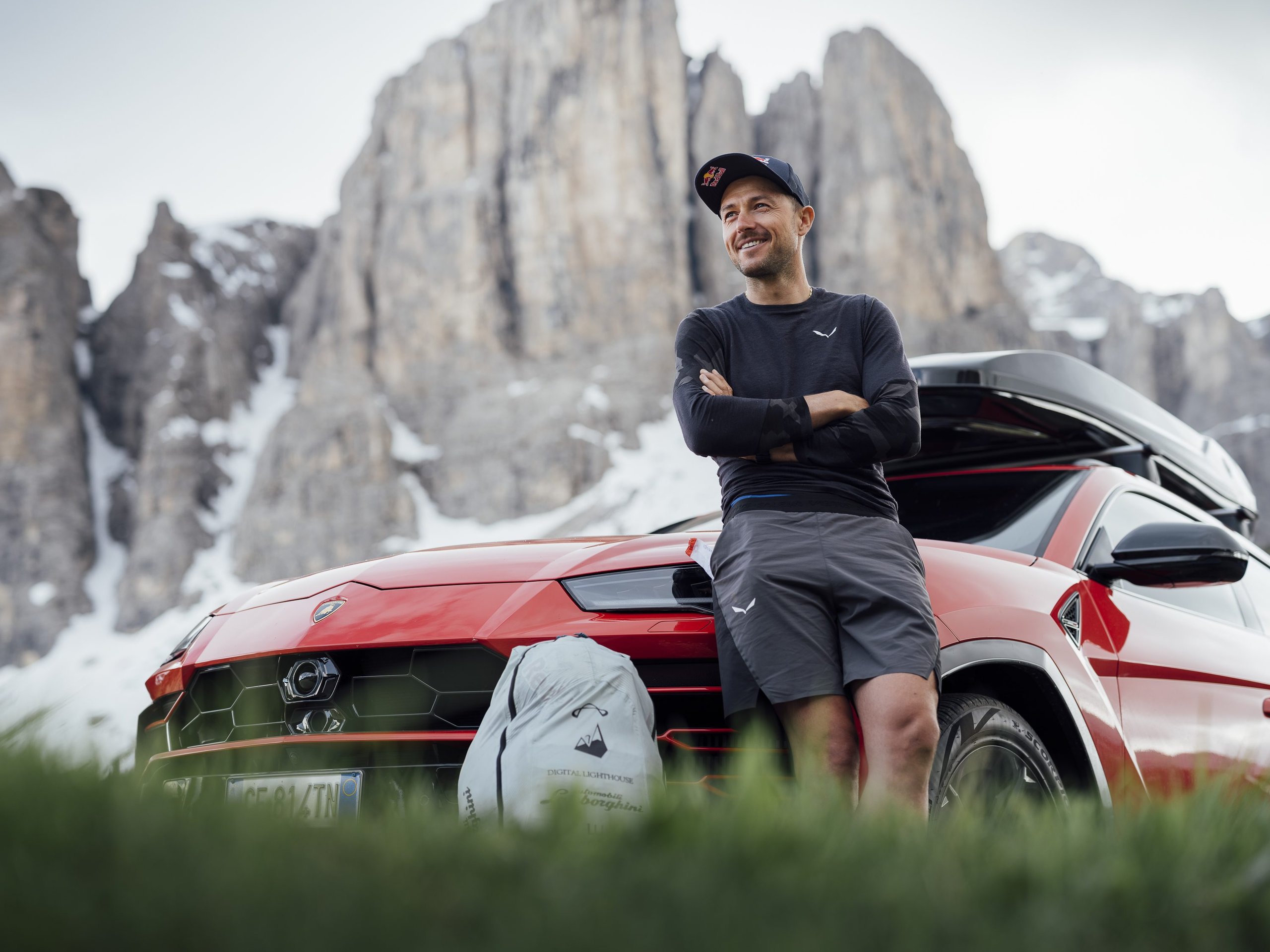
Aaron Durogati, an extreme sports athlete, sits in the luxurious interior of a Lamborghini Urus.
What This Means for the Urus in Lamborghini’s Lineup
The Urus transformed Lamborghini’s business. CarBuzz reported that the model set sales records for the company, and its commercial impact funded much of what followed in Sant’Agata’s product pipeline. When the Urus launched, critics called it a rebadged Audi RS Q8. By 2021, Lamborghini was using it to chase a paraglider through five countries, and nobody at the company seemed particularly worried about the comparison anymore.
The Durogati partnership also fits a broader pattern. Lamborghini has increasingly positioned the Urus in extreme environments, from Iceland to alpine passes, building a visual library that proves the car works beyond manicured European highways. For competitors like the Aston Martin DBX, Bentley Bentayga, and Ferrari Purosangue (which arrived later), the challenge is similar: convince buyers that a luxury SUV from a supercar brand can handle actual terrain. Lamborghini got to this argument first and pushed it further than most.
For prospective buyers, the practical takeaway from the Red Bull X-Alps support role is straightforward. The TERRA and NEVE drive modes, the air suspension’s height adjustment, and the four-wheel steering system are not marketing decorations. When Lamborghini says the Urus can “unlock any road,” the Durogati campaign provides visual evidence of what that looks like at altitude, on gravel, and under time pressure. Whether most owners will ever demand that capability is another question entirely, but knowing the engineering supports it adds genuine value to the ownership proposition.

Aaron Durogati leans against a red Lamborghini Urus, holding trekking poles amidst a stunning mountain backdrop.
What Lamborghini Left Out
Lamborghini confirmed the Urus’s role as Durogati’s support vehicle and detailed the Red Bull X-Alps race format, but several details remain absent. The company did not disclose whether the Urus received any mechanical modifications for Alpine support duty, whether additional ground clearance protection or underbody shielding was fitted, or what specific equipment the roof box carried. Durogati’s race result is also not addressed in the source material.
The broader question of whether Lamborghini planned to extend the Durogati partnership or develop an adventure-oriented Urus variant remains unanswered. The Urus Performante and Urus SE arrived in subsequent years with performance and hybrid focuses respectively, but no dedicated off-road or expedition package materialized. For now, the Red Bull X-Alps campaign stands as a one-off demonstration of capability rather than a signal of a new product direction.
Gallery