The Urus Splits in Two, and That Changes the Buying Decision
Lamborghini’s most commercially successful model now comes with a genuine choice. The Urus S replaces the original Urus as the brand’s refined, versatile Super SUV, while the Urus Performante occupies the harder, track-biased end of the spectrum. Both produce 666 CV from the same 4.0-liter twin-turbo V8. Both sprint to 100 km/h in 3.5 seconds. Both top out at 305 km/h. The numbers are identical. The character is not.
What Lamborghini created with this two-model lineup is a lateral split, not a vertical one. The Urus S and Performante share the same output, the same powertrain calibration, and the same torque figure of 850 Nm. Every point of differentiation lives in chassis tuning, suspension philosophy, design language, and interior specification. Prospective owners who assumed the “S” would sit below the Performante in some performance pecking order will find that assumption overturned the moment they compare spec sheets.
With more than 20,000 Urus vehicles produced since the model launched, Lamborghini clearly identified two distinct buyer profiles within that pool and decided to serve each one properly rather than asking a single car to be everything. The result is a lineup that lets the buyer choose a personality rather than compromise between two.
Air Suspension vs. Steel Springs: The Real Difference
Strip away the new color palette and the design revisions, and the fundamental engineering distinction between the Urus S and the Performante comes down to what sits between the wheels and the road. The Urus S rides on adaptive air suspension. The Performante uses conventional adaptive dampers with steel springs, a wider track, and a lower stance calibrated for circuit-style precision.
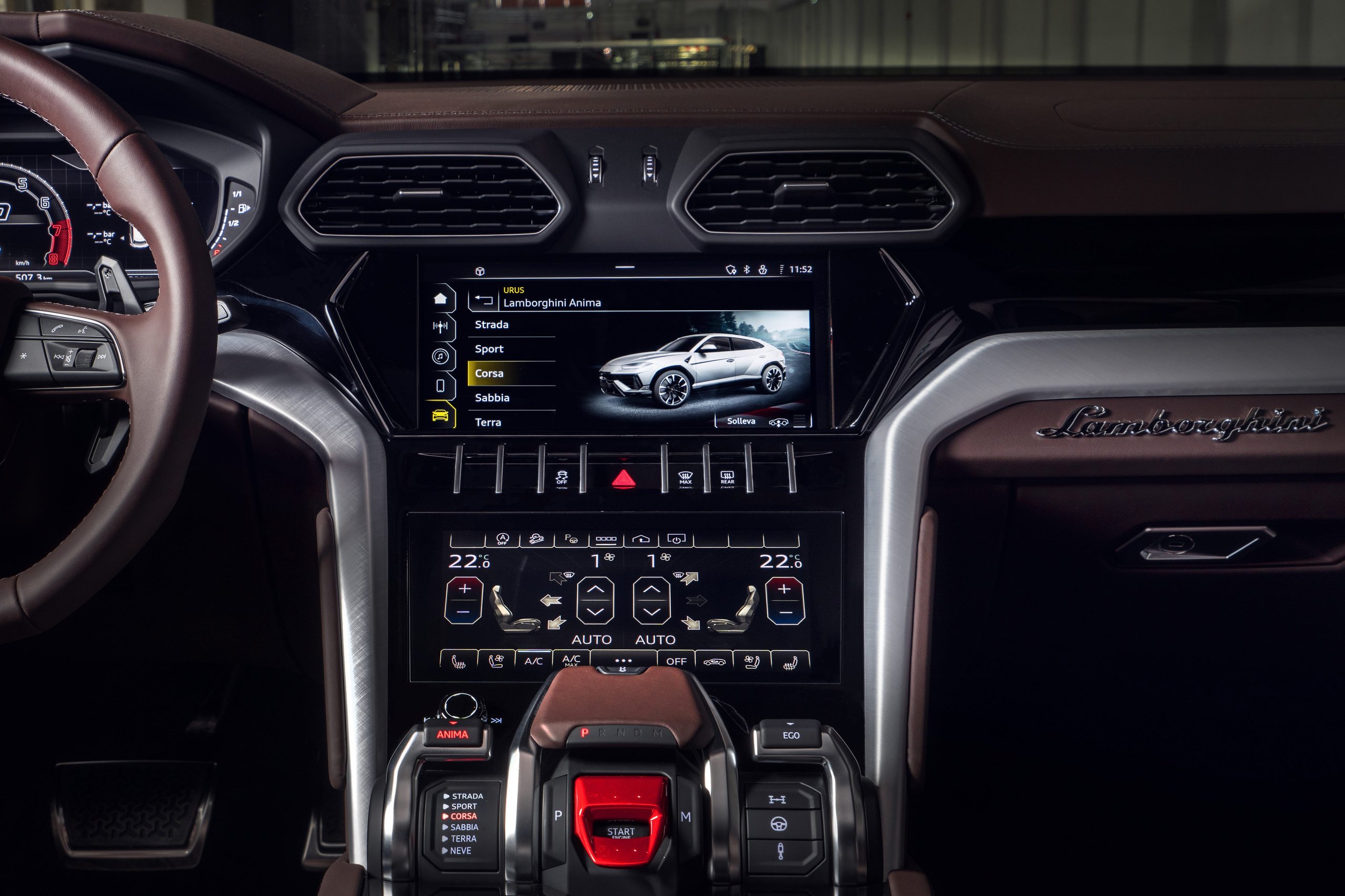
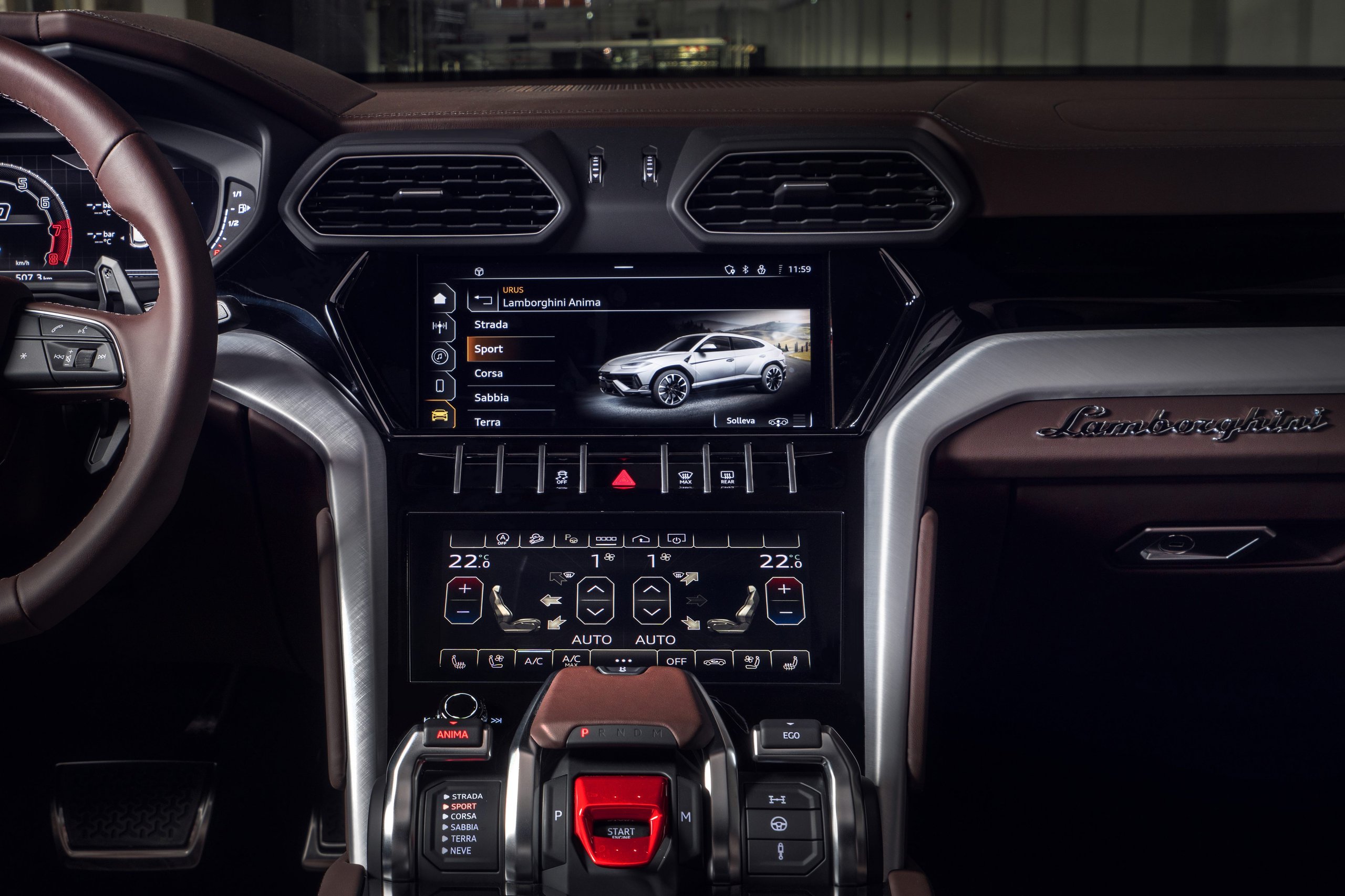
The air suspension on the Urus S does two things steel springs cannot. It adjusts ride height across driving modes, and it provides a compliance that absorbs broken pavement rather than transmitting every surface irregularity into the cabin. Lamborghini says the system adapts across STRADA, SPORT, CORSA, and EGO modes on pavement, plus three off-road selectors: TERRA, NEVE, and SABBIA. The Performante offers the same mode selection, but its stiffer spring rates mean STRADA mode still feels planted and firm rather than genuinely plush.
For owners who plan to use the Urus as a daily driver, and based on production volume that describes the majority of Urus buyers, the air suspension is the more livable choice. The Performante’s steel springs deliver sharper turn-in and a more connected feel through fast corners, but that advantage comes at the cost of the kind of long-distance, any-surface comfort the Urus S prioritizes. Six drive modes plus EGO mode give the S the broadest behavioral range of any Lamborghini Super SUV, reinforcing its role as the variant built for every environment rather than one specific one.

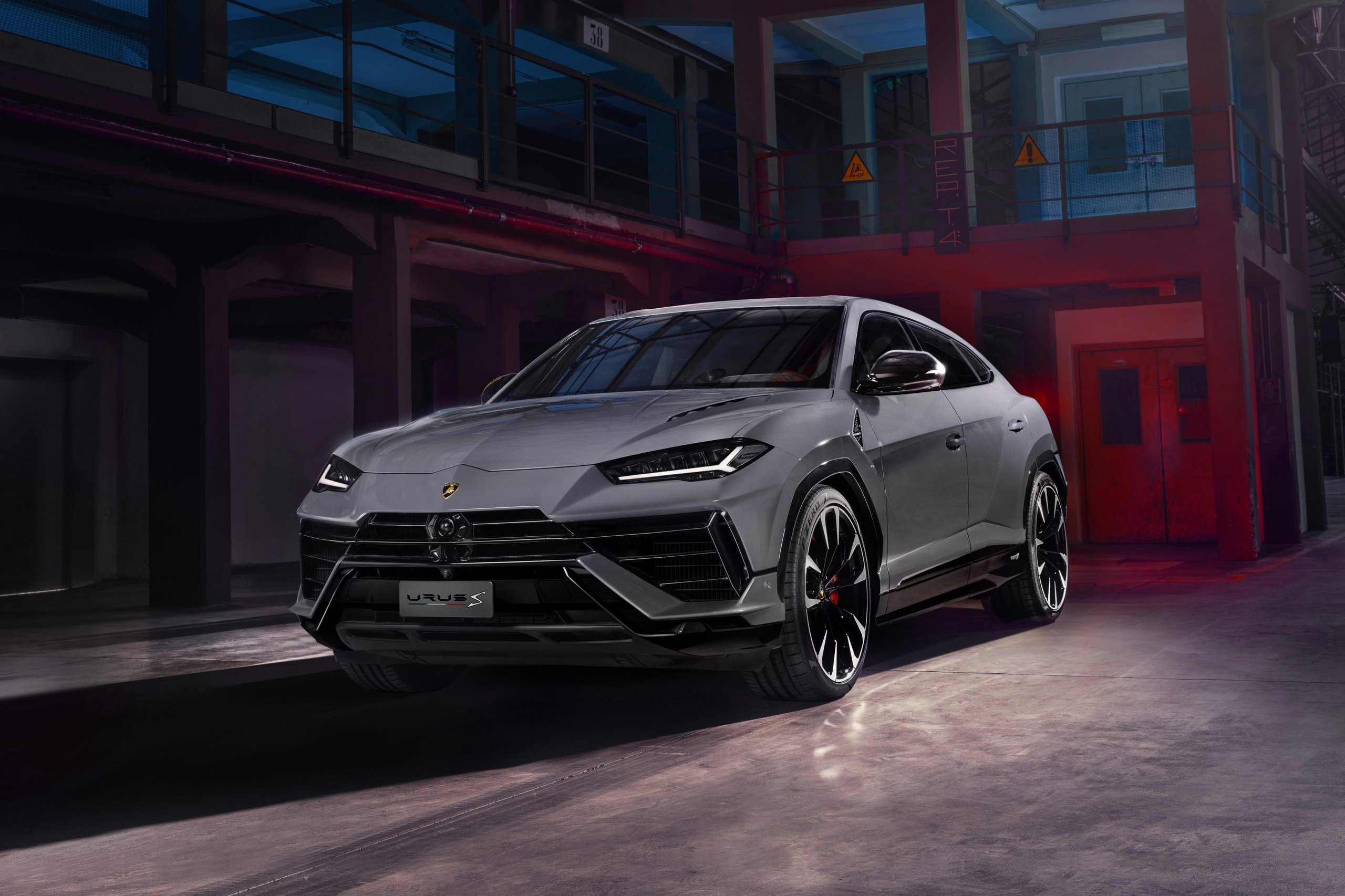
The Lamborghini Urus S reveals its sleek and powerful side profile, emphasizing its dynamic lines.
666 CV and a Retuned Exhaust: Performance Without the Track Pretense
The twin-turbo V8 in the Urus S produces its 850 Nm of torque from 2,300 rpm, holding that plateau all the way to 6,000 rpm. Lamborghini says the powertrain calibration is identical to the Performante’s: same throttle maps, same shift logic, same torque delivery. The Urus S achieves an improved weight-to-power ratio of 3.3 kg/CV and brakes from 100 km/h to a standstill in 33.7 meters.
Where the two cars diverge is the exhaust. A retuned system on the Urus S delivers a more pronounced start-up note and a sharper tone that varies across drive modes. Lamborghini pitched this as a reminder that the Urus S is still, fundamentally, a Lamborghini. The Performante’s exhaust is louder and more theatrical by design, particularly in Corsa mode. The Urus S aims for a more sophisticated register: present and authoritative, but not demanding attention at every stoplight.
The practical buyer takeaway is simple. If you want the identical straight-line performance as the Performante but prefer a car that settles into a quieter, more composed cruising personality on long highway stretches, the Urus S delivers exactly that without sacrificing a single horsepower. That combination of full power and refined delivery is the thread running through every decision Lamborghini made with this variant.

The Urus S features prominent dual exhaust tips, signaling its powerful performance.
Design Language: Refined Aggression
The Urus S wears its updates subtly compared to the Performante’s carbon-fiber-heavy visual aggression. A redesigned front bumper introduces cleaner lines and a matt black stainless steel skidplate as standard, replacing the original Urus’s more pronounced lower treatment. The front grille retains its black accents, but the overall effect is smoother, less combative, and more in keeping with a car designed to project confident restraint rather than track intent.
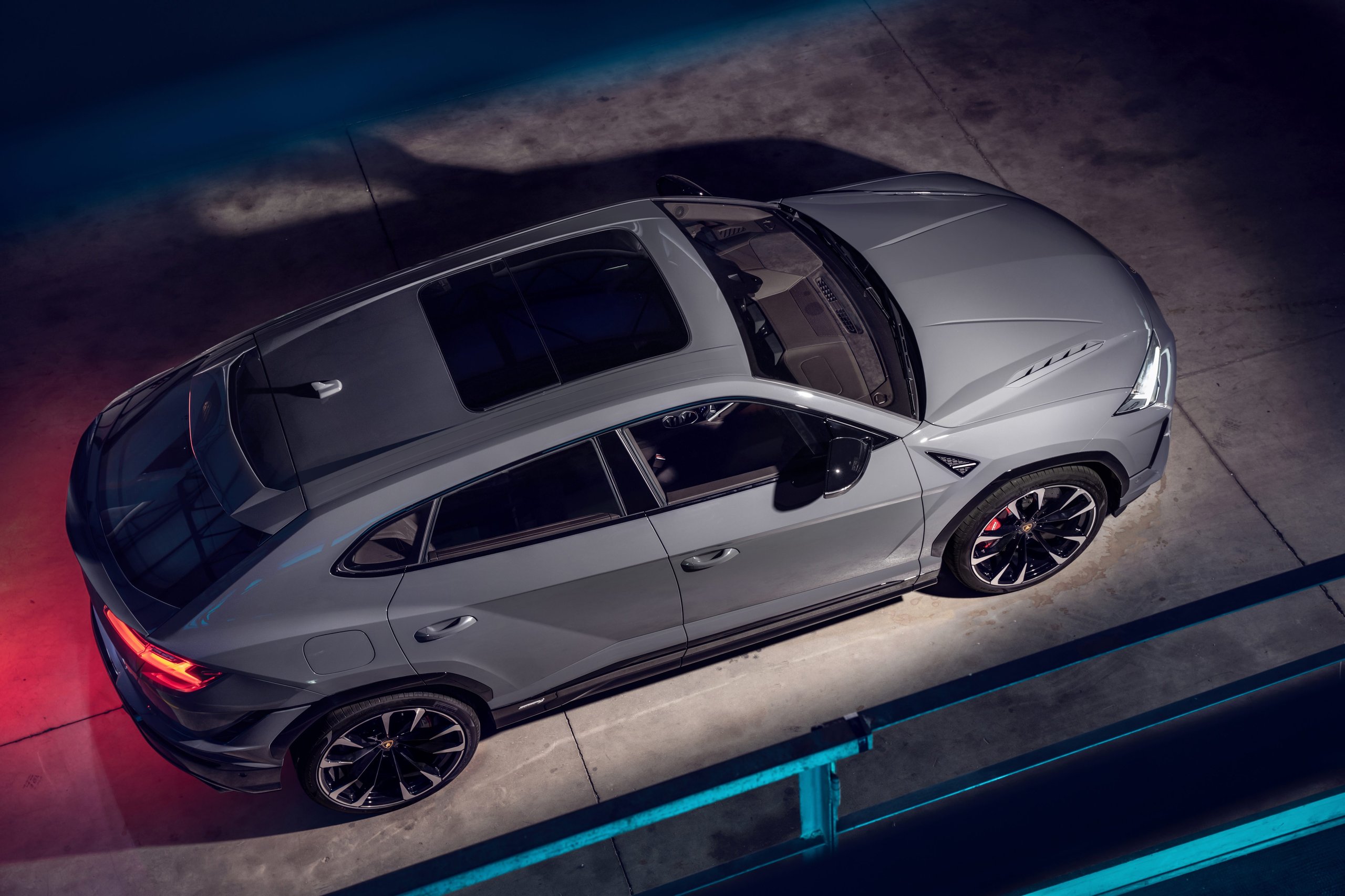
A new carbon fiber bonnet with matt black air vents comes standard, with optional finishes in gloss black, body color, or visible carbon fiber in either matt or shiny treatment. An optional exposed carbon fiber roof adds visual lightness to the roofline. At the rear, a streamlined bumper with a matt black lower section frames a new twin-pipe exhaust design in brushed steel. Buyers can upgrade the exhaust surrounds to matt or shiny black, or specify bright chrome through the Ad Personam program.
Five style configuration packages let owners mix body color, gloss black, and carbon fiber components across the exterior. New wheel options include 22-inch Nath rims with a titanium matt and diamond polish finish, and 23-inch Taigete wheels available in bronze with diamond polish alternatives, all supplementing the standard 21-inch wheel. The visual vocabulary is deliberate throughout: a Urus S parked outside a ski lodge or pulling up to a restaurant reads as something extraordinary without broadcasting weekend-warrior ambitions.

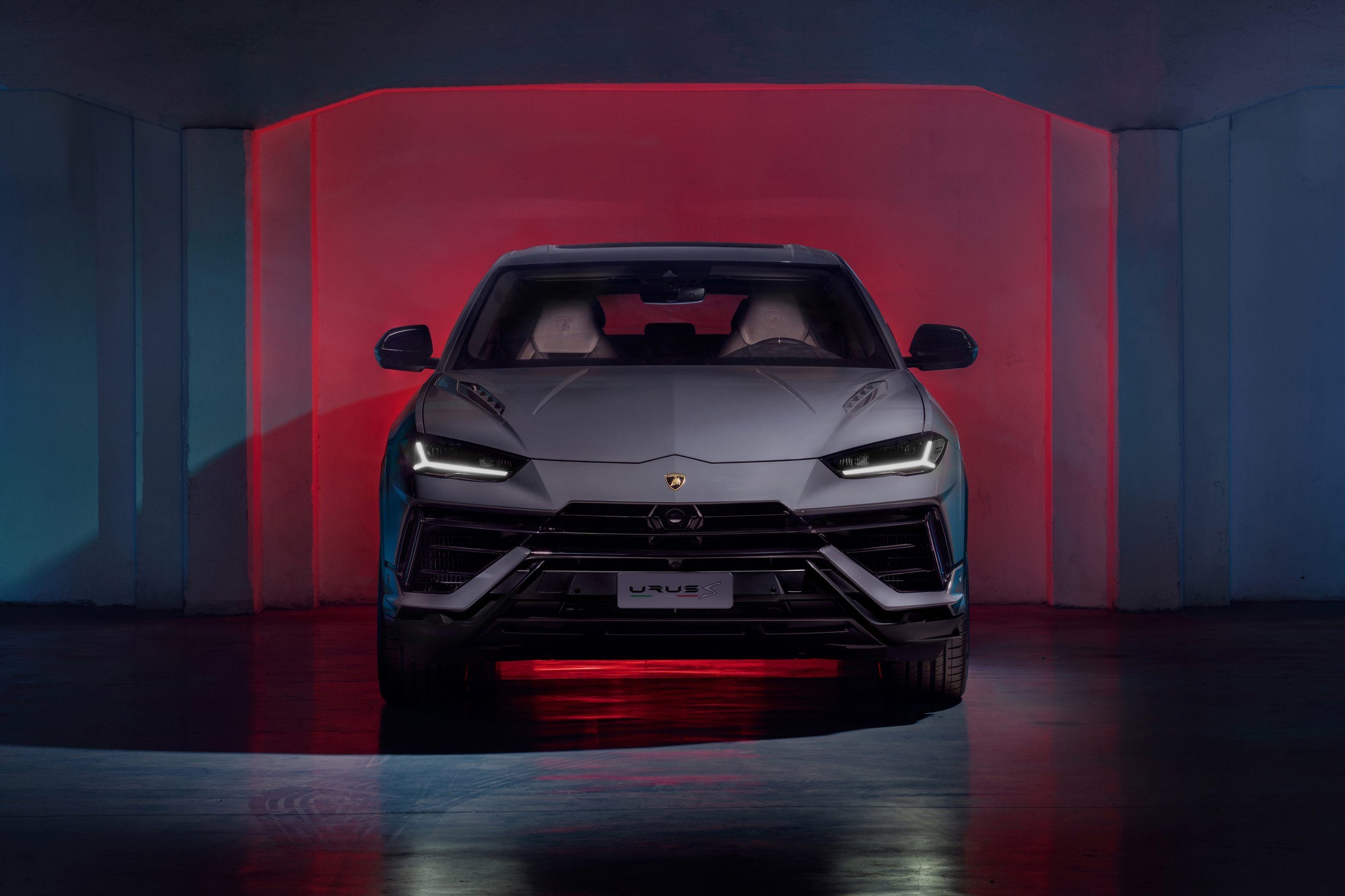
Intricate details of the Lamborghini Urus S, from its sharp headlights to its performance wheels.
Inside: A Cabin Built for Hours, Not Just Headlines
The interior overhaul on the Urus S centers on a fully revised color and trim palette that deepens the lifestyle positioning established by the exterior. Two new bi-color options stand out: the Bi-color Sportivo, which uses a complementary accent color with restraint, and the Bi-color Sophisticated, a black leather treatment paired with new contrast tones including Blu Leandro, Verde Aura, and traditional tan, cream, and brown options. Both feature the same stitching pattern introduced on the Urus Performante, a detail that subtly links the two models while letting the color and material choices establish separate moods.
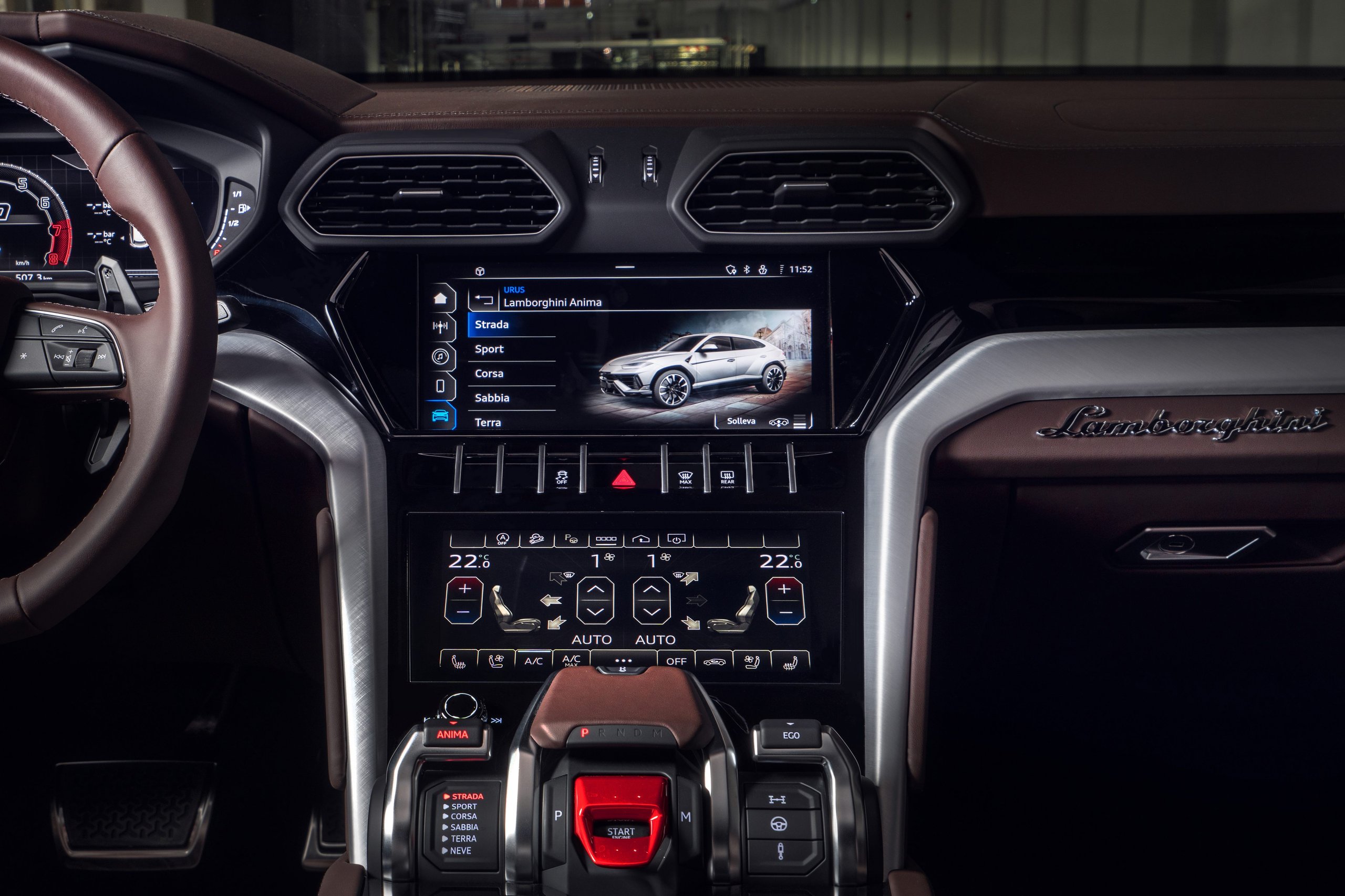
The cabin architecture remains familiar: dual-screen infotainment, the Tamburo drive mode selector on the center console with its aircraft-style toggle switches, and hexagonal motifs carried through the air vents, cup holders, and seat quilting. Connectivity includes connected navigation, security features, and in-car control services. The Lamborghini Unica App supports Remote Park functionality, and smartwatch integration now extends to a virtual car key.
For Urus S buyers, the Ad Personam program is where real personalization begins. Lamborghini does not publish the full extent of available combinations, but the expanded color and trim palette suggests the company wants the Urus S to function as a canvas for individual expression. The wider palette on the S gives buyers more room to create something genuinely distinctive, reinforcing the car’s identity as the Urus you tailor to your life rather than to a lap time.

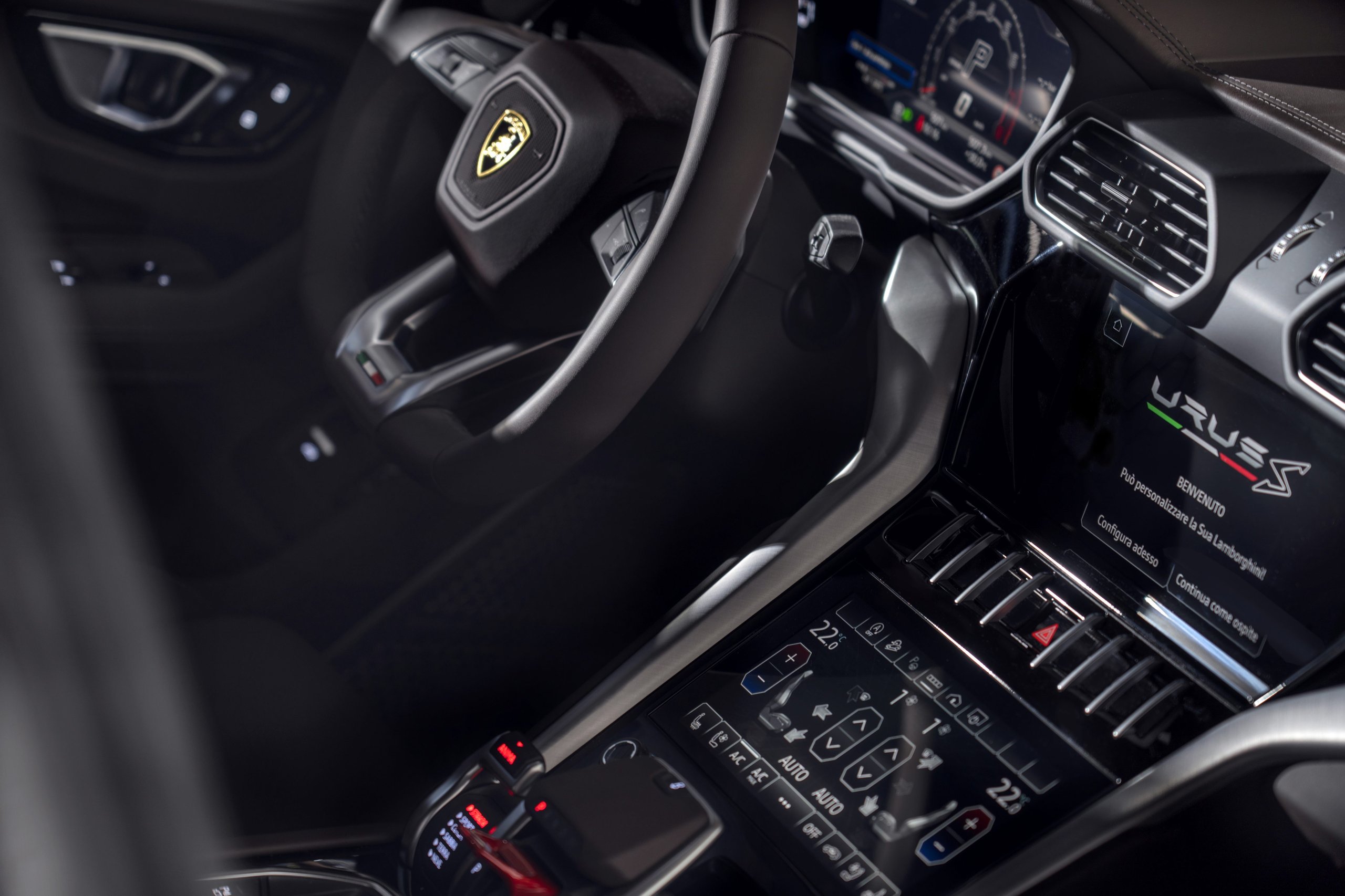
The sophisticated interior of the Lamborghini Urus S combines luxury with advanced technology and ergonomic design.
The Competitive Landscape: Where the Urus S Fits
The super SUV segment looks dramatically different from when the original Urus launched at the end of 2017. The Aston Martin DBX707, BMW XM, Porsche Cayenne Turbo GT, and Ferrari Purosangue all compete for the same buyers, each with a different interpretation of what a performance SUV should prioritize.
The Urus S occupies a specific niche within that field. The Cayenne Turbo GT and the Performante share a similar philosophy: stiffer, lighter, track-capable. The DBX707 leans toward grand touring character. The Purosangue, with its naturally aspirated V12 and strict production limits, plays a different game entirely. It positions itself as the variant that does everything competently rather than one thing brilliantly: comfortable enough for daily use, fast enough to embarrass sports cars, customizable enough to feel personal, and recognizably a Lamborghini.
Over 20,000 units produced, and the Urus became the volume backbone of the entire company. The two-model split with the Urus S and Performante reflects a brand confident enough in that commercial success to segment its best-seller rather than simply refresh it. Prices for the Urus S in the EU start at 195,538 Euros before tax, positioning it as the entry point into the Super SUV lineup, with the Performante commanding a premium for its track-focused hardware. For buyers cross-shopping the segment, the Urus S makes its strongest case on breadth: the same power as the harder-edged variant, wrapped in a package tuned for the widest possible range of driving scenarios.

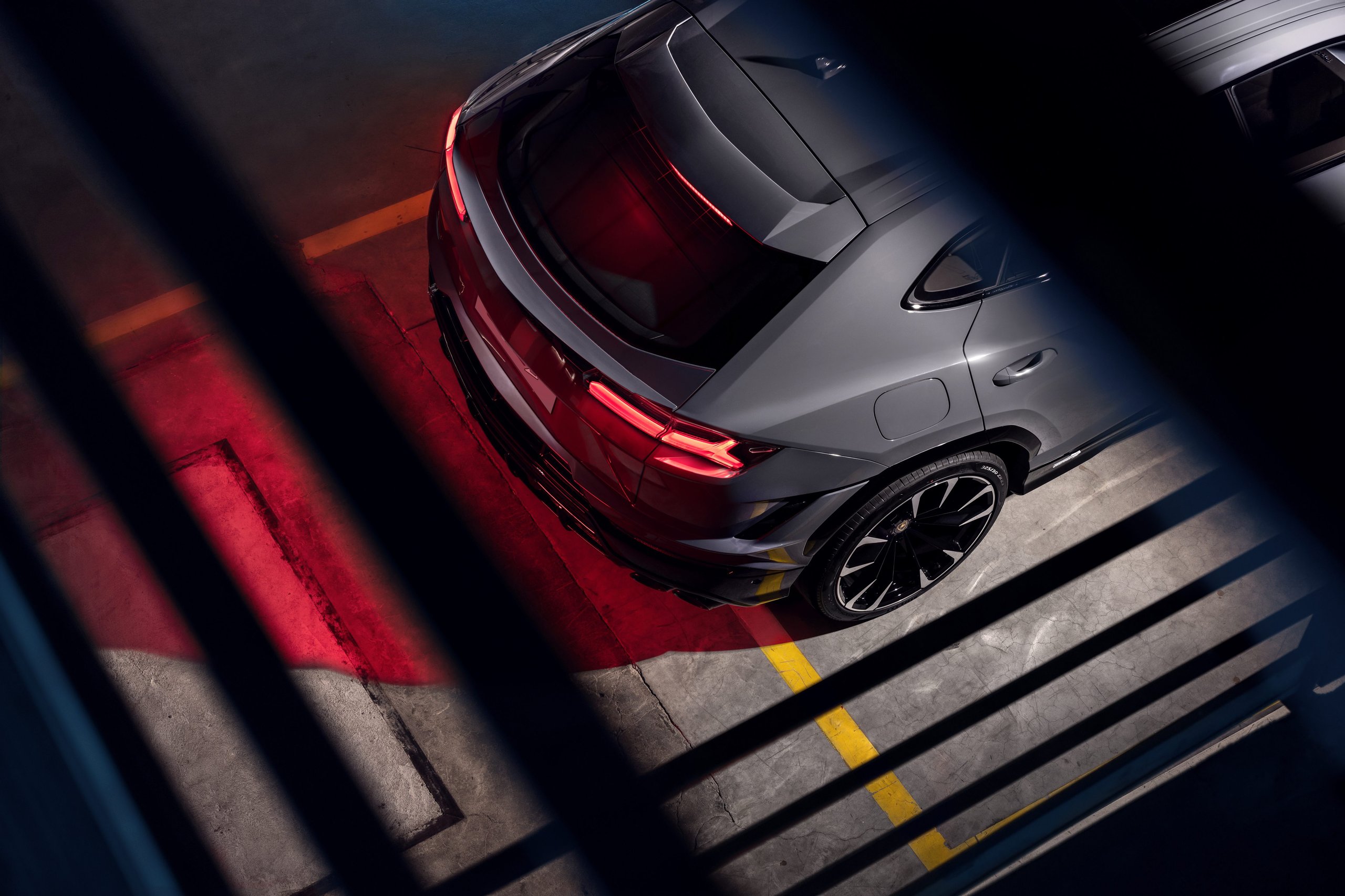
The Lamborghini Urus S displays its powerful rear stance and distinctive taillight design in a dramatic setting.
What the Two-Model Strategy Signals
Lamborghini’s decision to split the Urus into two distinct models rather than offering a single car with option packages reveals something about how the company reads its customer base. The original Urus tried to be both the comfortable luxury SUV and the aggressive performance machine, toggling between those identities through drive modes. The new lineup acknowledges that buyers want the character baked in from the factory, not just selectable via a dial on the center console.
This mirrors a broader industry pattern. Porsche segments the Cayenne aggressively. Aston Martin differentiates the DBX and DBX707 by power and intent. Lamborghini’s version of this strategy is more unusual because the power stays constant. The differentiation is entirely experiential: how the car rides, how it sounds at idle, how the interior presents itself, and whether the visual language says “weekend canyon road” or “Tuesday school run in something extraordinary.”
For current Urus owners considering an upgrade, the question becomes straightforward. If you found yourself leaving the car in STRADA mode most of the time and wishing it rode a bit more smoothly, the Urus S is the direct answer. If you spent your time in CORSA and wished the chassis felt tighter, the Performante was built for you. Lamborghini, for the first time, lets the Urus buyer choose a personality rather than compromise between two. That is the real significance of the Urus S: not a new power figure, but a new kind of clarity about what this Super SUV is for.
Gallery