The Geneva Show Car Returns to Glory
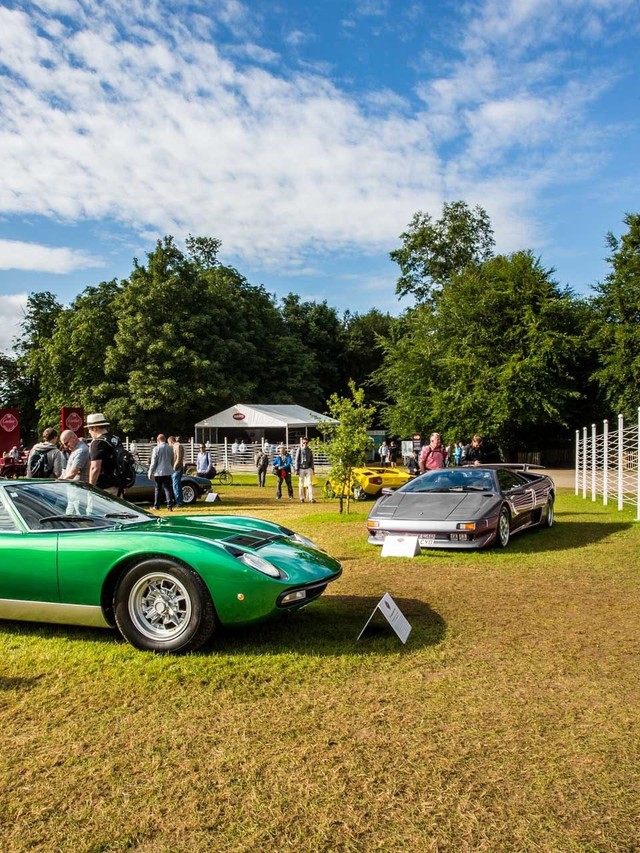
A Lamborghini Miura SV, restored by the company’s PoloStorico heritage division, was named overall winner at the Cartier Style et Luxe Concours d’Elegance during the 2016 Goodwood Festival of Speed. The timing was anything but accidental. Lamborghini chose the Miura’s 50th anniversary year to put its restoration capabilities on the most visible stage in the classic car world, and the gamble paid off in the most public way possible.
The winning car, chassis #4846, carries a biography that elevates it above the roughly 150 SVs produced. Lamborghini says this is the very Miura SV that debuted at the 1971 Geneva motor show, making it both the public introduction of the SV variant and, decades later, the proof of concept for PoloStorico’s full restoration program. Enrico Maffeo, head of PoloStorico, accepted the award from Laurent Feniou, managing director of Cartier UK.
The composition of the judging panel sharpened the significance of the result. The nine members included Flavio Manzoni, Ferrari’s vice president of design, alongside Apple’s then chief design officer Sir Jonathan Ive and industrial designer Marc Newson. When a car designed by Marcello Gandini in the late 1960s convinces Ferrari’s own head of design and two of the most influential product designers alive that it remains the most beautiful object on the lawn, the result speaks to something beyond nostalgia. It validates the restoration itself.
PoloStorico’s Debut and What It Signals for Owners
CEO Stefano Domenicali framed the Goodwood result as a milestone for the division itself, noting that the award recognized PoloStorico’s first full restoration. That distinction matters enormously. A factory heritage department can authenticate parts and stamp certificates indefinitely, but winning a top-tier concours on its inaugural complete rebuild establishes credibility at a different level entirely.
PoloStorico operates from Sant’Agata Bolognese with access to original tooling, factory archives, and institutional knowledge that independent restorers simply cannot replicate. For collectors, the practical implication is straightforward: a PoloStorico restoration carries the manufacturer’s imprimatur in a market where provenance and authenticity directly determine value. Lamborghini confirmed no specific pricing or timeline details for its restoration services at the time, but the Goodwood win functioned as the most effective advertisement the division could have bought, and it cost them a trophy instead of a media buy.
Collector communities have long tracked individual Miura chassis histories in remarkable detail, reflecting the model’s foundational role in defining the supercar category. That level of grassroots engagement is precisely what a factory heritage program needs to cultivate and protect, and a concours victory of this caliber gives PoloStorico immediate standing within those circles.
Gandini’s Lines, Fifty Years On
The Cartier Style et Luxe concours at Goodwood also featured a dedicated Lamborghini class honoring Marcello Gandini’s designs, assembling an Espada, Countach, Jarama, Silhouette, and Diablo on the lawn together. Seeing those five cars in sequence amounts to a visual argument about one designer’s range: the grand touring proportions of the Espada, the wedge extremism of the Countach, the restrained aggression of the Diablo. Each looks nothing like the others, yet all are unmistakably Gandini.
The Miura SV sat at the origin point of that lineage. Its low, curved bodywork and the famous “eyelash” headlight surrounds predate the angular Lamborghini language that followed, yet the car’s proportions, specifically the way its roofline flows into the rear haunches over that transverse V12, established a relationship between engine placement and sculptural form that every mid-engine Lamborghini since has inherited in some way. The Revuelto’s flying buttresses and the way the Huracan’s shoulder line resolves into its rear deck owe a conceptual debt to choices Gandini made when he was barely thirty years old. That PoloStorico could return chassis #4846 to a condition worthy of winning against this backdrop only reinforced the division’s technical and aesthetic authority.
Heritage as Competitive Strategy
Lamborghini’s investment in PoloStorico mirrors what Ferrari accomplished with its Classiche program, which certifies and restores cars from Maranello’s history. Ferrari Classiche launched earlier and benefits from a larger volume of eligible cars, but the programs serve identical strategic purposes: controlling the narrative around the brand’s most valuable older models, keeping restoration revenue in-house, and ensuring that the cars representing the marque at concours events meet the manufacturer’s own standards.
Where Lamborghini’s position differs is in scarcity. Fewer Miuras exist than comparable Ferrari Daytonas or Dinos, and the SV variant is rarer still. A factory-restored SV carrying a Geneva motor show provenance occupies a tier of collectibility where authentication is not merely desirable but essential. PoloStorico’s ability to deliver that authentication, backed by a concours victory judged in part by Ferrari’s own design chief, gives the program a credibility that money alone cannot purchase.
For prospective buyers of classic Lamborghinis, the takeaway is concrete. A PoloStorico-certified or restored car now carries demonstrable concours pedigree, a factor that should weigh heavily in any serious acquisition decision. The program’s existence also provides a degree of long-term value protection that independent restorations, however skilled, cannot guarantee in the same way.
The Modern Fleet at Goodwood
Lamborghini’s 2016 Goodwood presence extended well beyond the concours lawn, tying the heritage story to the current lineup. The company displayed the Aventador Miura Homage on its stand, a limited edition of 50 units built to commemorate the anniversary. Based on the Aventador LP 700-4, the Homage carried the full 6.5-liter naturally aspirated V12 producing 691 horsepower, with a 0-62 mph time of 2.9 seconds and a top speed of 217 mph. Distinctive Dione alloy wheels (20 inches front, 21 rear) in matte silver or gold, a Miura badge on the flank, and a numbered interior plate completed the tribute.
Goodwood’s Lord March drove a Huracan Spyder up the hill in the Michelin Supercar Run with Domenicali riding shotgun, while a Huracan Avio also made the climb. A Huracan Super Trofeo rounded out the stand display. The breadth of the lineup, from a restored 1971 show car to a current race-spec Huracan, illustrated the point Lamborghini was making all weekend: the line from the Miura to the present is unbroken, and PoloStorico exists to ensure the company owns every chapter of that story.
Gallery


