Victories at Donington, Salzburgring, and Shanghai Put Lamborghini in Title Contention
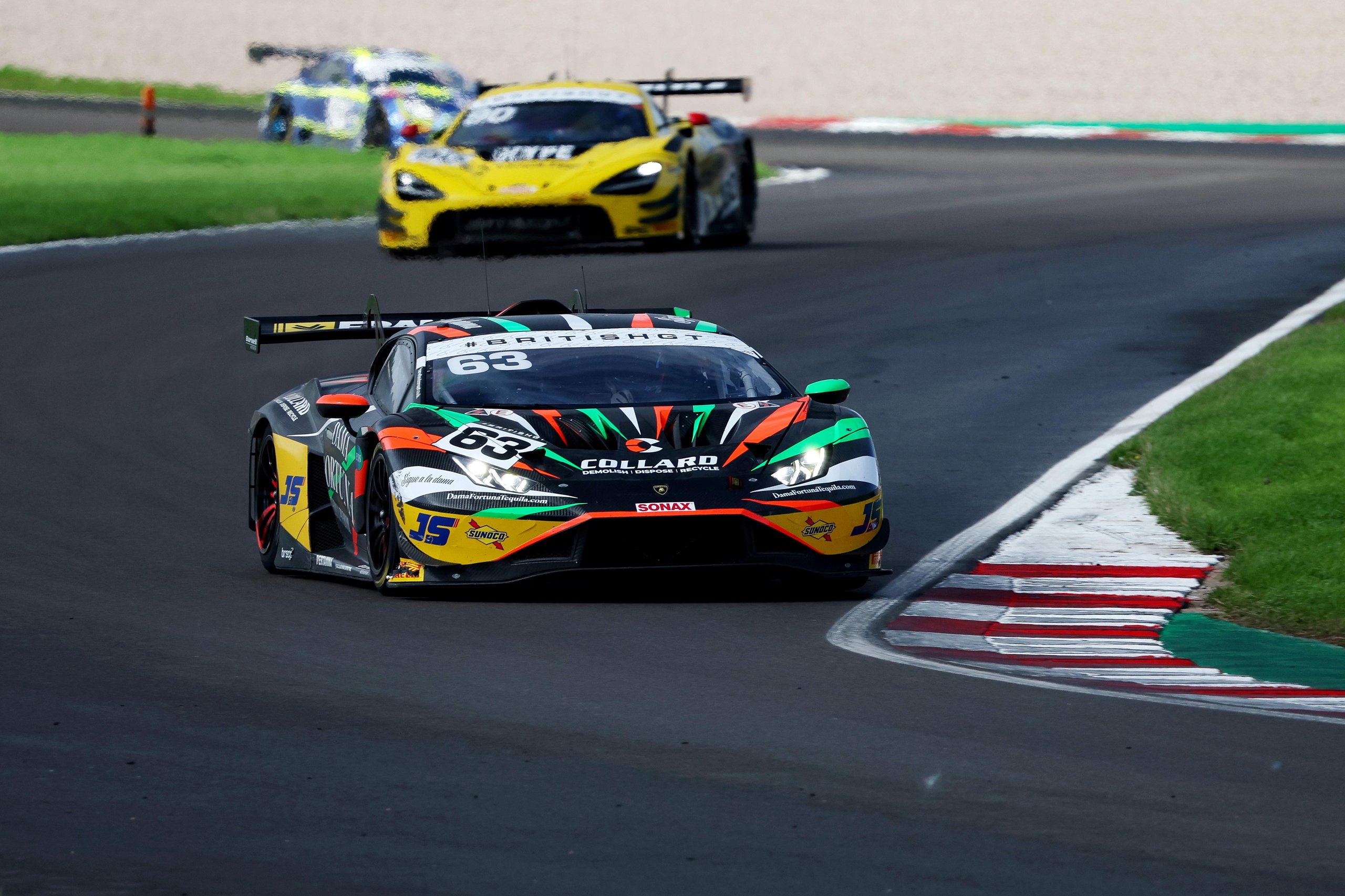
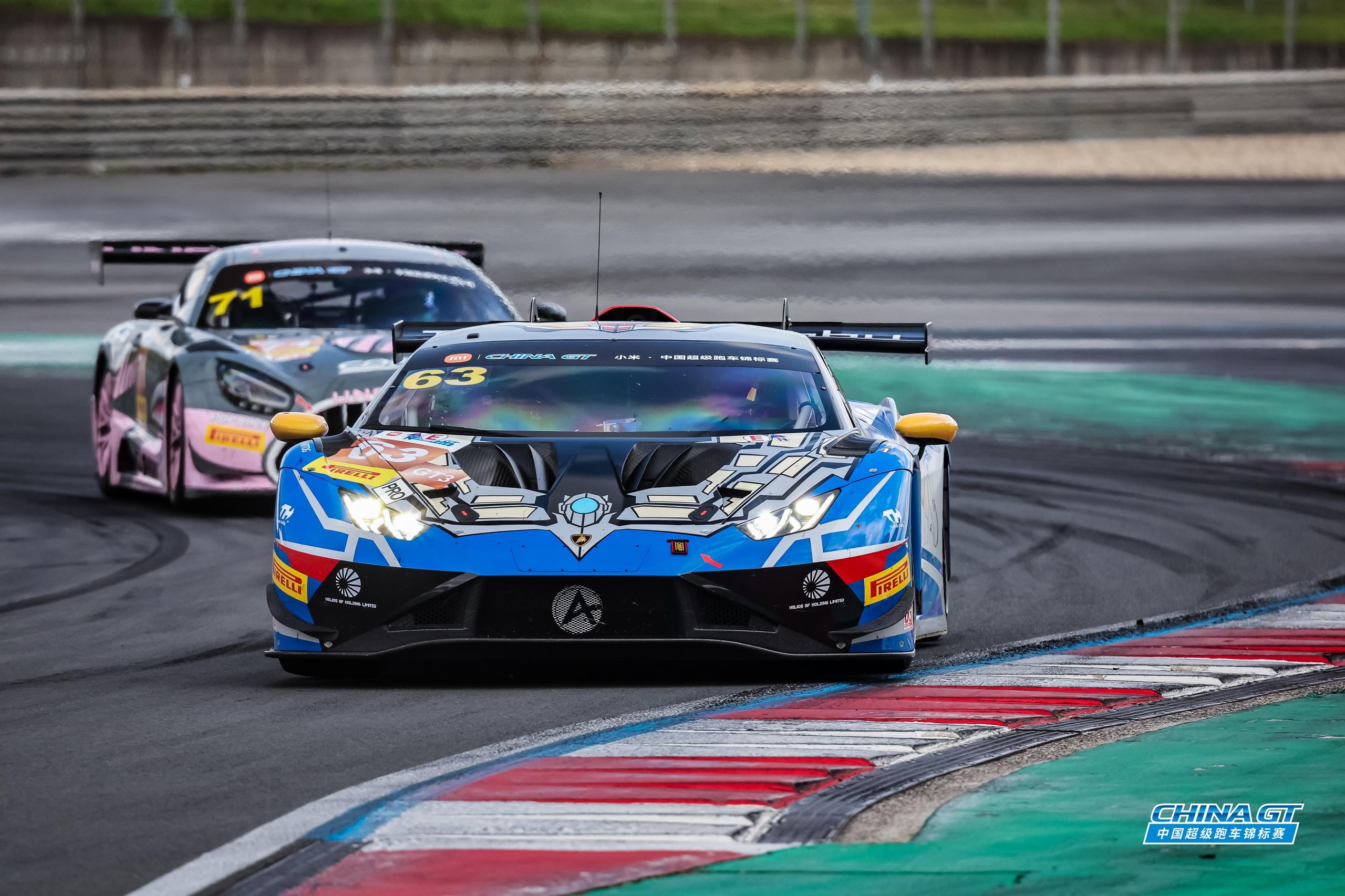
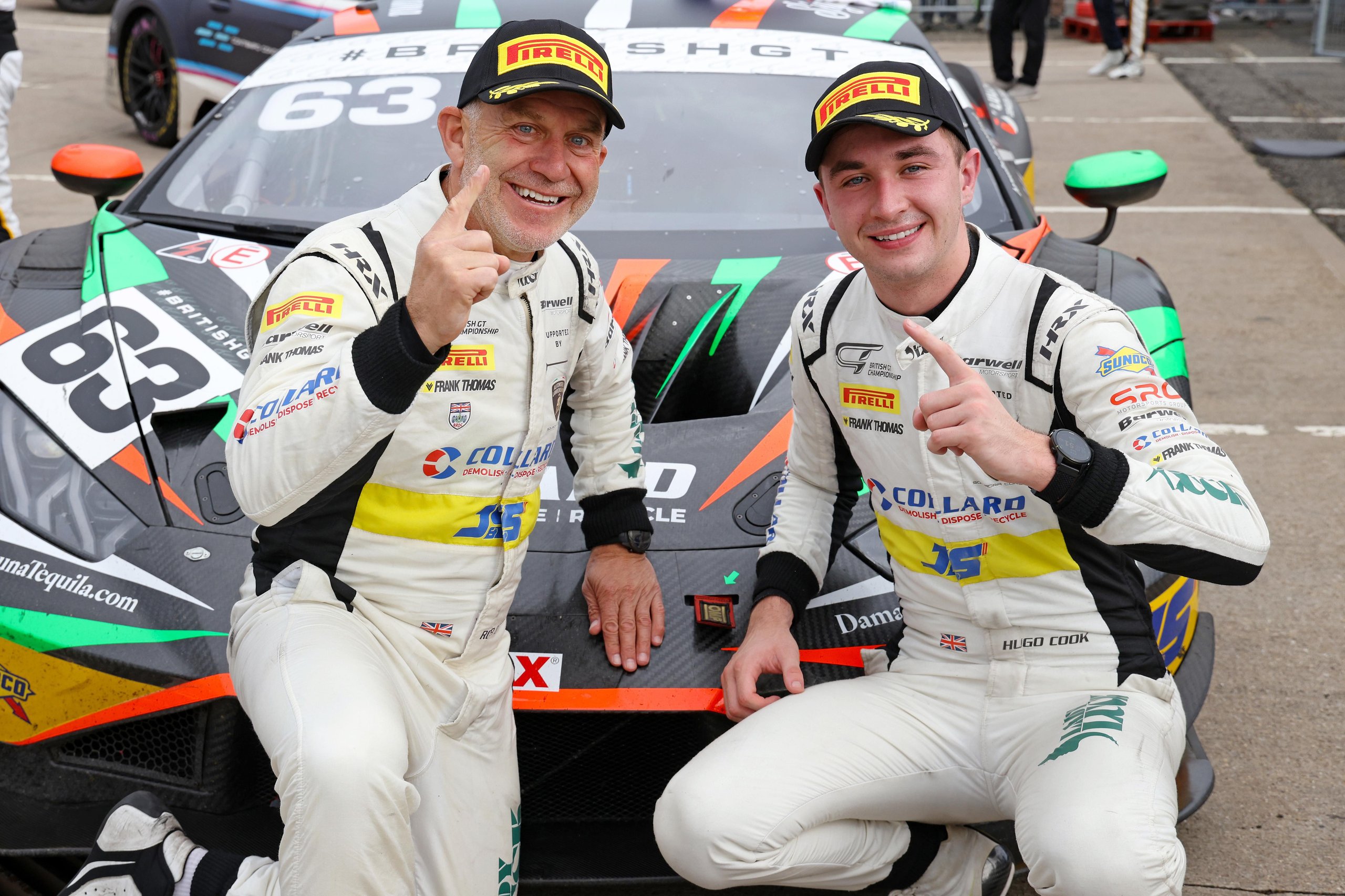
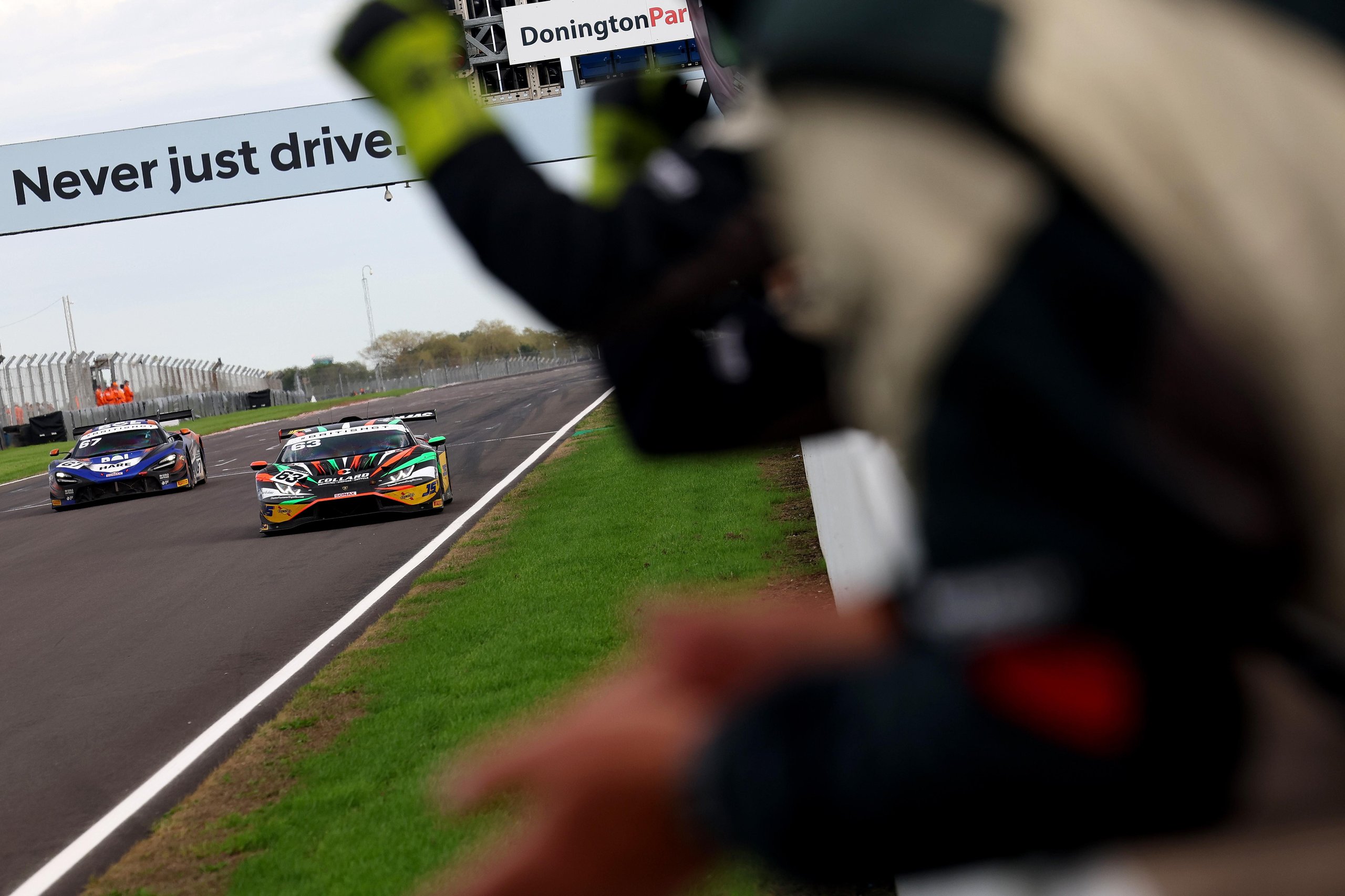
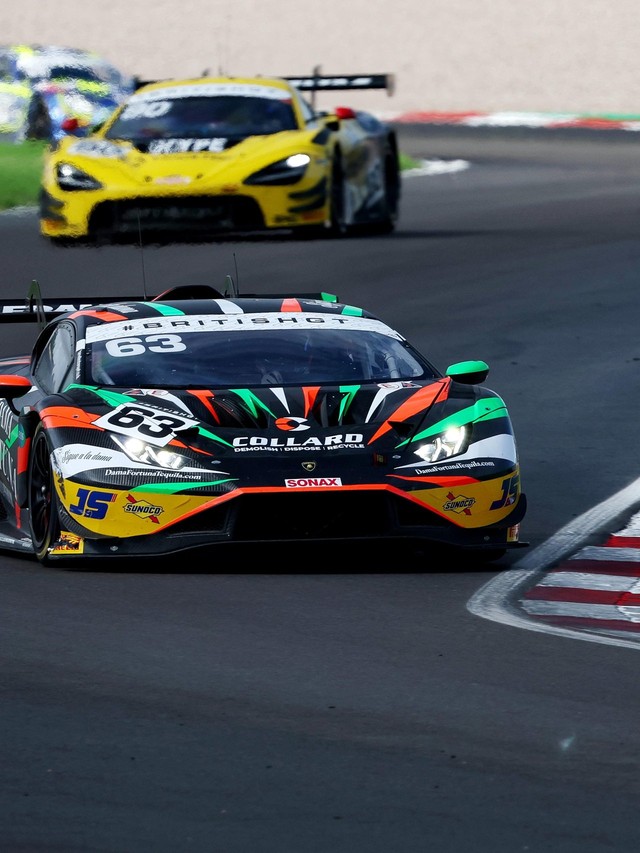
Cook and Collard won at Donington Park. Zulauf and Hirsiger drove from dead last to first at the Salzburgring. Nandy and Stuvik inherited a maiden China GT victory in Shanghai. Three Lamborghini Huracán GT3 EVO2 customer crews, on three continents, all reached the top step of the podium in the same weekend, and the collective result positions Lamborghini for a dramatic final act: realistic shots at both the British GT Championship and the ADAC GT Masters titles as the V10 platform nears the end of its competitive life.
The Donington result gives Barwell Motorsport‘s Hugo Cook and Rob Collard a 15.5-point cushion in the British GT drivers’ standings heading into the Brands Hatch finale on September 26-27. In ADAC GT Masters, Team Engstler’s Finn Zulauf and Felix Hirsiger sit five points behind the championship leaders with one round remaining at Hockenheim on October 10-11. Absolute Racing’s breakthrough win in the China GT Championship at Shanghai adds a third regional series to the highlight reel, even if that victory came via a post-race penalty to the on-the-road winner rather than a clean pass for the lead.
Beyond the raw results, the variety of paths to victory tells its own story. A controlled wet-to-dry masterclass. A penalty-fueled comeback from last on the grid. A post-race stewards’ decision. Customer racing rarely follows a script, and the Huracán GT3 EVO2 proved adaptable enough to benefit from all three scenarios.
Why Customer Racing Wins Matter More Than Factory Trophies
Factory-backed prototype programs grab headlines, but customer GT3 racing is where manufacturers prove their cars work in the hands of teams that buy them, maintain them, and race them without the safety net of a factory engineering truck. Lamborghini’s Squadra Corse operation supplies the Huracán GT3 EVO2 to independent outfits like Barwell Motorsport and Team Engstler, and those teams sink their own budgets into competing against customer entries from BMW, Porsche, Mercedes-AMG, and others.
The Donington victory was Barwell Motorsport’s 31st in the British GT Championship using Lamborghini machinery, pushing Lamborghini’s overall British GT win tally to 34. Those numbers reflect a long partnership, not a one-off result, and they speak to something important for the brand: the Huracán platform is reliable enough and competitive enough that a single team kept choosing it, year after year, through multiple regulation cycles. For prospective customer racing entrants evaluating which manufacturer to align with, that kind of continuity matters as much as any dyno sheet.
The competitive landscape in GT3 is dense. The Huracán GT3 EVO2 faces turbocharged machinery from BMW, Porsche, and others across these championships. Lamborghini’s naturally aspirated 5.2-liter V10 remains a genuine outlier in a class increasingly dominated by forced-induction engines, and the fact that it continues to win on pace says something about how well Squadra Corse understood the Balance of Performance regulations when developing the EVO2 package. That engineering edge becomes all the more significant when you consider the platform is approaching its final season of front-line competition.

Race cars, including a multi-colored Lamborghini, create a dramatic spray on a wet track under the Hyundai banner. Image: Automobili Lamborghini.
Last to First: The ADAC GT Masters Drama at the Salzburgring
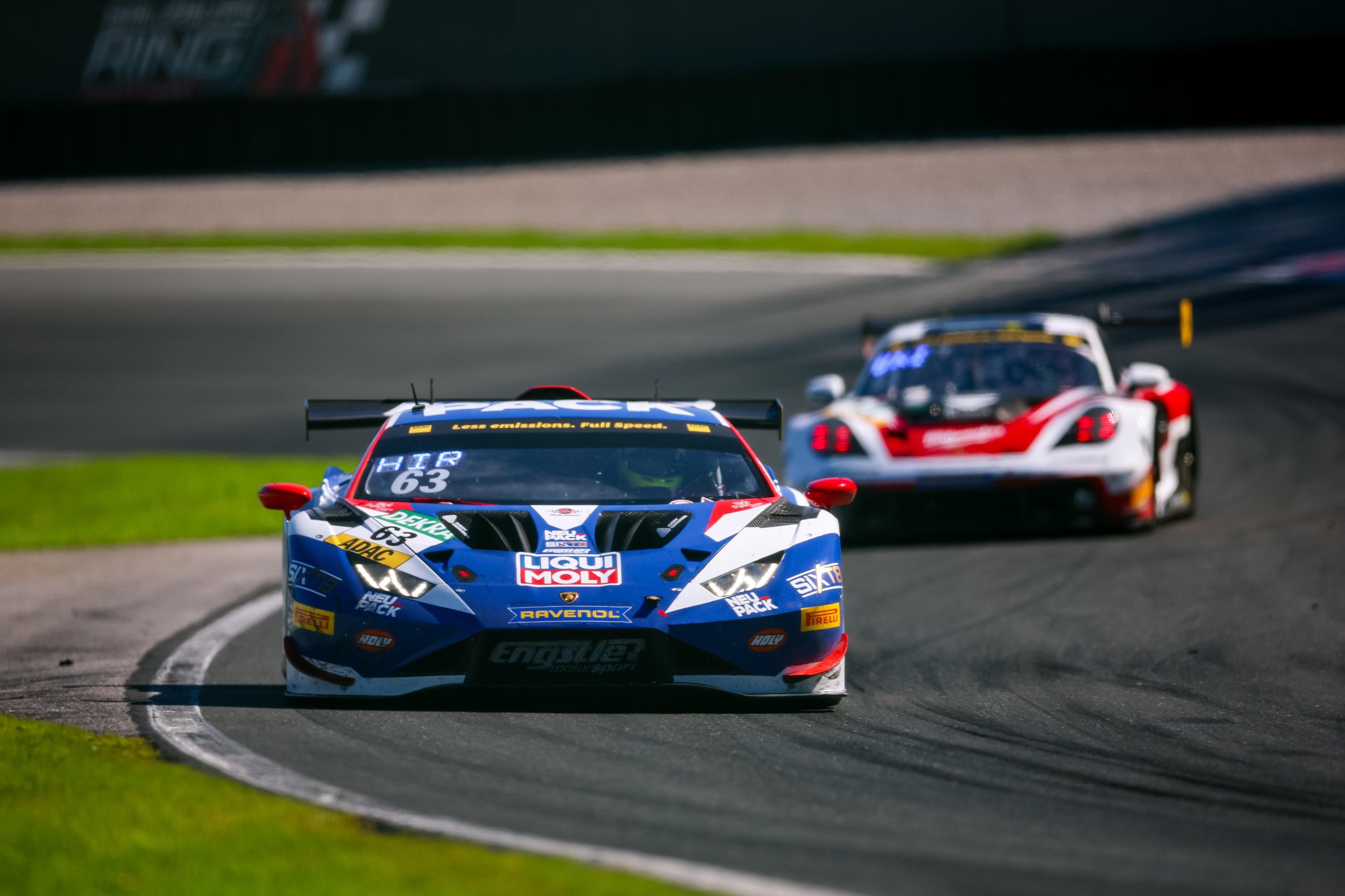
The Salzburgring weekend for Team Engstler reads like a screenplay someone would reject for being too implausible. Lamborghini GT3 Junior Driver Finn Zulauf qualified on pole for Race One with a 1m25.052 best, banking three bonus championship points. Then a technical issue before the grid formation prevented the #63 from starting. The car eventually joined the race twelve laps down, a formality that yielded zero points and handed the championship lead to BMW’s Tim Zimmermann and Leyton Fourie.
Race Two’s qualifying went even worse on paper. The #63 Huracán posted the fastest time again, but a parc fermé infringement disqualified the result, dropping Zulauf and Hirsiger to 13th and last on the grid. What followed was the kind of drive that justifies the entire customer racing model. Felix Hirsiger climbed five places in the opening laps, then gained another four positions before the pit window opened. Team Engstler made a strategic call to take their longer mandatory pit stop early while rivals did the opposite, and the gamble paid off. Hirsiger rejoined fractionally ahead of a Porsche and held the position on colder tires under sustained pressure, eventually crossing the line 1.690 seconds clear.
Four wins this season (Red Bull Ring, Zandvoort, Nürburgring, and now Salzburgring) from a team that lost the points lead through mechanical misfortune and a procedural penalty in the same weekend. The five-point deficit heading to Hockenheim is entirely manageable, but it requires a clean weekend, something the Salzburgring proved is never guaranteed.

Two victorious race car drivers celebrate on the podium with their trophies and champagne bottles. Image: Automobili Lamborghini.
The Naturally Aspirated Edge in a Turbocharged World
One source analyzing the Huracán GT3 EVO2’s competitive profile describes the car’s naturally aspirated V10 as offering superb cornering capability and strong wet-weather performance, balanced against a relative deficit in straight-line speed compared to turbocharged rivals. That trade-off showed up clearly at Donington, where the wet-to-dry conditions played directly to the Huracán’s strengths. Rob Collard built a four-second gap in the opening stint as the track dried, using the V10’s linear power delivery to manage the transition from wet tires to slicks with more confidence than the turbocharged cars behind him.
The 42/58 front-to-rear weight distribution, a characteristic inherited from the road car’s mid-engine layout, gives the EVO2 strong corner-exit traction. For amateur and semi-professional drivers who make up much of the customer GT3 grid, a car that rotates predictably and rewards smooth inputs is worth more than a few extra kilometers per hour on the straight. Cook, identified by Lamborghini as a Young Professional Driver in its development pipeline, built a 20-second gap after taking over from Collard and then eased off to win by more than 15 seconds. That kind of margin in a two-hour race suggests the car’s pace advantage was genuine, not circumstantial.
From Huracán to Temerario: The V10’s Final Exam
Every one of these victories carries a subtext Lamborghini would rather not dwell on: the Huracán GT3 EVO2 is a car living on borrowed time. According to Car and Driver, the Temerario GT3 was revealed at Goodwood in July 2025 as the platform’s direct replacement, making it the first race car entirely designed and developed at Lamborghini’s Sant’Agata Bolognese facility. Road & Track reported that the Temerario GT3 uses a modified version of the road car’s twin-turbocharged V8, stripped of its hybrid components to comply with GT3 regulations.
That transition means Lamborghini will move from the naturally aspirated V10 that defined a decade of customer racing to a forced-induction architecture more in line with what BMW, Porsche, and others already campaign. For teams like Barwell and Engstler, the switch will require adapting to a fundamentally different powerband and thermal management profile. The Huracán’s current championship runs are, in a sense, the final exam for a platform that proved the viability of Lamborghini’s customer racing model. If Zulauf and Hirsiger or Cook and Collard close out their respective titles, the V10 exits on the highest possible note.
Lamborghini’s specific timeline for phasing the Temerario GT3 into these regional championships remains unconfirmed. What the current results do confirm is that the Huracán still wins races on outright pace, giving Squadra Corse a strong foundation of team relationships and operational knowledge to carry into the next generation.

Two men celebrate their victory with the blue and white Lamborghini Huracán GT3 EVO2 in the pit lane. Image: Automobili Lamborghini.
What’s at Stake at Brands Hatch and Hockenheim
Cook and Collard carry a 15.5-point advantage into Brands Hatch, but they also carry a 20-second success penalty that will be applied at the finale. In a championship where races are decided by single-digit seconds, that penalty effectively neutralizes any qualifying advantage and forces the #63 crew to make up time on pure pace. Their closest rivals are teammates Jarrod Waberski and Alex Martin in the sister #78 Barwell entry, which recovered to fifth at Donington after an incident-filled race. An all-Lamborghini title fight at the final round would be a remarkable advertisement for the brand’s customer program, even if it creates some awkward internal politics for Barwell.
At Hockenheim, the math is simpler but the variables are wilder. Zulauf and Hirsiger need to outscore BMW’s Zimmermann and Fourie by more than five points. Given that the Engstler crew already lost an entire race’s worth of points to a technical failure and a procedural disqualification at the Salzburgring, the margin for operational error is essentially zero. The Huracán’s pace is clearly sufficient. The question is whether the team can deliver a clean weekend when it counts most.
For anyone following Lamborghini’s motorsport trajectory, these finales represent the last meaningful chapter for the V10 in top-level customer GT3 competition. Whether the Huracán exits with one championship, two, or none, the 2026 season already proved the platform can still fight at the front against newer machinery. That is the legacy the Temerario GT3 will need to match.
Gallery