A Seventh-Place Start, a Two-Minute Miracle
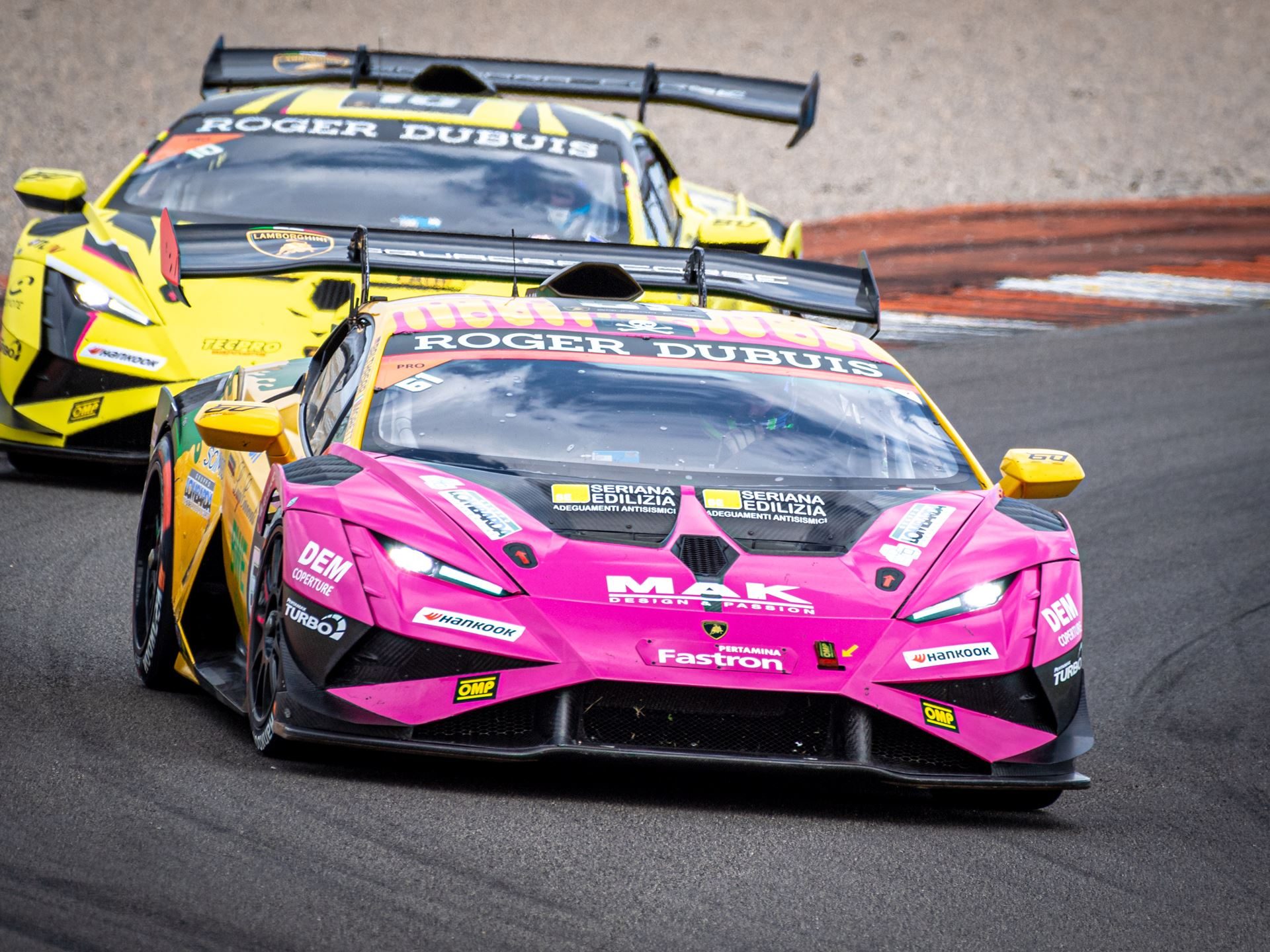
Oregon Team’s #61 Lamborghini Huracán Super Trofeo EVO2 crossed the line first in Race 2 at Valencia on September 17, and the result looked nothing like the grid sheet predicted. Marzio Moretti and Sebastian Balthasar started seventh, ran with a damaged car for much of the second stint, absorbed a 0.12-second pit-stop penalty, and still found a way to lead when the checkered flag dropped. The victory, their second of the 2023 season, came with just two minutes remaining after race leader Gilles Stadsbader understeered wide exiting turn one.
Championship leader Brendon Leitch finished fourth, maintaining his points cushion heading into the penultimate round at Vallelunga. Chaos across every class produced lead changes, drive-through penalties, and a formation-lap retirement in Pro-Am.
The Super Trofeo format, with its identical Huracán EVO2 machinery, strips away the engineering arms race and puts strategy, driver skill, and sheer resilience under a magnifying glass. Valencia Race 2 tested all three, and Oregon Team’s comeback through the field tells us something about what this series rewards: not the fastest car, but the most adaptable crew.
How Moretti and Balthasar Overcame a Penalty and a Broken Car
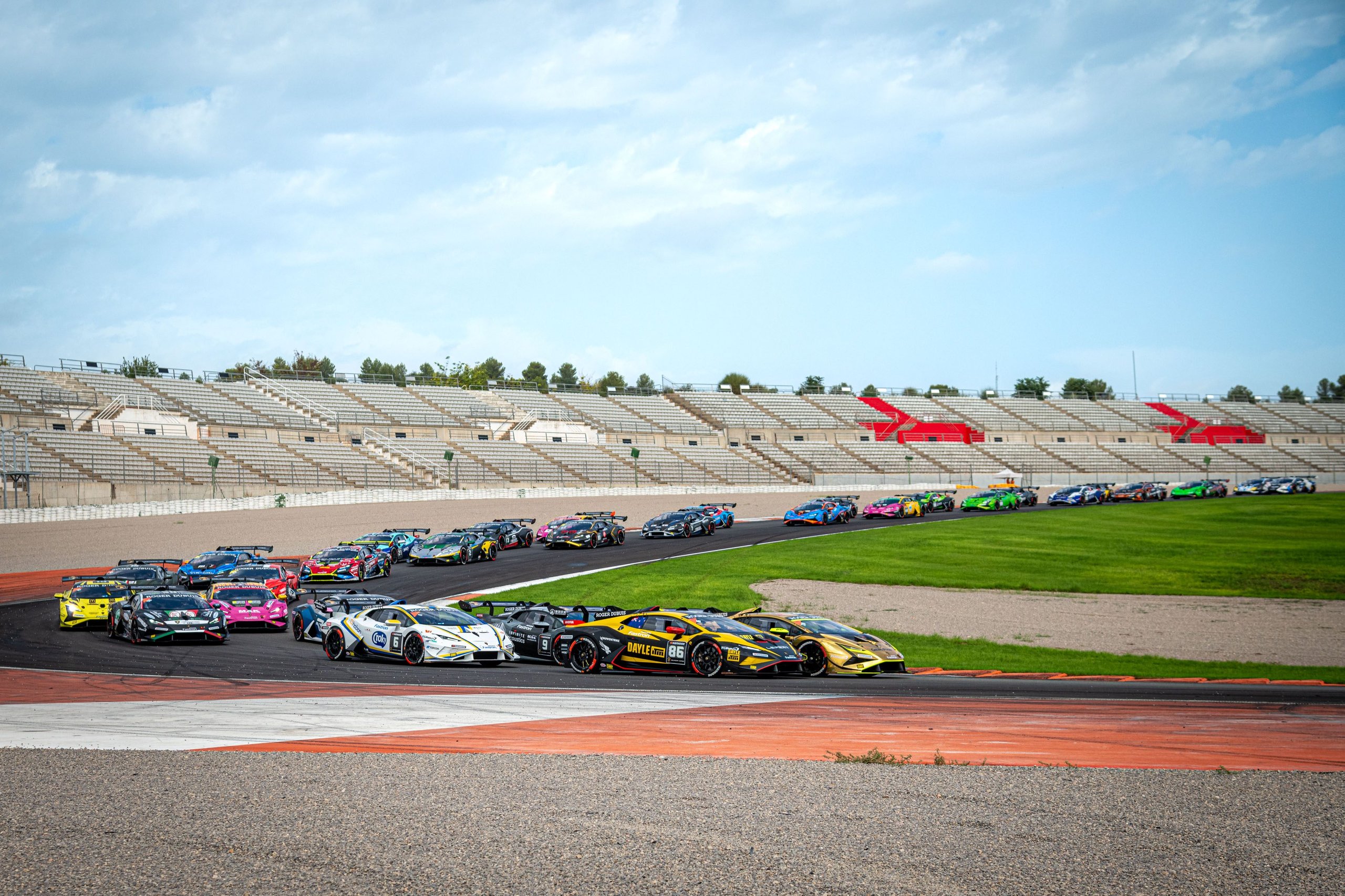
Balthasar handled the opening stint, which started messy. Contact between Rebelleo Motorsport’s Daan Arrow and the #6 of Michelotto sent Arrow spinning at turn one on the opening lap. Shortly after, the #99 Leipert Motorsport entry of Patrik Matthiesen and Brutal Fish Racing’s #54 of Jason Keats both found the gravel trap, triggering the first of two safety car deployments.
Through the restarts, polesitter Amaury Bonduel (BDR Competition) controlled the field, building a gap of over a second to Leitch. Balthasar, meanwhile, was the first of the leading drivers to pit, handing over to Moretti and banking a crucial window of clean air.
The strategic gamble paid off, but it came with a cost. On the lap before the pit stop, contact with the rear of Bonduel’s car damaged the #61’s aerodynamics and caused the engine to overheat. Lamborghini says Moretti drove the remainder of the race with reduced power and compromised downforce. That he closed on Stadsbader at all speaks to the pace he carried on worn tires and a sick car.
When Leitch rejoined from his own stop, he found himself alongside Bonduel at turn two. Both went wide on the exit, and Moretti sliced past into turn three, briefly taking the effective lead. But the four-car scrap that followed, involving Iron Lynx’s Ugo de Wilde, slowed the group enough for Stadsbader and DL Racing’s Matteo Desideri to leapfrog into the top two positions.
Desideri, making his first Super Trofeo appearance since 2016, spun at turn 11 while chasing Stadsbader. That put Moretti back on the Belgian’s tail for the closing laps. The decisive moment came when Stadsbader pushed too hard exiting turn one, ran wide, and handed the lead to the Oregon Team car.
“The contact caused the engine to overheat a lot and it was really hard to follow Gilles in front. I also used a lot of my tyres as well, but I was still faster than him and also had to remember about the penalty. Sometimes all you need is a mistake from the guy in front and that’s what happened.”
, Marzio Moretti, Oregon Team
Balthasar, for his part, called it “maybe the best win we ever had in the series,” noting that the team arrived at Valencia with no prior testing at the circuit and minimal practice laps. The poetic irony was hard to miss: in Race 1, Moretti and Balthasar lost a likely victory through a last-lap error that handed the win to Leitch. Race 2 reversed the script almost identically, a late mistake by the leader gifting Oregon Team the result.

Two victorious drivers celebrate their achievement next to a '1' stand, with their Lamborghini race cars in the background.
The EVO2 Under Pressure: What Identical Machinery Reveals
One-make series live or die by how well the spec car enables close racing, and Valencia Race 2 was a strong advertisement for the Huracán Super Trofeo EVO2. The race-ready version of Lamborghini’s V10 platform delivers 620 horsepower through a naturally aspirated 5.2-liter engine, and the fact that Moretti could remain competitive while nursing aero damage and overheating temperatures says something about the car’s mechanical tolerance.
The Super Trofeo format, organized by Lamborghini Squadra Corse, runs three continental championships (Europe, Asia, North America) with identical cars split across Pro, Pro-Am, Am, and Lamborghini Cup classes. Each round consists of two 50-minute sprint races. The format deliberately removes the variable of car performance, which is why results like Oregon Team’s comeback carry extra weight. When every car on the grid runs the same engine, the same aero package, and the same tire allocation, the margins come down to pit strategy, driver feel, and the willingness to push a damaged machine.
For Lamborghini, the series also functions as a talent pipeline. Drivers who excel in Super Trofeo often progress to GT3 and GT World Challenge programs. With Lamborghini’s Temerario GT3, the brand’s first fully in-house competition car according to Autoblog, now entering the picture, the Super Trofeo grid represents the proving ground where the next generation of Lamborghini factory-supported drivers earn their stripes. Races like Valencia, where the result hinges on adaptability under duress, are exactly the kind of pressure cooker that separates future GT3 contenders from weekend warriors.

A black and yellow Lamborghini Huracán Super Trofeo EVO2 leads the charge on the racetrack.
Championship Implications Across Every Class
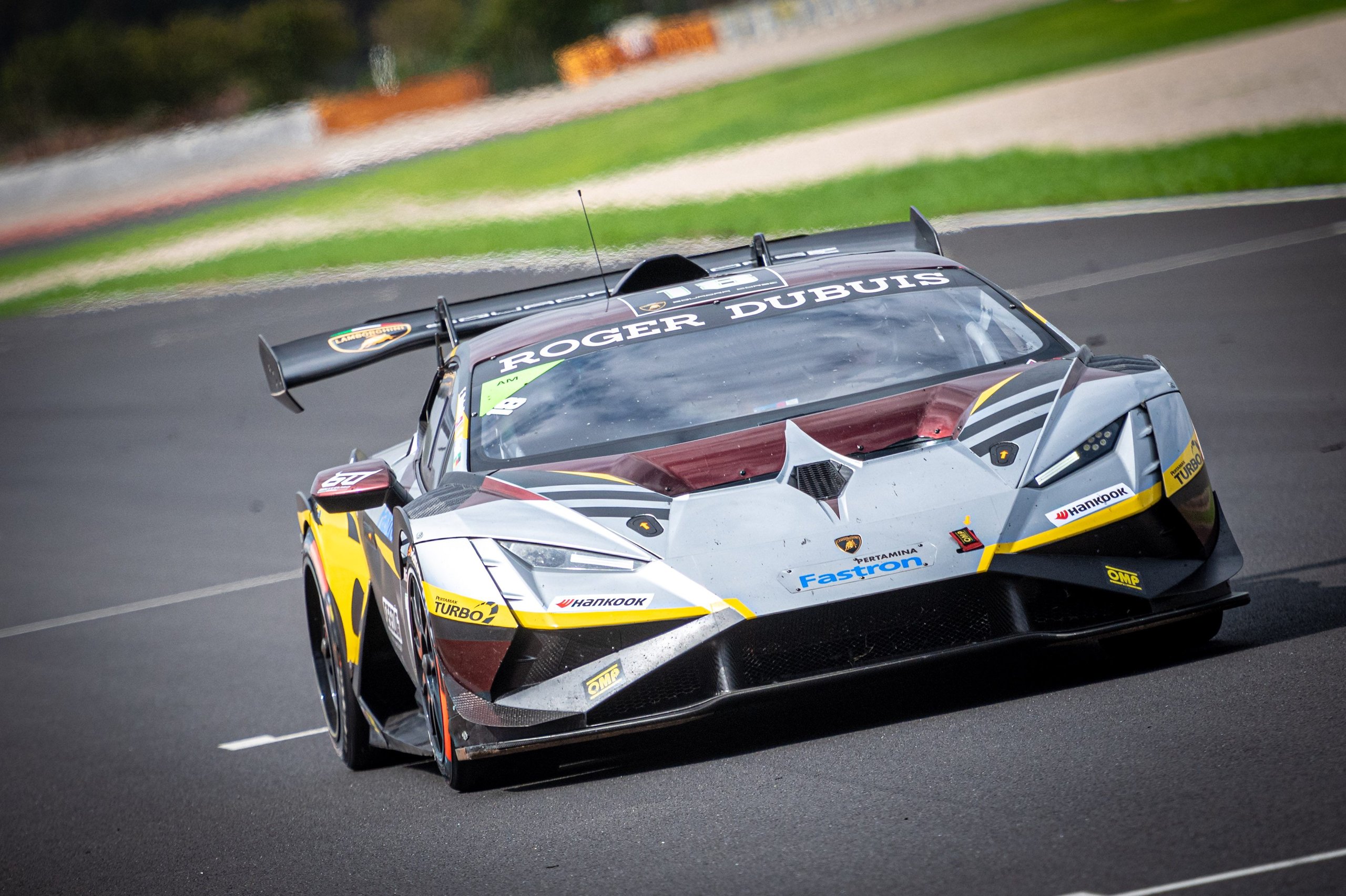
The Pro class standings tell a nuanced story after Valencia. Leitch, the championship leader in the #86 Leipert Motorsport entry, finished fourth, just off the podium. Lamborghini says he consolidated a healthy points margin heading into Vallelunga, but Oregon Team‘s second win of the season means the gap is not insurmountable. Largim Ali and Oliver Söderström claimed their first Super Trofeo podium in third, surviving sustained pressure from Leitch throughout the second stint. Bonduel, despite his qualifying pace, faded to sixth overall and fifth in the Pro standings.
Pro-Am produced its own drama before the race even started. The #22 Micánek Motorsport car of Karol Basz and Bronislav Formánek stopped on the formation lap and never took the green flag. Alex Au and Patrick Kujala, running the #81 Target Racing entry, climbed through the field after the pit window to take the class win. Au’s victory strengthened his points lead over main rival Andrzej Lewandowski, whose co-driver Artem Petrov spun late and finished a distant fourth in class. Edgar Maloigne and Stéphan Guerin completed the Pro-Am podium for Arkadia Racing.
The Am class was borderline absurd. Boutsen VDS teammates Karim Ojjeh and Elie Dubelly won after virtually every other contender hit trouble. Renaud Kuppens, in the sister Boutsen car, led early before beaching in the gravel at turn nine. Race 1 winner Ibrahim Badawy held the lead after pit stops, only to receive a drive-through penalty for overtaking under safety car conditions. Kuppens regained the lead, but co-driver Feligioni was taken out by CMR’s Wilfried Cazalbon under braking at turn two. Cazalbon received a penalty. Ojjeh inherited the top spot and held on. GT3 Poland’s Adrian Lewandowski finished second, with Badawy recovering to third.
Lamborghini Cup was comparatively clean. Paolo Biglieri and Petar Matić won from the front, extending their class points lead. Leipert Motorsport’s Jürgen Krebs pushed them to the flag, finishing just over seven-tenths behind. The Privitelio father-and-son pairing at Iron Lynx completed the podium after a late drive-through penalty dropped BDR Competition’s José Hernandez Ortega.
The Am class chaos, where the lead changed hands through penalties and gravel traps rather than pure pace, illustrates both the accessibility and the unpredictability of the lower tiers. But it also underscores the same lesson Oregon Team demonstrated at the front: in identical machinery, survival and composure count for more than raw speed.

Winners and team members celebrate on the podium with trophies at the Lamborghini Super Trofeo Europe event.
The Huracán’s Competitive Twilight and the Road to Vallelunga
The Super Trofeo Europe series, established in 2009, remains the longest-running Lamborghini championship and the most visible showcase for Squadra Corse’s customer racing operation. It runs alongside the GT World Challenge Europe calendar on circuits like Spa-Francorchamps, Imola, and the Nürburgring, giving teams and drivers exposure to the same venues where Lamborghini competes at GT3 level. For gentleman drivers, it offers structured competition in a controlled environment. For aspiring professionals, it offers a visible path upward.
Lamborghini’s broader motorsport trajectory adds context to what happened at Valencia. The Huracán Super Trofeo EVO2 represents the final chapter of V10-powered customer racing for the brand. With the Temerario GT3 moving to a twin-turbo V8 hybrid architecture, the transition will eventually filter down to the one-make series as well. For teams like Oregon Team, who built their programs around the Huracán’s naturally aspirated character, that shift will demand adaptation to an entirely different powerband and thermal management challenge. Moretti nursing an overheating engine to victory at Valencia hints at the kind of driver sensitivity that will matter even more in a turbocharged future.
The penultimate round of the 2023 season takes place at the Vallelunga circuit near Rome on November 12-13. Leitch holds a comfortable Pro class points lead, but Oregon Team’s momentum, two wins and a clear speed advantage at Valencia despite zero pre-event testing, makes them the team nobody wants to see in their mirrors. In Pro-Am, Au’s strengthened points lead gives him a buffer, though Lewandowski’s crew will be desperate to close the gap on home Italian soil. The Am class remains genuinely unpredictable. Lamborghini Cup looks like Biglieri and Matić’s to lose, but the tight margins at Valencia suggest Krebs will not concede quietly.
These are the last seasons where the V10’s naturally aspirated scream defines the Super Trofeo grid. Oregon Team’s comeback at Valencia, won on feel and nerve rather than horsepower, is a fitting reminder of what this formula does best.

A striking white and blue Lamborghini Huracán Super Trofeo EVO2 leads its rivals on the track.
Gallery