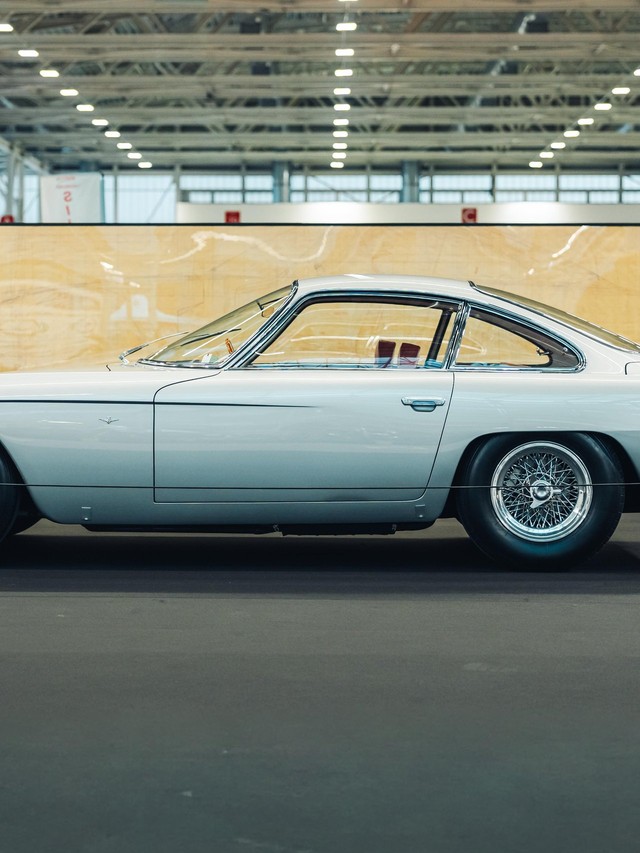
A Double Victory for Lamborghini’s Factory Heritage Division
In late August and early September 2018, two Lamborghini Miura S models restored by Polo Storico claimed top honors at a pair of elite UK concours events, proving that the factory’s heritage division can do something no independent restorer can: recover a car’s original identity so completely that the world’s toughest judges reward it with trophies.
At Salon Privé, held at Blenheim Palace in Oxfordshire, a 1971 Miura S originally owned by Rod Stewart earned Best in Class for 1970s Supercars, a special award for The Most Iconic Car, and third place Best in Show. Days later at Hampton Court Palace in London, a second 1971 Miura S won The Best 1970s Car. Lamborghini confirmed that both cars were restored at the company’s Sant’Agata Bolognese headquarters by Polo Storico, the official division responsible for classic Lamborghini preservation. The judges, headed at Salon Privé by five-time Le Mans winner Derek Bell MBE, were evaluating not just beauty but authenticity. One car had been buried under decades of modification; the other had barely turned a wheel since the late 1970s. Both passed that test convincingly, and the reasons why tell a larger story about what factory provenance actually means for collectors.
Rod Stewart’s Miura S: 23mm of Filler and an 18-Month Resurrection
The Salon Privé winner, chassis number 4863, carries one of the more dramatic restoration narratives in recent Miura history. Lamborghini says this right-hand-drive Miura S was first delivered in England in late October 1971, finished in Bianco Polo Park, a distinctive “ice” saltpeter-based shade of white chosen by its first owner, Rod Stewart. The car still wears its original number plate, JLL 831K.
Stewart’s connection to the Miura ran deep. One report indicates that chassis 4863 was actually the second of three Miuras he owned, following a P400 and preceding a yellow Miura SV. After leaving Stewart’s hands, the car passed through several British owners over the following decades. Between 1994 and 2014, a subsequent owner converted it to SV specification, altering the bodywork and covering the original panels under a 23mm-thick layer of body filler. When it arrived at Polo Storico, the car was blue, its original lines completely concealed.
The restoration took 18 months and focused primarily on the chassis and bodywork, reversing the SV conversion and stripping away the filler to recover the original S-specification panels. Critically, the car retains its original engine, meaning the mechanical heart of the vehicle remained untouched through all those years of cosmetic alteration. Salon Privé marked the car’s first public appearance since the restoration was completed.
The 23mm filler detail deserves attention. That kind of modification can permanently compromise panel geometry, and the fact that Polo Storico recovered the original form well enough to win Best in Class speaks to the depth of their archival and fabrication resources. Access to original factory tooling data and build records is something only the factory itself can offer, and this car is living proof of why that access matters.
The Low-Mileage Legend from Singapore
The Hampton Court Palace winner tells a completely different story, yet arrives at the same conclusion about factory restoration. Chassis 4845, also a 1971 right-hand-drive Miura S, wears a pale green exterior over a blue interior. Lamborghini says it was the only Miura shipped to South East Asia at the time, delivered to its first owner in Singapore on June 28, 1971. The car never returned to Europe until its concours appearance.
With less than 1,300 miles from new, this may be the lowest-mileage Miura in existence. It left the road at the end of the 1970s and sat dormant for three decades before being purchased in 2009 by an Indonesian collector. That collector commissioned Polo Storico for a complete restoration at the end of 2016.
Low mileage sounds like a blessing for a restorer, but it introduces its own challenges. Seals dry out. Fluids degrade. Rubber components harden and crack. A car that sat for 30-plus years in a tropical climate requires careful attention to corrosion and material degradation that a regularly driven example might never develop. The car won at Hampton Court, where His Royal Highness Prince Michael of Kent reportedly stopped to examine it and ask about the restoration, suggesting the work addressed those issues comprehensively.
For collectors weighing the significance of mileage versus condition, this car illustrates an important principle: ultra-low mileage only matters if the vehicle was properly stored and properly restored. Without both, low numbers on the odometer can mask expensive problems. Polo Storico’s ability to bring this car back to concours-winning standard reinforces the same point the Rod Stewart Miura makes from the opposite direction: factory knowledge is the difference between a good restoration and a definitive one.
What Polo Storico Actually Does, and Why Collectors Should Care
Lamborghini Polo Storico covers all models out of production for at least ten years, from the 350 GT through the Diablo. The division handles restoration, certification, archive preservation, and original spare parts supply. Lamborghini says components now cover over 65% of the classic fleet, with 200 additional items added to the catalogs in 2017 alone.
That spare parts figure is worth unpacking. Classic car ownership often comes down to parts availability. A gorgeous restoration means little if a future mechanical failure requires fabricating a component from scratch. By actively reintroducing original parts, Polo Storico reduces the long-term ownership risk for classic Lamborghini buyers in a way that few competitors match at this scale.
Ferrari operates its own Classiche program, and Porsche runs Porsche Classic, both offering factory restoration and certification services. Where Lamborghini’s program stands out is in the relative scarcity of its classic models. Lamborghini produced 338 Miura S examples total. Ferrari built thousands of comparable-era cars. That scarcity means each Polo Storico certification carries outsized weight in the collector market, because the pool of eligible vehicles is so small that every authenticated example matters. A concours victory at events of this caliber functions as a public stamp of that authenticity, and for collectors, that stamp translates directly into confidence.
One source reports that average sale prices for a Miura P400S sit around $1.69 million, with the highest recorded figure reaching $2.59 million. Celebrity ownership and documented factory restoration can push values well above those averages, though Lamborghini itself does not publish pricing guidance for restored examples.
Heritage as Strategy, Not Nostalgia
Lamborghini’s decision to showcase Polo Storico’s work at two of the UK’s most prominent concours events, rather than simply displaying new production models, reflects a deliberate brand strategy. The Aventador SVJ made its European debut at the same Salon Privé event, but Lamborghini chose to lead its communications with the Miura wins. That editorial choice tells you where the company sees long-term brand equity: not just in the next supercar, but in the cars that built the legend.
For anyone considering a classic Lamborghini purchase, the practical takeaway is straightforward. A Polo Storico restoration and certification adds a documented layer of authenticity that concours judges, insurers, and future buyers all recognize. The cost and timeline for such work remain unpublished by Lamborghini, and the company does not disclose restoration pricing publicly. What these two Miura S victories demonstrate is the outcome: cars that can compete at the highest level of international concours judging and win.
The Miura defined the supercar template in the 1960s. More than fifty years later, Lamborghini is making sure the cars that survive tell their stories accurately, down to the correct shade of white and the original number plate. In a market where provenance determines value, that commitment to getting the details right is worth more than any trophy.
Gallery


