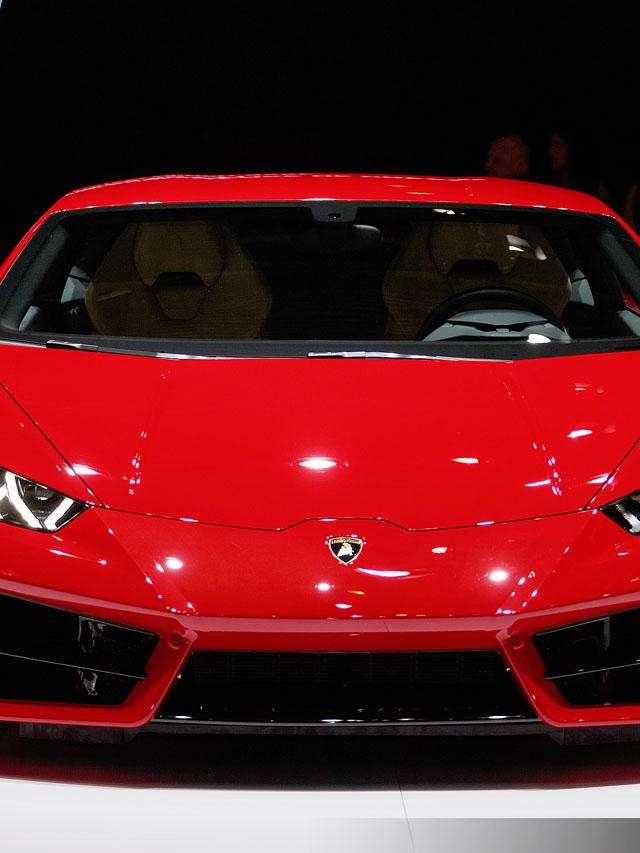
A Former Ferrari F1 Principal Takes the Helm at Lamborghini
Stefano Domenicali was appointed President and CEO of Automobili Lamborghini, effective March 15, 2016, succeeding Stephan Winkelmann, who transitioned to CEO of Audi’s sports affiliate quattro GmbH. A routine executive rotation within the Volkswagen Group, then? Not quite. Lamborghini just handed the keys to a man who spent two decades inside Ferrari, including a stint as Team Principal of Scuderia Ferrari F1 during its 2008 Constructors’ World Championship season.
Rupert Stadler, then Chairman of the Board of Management of AUDI AG and Chairman of Lamborghini’s Administrative Board, credited Winkelmann with transforming Lamborghini into a global leader in super sports cars over his eleven-year tenure and expressed confidence that Domenicali would continue that trajectory. The more interesting question is not whether Domenicali can maintain the status quo, but whether his particular background will push Lamborghini in directions Winkelmann never attempted.
The Ferrari F1 Connection: Why Domenicali’s Background Matters
Born in Imola in 1965, Domenicali graduated from the University of Bologna with a business administration degree in 1991 and began his professional career in finance with Ferrari. By 1993 he had joined Scuderia Ferrari as Head of Business Planning. He went on to serve as director of the Ferrari-owned Mugello circuit, managed Scuderia Ferrari’s sponsorship portfolio from 1996, and was appointed sporting director of the Formula 1 team in 1998. From 2004 to 2007, he led Ferrari’s Direzione Sportiva F1.
Then came the top job: in 2008, as Team Principal, he led Scuderia Ferrari to the Constructors’ World Championship. Between 2009 and 2014, Domenicali represented Ferrari in the F.I.A World Motor Sport Council, where he remains a member, and he currently serves as president of the F.I.A. Single Seater Commission. Since November 2014, he served as Vice President New Business Initiatives at AUDI AG, giving him direct exposure to the Volkswagen Group‘s internal workings before stepping into Sant’Agata.
What matters for Lamborghini buyers and enthusiasts is not the resume itself but the skills it implies. Running an F1 team at Ferrari’s level means managing complex engineering organizations under extreme competitive pressure, balancing technical ambition against commercial reality, and navigating the politics of global motorsport governance. Those are precisely the muscles a CEO needs to steer Lamborghini through what was shaping up to be the most ambitious product expansion in the company’s history.
Winkelmann’s Legacy: The Foundation Domenicali Inherits
Stephan Winkelmann left Lamborghini in strong shape. Over eleven years he oversaw the Gallardo-to-Huracán transition, the Aventador‘s rise as a flagship V12 icon, and the expansion of Squadra Corse’s customer racing programs. Winkelmann himself noted Lamborghini’s continual, profitable growth under his leadership, driven by a focus on new products and processes. He also highlighted his role in facilitating the initial release of the brand’s third model series, slated for launch in 2018, a clear reference to the Urus SUV.
The Urus represented the single biggest strategic bet in Lamborghini’s modern history. Winkelmann set the project in motion; Domenicali would be the one responsible for getting it across the finish line. Launching a super SUV required expanding the factory in Sant’Agata Bolognese, building an entirely new customer base, and doing all of it without diluting the brand’s identity as a maker of extreme super sports cars. It was, in many ways, a challenge tailor-made for someone who understood both the commercial and emotional sides of Italian performance brands.
From Maranello to Sant’Agata: The Competitive Implications
The elephant in the room is Ferrari. Domenicali spent more than two decades inside Lamborghini’s most direct rival, absorbing its engineering culture, its commercial strategies, and its approach to brand management. Lamborghini confirmed no specific product or motorsport initiatives tied to his appointment, but the strategic logic is hard to miss.
Ferrari and Lamborghini compete for overlapping buyers in the front-engined GT and mid-engined supercar segments, and by 2016 both brands were eyeing the high-performance SUV market. Bringing in a leader who understood Ferrari’s playbook from the inside gave Lamborghini a competitive intelligence advantage that no consultancy report could replicate. Domenicali’s Audi tenure, meanwhile, ensured he understood the Volkswagen Group’s engineering resources, shared-platform strategies, and the corporate framework within which Lamborghini operates.
For buyers, the practical takeaway was this: Lamborghini’s new CEO combined deep motorsport credibility with the commercial pragmatism needed to deliver a vehicle like the Urus without turning Sant’Agata into a volume manufacturer. Whether that balance would tip toward more track-focused special editions, expanded Squadra Corse programs, or a broader product portfolio remained to be seen at the time of his appointment. The ingredients for an aggressive, performance-oriented growth strategy were clearly on the table.
Domenicali himself kept his public remarks measured, stating his excitement to take on the challenges of Lamborghini’s legacy and continue its successes. Winkelmann, for his part, thanked the employees who made Lamborghini’s growth possible and moved on to quattro GmbH. The words were diplomatic. The underlying move was anything but.
Gallery


