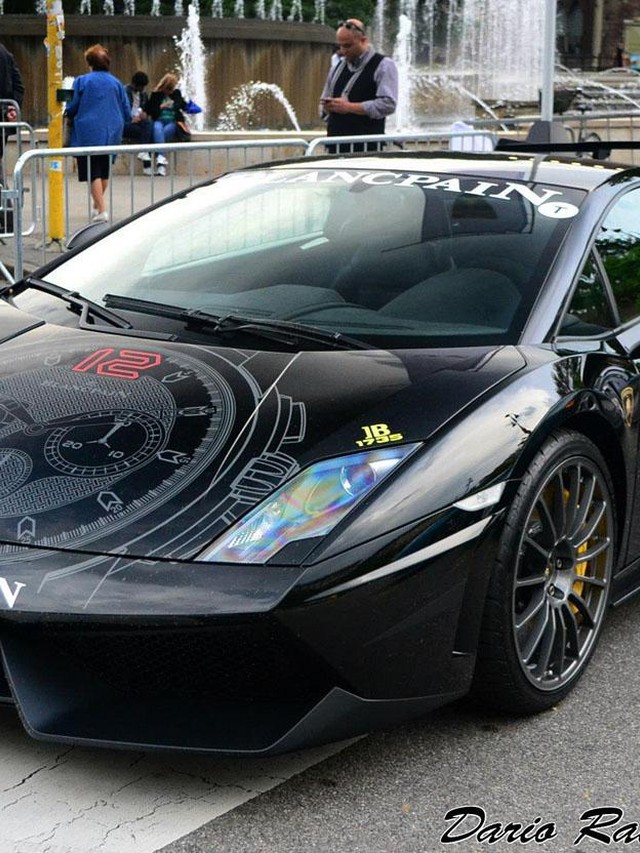
Imola’s Grand Finale: Crowning the 2017 Super Trofeo World Champions
Four races, eight different winners, and a championship decided as much by nerve as by outright speed. The fifth edition of the Lamborghini Super Trofeo World Final at the Autodromo Enzo e Dino Ferrari in Imola was the kind of weekend that justifies the entire customer racing enterprise: unpredictable, fiercely contested, and impossible to script.
Riccardo Agostini, a twenty-three-year-old from Padua, and his American co-driver Trent Hindman, born in 1995, took the PRO World Championship for Prestige Performance. They built their title on a pole position and Race 1 victory on Saturday, then sealed it with a calculated fifth-place finish in Race 2 on Sunday. Their names now follow Dennis Lind, the 2016 World Champion, on a roll of honor that reads like a roster of young talent ascending through Lamborghini’s customer racing ladder.
Over 160 drivers competed across the 2017 season’s three continental championships in Europe, Asia, and North America, plus a Middle East series launched just nine months earlier. All of them funneled toward this single weekend in Emilia-Romagna. When every car on the grid runs the same Huracan Super Trofeo hardware on the same Hankook rubber, the margins collapse to driver skill, team strategy, and composure under pressure. That eight different drivers stood on the top step across the PRO, PRO-AM, AM, and Lamborghini Cup categories tells you everything about the competitive balance Squadra Corse engineers into this series.
More Than Just a Race: The Super Trofeo’s Strategic Value to Lamborghini and Its Global Community
Established in 2009 as a European-only affair built around the Gallardo, the Super Trofeo had grown by 2017 into one of the most globally distributed one-make championships in motorsport, spanning four continents. Lamborghini is the sole constructor, Hankook supplies the tyres, and Squadra Corse manages the technical regulations. The result is a controlled environment where teams compete on preparation and driving, not on who can spend the most chasing aerodynamic loopholes.
The strategic calculus runs deeper than car sales. A driver who spends a season racing a Huracan Super Trofeo, traveling to circuits across a continent, working with Squadra Corse engineers, and competing against peers in identical machinery, becomes invested in the brand at a level no showroom transaction or marketing campaign can replicate. Customer racing builds community, and community builds loyalty that compounds over decades.
Just as importantly, the series functions as a genuine development pathway. Edoardo Piscopo, who won the 2017 PRO-AM World Final alongside nineteen-year-old Taylor Proto, previously claimed the 2014 PRO class World Championship. That kind of progression, from top-tier amateur to seasoned semi-professional, illustrates how the Super Trofeo creates a career ladder. Drivers who prove themselves here often move into GT3 competition, where Lamborghini fields factory-supported Huracan GT3 entries in series like the Blancpain GT and IMSA WeatherTech Championship.
Competitor programs like the Ferrari Challenge and Porsche Carrera Cup serve similar functions for their respective brands. Lamborghini’s distinguishing play is the World Final format itself: pulling the best drivers from every regional series into a single, high-pressure weekend. It concentrates the drama and gives the series a genuine championship climax that most one-make programs lack. Imola 2017 was proof of concept.
The Huracan Super Trofeo: The Machine Behind the Motorsport Drama
None of the weekend’s drama would land the same way without the right car underneath it. The Huracan LP 620-2 Super Trofeo is a purpose-built race car, not a road car with a roll cage bolted in. It shares its 5.2-liter naturally aspirated V10 with the road-going Huracan, but the similarities thin out quickly from there. According to Autoblog, the car was built specifically for the one-make series, featuring extensive use of carbon fiber, an aggressive aerodynamic package with a prominent rear wing, and a rear-wheel-drive layout that eliminates the road car’s all-wheel-drive system.
That rear-drive configuration is a deliberate choice. It makes the car more demanding to drive at the limit, which is exactly the point in a series designed to develop driver skill. When the front axle is not rescuing you from throttle oversteer, the gap between a good driver and a great one becomes visible in every corner. The eight-winner weekend at Imola was not an accident of circumstance; it was a product of machinery that rewards talent and punishes complacency in equal measure.
Some enthusiast sources describe the Huracan Super Trofeo era as representing a “golden era” of naturally aspirated racing for Lamborghini, a characterization that carries more weight now than it did in 2017. Looking ahead, Lamborghini debuted the Temerario GT3, its first fully in-house designed, developed, and built competition car, at the 2025 Goodwood Festival of Speed. That car is based on the twin-turbocharged V8 Temerario, which means the Huracan Super Trofeo era represents the final chapter of Lamborghini’s naturally aspirated customer racing story. For collectors and enthusiasts tracking the brand’s motorsport lineage, that distinction makes every season of Super Trofeo Huracan competition historically significant.
Champions’ Journeys: Highlights from the PRO, PRO-AM, AM, and Lamborghini Cup Battles
The weekend’s results across all four categories reinforced the same lesson: in a one-make series this tightly regulated, championships are won on resilience and racecraft, not raw machinery advantage.
PRO: Agostini and Hindman’s title looked comfortable on paper, but the competition was fierce enough that a single bad race could have unraveled their championship. Raphael Abbate and Yuki Nemoto won Race 2 for VS Racing, finishing second in the overall standings on identical points to Patrick Kujala and Richard Antinucci of Bonaldi Motorsport. The European champions, Mikaël Grenier and Loris Spinelli of Antonelli Motorsport, were excluded from the final battle entirely after receiving a penalty for contact with Nicolas Costa in Race 2’s opening laps. That penalty reshuffled the standings in a way that underscored how thin the margins were all weekend.
PRO-AM: Piscopo and Proto’s path to the title was anything but smooth. After winning Race 1 on Saturday, the US RaceTronics duo suffered two contacts at the start of Race 2 that dropped them to the back of the field. They clawed back to third, behind Race 2 winners Nicolas Gomar and Lucas Mauron of AGS Events and the Leipert Motorsport pairing of Niels Lagrange and Pieter Vanneste. That recovery drive, from last to the podium with a championship on the line, was arguably the weekend’s most compelling narrative.
AM: Florian Scholze and Philipp Wlazik of Dörr Motorsport arrived at Imola having never raced at the circuit. They won Race 1, then survived a first-lap accident in Race 2 that cost them a mirror, making overtaking, as Wlazik noted, “rather difficult.” A fourth-place finish was enough to secure the title in their first Super Trofeo season, capped by two wins in the European series.
Lamborghini Cup: Gerard Van der Horst, already a two-time European Champion, added the World Final title with a Race 1 victory and a fourth-place finish in Race 2. Race 2 itself was chaotic: an initial collision triggered by poleman Ryan Hardwick’s spin led to three safety car periods and a red flag before Massimo Mantovani emerged as the winner. Juan Perez of Antonelli Motorsport won the Lamborghini Cup class in Race 2 despite being involved in an accident six minutes from the end, with Hardwick and Cameron Cassels completing the podium.
Super Trofeo’s Legacy: Paving the Way for Future Lamborghini Racing Endeavors and Competitive Position
The 2017 World Final at Imola captured the Super Trofeo series at a point of confident maturity. Eight years after its founding, the program had grown from a single-continent curiosity into a genuinely global championship, and the addition of the Middle East series earlier that year signaled Lamborghini’s intent to keep expanding its geographic footprint.
For anyone considering entry into customer racing, the Super Trofeo occupies an interesting position in the market. Lamborghini has not published official participation costs, and the source material for this event does not address pricing. What enthusiast forums and racing community discussion consistently indicate is that these programs demand significant investment beyond the car itself: dedicated mechanics, transport, entry fees, and consumables add up quickly. Multiple forum discussions describe the maintenance requirements as labor-intensive, with experienced participants noting that the cars require substantial workshop time between track outings. That is the reality of running a purpose-built race car at a competitive level, regardless of the badge on the nose.
The strategic thread connecting the 2017 season to Lamborghini’s broader motorsport ambitions runs through driver development and engineering feedback. Drivers who excel in Super Trofeo graduate to GT3, where Lamborghini’s Huracan GT3 has been a consistent front-runner. The Temerario GT3, reported as Lamborghini’s first competition car fully designed and built in-house, represents the next evolution of that pipeline. When it enters competition, the drivers and teams who cut their teeth in Super Trofeo will form the backbone of its customer racing effort.
What Imola 2017 ultimately proved is that the Super Trofeo’s value to Lamborghini lies in moments no amount of corporate planning can manufacture. A champion team that had never seen the circuit before their first practice session. A title contender penalized out of the fight on the final day. A driver clawing from last to the podium with a championship hanging in the balance. These are the stories that make motorsport credentials something more than a line in a press kit, and they are the reason Lamborghini’s customer racing gamble, eight years on, was paying off.
Gallery


