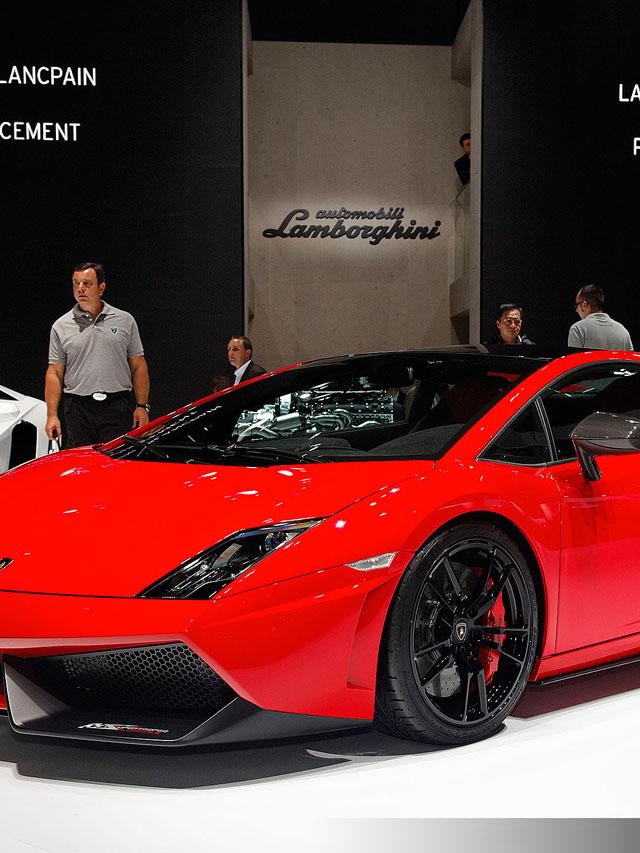
The Stage Is Set: Lamborghini’s Super Trofeo World Final Returns to Vallelunga
From November 15 to 18, the Piero Taruffi circuit at Vallelunga outside Rome will host the sixth edition of the Super Trofeo World Final, the single weekend that crowns continental and overall world champions from the European, North American, and Asian series. The venue carries weight: Vallelunga staged the inaugural World Final back in 2013, and bringing the event home five years later signals how seriously Lamborghini treats its customer racing program’s roots.
More than 60 cars are expected on the grid, and for the first time at this championship decider, every one of them will be the Huracán Super Trofeo Evo. Lamborghini chose its highest-visibility customer racing event as the car’s competitive proving ground, meaning the Evo’s first global impression will be made under maximum championship pressure, with titles still hanging in the balance across all three continental series.
A Global Battle: Three Continents, One Weekend
The World Final’s structure is unusual in single-make racing. Drivers from three separate continental championships, each with their own season-long points battles, converge for a shared finale that determines both regional titles and an overall world championship. The European series first ran in 2009, with the Asian championship following in 2012 and the North American series launching in 2013. By 2018, Lamborghini says the European series alone averaged 44 cars per grid, peaking at 48 entries at the Monza opener.
Those numbers matter because a one-make series lives or dies on participation. Grid density of that caliber suggests the Super Trofeo program is healthy enough to sustain competitive fields across multiple continents, and the World Final is the moment all that investment in regional infrastructure, team support, and car development converges in a single weekend.
The Huracán Super Trofeo Evo: What Sits Behind the Aggression
Lamborghini’s official material for the World Final focuses on the event itself rather than a detailed technical breakdown of the Evo. What the previous generation LP620-2 Super Trofeo established is well documented: a naturally aspirated 5.2-liter V10 producing 620 horsepower, a hybrid carbon and aluminum chassis, rear-wheel drive, a dry weight of 1,270 kg, and a power-to-weight ratio of 2.05 kg/CV. Power reached the rear axle through a six-speed sequential X-Trac gearbox, and stopping came courtesy of Brembo/PFC brakes.
The Evo designation implies aerodynamic and chassis refinements over that baseline, though Lamborghini did not detail the specific upgrades in its World Final announcement. What enthusiasts following the series should watch for at Vallelunga is whether the Evo’s changes translate into visibly different racing behavior: closer battles, higher corner speeds, or altered braking zones compared to previous World Finals. The car’s competitive character will be the real reveal, even if the spec sheet remains partially under wraps.
Collectors and aspiring racers should also note that Super Trofeo cars occasionally surface on the secondary market years after their competitive life ends, and the Evo generation is likely to carry particular significance as the final evolution of the Huracán racing platform before Lamborghini’s eventual transition to the Temerario GT3, which Squadra Corse is developing entirely in-house for the first time.
Championship Showdowns Worth Watching
Every class title in the European series arrives at Vallelunga undecided, and the same tension runs through the North American and Asian championships. In the European PRO class, Karol Basz and Vito Postiglione hold a ten-point lead over Giacomo Altoé and Daniel Zampieri, a pairing that recently won the Italian Gran Turismo championship with Lamborghini. Ten points with 32 still available means the leaders cannot afford a bad race. The PRO-AM fight is tighter still: Juan Perez and Loris Spinelli, who already clinched the North American series title, lead by nine points over Lorenzo Bontempelli and Emanuele Zonzini. Andrej Lewandowski looks more comfortable in the AM class with six victories, while the Lamborghini Cup comes down to a two-driver contest between Gerard Van der Horst and Joseph Collado.
Across the Atlantic, Corey Lewis and Madison Snow of Change Racing carry a seven-point cushion in the North American PRO class, and Ryan Hardwick holds a six-point advantage heading into the AM finale. The North American team championship is separated by a single point between Change Racing and US RaceTronics, a margin so slim that one mechanical failure could decide the outcome.
The Asian series brings its own intrigue. Andrea Amici and Artur Janosz lead the PRO standings with five wins for FFF Racing Team by ACM, while the PRO-AM class is deadlocked at 120 points between Mikko Eskelinen/Juuso Puhakka and Evan Chen/Akihiro Asai. When championships are this close across all three continents simultaneously, the World Final format earns its billing as the pinnacle of Lamborghini’s racing season.
Lamborghini’s Customer Racing Play in a Competitive Landscape
Single-make racing series serve a dual purpose for supercar manufacturers: they build brand loyalty among wealthy customers who want structured competition, and they develop driver talent that can graduate to higher-tier GT racing. Lamborghini’s Super Trofeo feeds directly into its GT3 program, creating a pipeline that keeps teams and drivers within the Squadra Corse ecosystem. Ferrari runs a similar model with the Ferrari Challenge, and Porsche fields its Carrera Cup. What distinguishes the Super Trofeo is its global World Final format, which forces continental champions to prove themselves against each other on neutral ground.
The specific technical differences between these rival series, including car costs and performance parity approaches, are not detailed in the available source material, but the participation numbers Lamborghini reports for 2018 suggest the program competes credibly for the attention and budgets of gentleman drivers and aspiring professionals alike. For buyers considering a step into competitive motorsport with Lamborghini, the practical takeaway is that the Super Trofeo offers a structured, manufacturer-supported path from regional racing to a genuine world championship, with the Huracán Evo providing a common platform that keeps competition focused on driver skill rather than engineering budgets.
How to Watch
All races will be available via live streaming on squadracorse.lamborghini.com/live-streaming and the Lamborghini Squadra Corse Facebook page. Each race runs 50 minutes. The Asian and North American series race on Friday, the European series splits its classes across Friday sessions, and the World Final races take place on Saturday and Sunday. For anyone unable to make the trip to Vallelunga, the streaming coverage offers the best way to see whether the Huracán Super Trofeo Evo lives up to its billing on its biggest stage.
Gallery


