The Huracán’s Last Stand: A Victory That Means More Than Points
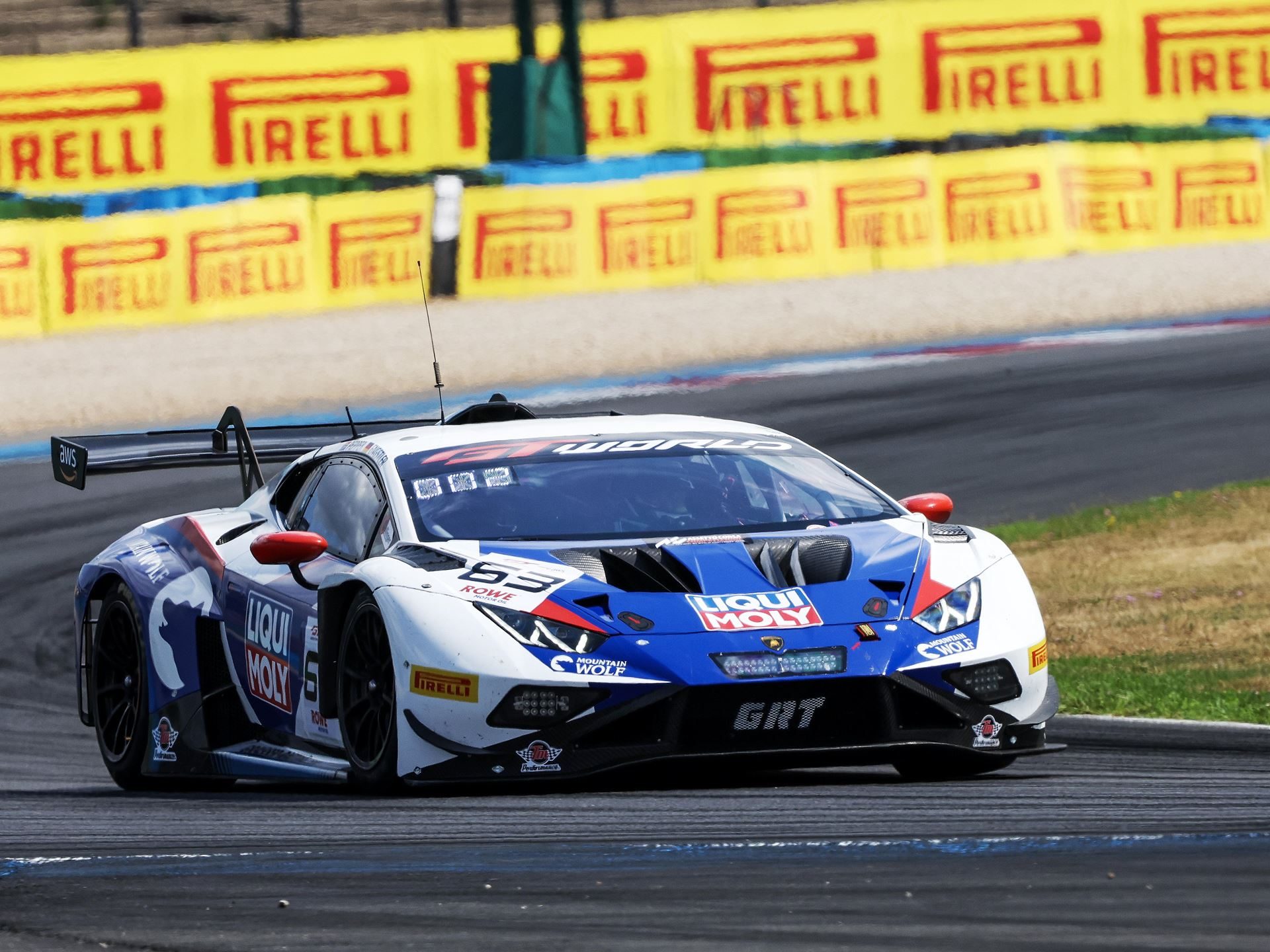
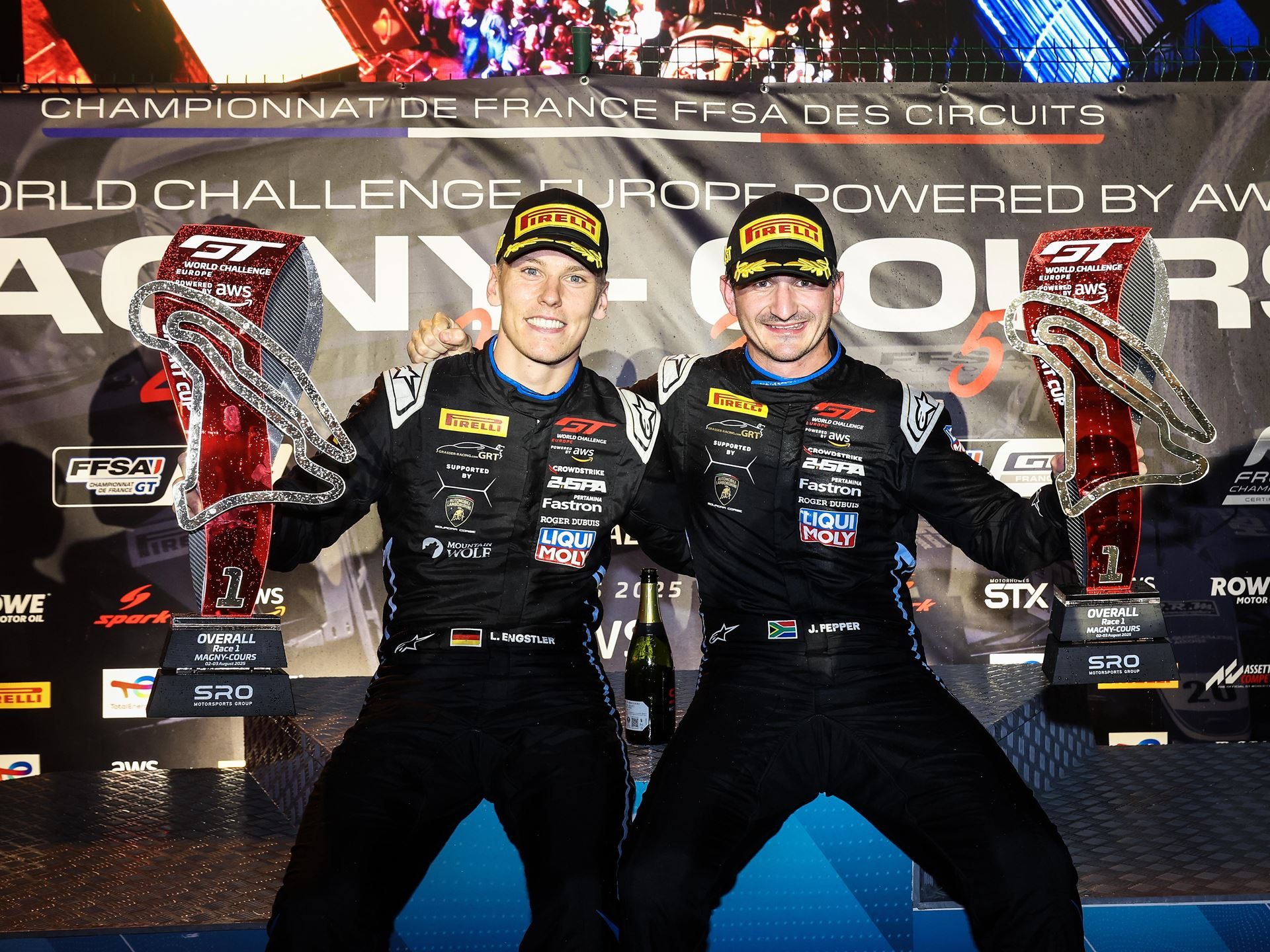
Four years is a long time between drinks in GT3 racing, where the competitive churn between manufacturer programs can make a single season feel like a generation. On August 3, 2025, Grasser Racing Team’s #63 Lamborghini Huracán GT3 EVO2 ended that drought at Magny-Cours, winning Race 1 of the GT World Challenge Europe Sprint Cup and following it with a runner-up finish in Race 2, separated from a perfect weekend by just 0.156 seconds. Lamborghini says the result marks its first Sprint Cup victory since Zandvoort in 2021.
The timing matters as much as the result itself. With Lamborghini having confirmed the Temerario GT3 as the Huracán’s successor, every remaining race for the naturally aspirated V10 platform carries the weight of a closing chapter. One report indicates the Temerario GT3 represents Lamborghini’s first racing car designed, developed, and produced entirely in-house, a significant shift from earlier programs that relied more heavily on external partners. The road car and race car reportedly share a 4-liter twin-turbo V8 developed by the same engineering team. That transition looms, but at Magny-Cours the Huracán GT3 EVO2 reminded everyone it is still the car fighting for results on the grid, still capable of winning under real pressure, and still writing its own story.
Drivers Luca Engstler and Jordan Pepper recovered from a pit-stop delay to win Race 1 by 1.243 seconds. The combined weekend lifted GRT to fifth in the Sprint Cup standings heading into the season finale at Valencia. For enthusiast circles that reflect on the emotional significance of the Huracán’s V10 in its final competitive chapter, victories like this one add to the legacy in concrete terms.
Race 1: Leading, Losing, and Taking It Back
The weekend started well for the Austrian-based Grasser Racing Team. The #63 topped the opening practice session, and Engstler qualified second fastest for Race 1. A track limits penalty for a Bronze Cup Ferrari then promoted the Huracán to pole position, giving Engstler the inside line for the rolling start.
He converted that advantage cleanly, pulling away before a multi-car incident at the Adelaide hairpin triggered an early safety car. That bunched the pack and erased his gap, but Engstler held station at the restart and built a margin of just over two seconds on the chasing Porsche before the mandatory pit-stop window opened.
Here is where the race nearly slipped away. Lamborghini confirms a delay with the front-left wheel during the stop cost the #63 valuable time and the lead. Pepper emerged in second, close enough to challenge but behind a car that now controlled track position. He nearly got alongside at the Imola chicane but couldn’t complete the pass.
A second full course yellow, with 12 minutes left on the clock, gave Pepper his opening. He executed a decisive move at the restart, retaking the lead from the Porsche and building enough of a gap to cross the line 1.243 seconds clear. That sequence, compressed into a single evening race under lights in central France, captured everything the Huracán GT3 EVO2 still brings to a fight: raw pace, a crew that refuses to fold, and a driver pairing capable of recovering from setbacks that would bury lesser operations.

Race 2: 0.156 Seconds From a Perfect Weekend
Pepper started Race 2 from second on the grid and held position through his opening stint before handing the car to Engstler. The German kept pressure on the race-leading McLaren throughout the second stint and nearly made a pass at the Nürburgring chicane before a late full course yellow compressed the field again.
Engstler carried stronger pace in the final sector and got alongside the McLaren at the finish. The gap at the line: 0.156 seconds. A double win was right there, close enough to taste, and the near-miss only underscored how competitive the Huracán GT3 EVO2 remains against the latest machinery from rival manufacturers.
Lamborghini did not disclose exact points totals, but the trajectory heading into the season finale at Valencia in September looks considerably healthier than it did after a frustrating home round at Misano.

Engstler and Pepper: Complementary Strengths Under Pressure
Both Luca Engstler and Jordan Pepper are Lamborghini Factory Drivers, and their combined weekend tells a clear story about role division. Engstler handled qualifying and opening stints, consistently extracting pace from the Huracán in clean air. He was second fastest in qualifying, led the early phase of Race 1, and pressured the McLaren deep into Race 2’s closing laps.
Pepper’s contribution came under different circumstances: traffic, restarts, and the kind of wheel-to-wheel aggression that decides races in the final 15 minutes. His restart pass on the Porsche in Race 1, executed at the end of a full course yellow period, was the decisive moment of the entire weekend.
GT3 Sprint Cup races demand two drivers who can each deliver under different types of pressure. At Magny-Cours, the complementary nature of their strengths was on full display, and the results suggest GRT found its rhythm at exactly the right point in the season. With Valencia as the finale, the momentum matters for a platform making its final case.

The Broader Grid: Lamborghini’s Customer Teams at Magny-Cours
Beyond the #63’s headline results, the Magny-Cours round produced a mixed bag for other Huracán GT3 EVO2 entries, but the overall picture reinforced the platform’s competitive breadth. The #78 Barwell Motorsport car of Lamborghini GT3 Junior Driver Hugo Cook caught the worst of the Adelaide hairpin incident in Race 1, suffering significant delays that effectively ended its chances. Cook and Lamborghini Factory Driver Sandy Mitchell recovered to finish seventh in Race 2, a respectable salvage job.
In the Bronze Cup class, Lamborghini Factory Driver Loris Spinelli and team-mate Dmitry Gvazava delivered their first podium of the year aboard the #85 Imperiale Racing Huracán GT3 EVO2. They took third in the Bronze Cup category in Race 1 and repeated the result in Race 2. Consistent double-podium weekends in any GT3 class are harder to produce than they look, and for a Bronze Cup pairing finding form mid-season, it signals genuine progress.
Three different Huracán GT3 EVO2 entries, run by three different customer teams, all producing competitive results across Pro and Bronze Cup classes. That kind of breadth matters in GT3, where the manufacturer’s reputation rests as much on the reliability and accessibility of its customer racing platform as on outright wins. GT3 racing, organized by SRO under the GT World Challenge banner, is the most visible customer racing category in Europe, and manufacturer presence in the results directly influences team purchasing decisions. Prospective customer teams evaluating platforms for future seasons pay close attention to which cars are winning, and which are reliable enough to finish consistently.
Valencia and Beyond: How the Huracán GT3 Story Ends
Whether the Huracán GT3 EVO2 can close the 2025 season with another strong result at Valencia will determine how this platform’s Sprint Cup story concludes, and how much momentum Squadra Corse carries into whatever comes next. The Magny-Cours weekend proved the car still has the pace, the driver pairing still has the chemistry, and the customer team network still has the depth to compete across classes.
Breaking a four-year Sprint Cup win drought carries weight beyond the points table. It validates a season’s worth of setup work and driver preparation for teams running the Huracán GT3 EVO2. And it ensures that when the V10’s roar finally gives way to the Temerario’s twin-turbo V8 on the GT3 grid, the Huracán will leave as a winner, not a fading contender waiting to be replaced.

Gallery