The Sterrato’s Southern Hemisphere Debut on Ice
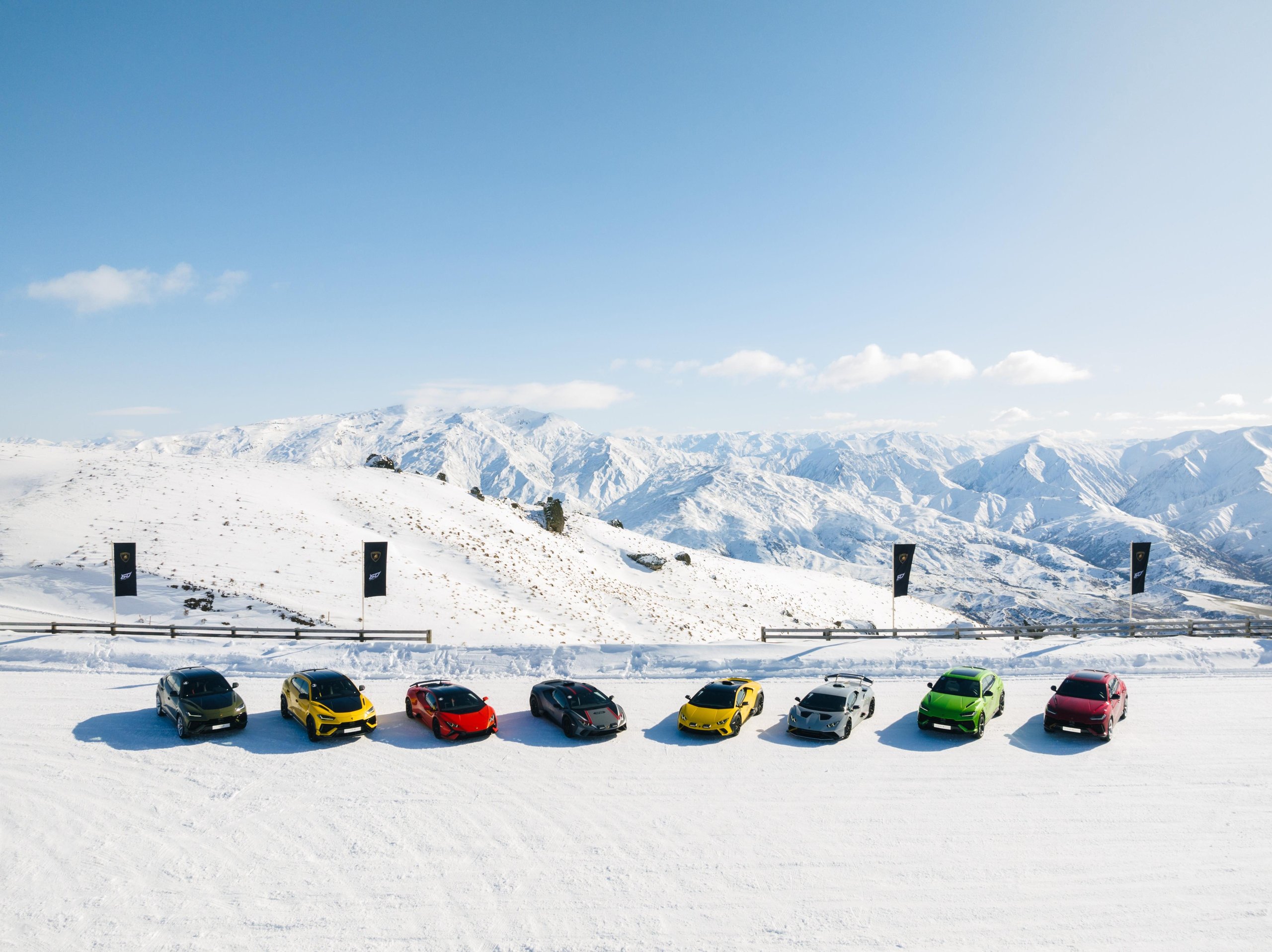
On August 7, 2023, Lamborghini staged its Esperienza Neve ice driving program at the Southern Hemisphere Proving Grounds in Queenstown, New Zealand, and the star of the fleet was a car most people associate with gravel roads and Instagram photo ops: the Huracán Sterrato. Asia Pacific clients rotated through a lineup that also included the Huracán Tecnica, Huracán STO, Urus Performante, and Urus S, all guided by professional Lamborghini instructors across frozen circuits carved into the New Zealand winter. The Sterrato’s appearance, though, marked a first for the Esperienza Neve program, and it carried a specific burden of proof.
The question that follows the Sterrato everywhere is whether the raised, cladded, roof-railed Huracán amounts to a genuine capability statement or an aesthetic exercise sold on the strength of its naturally aspirated V10 soundtrack. Queenstown’s ice circuits, surrounded by the Remarkables mountain range, offered conditions about as far from a Monza hot lap as you can get. That was precisely the point. Lamborghini says the three-day program was designed to let owners explore the full range of its current lineup in conditions that strip away the safety net of warm tarmac and predictable grip.
Francesco Scardaoni, Lamborghini’s Region Director for Asia Pacific, framed the event as a chance to “further demonstrate the capability of the all-terrain super sports car that goes beyond the asphalt.” The corporate language is predictable. The setting was not.
Why the Sterrato Needed This Proof Point
The Huracán Sterrato occupies a peculiar position in Lamborghini’s history. It arrived as the final V10 Huracán variant, a send-off that traded downforce for ground clearance and added a dedicated RALLY driving mode to the car’s revised LDVI (Lamborghini Integrated Vehicle Dynamics) system. Lamborghini says RALLY mode is specifically optimized for dirt and loose surfaces, including snow, recalibrating the all-wheel-drive torque split, stability control intervention, and throttle mapping for low-grip conditions. STRADA and SPORT modes remain available for road use, but RALLY is the party trick, the mode that separates the Sterrato from every other Huracán.
What makes the Sterrato’s inclusion at Esperienza Neve so telling is that ice tests exactly the claim Lamborghini built the car around. On dry gravel or a manicured dirt road, any all-wheel-drive supercar with enough ground clearance can look competent for a photo shoot. Ice is less forgiving. The surface exposes every calibration choice in the stability system, every compromise in the suspension geometry, every weakness in the tire compound. If the RALLY mode software works as advertised, the Sterrato should feel composed and controllable where a standard Huracán would be a liability. If it doesn’t, no amount of plastic cladding saves the narrative.
Multiple owners on enthusiast forums describe the Sterrato as a surprisingly capable daily driver, praising the higher ride height for reducing the constant anxiety of scraping a front splitter over speed bumps. The off-road capability is often described as a bonus rather than the primary appeal. A common sentiment: the Sterrato is the Huracán you can actually live with, and the gravel and snow capability is the cherry on top. That real-world owner perspective makes the Esperienza Neve validation more meaningful than a typical press event, because the people buying these cars genuinely want to know whether the engineering supports the lifestyle the marketing promises.

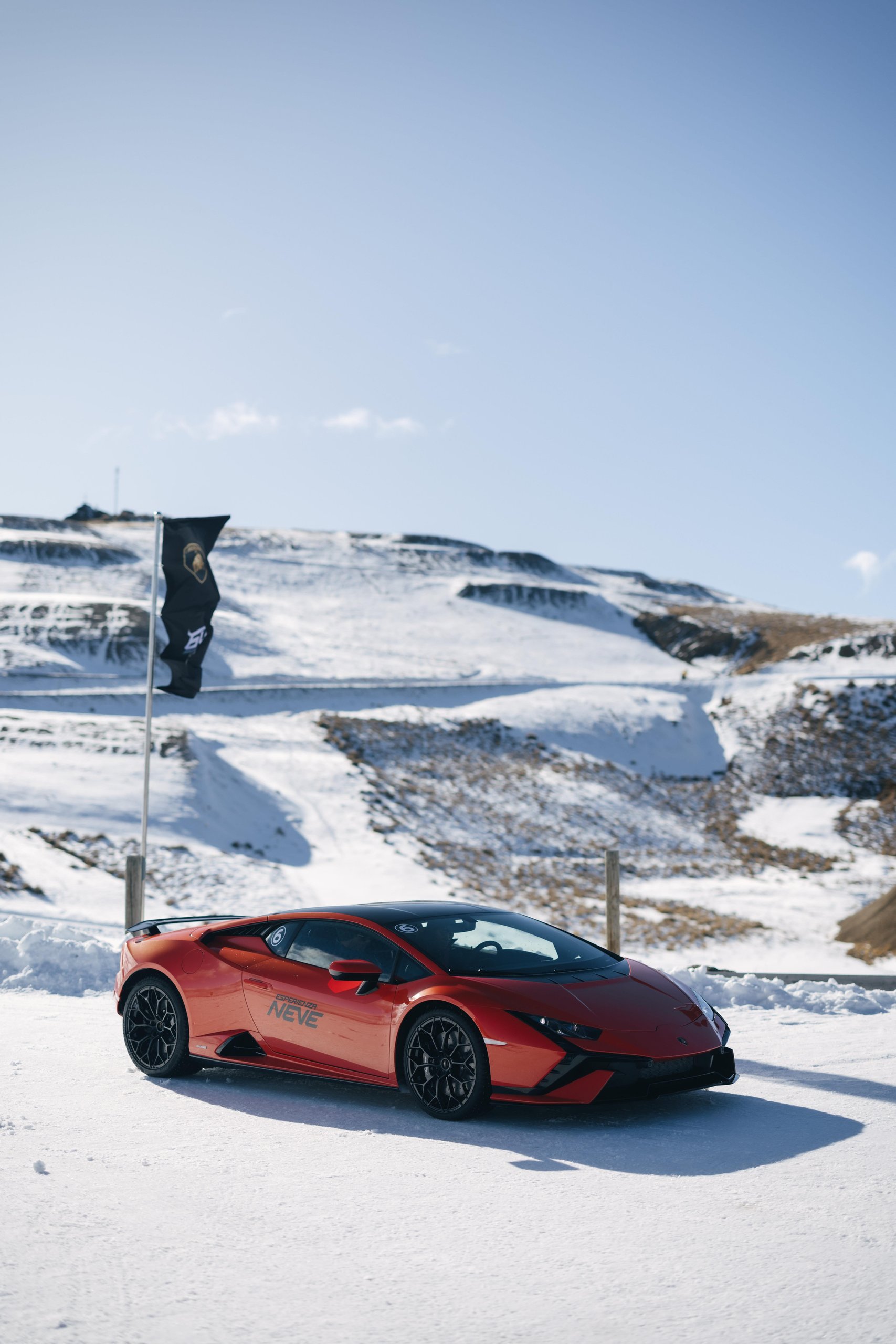
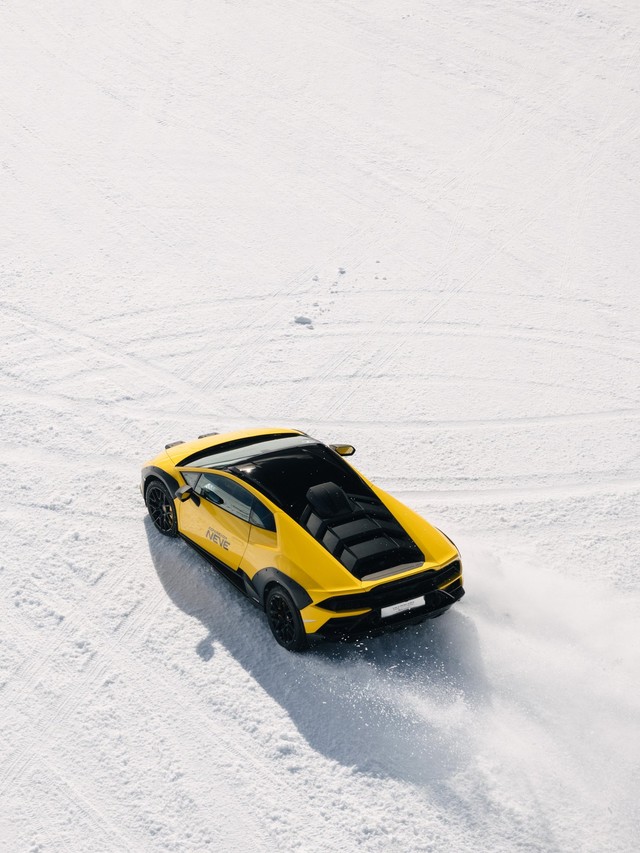
The yellow Lamborghini Huracán Sterrato carves through snow, demonstrating its off-road prowess.
RALLY Mode and LDVI: Engineering for Surfaces That Fight Back
The Sterrato’s revised LDVI system deserves explanation in plain terms, because it represents a fundamentally different engineering philosophy from the track-focused calibrations in the STO or Tecnica. Standard Huracán LDVI uses a feed-forward logic system: it predicts what the car will do next based on driver inputs and adjusts the all-wheel-drive torque split, magnetorheological dampers, and stability systems before the car actually begins to slide. On a circuit, this makes the car feel telepathic. On ice, the same predictive logic would be counterproductive, because the surface itself is unpredictable.
RALLY mode recalibrates the entire system for exactly this problem. Lamborghini says the mode allows greater slip angles before stability intervention, shifts more torque rearward to encourage rotation, and softens the throttle map so that the driver can modulate power delivery through sustained slides rather than being corrected out of them. The Sterrato sits 44 mm higher than a standard Huracán EVO, with increased suspension travel and a wider track. On snow, that extra travel matters enormously: it allows the dampers to absorb surface irregularities that would unsettle a lower car mid-slide.
The practical result, based on Lamborghini’s description of the system, is a car that lets the driver be the stability control. The LDVI still intervenes to prevent genuinely dangerous situations, but the threshold is set high enough that skilled drivers, or clients with professional instructors riding shotgun, can explore the car’s balance in ways that would be impossible in STRADA or SPORT. For a V10 supercar producing north of 600 horsepower, that calibration confidence on ice is a meaningful engineering achievement, not a marketing checkbox.

The yellow Lamborghini Huracán Sterrato speeds away, leaving a trail of snow in its wake.
The Sterrato vs. the Porsche 911 Dakar: Two Philosophies, One Niche
The Sterrato did not invent the off-road supercar concept, but it shares the niche with only one serious rival: the Porsche 911 Dakar. The two cars approach the same idea from opposite directions. Porsche built the Dakar around rear-engine traction advantages, rally-raid heritage stretching back to the 953 that won the 1984 Paris-Dakar, and a turbocharged flat-six that delivers its power in a broad, usable band. The Sterrato counters with mid-engine balance, all-wheel drive as standard, and a naturally aspirated V10 that rewards drivers willing to chase the upper reaches of the rev range even on loose surfaces.
Neither car is a genuine off-roader in the Land Rover sense. Both are road cars with enough ground clearance and suspension compliance to handle gravel roads, fire trails, and, as Queenstown demonstrated, groomed snow circuits. The real competition between them is philosophical: Porsche sells the Dakar as a continuation of its motorsport legacy, while Lamborghini positions the Sterrato as an expression of adventurous versatility. For buyers cross-shopping the two, the deciding factor is likely emotional. The 911 Dakar sounds like a sophisticated sports car doing something unusual. The Sterrato sounds like a V10 apocalypse happening on a ski slope.
According to CarBuzz, Lamborghini may not be finished with the concept. Reports suggest a Temerario-based Sterrato successor could follow, bringing the raised, rally-ready formula to Lamborghini’s new twin-turbo V8 hybrid platform. If that happens, the Sterrato’s Esperienza Neve appearance becomes more than a farewell tour for the V10. It becomes the proof-of-concept for a permanent line extension.

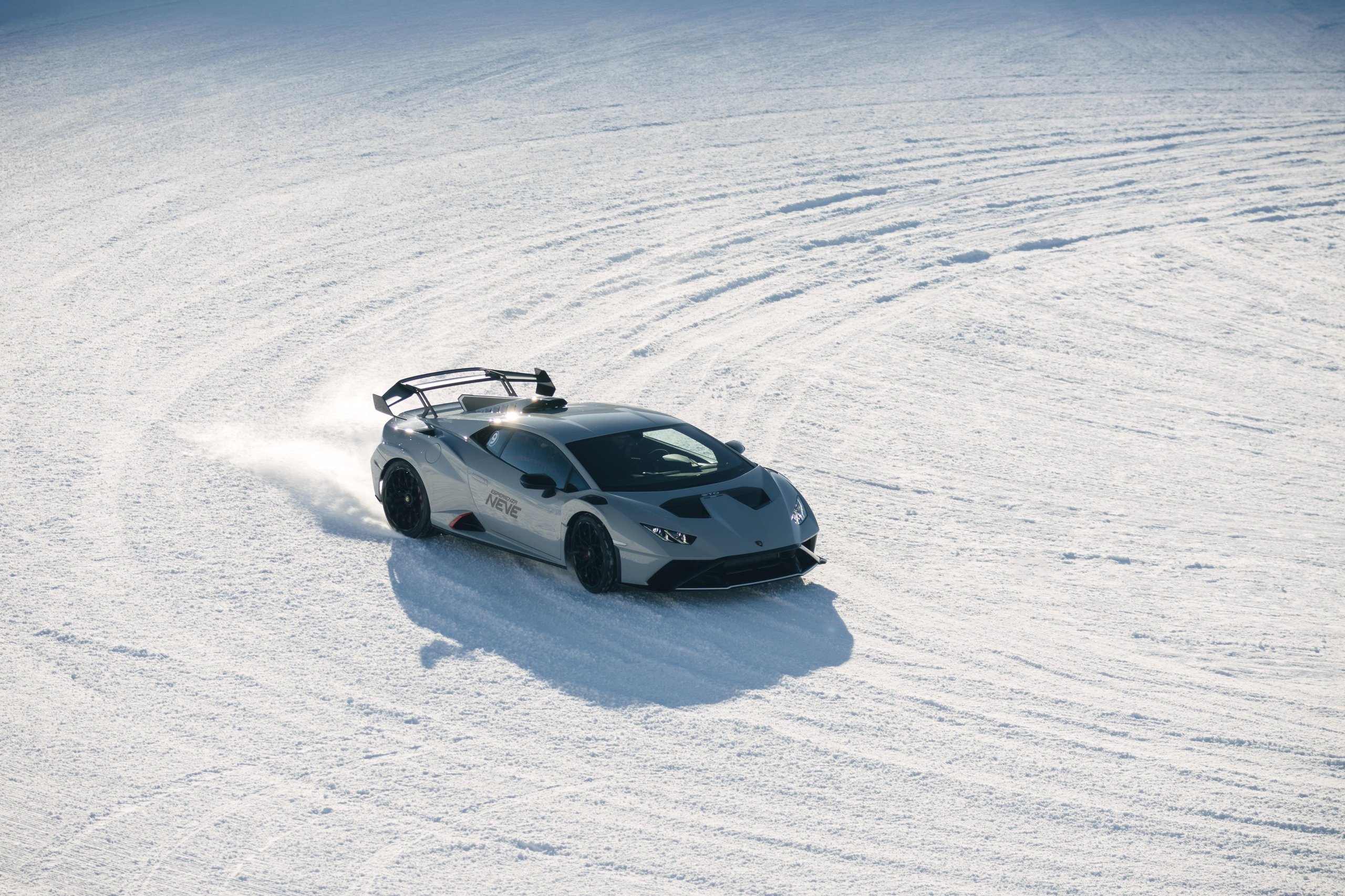
The white Lamborghini Huracán STO kicks up a dramatic spray of snow while drifting.
The Esperienza Neve Experience: What Clients Actually Get
Esperienza Neve is an exclusive, invitation-only ice driving program designed for Lamborghini’s existing clients. Multiple reports indicate that participation is arranged through dealerships and involves a five-figure fee. The New Zealand edition ran as a three-day program, with guests staying at a luxury hotel on the shores of Lake Wakatipu and dining at high-end restaurants across the South Island. Lamborghini’s Esperienza programs span multiple formats, covering track, dirt, ice, and sand, and the Neve variant is specifically built around winter driving dynamics.
Beyond the obvious appeal of sliding a V10 supercar across a frozen proving ground, the real value for clients is access to professional instruction in conditions most owners will never encounter on their own. The rear-wheel-drive STO and Tecnica provided a masterclass in oversteer management on ice, while the all-wheel-drive Urus Performante and Urus S demonstrated how four-wheel steering translates to low-grip cornering stability. According to one report, attendees of these programs typically own about five supercars on average. For that demographic, the cars themselves are familiar. The conditions are what make the experience worth the trip.
A separate Esperienza Neve event took place in February 2025 on Sacacomie Lake in Quebec, reportedly featuring the Urus SE, Huracán Sterrato, and V12 Revuelto. The program’s expansion from its traditional European venues to New Zealand and Canada signals that Lamborghini treats these experiential events as a serious client retention tool, not a seasonal curiosity. For prospective buyers wondering whether the Sterrato’s off-road credentials are real, the simplest answer might be that Lamborghini is confident enough to build an entire client program around proving it.

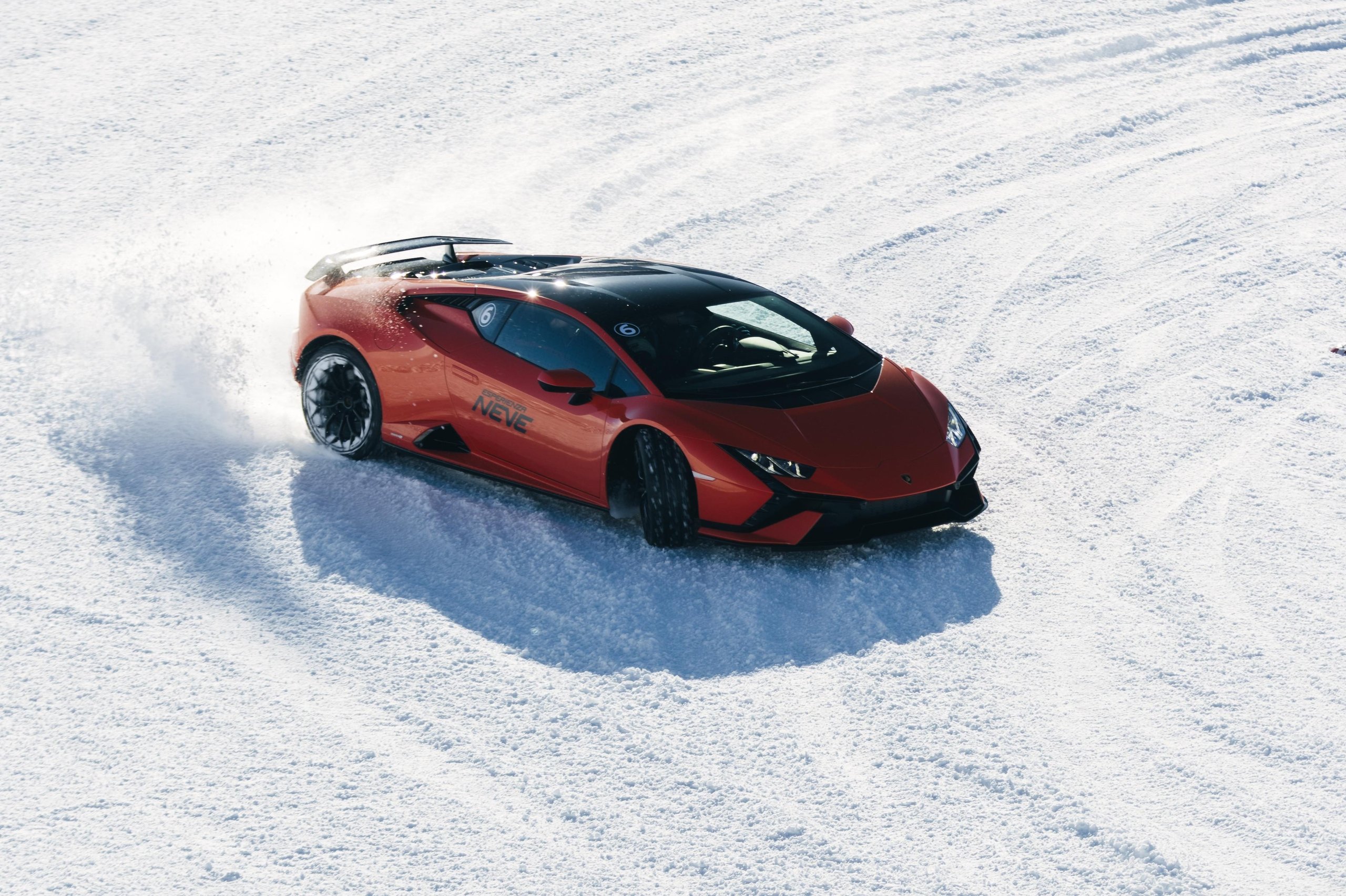
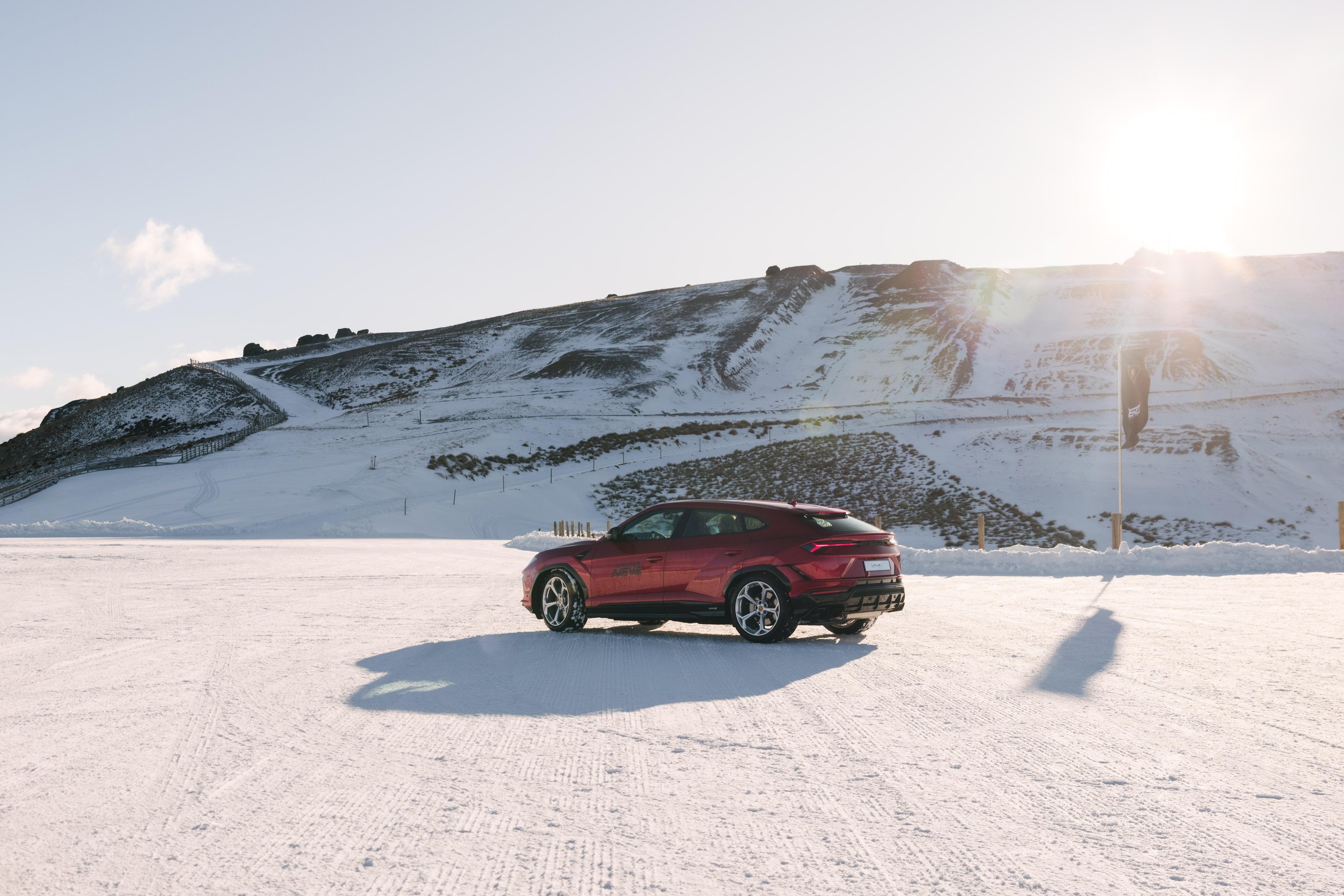
The powerful red Lamborghini Urus effortlessly navigates deep snow, creating a dramatic spray.
What This Means for Sterrato Buyers and Lamborghini’s Direction
The Sterrato’s production run ended with the Huracán line, and finding a new, unregistered example already requires effort. Forum threads on Lamborghini-Talk show buyers actively searching for unclaimed dealer allocations, while others debate whether the Sterrato or the Performante represents the better long-term hold. The Ad Personam division even released a four-theme All-Terrain special edition series (Neve, Sabbia, Terra, and Bosco) celebrating the environments the Sterrato was designed to conquer. Demand, at least among the collector-minded segment, appears to be climbing rather than fading.
For anyone considering a Sterrato purchase today, the Esperienza Neve event reinforces the most important practical argument for the car: it works. The RALLY mode calibration, the raised suspension geometry, and the all-wheel-drive system are not cosmetic additions. They function on surfaces that expose engineering shortcuts. Whether a typical owner will ever drive their Sterrato on a frozen lake in New Zealand is beside the point. The capability is real, and that reality supports both the driving experience and the car’s long-term collectibility as the last naturally aspirated V10 Lamborghini built for terrain beyond the racetrack.
Lamborghini’s competitors, Ferrari and McLaren chief among them, offer nothing comparable. Neither brand produces a raised, off-road-capable variant of a mid-engine supercar. Porsche does, but the 911 Dakar plays in a different weight class and powertrain philosophy. That competitive vacuum is exactly why the Sterrato matters to Lamborghini’s brand narrative, and why proving it on ice in front of paying clients carries more weight than any spec sheet could.

A stunning lineup of Lamborghini models showcases their vibrant colors against a breathtaking snowy mountain backdrop.
Gallery