3,245 Cars, €872 Million, and a Company That Could Finally Pay Its Own Way
In fiscal year 2015, Lamborghini crossed a threshold it had never reached before: 3,245 cars delivered worldwide, a 28% jump over the 2,530 units sold in 2014 and the first time the company broke through 3,000 annual sales. Turnover climbed even faster, rising 39% from €629 million to €872 million, pulled upward by the high transaction prices of V12 Aventador derivatives.
The raw numbers mattered, but the detail buried beneath them mattered more. Lamborghini confirmed that all new projects were being financed directly from cash flow. For a company that had spent decades cycling through corporate parents and financial uncertainty, that single statement signaled a fundamentally different kind of stability. Sant’Agata Bolognese was no longer just building exciting cars; it was generating enough profit to fund its own future without borrowing against it. Every major Lamborghini development since, from the Urus factory expansion to the hybrid Revuelto, traces its financial roots to the self-sufficiency that 2015 made real.
The Huracán and Aventador Effect
Two naturally aspirated engines carried the entire sales ledger in 2015, and both outperformed the cars they replaced by wide margins.
The Huracán LP 610-4, in its first full calendar year on the market, accounted for 2,242 deliveries. In the 18 months following its introduction, Lamborghini says the Huracán outsold its predecessor, the Gallardo, by 70% over the same post-launch window. The Gallardo had been the best-selling Lamborghini in history at the time of its retirement. The Huracán made that record look modest.
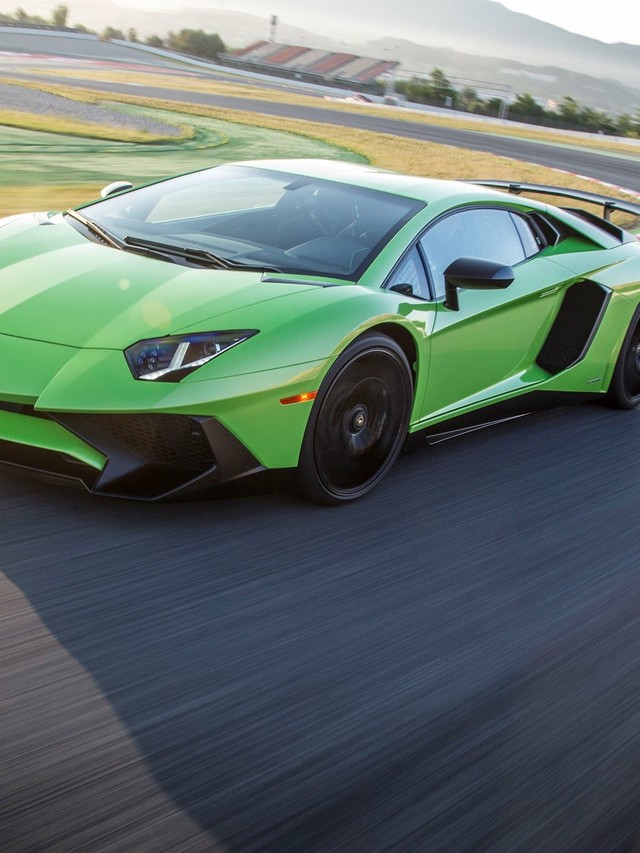
On the V12 side, combined deliveries of the Aventador LP 700-4 (coupé and roadster) and the freshly launched Aventador LP 750-4 Superveloce totaled 1,003 units. Over the 52 months following the Aventador’s market introduction, sales ran 124% ahead of the Murciélago during the equivalent period. The Superveloce, with its stripped-down focus and higher price, played an outsized role in pushing turnover growth beyond what unit volume alone could explain. Fewer cars, more revenue per car: a formula that fed directly into the cash-flow independence Lamborghini announced that year.
Anyone who has watched Lamborghini’s later limited-edition strategy, from the Sián to the Countach LPI 800-4, can trace its commercial logic back to the lesson the Aventador SV taught the company in 2015. High-value, low-volume derivatives generate disproportionate revenue and keep the brand’s exclusivity intact. That revenue, in turn, is what allowed Lamborghini to self-finance its expansion rather than depend on outside capital.
Winkelmann’s Quiet Blueprint
President and CEO Stephan Winkelmann framed 2015 as the fifth consecutive year of business growth, a streak that began during the aftermath of the global financial crisis. His public comments pointed to “wide-reaching strategic decisions” intended to secure Lamborghini’s position in global luxury markets over the medium and long term.
Lamborghini did not spell out what those decisions were. With the benefit of hindsight, the trajectory is clear. The cash-flow independence established by 2015 gave Lamborghini the financial credibility within the Volkswagen Group to pursue the Urus SUV program, a project that required significant investment in a new factory expansion and an entirely new vehicle segment for the brand. The Urus would arrive in 2018 and, by 2023, push Lamborghini past 10,000 annual deliveries for the first time. According to Car and Driver, that 2023 total reached 10,112 units, with the Urus accounting for more than 6,000 of them.
That same financial foundation enabled Lamborghini’s pivot toward electrification on its own terms. Rather than rushing an EV to market, the company used its profitability to develop plug-in hybrid architectures for the Revuelto and Urus SE while keeping naturally aspirated performance at the center of its identity for as long as possible. As Road & Track reported, Lamborghini’s 2025 revenue reached an all-time high, with multiple new models planned for 2026. The seeds of that position were planted a decade earlier, in the year the company proved it could pay its own way.
Where Lamborghini Stood Against Its Rivals in 2015
Lamborghini’s 2015 results gain sharper meaning when read against the competitive landscape of that moment. Ferrari, still under Fiat Chrysler’s umbrella, was preparing for its October 2015 IPO on the New York Stock Exchange, a move driven partly by Sergio Marchionne’s desire to unlock value and fund Ferrari’s own independence. McLaren, meanwhile, was scaling up its Automotive division with the 570S, chasing volume in the entry-level supercar segment the Huracán dominated.
Lamborghini’s advantage was structural simplicity. With only two model lines, V10 and V12, the company could concentrate engineering resources and marketing spend without the complexity of managing a broader portfolio. The result was a brand that punched well above its size in revenue per unit, a metric that would become even more favorable as limited editions and the Ad Personam customization program expanded. By 2025, Lamborghini says 94% of all cars delivered carried at least one bespoke element.
This concentration of resources on fewer, higher-value products is precisely what made cash-flow self-sufficiency possible. A sprawling lineup would have spread margins thin; two focused model lines generated the surplus that Winkelmann could reinvest into the company’s future.
From 3,245 to 10,747: The Trajectory That 2015 Made Possible
Lamborghini delivered roughly three times as many cars in 2025 as it did in 2015. Revenue grew from €872 million to what one report pegs at $3.20 billion. The product lineup expanded from two sports cars to three model families spanning a V12 hybrid flagship, a twin-turbo V8 hybrid mid-engine car, and a plug-in hybrid SUV, with a two-door GT reportedly in development.
None of that was inevitable. Plenty of low-volume manufacturers have posted a single strong year and then stalled. What distinguished 2015 was the decision to treat profitability not as a windfall but as infrastructure: money reinvested into new segments, new technologies, and a dealer network that could support sustained growth without diluting the brand.
The practical takeaway for current and prospective Lamborghini owners is straightforward. The company’s financial health directly protects residual values, ensures continued parts and service investment, and funds the kind of ambitious engineering (a 10,000-rpm V8 hybrid in the Temerario, for instance) that keeps these cars compelling. That financial health started, in earnest, in 2015, the year Lamborghini stopped depending on anyone else to pay for what it wanted to become.
Gallery


