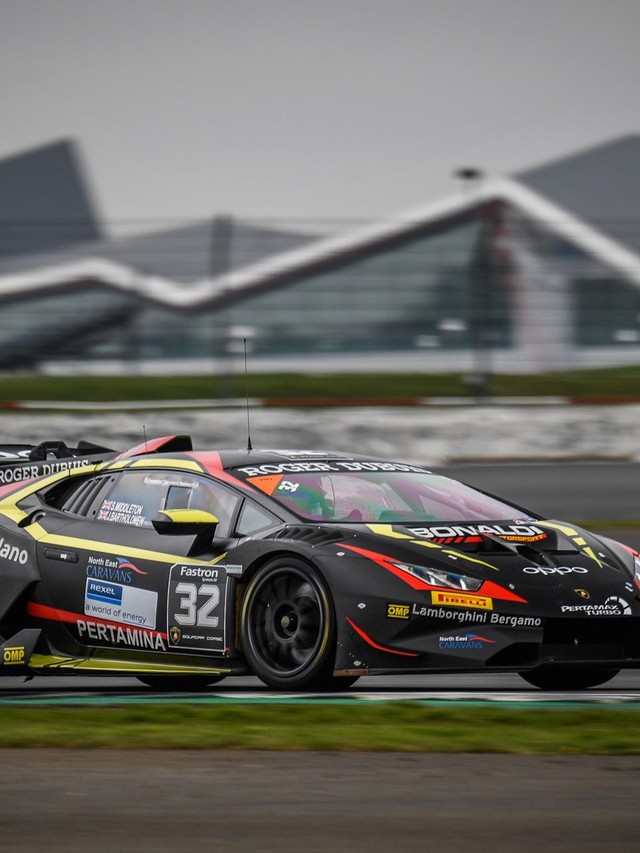
Thirteen Drivers, One Long Game
In early 2016, Lamborghini Squadra Corse selected thirteen drivers, all aged 26 or younger, for the third year of its Young Drivers Program. The candidates came from across the three continental legs of the Lamborghini Blancpain Super Trofeo in Europe, Asia, and North America, each having earned a spot through on-track results in those one-make championships. The program’s stated purpose was straightforward: take promising young racers and shape them into rounded motorsport professionals, not only behind the wheel but in media work, fitness, and the broader commercial machinery that surrounds modern GT racing.
What made the 2016 intake worth paying attention to was the scale of ambition it represented. Lamborghini confirmed that by that point, twenty graduates of the program were already competing in major GT championships worldwide. For a manufacturer whose motorsport division was still relatively young compared to Ferrari’s or Porsche’s entrenched academies, that number carried real weight. It suggested the pipeline was working, and Squadra Corse was willing to keep investing in it.
“They come from different countries and continents because we’re looking for drivers who can represent us, in the future, also in new emerging markets,” said Giorgio Sanna, Head of Lamborghini Motorsport.
Why Lamborghini Needed Its Own Talent Factory
Selling GT3 race cars is profitable. Winning GT3 championships is something else entirely. By 2016, Lamborghini understood that customer teams buying Huracán GT3 machinery could only do so much without factory-supported drivers who knew the car intimately and could extract its full potential in endurance and sprint formats. Ferrari and Porsche both operated well-established driver academies by this point, feeding talent into their respective customer and works programs. Lamborghini’s response, launched in 2014, was to build a structured funnel of its own.
In 2015, Lamborghini Squadra Corse operated a multi-tiered system: a Young Driver Program, a GT3 Junior Program, and a Formula Junior Program. The Young Drivers tier focused specifically on Super Trofeo competitors, using the one-make series as a proving ground where coaches could evaluate racecraft, consistency, and temperament under controlled conditions. The Huracán Super Trofeo, a stripped, caged evolution of the road car running identical hardware across the grid, served as the ideal equalizer. Raw talent showed through when the machinery was the same for everyone.
Sanna’s emphasis on “emerging markets” was a telling detail. Lamborghini was not simply looking for the fastest Europeans. The brand wanted ambassadors who could open doors in Asia, the Middle East, and the Americas, regions where GT racing was growing and where Lamborghini’s commercial footprint was expanding in parallel. The racing program and the sales strategy were, in effect, the same strategy.
What the Program Actually Looked Like
Lamborghini positioned the Young Drivers Program as more than seat time. Selected participants worked directly with the motorsport department in Sant’Agata Bolognese, training alongside factory drivers and receiving coaching that extended well beyond lap-time improvement. The curriculum, according to Lamborghini, covered media handling, physical conditioning, and the professional discipline required to sustain a career in GT racing.
The 2016 cohort was drawn entirely from Super Trofeo competition, meaning every participant already understood the Lamborghini ecosystem. They knew the car, the team structures, and the paddock culture. The program’s job was to accelerate their development from fast amateurs into drivers capable of stepping up to GT3 and, eventually, factory representation. That distinction matters: many manufacturer academies recruit from open-wheel feeder series, but Lamborghini built its funnel from within its own racing world. The advantage is loyalty and brand fluency. The risk is a narrower talent pool.
Where the 2016 Graduates Ended Up
Tracking the careers of 2016-era program participants reveals a mixed but instructive picture. Not every graduate became a Lamborghini factory driver, and several went on to represent rival manufacturers, which is the nature of professional motorsport. According to one detailed retrospective, Luca Stolz moved to Mercedes-AMG and won the 2018 Blancpain GT Series Endurance Cup title, while Patric Niederhauser claimed the 2019 ADAC GT Masters championship with Audi before eventually becoming a factory driver for the Ingolstadt brand. Michele Beretta stayed closer to the Lamborghini orbit, winning the 2017 Italian GT Championship with Ombra Racing and later claiming the 2021 International GT Open title with VSR, a prominent Lamborghini customer team.
That some graduates left for competitors is not a failure of the program. It is evidence that the training worked. A driver academy that produces talent good enough for Mercedes-AMG and Audi to recruit is doing something right, even if the retention rate is imperfect. Lamborghini’s challenge, then and now, is making the factory pathway compelling enough that its best graduates choose to stay. The Temerario GT3 program, which represents a dramatically expanded in-house racing commitment, may change that calculus significantly.
From 2016’s Thirteen to 2026’s Thirty
The program’s growth over the past decade tells its own story. In 2016, thirteen drivers formed a single cohort. Reports indicate that by 2025, Lamborghini Squadra Corse’s Young Driver Programs selected 16 Super Trofeo and 4 GT3 drivers, splitting the intake across two distinct competitive tiers. According to our earlier reporting, the 2026 edition expanded further to 30 drivers across three tiers, adding a partnership with Formula Medicine for dedicated physical and mental preparation camps.
That trajectory reflects both the program’s maturation and the expanding scale of Lamborghini’s racing ambitions. The Temerario GT3, which debuted at the 2025 Goodwood Festival of Speed as Lamborghini’s first competition car fully designed, developed, and built in-house, will need a deep bench of capable drivers when it enters customer hands. The Super Trofeo variant, planned for 2027, will create another rung on the ladder. Every driver who climbs from one-make racing into GT3 competition through Lamborghini’s own system is a driver who understands the brand’s cars at a cellular level.
The practical takeaway is clear: Lamborghini is no longer borrowing its competitive credibility from customer teams alone. The investment in young drivers that began modestly in 2014 now underpins a vertically integrated racing operation, one where Lamborghini designs the car, builds the car, and increasingly trains the people who drive it.
Lamborghini’s Academy in Context
Ferrari and Porsche both run driver development programs that are older and, in Porsche’s case with the Carrera Cup ecosystem, considerably larger in scale. Lamborghini’s approach differs in one important respect: its entire feeder system is built around a single one-make championship, the Super Trofeo, which functions simultaneously as a customer racing series, a revenue generator, and a scouting platform. Ferrari’s academy draws more heavily from single-seater backgrounds. Porsche’s Carrera Cup operates at a scale Lamborghini cannot yet match. But Lamborghini’s tighter integration between its commercial racing series and its talent pipeline gives the program a coherence that larger operations sometimes lack.
The 2016 intake was a small class in a young program. Nearly a decade later, the infrastructure around it looks entirely different: more drivers, more tiers, medical partnerships, and a purpose-built GT3 car waiting at the top of the ladder. Giorgio Sanna’s 2016 comment about seeking drivers for “emerging markets” reads less like corporate aspiration now and more like a blueprint that Squadra Corse actually followed.
Gallery


