A V12 Grand Tourer Retraces The Beatles’ London
On the 60th anniversary of “Love Me Do,” released October 5, 1962, Lamborghini drove a 400 GT 2+2 through the streets of London on a route from Abbey Road Studios to Savile Row. English journalist and author Dylan Jones OBE narrated the accompanying video, connecting the car’s presence in 1960s London to the cultural moment The Beatles created.
The route itself tells the story. Abbey Road, where The Beatles recorded virtually their entire catalog. Savile Row, where they performed live for the final time on a rooftop on January 30, 1969. According to Lamborghini, a Rosso Alfa 400 GT 2+2 with a Nero interior was parked on the street below that day, and the car is reportedly visible in Peter Jackson’s documentary Get Back. The company framed the tour as a celebration of heritage and cultural relevance, but the richer thread running through the event is the car’s direct, personal connection to one of the four men who made those streets famous: Paul McCartney owned a 400 GT 2+2, and the evidence is far stronger than Lamborghini’s own materials acknowledge.

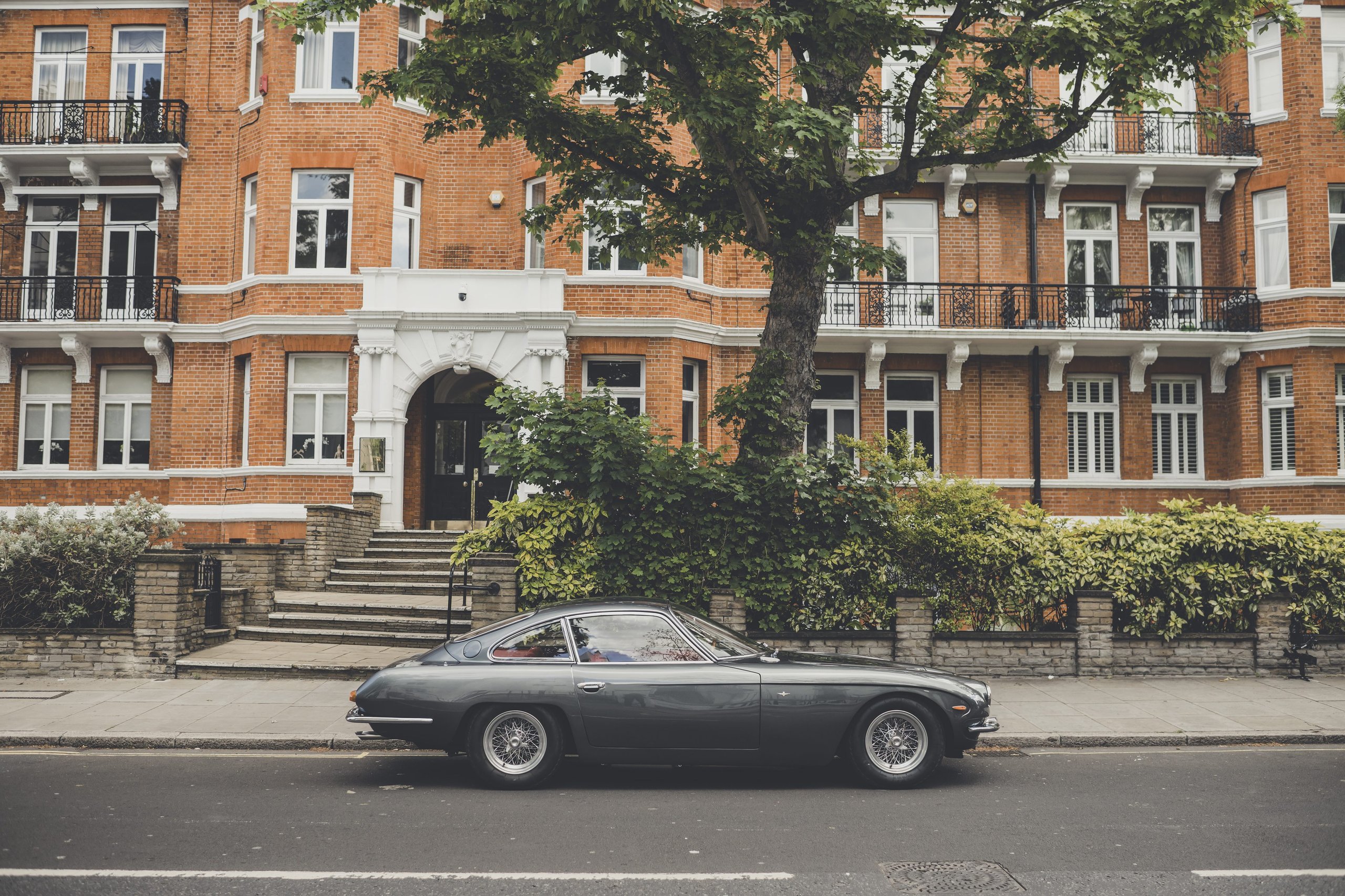
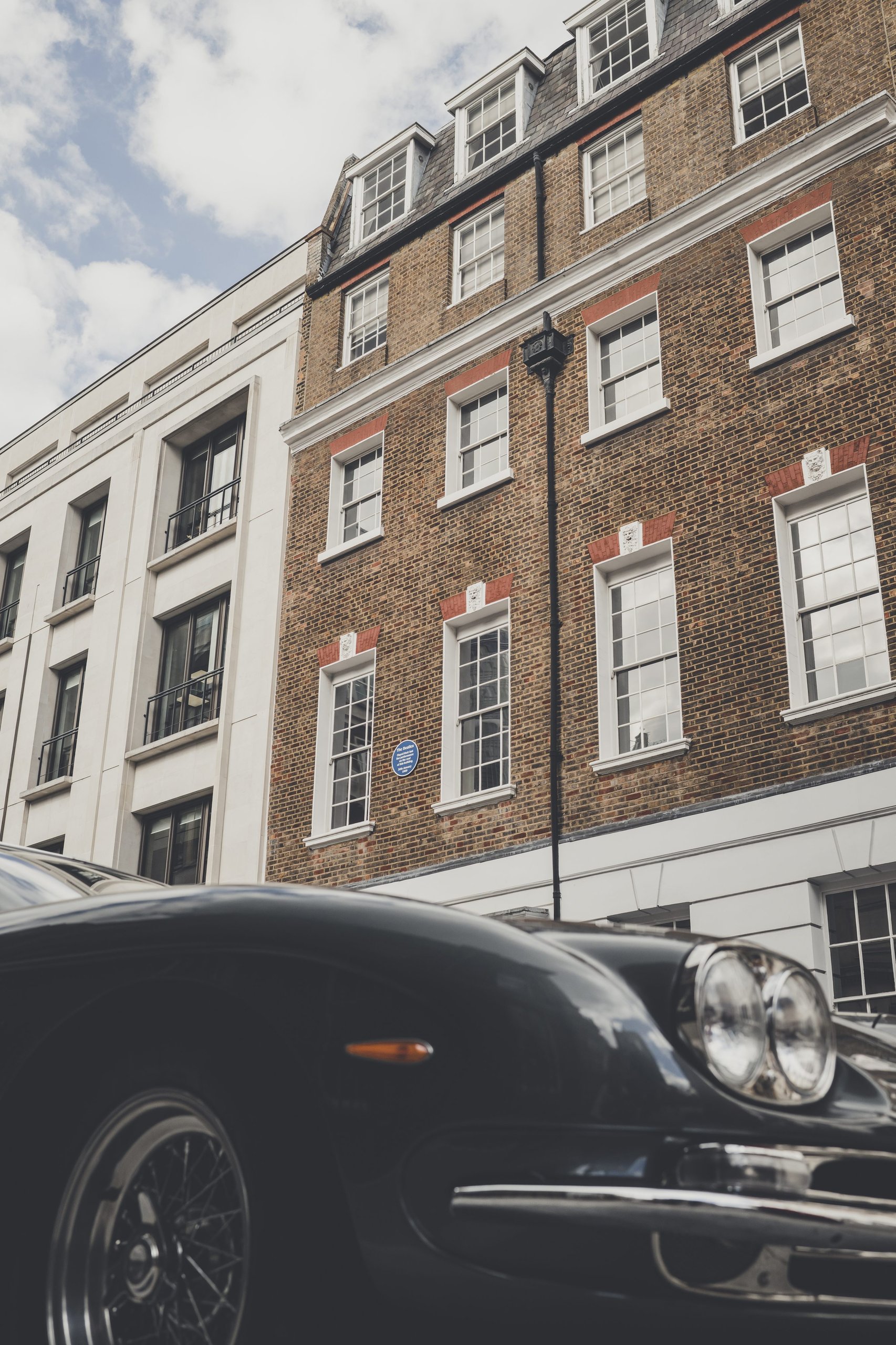
The iconic Lamborghini 400 GT 2+2 rests on a historic street, reflecting a blend of automotive and cultural heritage.
McCartney Confirmed It Himself: The ‘Rumor’ Was Already Settled
Lamborghini’s official material describes McCartney’s ownership of a 400 GT 2+2 as something “numerous sources suggest” but lacking “official documentation to prove it.” That framing is outdated. Sir Paul McCartney himself has confirmed in an interview that he owned a red Lamborghini 400GT in the late 1960s. Multiple independent sources corroborate this.
The paper trail goes further. Reports from a 2018 auction indicate McCartney’s specific 400 GT 2+2 carried the registration SLF 406F. A 2018 Bonhams sale featured a 1967 Lamborghini 400 GT 2+2 explicitly advertised as “first owned by Paul McCartney.” An RM Sotheby’s auction the same year listed a 1967 400 GT 2+2, Chassis No. 01141, as “reportedly first owned by Paul McCartney,” though that car did not sell. Reportedly, only four 400 GT 2+2 models were imported to the UK and converted to right-hand drive, making McCartney’s car exceptionally rare even within an already limited production run.
For a brand that invests heavily in heritage storytelling, this matters. Lamborghini does not need to hedge about a Beatle owning one of its early grand tourers when the evidence is public and confirmed by the owner himself.
Breaking Down in Soho: McCartney’s Life with the 400 GT
McCartney’s ownership was not a polished celebrity endorsement. It was real, messy, and entirely in character for a young rock star buying an exotic Italian car in late-1960s London. He recounted breaking down in Soho in his 400 GT, having to push it down the street. He also shared an anecdote about receiving a year-long driving ban for speeding in a sports car.
These details separate a genuine ownership story from a marketing partnership. McCartney did not pose with the car for a campaign. He drove it, broke down in it, and apparently pushed it through one of London’s busiest neighborhoods. For anyone who has ever owned a classic Italian car, the image requires no embellishment. Early Lamborghinis rewarded their owners with extraordinary performance and punished them with the mechanical temperament that came with hand-built V12 engineering. That McCartney kept his 400 GT for over a decade, reportedly until 1979, suggests the rewards outweighed the frustrations. His personal history with the car is exactly the kind of story that gives Lamborghini’s London tribute its emotional weight.

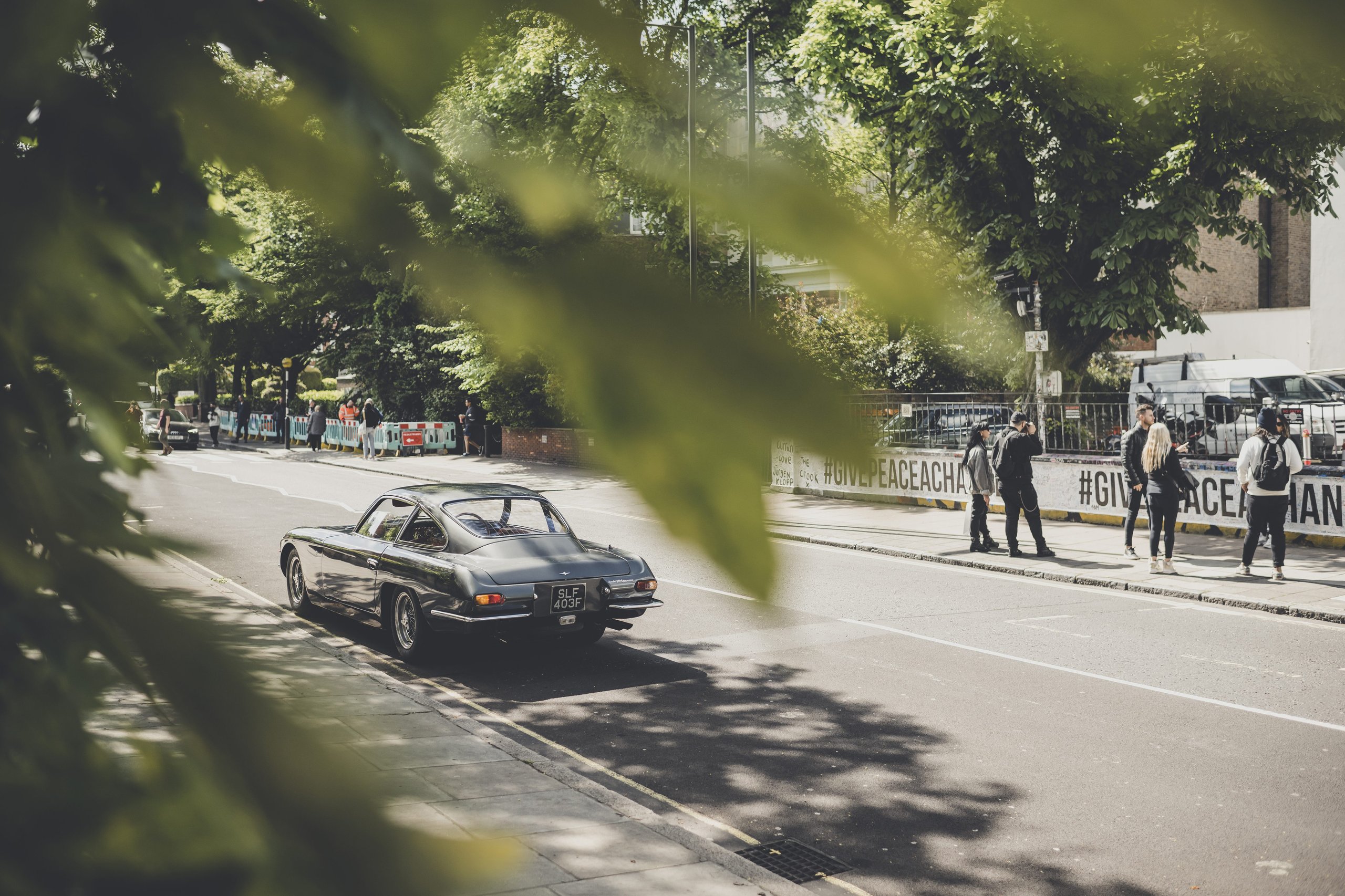
From the classic interior of the 400 GT 2+2, a vibrant London street scene unfolds, featuring Oxford Circus Station.
Lamborghini’s Foundational Grand Tourer and the V12 That Started Everything
The 400 GT 2+2 launched in 1966, only three years after Ferruccio Lamborghini founded the company. Carrozzeria Touring, one of Italy’s most respected coachbuilders, penned the design. Powering it was a 4-liter DOHC V-12, an engine architecture that would define Lamborghini for the next six decades and still sits at the heart of the Revuelto today.
What made the 400 GT 2+2 unusual for its time was the 2+2 seating configuration. Ferruccio Lamborghini wanted to build the fastest, most comfortable, and most beautiful grand tourer available, and he saw no reason a car like that should not carry passengers in the back. The result could cross continents at speed while accommodating more than two people, a concept Lamborghini would revisit with the Espada and, much later, with the Urus.
Ferrari’s competing grand tourers of the era, the 330 GTC and later the 365 GT 2+2, pursued a similar philosophy, but the positioning differed. Ferrari’s GT cars existed alongside a racing program that defined the brand. Lamborghini’s grand tourers were the brand in those early years, the purest expression of Ferruccio’s vision before the Miura rewrote the rules of what a sports car could be. That foundational identity as a builder of refined, powerful grand tourers is something Lamborghini still draws on, and it is precisely why a Beatles tribute centered on the 400 GT resonates beyond nostalgia.

The meticulously maintained V12 engine of the Lamborghini 400 GT 2+2 is a testament to classic automotive engineering.
From Abbey Road to Savile Row: The Tour in Detail
The London tour followed a route loaded with meaning for anyone who knows the band’s geography. Starting at Abbey Road Studios, the 400 GT 2+2 passed through streets where The Beatles lived, worked, and drew inspiration during the years that produced Sgt. Pepper’s Lonely Hearts Club Band, the White Album, and Let It Be. The destination, Savile Row, connected the car directly to the rooftop concert that ended the band’s live performing career.
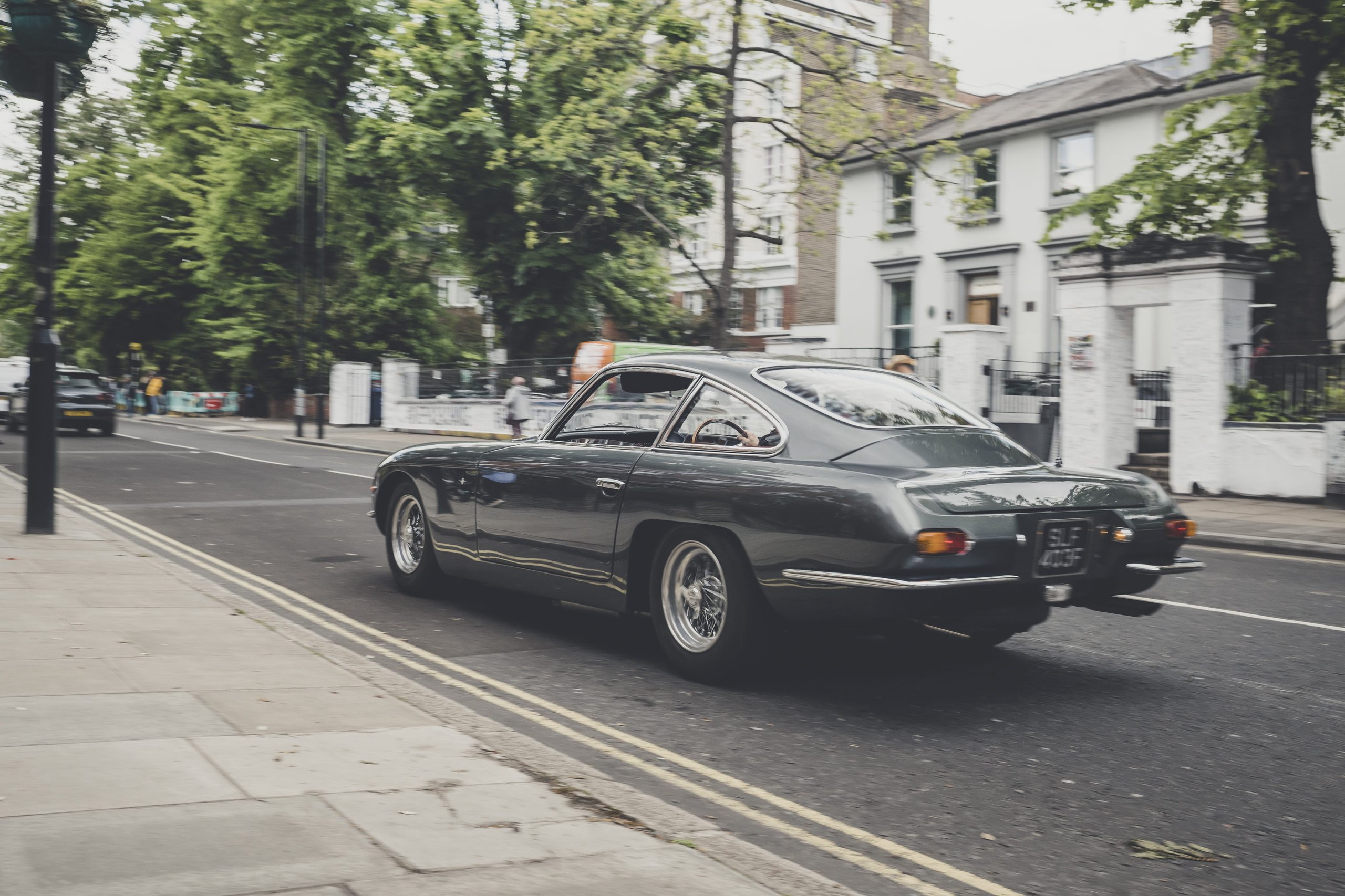
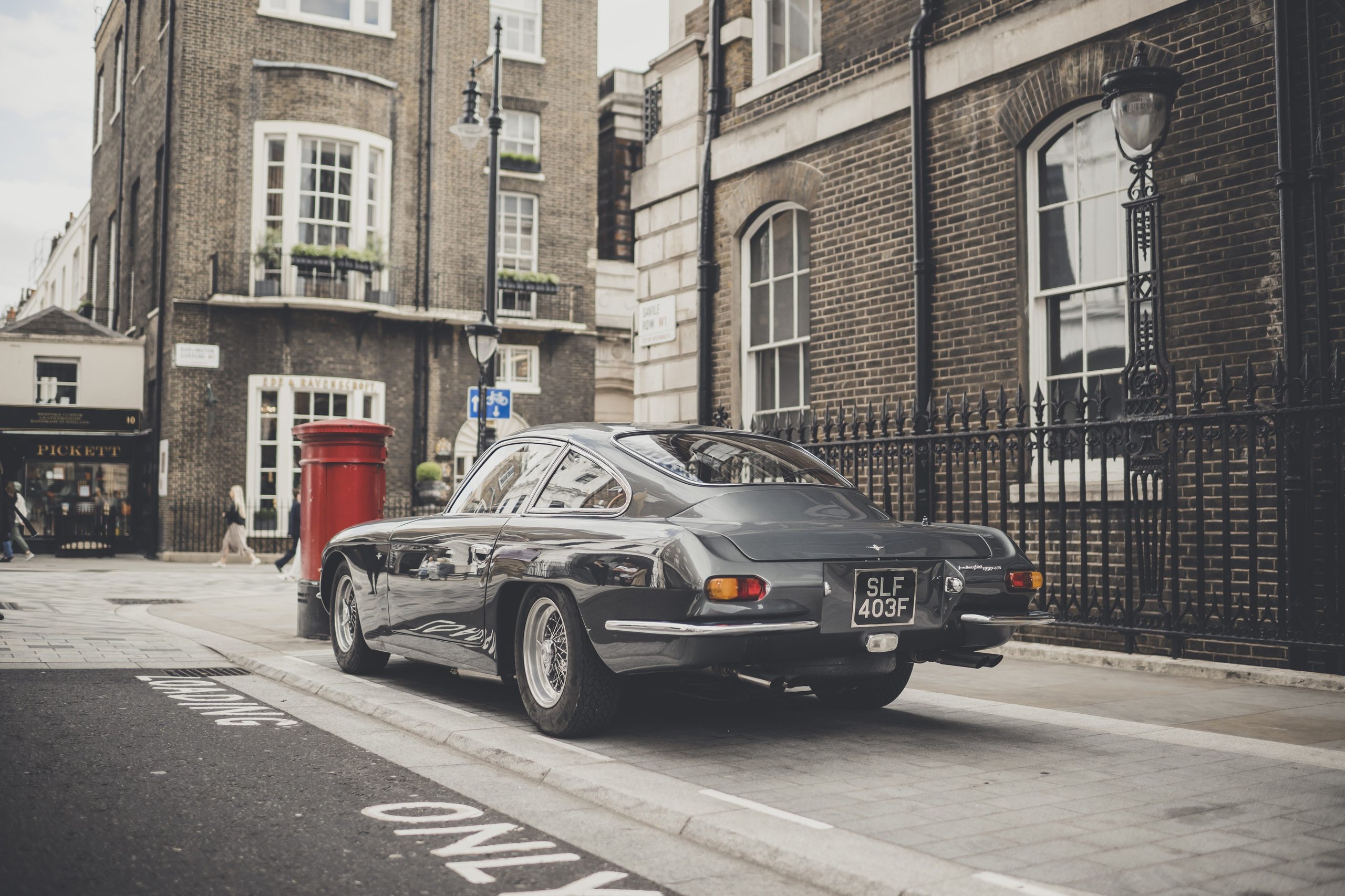
One detail worth noting: the car used in Lamborghini’s video carries the registration SLF 403F, according to one source. McCartney’s own 400 GT reportedly carried SLF 406F. So the tour car and McCartney’s personal car are not the same vehicle, but both belong to that tiny cohort of right-hand-drive UK examples. The distinction matters because it shows Lamborghini sourced a period-correct, UK-delivered 400 GT 2+2 for the shoot rather than using a stand-in from a different market. That level of care reinforces the authenticity of the tribute and, by extension, the depth of the McCartney connection the brand could be celebrating more openly.

The Lamborghini 400 GT 2+2 is elegantly parked on London's historic Savile Row, known for its bespoke tailoring.
Why This Heritage Story Points Forward
Lamborghini does not stage heritage events for nostalgia alone. Every time the company surfaces a classic model, it reinforces a lineage that connects to whatever comes next. The 400 GT 2+2’s identity as a refined, front-engined grand tourer with real passenger space resonates directly with what Car and Driver recently reported: Lamborghini plans to return to its roots with a new two-door GT. The company’s first fully electric vehicle, now expected in 2029, is widely understood to be a grand tourer rather than a supercar.
The 400 GT 2+2 is the template for that ambition. A car that prioritized comfort, beauty, and a V12 soundtrack over lap times. It a Beatle bought not because it was the fastest thing on four wheels, but because it was the most desirable way to cross London. If Lamborghini’s future electric GT can capture even a fraction of that appeal, the brand’s grand touring lineage will prove to be more than a marketing exercise. It will be a blueprint, and this London tribute, with its quiet V12 threading through streets The Beatles once owned, will look less like a nostalgic detour and more like a statement of intent.

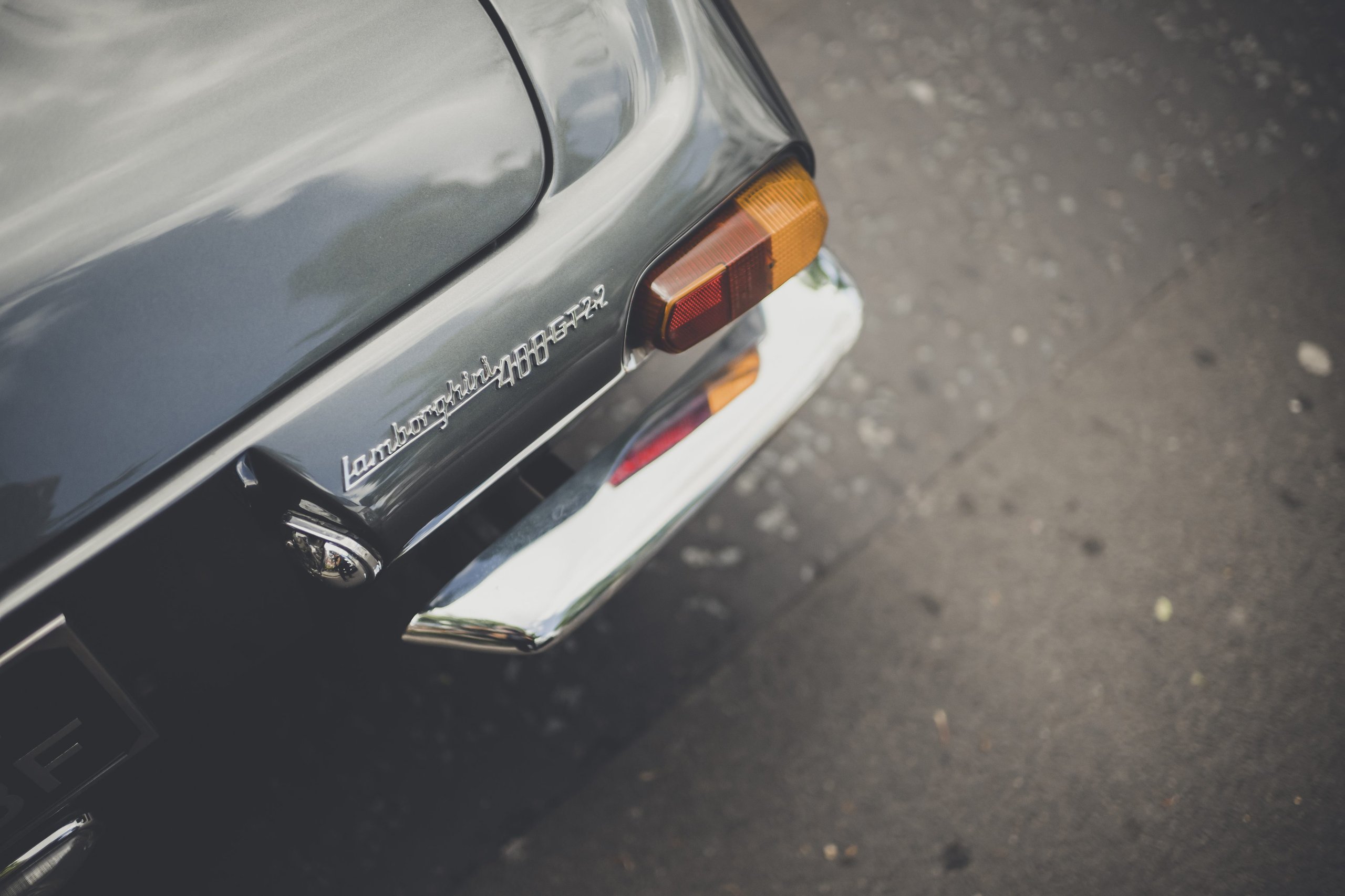
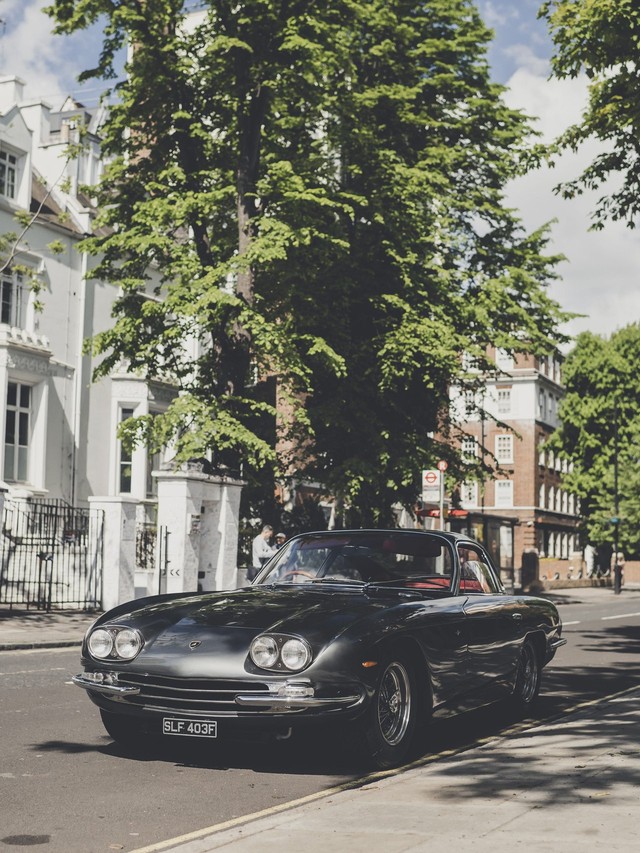
The elegant front fascia of the Lamborghini 400 GT 2+2 is showcased while parked on a sunny city street.
Gallery