Four Sant’Agata V12s on the Cernobbio Carpet
Lamborghini fielded four V12 cars at the 2024 Concorso d’Eleganza Villa d’Este, and two of them left with hardware. That result, from a concours running since 1929 and routinely described as one of the oldest and most celebrated in the world, amounts to more than a pleasant weekend at Lake Como. It is evidence that Lamborghini’s classic V12 models, backed by the company’s Polo Storico certification program, are earning the kind of institutional recognition that cements long-term collector value.
A 1967 Miura P400 competed in Class D, titled “Faster! The Arms Race On The Road.” The remaining three entries, a 1976 Countach LP 400, a Countach 25th Anniversary, and a 1999 Diablo GT, filled Class H, “The Need For Speed: Supercar Stars of The Video Generation.” That class grouping alone tells you something about how the concours organizers view these cars: the Countach and Diablo belong to the era when poster culture and video games cemented the supercar in popular imagination.
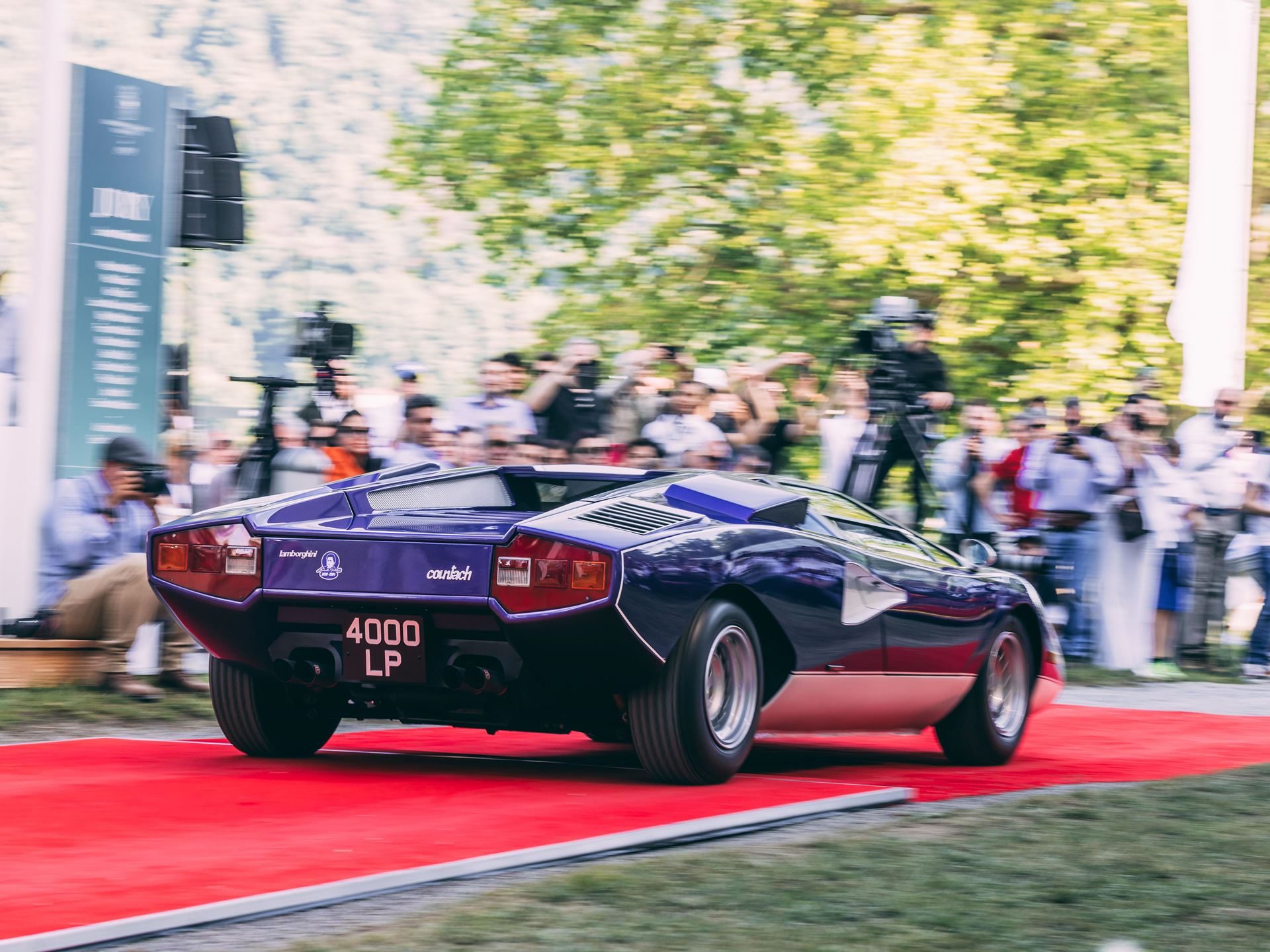
The Viola-over-Bianco Countach LP 400 took the jury’s ‘il Canto del Motore’ trophy for best sound. The Diablo GT, appearing at Villa d’Este for the first time as a model, won the ‘BMW Group Ragazzi’ trophy, voted the most iconic car in the competition by the under-16 audience during the public open day at Villa Erba. A V12 from 1976 winning a sound award and a V12 from 1999 winning the youth vote is a neat encapsulation of what keeps these cars relevant across generations, and of why Lamborghini’s heritage strategy deserves closer attention.
Why Heritage Wins Matter for Lamborghini Owners
Concours trophies do not change a car’s specification sheet, but they accomplish something arguably more valuable for owners: they validate provenance in public, in front of the most discerning audience in the collector world. Villa d’Este is not a local cars-and-coffee meet. The field routinely includes the rarest machinery from every major European marque, and the judging panel evaluates condition, originality, and historical significance with forensic attention.
Placing four cars in that field and collecting two awards reinforces a message Lamborghini wants collectors to hear: these V12 models hold their own against the best of any era. After Sales Director Alessandro Farmeschi made a point of connecting the concours entries to Polo Storico. One of the four cars already held a Polo Storico Certificate of Authenticity, and two others were undergoing the process at the time of the event. The certification is becoming a visible credential at the highest level of concours competition, not just a piece of paper filed in a glovebox.
The practical takeaway for current or prospective classic Lamborghini owners is straightforward. Lamborghini says the program covers every production model from the 350 GT through the last Diablo produced in 2001. Pursuing that certificate strengthens both the car’s documented history and its standing in events like this one, tying individual ownership directly to the factory’s own narrative of authenticity.

The Cars: Provenance, Color, and Configuration
Each of the four entries carried its own story, and several details reward closer inspection for readers who care about specification and originality.
The 1967 Miura P400 wore Rosso Miura over a Nero interior and was originally shipped to the United States through the Bob Estes dealership in California. Its owner recently completed a full restoration and submitted the car for Polo Storico certification, which was still being processed at the time of the concours.
The 1976 Countach LP 400, the sound-award winner, was delivered on December 24, 1976 through Achilli Motors in Milan. Its original Viola exterior with Bianco interior makes it one of the more visually striking LP 400s in existence. Lamborghini produced the Countach across five main series through 1990 (LP 400, LP 400 S, LP 500 S, LP 5000 Quattrovalvole, and 25th Anniversary), and the earliest periscopio cars like this one occupy a specific place in the collector hierarchy.
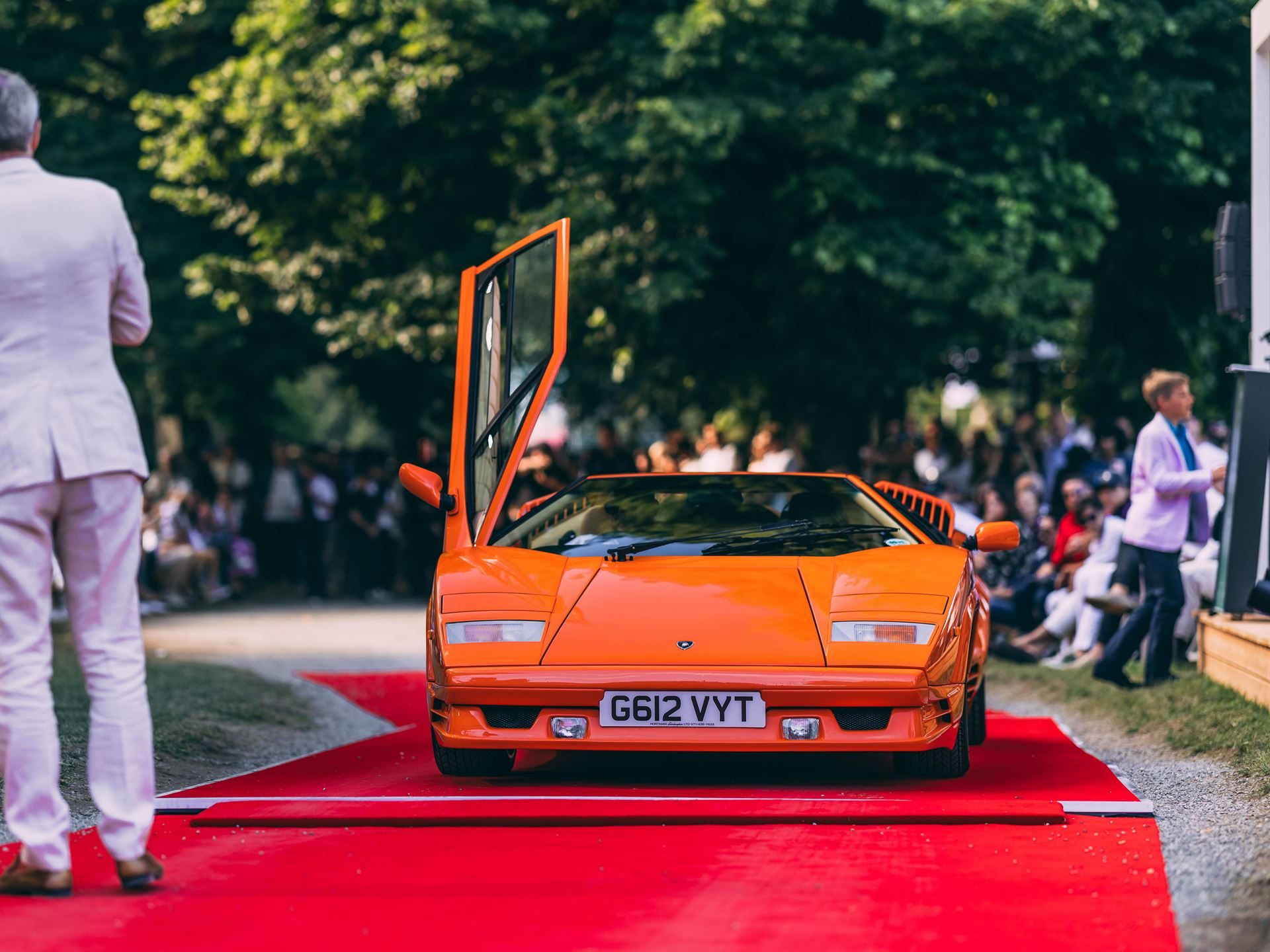
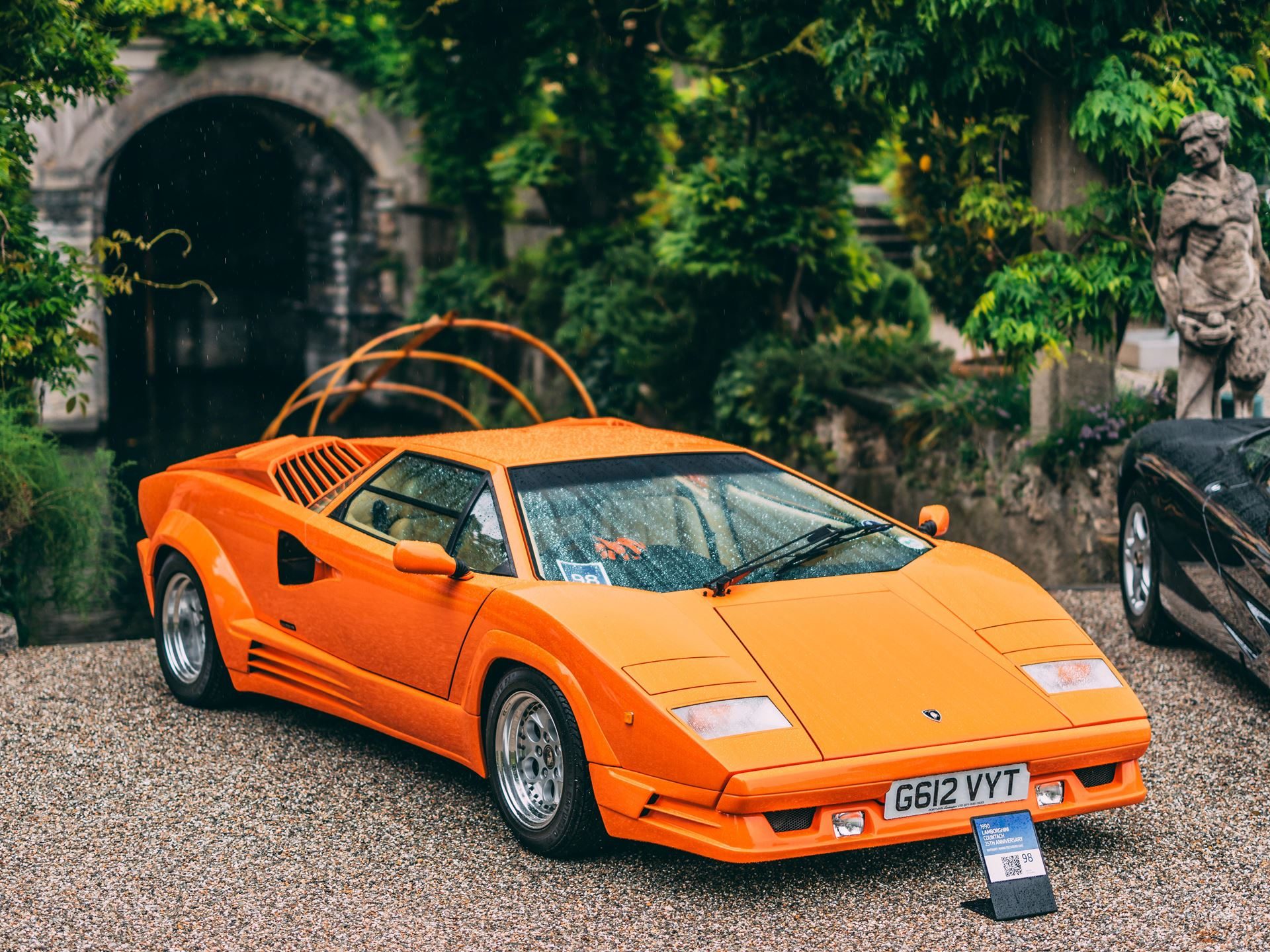
The Countach 25th Anniversary, created in 1988 to mark Automobili Lamborghini’s first quarter-century, was the highest-production Countach variant. This particular car was released on February 27 and delivered on March 27, 1990 through the Portman dealership in London. It is one of the few right-hand-drive examples in the series, and its exterior color, Arancio 1120106, was a bespoke shade recreated for the original owner to match the orange of his previous LP 400. Lamborghini says only one Countach 25th Anniversary exists in this color. The car carries very low mileage, has never been restored, and recently received Polo Storico certification, making it a textbook case of how factory authentication and exceptional originality reinforce each other.
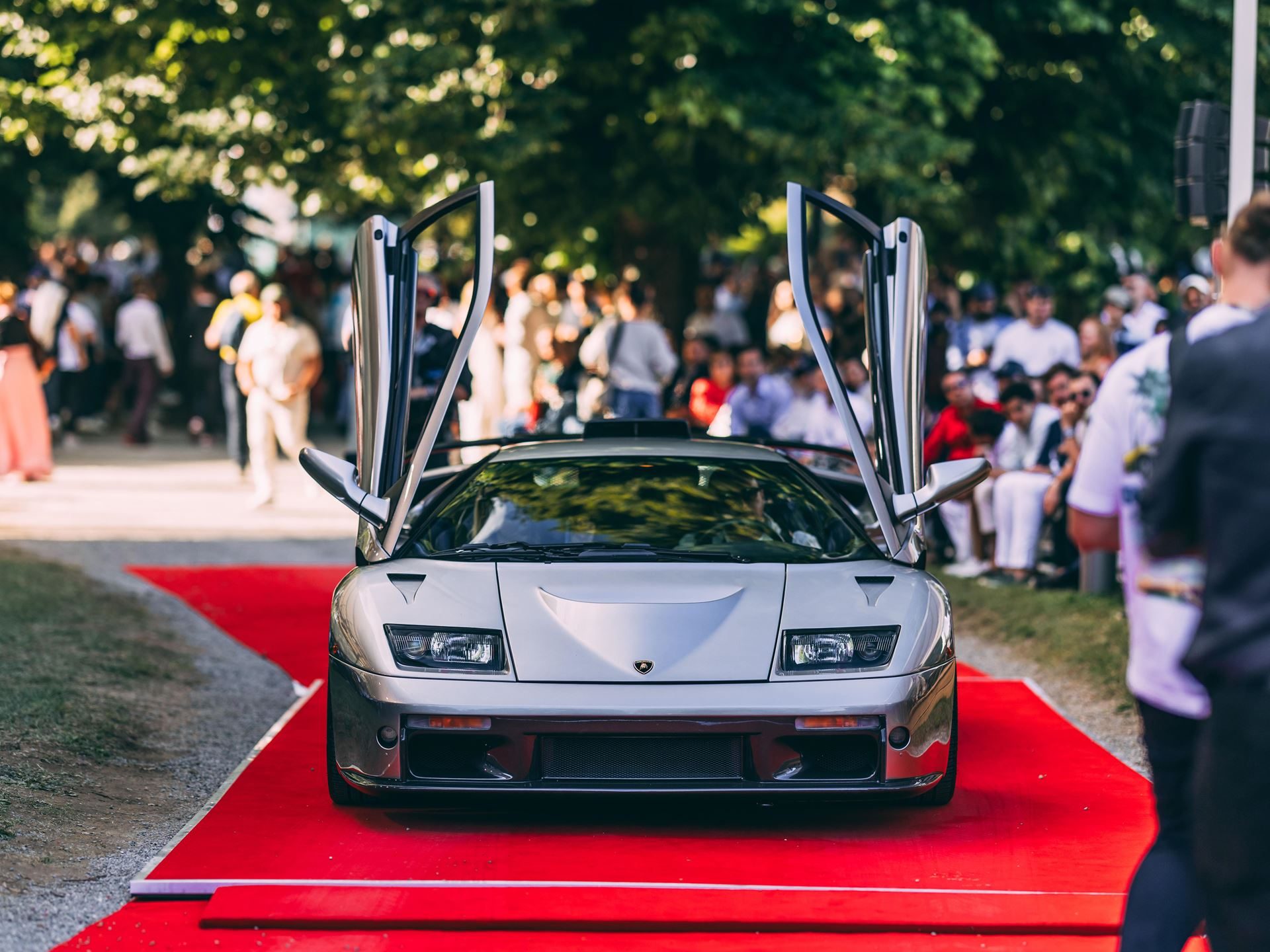
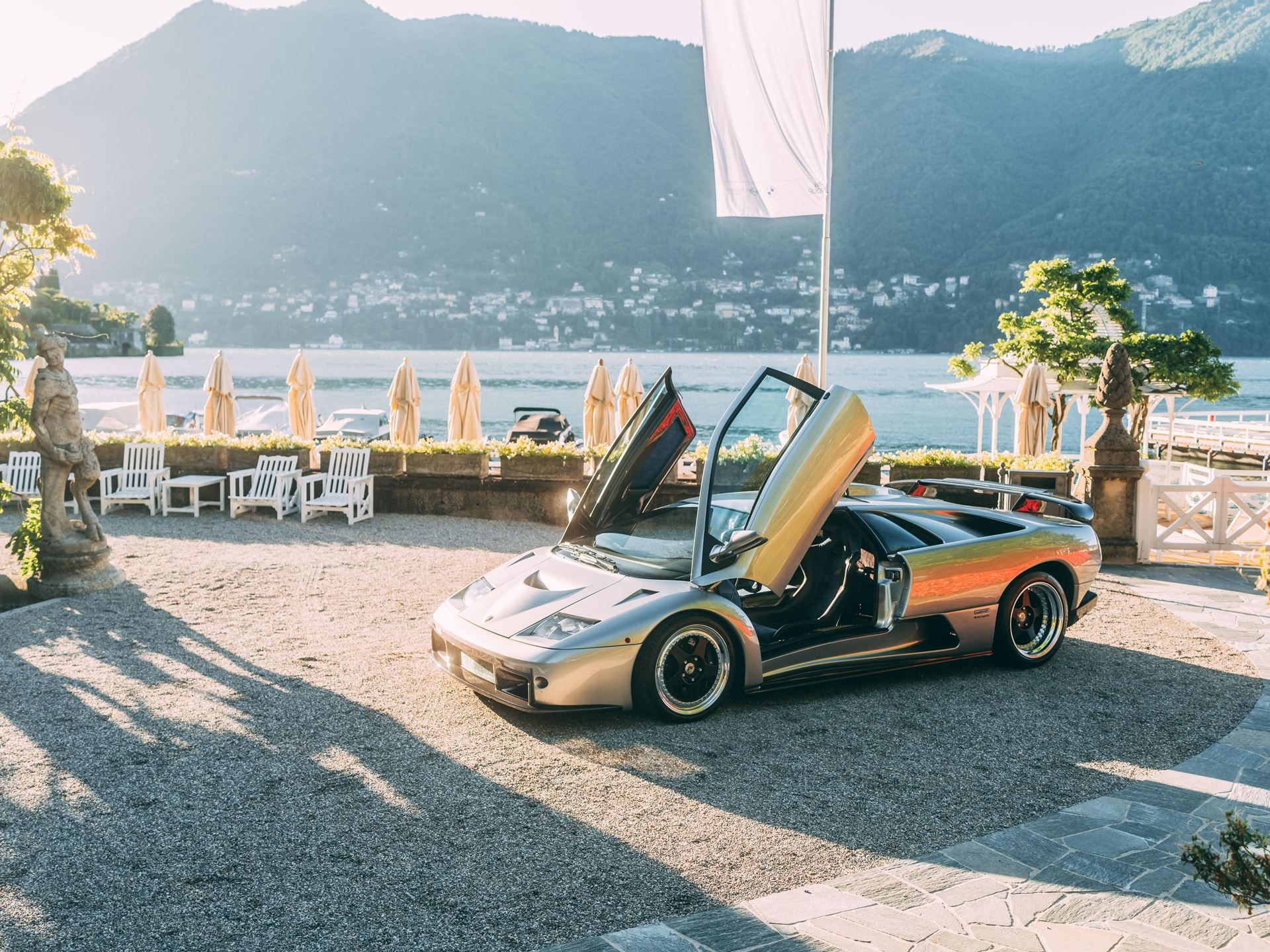
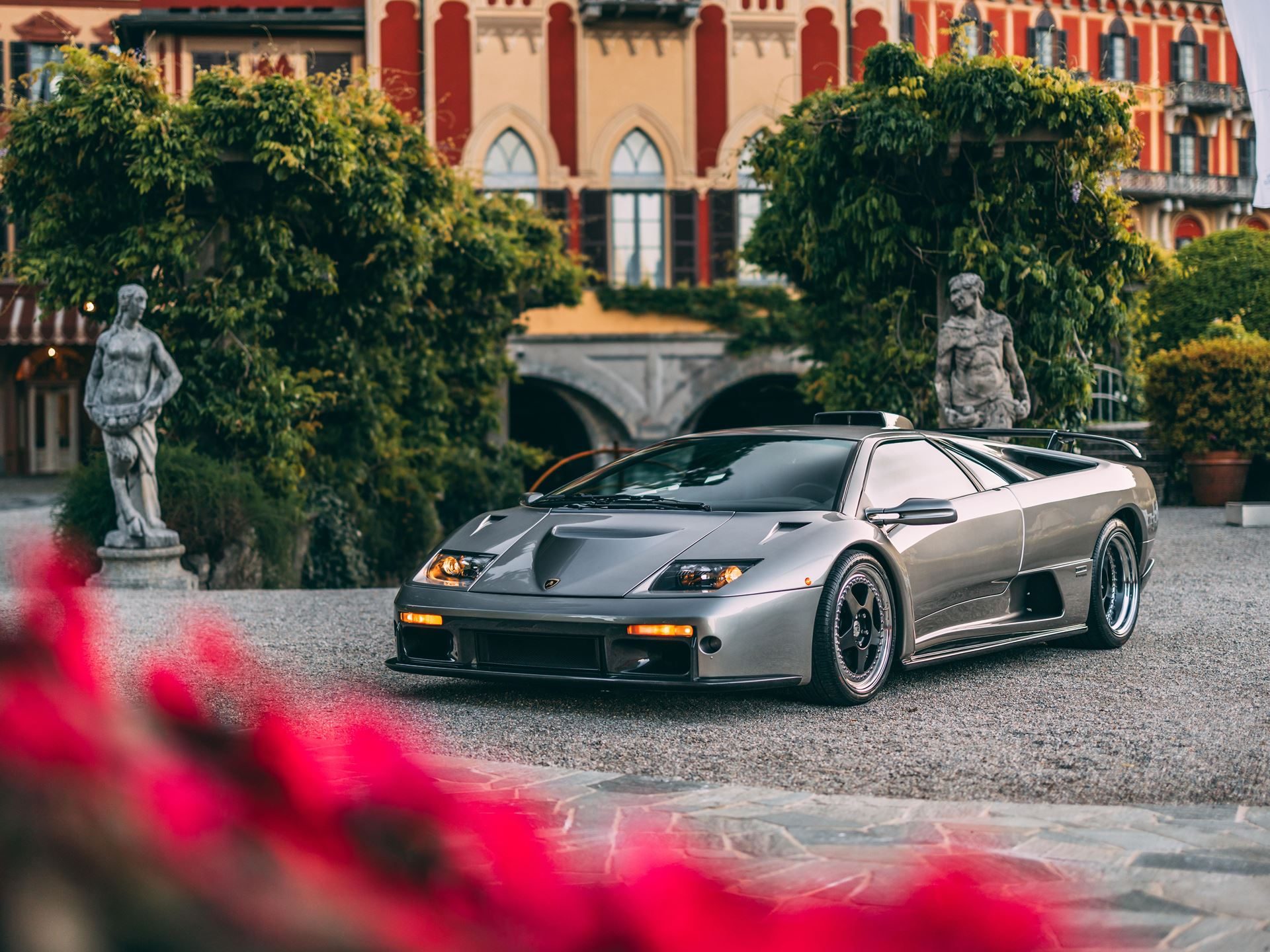
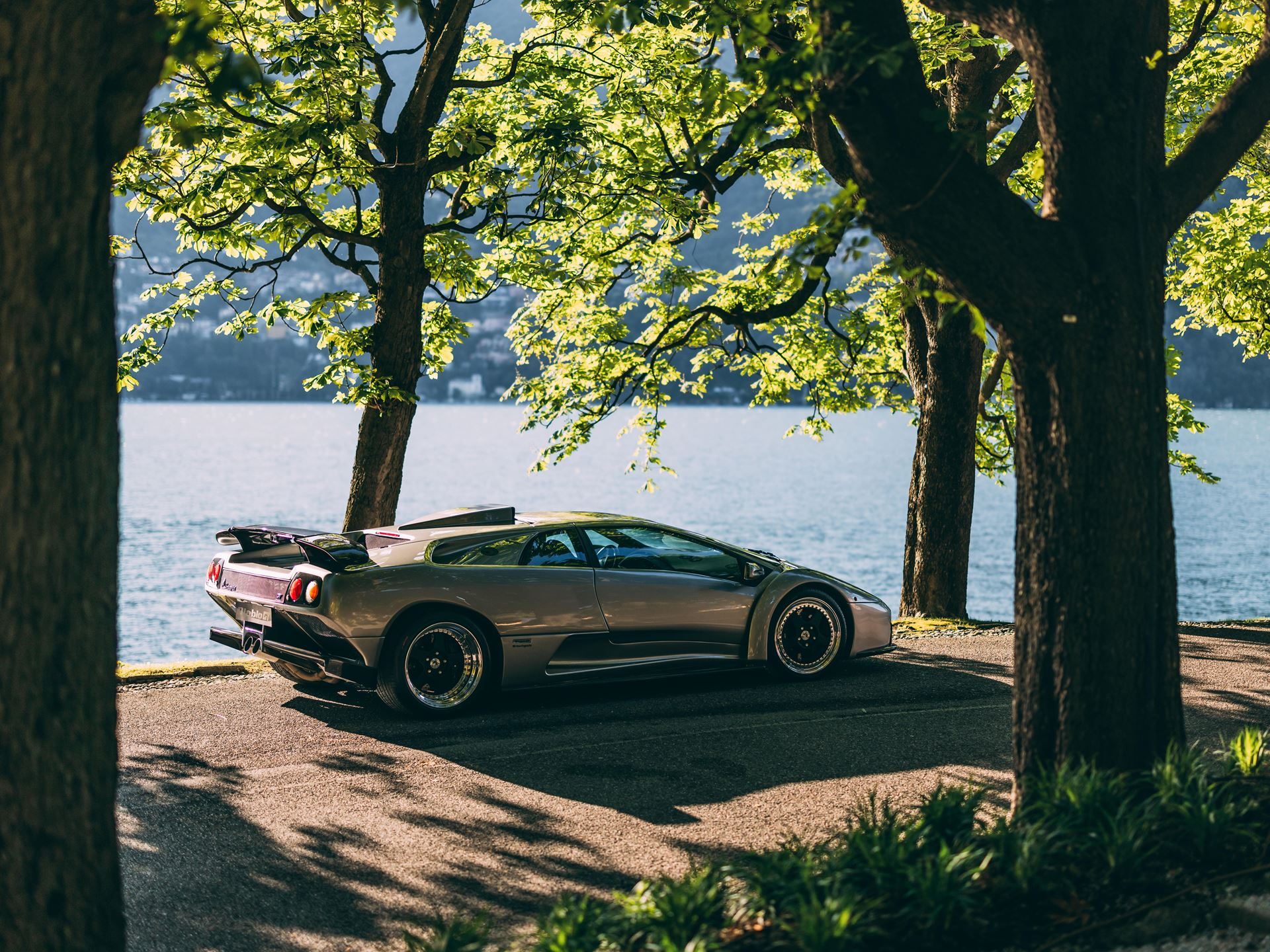
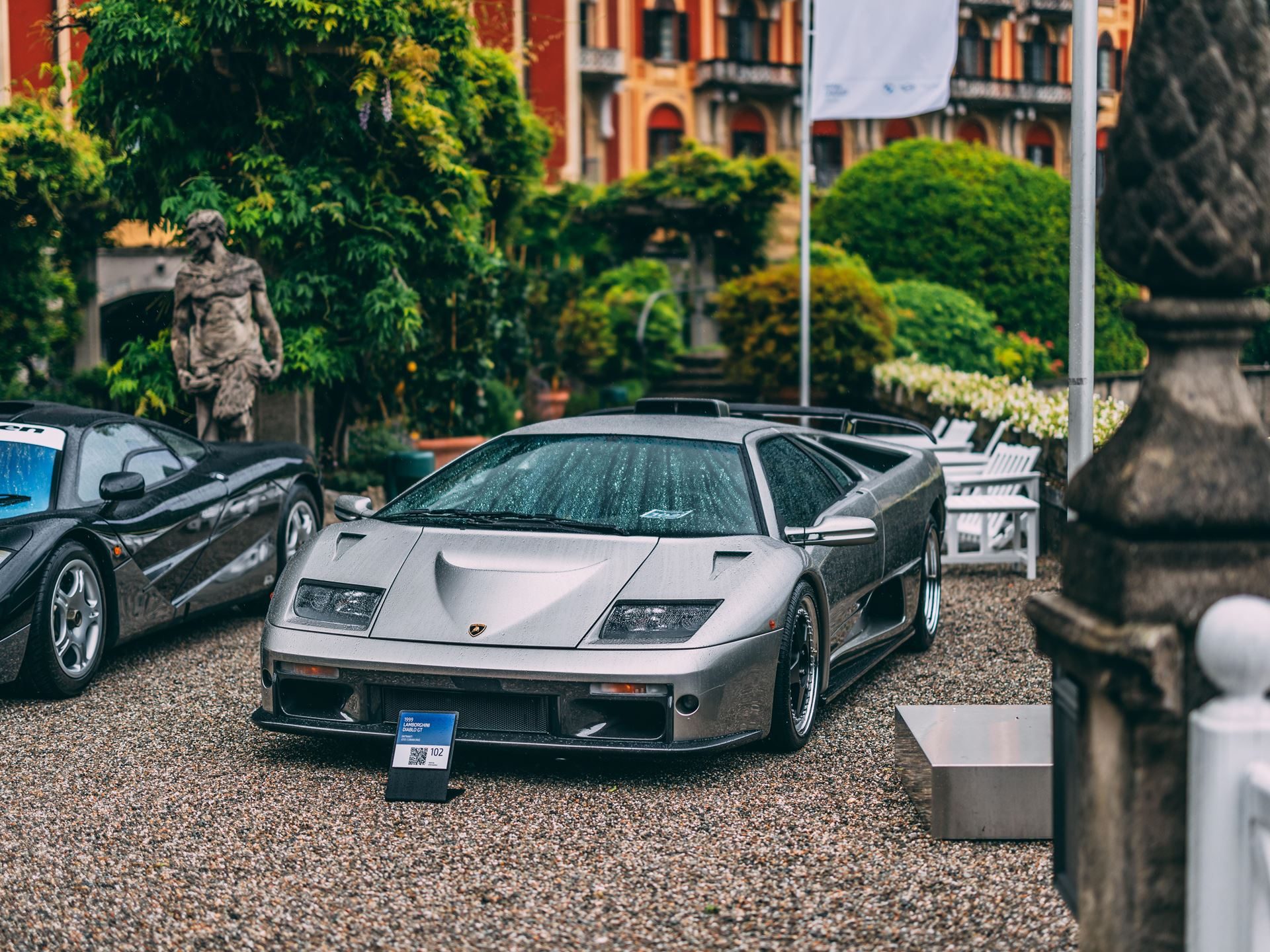
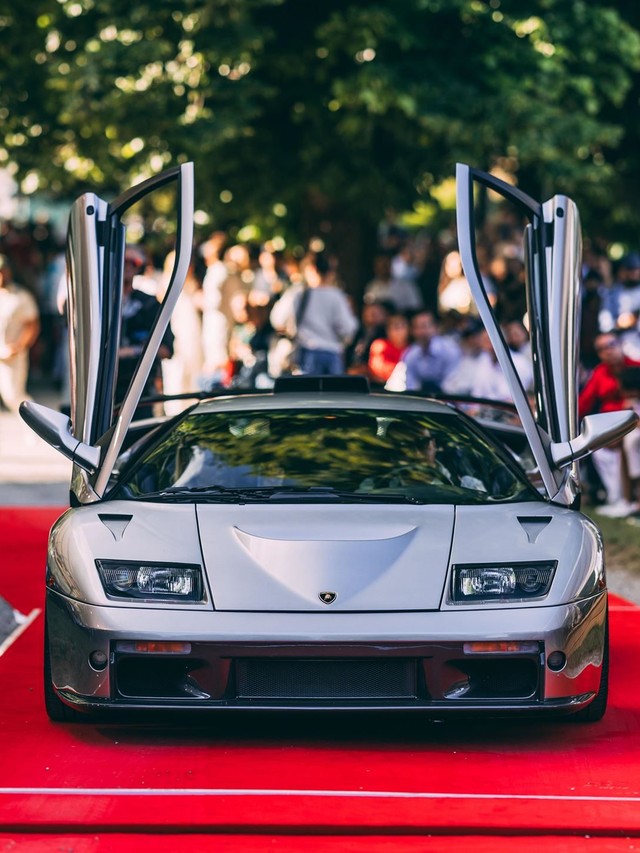
The 1999 Diablo GT, number six of 80 produced, was released on November 18, 1999 and delivered through Touring Auto in Milan. It retains its original Titanium Silver finish with an Alcantara Blu interior and exposed carbon-fiber rear wing. The original specification included optional short gear ratios (17/43) and provisions for a car radio and rear camera. Lamborghini said the car was undergoing Polo Storico analysis for its Certificate of Authenticity at the time of the event.

The Diablo GT’s Villa d’Este Debut and What It Signals
Lamborghini confirmed this was the first time a Diablo appeared at the Villa d’Este competition. That fact alone deserves attention. The concours tends to favor older, more established classics, and the Diablo’s inclusion in the field signals that the model is crossing from “used supercar” territory into recognized collectible status.
The GT variant sits at the sharpest edge of that transition. Only 80 were produced, and the car drew from GT2 racing solutions mounted on the standard Diablo platform to create what Lamborghini described as the fastest production car in the world at its March 1999 unveiling, with a claimed top speed of 346 km/h (215 mph). Winning the under-16 audience vote for most iconic car is a modest trophy in the grand scheme of concours judging, but it points to something real: the Diablo GT‘s aggressive proportions and exposed carbon-fiber wing still stop people in their tracks, regardless of age.
For collectors watching the Diablo market, the Villa d’Este appearance functions as a kind of institutional endorsement. Concours acceptance, Polo Storico involvement, and public recognition all contribute to the narrative that moves a car from appreciating curiosity to established classic. Whether that translates into value movement is a question the market will answer on its own timeline, but the direction of travel is unmistakable, and it runs through the same Polo Storico pipeline that is already validating the Miura and Countach generations.

Polo Storico in Context: The Heritage Arms Race
Lamborghini is not the only Italian supercar manufacturer investing in its back catalog. Ferrari’s Classiche program operates on a similar principle: factory-backed authentication, archival research, and restoration support for eligible models. Both programs exist because the manufacturers understand that the value of their heritage fleet reflects directly on the brand’s prestige today.
Ferrari Classiche covers a broader range of models and has been operating longer, giving it deeper market penetration among collectors and auction houses. Polo Storico, inaugurated in 2015 at the Sant’Agata Bolognese headquarters, is younger but tightly focused: every production Lamborghini from the 350 GT through the final 2001 Diablo. Lamborghini says the department operates across four pillars (archive, certification, restoration, and original spare parts), and the certification process involves analysis of mechanical components, interiors, paintwork, and modifications.
The competitive context matters for owners. A Polo Storico certificate at a concours like Villa d’Este carries weight precisely because it mirrors the kind of factory authentication that Ferrari collectors expect from Classiche. The more visible Polo Storico becomes at top-tier events, the more it normalizes factory certification as a baseline expectation for serious classic Lamborghini ownership. That benefits every owner in the ecosystem, whether they plan to show the car or simply want documented provenance. Villa d’Este 2024, with three of four entries either certified or in the certification pipeline, suggests Lamborghini is pushing that normalization deliberately.

What Villa d’Este Tells Us About Lamborghini’s V12 Legacy
Showing four naturally aspirated V12 cars at Villa d’Este, spanning from 1967 to 1999, reinforces a message that extends well beyond the concours lawn. Lamborghini’s current V12 flagship, the Revuelto, pairs its naturally aspirated twelve-cylinder engine with hybrid electric motors. The company is building its future around electrification while keeping the V12 alive. These four Cernobbio entries make the case that the engine configuration is not a legacy obligation but a living tradition, one whose collector credibility the factory is actively cultivating through Polo Storico.
The quartet also represents a useful cross-section for anyone trying to understand the V12 hierarchy. The Miura created the mid-engine supercar template. The Countach LP 400 defined the visual language that every Lamborghini since has referenced. The 25th Anniversary closed out the Countach era as its most numerous variant. And the Diablo GT pushed the V12 to its most extreme road-legal expression before the Murciélago arrived.
Lamborghini did not confirm whether it plans a larger presence at future Villa d’Este editions, or whether Polo Storico will expand its eligibility window beyond the 2001 Diablo cutoff. Both are questions worth watching. For now, two trophies from four entries is a strong result, and the convergence of concours recognition with factory certification points to a heritage strategy that is gaining real momentum.

Gallery