Lamborghini’s “Focu5on” Format Reveals the Factory’s Quieter Ambitions
Lamborghini introduced a monthly content series called “Focu5on: 5 things you don’t know about…” and chose, for one of its earliest installments, to spotlight the environmental initiatives running behind the scenes at Sant’Agata Bolognese. The format is built around anecdotes and lesser-known projects that rarely surface in supercar coverage, and the subject here is genuinely unusual: oak forests, branded honey, biogas pipelines, and carbon fiber recycling programs, all operating on or near the same 160,000-square-meter site where V12 engines are assembled.
The instinct for most enthusiast readers will be to file this under corporate PR. That instinct is understandable but slightly misplaced. What Lamborghini is actually doing with these five projects is constructing a credibility buffer: a demonstrable record of environmental investment that gives the company room to keep building high-performance combustion and hybrid powertrains while regulatory and cultural pressure intensifies across Europe. The individual initiatives are interesting on their own terms, but the strategic logic connecting them is the real story.
Direzione Cor Tauri: The Roadmap Behind the Green Gestures
Every one of these factory-level sustainability projects sits under the umbrella of “Direzione Cor Tauri,” the decarbonization plan Lamborghini named after the brightest star in the constellation of Taurus. The plan targets a 40% reduction in CO2 emissions across the entire value chain by 2030, covering supply access, manufacturing, and logistics rather than tailpipe numbers alone. The Sant’Agata Bolognese production site achieved CO2 neutral certification in 2015, a status it maintained even after the facility doubled in size to accommodate Urus production.
Direzione Cor Tauri represented the largest investment in the company’s history when it was unveiled, with reporting indicating over €1.5 billion allocated over four years. That figure funded the Revuelto’s hybrid V12 architecture, the Urus SE plug-in hybrid, and the Temerario’s twin-turbo V8 hybrid system. But it also funded the less glamorous infrastructure work at Sant’Agata: solar arrays, heating systems, waste recovery programs, and biodiversity projects that collectively reduce the factory’s environmental footprint while production volumes scale up.
The practical implication for owners and prospective buyers is straightforward. Lamborghini is building the environmental case for its continued existence as a maker of combustion-powered performance cars. Every ton of CO2 offset at the factory level is a ton that does not need to be accounted for by neutering the product lineup. Whether that arithmetic holds up under tightening EU regulations remains an open question, but the investment is real and the approach is more granular than most competitors have publicly documented.
10,000 Oaks, 600,000 Bees, and 430 Kilograms of Branded Honey
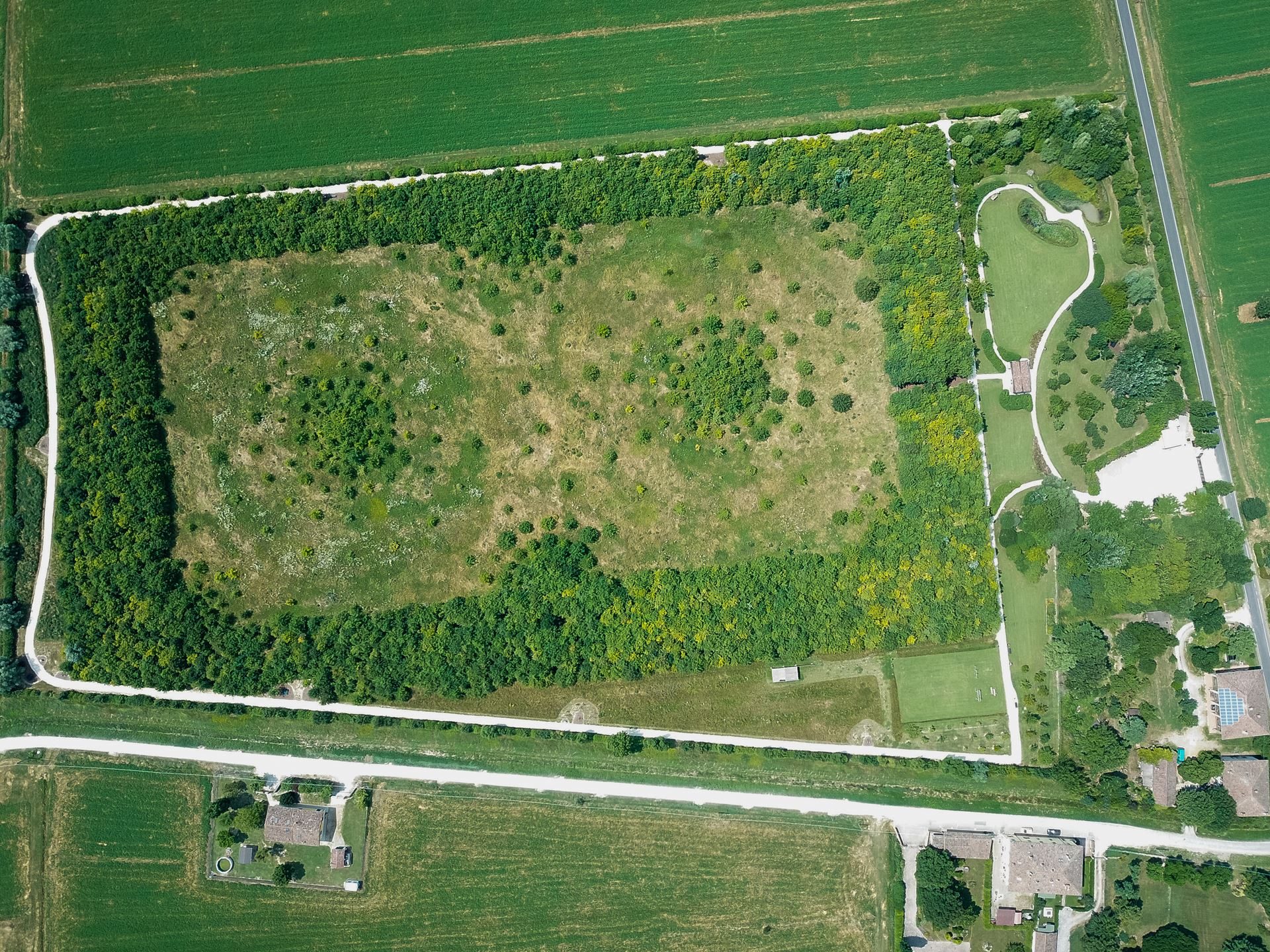
The Lamborghini Park, established in 2011 through a collaboration with the municipality of Sant’Agata Bolognese and the universities of Bologna, Bolzano, and Munich, covers a substantial green area adjacent to the factory. Lamborghini says 10,000 oak trees were planted, and studies indicate the park sequestered 90 tons of carbon, equivalent to approximately 330 tons of CO2 absorbed over the intervening years. As carbon offset numbers go, 330 tons is modest relative to the emissions of a supercar factory producing over 10,000 vehicles annually. The park serves a secondary function, though, that is arguably more valuable: it provides the setting for one of Lamborghini’s stranger initiatives.
Since 2016, thirteen beehives housing approximately 600,000 bees have operated in the park as an environmental biomonitoring station. Analysis of the honey, wax, and bees themselves allows detection of environmental pollutants in the area surrounding the production plant and the town of Sant’Agata Bolognese. Three of the thirteen hives are dedicated to honey production, yielding 430 kg of certified Lamborghini-branded honey each year, distributed to employees as a Christmas gift.
The biomonitoring angle is the part few competitors replicate. Bee colonies are sensitive indicators of air quality and chemical contamination, and maintaining healthy hives near an industrial facility provides ongoing, living proof that the factory’s environmental controls are working. That is a more persuasive data point than a consultant’s annual audit, and it produces a genuinely charming by-product. Few automakers can claim their factory doubles as an apiary.

Lamborghini's 'Miele Tiglio e Meliloto' honey, produced in Parco Lamborghini, is presented with a classic yellow Countach in the background.
Powering Sant’Agata: Solar Scale and Biogas Heating
Lamborghini’s photovoltaic installation, operational since 2010, spans 14,600 square meters and is cited by the company as the largest integrated industrial solar system in the Emilia-Romagna region. With 2.2 MW of generating capacity, it produces an average of 2,500,000 kWh of electricity per year and contributes to an annual reduction of 2,000 tons of CO2. Lamborghini equates that electricity figure to the annual consumption of 530 apartments of approximately 100 square meters each.
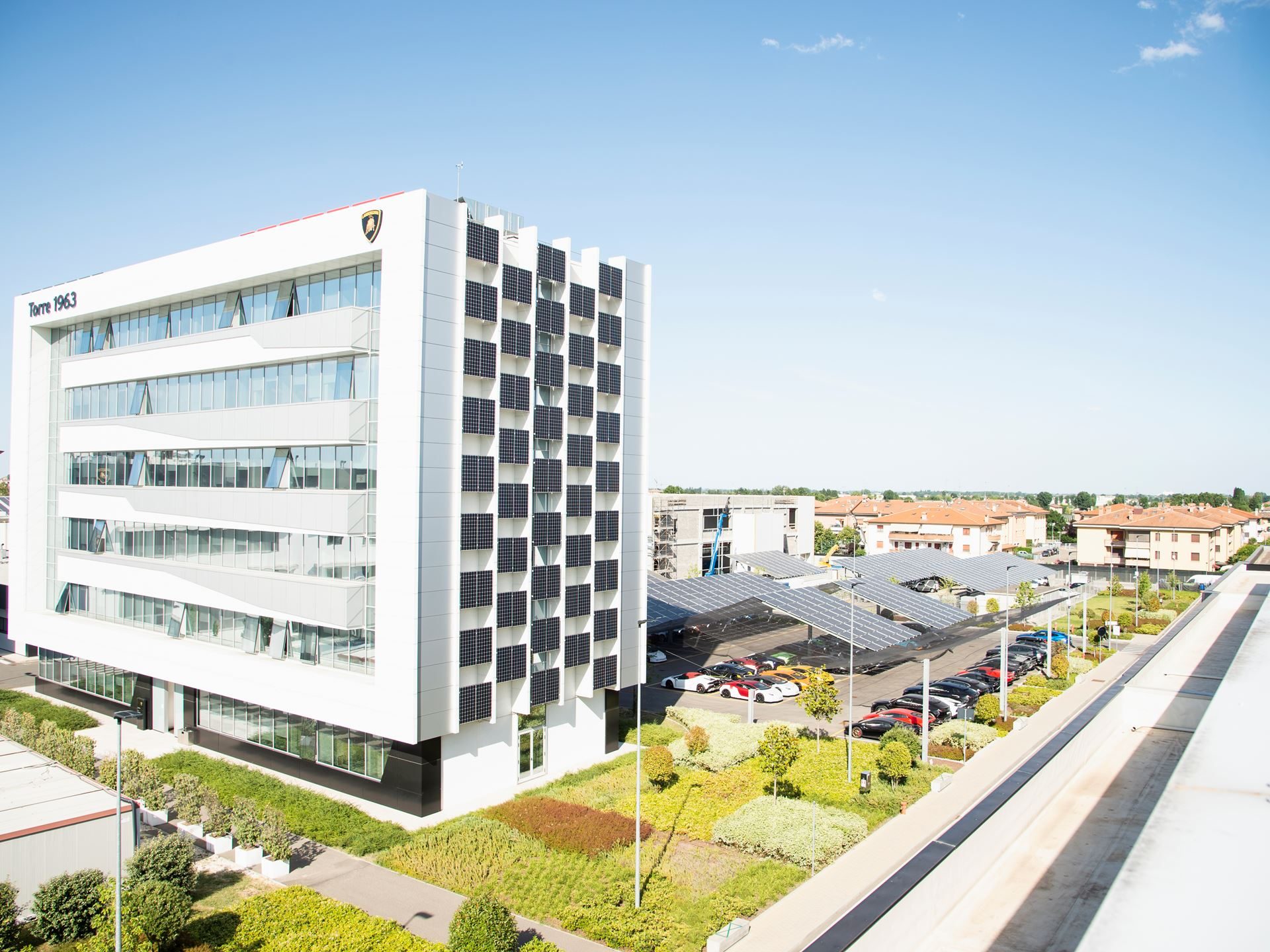
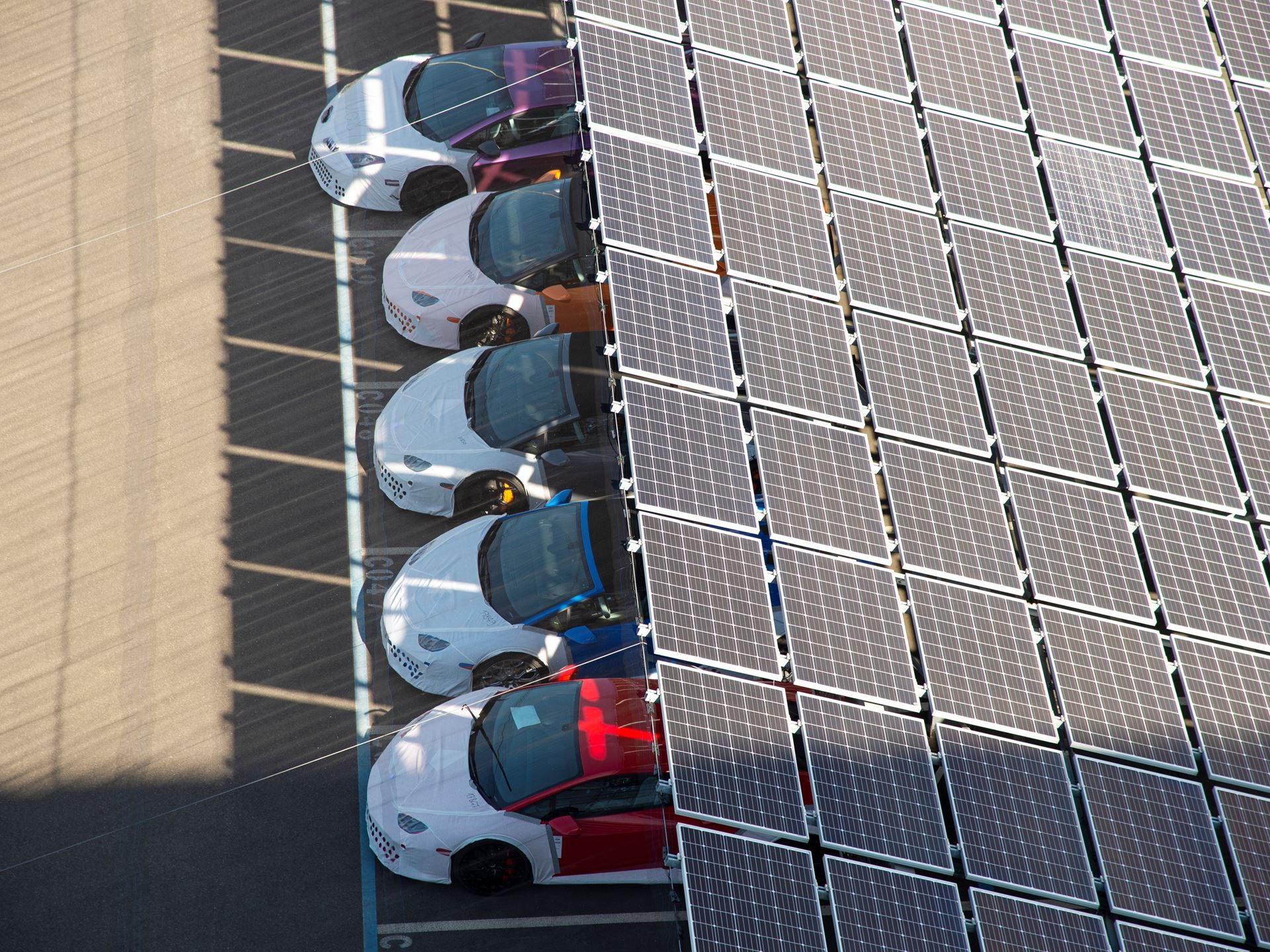
The solar panels are visibly integrated into the factory campus, covering the facade of the Torre 1963 building and forming carport structures over employee and vehicle parking areas. The visual effect is striking: rows of freshly completed Lamborghinis parked beneath solar canopies, the cars and the energy infrastructure occupying the same frame.
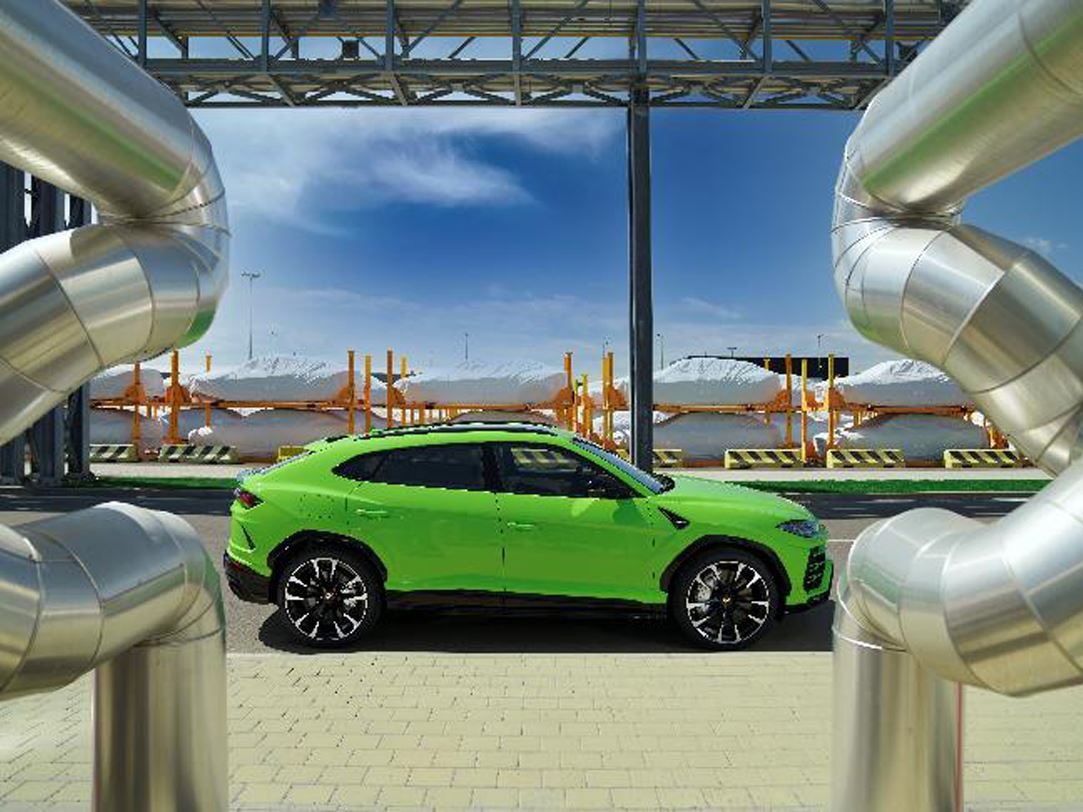
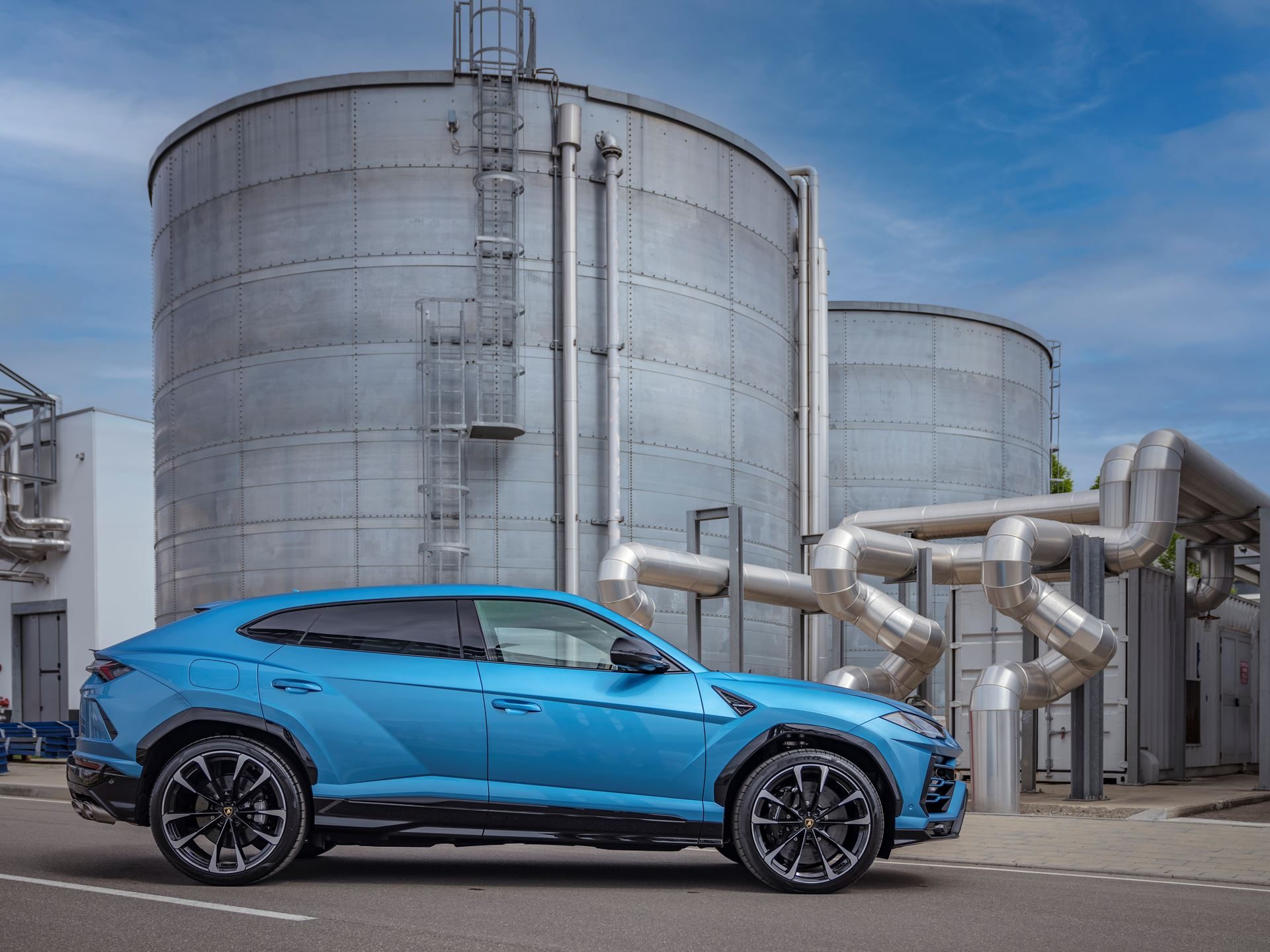
Heating the factory complex relies on a district heating system that Lamborghini says makes it the first Italian automotive company to adopt this approach. The system delivers 2,500,000 kWh of thermal energy annually, sourced from a biogas-powered cogeneration plant located roughly 6 km away in Nonantola. Hot water at 85°C travels through underground pipes to the facility, where it feeds the air-conditioning systems in production departments and offices. The biogas origin means the heating supply is renewable rather than fossil-fuel dependent, and the underground delivery eliminates the need for on-site combustion infrastructure. These are not abstract commitments printed in a sustainability brochure; they are physical systems embedded in the daily operation of the factory, quietly reinforcing the credibility buffer that Direzione Cor Tauri is designed to build.

The 'Torre 1963' building stands tall, adorned with solar panels, overlooking a vibrant collection of parked Lamborghini supercars.
Closing the Loop: Carbon Fiber to Classrooms, Leather to Leather Goods
Lamborghini reports that in 2020, it recovered 56% of all special waste produced by its manufacturing operations, diverting those materials from landfill or disposal. Two circular economy projects launched that year illustrate how the company handles specific waste streams.
Carbon fiber that can no longer be industrialized is delivered to the Experis Academy technical institute in Fornovo di Taro, where it is reused for educational purposes, training technicians in composite material processing. The arrangement addresses two problems simultaneously: it keeps non-recyclable carbon fiber out of landfill and helps build the skilled workforce that Lamborghini and its suppliers depend on for future production.
Leather that fails quality controls or remains as residual material, too small or bearing minor natural defects for use in vehicle interiors, is transformed into customized leather goods through a partnership with Cooperativa Cartiera in Marzabotto. The cooperative recovers leather and fabric by-products that would otherwise be discarded. Additional process waste is repurposed internally into souvenirs for customers and guests during Lamborghini events, available exclusively at the Lamborghini Store in Sant’Agata Bolognese.
The leather recycling program resonates with the ownership community in particular. Lamborghini customers routinely spec elaborate interior leather treatments through the Ad Personam program, and knowing that the offcuts from that process feed a local cooperative rather than a waste bin adds a layer of craft narrative to the purchase. Whether buyers consciously value this is debatable, but it reinforces the idea that Sant’Agata operates as a self-contained ecosystem rather than a conventional assembly plant, and it adds another concrete detail to the credibility case Lamborghini is assembling.

An aerial perspective reveals a vast green area, highlighting Lamborghini's commitment to biodiversity and natural landscapes.
The Strategic Tension Competitors Avoid Discussing
The uncomfortable arithmetic behind any supercar maker’s sustainability program is that production volumes keep climbing. Lamborghini delivered over 10,000 cars in both 2023 and 2024, setting consecutive sales records. More cars built and shipped means more Scope 3 emissions, the indirect emissions from the supply chain, logistics, and vehicle use, and according to one sustainability report, Lamborghini’s Scope 1, 2, and 3 emissions increased between 2023 and 2024. The company attributes the Scope 1 and 2 rise to higher energy consumption from the cogeneration plant and a new thermal power plant in the painting section, while the Scope 3 increase tracks directly to the higher volume of cars brought to market.
Lamborghini has offset residual emissions through carbon credits from 2015 to 2023, a practice that maintains the CO2 neutral certification but draws criticism from environmental advocates who view offsets as accounting rather than reduction. The company is reportedly committed to using lower-impact materials like recycled carbon and aluminum, transitioning vehicle logistics toward rail transport, and electrifying its internal fleet. These are incremental moves, not transformational ones.
No competitor in the supercar segment talks openly about this tension either. Ferrari publishes sustainability reports but faces the same volume-versus-emissions challenge as its Maranello output grows. McLaren and Porsche operate under similar constraints. What distinguishes Lamborghini’s approach is the specificity: biogas from a named town 6 km away, bees monitored by university researchers, carbon fiber routed to a specific technical school. The projects are small in absolute environmental impact but unusually concrete, and that concreteness is precisely what makes them harder to dismiss as greenwashing.
What This Means for Lamborghini Owners and the Brand’s Direction
Lamborghini has not disclosed the total investment in these five specific initiatives or provided a financial return-on-investment breakdown. What the Focu5on series does confirm is that the company views factory-level sustainability as a brand asset rather than a compliance cost, something to publicize rather than bury in an annual report.
For current and prospective owners, the practical takeaway is that Lamborghini is building institutional credibility to defend its product philosophy. Every hybrid Revuelto and Urus SE sold benefits from the narrative that the factory producing it operates on solar electricity, biogas heating, and circular waste programs. That narrative matters when regulators, insurers, and cultural sentiment all exert pressure on high-performance car ownership. A buyer choosing a Lamborghini over a competitor can point to a factory that monitors its own air quality with 600,000 bees, which is a more memorable sustainability credential than a line item in a corporate PDF.
The broader direction is clear even if the Lanzador EV program was recently shelved. According to Road & Track, Lamborghini CEO Stephan Winkelmann confirmed the company will no longer pursue the Lanzador as a production vehicle, pivoting away from a fully electric model while maintaining the hybrid strategy across the current lineup. That decision makes the factory sustainability investments more important, not less: without a zero-emission halo car on the horizon, the environmental credibility of the production site itself becomes the company’s primary green argument. The bees, the oaks, and the biogas pipeline are doing work that a canceled EV no longer can.

A modern building adorned with solar panels stands tall at the Lamborghini factory, showcasing sustainable energy initiatives.
Gallery