A New Museum for a 60-Year-Old Argument
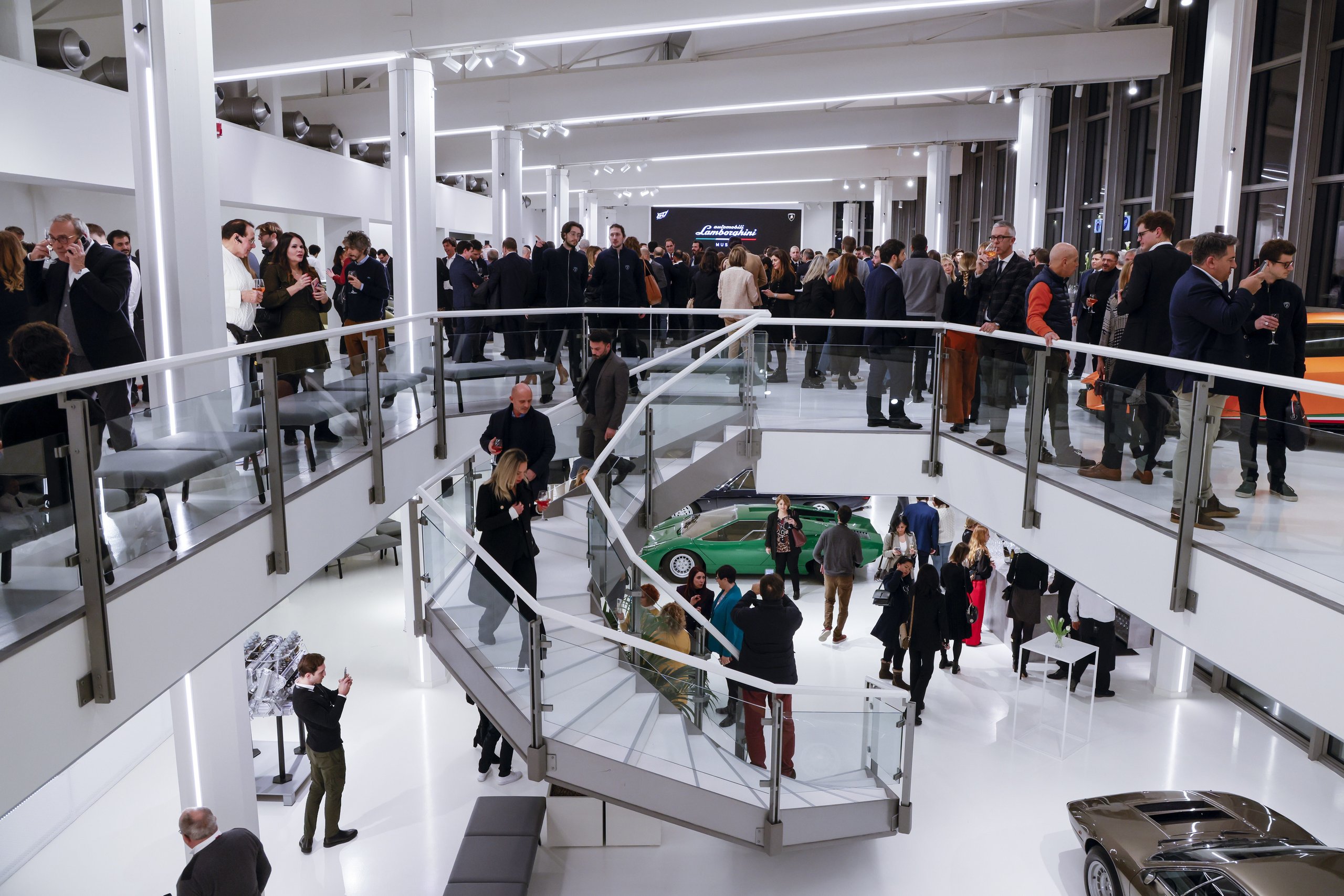
The Automobili Lamborghini Museum in Sant’Agata Bolognese reopened on January 20, 2023, with a new name, a completely remodeled interior, and an exhibition titled “THE FUTURE BEGAN IN 1963.” The event officially kicked off Lamborghini’s 60th anniversary year. Rather than mark the occasion with a new car reveal or a speed record, the company chose a curatorial statement: that every significant Lamborghini, from the 350GT to the Countach LPI 800-4, carried at least one idea the rest of the industry considered outlandish before eventually adopting it.
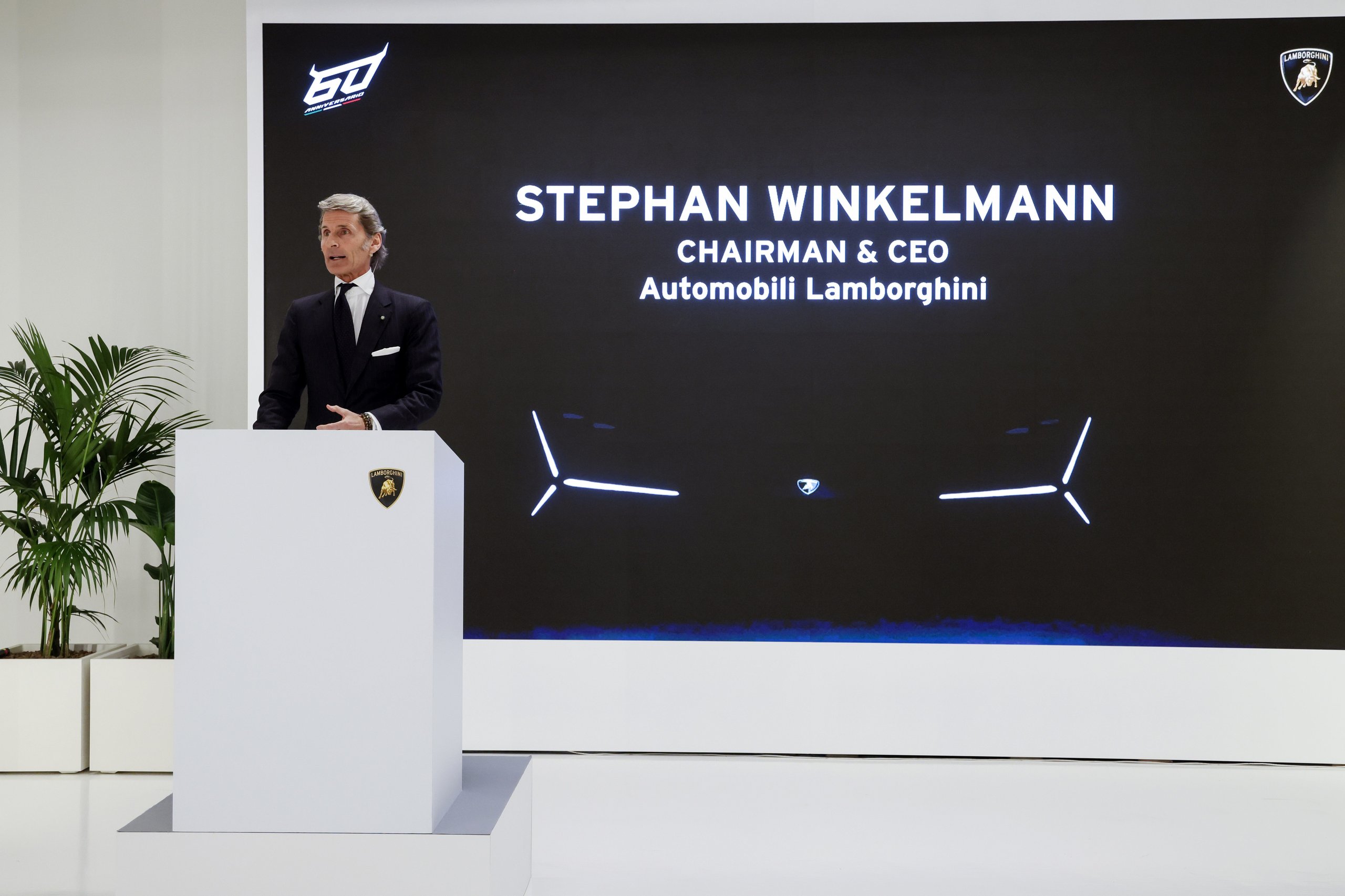
That framing matters more than the ribbon-cutting. Lamborghini says the exhibition retraces the most emblematic eras and representative moments of its first six decades, beginning with founder Ferruccio Lamborghini. Chairman and CEO Stephan Winkelmann spoke at the opening, describing 2023 as a year of international events, initiatives, and activities the company would reveal throughout the calendar. The museum sits within the original nucleus of buildings where Ferruccio laid the foundation stone in 1963, giving the redesigned space a physical connection to the origin story it now tells on its walls.

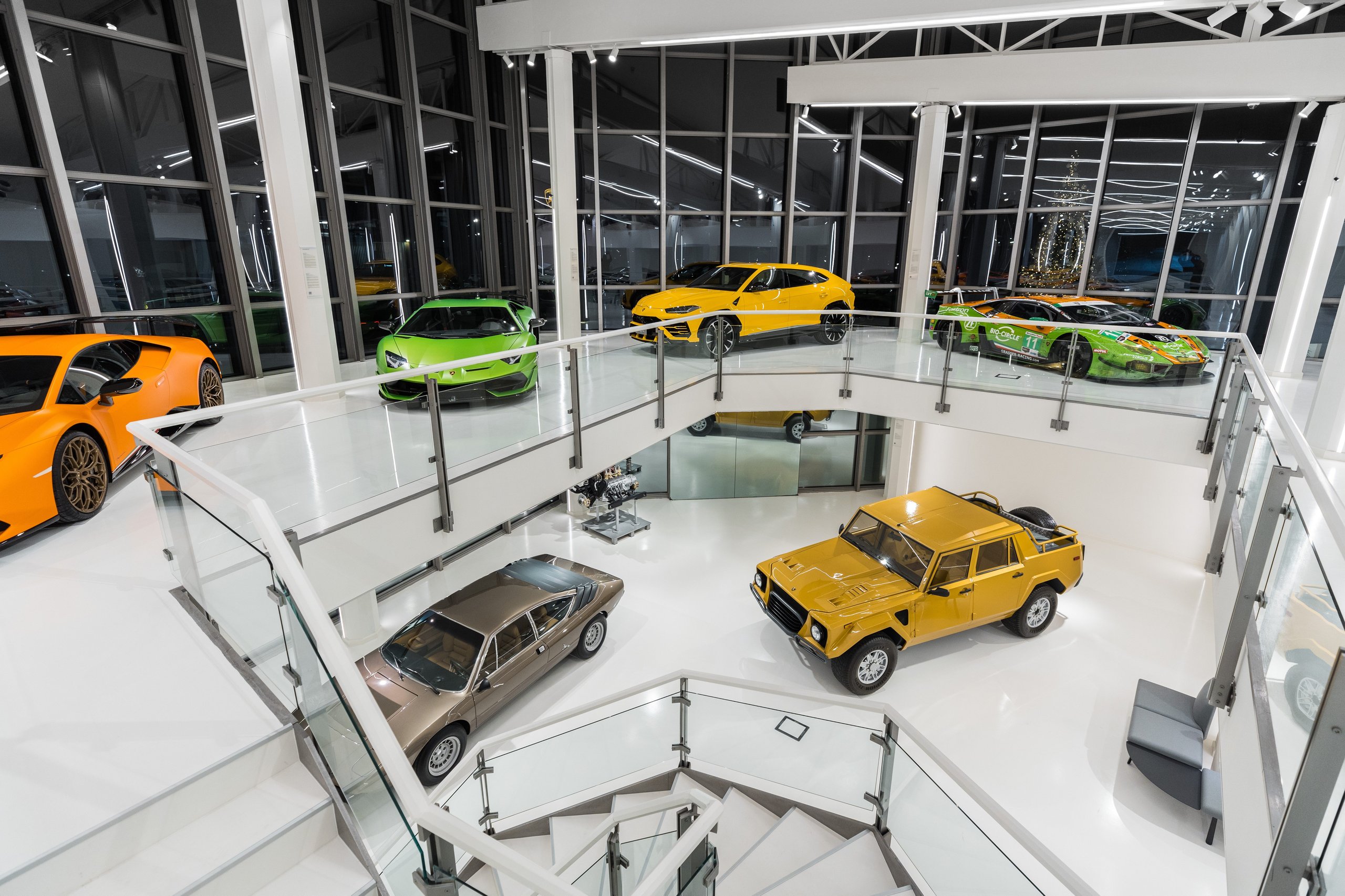
The redesigned Museo Automobili Lamborghini features a striking display celebrating the brand's 60th anniversary.
Decoding “The Future Began in 1963”
Exhibition titles at automotive museums tend toward the forgettable. This one is doing real work. By declaring that the future began in 1963, Lamborghini positions its entire history as a forward-looking project rather than a nostalgic archive. The implication is pointed: every car on display represents a moment where the company bet on an idea before the market was ready.
The Miura, which debuted in 1966, put a transverse V12 behind the driver and effectively invented the mid-engine supercar layout. The original Countach in 1971 introduced a wedge-profile design language so extreme that the rest of the industry needed a decade to catch up. The LM002 arrived in the 1980s as a luxury high-performance SUV concept that seemed absurd at the time and now looks prophetic given the Urus’s commercial dominance. The Sián FKP 37 marked Lamborghini’s first step into hybrid production powertrains, using supercapacitor technology rather than conventional batteries.
Lamborghini says all of its super sports cars encompass at least one disruptive idea. That is corporate language, but the exhibition backs the claim with metal. A wall display visible in the redesigned space reads “BORN OUT OF A CHALLENGE,” anchoring the narrative in Ferruccio’s original decision to build grand touring cars that could rival the established Italian competition. The timeline on that wall runs from 1963 through to the Direzione Cor Tauri strategy in 2023, drawing a direct line from the founder’s personal grievance to the company’s electrification roadmap.

The Lamborghini Museum's timeline wall highlights key milestones in the brand's storied history.
Heritage, Contemporary, Few-Off: How the 19 Cars Are Organized
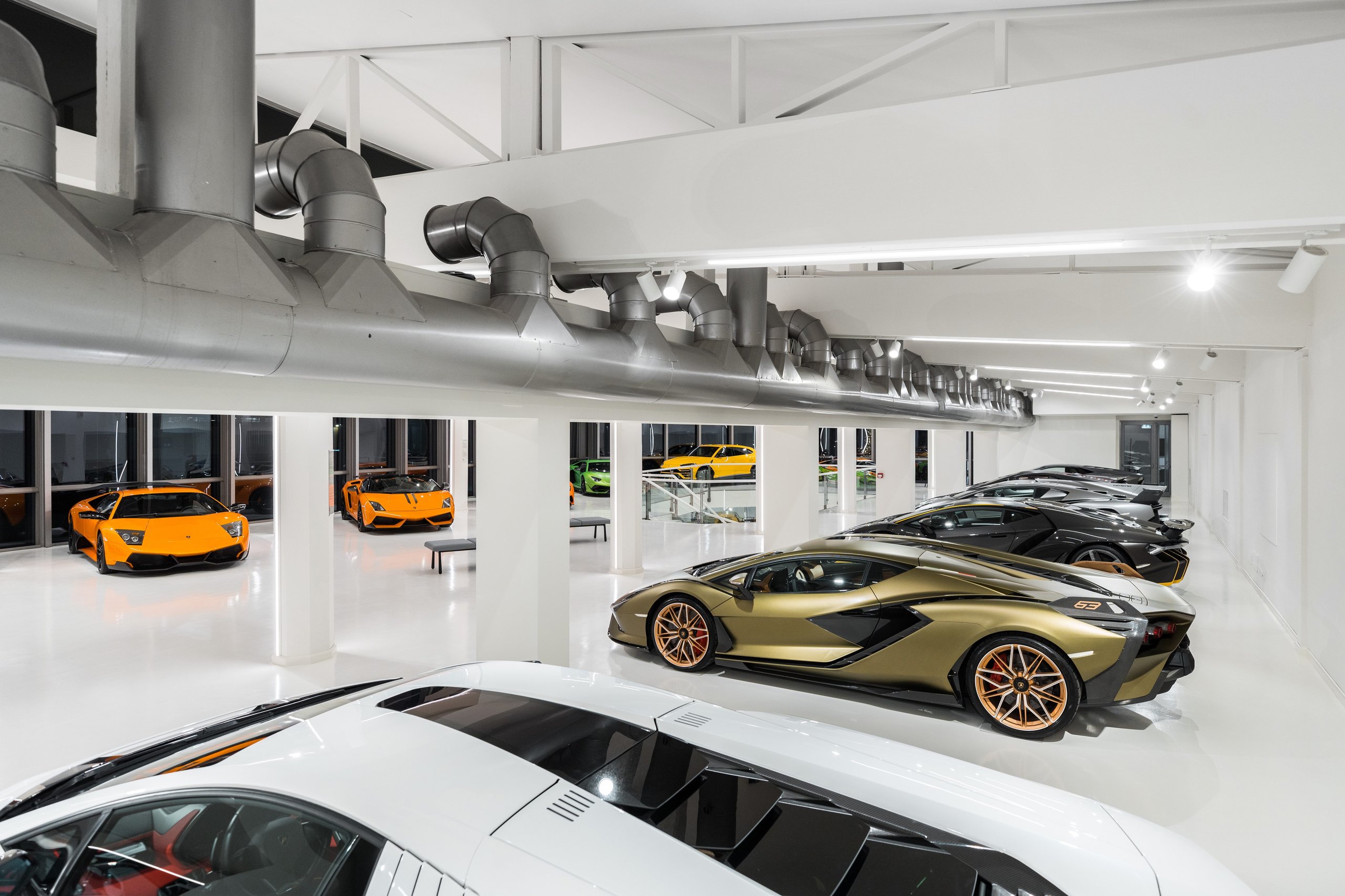
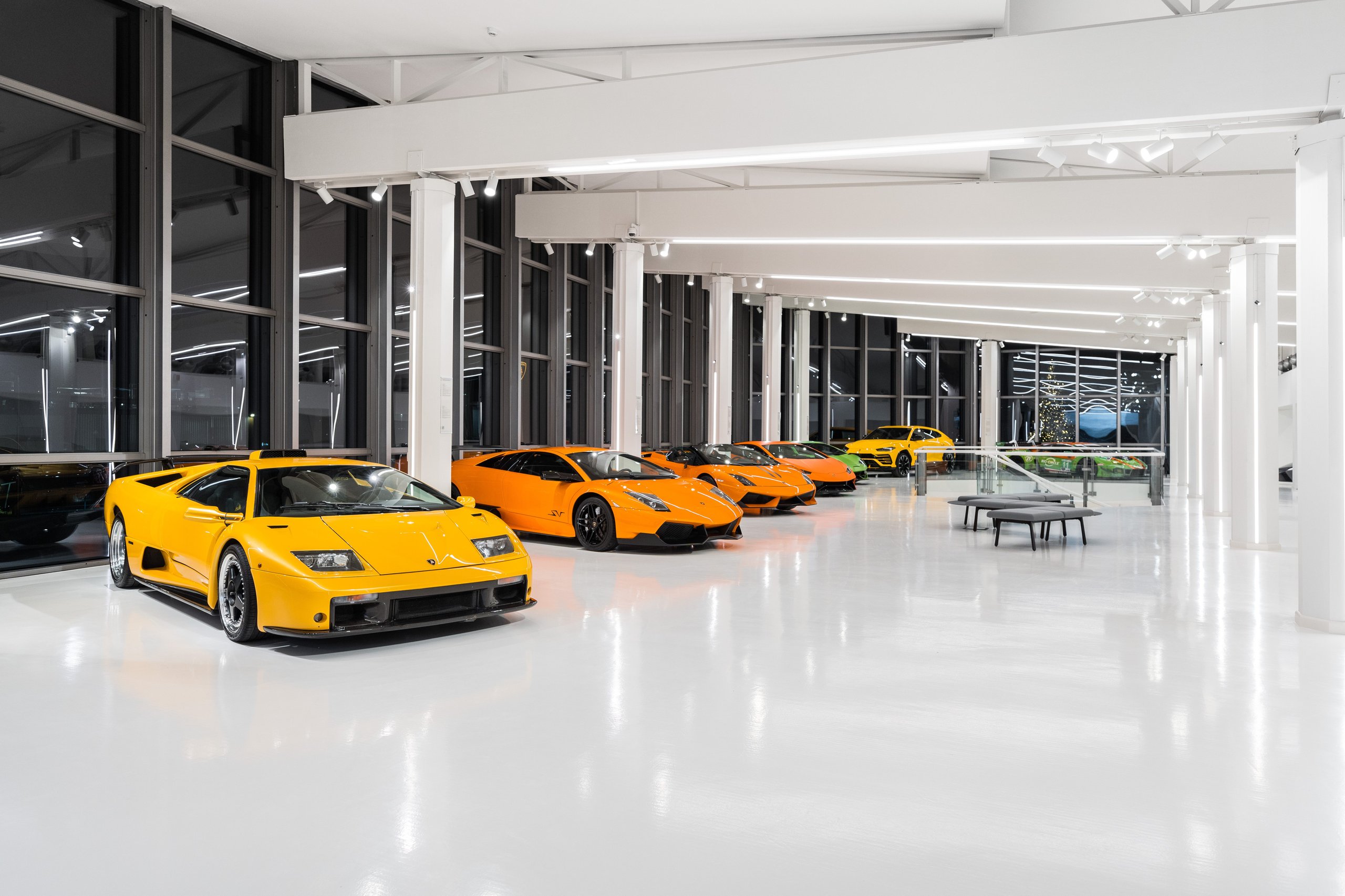
The 19 cars on display divide into three thematic groups that reinforce the disruption thesis at every turn. Heritage covers the foundational models: the 350GT, Miura S, Espada, LP 400 Countach, Urraco, and LM 002. Contemporary picks up the production lineage from the 1990s onward with the Diablo GT, Murciélago SV, Gallardo Performante Spyder, Huracán Performante, Aventador SVJ, Urus, and a GT3 race car. Few-off gathers the ultra-limited machines: Reventón, Sesto Elemento, Veneno, Centenario, Sián, and Countach LPI 800-4.
The grouping reveals more than chronology. Placing the GT3 alongside road cars in the Contemporary section treats Lamborghini’s customer racing program as part of the core product narrative rather than a sideshow. The Few-off category quietly makes the case that limited-run specials are where the company tests its most extreme engineering ideas before they filter into series production. The Sesto Elemento’s obsessive carbon fiber construction, for instance, informed the material strategy for subsequent Squadra Corse projects.
Anyone who visited the museum after its previous renovation in 2016 will notice the shift in emphasis. That earlier redesign expanded exhibit space and introduced multimedia elements, organizing the experience around a past-to-future journey with white floors and gray walls designed to let the cars’ colors dominate. The 2023 version retains the bright, minimalist aesthetic but layers in a more explicit argument about why each car mattered, not just when it appeared.

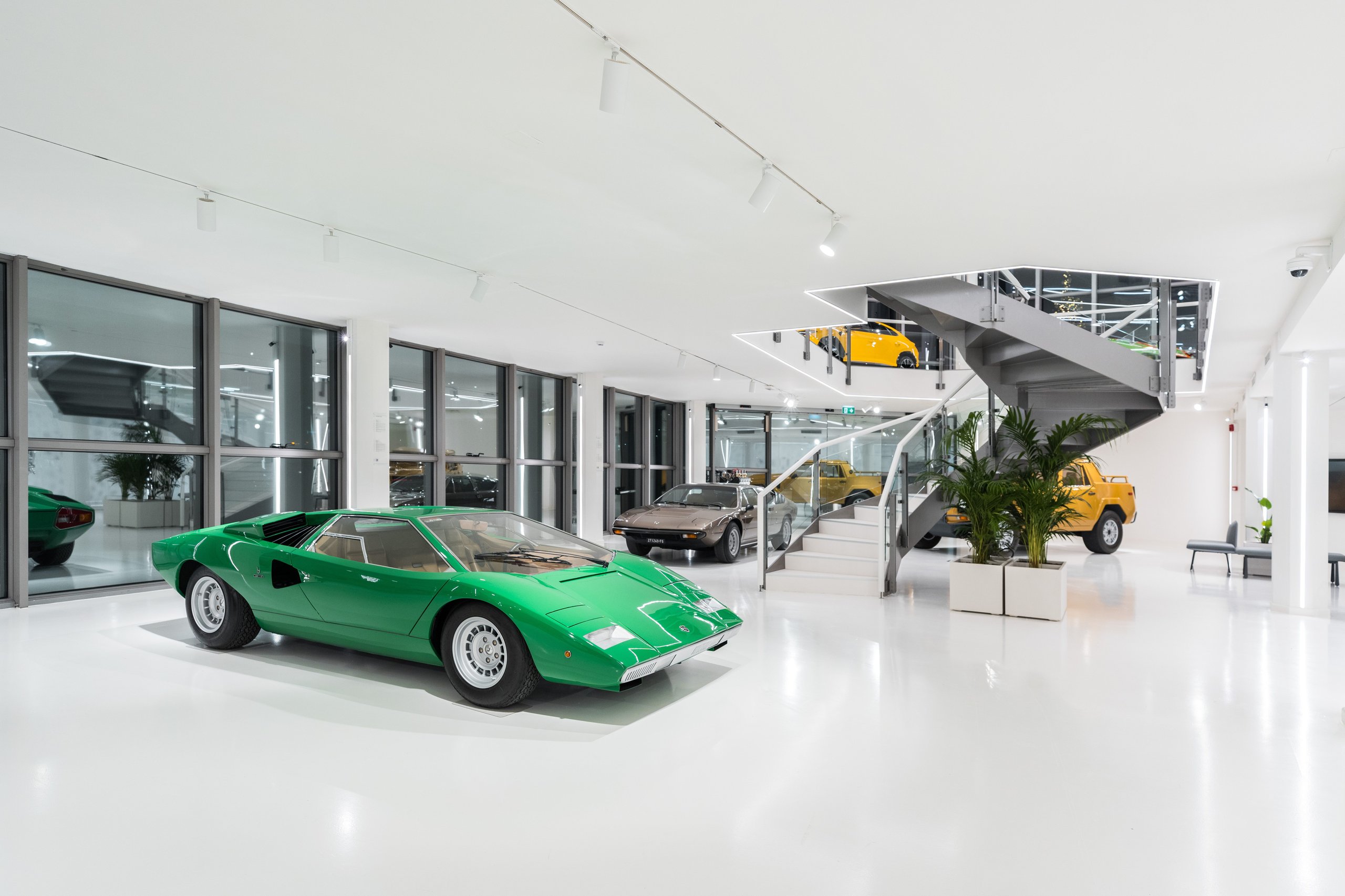
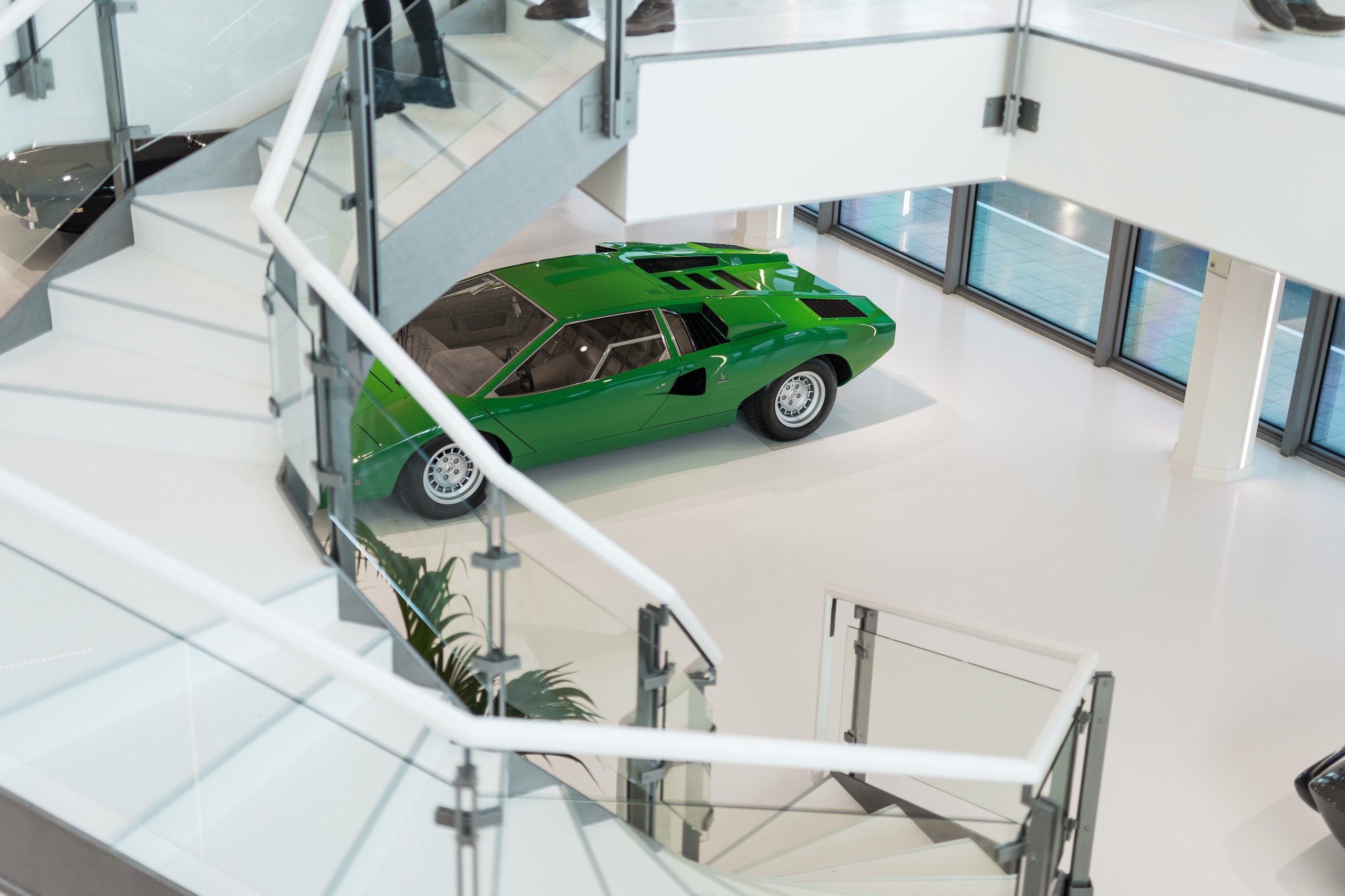
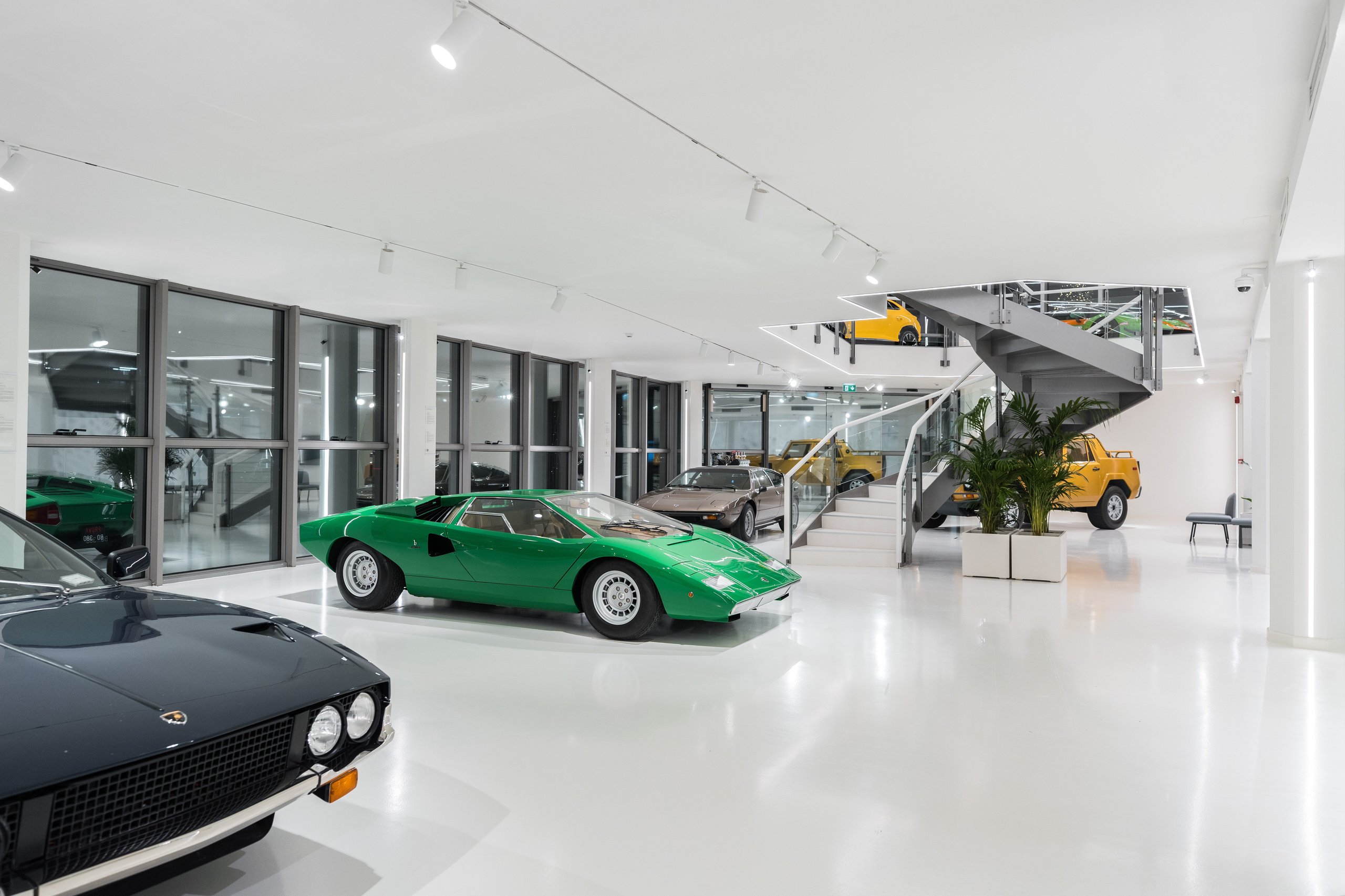
A vibrant green Countach leads a procession of classic Lamborghini models in the newly redesigned museum.
Winkelmann’s Bet: Heritage as Competitive Strategy
Winkelmann’s comments at the opening deserve close reading. He framed the anniversary year as building from a challenge Ferruccio took up in the early 1960s, one the company developed through ideas that shaped the path of luxury super sports cars. The forward-looking element is the Direzione Cor Tauri strategy, which the exhibition’s timeline places as the 2023 milestone, putting the electrification roadmap on equal footing with the Miura’s debut and the Countach’s launch.
This is where the museum becomes a competitive document. Ferrari’s Maranello museum and Porsche’s Stuttgart facility both celebrate deep engineering heritage, but they tend to frame that heritage as continuity and refinement. Lamborghini’s curatorial argument is different: the brand’s value comes from discontinuity, from the willingness to do something the market did not expect. The Urus was a commercial gamble that now accounts for a huge share of the company’s volume. The Sián’s supercapacitor hybrid system took a different path from conventional battery-electric solutions. Even the decision to keep naturally aspirated V12s in the flagship lineup longer than any competitor was, in its own way, a contrarian bet.
For enthusiasts planning a pilgrimage to Sant’Agata Bolognese, the factory museum operates on regular public hours, while factory tours require coordination through a Lamborghini dealer. Forum discussion on Lamborghini-Talk suggests also visiting the separate Ferruccio Lamborghini Museum in Funo di Argelato, which houses Tonino Lamborghini’s collection and focuses on the founder’s broader industrial legacy.

The new Countach LPI 800-4 stands proudly in the redesigned Lamborghini Museum, showcasing modern design.
What the Redesigned Museum Signals for the Anniversary Year
The museum reopening was the first public act in what Lamborghini described as a full calendar of 60th anniversary programming. Some of those events materialized on a grand scale: independent reports confirm that Lamborghini Day UK gathered over 380 cars at Silverstone, a world record for the largest Lamborghini parade was set at Suzuka, Japan, with 251 cars, and a 60th Anniversary Giro tour through Italy culminated in a Concours d’Elegance in Bologna.
Yet the museum itself functions as the permanent anchor for all of this activity, the place where the brand’s argument about its own identity is made most explicitly and where visitors can evaluate whether the narrative holds up when you stand next to the actual cars. A gold Miura in a minimalist white gallery, a V12 engine displayed as sculpture on a stand, a child staring up at the bronze Sián: these are the moments the redesign was built to produce.
Lamborghini’s decision to open the anniversary year with a museum rather than a product launch tells you something about where the company sees its competitive advantage. The cars will come. The Revuelto was already on the horizon. But the story the company wanted to control first is the one about why those cars exist at all.

A child stands beside the futuristic gold Lamborghini Sián FKP 37, showcasing its bold design in a pristine showroom.
Gallery